
Everyday Essentials

Given my health situation – living with multiple chronic illnesses that require daily management – I thought it might be interesting to make a list of the things I need and use everyday and maybe if any of you guys live with chronic illnesses, you could compare it to what you use. Are these things helpful to you? Might they be? Are there things that are helpful to you that aren’t on this list?


GLASSES – This is a pretty obvious one. I can’t see three feet in front of my face without them; I am incredibly short-sighted. Both of my biological parents are or were short sighted and I believe that certain forms of Ehlers Danlos Syndrome (EDS) can affect your eyesight. Regardless, I’m not going anywhere without my glasses.

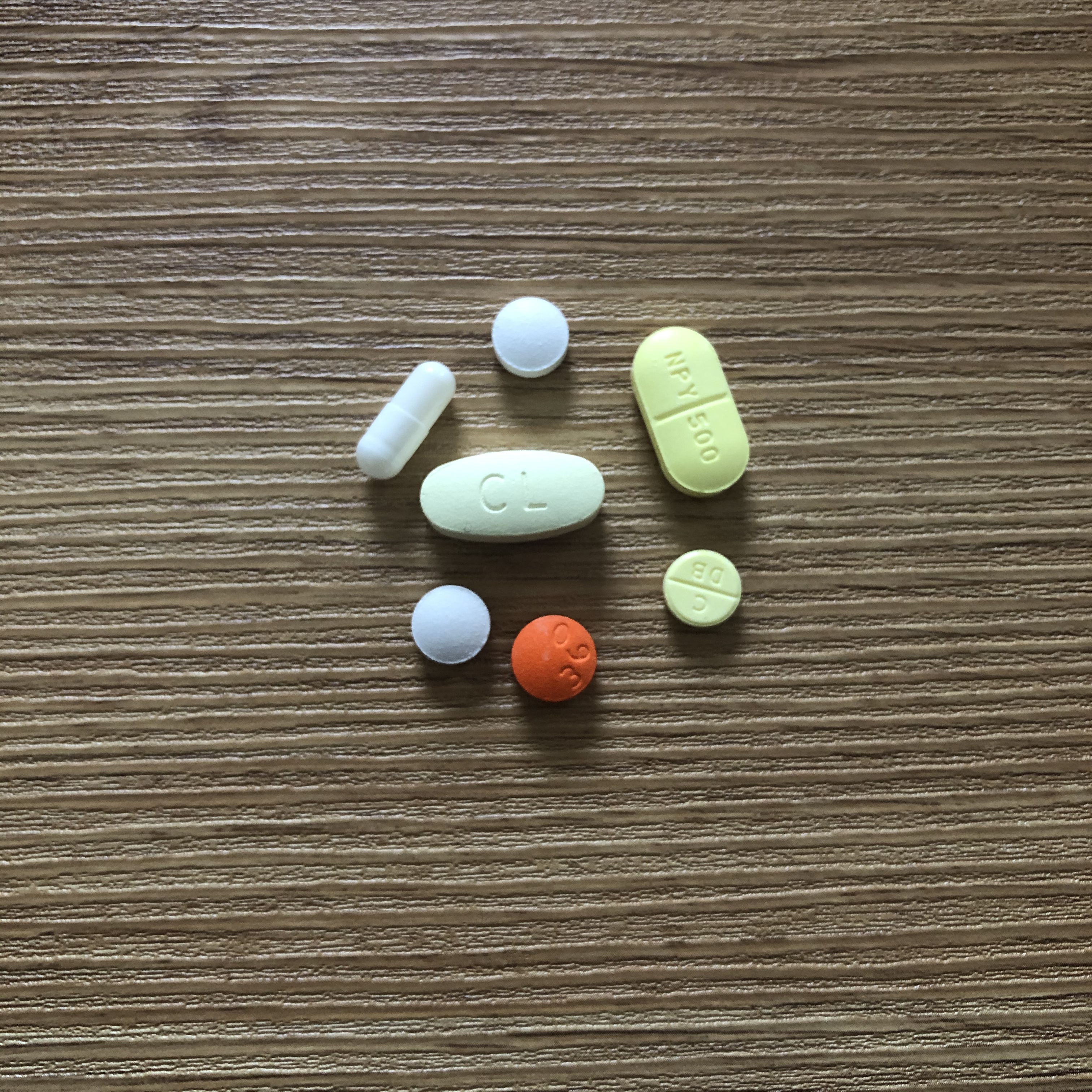
MEDICATION – I have certain medications that I have to take everyday, as well as some that are situation dependent. The most important are my anti-depressant, Phenelzine, and the beta-blocker, Propranolol, and I really feel it if I don’t take them; while it took them a while to take effect at the beginning, it can through everything off course if I miss a day. So taking your meds… very important!
IMG_5644

PAINKILLERS – Okay, this isn’t an everyday occurrence but it’s very common, especially at the moment (I hurt my back about a month ago – a story for another time). I have them on me all the time and I regret it if I don’t. Pain can be so debilitating and if I don’t have something to manage them, if only to get home, then I’m in really trouble. I also get migraines that absolutely incapacitate me so having the pills that help with those is vital. I often feel like a walking pharmacy but I’ve learned the hard way – several times – that it’s better to be prepared.

LOTS OF WATER – Generally, none of us are drinking enough water but as a person with Hypermobile Ehlers Danlos Syndrome (hEDS), I’m sure I’m not, as hard as I try. When I was diagnosed, the recommendation was that I drink more than double what a person without hEDS is supposed to drink (x); I’ve been trying to build up my water intake but it’s a slow process. I also have Postural Orthostatic Tachycardia Syndrome (POTS), which often occurs with hEDS, and includes symptoms like dizziness, light-headedness, swelling in the legs after standing for short periods of time, palpitations, fainting, and more, all of which can increase in intensity when a person is dehydrated, after exercising, or during hot weather (I want to write a more in depth post about all of this when I have more time). Dehydration has also been linked to an increase in pain sensitivity (x). Increasing water intake has proven to help POTS symptoms so I’m doing my best to always have water with me (or cordial if the taste of water becomes a struggle, something my nutritionist okayed, given that I’d still be getting the fluids) and I think it’s helping me to drink more (x). It’s surprisingly hard though, to drink that much water.

MY PHONE – I know that many people talk about needing breaks and time away from their phones but, in general, having my phone around is more helpful than it isn’t. I find social media pretty triggering for my anxiety so I rarely find myself scrolling through Facebook or Twitter or Instagram (and I hate TikTok more than I can even articulate) whereas I find the apps for setting alarms and timers helpful, Duolingo really good for my anxiety (and mental health in general), and the Notes app vital to writing down thoughts and ideas to follow up on. I do find it stressful that it means anyone has access to me, can contact me whenever they want, but then Airplane Mode is right there… But generally, my phone is more helpful than not.

MY BULLET JOURNAL – Between my ADHD and my general anxiety about being organised, my bullet journal (or what began as a bullet journal and has evolved into a more personalised version of the system) is all but permanently attached to me. It has my list of commitments, the list of things I want to get done during the day, and anything else that might be relevant, like stuff to do with the cats or the house. I honestly don’t know what I’d do without it.

FIDGET TOYS – My hair pulling has been particularly bad recently (plus I’ve seriously struggled with chewing the callouses on my fingertips and tearing at a scar on my face) and after years of dealing with it, I have a slightly ridiculous collection of fidget toys that I rotate using as the urge to pull varies; sometimes certain fidgets are more effective than others. So I usually have at least within reach, whether that’s wherever I am or in my bag.

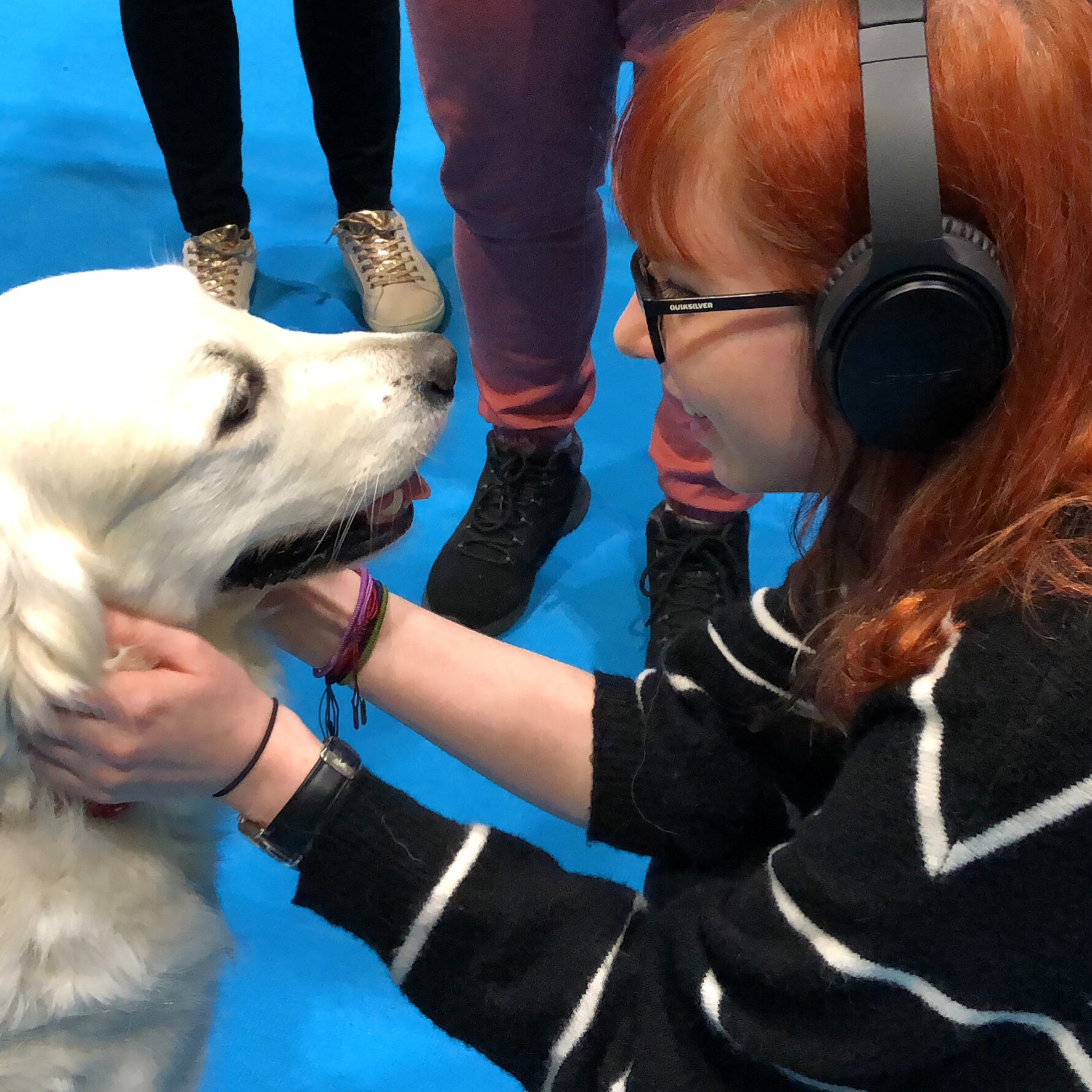
NOISE-CANCELLING HEADPHONES – Having had some very unpleasant experiences with just how loud the world is (you may remember this particular disaster), I got an amazing set of noise-cancelling headphones that have made navigating my hometown, London, transport systems, etc so much easier. I’ve recommended them to multiple people and those who got them have agreed that they make life – and all of its noise – a lot more manageable.
IMG_9047

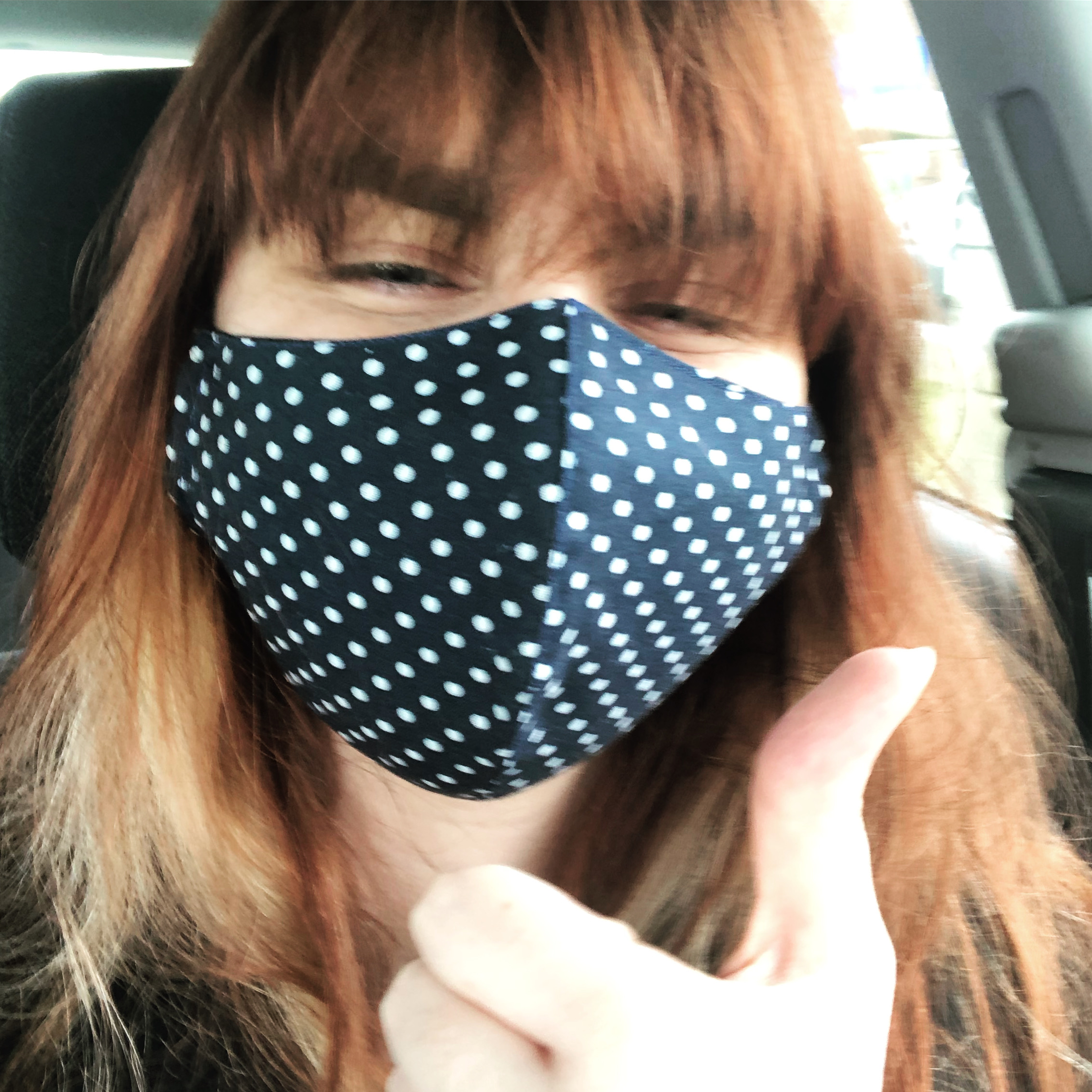
FACE MASK AND HAND SANITISER –  I know that, for a lot of people, it feels like the pandemic has ended but, for many, many others, it hasn’t. I know immunocompromised people, those struggling with Long COVID, people who are still getting COVID and getting seriously sick so it certainly doesn’t feel over to me. If I’m out, I’m pretty neurotic about hand sanitiser and wearing a mask; I’m not perfect and I do sometimes forget, especially if I’m feeling overwhelmed in a social situation and there’s no prompt of other people wearing masks, but I’m still pretty on the case about it all.
B7AE6E21-A845-45F9-AFA0-12AE5B708C79

A HIDDEN DISABILITIES SUNFLOWER LANYARD – I’m not sure when I first got my sunflower lanyard and I can’t honestly say it’s changed my life but there are certain places that it does make life easier, like at airports and concerts (and getting support in those sorts of places is so important). Mostly I wear it when travelling around London because having a big ‘autistic’ label around my neck reminds people to take care and hopefully be a bit more aware of what they’re doing and what’s going on around them. I’m sure there are people who see it and it makes them uncomfortable or contrary or belligerent (because, in my experience, those people tend to be everywhere) and I think there are places where it probably makes me more vulnerable but, on the whole, it tends to be helpful if I use my judgement.

JOINT SUPPORTS – Because of my hEDS, I struggle with a lot of pain in my joints (the gift that keeps on giving) so I have a handful of different supports and braces. I mainly use them for my knee and for my wrists, but I also have one for my back. They not only really help with my stability – something I’m struggling with more and more – but, as with my sunflower lanyard, they remind people that I am kind of fragile and that they need to be careful around me, especially on trains and the underground etc.

POLARISED SUNGLASSES – The last time I went to get new glasses, I mentioned that I have hEDS and the optician recommended getting polarised sunglasses because they can help with light sensitivity, something that many people with EDS struggle with: our eyes are sensitive can get really tired because they are made up of 80% collagen, which is – as we know – what EDS negatively affects. And if you can reduce the strain on your eyes – which these glasses do, even if you’re inside but it’s still very bright – then you can hopefully reduce the chances of developing problems with your eyes (again, EDS: the gift that keeps on giving).

LIP BALM – A common symptom of multiple types of EDS is sensitive skin and that can manifest as dry lips (and cracked lips that take ages to heal) so I try to always have a good lip balm around. My personal preference is the EOS Crystal Lip Balm in Hibiscus Peach, which I’m not totally sure they make anymore but it’s still available through various online stores. But it’s their crystal lip balms that are best for hydrating your lips (but it’s worth reading this article because some people have had allergic reactions to certain ingredients); the previous, more waxy versions were nice but I didn’t find them to be super effective.  This one helps my skin recover really quickly (and stay hydrated) and I can barely feel it on my lips, a plus considering that the sensory experience of make up and skincare can be really difficult for me. But there are a lot of great ones out there; I’ve used several from The Body Shop that I would recommend too.

CBD GUMMIES – Over the last couple of years, my sleep schedule – for the most part – has been awful. Most nights I was getting a fractured few hours and then there were nights where I didn’t sleep at all. It was horrible and it just made my mental health even worse, which was pretty impressive given how bad it was when my sleep was at its worst. I felt like I’d tried every strategy ever suggested, including some pretty strong prescription sleeping pills; they worked-ish but I suffered from some pretty miserable side effects for not much reward. I’d always been vaguely resistant to trying CBD based products for some reason – I’m not really sure why – but I was desperate and ended up trying a few different types of CBD gummies. Within a few days, my sleep was deep and reliable again. Months later, it’s remained pretty good. Plus it’s helped me avoid relying on prescription pills, which I’ve had to do in the past even though it’s not generally advised (this was with the approval of my doctor); taking them every night can increase your tolerance and so they stop working and no one really knows what the long term effects are, although some people become addicted and can experience symptoms like hallucinations. So avoiding that is definitely a pro on the pro-con list. Research is still being done around CBD but so far it seems that the only problems are certain drug interactions, which would just involve a conversation with a doctor. None of those interactions were a problem for me so I’ve been taking them consistently ever since and my sleep has been so much better. They’re a constant presence on my bedside table.


So I hope that was of some interest, at least. As I said in my introduction, let me know if you use these things; let me know if you use other things; let me know if there are things that might work better than the ones on this list! Over to you!

#ToHelpMyAnxiety

TW: Mentions of self harm and Trichotillomania. 

So the theme set by the Mental Health Foundation for Mental Health Awareness Week this year was anxiety. They pushed the hashtag #ToHelpMyAnxiety to raise awareness but I didn’t see it once on social media so I decided to write a whole blog post on the topic, on what helps my anxiety as well as what I’ve heard from others about what helps them. I ranted recently about how people engage with Mental Health Awareness Week, and awareness days in general, but I do think that sharing coping mechanisms for anxiety is a useful thing to do and a good use of those days.

I live with very severe anxiety, so bad that nothing I do actually banishes it, but I have found certain things that help to manage or reduce it. And I’ve spent a lot of time talking with friends and acquaintances about anxiety, discussing how we all try to cope with it. So I have a lot of tried and tested methods that have all worked for at least one person and therefore will hopefully be useful to at least one of you. If any of these ideas help just one person, then it’s worth the work to compile them. (Some of these have been pulled from my experience as an autistic person but many of them are useful for anxiety so I figured it was worth including them.)

I do think it’s worth mentioning that not all of my coping mechanisms are good, healthy ones. I’m focussing on the healthy ones because those are the ones we should all be aspiring to practice but I felt it would be remiss to not even mention them.


General Tips:

  • Maintaining a healthy lifestyle – Getting enough sleep, eating healthily, moving your body, and, in some cases, taking additional supplements (I am not knowledgeable about this, nor qualified, to give advice but I do personally take supplements on the advice of a nutritionist, one who has experience with my health problems) are all important in managing anxiety. Not getting enough sleep or not eating enough can drastically increase anxiety, as you’ll know if you’ve struggled with anxiety in the past (and present).
  • Make sure I’m breathing properly – I know people who swear by deep breathing exercises but I don’t usually need to go that far; I often find myself breathing very shallowly and need to reset, take a deep breath and remind myself what normal breathing is. At home, singing is really useful for this, I think because it forces me to control my breathing, plus it’s something I love to do.
  • Consciously relax my body – When I’m really anxious, I’ll suddenly find my body so tense that I’m like a coiled spring. I have to focus and physically relax my muscles – drop my shoulders, unclench my fists, uncurl my toes, etc – sometimes multiple times a day. I usually find the tension creeping in again but making the effort to relax over and over does seem to help.
  • Avoid loud noises – Loud noises are a serious trigger for my anxiety so I try to avoid them as much as possible, although some environments seem to be exceptions, like concerts for example. Most of the time noise cancelling headphones do the trick so I’m very grateful to have such a great pair.

IMG_9047

  • Avoid certain fabrics – This is probably more Autism anxiety than general anxiety but I thought it might be useful to someone. The sensory irritation of some fabrics (I particularly struggle with acrylic and polyester) slowly overload my brain until my anxiety makes it impossible to concentrate. So sticking to safe textures, like cotton, is a good strategy, even if it does mean I miss out on cool clothes occasionally.
  • Fidget toys or fidget jewellery – We all stim (shortened from self-stimulatory behaviour) to some degree, both neurodivergent and neurotypical people, and one of the most common reasons for stimming is anxiety. Many stimming behaviours aren’t harmful (and many autistic individuals enjoy their stims) but sometimes they are and sometimes they can draw unwanted attention. This is where fidget toys and fidget jewellery can be really helpful because it fulfils the same need as stimming but allows that behaviour to stay under the radar, if that’s what you want. I’m not ashamed of being autistic or of my stimming behaviours but some of them are harmful and need redirecting and some of them are such that I don’t always want them to be people’s first impression of me; I prefer to choose when I reveal that sort of information but still need to stim in the meantime.
IMG_9824

  • Creating something with your hands – I’m not very artistic, not in the making of physical art anyway, but I do find it soothing to make things with my hands, whether that’s doing origami or making friendship bracelets. This is apparently a very common thing, as it allows our brains to essentially switch off and take a break from the relentless noise pouring in.
  • Bullet journalling – Organising and updating my bullet journal (or my version of it that’s accidentally evolved over the years) and to-do list help me to keep track of what’s happening so I don’t have to worry that I’m forgetting something.
  • Learning a language – This is something I’ve learned over the last year. I started using Duolingo and found it to be a really good way to distract myself when I was anxious, plus I was learning something new at the same time. I would like to use the language and, in theory, I will but even if I don’t, I did manage to reduce my anxiety, learn a new language, and feel better about myself.
  • Socialising (to the best of my ability) – Depending on what’s best for you, a certain level of socialising can be really good for managing anxiety (especially if you have someone to talk to who understands what you’re going through). It’s a bit of a balancing act because it can help up to a point and then become overwhelming, but if you can walk that line, you can find relief from anxiety in both socialising and alone time (as many of us know from experience, too much of either can just make the anxiety worse).
  • Therapy – If your anxiety is ongoing or seriously impacting your life, therapy might be something to consider. I talk about my anxiety in therapy a lot: what I’m anxious about, what I can do to mitigate it, short term and long term strategies, what else it might be connected to. I’ve learned a lot about myself and my anxiety and although some anxieties are impossible to avoid, I have learned how to manage some of them.

At Home:

  • Blanket – Unless it’s absolutely sweltering, I usually have a blanket draped over my legs and lap. It’s not a weighted blanket because those are just too much for me but a light blanket provides just enough weight to be calming, to be grounding.
  • Controlling the temperature – I’m more able to handle my anxiety when I’m comfortable, regulating my temperature included. So that I don’t have to adjust the whole house, I have a little electric blanket that I can sit on if I’m cold (also great for my chronic pain) and an amazing fan (noiseless because the noisy ones can trigger my anxiety) and that way I can adjust the temperature really easily as I need to.
  • Burning my favourite candle – When I’m feeling anxious, burning my favourite candle (my personal choice is the pink pepper grapefruit candle from The Candle Bar, but really any pink grapefruit candle will do) helps to relax me; I feel safer and calmer and like I can breathe more easily.
  • Stroking my cats – It’s been scientifically proven that spending time with animals lowers our stress levels and I absolutely know it to be true from my personal experience. Being around my cats relaxes me and it’s only when I’m away from them – even for only a few days – that I realise just how much they reduce my anxiety. So being with animals, if possible, is definitely a good tactic and fortunately, these days, there are many ways to do that if it’s not possible to own a pet yourself.
  • Favourite movies and TV shows – When I’m having a bad day, returning to my favourite movies and TV shows (even if I have to work on stuff while I watch them) is very calming. The familiarity and nostalgia of those stories and characters makes me feel safe, pushing the outside world and all its stresses away for a while. As psychologist Pamela Rutledge says, “It can become really therapeutic, especially if you are feeling anxious. Watching the same piece multiple times reaffirms that there’s order in the world and that it can create a sense of safety and comfort on a primal level.”
  • Diary writing – I feel like, with every day that passes, I’m carrying around more and more memories and the longer I go without writing them down and putting them somewhere safe, the more anxious I get. This is where my OCD chimes in. Complying with that need to write everything down may feed my OCD but it also brings me huge relief, both in that it relieves the weight that I feel like I’m carrying – and the anxiety that I could forget those memories and that they’d therefore be lost forever – but also in that it helps me process what I’ve been going through; the act of writing out my thoughts and feelings helps me untangle and make sense of them. I couldn’t cope without it.

Out and About:

  • Have a well packed bag – It often ends up being a little over excessive (and heavy) but by making sure I have everything I know I’ll need (or might need), I can avoid a lot of anxiety and uncertainty; it’s my safety net. The contents depend a little on where I’m going but I usually have my phone (and portable charger so that I’m always able to reach someone if I need to), my noise cancelling headphones, my ID, my wallet (and travelcard), my keys, my sunflower lanyard, a bottle of water, a face mask (and a spare), hand sanitiser, medication (for anxiety and pain), my bullet journal, a fidget toy, and something to distract myself with if necessary, like a book. I think that’s everything. But if I’m prepared for everything, I’m less likely to end up in a situation that triggers my anxiety because I already have a solution.
  • Exercise – I think there’s a bit more nuance to this one than is often made clear. Because of my mobility and chronic pain problems, exercise is hard for me and swimming is the only thing I can reasonably do at this point, which isn’t something I can just get up and do. But I do love it and I do find that it makes me feel better. I do agree that moving your body is helpful but I think that you get more out of it when it’s a form of exercise you enjoy, rather than exercise for the sake of exercise. Some of my friends love running and find that really centering and yoga is often recommended as a good choice of exercises, particularly because of the relationship you develop with your breathing, another well known coping mechanism for anxiety.

IMG_5511

Other People’s Tips:

  • A change of scenery – Sometimes we can just get stuck in the spiral of anxious thoughts and one way to break that spiral is to literally move to a different place. Our brains are super sensitive to changes in our surroundings and new experiences are closely linked to reward and positive feelings.
  • Gardening – While gardening is not something that helps me, it’s something that many people find really helpful, whether that’s tending a full garden or looking after plants and window boxes. My Mum loves to garden and when I asked her why she finds it relaxing, she said that part of it is that she’s outside and away from work, but also that it requires all of her attention and that there’s always progress to be made. I can definitely understand that even if plants specifically aren’t my thing.
  • Reduce caffeine – I don’t understand the science, but it has been scientifically proven that reducing caffeine reduces stress. As far as I can tell, caffeine has no effect on me at all – energy-wise, at least – so I have no idea if it affects my stress levels. But if you’re ingesting a lot of caffeine, it might be worth cutting down your intake and seeing how you feel.
  • Listening to music – Some people find listening to music deeply relaxing and it’s true that, as an activity, it lowers your heart rate and cortisol levels. Personally, it might physically relax me but since music is my job, it’s not very relaxing for my brain. I think they call it ‘a busman’s holiday.’
  • Reading – Reading is also proven to lower your heart rate and ease tension in your muscles so it’s a technique worth trying but, of course, reading isn’t everybody’s cup of tea.
  • Puzzles – My friend loves doing puzzles and, as it turns out, puzzles actually help release dopamine in your brain, which is why we feel good when we do puzzles. I prefer doing puzzles with people rather than doing them alone and I’m sure that that has its own benefits too.
  • Self care – The idea of doing something that helps you feel good, mentally and physically, seems obvious but it’s so easy for all of us to get caught up in everything we need to do and everything we’re worried about, that we often forget. For some people, this is taking a long bath, for others it’s painting their nails, or catching up with a friend, sleeping in, or keeping a gratitude journal. The list of potential options is probably longer than The Lord of the Rings books so I’m sure there’s something useful there for all of us; it just might take a while to find the right thing.
  • Meditation – I don’t know a whole lot about meditation (and all of the different types) but I know that some people swear by it. Not only does it reduce symptoms of anxiety, depression, and PTSD, it can also improve your sleep, blood pressure, and heart rate. Regular meditation can also physically change the structure of your brain, improving your senses, your concentration, and ability to process emotions. Knowing it can do all of that, it definitely seems worth researching.
  • The 333 rule – I’ve seen many variations of this technique so you don’t have to stick to these rules, just the ones you set for yourself, the ones that work best for you. In this example, when you’re anxious, you try to redirect your focus to three things you can see, three things you can hear, and three things you can touch. I’ve heard some people say that this is too easy and doesn’t distract them enough, leading to all sorts of imaginative versions of this idea: my favourites, I think, are three things you can fit in your pocket, three things you can balance on top of each other, etc. Whatever works for you, if it works for you.

Other notes:

  • I’ve been taking medication for my anxiety for a long time now, Diazepam as and when I need it (although it does have to be monitored, which it is). It has been incredibly helpful although I’m careful about never getting dependent. There are ebbs and flows in my anxiety where I take it more and I’ll take it if I know I’m about to do something stressful, like have a stressful meeting or take a flight, but it’s very much a balance of taking them and using other strategies like the ones I’ve listed.
  • As I said, I do think it’s also worth noting that I have some harmful, self-destructive methods of coping with my anxiety. I’ve been self harming on and off since I was twelve because I just needed to give all of the intense feelings an escape route out of my body, like a pressure valve (it’s always been sporadic though – I’ve never been a really serious self-harmer, not in comparison to how much some people struggle with it). My hair pulling is worse though. I’m not sure if it’s Trichotillomania or if I’m stimming but either way, it’s not good: I’ve always been able to avoid it being visible but I have so many patches of hair at different lengths and my scalp gets so sore. I’ve also developed problems in my hand, wrist, elbow, and shoulder from the repetition of pulling. But it’s so hard to stop and trying to resist the urge to pull causes me incredible stress and anxiety so I just end up pulling to escape it. I’m talking about it in therapy though so maybe we’ll make some progress with that.

(1) (2) (3) (4) (5)


So I hope this has been helpful. Hopefully there are enough ideas here that there’s something for everyone, to try at least. If you’re reading this and struggle with anxiety, I feel for you and I’m in this with you and I hope that you find something to help you manage it. Severe anxiety is not something that we just have to accept, just have to live with. There are ways to make it easier – maybe there are even ways to shed it – and I hope you find them because you deserve to enjoy your life. You deserve to feel everything, not just anxiety.
ADHD Awareness Month 2021

Not long after I learned that October is ADHD Awareness Month, I saw this challenge on Twitter and you know me, I love a good challenge.

IMG_9357

Via @roryreckons on Twitter (x)

I thought it would be annoying to post something every day, especially since I knew just from looking at the prompts that there would be days when I didn’t have much to say, so I decided to do the month as one self-contained post. Having ADHD and everything that comes with that… it’s all still relatively new and I’m still trying to figure it all out, especially considering the crossover with autistic traits. I thought that, maybe, this might help with gaining a better understanding of ADHD and how it affects me individually.


So, here we go…

Day 1 – Introduction

If you’ve been reading my blog for a while, you may know some of this stuff already so bear with me…

My name is Lauren Alex Hooper and I’m a twenty seven year old woman (I use she/her pronouns), although I’m not really sure how I identify in terms of gender and sexuality; up to now, all of my energy has been spent on figuring out and managing my health so there hasn’t really been the time to explore that area of my identity. Between the ages of twenty and twenty six, I was diagnosed with Autism Spectrum Disorder (ASD), Attention Deficit Hyperactivity Disorder (ADHD) (Inattentive Type), Hypermobile Ehlers-Danlos Syndrome (hEDS), Postural Tachycardia Syndrome (POTS), Treatment Resistant Depression (TRD), Generalized Anxiety Disorder (GAD), Obsessive Compulsive Disorder (OCD), and Borderline Personality Disorder (BPD). These conditions all affect me daily and I live with both chronic pain and chronic fatigue, believed to be due to my hEDS. Given the often overwhelming challenges that these all present, I’m still living at home with my Mum and our family of five cats (made up of three generations). Two of my other parents live nearby, with my fourth parent in London. My younger sibling, Charlie – who is an amazing artist of many disciplines – is also based there.

In roughly the same time period, I completed a BA and an MA in Songwriting, my biggest and most enduring special interest. In 2018, I released my debut single, ‘Invisible,’ a song that documents my struggle to be seen and heard as I tried to get help for my mental health and ASD; I’m incredibly proud of that song and all of the proceeds go to YoungMinds, a charity supporting young people with their mental health. Then, in 2019, I began the release cycle of my debut EP, Honest, which was completed in late 2020 (delayed somewhat by the pandemic). The EP is a collection of my experiences with mental health, centered around the idea that things only really got better when I started being open and honest about what I was going through. As of October 2021, this little, self released EP that was made in various bedrooms has reached over 120,000 streams with a limited run of physical copies on sale at Resident Music, THE independent music shop in Brighton (UK), where I live. It’s been an absolute rollercoaster but I’m really proud of it and all it’s achieved. And now, with that era all but wrapped up and my Masters done, I’m working on several new projects, including an album about my experiences as an autistic woman.

Day 2 – What I love about being an ADHDer is…

Given the overlap between Autism and ADHD, I’m not entirely sure where which traits come from, if it’s possible to really separate them. I’ve done some research and it seems that there’s too much overlap to truly say that one trait belongs to one and not the other but the following things are what seem to commonly come up in relation to the positives/strengths of ADHD…

    • Hyperfocus – Although the timing may not always be ideal, I love that my brain gets absolutely obsessed with something and just has to know more about it. I’ve always been super curious and I’ve always loved learning – part of the reason why I’ve already studied to Masters level and hope to pursue a PhD at some point – and so I often end up going down rabbit holes, researching a particular subject as much as I can until physical or external limits force me to stop; I remember being asked, probably aged about seven, what I wanted to do when I finished school and finished learning and I was just horrified by the idea that there would come a time not dedicated to learning things. Sometimes my fascination with a thing will only last a day or so but sometimes it’ll last months; that’s sort of where the the line between hyperfixation and special interest blurs.
    • Creativity – I’m not sure that having ADHD is what made me a creative person but I think it’s pretty safe to say that I am one. I love writing is pretty much every form, I love making music, I love photography. I would love to try some different visual forms of art, like painting or graphic design or videography or sculpture (I’ve loved Andrew Drummond since I saw his ‘Observation / Action / Reflection‘ exhibition in Christchurch, New Zealand and I’ve recently fallen in love with Anna Berry’s work). Oh, and I love how amazingly creative some people are with make up; I’d love to learn how to do some of the incredible stuff that make up artists create. There just isn’t enough time to try and get good at all of the things I want to do! I’m also fascinated by physical arts, like dance, aerial silks, and martial arts. But given my physical limitations, I can’t engage in those at this point in time but hopefully one day I will be strong enough and have the stamina to at least try them.
    • Problem solving – Given my late diagnosis, it’s hard to know whether these traits are learned or due to my ADHD (I mean, maybe it’s a combination: a natural ability that’s been honed by experiences requiring problem solving) but I’ve always been a good problem solver, good at looking at a problem and seeing it from various different angles. I’m the person people tend to go to when things go wrong or don’t work (electronics in particular) and I’m just weirdly good at fiddling around with them until I figure out what the problem is and how to fix it, if it can be fixed without specialist training.
    • Determination – There’s not much to say about this. I am a determined person. I think the David Foster Wallace quote, “Everything I’ve ever let go of has claw marks on it,” sums me up quite well, both in positive and negative ways. I will fight for things until I have nothing left, even things that I probably should’ve given up on long ago.
    • Perfectionism (to a degree) – While I’m aware that my perfectionism can put me under immense pressure, I do like that I’m always striving to produce the best work I can. Especially when it comes to my music, every detail is important and I’m not completely satisfied until everything is exactly as I want it. But I am aware that that’s not always possible and most of the time, I can dial it back a bit when necessary; regardless of whether it’s been possible to make things perfect or not, I’m always proud of the fact that I tried to and tried really fucking hard.
    • Open – Again, I don’t know if it’s the ADHD that makes me an open person but I am. I am an honest person. That doesn’t mean I share everything (I’m not very good at telling where the exact lines are but I know that people would find that annoying unless they’ve clearly invited me to do so) but there came a point where I realised that I had to be honest about how I felt and what I was struggling with and how I experienced the world in order to protect my mental health. And it has really helped me but what came as an unexpected pleasure is that it seems to have inspired other people to be more open and honest, both with others and with themselves: the stories some people have shared with me have been so moving. While I think they themselves deserve the credit for making those changes in their lives, I’m deeply honoured that they consider me a part of that journey.
    • The opportunity to help – I’ve had some really difficult experiences due to being neurodivergent and due to being diagnosed in adulthood. But working through it, facing the invalidation, the ignorance, the ableism… it’s given me purpose. I want to make things better and help other neurodivergent people and I can do that using my experiences. I’m already getting little opportunities to do so and that means so much to me.

@roryreckons, who I got this challenge from, wrote a really interesting post for this day, including some fascinating information about ADHD that is really worth reading.

I have to say I’m not wild about the term ‘ADHDer.’ It feels very clumsy. It also feels a bit like something I actively participate in, like I chose it, like I’m saying, “I’m a runner,” or “I’m a painter.” I don’t know; I’m not convinced by it as an identifier.

Day 3 – My Identification/Discovery Story

I was being assessed for hypermobility (and was subsequently diagnosed with hEDS) and at the end of the session, it came up in conversation that I was thinking about getting tested for ADHD (I’d been researching the ways I’d been struggling and ADHD had come up as a possibility, which I know often occurs alongside Autism) and the consultant said that she was qualified to do that so we could schedule an assessment if I wanted to. So we did and a few months later, I was diagnosed with Inattentive ADHD.

Day 4 – Reactions to Identification

Since this is just another step on my journey of trying to make sense of myself and why I struggle the way I do, I haven’t really felt the need to make an announcement or anything like that. I told my family and friends, of course, and I’ve brought it up when necessary, like when trying to get accommodations at uni, but otherwise it hasn’t been been a huge thing, not like discovering I was autistic was. So everyone’s just kind of taken it in stride, adding it to their picture of me – those who know about it anyway.

Day 5 – Hobby Graveyard

I’ve never really thought of moving on to a new hobby as leaving them in a ‘hobby graveyard.’ I’ve always felt like it was more that I was prioritising certain stuff or that I was just finding my way to more ‘suitable’ hobbies. Technically, yes, I have multiple hobbies that I’ve stopped doing but rarely because I got bored of them and more because I evolved away from them. But here are some of my past hobbies…

    • Gymnastics
    • Clarinet
    • Flute
    • Playing in an Orchestra
    • Horse riding
    • Writing fanfiction
    • Writing fiction
    • Watercolour
    • Origami

That’s all I can think of off the top of my head. I still love most of these things but I just can’t physically do all of these hobbies: I don’t have the time, they’re expensive, and there are other things I love doing more. But hopefully I can come back to them one day in some way or another.

Day 6 – Supports and Appreciation

I am super lucky to have a lot of great people in my corner. I have a wonderful, close-knit family who have all been deeply supportive; not only have they all been great in general but they’ve all been so incredibly helpful in different areas of my life over the years. I can’t even begin to express how grateful I am, especially to my Mum. She has been a hundred percent with me every step of the way and she’s just been a force of nature in the pursuit of getting people to listen to and help me. And not just that, she supports me every day, helps me to manage just being alive, just being a person in this difficult, inflexible society. I don’t know what I’d do without her. Oh, and there are also my cats who, while they have absolutely no idea about any of this I’m sure, help maintain some level of calm in all the chaos.

I’m also very lucky to have some really great friends. They’ve never been weird about all of my diagnoses, only ever respectfully curious about the parts they don’t know much about. And I’m always open to questions. Once, while in conversation with a friend, I said that I was always happy to answer questions and in reply, she said that all she needed to do to understand me was listen to my songs. I probably looked like a deer in headlights. I mean, that’s what I try to do with my songs but to hear her say it so plainly kind of took my breath away. My friends are really sweet about supporting me and accommodating the issues that make my life hard, that make spending time together hard. I appreciate it so much; a lot of these things that I struggle with make maintaining friendships (from both sides) really hard and it means so much to me that my friends have stuck with me.

And although I’ve had some really supportive tutors over the years, I only recently had a neurodivergent tutor for the first time and it was amazing. It’s like we spoke the same language and she was able to translate this confusing academic world into ideas and words that I understood. I got so much out of my course and out of the work I was doing in the time she was my supervisor; it was pretty amazing to work with the guidance of someone who has a real understanding (and also appreciation as well) of how differently my brain works. And considering how well I did in the module, I think that shows just how well a neurodivergent person can do when they’re understood and supported.

Day 7 – The ADHDer Community

I haven’t really found ‘the community’ yet. After my ASD diagnosis, it was about three years before I sought out any kind of community; I had to figure out what being autistic meant to me first before I could engage further, if that makes sense. So I wouldn’t be surprised if it takes me a while to feel ready to reach out but then maybe it will be quicker this time since I’ve already gone through a similar process. I’m part of multiple Facebook groups relating to Autism, one of which is for women with Autism and ADHD, and I’ve enjoyed those interactions a lot so far. I also have a friend who’s going through the ADHD  diagnostic process at the moment so it’s nice to be able to share those experiences with someone I already know since I didn’t go through it that long ago.

Day 8 – Favourite ADHDer Blogs/Comics

I have to say, I haven’t really found any ADHD blogs or comics that really speak to me yet. But I also haven’t been looking in any kind of dedicated way. I’m still making sense of this diagnosis, still trying to manage the struggles, and still trying to get help for it. That’s my main focus at the moment.

Day 9 – Favourite ADHD Owned Business

With Christmas not that far away, I have been looking for present ideas and I do like to buy from independent shops when I can. I’ve found a few autistic owned shops but as of yet, I haven’t found any ADHD owned shops yet. But I’m still looking.

Day 10 – Sensory Seeking/Aversion

I’m generally a sensory-seeking person but they’re very specific sensory experiences that I crave. I love colour and I love lights, especially colourful lights (as long as they’re not in my eyes or face). I love glittery things and shiny things. I also love patterns: smooth curves and crystalline angles. I love the patterns in nature, like the symmetrical patterns in the petals of flowers (Dahlias and Gerberas, for example). They just make my eyes feel good and looking at them relaxes me.

Sound is a bit more complicated (volume can be a real issue for me, especially when I’m stressed) but as a musician, I love the details and nuances in music and in sound. I could talk about music for hours but for this, I think I’ll stick to just distinct sounds. I love the sound of thunder, of heavy rain, the rustle of leaves as you walk through them, snow or frost crunching under foot, the crackle of a fire, the sound of typing. I find all of those sounds so soothing. But then there are also noises that really upset me, that can send me into a meltdown even. Metallic sounds, voices low enough that I can’t quite make out what they’re saying, babies crying, sudden loud noises like fireworks or sirens, shouting or raised voices, mechanical sounds (like buzzing or humming, or that high pitched tone/whine)… they all, at the very least, get the hairs on the back of my neck standing up. Oh, and snoring.

Smell is a really tough one for me. The smells I like, I love: most fruits, especially satsumas; the beach and the sea; forests, pine, cut grass; wood fires and the smell in the air after fireworks (a tough one when the sound of fireworks can cause me to have a meltdown). But the smells I don’t like have me scrambling to get as far from them as possible so that I don’t throw up: metallic, rotten, sickly sweet smells and the way they catch in your throat and leave you choking on them. I’m sure there are more, and more specific ones, but that’s all I can think of right now and it’s not exactly the most enjoyable thing to think about.

Taste is another difficult one, given that food is a complete minefield for me. I crave sweet tastes a lot, especially artificially sweet tastes (although I read recently that that is common in unmedicated ADHD), and I like salty things but anything more complicated than that is unpleasant and overwhelming. Even the lowest point on the spice meter is too spicy for me. (And the texture of food is a whole other issue…)

I’m also super sensitive to what I’m touching. There are sensations that I love, like frost or snow crunching under foot, feeling loud music in your body at a concert, fabrics like velvet, the sensation of being in water, the weightlessness of being in water, how your fingers feel against ice, my cats’ fur, my lovely old dog’s ears, and so on. And there are sensations that I hate, that I can’t bear feeling, that I have to wash off in order to think clearly (and sometimes even that isn’t enough): touching something sticky, clammy, metallic, oily or greasy, slimy, powdery or dusty. They make me shudder just thinking about them.

I’m sure I could talk more about sensory stuff but I think I’ll save it for another day or this post is going to get even longer than it’s already bound to be.

Day 11 – Fidgets and Stims

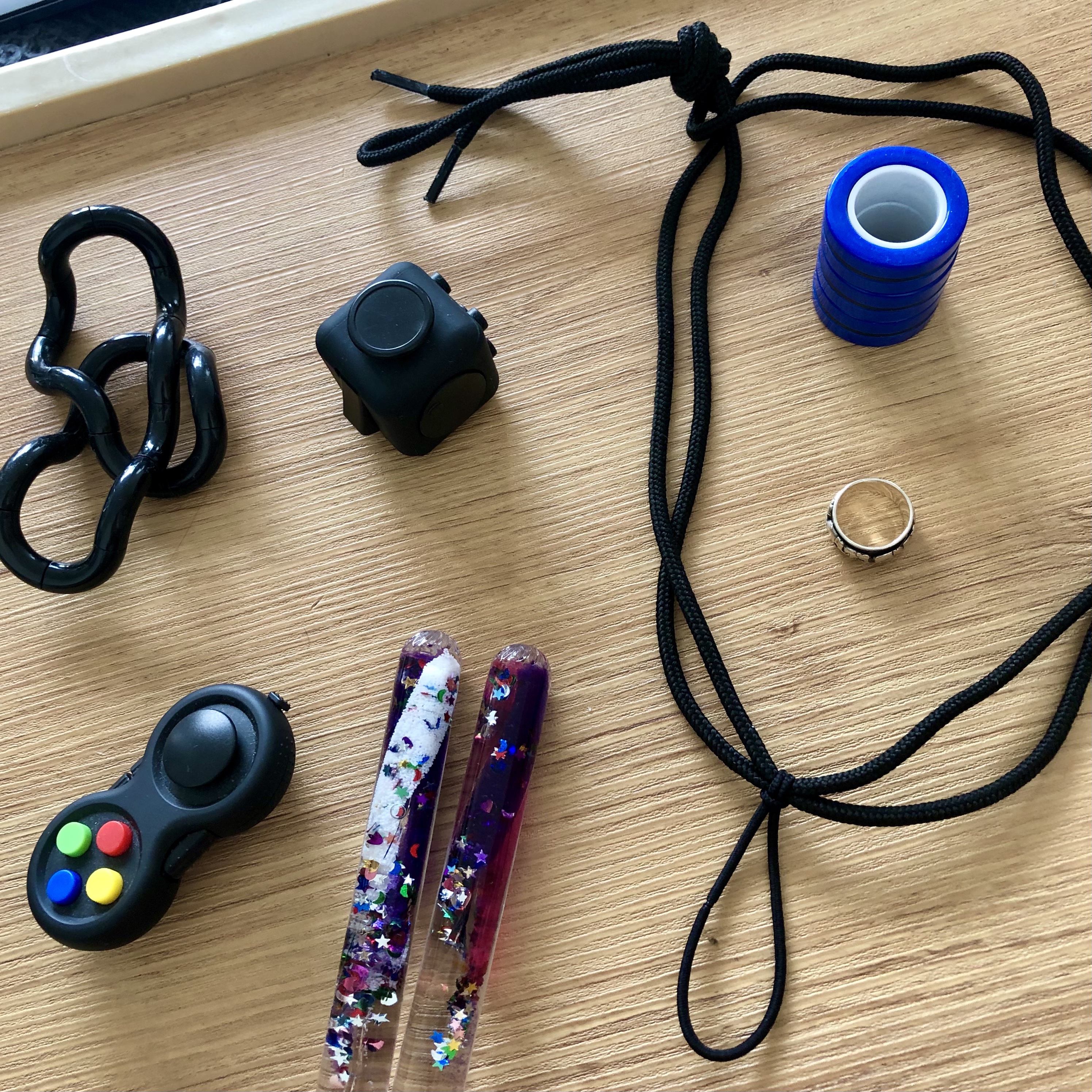
I go through phases with fidget toys: one will satisfy me for a while and then, out of nowhere, it stops doing whatever it is that helps and I move onto another one. Hence why I have a box of them so I can quickly and easily choose a different one. I’m currently fiddling with two: I tend to play with my tangle one-handed (especially when I’m trying to sleep) and I’m also wearing (or at least trying to remember to wear) a necklace made out of a shoelace with a hairband attached. I’m pretty sure my hair-pulling is how I stim but I really don’t want to be pulling my hair out so I’m trying to redirect the urge; this little set up is as close as I can get to the motion of hair pulling and hoping I can move from hair pulling to that and then a movement that doesn’t put so much repetitive strain on my elbow and shoulder.

IMG_9824

From left to right, top to bottom: black tangle, black fidget pad, black fidget cube, two sensory glitter tubes, homemade stimming necklace, three blue magnetic spinning rings, silver elephant spinning ring.

Day 12 – Favourite ADHD Charity

I have yet to go looking for ADHD charities, to be honest. I just haven’t had the headspace but there are a few, local ones especially, that I’d like to investigate further when I feel like I can properly commit to it.

Day 13 – Family

I’ve already talked quite a bit about my family, back in the ‘Supports and Appreciation’ prompt. I have four fantastic parents; then there’s my Dad who died when I was 13. I don’t know much (don’t know enough) about him. Finding out who he was and what he was like is an ongoing project. I also have a younger sibling; we were super close as kids and although we’re not as close now, that’s simply as a result of growing up and building our own lives. We still have a great time whenever we can get together. Due to my various disabilities, I live at home with my Mum and our family of cats. I love them all so much and I’m so proud to call them my family.

Day 14 – Order from Chaos

I feel like I’m more mentally chaotic than physically; I’m not the most organised person in the world but I manage pretty well, particularly with help from my Mum. But my thoughts are another matter. Sometimes my thoughts move so fast that I can’t keep hold of them long enough even to figure out what they are; I find those times really scary. Trying to find something to hold on to in the chaos is hard and it’s easy to feel untethered and panicked. Fortunately it isn’t like that all of the time though. I still feel like I have an overwhelming amount of stuff in my head that I’m constantly sorting through.

@roryreckons, the creator of this challenge, made a really in depth post for this day with lots of useful resources that I’m looking forward to digging into.

Day 15 – Everyone Should Know

It’s not that we’re not trying. We are trying. We’re trying so hard. A big part of ADHD is struggling with executive function, mental skills that help us with organisation, planning, start, stay focussed on, and finish tasks, among other things. What some people assume is laziness or lack of care, is actually difficulty with executive function and struggling with these skills can cause those with ADHD great distress. Being told to ‘try harder’ when you’re already trying so hard is not just frustrating but makes you doubt yourself, wonder whether you actually are lazy. This should never be the case. ADHD is a neurodevelopmental disorder (the debate about whether neurodiversity should involve words like disorder or deficit is ongoing and important but too big to get into here); it’s a medical condition. Difficulties with executive function are ‘part of our wiring.’ That’s not to say that it’s fixed, but telling someone to ‘just try harder’ or ‘just focus more’ when their brain doesn’t respond to that kind of motivation is unhelpful and unkind. They’ve probably already thought of that, you know?

Day 16 – Work/School

Education has been a mixed experience for me. I’ve always been incredibly shy and I struggled socially although no one really realised the extent of it, myself included: I learned to mask very well very quickly, long before I knew what masking was, long before I even knew I was doing it. And being a huge perfectionist, I felt a lot of pressure and anxiety around my grades, sometimes to the point where I made myself unwell. Having said that, I’ve achieved some great things academically and while I’ve never had masses of friends, I get on well with people and have a group of close friends that I absolutely adore. So, yeah, it’s been very mixed.

I think it’s fair to say that the undiagnosed ASD and ADHD clearly contributed to the difficulties I’ve had throughout my time in education, which is most of my life really. And I don’t think it helped that I missed the first two and a half years of secondary school (a period of illness that was half-heartedly diagnosed as Chronic Fatigue Syndrome, diagnosed formally in retrospect, and now it may be that it was due to the hEDS – I’m really not sure what to think now), putting me at a disadvantage academically and socially. But what was probably a combination of natural ability, my terrible fear of getting in trouble, and my perfectionism meant that I did relatively well in secondary school. Sixth form and my A Levels were mostly dominated by the strengthening symptoms of my anxiety and depression: I did well in the subjects that I loved but otherwise I struggled. I couldn’t get information to stay in my brain, I couldn’t understand certain concepts as hard as I tried, I felt like I was running an endless obstacle course that only seemed to get harder, and I was constantly exhausted. It all kind of spiralled and I barely managed my exams. I tried to resit several of them the next year but my mental health was so poor (plus whatever was going on with the undiagnosed ASD and ADHD) that I didn’t do any better. Fortunately though, I did have the grades I needed to pursue my BA in songwriting so it all worked out in the end.

University was, obviously, very different from secondary school and sixth form but I didn’t exactly get the same experience as most of my peers. Because of the challenges I live with (my mental health problems weren’t diagnosed until the January of my first year and my ASD wasn’t diagnosed until the summer break between first and second year), I lived at home and commuted to London for university, staying with family when I had two of more days of classes in a row. It was necessary but hard; I was so tired all the time (I was actually taking naps on the sofas at uni at certain points) and it didn’t help the feeling of separate-ness, being so far away and unable to join the spontaneous meet ups and so on. And again, the classes I loved, I absolutely loved but when it came to the classes I didn’t enjoy or found difficult, I really struggled – I still don’t feel like I have a good grasp of music theory (not that I’ve given up). It felt like there were just some things I couldn’t learn, like my brain just wasn’t capable of processing the information (something I’m working on, especially after learning more about ADHD and hearing similar stories from others). And although it wasn’t a constant feeling, I struggled with feeling invisible and feeling like I was never going to be good enough to do the one thing I wanted to do: write and release songs. As amazing as it was to study my very favourite thing and therefore spend most of my time doing it, doing it surrounded by other people who all want the same thing was really challenging at times: you’re constantly exposed to new, amazing music and as cool as that is, if you’re doubting yourself even the slightest bit, that can just make the feeling ten times worse. It’s easy to slip into comparing yourself and seeing all of the ways in which you aren’t as good as this person or that person. So, yes, it was an amazing experience but it was incredibly hard.

The MA was a very different experience (apart from, you know, doing most of it in a global pandemic). The pandemic definitely played a big part: my anxiety was so high, I felt completely overwhelmed by everything that was going on in the world, and I was adjusting to a whole new way of learning (and cowriting). I’m sure those things affected my ability to take in, process, and use new information. I loved the practical part, the constant writing of songs and constant cowriting; I loved that and I feel like I did a lot of my best work so far. But the modules that included extended research and essay writing were a struggle: I found it incredibly difficult to focus on the research I was reading, to digest it enough to pull out the useful information, and then construct the essays themselves. In the first year, my Mum sat with me for hours and hours, helping me to collect all of the relevant information and painstakingly put it together. In the second year, for the final project, I had an excellent supervisor (who is also neurodivergent and therefore had a personal as well as professional understanding of how I’d potentially need to approach things differently), which made a huge difference. I did still struggle though. Staying focussed, attempting to keep my attention from wandering, pulling together all of the information (it was a lot: four-ish months of work that had to be condensed into an hour’s presentation)… it took every drop of energy I had. I was concentrating through sheer force of will and when it was all finally over, I was beyond exhausted.

While I’ve pretty much considered myself a student up to this point, I guess I am self employed: I am dedicated to being a singersongwriter and even though I love it and it started out as a hobby, it’s now my job and one that I want to spend my whole life doing. I’m dedicated to making that happen but it’s freaking hard work sometimes and there are a lot of challenges. I love the creative side and those related decisions often feel very easy, almost instinctive, but the logistical, business, marketing side is really hard for me. For some reason, I find those decisions and tasks much more likely to overwhelm me and money-related tasks are particularly stressful for me (something I’ve seen other people with ADHD talk about). I’ve had some really great help with this up until now and I’m so grateful for that but I would love – so much – to find a way to make this stuff less challenging. So often the level of stress in response to these tasks isn’t proportional and I have to believe that it doesn’t have to be this hard. Now that I’m not studying (although I still have a lot to do), I’m hopeful that I can dedicate some time to this. And I’m cautiously hopeful that the ADHD meds I should be starting in a few weeks will improve things too. As I said, I’m committed to making this happen so I’m doing my best and I have some good people in my corner to support me.

This one has gotten very long so I’ll stop there, I think.

Day 17 – ADHD People I Admire

Kalie Shorr – I’ve been a fan of Kalie’s for years – she’s a fantastic songwriter and performer, she’s super creative, she’s incredibly hardworking, she’s hilarious, she’s a really lovely and genuine person, and she uses her voice for the things that she’s passionate about (always in creative and interesting ways that emphasise her words, of course) – and then, earlier this year, she made a podcast episode about how she’d been diagnosed with ADHD and what she’d learned about herself and certain past experiences in the light of the diagnosis. She described experiences that I really relate to and her positive experience with medication (which she’s been documenting on Twitter – often hilariously, as is her way) has helped me in my own ADHD journey. And as someone who is pursuing the same career path as am I (and is doing so very successfully), it gives me hope that my ADHD isn’t something that will make this path impossible. It might not be easy but it’s not impossible and I’m really grateful to have someone (and someone I think so highly of) remind me of that at this moment in time. (I love this quote from a recent interview: “That’s why I love co-writing as well, I actually think it has a lot to do with… because I love writing by myself and I’ve written some great songs by myself. It’s not that I can’t, it’s that I love the process of co-writing. I think it’s because I have ADHD with the massive dopamine deficiency. The immediate feedback you get when you put out a good line and the people in the room freak out over it, that feels so much better than when I write a good line in a song I wrote by myself and I’m like ‘I think this is good, but I’d rather wait for someone else to tell me that it’s good.’ I get so energized by all these tiny pings about writing a song, and then you get the big hit of dopamine.”)

Emma Watson – I’m somewhat hesitant to include Emma Watson since she hasn’t spoken personally about having ADHD but the information is out there so, if it’s true, I would have to include her in this list. Growing up with Harry Potter, with the characters and the cast, she was always someone I looked up to and I remember an interview where she talked about how her Dad really didn’t have the money to send her to the school he did and how her birthday presents were her uniform and her school supplies and how she worked hard every day (finishing with nine A*s!) because she wanted to make him proud, to show him how much she appreciated it. Of course I’ll probably never be able to completely detach her from Hermione (as I’m sure is the same for many people and probably for her too), it’s been very cool to watch her grow and experiment with different roles and engage in important social issues (I think a good example is this video interview where she talks about finding the constructive criticism in social media, educating herself and broadening her understanding of feminism, the need for the education system in the UK to revise and improve the teaching around Britain’s involvement in foreign affairs (including how the country profited from slavery), transgender issues, and more) while still remaining a very normal, relatable person. She’s achieved so much, she’s pushed her own limits and challenged her comfort zone, and she’s trying to use what she has to make a positive change in the world (despite feeling like she’s still figuring herself and her life out) alongside the challenges of living with ADHD, whatever they are for her, and I find that really inspiring. (x) (x)

Simone Biles – I think it probably goes without saying that Simone Biles’ talent, skill, and incredible work ethic is enough to consider her a person worth admiring. But she’s also repeatedly shown such incredible emotional strength in very difficult circumstances (this year’s Olympics being the most recent example) and has handled them so thoughtfully and gracefully. At the Olympics, even with so many people criticising her for even considering it (and then for doing it), she put her mental health first and stood by that decision. No doubt she made that choice for herself but by making it and talking about it publicly (and talking about it unapologetically, without any shame), she sent such a powerful message that meant so much to so many people, that sometimes you have to prioritise your mental health regardless of the situation and that that is okay. It’s something even the most self aware of us struggle with, even if we understand why we should to do it; it’s a vicious cycle that, often when you’re struggling mentally, it becomes even harder to remember and/or accept that. Seeing someone actually do it, do it under immense pressure, and continue to stand by it after the fact is very powerful and hopefully it will help a lot of people to remember that it is possible, that the world won’t end if they need to stop and take a break from everything. So I can only admire and respect her strength and her willingness to share her experiences because there’s no knowing how many people she’s helping. (x)

I’m sure there are more people I could add to this list but these three are all I can think of at the moment.

Day 18 – Someday…

On a personal level, I can’t help hoping that – someday – I won’t feel so ‘othered’ by being neurodivergent, that I won’t feel so different and so deficient when and after spending time with neurotypical people. It’s not that I don’t enjoy spending time with these people because I do: almost everyone I know is neurotypical and those that I love, I love dearly. But there are throwaway comments and common experiences that just make me feel so different to everyone around me and it’s just so exhausting to have these constant, endless reminders. It’s so hard to try and accept my ASD and my ADHD when it feels like, everywhere I turn, one thing or another is telling me that I’m… less than or wrong or broken. Someday, I’d like not to feel that way.

Day 19 – I love it when…

I can just totally hyperfocus on something without interruption or pressure to do something else. I just love falling down a rabbit hole and reading everything I can find on a subject, learning as much as I can about a particular songwriter’s process, the theories around alternate universes, the different types of typewriters, why thunderstorms make certain people (myself included) feel so much better… I don’t remember it all but I love the feeling of soaking it all in. And it does mean I have a random fact about almost everything.

Day 20 – Communication Style

I’m not really sure what this prompt is asking of me, to be honest. Googling ‘communication styles’ gives me so many different possibilities that it’s hard to know what the right one for this prompt is. Maybe this is something I’m going to have to investigate further but for now, the way I feel I communicate best is through the songs I write. Being able to use lyrics, melody, harmony, instrumentation, production… the right combination of those things can convey a feeling or an experience in such a pure way. Not long after I met one of my now best friends, we were talking about me being autistic (I think it was in the context of a song she was helping me write, I’m not sure now) and I just made the casual comment that if there was ever something that she wanted to know or something she didn’t understand, she could always ask. And she replied, ‘I just have to listen to your songs to understand you.’ I’m not gonna lie, I was kind of floored by that response (and I still am a bit – it makes me very excited about the music projects I’m currently working on). I mean, that’s the goal – to find connection through the songs I write – and my friend had just confirmed that for me. So that was a big moment and a special one but I think I’d still be saying the same thing had that not happened. Songwriting feels like the way I communicate best and to have that in my life is something very special indeed.

Day 21 – One thing other people don’t understand…

From my admittedly limited personal experience, I think a lot of people find it hard to reconcile ADHD with good grades: if you’re turning in work on time and getting good marks, you couldn’t possibly have ADHD, for example. Thinking like this can prevent those struggling from getting support because they don’t show the stereotypical signs of a condition like ADHD. Apart from 2013 (the year when my mental health problems really started to manifest, resulting in such a crisis that I barely made it through my A Level exams), I’ve always turned in work on time or early (unless I had an extension due to health stuff) and achieved high grades in pretty much all of my classes. Personally, I think that, up until A Levels at least, this was largely due to a natural ability, the fact that I enjoyed learning, and very intense perfectionism. Getting to do a BA and MA in songwriting, my most enduring special interest, helped to balance out my struggles with executive function, I think: because I was so passionate about what I was studying (for the most part at least), it wasn’t as hard as it might’ve been had I been studying something that I was less passionate about. I’ve definitely had areas and periods of time in which I’ve struggled – I wouldn’t have sought out what resulted in my ADHD diagnosis if I hadn’t – but I guess I’m just saying that you can have ADHD and be a good student and the idea that you can’t is a harmful one.

Day 22 – Dispel a myth

I don’t know whether this myth still persists but I definitely grew up with the impression that having ADHD meant an inability to sit still. If that myth does still exist, I’m definitely proof that that isn’t true, as a constant of ADHD at least. I can sit in basically the same position all day without moving because I’m so absorbed by what I’m doing. I forget to move, to the point where it’s actually causing me problems: my chronic pain (thanks to my hEDS) is exacerbated by these long periods of no movement so I’m actually trying to move around more. So, yeah, we can sit still.

Day 23 – Can’t live without…

My family. On any and every level, I could not live without them (and I include my close friends in this circle too). But I’ve talked about them quite a lot so I’m gonna say songwriting as well. When I’m writing a song, the rest of the world goes away and I feel like I can just be me, focussed on something that I love more than pretty much anything else. And then, when I finish a song and feel like I’ve really said what I wanted to say, that feeling is so special. I feel like, for a little while at least, I’m in sync with the rest of the world and all of the usual friction that exists just disappears. I feel calm and relaxed, like I’m finally still; usually I feel like I’m constantly vibrating, which is just so exhausting. So, while I love the creative discipline of writing songs, I love the way it makes me feel. I’ve never experienced anything like it.

Day 24 – ADHD Political Issue

A massive problem with conditions like ADHD, as well as other neurodivergencies, is the lack of support available, for those who appear to be functioning well especially. So many individuals, myself included, have had to fight for support – in education, from medical professionals, sometimes from the government – because, so often, people just don’t understand the challenges that these conditions present or don’t believe those asking for help. I can’t get too deeply into this (especially at the moment, given that I’m overly emotional due to the reduction of my antidepressant medication – an unfortunate but necessary step in order to try medication for my ADHD) because I’ll just get too upset but the society we live in is so deeply ableist, and it’s so entrenched that no one even notices. And worse, a lot of people don’t seem to care about changing it. We’re in the minority, right? Why should society change to make the lives of the few better when the lives of the many are just fine? Honestly, the apathy so many people have towards those with disabling conditions (I know not everyone with ADHD considers themselves disabled but some do) – conditions that are often made worse by how our society is structured – makes me so, so angry and just so sad.

Day 25 – Symbols

To be honest, I’m really happy to stick to ribbons of specific colours; I like the simplicity. But I also understand that, at some point, the various colours are going to get too similar and people aren’t going to be able distinguish one from another. But I’m not sure how an entire community will ever be able to agree on one symbol. I’m more familiar with the various Autism symbols but for ADHD, I’ve seen the orange ribbon, the rainbow infinity symbol (which is often used in the autistic community), the butterfly, the rainbow butterfly. Ultimately, I think that what we experience with ADHD is too broad to be summed up with an image like an animal or a symbol because they have their own associations. This is why I like the orange ribbon.

Day 26 – Favourite ADHD Book

I’ve yet to read any books about ADHD, given that I was diagnosed in the middle of my Masters and had to give everything I had to that. Plus I’ve found it hard to focus when reading books over the last few years. But I have had multiple options recommended and I think these are the ones I’m going to look into first…

    • You Mean I’m Not Lazy, Stupid, or Crazy?! by Kate Kelly
    • Delivered from Distraction by John Ratey
    • Smart But Stuck by Thomas Brown
    • Taking Charge of Adult ADHD by Russell Barkley
    • Queen of Distraction by Terry Matlen
    • Scattered Minds by Gabor Maté

Day 27 – Identity Language

Personally, I don’t really have an issue with how people identify themselves; they should use the language they feel comfortable with and respect that in others. As a general rule though, I think identity-first language is important for the neurodivergent community. With conditions like Autism or ADHD, they affect the way we perceive and process the world; they are intrinsic to who we are, to our identities. Having said that, I’m not sure how identity-first language works with ADHD. With Autism, we have the word ‘autistic’ but there isn’t an equivalent for ADHD, at least as far as I can tell. I’ve seen people use ‘ADHDer,’ but I find that awfully clumsy and awkward to say. I don’t have any other ideas though.

When it comes to my own circumstances, I am autistic. Absolutely. But I still feel like I ‘have ADHD,’ maybe because it’s still a relatively new diagnosis and I haven’t had the time and headspace to process what it means and how it fits into my constellation of diagnoses and my identity.

Day 28 – Dealing with Boredom

I’m not sure I’m ever bored; I always have too much to do (or I’ve crashed after trying to do too much). The closest state I get to boredom is not knowing what to do and that’s usually because I feel overwhelmed by all of the things I could do. (@roryeckons’ post on this is great though.)

Day 29 – Favourite Memes

I’ve seen a lot of ADHD memes so choosing a favourite or even favourites is hard.

burning-candles

(x)

hmm-this-subject-looks-interesting-adhd_memetherapy-hyperfocused-deep-dive-till-death-by-exhaustion

(x)

EcmT8WSXoAEBVwt

(x)

EcpAUktWkAEzOE4

(x)

4lat5z

(x)

man-time-management-have-adhd-okay-shouldnt-take-long-between-an-hour-and-um-11-months

(x)

animal-adhd-is-superpower

(x)

can-do-all-three-things-brain-know-now-going-do-none-them-wait-232-pm-12019-twitter-android

 (x)

I could also share most of the memes on this page and this whole thread is hilarious (x).

Day 30 – Hyperfocus

I find the concept and research behind hyperfocus really fascinating. I was about a breath away from hyperfocusing on hyperfocus to write this day’s post (when I realised what was happening, I had to laugh) but I managed to reign it in before I really got lost in it. Some of the stories I read were fascinating. Personally, I love it when my brain hyperfocuses, although it can be annoying when I get sucked into something (or repeatedly sucked into one thing and then another and then another) at the exact moment when there’s something I really need to do. But when there isn’t an impending deadline, it can be so fun. I love going down the rabbit hole of a new subject and learning everything I can about it. Sometimes it’s resulted in essays about the subject and sometimes it even turns into a full blown special interest.

Day 31 – Acceptance means…

I don’t know what real acceptance looks like, if I’m completely honest. Yes, we can learn to and practice accepting ourselves and our friends and family can be understanding and supportive but I think acceptance – real acceptance – is bigger than that. Real acceptance is when ADHD is understood, acknowledged for what it is, and accommodated, and done so without persuading or convincing or fighting for it. But I don’t know if that’s a realistic expectation. How can that kind of acceptance be possible when we, neurodivergents, are the proverbial square peg in the round hole, living in a world that is not only built in a way that doesn’t accommodate us but actually disables us further? As I said before, when so many people don’t want the world to change, it can all feel deeply dispiriting. So I don’t know what we do in that regard. But, to quote Amanda Tapping, “The best thing you can do is to make your corner of the world as good as possible,” and so that’s what I think we focus on. We work on accepting ourselves and using the gifts we have to create as much good as possible, for ourselves and for others. Maybe I’m thinking too big when it comes to this prompt but there have just been a number of things recently that have just highlighted how ableist the world can be and that’s been upsetting. And much as it makes me want to flip tables and scream that the world isn’t fair, I want to focus on the good and the good that I can do.


As I said, this is still all very new and it’s a lot to take in. But I do feel like I’ve learned a lot by doing this challenge, both from my research and from reflecting on my own experiences. It’s been a mixed bag – some of it fun, some of it upsetting, and some of it overwhelming – but I’m learning and I’m figuring stuff out and hopefully it won’t be long before I feel a bit more confidant about it and about how I can manage the challenges that come with it.

Who knows, maybe in a year, I’ll do this challenge again and see how much has or hasn’t changed…