 Finding Hope
Mental Health Update (September 2020)
Posted on September 21, 2020
Trigger Warning: This post contains mentions of self harm, but it’s simply a statement that it happened and there are no descriptions, graphic or otherwise. If this could upset or trigger you, please don’t read any further. Please always put your mental health and emotional state first.
I feel like it’s been a while since I posted a mental health update. And while most of my recent posts have mentioned mental health, I haven’t really felt able to write anything mental health centred. I’ve tried but it’s been really hard. Since the pandemic hit the UK and we went into lockdown, my mental health has basically been a black hole of anxiety and depression that I can only occasionally distract myself from. So it’s been hard to write about it, to write anything beyond “my depression is overwhelming and my anxiety is off the charts.” And there’s only so many times you can say that before it just makes things worse. So I’ve been focussing on things that might be helpful in lockdown, music things, and the day to day approach that I’ve been taking to things. The blog itself has been a method of managing my mental health. But now I’m going back to my Masters (my first classes – all online – are tomorrow) and I wanted to try and describe where my mental health is before I take on that new challenge. I guess it’s something to measure myself against, to see whether I’m coping or whether I’m struggling even more, because I really don’t know how these next few months are gonna go. So here we are, this is the state of my mental health at the beginning of my third semester of my Masters in September 2020…
My anxiety has been – and still can be – paralysing. Early in lockdown, it was a constant, debilitating state but it has evolved since then. It’s easy to get sucked in but day to day, I seem to be able to manage it with a combination of flexible tasks to distract but not restrict me and large amounts of Diazepam. I’m not sure how I’m going to manage going back to university classes with deadlines and uncertainties but as I’ve previously said, I need to try. I will reevaluate if my anxiety starts to become unmanageable again.
My depression has almost become background noise at this point, just a deep, dragging feeling at the back of my mind. I’ve had days where everything just felt so overwhelming and insurmountable that all I could do was stare at the TV and breathe but most of the time, my anxiety has just taken up too much of my attention to really feel it. This still seems to be the case: my anxiety is just too demanding to allow it much space in my brain.
My OCD, which manifests as a compulsion to write down everything that happens to me, has been easier to manage in lockdown with not much going on. I was majorly behind when lockdown began and, because this period of time is so unknown, I wanted to document it in real time so I started a new notebook with the plan to catch up with the old one as time passed. Unfortunately I still haven’t managed that and with multiple stressful things happening in the last few weeks, I’m behind in my current one so I’m going into a new academic year already trying to juggle that. My attempts to balance my OCD and my anxieties around Masters work was a really challenge last year and it looks like it’s going to be just as bad, if not worse, this year. So that’s really not fun and causing me a lot of anxiety already.
My Trichotillomania really spiked in the first few months of lockdown when I was so anxious that I could barely do anything. I’m currently writing a post about the triggers of hair pulling (not to be confused with the causes) and three big ones were really present here: stress, not having something to occupy my hands, and feeling out of control. So I was pulling a lot – to a painful level – back in March, April, May. But as I’ve slowly been able to distract myself and get things done, I’ve been pulling less – significantly less. It never completely goes away but I’ll take whatever I can get.
I’ve had multiple autistic meltdowns since lockdown began. Living with such a high level of anxiety, it doesn’t take much for something to trigger a meltdown. I’ve had about twenty (which I’m pretty sure is more than the whole of last year but I don’t have last year’s tracker in front of me); most of them have been ‘normal’ for the meltdowns I have but a couple of them have been significantly worse, taking days to recover from. They’re really, really horrible and I feel awful afterwards, mentally, emotionally, and physically.
While there have been periods of time where I’ve self harmed consistently, it’s more often than not a one off occurrence with big gaps of time in between. I’ve always considered it a coping mechanism for very specific emotional scenarios rather than a habit or addiction. Given how much I’ve struggled emotionally during lockdown, I’m kind of shocked that I’ve only done it once but then, with my Mum around all the time, maybe it’s not all that surprising: I know that it upsets her and that only makes me feel worse so I have suppressed it in the past. But there was one occasion where I just couldn’t. So it could’ve been a lot worse.
I’ve missed a lot of therapy sessions over the last few months. If I’m honest, I’m finding it really hard to know how to approach them. Obviously, the biggest thing is the pandemic and my pandemic anxiety but we can only talk about that so many times before running out of things to say and yet, I feel so mentally fragile at the moment that tackling any of my other issues feels like just too much, like the process of digging into something difficult might disrupt my delicate, carefully maintained ability to function. So I’m not really sure what to do. I’ve just started having regular sessions again so I guess we’ll see how it goes.
Am I ready for this next semester? I have absolutely no idea. I really don’t know how I’m going to manage it with my mental health as it is but as I’ve said, I need to try. The only thing worse than trying and failing would be not trying at all. Maybe that’s a naive approach to things, considering my mental health problems, but that’s how I feel. I can only hope that, if there are any warning signs that things are getting worse, I can see them and make the appropriate response.
Things I Did In Lockdown
Posted on September 20, 2020
Given how stressful I was finding the pandemic and the lockdown, I thought it might be helpful to keep a list of what I’d done (achieved, managed, spent time on – whichever word is most appropriate), whether it took a huge amount of effort or was simply something I’d wanted to do, just to remind myself that I was still doing things, that I was still capable of being productive during such a difficult time. Some of them are silly, some of them important, and some of them are just interesting. And I thought posting it would be a good record of sorts when it comes to looking back at this time.
I don’t consider us to be out of lockdown by posting this. It’s just that now I’m starting a new year at university – the second of my Masters Degree – so my life is going to change. I’m doing all of my classes online, rather than going in for half of the classes as is the current norm at uni; I’d be commuting and the risks still feel too high for just two hours a week. So in terms of leaving the house, not much is changing. But it’s a moment of transition in my life and so it seemed like a natural stopping point for this post. I may continue it as a series, depending on how things play out going forward but for now, this is what I did while in lockdown, from 13th March to 20th September 2020…
- Watched the entirety of Grey’s Anatomy.
- Bought a Kalimba.
- Went down a YouTube rabbit hole of Otomatone covers…
This one and this one are my favourites.
- Did the Enneagram test.
- Tried (unsuccessfully) to teach one of my cats to play fetch.
- Watched all of the Harry Potter films one after the other (more than once…).
- Continued therapy via Zoom.
- Released and promoted the ‘Clarity (Academic Remix)‘.
- Released and promoted the ‘Clarity (Academic Remix)’ Music Video.
- Wrote a 4000 word, fully researched and referenced essay about authenticity and imagery in ‘All Too Well’ by Taylor Swift for my Masters Degree.
- Finished the first year of my Masters Degree.
- Rescued one of my cats (the youngest) when she went missing, stuck up a tree for maybe twenty four hours, with the help of some kind neighbours (all of us masked and socially distanced).
- Rewatched many of my favourite films and TV shows, including…
Films: Hot Fuzz, The Martian, Miss Congeniality, etc.
TV Shows: Episodes, Lucifer, and Nikita, etc.
- Wrote and posted fifty three blog posts.
- Watched Season 15 of Criminal Minds, finishing the show after following it for ten years.
- Read a lot of Fanfiction…
This is something I did a lot of as a teenager but reverted to during my Masters as a form of stress relief: escaping into another world, a familiar and safe world. My most impressive achievements were reading all of the Ros Myers (Spooks) Fanfiction I could find and reading The Changeling and it’s three sequels (a Harry Potter alternate universe where Ginny is sorted into Slytherin, which totals nearly 600,000 words). Of course, there were more one off stories; these are just my greatest hits.
- Had multiple movie dates with friends and family.
- Had multiple Studio Ghibli movie dates with one group of friends.
- Multiple collaborations via video calling: working on my songs, working with new people, critiquing the songs of friends, and so on.
- Caught up with Law & Order: SVU.
- Received a grade I was really happy with for my Musicology essay on Taylor Swift’s song, ‘All Too Well.’
- Released and promoted ‘Sounds Like Hope.’
- Rewatched all ten seasons of Friends (multiple times – although mostly as background noise).
- Played the piano a lot, learning the songs of others and writing my own.
- Watched all of Little Fires Everywhere in one day.
- Released and promoted the music video for ‘Sounds Like Hope.’
- Bought a new cat tree for the cats (they’d practically destroyed the old one), one with beds for all five of them and eventually we caught them all in it at once.

- Had multiple panic attacks and meltdowns, some really severe.
- Watched all of Absentia Season 1 in one day.
- Watched multiple new films including What Happened To Monday, Isn’t It Romantic, Ocean’s 8, Studio Ghibli’s Castle In The Sky, Fantasy Island, The Half Of It, Official Secrets, The Accountant, and more.
- Watched multiple new TV shows, including Little Fires Everywhere, Absentia, Broadchurch, Agents of Shield Season 7, The Fix, Lucifer Season 5 (Part 1), Away, and more.
- Started watching Castle.
- Made multiple banana breads (and other things, like chocolate chip cookies, but that’s less uncommon).
- Signed petitions and made donations to various causes in the Black Lives Matter movement and collected a list of resources to educate myself more when I don’t feel so incredibly mentally and emotionally fragile (short pieces, like some of the infographics on Instagram have been really good and digestible but I’ve been struggling to absorb large amounts of new information due to my general mental state, which has included frequent meltdowns and panic attacks, all affecting my concentration and memory).
- Filled six diaries.
- Watched many of my favourite movies from childhood, including The Emperor’s New Groove, A Bug’s Life, and all of the Wallace and Gromit shorts and movies.
- Sorted through my clothes.
- Sorted through and reorganised my DVDs.
- Spent A LOT of time with my cats.
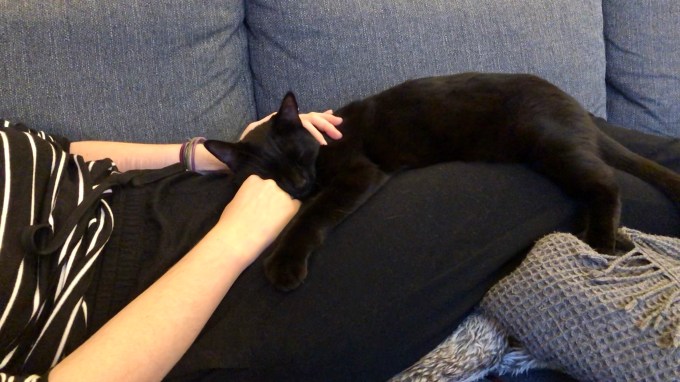
- Made a significant dent in sorting through all of my possessions.
- Sorted through my jewellery.
- Worked on my music theory knowledge during a series of piano lessons.
- Weaned myself off Pregabalin.
- Gathered up loads of stuff to donate to charity shops when they reopen/are able to accept donations.
- Cleared out my box of electronics, technology, cables, etc, only keeping the things I actually use and need.
- Cleared my eight USB sticks.
- Celebrated the kittens’ first birthday.
- Received my new laptop (plus other helpful equipment) from DSA, the process of which has been going on for months, only to find that it wasn’t the right laptop.
- Watched multiple online/streamed concerts, including ICMP Songwriters’ Circles, Kalie Shorr, Savannah Keyes, Song Suffragettes, Ingrid Andress, and more.
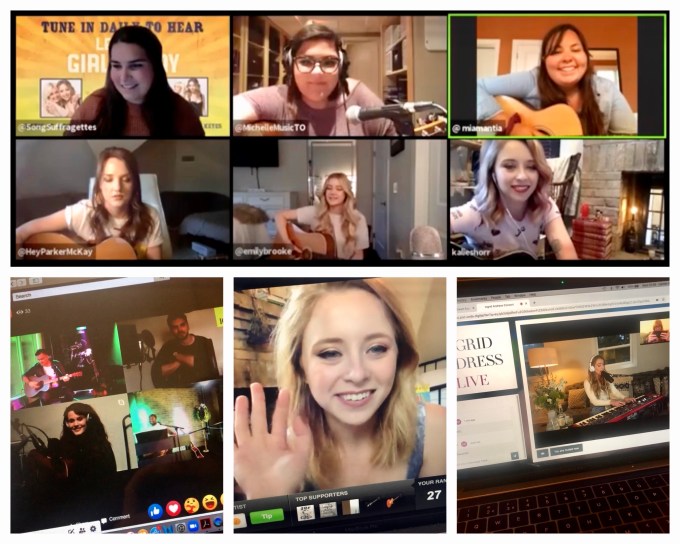
- Attended Ingrid Andress’ first livestream show with a meet and greet afterwards, which started at 2am and resulted in me staying up until 5am.
- Watched all of Absentia Season 2 in one day.
- Took part in multiple research studies looking at how the pandemic and subsequent lockdown are affecting mental health in general, specific mental health conditions, and Autism. I also participated in studies about experiences with therapy and about living with Chronic Fatigue Syndrome.
- Received and set up the new laptop from DSA.
- Loaded up my old Photos library onto the new laptop, only to find three (or more, sometimes up to seven) copies of basically every photo so I started going through and deleting the duplicates (getting the wheel of doom approximately every five seconds). Got down from 85,000 to just under 30,000 and then organised them all into albums, which took about three weeks. It was a mammoth job but it was incredibly satisfying to finish.
- I applied to be part of the Disability Pride 2020 Livestream, got a place, and saw myself on TV!
- Managed to go out for a haircut.
- Planned the ‘Back To Life’ music video, having had to scrap the original plan due to travel restrictions and anxiety.
- Dyed my hair orange.
- Dyed my hair red when the orange wasn’t the right colour.
- Filmed the ‘Back To Life’ music video on the beach with Richard.
- Watched all of Absentia Season 3 in one day.
- Was interviewed by a Dutch journalism student about being a new artist during a pandemic.
- Obsessively listened to and analysed Taylor Swift’s beautiful new album, folklore.
- Bought a Gretsch electric guitar (for my birthday but early so that I can make use of the time I have before uni starts, in whatever way it starts).
- Tried to go to the gym but didn’t feel it was safe.
- Finally saw Hamilton via Disney+.
- Met up with a friend for a dog walk, meeting her gorgeous new puppy for the first time.
- After experiencing serious and ongoing pain in both shoulders down to fingers, I had a Zoom appointment with my GP who referred me to an occupational rheumatologist (which would apparently take two to three weeks). And since any medication stronger than Ibuprofen and Paracetamol will cause side effects similar to those of my anti-depressants, she’s reluctant to prescribe anything stronger unless absolutely necessary.
- Finished Liar Series 2.
- Updated my photo albums, after getting eighteen months behind.
- Got up to date with Agents of Shield Season 7 so that I could watch and celebrate the finale of the season and the show itself with the show’s cast, crew, and fandom on social media.
- Watched the Perseid meteor shower and saw a handful of ‘proper’ shooting stars.
- Suffered severe electric shock like pain in my lower legs, requiring more doctors appointments. The information was added to my rheumatology referral and I started taking stronger painkillers.
- Watched Hamilton with some of my family who’d seen it live and loved it but not seen the film.
- Watched the finale of Agents of Shield, not just of Season 7 but of the whole show, and cried my eyes out, although sometimes I was laughing at the same time. I loved it and thought it was a really beautiful end to such a fantastic show. I’ll miss it more than I can say but I’m so grateful to have had it, to have had Daisy Johnson, and I’ll always carry with me what it’s meant to me.
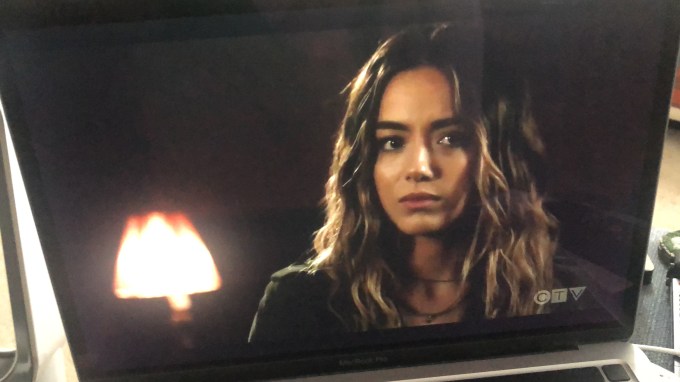
- Released and promoted ‘Back To Life.’
- Did an interview with Vents Magazine.
- Went on several dog walks with my friend and her puppy.
- Contributed to #DaisyJohnsonAppreciationWeek2020 and #QuakeWeek on social media, posting edits on Tumblr and Twitter.
- Did an interview with Middle Tennessee Music.
- Filmed the Behind The Video for the ‘Back To Life’ music video.
- Went through my clothes a second time (sorting through my possessions, especially when I have an emotion connection to them gives me decision fatigue and I stop being able to make objective decisions – there was a lot to go through the first time).
- Did an interview with Zap Bang Magazine.
- Made the decision to do the next semester of my Masters Degree 100% online.
- Bought Bon Iver tickets for November 2021 – here’s hoping it’ll be possible to go!
- Put together the ‘Back To Life’ music video with Richard.
- Released and promoted the ‘Back To Life’ Music Video…
- Kept a two week photo diary for the CFS/ME research study.
- Finally captured the motivation to start learning the Kalimba only to find out there was a problem with the one I’d bought so I have to sort that out before I can really start learning to play it.
- Went through a traumatic few weeks worried that there was something seriously wrong with one of my cats but after multiple vet visits and lots of tests, she’s been given a clean bill of health.
- Attended the (online) Induction event for the new year at university.
- Acted as a guinea pig for one of my tutors as he fine-tuned a couple of things for the upcoming online classes.
- Was given a signed copy of folklore by Taylor Swift as an early birthday present.
- Signed up for a home recording course.
I doubt I’ll ever be able to look back on this time positively (from a personal perspective – in the wider sense, it’s clearly been catastrophic) but there have been moments and experiences that I am grateful to have had. As I’ve said, I don’t consider lockdown to be over so this post may become a series but with my Masters to focus on, I will have significantly less time to dedicate to bigger projects like organising my photos or sorting through my possessions. So lockdown continues; I’m just entering the next chapter.
Going Back To University During A Pandemic
Posted on September 16, 2020
So, as of next week, my university classes start again and given that the pandemic is worse than ever in the UK (when it comes to the number of cases, at least), I definitely have mixed feelings about it. Had this year gone ahead as expected, I would’ve been super excited to go back to uni but with all my anxiety about the pandemic, not to mention the state of my mental health in general, it feels like an almost impossible feat. I’m not sure how I’m going to manage it. But before I start thinking about that, I thought I’d document how I got to this point…
When the pandemic hit the UK and the lockdown went into effect, I only had two or three weeks of online classes to contend with before my final assignment, which was a piece of coursework. Once that was turned in, I was done, with only unstructured time ahead of me. As a part time student, I didn’t return to classes until late September so, although I’d planned to do a lot of things (I made a post about that here) in that time, I didn’t have to try and manage university alongside all of my anxiety about the pandemic. I didn’t have to think about university for a long time and since we didn’t know much about Covid-19 at the time, it seemed pointless to speculate. So I put those worries to the side and just tried to manage day to day (with varying levels of success).
When August rolled around, the anxiety about what I was going to do started to build. I’d thought about deferring but I really didn’t want to do that: I didn’t want to delay my education more than it already had been with years off to manage my mental health; I felt like I’d be at a real disadvantage in the second year modules, having potentially forgotten skills I’d learned in the first year; we don’t know how different things will be in a year anyway and I’d rather be working through the modules with people I know, whether that’s the case or not. So if I was going to do it, I had to figure out what felt safe and manageable.
Eventually I got an email from my university with some information about how they’d planned out the module, trying to balance safety and getting the best out of our education. My first module of the year was going to be 50% online and 50% onsite: the lectures would be via Microsoft Teams and the practical workshops – where we put the musical skills into practice – would be in person, although there were various different rules about whether anyone could actually perform what they’d written, depending on the number of students present. That all felt very uncertain and anxiety-provoking. Plus commuting to London (using trains and the underground) for only two hours of classes felt like a lot of risk (especially with the number of cases on the rise) – and that’s without considering the effects it would have on my energy levels and mental health and how that would affect my ability to complete the module – for not necessarily enough reward. It all felt very risky and scary.
I spoke to the head of the module, a tutor I’ve known for a really long time and have a really good relationship with. I wanted to get a bit more detail about what was happening, especially as it’s the module I’ve been most worried about: music theory has always been a struggle for me and even though it’s more about experimenting with those concepts in our writing, I’ve still worried about it from the beginning of the course. It’s the module I’ve always felt I’d need the most support and clarity in. Unfortunately, this trusted tutor will be running the online classes and not onsite at all – not that I’d want him to put himself at risk but that plus the fact that my two closest friends wouldn’t be there either only increased my anxiety. In what was obviously going to be a very stressful semester, I felt like I had very few people that I could go to if I needed help or something triggered a meltdown, for example. It was all feeling more and more overwhelming and difficult.
There was the potential to do the whole module online and at the beginning of lockdown, I’d refused to consider it, feeling that I wouldn’t get the education I had chosen and was paying for, if all the classes were online, especially when it’s such a practical course. But if I didn’t want to defer, my only options were to do the 50/50 approach or move entirely online. And after thinking about it a lot and talking to multiple members of my family, we decided that all the stress of going into uni felt like a significant cost compared to the benefit. So eventually I bit the bullet and decided to transfer to being a fully online student.
For a while, everything was fine – or as fine as it could be. But as we started building up to the new year, everything started to unravel. I always find the start of the new academic year stressful but this year has been a special level of hell. One example was ongoing complications with my timetable, which only exacerbated my already high anxiety and caused multiple meltdowns. I could probably rant for hours about the problems in education around mental health and neurodiversity but I won’t. At least not here.
The last week or so has probably been the worst, mental health wise, since the early days of lockdown: there has been constant anxiety, sickening drops into the depression that I’ve been carefully tiptoeing around since the pandemic reached the UK, and many meltdowns. I’ve also fought with Mum, which almost never happens. You know I’m in a bad place when that starts happening. My emotions have been very volatile; my anger has been particularly explosive. Anger’s not an emotion that I usually experience, especially not to this degree, so that’s been really hard to know what to do with. I’m really going through it at the moment.
It’s been suggested and even recommended that I defer, given the state of my mental health and my anxiety around the pandemic but I really, really don’t want to. I don’t want to defer and I don’t really want to do the module online – neither feel like great options, if I’m honest – but we have no idea what the situation next September will be and of the two, I’d rather be moving forward.
Today my group had our induction session, which was helpful. And it was really nice to see my course mates and tutors again; it was a little glimpse of normality, even if it was through a screen. I don’t know if I feel any better about the whole situation – I’m still terrified that the odds against me are just too high and I’ll fail everything – but I’d rather try than not. If get a couple of months in and it really is too much then I’ll reconsider but I have to try. I just can’t not try.
 Finding Hope