 Finding Hope
A Week In My Life (February 2021)
Posted on February 20, 2021
It’s a whole new year, a whole new semester… and a whole new lockdown. So I guess it seemed as good a time as any to do another of these week-in-my-life posts. A lot has been going on recently so I thought it might be a good week to document, as much for myself as for anyone else; it’s all been a lot to process and I thought this might help with that.
The week in this post began on Monday 1st February and ended on Sunday 7th February 2021.
MONDAY
I usually like to keep Mondays gentle, given that Tuesday is a long day with my uni classes but this Monday was different. I struggled up (I’m naturally a morning person but between my medication and the pandemic, I’m just tired all the time, which makes getting up in the morning a real battle), had a shower, and managed a bit of breakfast before my first official Occupational Therapy session – I’ve had a consultation but this was the first ‘practical’ session, I guess you could call it.
There were still a lot of questions – all the hows and whens and so ons around the pain in my hands – but the therapist also taught me a series of exercises that I should do daily and how they would help with my pain. She also explained how it all linked in with my hypermobility. So it was really helpful and an encouraging step forward after feeling stuck for so long but despite how little I had to do each day, the exercises caused more pain. I’ve been trying to continue with them as the therapist did say that that could happen but it’s hard to motivate yourself to put yourself through pain. I will have had another appointment by the time this goes up so hopefully I’ll have had some advice on this.
She also had some recommendations on private pools that we could book since swimming is the only real exercise I can do, for the lockdown specifically but also to use until the Hydrotherapy referral comes through. She’d also double checked the Pain Management referral to find that it hadn’t reached the department and so pushed it through personally – apparently, because the pain is impeding my education that puts me further up the list than I might’ve been otherwise. So that was all good but the appointment was pretty exhausting. I actually fell asleep for a couple of hours afterwards.
I woke up suddenly and realised I was ten minutes late for my cowriting session with Richard. That startled me awake, I can tell you that. I scrambled up and logged into Zoom. We had a really good session, finishing a song we’d started the previous week, ‘One More Time.’ I really like it and I’ve been singing it, the chorus especially, ever since we wrote it. It’s one of my favourite songs I/we’ve written recently.
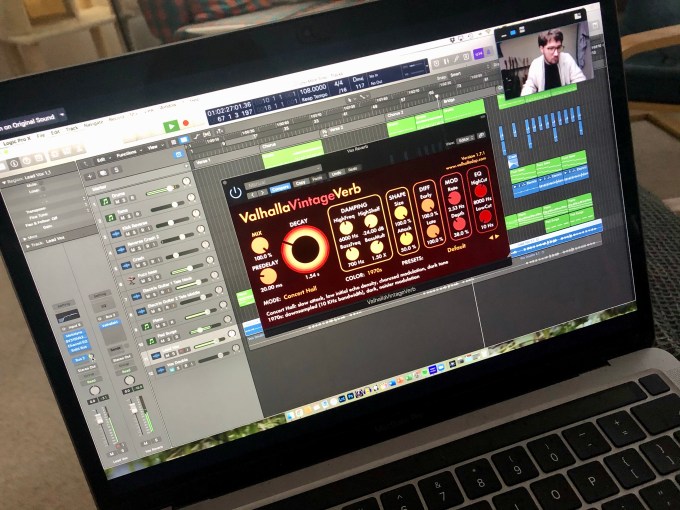
With the demo finished, we talked about the upcoming projects we’re working on, alone and together, for our Masters and for our own projects. That was productive as well, although the creating is always my favourite part of any session.
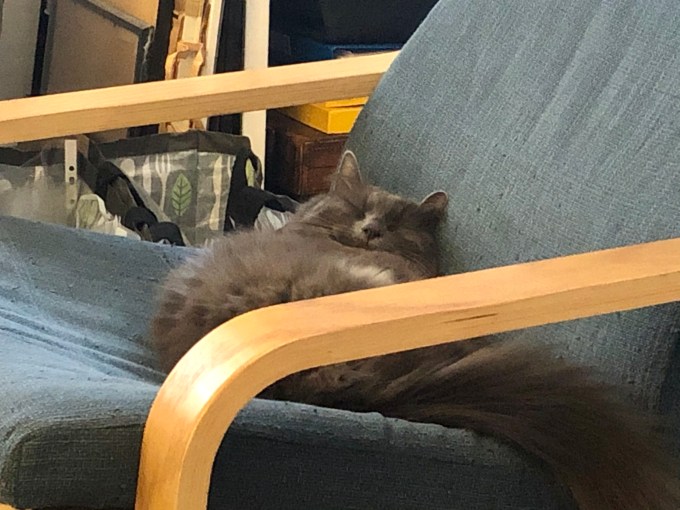
Several of the cats had been hanging out with me the whole time (I think we were on the call for about four hours in total) and they were being ridiculously adorable. Mouse in particular looked very content with the situation. Having them around all of the time is one of the things that has made this last year bearable; I’m beyond grateful for them.
I was exhausted after that and curled up on the sofa with Criminal Minds. I’ve been rewatching it over the last few weeks and I’d forgotten how much I love it, how much I love the characters; I think Emily Prentiss was one of my first Favourites with a capital F TV show characters.
My mind was wandering and I was thinking about one of my current song ideas, one that hasn’t fully revealed itself to me yet, when the perfect hook popped into my head. Unfortunately, before I could even reach for something in order to record it, it was gone. It was infuriating. I must’ve sat there for an hour, retracing every train of thought I could remember having before the hook occurred to me but alas, I couldn’t get it back. And now, of course, I’m convinced it was the perfect idea: just what I needed to make the song work. So that was very frustrating, which didn’t help with how overwhelmed and stressed I’d been feeling over the previous few days. Part of that was due to the results of the last module being released a few days before. I’m often slow to open results – I like to wait for a moment when I’m feeling stable enough to handle a good or a bad result – but I also had three cowrites and a day of classes in the following days so I didn’t want my emotions about the grade to affect those. That said, I couldn’t forget about them completely and the not knowing was stressful.
Eventually I gave up on trying to conjure back up that perfect hook (*sigh*) and did some writing for the blog. I even managed to finish the post I’d been writing about Lucky. That was a hard one to write so I was glad to have it done.
Mum and I had dinner together and then we had a family video chat, one that specifically included my Granny in Australia because it was her birthday. Since it was a milestone birthday, at the very least some of us would’ve been out there to celebrate with her if not for the pandemic, something that’s been hard for all of us but especially the one of my four parents who’s her daughter. So it was hard, but having a video chat was better than nothing and I think we made the most of it.
After we hung up, Mum and I had a gentle evening, continuing with our Criminal Minds rewatch. I also tried to do some catching up with my diary. I’m so far behind now that it’s more like keeping up: I’m just barely managing to keep bullet points as prompts for some imaginary moment in the future when I have the time to go back and write it all out. I’m finding that incredibly stressful because the need to write everything down is only being partially fulfilled, leaving me with so much anxiety that sometimes I’m left feeling suffocated. But that anxiety is constantly battling with the anxieties of other things that HAVE to get done, like my Masters work. There just aren’t enough hours in the day. Plus, a lot of the time, I feel like my brain is wading through treacle, making it even harder to function. My brain feels a bit like it’s been hit by a hurricane; it’s just a chaotic mess and nothing’s where it’s supposed to be or doing what it’s supposed to do.
I went to bed early-ish, early for me anyway, but then I accidentally stayed up for several hours, watching videos on YouTube. One of the upcoming writing briefs for this module is to write a song based on a fictional story and I’ve wanted to write a song about Daisy Johnson from Agents of SHIELD forever so this seems like a good opportunity; maybe a deadline is what I need to make it happen. So watching all of these Daisy Johnson videos on YouTube and listening to the songs that people associate with her is research of sorts. I’m still trying to work out the perspective I want to write the song from, whether it’s about a particular moment in time, or about her emotional journey, but I found several songs that definitely have potential as inspiration. It didn’t exactly help my brain wind down though.
TUESDAY
I managed to sleep through all of my alarms, which meant that I was almost an hour behind in getting ready for the day – my uni classes day. So I had one of the fastest showers of my life, put on minimum make up, and inhaled some breakfast, logging on just in time for my first class. Definitely not the most fun or graceful start to a day.
My first class of the day was our workshop, where we present the songs we’ve written based on the techniques we learned in the seminar the previous week. Due to a meltdown, I’d actually missed the seminar, which had been on the techniques of song maps and pyramiding, but after reading the resources and a long discussion with one of my friends who’d been at the seminar, I felt I understood the theory enough to at least attempt to apply it. I’d written one song with Richard and another with one of my coursemates, both of which I really loved. There was only time for one of them, given how many people had brought songs (some days, everyone brings a song and we have to be really efficient whereas on others days, some people haven’t brought a song and there’s more time and people can present both cowrites and songs for their own projects), and the cowrite with my coursemate got chosen. It was well received with a healthy amount of suggestions for improvement, some of which we agreed with and some we didn’t. We’re planning to work on it again soon, since one of the upcoming briefs is to redraft a song.
There were some other really cool songs played during the session but I don’t want to say too much about them since they’re part of other people’s projects. Having said that, my group is packed full of amazing writers so whenever they release music, I’ll be sure to share it on my social media. So check those out if you want to hear about these awesome up and coming artists and writers…
It was a good class but then we had a four hour break before the seminar in the afternoon, starting at 4pm. Tuesdays are hard for me: they’re long and they require a lot of energy and focus, especially the three hour seminar. So I’ve taken to using the break to have a nap to recharge for that class. I slept for almost three hours, had some food, and quickly recapped the notes from the last seminar before we got started again.
We began by discussing what we’d worked on over the previous week – song mapping and pyramiding – and talked about how we’d implemented songs maps into our work, what impact it had had on our writing process, and what we’d struggled with. Having missed the seminar where song maps had been introduced, I’d struggled initially but having incorporated it in the writing of several songs, I do feel like I’m getting more of a feel for it. We had some interesting (and, at points, entertaining) debates over various elements before moving into the new topic: different approaches to cowriting. In groups, we were encouraged to just talk until one of us said something that might make an interesting song and then start writing that song together.
I’d initially been worried about being dropped into a group of people I didn’t know and asked to create something so I’d spoken to my tutor and we’d worked out a solution that I’d be in a group with at least one person I knew. I’m always keen to write with new people but, being autistic, it’s a lot easier and a much more positive and productive experience if I have, at the very least, spoken to them beforehand. So having one person I already knew just created a safety net in case I got overwhelmed or something. I actually knew two people in my group and then there was another guy I hadn’t previously met; we got on really well with lots of laughing and goofing around but we also came up with a really strong concept and started working on the song. So we did pretty well, I think.
When the class ended, at 7pm, I was exhausted but the nap had helped. I wasn’t completely floored like I often am. I even managed to work on a song I’m currently writing, one called, ‘Astronaut.’ I’m usually barely capable of eating dinner and catching up with my diary so that was quite an achievement. The nap had clearly worked wonders.
There wasn’t much left of the evening but my Mum and I had dinner and continued our Criminal Minds rewatch. I also worked on a couple of blog posts before going to bed far too late, as is my norm at the moment. I just get this weird anxiety when I start getting ready for bed. Maybe it’s to do with anxiety about being unable to sleep, maybe it’s anxiety about a period of unproductive time (that’s something I’m struggling with at the moment)… I don’t know. And it just makes it even harder to get to sleep.
WEDNESDAY
It took me a long time to wake up on Wednesday morning; I just couldn’t open my eyes. I feel like I’m having more and more trouble with mornings; my antidepressants are very sedating, which is one of the reasons I’ve been thinking a lot about trying a new medication. It’s just such a tough process and there never seems to be a good time.
When I eventually managed to keep my eyes open for longer than a minute, I forced myself up and had a shower before settling at my desk in the living room. With Criminal Minds as a backdrop, I spent several hours working on blog posts. I struggled to concentrate though because, in the back of my mind, I was aware of the fact that last module’s grades were still waiting to be opened. They’d come out the week before but I’d had three cowrites and a day of classes ahead of me and if the grades were bad, I didn’t know how I’d manage to be present and productive in those sessions. So they were still sitting there, unopened, and I was very aware that I really should open them and look. But it was really hard to make myself do it.
Eventually I did, when Mum went out to do the food shop. It’s not that I didn’t want her to know or anything; I just find it easier to see results, have my initial emotional reaction in private, and process it a bit before sharing the news with people. I was happy with the grade – for the most part (but then I’m a perfectionist and always somewhat disappointed if I don’t do exceptionally, something I think is an unfortunate consequence of being a really high achiever at a young age) – but I did have some issues with the feedback. Reading through the feedback sections, I felt like we hadn’t been assessed on what we’d been told we’d be assessed on. The more I thought about it, the more upset I got. I’d worked so hard and talked to the tutors so many times in order to get a clear pictures of the module and how it was assessed and then to see feedback that felt fairly unrelated to what I’d been told was actually really distressing. I guess I felt (and feel) like I would’ve done things differently if I’d known the type of feedback the work would receive. I’d worked so hard on my assessment submissions so that was just quite deflating.
I talked about it a lot with my Mum and after that, I was just exhausted. So I put on some Criminal Minds and spent most of the day working on blog posts. Or trying to, at least. Wednesdays are always my least productive days, like my brain and body borrow from Wednesday to get through Tuesday, leaving Wednesdays significantly depleted of… just everything. So I always try to avoid putting anything important on a Wednesday.

So a gentle afternoon turned into a gentle evening, watching Criminal Minds and writing for the blog in front of the fire. The cats love it when we have a fire. They all congregate in the living room and spread out in front of it, occasionally rolling over – ever so casually – to warm a different side of their bodies. It’s adorable.
I managed to go to bed at a reasonable time, watched some more Daisy Johnson videos, and was actually asleep before midnight.
THURSDAY
I had to get up painfully early to go to the dentist (my dentist is a safety hub, which apparently means they can be open during lockdowns because they look after people with disabilities, although I didn’t know this until fairly recently), which wasn’t a pleasant experience. They have really strict safety procedures (the only reason that I feel safe going there), like an hour between each patient to sterilise the room and so on, so it takes a long time to get an appointment. Unaware of the fact that I could go to my dentist until a few months ago, it’d been a long time since I’d had a check up and so there was quite a lot to do. I’m not gonna go into detail because I don’t think anyone enjoys descriptions of dental work but it was a difficult experience, moreso than usual. I find the noises of the machines particularly difficult and in excess, they get dangerously close to triggering a meltdown, so by the time the appointment was finished, I was completely exhausted.
Back home, I finally managed to get through the Occupational Therapy paperwork and start doing the exercises for the pain in my hands and wrists. Despite the simplicity of the movements, it was hard work and every joint from my fingertips to my elbows hurt afterwards. I made a note of it to report back to the therapist – I had another appointment in a week – and took some painkillers that eventually took the edge off.
It wasn’t long before my next appointment, by phone this time with the Chronic Fatigue Service, so I lay on the sofa and watched Criminal Minds for a little bit while I recharged and gathered my thoughts for the call. I was already apprehensive about the call as it was a doctor I’d previously had a really bad experience with – one I’m tempted to go as far as saying was traumatic. It was a long time ago now but I was still anxious about the whole thing.
It turned out to be exhausting, upsetting, and a complete waste of time. He had very little of my history so most of the hour was spent taking a very extensive history, involving questions ranging from my parents health to my diet to my mental health diagnoses to my medication. And after all of that, he basically said that my case was too complicated for them, that with the more recent diagnoses – including the hypermobility diagnosis – I was better off with my current specialist. What may have previously been perceived to be Chronic Fatigue Syndrome might actually be Persistent Fatigue associated with hypermobility but it’s hard to be sure. But not only did we hang up with less clarity than when we started the call, the whole thing was just… unpleasant and awful; he claimed that I’d been diagnosed with CFS in 2007 by a doctor I don’t even remember seeing according to a letter that neither my Mum nor I remember getting; he was critical of how much Red Bull I drink (due to the sedating effect of my medication as far as I can tell) and acted like I was doing it for fun, not because it’s the only thing that keeps me awake and functioning; he talked about a set of blood tests that were never discussed with us, which was particularly alarming as one of the results could’ve indicated cancer… And on and on. It was a complete fiasco. Every time I think things can’t get worse with doctors, they do. I could’ve had cancer and no one ever even bothered to mention it. I mean… I don’t have any words.
So that was basically the day written off. I was just too distressed and too exhausted. There was an extracurricular uni session in the evening but I was just too tired. I knew I wouldn’t be able to focus and it would be recorded so I could always catch up later. Instead I spent the evening watching Criminal Minds and very, very slowly adding to some blog posts. I did get some exciting music news but unfortunately I can’t share that yet. So the day did end on a better note.
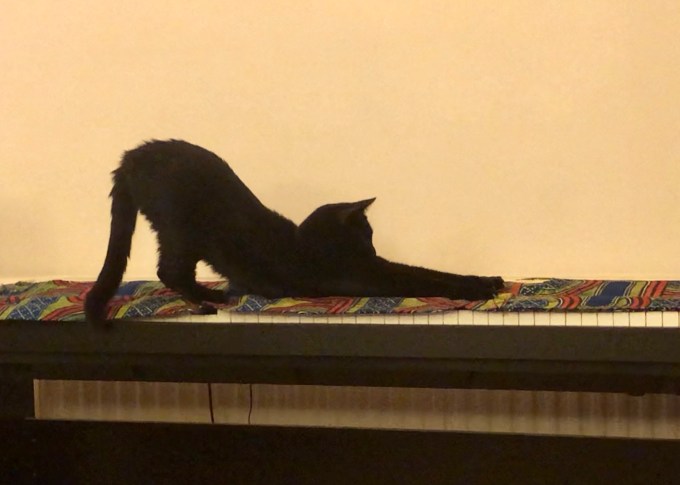
There’s no particular reason to include this picture other than the fact that I thought it was adorable: cat yoga on a piano.
I went to bed early, watched a few more Daisy Johnson videos (at the moment it feels like the only time I feel able to take the time to watch YouTube videos is right before bed or before I get up in the morning), and eventually went to sleep.
FRIDAY
I got to sleep in a little bit and then it was up and out to the hospital for an ECG (echocardiogram). Since a small amount of people with hypermobility develop heart problems, I’ll have to have ECGs every five years or so to make sure everything’s okay. I wasn’t too worried about it but again, it was another distressing medical experience.
I’ve had an electrocardiogram before and just like that, you’re asked to undress so that the ultrasound wand can get a good image of every necessary angle of your heart. But I just couldn’t do that: the idea of being so exposed in front of people I didn’t know was and is nightmarish to me. I don’t know if that’s an ASD thing or or me thing or what. They looked at me for what felt like ages before reluctantly allowing me to keep my bra on, telling me that they likely wouldn’t get as good images. I was trying not to lose it completely so, as you can imagine, that was a super helpful comment. And then, to make matters worse, the doctor pressed the wand against my chest so hard that it physically hurt; part of me wondered whether it was a punishment for being ‘difficult.’ I couldn’t breathe properly and it hurt so much that I was almost crying, especially when she pressed it against my sternum.
When it was finally over, my Mum asked if they’d gotten what they needed and they said that they had. So much for my bra being an issue. When I was fully dressed, Mum asked me to wait outside; she was five minutes maybe and then we were out of there. She told me that she’d just done what she normally ends up needing to do with medical professionals and explain how important the language they use with autistic patients is (because, as usual, they didn’t know how to work with an autistic individual). So, for example, instead of saying they probably wouldn’t get the pictures and therefore making me feel guilty for my anxieties, they could’ve said that they could try and then, if they couldn’t get the pictures, we could all re-evaluate together, which would’ve made me feel like they were at least trying to work with me rather than dismissing my difficulties. Apparently they thanked her for sharing her experience and said that they would take it on board; whether they will, I can’t say.
The whole experience had been distressing and exhausting and I was barely holding it together. I just wanted to get home and curl up under a blanket in the safe little bubble that is my living room, curtains closed and fairy lights on. So that’s what I did. I attempted some blog writing but it was very half hearted; I was just really drained by the experience at the hospital.
Early afternoon, I had a therapy session. It was probably too much on top of the ECG experience but then I hadn’t expected that to be so dramatic and emotional. Again, I’m drawn towards the word traumatic but I guess I’m reluctant to call it that as just a person and not a mental health professional. Had it just been the one time, I wouldn’t think to call it a trauma – I’d call it distressing or deeply upsetting – but as the latest in a long line of deeply distressing experiences at the hands of medical professionals or in medical settings, it feels like it’s bigger than that, that those experiences have built up to create a big ball of trauma.
It wasn’t easy but somehow I managed to pull myself together enough for my therapy session. A lot had happened since my last session so there was a lot of catching up and processing, most especially about the medical stuff that’s been going on. It was really hard, both in the sense that it took a lot of energy to talk about it all and in that it kicked up a lot of emotions. It’s weird: it’s like I’ve been boxing it all up and hiding it under the bed for years and suddenly, the recent appointments have just kicked the lid off and I can’t get it all back in, like when you have to sit on a suitcase in order to zip it closed. So now all those emotions are just everywhere and I can’t move without tripping over one or another of them.
We finished up the session but I knew that if I stopped, I was really going to crash so I did some prep work for a cowrite I had the next day; I really don’t like going into cowrites without anything prepared, even if it’s just a list of relevant words or phrases. Since we ended up writing about something completely different, I think it’s probably fine to talk about the song we were planning to write: we’d been talking about our personal concepts of time and how time feels different since the pandemic began. So that was our concept but we needed to refine it so that it would work in song form. So I spent some time looking up interesting words in the thesaurus, searching for inspiration on quote websites, and free writing about how I’ve been feeling over the last year in relation to time. There were a few quotes that I loved and could’ve drawn inspiration from if we hadn’t jumped ship and worked on a different idea:
- “Here we are, trapped in the amber of the moment. There is no why.” – Kurt Vonnegut
- “As if you could kill time without injuring eternity.” – Henry David Thoreau
- “Time is what keeps everything from happening at once.” – Ray Cummings
I thought those three quotes in particular were beautiful. I could write a song based on each one.
Late afternoon, I logged into Microsoft Teams for our group cowrite – a session to finish the song we’d started during Tuesday’s seminar. We’d already written most of the song but we kept writing and refining. We had a really good time together but we did talk about whether four people were necessarily needed for the first draft of a song. Having said that, I think everyone contributed in their own ways and the song wouldn’t be what it is without all four of us. We ended up being on the call for over two hours before deciding to call it a day. I was a bit frustrated to leave it unfinished again but I think that’s just coming from my issues with productivity; I hate leaving things incomplete. I was still staring at the Google Doc when I had a spark of inspiration and jotted down a full bridge to look at next time. I thought it worked well so I was hopeful that the others would like it too.
Less than ten minutes later, one of my parents (who doesn’t live with us but is in our support bubble) arrived. We try to have an evening a week where we just hang out together and have some real human interaction. We treated ourselves to an Indian takeaway and caught up while we waited for it and then watched a couple of episodes of Lucifer, the show we’re currently watching together. It was very chilled out and I was practically asleep on the sofa when she got up to leave.
Mum and I watched a couple of episodes of Criminal Minds before going to bed and I watched a few more Daisy Johnson YouTube videos. This is one of my favourites so far:
It’s one of several that are sort of building a sonic picture in my mind as I put this song together. Yeah, I’m trying to work out how to write my own Daisy Johnson song but I’m also realising that it’s a form of procrastination too. When I lie down at night, my thoughts start to spiral and the spiral gets tighter and tighter until I can’t think or breathe. I definitely can’t relax enough to sleep. I’ve tried all of my strategies but they don’t seem to be working so I’ve been seeing the early hours of the morning a lot more often recently.
SATURDAY
After going to sleep so late, I slept in, hours and hours later than usual. I missed almost half of the day, which was very disconcerting. And even awake, I couldn’t summon the energy to get up for a while so I scrolled through Twitter on my phone. I’ve recently gotten into #ActuallyAutistic Twitter (I knew it existed but hadn’t spent much time looking at it) but I’m still not entirely sure how I feel about it: some of the people on there are really lovely and share valuable tips and information but I’ve also seen some pretty intense debates that make me feel quite anxious, like it wouldn’t be safe to express my opinions or experiences without someone judging me or telling me how [insert word here] I am. So it’s a mixed bag and I’m not sure whether or not engaging with it is good for my mental health, right now at least.
Eventually, at about half twelve, I dragged myself up and into the shower. The points where they’d pressed the ultrasound wand were really tender and painful. There wasn’t any bruising but they hurt to touch.
Shower done, I settled in the living room. Sooty immediately hopped up for cuddles and ended up spending most of the day tucked up against me in one position or another. It was very cute and very soothing.

With so many big posts coming up, I decided to post a short, less intense post, editing and posting another Little Things post. It’s true what I write in those posts: I do want those of you who read my blog to know who I am as a full person, not just a Picasso painting made up of the specific parts I talk about in any given blog post. That’s part of why I write these posts too.
When that was finished and posted, I did some admin stuff, mostly emails: some music stuff, plus some messages around my long term project of tracing my family history (that’s a story for another post). I also continued my attempts at redrafting the lyrics of ‘One More Time’ but I was still struggling to get it right. It was going to be super satisfying when I finally hit the right combination of words but until then, it was somewhere between a really complicated Rubik’s Cube and banging my head against a wall.
Eventually it was just getting too disheartening so I took a break. I went to Tumblr as I often do for inspiration and while I didn’t find anything to help with this song, I did find some cool art, some interesting lyric analysis, and some beautiful gifsets from several of my favourite TV shows. At the very least, it released some of the tension in my brain.
It was an evening of Criminal Minds, dinner, and my physio exercises. Oh, and a further attempt at redrafting ‘One More Time,’ but still no dice. It’ll get there at some point; I just don’t know when. My brain just feels really overloaded and overwhelmed at the moment and that makes it really hard to think when I get stressed or anxious. And it just snowballs, everything getting worse and worse until I feel like I’m so twisted up in this net of my own thoughts that I can’t move, can’t think clearly. It’s exhausting and yet, sleep is such a struggle.
SUNDAY
I really struggled to wake up but eventually I managed to drag myself into the shower and then the living room. One of the cats, Tiger, immediately sought me out for attention and paced relentlessly until I gave in and devoted all of my attention to her. The cats are all getting far too used to us being around all of the time…
Late morning, I had a FaceTime call with a friend that went on for over an hour. That was really nice and we had a good laugh, which I really needed after the week it had been. It gave me a much appreciated boost, which was only heightened by the flurries of snow outside. That was very exciting and when I went downstairs after the call ended, I got to enjoy watching the cats in the garden, watch their befuddlement at the snow: the little shakes when it landed on them, the pouncing on the settling snowflakes… It was incredibly adorable.
Back upstairs, I did a bit more thinking and searching for inspiration – in my various songwriting notes, in my diaries, on Tumblr – for my upcoming cowrite and I worked on that until it was time for the video call, about an hour later.
I think it was a good session, especially for a first time cowrite. It was with another of my coursemates and while she and I have known each other a while now, we hadn’t managed to write together up to this point. We had a good time and laughed a lot while still managing to write most of a really promising song in about ninety minutes. So I feel like we did well. I like the song and I like the message behind it; hopefully we can finish it sometime in the near future.
So I finished the session in a really good mood, that is until I saw that Sia’s dangerous, offensive, and incredibly ableist and problematic film, Music has been nominated for two Golden Globes. I was – I am – disgusted and appalled by how little so many people – in this case, the film industry – care about the wellbeing, the opinions, and the happiness of the autistic community. It’s horrifying. It makes me want to scream at someone but there’s no one to scream at. Put me in front of the Golden Globes people and I’d rip them a new one but that’s not gonna happen, not in this reality anyway.
https://twitter.com/maiisiesh/status/1356965874981363713?s=20
https://twitter.com/autistictic/status/1357021933859184641?s=20
I did my best to have a quiet evening since I had another busy day ahead of me but I couldn’t shake off all the unpleasant feelings around Sia’s film. I tried to distract myself and work on ‘One More Time’ but I just couldn’t focus. I was too emotional, too overwhelmed. I wouldn’t have been surprised if I’d spiralled into a meltdown, if not for the fact that I was too tired to even cry.
In the end, my Mum and I watched some more Criminal Minds while she gave me a neck and shoulder massage (one of her many lives was as a massage therapist). The pain is creeping higher and higher, up my neck and into the base of my skull so although it wasn’t the most comfortable experience, I felt better for having it. Less tension, less pain. Some of the time, at least.
Again, getting to sleep wasn’t easy but it was a better night than others so I’m grateful for that. I’ll take whatever I can get right now. I’m waiting on various things that will potentially help but everything’s moving very slowly. My logical brain is very understanding, given everything with the pandemic, but my emotional brain is less rational, struggling to cope with the pain and the anxiety and the lack of sleep. As human beings, we are more than capable of holding two such opposing emotional responses but it being possible and it being easy aren’t the same thing, are they?
Somehow that ended up being a lot longer than I’d planned, than I’d expected it to be. But apparently there was a lot of stuff in my head that was intent on getting out. Life feels pretty complicated at the moment.
 Finding Hope