 Finding Hope
World Cat Day 2023 – The Benefits of Cats
Posted on August 8, 2023
Happy World Cat Day! I am both deeply a cat person and a dog person, even though I don’t have a dog right now, and my cats are one of the great loves of my life so, for World Cat Day, I thought I’d research and share why cats are so incredibly good for us. But before I get started with that, I wanted to share my favourite fact: we know that our relationship with cats goes back thousands of years but some research shows that cats essentially domesticated themselves in South Asia, befriending humans for a ‘mutually beneficial relationship’ (although, let’s face it, it probably started out as an easy way of getting food). (x) And clearly, we’ve always been obsessed with them: in 889 CE (also known as AD), twenty-two year old Japanese Emperor Uda described his new cat with familiar passion: “the colour of the fur is peerless,” “when it stands, its cry expresses profound loneliness, like a black dragon floating above the clouds,” and “I am convinced it is superior to all other cats.” (x) Who of us cat owners have not described our cats in similar ways and with similar pride?
IN THERAPY
- According to the Human Animal Bond Research Institute (HABRI), pet therapy sessions have proven to decrease isolation and loneliness, increase social functioning, and improve independence in autistic individuals.
- Cats are being used in animal-supported therapy more and more, commonly used to treat anxiety disorders, depression and Post Traumatic Stress Disorder (PTSD), as well as Attention Deficit Hyperactivity Disorder (ADHD) in children as they often help to keep them calm and focussed.
- Cats (and animals in general) act as a good ice-breaker, both at the beginning of the session or if the session becomes difficult and the patient needs a moment to breathe; they serve as a positive, calming topic of conversation, a good release valve, before getting back to work.
- Cats are a reassuring presence, good for reducing anxiety.
EFFECTS ON THE BRAIN
- A positive bond with your pet can increase your dopamine, serotonin, and oxytocin levels, the hormones known as the ‘happiness hormones.’
- Researchers have discovered that the human brain releases endorphins when stroking a cat and when listening to a cat purring, lowering our stress levels.
- The brain also responds to a cat’s purring by releasing serotonin.
- Playing with your cat can raise your levels of serotonin and dopamine, relaxing the nervous system, and the ‘happiness hormones’ are stimulated when we smile or laugh or talk to our cat.
- Studies show that the bond between a person and their pet is linked to several mental health benefits, including reduced feelings of loneliness, reduced anxiety, and reduce symptoms of PTSD.
- According to HABRI, 74% of pet owners say that owning a pet has improved their mental health. Studies have shown that the bond between human and animal increases oxytocin levels in the brain, resulting in feelings of calm and focus.
- Research by the Mental Health Foundation and Cats Protection, in a study of over 600 cat owners, found that 87% felt that having a cat had a ‘positive impact’ on their wellbeing and 76% reported that they felt they could cope better with their lives because of the presence and relationship with their cat.
- It has been reported that people with pets experience less anxiety than those without. Studies have also shown that cats are beneficial in reducing anxiety, especially in certain groups such as students and autistic children.
- Spending even twenty to thirty minutes with a pet can trigger chemical changes in the body that reduce stress, including the increase of serotonin and dopamine levels in the brain and reducing anxiety.
EFFECT ON EMOTIONS
- Our pets love us unconditionally which is very comforting when we’re struggling or feeling lonely.
- Animals are so present that they encourage us to do the same, to be present and mindful.
- Researchers in 2008 found that 44% of cat owners felt ‘a sense of safety’ when with their cats.
- Caring for someone or something other than ourselves, that relies on us, can create a sense of accomplishment, fulfilment, and confidence. And the more confidence we have in ourselves, the better we tend to feel about ourselves.
- Polish researcher Elzbieta Budzinska-Wrzesien and her colleagues concluded that when you have a close relationship with your pet – who shows you unconditional affection and doesn’t judge you – that relationship can boost your sense of wellbeing and self esteem. This bond can relieve stress, increase social interaction, and create healthy habits.
- The love of and for a pet can often motivate a depressed person to keep going because they know they have their pet relying on them.
EFFECTS ON THE BODY
- Studies have shown that the bond between a person and their pet can result in many health benefits, including decreased blood pressure and cholesterol levels.
- Multiple studies show that cats have a calming effect on us, reducing our stress to the point that we are approximately 30% (different studies show slightly different numbers) less likely to experience heart disease. Even watching videos of cats of have shown to reduce our stress.
- Another study showed that cat owners have fewer strokes than non-cat owners.
- Stroking and cuddling your cat can reduce the cortisol, the stress hormone, in your body, which leads to decreased heart rate, blood pressure, and anxiety.
- Some studies have shown that having your cat close by at night results in better sleep. Cat-owners who let their cat sleep on their bed or in their bedroom said they found it easier to both fall asleep and stay asleep. Compared to dog owners and those without pets, cat owners specifically indicated waking up fewer times during the night, as well as less restlessness and fatigue.
- A cat purring has therapeutic effects both on them and on us. Studies show that purring falls between 25 – 240Hz, the frequency known to speed up the healing of injuries, including broken bones, damaged tendons, and injured joints. Some people have even reported the purring of their cat easing their migraines too.
EFFECTS ON LIFESTYLE
- Looking after a pet requires the ability to create and stick to a routine, time management skills, organisation, and multitasking. These skills are difficult for many people, especially individuals with ADHD, so caring for a pet can aid in building and strengthening these skills, motivated by the knowledge that your pet needs your care and attention; tasks involving them can’t be procrastinated or skipped. Over time, these skills can be harnessed for non-pet related tasks.
- Caring for a pet can also help to build a better sense of self-esteem and can improve how pet-owners, especially those with ADHD, feel about themselves in a neurotypical society.
- ADHD pet owners have reported feeling great pride in managing to take care of their pets, especially on their own. Sometimes it’s the first time they’ve managed to build and keep a daily schedule. This builds confidence, which goes on to affect other areas of their lives. Some reported that getting a pet is what forced them to learn and improve these skills, which resulted in them taking better care of themselves as well.
I found an excellent story during my research…
“I have a cat and I couldn’t manage without him. Yes, he provides comfort and unconditional love, but he also keeps me on track. I used to work with chimps and sign language, so when I got a kitten, I placed a very high priority on his communication skills and on shaping gestures he used naturally. I also used food puzzles and other things to keep his mind active. He knows what time I need to be up for work in the morning. Unless I tell him the night before that we can sleep in, he pokes me awake 3 or 4 minutes before the alarm. If I space out cuddling with him, he gives me a minute or so, and then he stands up and uses his limited gestures to say firmly, ‘You. GO,’ and waits to make sure I’m up before he leaves the room. He knows how long it takes me to wash and dress. If I dawdle too long deciding what to wear, he’s in the doorway checking to see what’s taking so long. If I leave something in the oven and forget about it, or leave a burner on after I’ve taken a pot off it, he lets me know. Sometimes I assume he’s just looking for attention and scold him for making a ruckus when I’m trying to focus, but if it’s a safety issue, he won’t stop until I give up and say, ‘FINE! SHOW me what’s wrong,’ and then he leads me to the stove, or wherever the issue is. He’s most certainly the grown-up in the relationship.” (x)
MY CATS
If you’ve followed this blog for a while, you’ll know that I have five cats, all related to each other. Lucy came first and then we kept her second litter of kittens, Tiger and Mouse, and then – to even the vet’s surprise – Mouse suddenly had two kittens, Sooty and Sweep, that – for a number of reasons, including the pandemic – we ended up keeping. I love them all dearly and it’s sweet how, not only have they all developed different relationships with each other, they’ve developed different relationships with me.
Lucy is my anchor. She’s always there, curled up next to me or snoozing somewhere in the same room. She doesn’t want to be cuddled all of the time but she always wants to be nearby; she likes to know what’s happening and what I’m doing. It’s very sweet. And she probably looks after me more than I look after her: she regularly checks in with me, she follows me around, she gets anxious if she can’t be in a room with me, she’s always really pleased to see me when I reappear from behind the shower curtain, she tries to usher me to bed when it gets really late and then sits with me to make sure I don’t get up again, and so on. It’s adorable. She’s the queen of the house though and she absolutely knows it.


Tiger is my snuggle buddy. Up until recently, she’d come for a cuddle now and then but she was usually too busy exploring the garden or playing with the other cats (plus she does have a favourite spot for snoozing). But after I went to the US and then Germany, it’s almost like she realised that she really doesn’t like it when I go away – I think all five cats got very comfortable with my Mum and I being home all the time since the pandemic began. As soon as I got home, she was all over me and ever since, she’s been coming to me for long cuddle sessions multiple times a day. It’s very cute, especially given how independent she was before. I’m certainly not turning her down, even if her tail is a weapon of mass disruption.
Mouse and Sweep are my floofs. Sweep has always been Mouse’s baby and they are definitely a bonded pair, which is a gorgeous thing to witness: they are curled up together all the time and even in the summer heat, they lie as close together as possible without touching (although Sweep often reaches out with her paw to touch Mouse, like she’s reassuring herself that she’s still there). Sweep frequently runs to Mouse for reassurance after something traumatic happens (the most traumatic thing to ever happen to her is the unexpected appearance of the window cleaner’s brush) or runs into the room, calling for her. It’s so cute how much she loves. She’ll rush up to Mouse and flop down on top of her, getting as close as possible, something that I’m not sure Mouse always appreciates. Mouse has always been the most skittish of the pride but she’s getting more affectionate and playful as she gets older, which is lovely. And we’ve started trying to teach them all tricks, mainly for our own entertainment, and Mouse has definitely been the fastest to pick them up. And Sweep is the complete opposite. I’ve started referring to her as ‘my little neurodivergent baby.’ I don’t know if there’s any proof that neurodiversity exists in any species other than humans but it seems unlikely that it’s just us; I wouldn’t be surprised if it’s only so obvious in humans because neurodivergent individuals are forced to live in a neurotypical society, something that animals don’t seem to have, certainly not in the same way. If those pressures aren’t there, then maybe neurodivergence doesn’t manifest in the same way. Anyway. I think of Sweep as neurodivergent because she seems to think and process completely differently to the other four, like they think in words and she thinks in pictures – or the cat equivalent. She still struggles with the cat flap, she doesn’t seem to understand how doing tricks works at all, she likes to hide away from everyone but has her special bond with Mouse, she seems to experience a lot more anxiety than the rest of them… I don’t know. She’s just very different to the others, not that we love her any less.
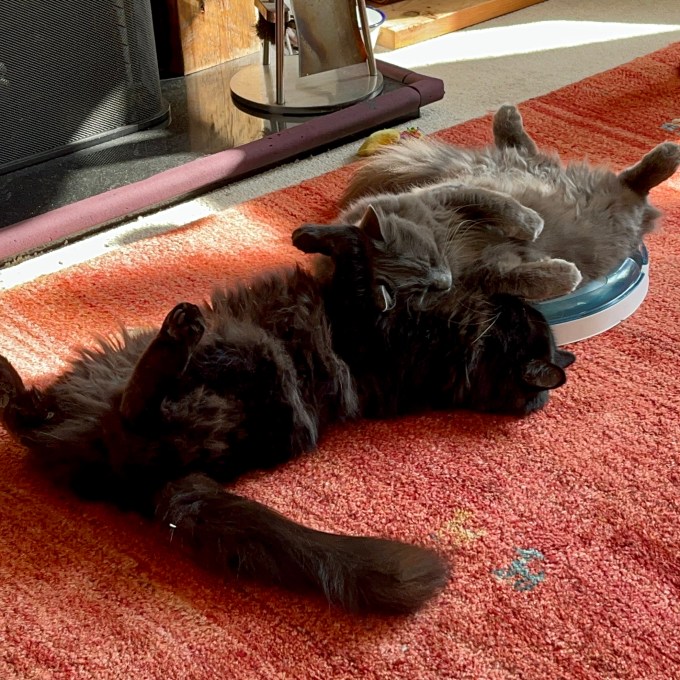
Sooty is my baby. She’s always seemed to think of me as her mother, even when she was a teeny tiny kitten. I wonder if that’s because Sweep and Mouse are always so entangled but whatever the reason, it’s adorable and I’m not turning down her affections. She always wants to sit on the sofa with me, demanding that I stretch out my legs so that she can stretch out between them; it’s her favourite spot. She’s also very playful and she and Lucy are a particularly playful pair, although she’ll play with anyone who will engage with her. She still feels very much a baby, Sweep too, even though they’re four now (which seems unbelievable to me but then I guess the pandemic really screwed with our perception of time) and that’s very sweet. I kind of hope she always will; I think she’ll probably always be my baby (although, to a degree, they’re all my babies).

APRIDEOFCATS
To avoid overwhelming people with cat pictures on my Instagram, which is focussed on me as a singersongwriter, I created a new account, aprideofcats, so that I could post as many as I wanted. It’s as much as for my own entertainment as anything else. I stopped using it for a while – when I was struggling with social media in general – but I’ve recently started posting on it and having a great time, trying to choose between the ridiculous amount of cute pictures that I have of them.
So there you have it: concrete evidence that cats are amazing. I’m just kidding, although I do love cats and my cats in particular. I think it’s fascinating that just spending time with animals – and in this case, cats – can have such dramatic effects on us and our health, physical and mental. I hope this has been interesting and fun and if you liked the cute little faces of my cats, please do follow my cat instagram: there will be plenty more photos of them going up.
(1) (2) (3) (4) (5) (6) (7) (8) (9) (10) (11) (12) (13) (14)
January 2020
Posted on February 15, 2020
January was tough. A lot of difficult things happened. Normally, I wouldn’t do a monthly round up but there were several things this month that I didn’t think would get properly acknowledged (in my yearly review or otherwise) if I didn’t. So here’s January 2020 and it’s highs and lows…
- Assessments and meltdowns – I began the year working frantically and anxiously on assessments for the module I’d just finished. And as soon as I’d finished the essay, it was onto preparing the presentation, which absolutely terrified me. All of the work with no rest and all of the anxiety caused so, so many meltdowns. So it was a very stressful start to the year.
- Presentation – My final presentation was very stressful. I worked ridiculously hard on a powerpoint presentation and script that described my progress throughout the semester with snippets of the songs I’d written and I thought I’d done okay but I was and am upset with my grade, mainly because the ‘good’ and ‘bad’ feedback I got seems to contradict each other. There’s this thing we have called Results Counselling (or something similar) where we can go and discuss it all, which I’m gonna do as soon as I can get through it without crying (not just about the grades – it’ll come up later). Whether that will change the grade or not, I don’t know.
- Choosing my timetable and beginning the new semester – My uni are really helpful about working with me to find a timetable that was best for my health, mental and physical. I really appreciate that they do that. I know that, as a disabled student, they have certain obligations to help me but this is something that causes me a lot of anxiety so I do really appreciate it. Special thanks to Ivy and Aislin for their help. And then the semester began. I’ve swung from overwhelming anxiety to calm and back again so many times that I’m dizzy. Right now, I’m okay. I think.
- ‘Clarity’ came out! – The second track from my EP, Honest, was released on the 10th and for what is essentially a second single from an independent artist, it’s done really well. It was added to several playlists with lots of followers and it’s been played on a handful of independent radio stations, including Get In Her Ears, which I’ve followed for a long time. So that was really cool. It’s also had quite a lot of airplay on a couple of local independent radio stations, which feels very special even if bigger stations are ‘better’ for my career – their support means a lot to me. It’s been a lot less stressful and a lot more exciting than the release of ‘Bad Night’ (although that was probably because it was the first one and so all new and unknown). Having said that, there’s still a lot more to come…


- My First DSA Assessment – As you probably remember from this post, it was a bit of a disaster. It was incredibly upsetting and we were basically told I would get no support as a disabled student. Things have changed a bit since then but I don’t want to talk about it until I actually know what’s happening, until it’s more than just speculation and hope.
- Semester B – We’re only four weeks into the new semester so we haven’t gotten that far yet but it’s definitely difficult. Much like the first semester, the content is really interesting but there’s a new challenge this semester: the academic language. A lot of the time I have no idea what the texts are saying and that’s pretty distressing. It makes me feel stupid and like I’m not smart enough to complete a Masters and ‘what the fuck was I thinking trying to do this?!’ Just as I thought I had a question for my assessment essay, I decided it was too complicated and now I’m waiting to hear from my tutor about it. I feel frozen. It’s hard to research when you don’t know what you’re supposed to be researching, a problem I had last semester although in a different scenario. I’m doing my best though and I’m doing my best not to panic. But I’m keeping up with my writing and I’ve written songs that I like so that’s keeping me grounded even though they don’t get assessed. But it reminds me why I’m doing this: to write better songs.
- Manic by Halsey was released – I love Halsey and I was very excited for this album and (Hurray!) I absolutely love it. It’s so different from Badlands and Hopeless Fountain Kingdom but they were really different from each other; there’s progression and evolution and exploration. This one is particularly emotionally vulnerable and to me, the often acoustic production reinforces that. I love all of Halsey’s albums and I think this one is the perfect next step. I love most of the songs but my absolute favourite are ‘Ashley,’ ‘Graveyard,’ ‘You should be sad,’ ‘More,’ ‘Still Learning,’ and ‘929.’
- Sharné visited – One of my best friends from uni came to visit me (and my cats) and we had such a lovely weekend. We went to the beach at golden hour, made cookies, watched movies, and played with the cats. It was so, so nice. I had such a good time. She’s the best.
- University gig – The full time students on my course put on a show and it was so cool to hear the songs they’d written and it was so, so nice to see my friends play and get the recognition they deserve because they’re such talented, hardworking writers. It was such a good gig and I wish I could’ve stayed to the end but I had to get home to Brighton.

(Luce Barka performing ‘Be More Kind’ – a very beautiful, meaningful song.)
- Richard visited – Richard came down to visit me (and, again, the cats – I’m sensing a theme) and we did some writing and production, which was really fun, especially given that I was trying some new things. We also worked on some stuff for the rest of the ‘Clarity’ release cycle and for the release of the next song. Ooooh…
- BeFries closed – My favourite restaurant in Brighton closed this month temporarily and then permanently and I’m absolutely gutted. I loved that place, I loved the food, and I loved the people. I’m so, so sad that it’s gone and I genuinely don’t know where my new meeting spot will be because that’s where I took everyone.

- Announced ‘Clarity’ music video – I announced via social media (I’m having major problems updating my website for some reason) that the ‘Clarity’ music video would be coming out in early February! I’m so excited for everyone to see it! (It will have gone up by the time I post this but this is where I am right now…)

“I’m so, so excited to announce that the music video for ‘Clarity’ will be coming out Friday 7th February! @rsandersonphoto and I had such so much fun shooting this and there’s a pretty cool surprise in there so we hope you love it as much as we do!” (x)
- Cheer – This might seem small compared to some of the other things on this list but I watched it after hearing all the good press about it and it absolutely held up. It was shot beautifully and the pacing was really good. The stories of all the cheerleaders had me so invested in each of them and their places in the series, and in their futures. I cried in almost every episode.
- The Grammys 2020 – I have many, many opinions about The Grammys, about who should’ve won which awards (*cough* Taylor Swift for Song of the Year with ‘Lover’ *cough*) but mainly I’m just super happy that Natalie Hemby and Sara Bareilles won their first Grammys. I can’t believe that this is a first for both of them, given how freaking talented they are and how successful they’ve been but regardless of that, this is amazing news and I’m so happy for both of them.
- Waitress with Sara Bareilles – The best moment of the month was seeing Sara Bareilles on her first night as Jenna in Waitress the Musical in London. She was incredible. The whole show was amazing but she was a magic all of her own. When she sang ‘She Used To Be Mine,’ (which I know is a special song to her and is a special song to me too) the standing ovation went on for so long that eventually the only way to stop us was to continue with the show and therefore force us to sit down. She was truly awesome and I felt so lucky to be there. I’m fortunate enough to get to see her again before her run finishes and I’m so, so excited.

- Track of the Day – In the interval of Waitress, I discovered that ‘Clarity’ was going to be Track of the Day for BBC Introducing in the South and played on the radio, on a show I haven’t been played on before. So that was massively exciting (apart from some confusion about the date). Fortunately, I wasn’t in class when they played it so I could listen and enjoy the feeling! Hearing yourself on the radio, hearing people introduce you and your song and spread the message you’re trying to spread is so special.

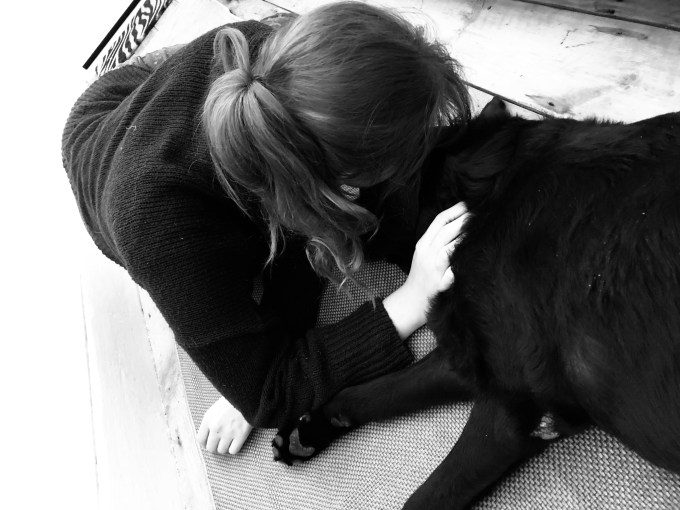
- Lucky – If you follow my social media, you’ll know that we had to have our family dog put to sleep in the last days of January. We first met him when he was a couple of days old and he would’ve been sixteen on the 9th February, so he lived a long and happy life (I hope he was happy – he seemed happy and we did everything to make sure he was). But saying goodbye to him was agonising and there’s been a massive hole in my life ever since. I miss him desperately. I want to write more about him – it just feels like the right thing to do – but I’m just not ready yet.
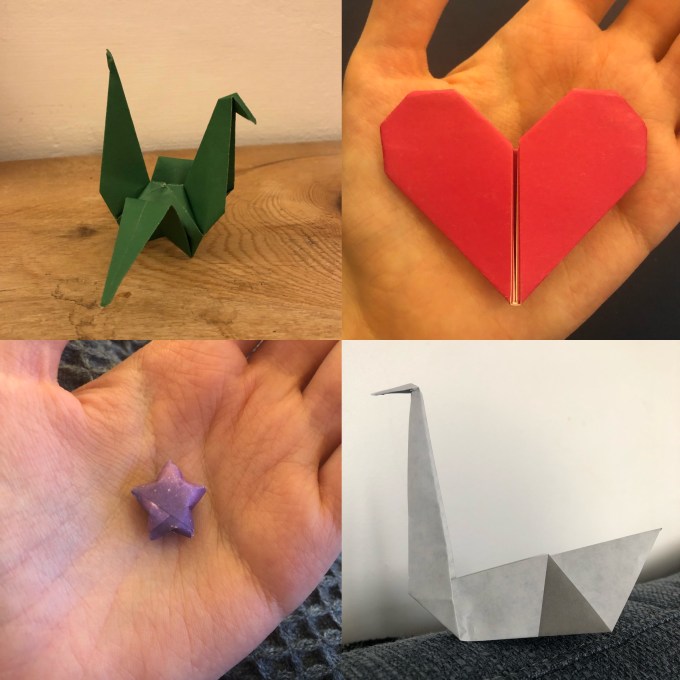
- #30dayfeb – My tutor, mentor, friend, and super inspiring person, Sophie Daniels, is running a challenge throughout February (1st February – 1st March) under her artist project name, Liberty’s Mother (the name comes from the name of her daughter, Liberty, who tragically died the day before she was born), to raise awareness about baby loss and money for the baby loss charity, Tommy’s. The challenge is all about doing something positive for your wellbeing everyday for 30 days. I know a lot of people are going to the gym everyday, doing yoga, and so on but given my chronic fatigue and chronic pain, I can’t do those things so I’ve decided to focus on relaxing my brain: mindfulness essentially but in a slightly less traditional fashion. I’m going to try and make a piece of origami every day because I can’t think or stress about anything when I’m doing it because I have to concentrate so hard. And I could do with some of that. You can sponsor me to do this, to try and do this everyday. Here are some of my attempts so far.
So that was January. Yeah, 2020 – the new decade – began on a very stressful and sad note. I’m thankful for the moments of light.
 Finding Hope