 Finding Hope
A Week In My Life (July 2023)
Posted on September 30, 2023
I really overdid things in June and pushed myself harder than I could really handle; I was just so overwhelmed and drained and exhausted so, in July, I tried to take things more gently, to varying degrees of success. Having said that, I did have some completely one-off opportunities booked that I couldn’t – and didn’t want to – miss. It’s hard, relearning to balance doing things with recharging and building my stamina. There are still so many things I want to do, especially see my friends and schedule more sessions with my favourite cowriters but I just really struggle to make things fit, and make things fit without absolutely crashing and burning, something that has happened repeatedly since I started taking the Phenelzine – and therefore doing things – again.
The week in this post started on Monday 3rd July 2023 and ended on Sunday 9th July 2023.
MONDAY
I woke up before nine and worked through some of my morning habits, like drinking water and my Duolingo practice, before getting up and getting in the shower. Then I settled in the living room and got to work on my current blog post, alternating with closing some of the many tabs I have open and trying to tidy my laptop up a bit. My Mum had gone in to town to get her laptop fixed and she’d asked about mine and it’s new habit of randomly turning off at any given moment. They said that, when it was made in 2015 (I got it later, refurbished), running it was like asking it to function at 100% but now, eight years later, running it is like asking it to run at 200%, which is obviously problematic. And given my propensity to work on about seven different things at once (with so many tabs open), I’m honestly surprised that it’s survived this long. They basically said that it’s not going to last much longer and I’m going to need to get a new one soon: the dreaded words with the Taylor Swift ticket sales coming up. Even though I’ve been saving for these concerts and have savings for moments like these (when something necessary, like a laptop, needs to be bought), the money anxiety was sitting in my stomach like a slimy, writhing creature.
Early afternoon, one of my friends came over to visit. She’s probably my oldest friend; we met when we were thirteen and we’ve been really close ever since, even though we don’t see each other as much now, living in different cities and working and so on. But our friendship has been one of the great pillars of my life; we always pick up right where we left off and there’s never any awkwardness. It was so, so lovely to see her, to hang out with her even though it wasn’t as long as we’d hoped for, but we got to catch up properly and we had a good laugh. I miss her more now that she’s further away, further away than she ever has during our friendship; it’s so much harder to see each other. But it’s comforting to know that our friendship has never really changed, even if it has evolved since we were at school and saw each other every day.
When she left, I made sure to take some rest time. Mum and I were both hanging out in the living room; she was working on her laptop and I spent a couple of hours continuing the work of cleaning up my laptop. We’ve been half watching House at times like this and we finally finished it, watching the ‘making of’ at the end. For the most part, it was fun and interesting but there was one part that really got under my skin: one woman was talking about the creation of the character of Gregory House and how the original idea was that House was in a wheelchair but that that was ‘too difficult’ so they changed it. I’m sure she meant it from a filming and set perspective and they eventually got to the idea of him using a cane, which I do think was a better choice for storytelling given the character, but the way she talked about it just felt really ableist and insensitive. I know I get triggered by that ‘too difficult’ and ‘too complicated’ talk but it just felt really uncomfortable and, at the very least, borderline offensive to wheelchair users.
My Mum and I had an early dinner together and finished His Dark Materials while we ate. It was the first time Mum had seen the end and my second. God, the end just wrecks me; it’s so heartbreaking. Dafne Keen and Amir Wilson’s performances (and, of course, Ruth Wilson’s – I love her) are just incredible. I think series three is my least favourite, just because there’s so much happening that needs to be shown in order for the end to make sense but, when any of those three are onscreen (plus the scenes between Ruth Wilson and James McAvoy), it’s breathtaking.
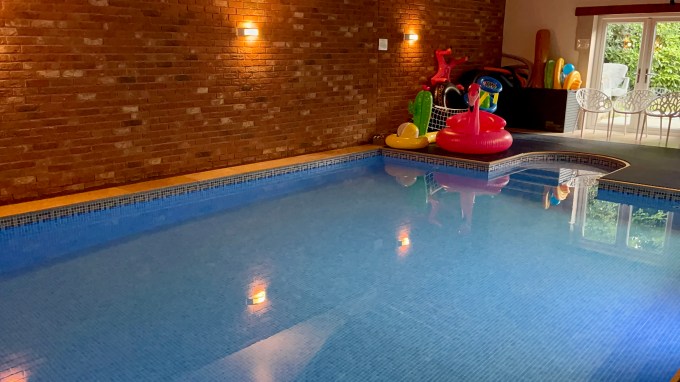
I was freaking exhausted but I made myself go and do my hydrotherapy anyway. I tried – I really, really tried – but my back still hurt and I was so exhausted that I didn’t manage as much as I usually do. I was so tired that I felt like, if I’d rolled over and floated face down, my body would have been too tired to care and I would’ve just drowned. But going was better than not going and I had a nice time with two of my parents swimming too.
Back home afterwards, I put on Doctor Who, too tired to think any harder about what to watch, and kept working on my laptop. It was a struggle though because I kept getting distracted by the cats playing with their new donut toys, plus I kept falling asleep sitting up; I was that tired.

I dragged myself to bed, utterly exhausted, but then I was still awake at three for some reason. That was deeply frustrating; I was so tired but I just couldn’t sleep.
TUESDAY
I struggled to wake up, finally managing to drag myself out of bed around twelve; I was just so tired and the lack of decent sleep made me feel heavy and groggy. I don’t know whether it was connected or not but for the next few hours, I had some really miserable stomach problems that meant I couldn’t do much more than lie on the sofa. I felt hot and faint and nauseous and sweat was all but dripping off me. It wasn’t fun but eventually it did recede a bit and I was able to haul myself up and into the shower.
Back in the living room, I spent the next several hours working on blog posts, hanging out with the cats, and dreading therapy. I was just feeling so tired and raw that putting my feelings under a magnifying glass was the last thing I felt like doing. But I went and it wasn’t as bad as I’d imagined it would be: I’d recommended The Anthropocene Reviewed by John Green to her because I related to so many of the feelings and philosophies that Green had written about (my copy, full of highlighted passages and comments scribbled in the margins, is an incredibly revealing insight into my brain, into my emotions and experience of the world) and she’d just finished it so we decided to go through some of the things that had really resonated with me, especially in the context of my mental health. It wasn’t easy but it wasn’t as hard as it could’ve been. I do think our discussion made it clearer than ever that my depression is still hanging around, dark and heavy and cloying.
Back home, I spent the evening working on blog posts and trying to reduce the amount of open tabs on my laptop. For a while, there was some amazing heavy rain and that really helped to lift my mood; I’ve always found it so calming but also really invigorating. If I recall correctly, rain releases a wave of negative ions which apparently relieve stress and alleviate depression as well as boosting energy. I don’t know how much research is behind those findings but heavy rain and thunderstorms always have that effect on me.
I wrote in my diary for a bit and then started to go to bed early but got distracted by the piano. A little fiddle turned into a couple of hours as I started playing old and half finished songs; my early night became a distance memory when I got sucked into writing a bridge for a song I’ve always loved but never managed to finish.

When I eventually got to bed, I quickly planned out my route into London for the next day and then went to sleep around two in the morning.
WEDNESDAY
I struggled up early but kept falling asleep again, which resulted in me running around like a headless chicken as I tried to get ready to leave. I just managed to catch my train and spent the journey catching up with various family members, working on various blog posts, and listening to Maisie Peters’ album, The Good Witch. I’m obsessed with it.
It seemed to take ages to get to Richard (one of my best friends, my most trusted cowriter, and my producer) but I did eventually arrive, exhausted, out of breath, and hot. We hung out for a bit as I gathered myself, catching up and chilling. We were both tired but eventually we got going, settling into his studio to work on some music. We didn’t have a specific plan and ended up writing a new song together, based on an idea that I’d been turning over in my head. It was hard to start with, like we’d both forgotten how to write together after going so long without doing it – it did get easier but I think that, if we can get back to writing together more often, we’ll find our groove again (no pun intended). By the time we had to stop, we’d written a delicate little song based on The Nettle Dress, an art piece with an accompanying documentary.
That done and running late, we raced across town (my joints were deeply unimpressed – although admittedly I shouldn’t have tried to be a hero and just gotten the lift out of the tube station instead of trying to manage all of the stairs) to the O2 Forum Kentish Town for the Maren Morris show. We both love her and we always go to see her together whenever she tours here. My Mum met us there: I had a disabled ticket and she had the accompanying companion ticket since I find these environments so hard (concert accessibility is unbelievably terrible) and she knows best how to help me through them. The O2 Forum Kentish Town doesn’t have an accessible section (which, again, just blows my mind – how can they be a functioning concert venue that hosts acts as big as Maren Morris without accessible seating?!) but they offered me early access so that I could, in theory, get a suitable seat. That was very stressful but fortunately we did get in quickly enough to get a seat that wouldn’t leave me in excruciating pain the next day. The few in total that I could’ve used only fanned my frustration with them as a venue.
Sam Palladio was the support act and he was good but his musical style wasn’t really my taste; for the most part, I couldn’t stop thinking about him as Stoke in Episodes, which was pretty distracting. Ah well. I’m happy to simply enjoy the support slot; becoming a fan of the person filling that slot is a bonus considering they’re not the person you’re there to see.
Maren Morris was incredible, as always, and she played so many of my favourites, including ‘Circles Around This Town,’ ’80s Mercedes,’ ‘The Middle,’ ‘RSVP,’ ‘Nervous,’ ‘Once,’ ‘Second Wind,’ ‘Rich,’ ‘The Bones,’ and ‘My Church.’ Her voice was in top form and she’s such a great performer; it’s always such an amazing experience to see her live. I love how much London means to her, how she never fails to acknowledge how much she loves it. And to honour that this time, she played a brand new song called ‘Get the Hell Out of Here.’ That was really special.
It was a really, really awesome show. She’s such an amazing performer. My only regret was that she didn’t play ‘Humble Quest’ since I love it so much, but then it seems that we got a lot more songs than the rest of the tour did – plus a new song – so I really can’t complain. It is surprising to me though, since it is the title track of her most recent album. (The show had also meant I missed the Song Suffragettes show – and, as it turned out, the last one – which I was sad about because I love or am desperate to see most of the girls playing and see my friends who work the event but it couldn’t be helped. It’s Maren Morris!)
Richard and I hugged goodbye, repeatedly and effusively, before going our separate ways. A short bus ride later and I was on the train home. I was exhausted but I used the time to make sure my Ticketmaster and AXS accounts were linked up and organised, all the information stored clearly and carefully to hopefully make any ticket buying as straightforward as possible. It was a cold train on a cold night and even though I’d sat for most of the show, my joints were so sore (probably from the slightly panicked journey to the venue); I was hobbling by the time I got off the train.
I was very pleased to get home and into my bed but I needed some time to decompress before I could sleep. I was scrolling through BBC iPlayer, looking for something that would soothe the still surging adrenaline. I spotted Wallace & Gromit, consistent figures in my childhood, and ended up falling asleep as those stories played out.
THURSDAY
My alarm went off at the usual time but I ended up going to back to sleep. It was a very slow start to the day but I was just so tired and sore from the night before. I also had a throbbing headache so I figured I was dehydrated, having probably not drunk enough at the concert. I’ve been trying to drink more water (my hEDS comes with Dysautonomia so I’m quickly and easily dehydrated) but the habit hasn’t become ingrained yet and I’d been distracted by the trip to London.
I lay in bed for a while, looking through my photos from the night before. There weren’t many good ones. I would love to get a new camera – mine is probably ten years old now, if not more, and I’m finding myself increasingly unhappy with the quality of the photos – but between the cost of Taylor Swift tickets (fingers crossed that I can get them) and the looming expense of a new laptop (mine is dying a slow, painful death), I can’t afford it, at least not for a while. Hopefully I’ll be able to get one before hopefully seeing Taylor Swift next year.
It turned out to be a hard day. I did manage to get my budget clearly worked out for seeing Taylor (I’d had a rough idea, having been saving since The reputation Tour ended, but it needed to be hammered out, which I’ve now done) but I spent most of the day in tears, stressed and overwhelmed and exhausted; it’s never been clearer that I need a day off, that I’ve been doing too much and need to slow down a bit. The boost Phenelzine gave me seems to have worn off, at least to some degree, and now I’m left with more plans than I have the energy or emotional capacity for. Between the busy weekend ahead, my stress around money, and the fear that I won’t get to see The Eras Tour next year: I’d received a presale code but there was no information about disabled access and when we rang them to ask how to handle the ticket sale, the information was different from last time. It’s different every time. The whole thing is just getting more and more distressing; it’s just another aspect of the world telling me that, because I’m disabled, I don’t matter as much as the rest of the population.
So it wasn’t the best day and I struggled to get much done. I did some writing and posted on my cat Instagram – a throwback to when my lovely Lucy was a kitten – but that was about it, having lost so my of the day to panic and distress…
I had a quiet evening, watching New Tricks with Mum and working on a couple of different blog posts before going to bed.
FRIDAY
I could not sleep, no matter what I tried; I think three hours is probably a generous estimate if I totalled up the sleep I did manage to get. It was frustrating and boring but the timing could’ve been worse as it meant I was awake to listen to Speak Now (Taylor’s Version) when it came out. Given that her album releases are always at five am for me, I don’t get to join in the countdown with everyone online. So that was a bonus of sorts.
I always loved Speak Now – it was the album that had me absolutely invested in Taylor’s music – and I think this is the best rerecording of the three so far, in terms of how closely she’s managed to replicate the sound. The vault comes close to being my favourite, just after the vault on Red (Taylor’s Version): I love ‘Electric Touch (Taylor’s Version) (From The Vault),’ ‘I Can See You (Taylor’s Version) (From The Vault),’ ‘Timeless (Taylor’s Version) (From The Vault),’ and ‘Castles Crumbling (Taylor’s Version) (From The Vault)’ is fast becoming one of my favourite songs on the whole album. And the prologue is beautiful but heartbreaking; I’m tempted to call it one of the best non-musical things she’s written. Speak Now has always been about using her music to express her feelings and tell her side of so many different stories but this new prologue exposes a new side of that: that she was ashamed of not speaking up in the moment (something that she now tries hard to do) and that writing these songs was her way of coping with it, like she needed to prove to herself – and everyone else – that she could speak up. That undertone of shame is also present when you look at the songs she didn’t include at the time, in the context of the prologue: there are powerful emotions and experiences – the insecurity in ‘When Emma Falls in Love (Taylor’s Version) (From The Vault),’ exploring her sexuality in ‘I Can See You (Taylor’s Version) (From The Vault),’ and the pressures and fears that you can hear in ‘Castles Crumbling (Taylor’s Version) (From The Vault),’ for example – that it seems she didn’t feel able to share and thus an album about being honest wasn’t as honest as she’d intended. I have so many thoughts about this album already but I think I’ll save them for my albums post.
I got up around seven, bored of trying to sleep; I figured I’d have a nap later in the day if I needed one. My plans for the day had changed anyway: I’d originally been going to see Madeline Edwards at OMEARA that night, having seen her in Nashville and fallen in love with her album, Crashlanded, but she’d cancelled the show (with promises to come back soon). I was disappointed – I’d been really looking forward to seeing her perform again and seeing her perform a show after seeing her in a songwriters’ round capacity – but personally, it was probably a good thing that I didn’t have to travel up to London with the weekend I had ahead of me. I was already completely exhausted and it meant I could still go to therapy – not as much fun but still a worthy use of time.
I tried to have a restful day but I was so anxious about going to London Film and Comic Con the next day. It was my third attempt; my first was thwarted by COVID and the second by my anxiety. It’s not a happy environment for me and I was stressed about being surrounded by so many people and so much noise. I was also worried about messing up out of anxiety when meeting Amanda Tapping, my reason for going. So the whole thing had me basically paralysed by anxiety. I tried to do nice things, like watch my favourite TV shows and make bracelets (my current hyperfixation), but it was still a lot.
I went to therapy and we split the time between going over the coming days and my coping strategies before continuing with our discussions inspired by The Anthropocene Reviewed by John Green. I do like having something to prompt our conversations, especially when it’s a busy, stressful week; I feel like it allows us to keep moving forward, for her to keep learning about me, without flooring me the way sessions often do. When I’ve got something big the next day (or during the week), I can’t really afford to give everything to therapy. It’s a good way of still making the most of the time, at least for me.
Back home, I put on New Tricks (an oldie but such a goodie – apart from some of Brian’s mental health stuff) and continued resting, methodically making more bracelets. I wasn’t sure if I’d have the opportunity (or the confidence) to give the handful I’d made for Amanda to her but I wanted to be prepared. I also wrote out my letter for her (I wanted to make sure I could share the thoughts I wanted to share with her, even if I froze up in the moment) and chose the photo I wanted her to sign at the autograph booth (one from the final episode of Sanctuary – Sanctuary, my beloved).
One of my parents (one that doesn’t live with me and Mum) joined us for dinner and we caught up and continued our watching of Lucifer while we ate. I finished the bracelets I’d been making and went to bed early, very aware of how early I had to be up in the morning to get to London.
SATURDAY
I had a stressful early start but despite everything, Mum and I still made the train on time. Mum had a carer’s pass for LFCC; there was no way I could do it without her. Maybe one day but certainly not at this point, having already attempted to go and backed out because my anxiety over it was so paralysing. Even with her there, I was worried about getting overwhelmed and having a meltdown. But at least with her there, someone knows what to do; I wouldn’t have to manage something like that on my own.
On the train, I managed to get my new blog post up and then there was nothing left to do but wait and deep breathe until we got to London and then over to Olympia. Getting in as a disabled person was complicated and stressful – I absolutely would’ve had a meltdown if I’d been there by myself, without her to take over and cut through the chaos – but the people were really nice (one of them at least was autistic too) and skipped through all the complications to make it easier and get me through the registration and back out into the open hall and away from the dense crowd, which I really appreciated. We’d arrived in good time so at least I didn’t have to worry about that. We’d planned to be there just for the Amanda Tapping parts – the meeting and photograph, the autograph, and her talk later in the afternoon – so that I didn’t overwhelm myself when I was already anxious about my first trip to the convention but that meant we had a pretty big gap in the middle of the day; I hadn’t booked anything because I hadn’t been sure how the autographs worked. But according to the schedule Clark Gregg and Iain De Caestecker – both from Agents of Shield – had a talk right in that block of empty so I booked us into that.
I’d been well prepared and had the map on my phone so I navigated us up to the second level where the photo booths and autograph tables are. I spotted Amanda quickly and just stood for a while, watching people take their turn and trying to get an understanding of how the whole thing worked. But since it was just about time for her photo session, I didn’t join the queue; I’d just have to leave it again in a few minutes. So I found a quieter area to sit and wait, deep breathing to try and keep myself calm for the impending meeting. I was so anxious and so anxious about doing something stupid or embarrassing that would make me cringe for the rest of my life; I tried not to obsess over that possibility and just breathe but it was hard. My Extra Help wristband meant that I was allowed to go straight through for the photo – so I didn’t have to stand and didn’t have to spend too long completely surrounded by people – but there were still several people before me, which was a relief; that meant I could watch both how the process worked and how they interacted with Amanda (and how Amanda interacted with them, not that that had changed from when I met her back in 2018 at AT9 – she’s so open and warm) to prepare myself. When it was my turn, we hugged and I said how good it was to see her in real life and not on a screen. She was really lovely; I hate that the memory is already fading. We posed for the photo and then we said goodbye, that I’d see her at the autograph table. I don’t know how she does that kind of event; I’d be completely overwhelmed. My photo was printed right there and I collected it on the way out. I wish I was happier with it: my fringe rarely looks good in photos and I feel like I never look like myself in posed photos. But, as it turned out, it was the autograph moment that was really special.
The adrenaline was still pumping, my hands shaking, when I met up with Mum outside the photo booth and it took almost an hour for me to calm down. The adrenaline crash was making me feel sick and I was obsessing a bit over whether I should’ve done the autograph before the photo, whether I’d been too enthusiastic, and so on and so forth. The photo session had ended and, after taking a photo with Matt Smith, Amanda was back at the autograph table. I was really stressing about messing up but I knew that putting if off was just giving me more time to worry. At that moment, the queue was pretty short so I joined the end and pulled out the photo I’d printed for her to sign.
The photo sparked surprise from her helper person – I think everyone had one to take care of the admin of checking everyone off and getting names right – about her with long, dark hair, which Amanda laughed about and I expressed my love of Sanctuary and how important the show was to me, how it always will be. I gave her the letter I’d written, briefly explaining that I’m autistic and had worried that I’d get too overwhelmed to talk, which she took in stride (I was feeling pretty overwhelmed, talking to her face to face – although having no one behind me, waiting for me to move on, did help). I also gave her the bracelets I’d made and she was so gracious and so lovely about them, instantly noticing that both Mum and I were wearing others that I’d made. The conversation actually felt surprisingly easy and, like any fan I think, I couldn’t help wishing I had hours to talk to her and ask her questions. My Mum also grabbed a moment with her, thanking her for everything she’s done for me – for how much her presence in my life has helped me – from one mother to another. We all ended up quite emotional and Amanda stood up and gave us both a hug, saying that we’d made her weekend. I’m sure that we’re one of multiple moments that made her weekend but that meant a lot to me; I treasure that comment.
I was beyond hyped and very emotional after that and needed a quiet moment to myself in the bathrooms in order to bring everything back down to manageable levels, levels where I wouldn’t get tipped into a meltdown by the business and background noise of the convention. And by the time I’d managed that, it was time for the Clark Gregg and Iain De Caestecker talk.
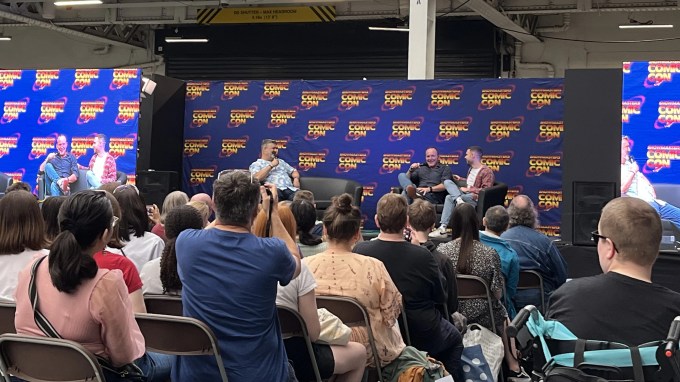
Clark Gregg is so lovely, warm and open and affable, and although he was quieter, Iain De Caestecker seemed really nice too. They were clearly really good buddies and they told lots of funny stories; they were very enjoyable to listen to. It was really cool to hear how they got into acting and how some of their early roles shaped them and their approaches to their careers and their new projects sound interesting, although I’m not entirely sure Iain’s is my thing. They talked a little bit about Agents of SHIELD but I couldn’t help wishing that they’d talked about it a bit more, about their experiences on the show and with their castmates. I’m pretty sure everyone there was an Agents of SHIELD fan and would’ve welcomed any behind the scenes stories. On that note, I’m still sad about missing Ming Na Wen when my anxiety forced me to cancel and I would LOVE to see Chloe Bennet at a convention, although I’m not sure she does them anymore; she hasn’t done one in years, pandemic irrelevant. I can only imagine what an absolute mess I’d be if I had the opportunity to meet her, given how important the character of Daisy Johnson is to me; her acting is, of course, a big part of that.
When the talk ended, Mum and I found a table tucked away and had some lunch. We ended up chatting with a man who had a service dog, a gorgeous yellow lab or golden retriever, I wasn’t quite sure. But he was lovely and that got us talking. Now that I’ve been accepted to Autism Dogs‘ service dog programme (yes, I am SO excited about getting a service dog but I want to talk about that properly in its own post because the whole thing is a really big deal), I’m always keen to talk to people about their experiences and about their service dogs. This guy – he was also autistic but had his service dog due to being in the armed forces – patiently talked with me about his previous and current service dogs and even showed me photos of his dogs meeting various famous people; that made me laugh. While obviously not a good reason for trying to get an Autism service dog, I think that must be a super cool way of raising awareness about Autism and the needs of autistic individuals: posting pictures of your service dog with someone famous.
When the time rolled around, me and Mum headed down to the little auditorium area. I ended up making friends with someone in the queue and we spent the wait, discussing how much we love Amanda Tapping, about Stargate SG-1 and Sanctuary. She was having a hard time and, as the only person there, I did my best to keep her occupied until the talk began and then we were all absolutely occupied by Amanda. She walked out onto the stage and I noticed straight away that she was wearing three of the bracelets I’d made her – I thought I might explode with joy. (I couldn’t see, at the time, which ones she’d chosen and my photos turned out not to be clear enough. I ended up scouring social media for photos that would reveal them and, although it took several days, I did eventually get to see which ones they were, which made me very happy.)


I’ve always found Amanda to be a beautiful, thoughtful speaker. Even when answering questions from the audience, questions she couldn’t have prepared for, she speaks well, earnest and personable and funny, always engaged with both the person who asked the question and the audience as a whole. I think it’s because everything she does comes from a place of empathy. All of that said, the talk was really interesting and enjoyable. She told stories, from the set of Stargate SG-1 and Supernatural, and joked around with the host; she talked about her upcoming projects (although the future is very unknown with the writer’s strike going on) and how she’d been thinking about the future and what she wants to do next, how she’s told her agents that she wants to act again. That was very exciting to everyone. She also shared quite a lot about her life, like stories from quarantine times and how she prepares for these events and recovers after, and it was so lovely and such an honour to get a little glimpse into her world. The one thing that I felt was missing was any talk of Sanctuary, especially as her most recent starring role and a project that was such a world unto itself, driven by this small, emotionally invested circle. It would’ve made the experience perfect to hear a couple of stories from that time. I kept waiting for her to mention it or someone to ask a question about it but nobody did. I’d finally gathered the courage to put my hand up and ask a question about it (I can’t remember what it was now – probably something about how it differed to other shows she’s been a part of or about the character of Helen Magnus, another of my absolute favourite characters of all time) but it was too late; we’d run out of time and they weren’t taking anymore questions. But it was fine. The day had been amazing and the fact that I’d even considered asking a question was a really big deal. Maybe next time I go to a similar event, I’ll actually manage to ask one.
So, yes. As I said, it was an amazing day and an amazing experience, despite all of my anxiety around. It took me a while to process it all but when I finally felt like I could put at least some of it into words, I posted this…
When Amanda’s talk finished, Mum and I got going, heading back to the station and catching the train towards Manchester. Having been accepted by the Autism Dogs charity, we wanted to go to their fundraiser the next day to show our support and our gratitude. It was a bit of a trek though, especially after such a long, emotional day. I’d planned to work on the train but I was so tired that I ended up putting my head down on the table and sleeping for more than two hours. Oops.
It was pouring with rain when we arrived – absolutely tipping it down – and since our hotel didn’t do dinner, we picked up fish and chips and the hotel was really lovely and accommodating in letting us eat in our room. I was still falling asleep, literally wherever I stopped (like leaning on the bannister while the hotel staff member retrieved plates and cutlery for us); I barely made it through my dinner. We ended the day watching one of the Sanctuary episodes I had on my laptop (and were properly weirded out, watching Amanda with long, dark hair after just talking to her in person with short, blonde hair). We were both asleep early, probably by ten and definitely by eleven.
SUNDAY
Exhausted from the day before, it was a struggle to wake up early but I did eventually manage to force myself out of bed. The shower was super slippery and I nearly fell over several times, which was a bit scary, but I did survive – just – and then ran around like a headless chicken as I got myself ready and packed up. The cab was already waiting when I was done but then I got lost twice on my way out of the hotel. So… not the most graceful beginning to a day.
My Mum and I spent the morning at the Autism Dogs fundraiser, which was really enjoyable. We ate cake, met some gorgeous dogs, and watched the dogs compete in some very adorable competitions, including waggiest tale and several rounds of musical sits. It was all very cute.


The event being so far away meant that we didn’t know anyone there (apart from a few people from Autism Dogs) but we met a really nice family and ended up spending most of our time chatting to them (and their gorgeous dog). It was a really nice morning.
Then it was back to the station, a really long wait for the train, and a long series of trains home. The only thing of note was a really adorable corgi on one of them. I could definitely see myself having a corgi. But beyond that, it was long and cold and monotonous. I was completely exhausted – physically, mentally, and emotionally – so I didn’t manage to do anything on the journey; I ended up alternating between scrolling through social media and sitting back with my eyes closed.
Getting home was a great relief. It had been a really good weekend but, as exhausted as I was and needing to process everything that had happened, I really needed some time in my safe space without loads of people around. I was delighted to see the cats too; I hate being away from them. I went to bed ridiculously early and was asleep in minutes.
This post is – clearly – quite late. To be honest, I wasn’t sure if anyone cared, a fear that I often have about this blog, especially in my lower moments. But this blog really matters to me so I’m trying to ignore those whispers. This was a really cool week where some really special things happened and so I came back to it and pushed myself to get it done. I hope you enjoyed it, or at least found it interesting. It’s kind of funny; I think these are the posts where you can potentially learn the most about me but because they’re so busy, with so much happening in each one, that fact sometimes goes unnoticed. I don’t know. Maybe that’s just my runaway brain overthinking.
I hope you’re all doing well.
Amanda Tapping: Embracing Mental Health as a Fandom (Livestream)
Posted on June 18, 2023
I have been a fan of Amanda Tapping – Samantha Carter in Stargate SG-1, Helen Magnus in Sanctuary, actor, director, and more – for years, since I was about fifteen or sixteen (so over a decade). She’s an amazing actor, a fantastic director, a deep and creative thinker, and an incredibly generous person: for years, she did – amongst other things – annual weekend-long charity events, each one raising thousands and thousands of pounds for charity. I’ve always loved her performances, especially as these two characters, (and her commitment to the integrity of the characters) and they had a huge impact on me; even after all these years, there are moments from the shows and from the audio commentaries (that I listened to obsessively) that I see show up in my life and my creative approach. They – and she – really did change my life.
Back in 2016, I had the opportunity to meet her at her annual GABIT event, AT9. This event involved several Q&A sessions when she not only answered questions but told stories from her life and acting experiences. Attendees also got to take photos with her and get her autograph, getting little pockets of time to talk to her. Meeting her was an amazing experience, even if I was so unbelievably nervous that I could barely talk. But she was so sweet, holding my hands the whole time and just pulling me out of myself, making it a little easier. She really is the loveliest human being.
A few weeks ago, I got an email from The Companion, a website focussed on sci-fi media with this goal: “To create the most special, fun, and welcoming place where as a geek, you can be yourself and bring you closer to the creators, actors, experts… and each other. We launched The Companion in October 2020 during lockdown on this shared belief: geeks deserve a high quality home just like fans of sports, fashion, music, and other ‘premium’ genres.” Their think pieces, character and episode analyses, behind the scenes articles and so on are all really interesting and their interviews with so many people involved with these shows are always fascinating and good fun. It’s a great site, even without events like these. Back to said email…
“We’re absolutely thrilled to announce this very special event with Amanda Tapping – and all for a good cause. As one of our cherished Companion members, we wanted you to be the first in line for an opportunity to meet the legendary actor, director, and producer. Join us on June 3rd, 2023, for a live online interview with Amanda Tapping covering a subject close to her heart: mental health. Hear stories of how Stargate fandom saves lives and share some of your own. ‘As part of the sci-fi community, I’ve seen firsthand how we can all come together and support each other,’ says Amanda, ‘and I would like to extend that same compassion and understanding to issues around mental health.’“

So I love Amanda Tapping and mental health is a deeply important cause for me as well so this seemed like a gift from the universe. I bought a ticket straight away. There was also an opportunity to meet her online after the event but, as much as I would’ve liked to, I just felt like it wasn’t right for me. For one thing, it was in a groups for a short period of time and I know I wouldn’t have felt able to say anything I wanted to say with an audience. And it was just too expensive to justify, especially with that context. So I reluctantly clicked away and hoped I’d get another opportunity in the future.
We did, however, have the opportunity to share a story that would be passed on to her and I really liked that idea; it felt much less exposing, even if it did get shared during the livestream. So I wrote about how Sanctuary in particular got me through sixth form when I first started struggling with depression and anxiety; I had this fun little daydream about working on the set, working on the scripts for the show, and I probably spent more time in that world than I did in the real one (I swear, I had multiple cork boards with storylines planned out). I couldn’t have gotten through that period of my life without it, without her.
I really wasn’t sure what to expect from the livestream, how it would go, but it was highly enjoyable despite the emotional nature of it. Everyone was very thoughtful and heartfelt but still funny and ultimately hopeful. I won’t share everything because it was a unique and special experience that we all paid for but there are things that I think no one would mind if I shared because of how they could help people. And I wanted to share the experience of this livestream with someone I love and respect so much.
The first thing Amanda did, after being introduced, was lead everyone through a breathing exercise – breathe in for four, hold for four, out for four, hold for four – that she does with her daughter, Olivia, when she’s feeling “super anxious.” She clarified that she’s not an expert or anything but that she has been through “things” and that she’s maybe, as her daughter has said, a person who “feels things a little too much.” She feels it and she wants to help people who are also feeling it; that was a really nice way of putting it and it was nice to hear. She was pretty emotional from the start, telling us – and there were a lot of us, in the comments and just watching – that she was “really, really grateful that [we were] all [there].”
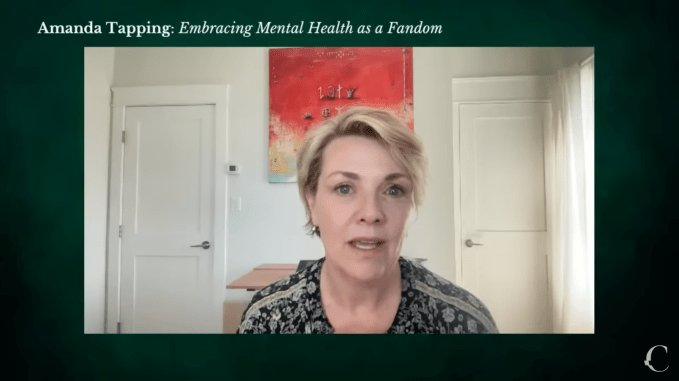
I hadn’t forgotten how much I love her but seeing her again and hearing her voice, I was just overwhelmed by how much she means to me, how much she’s impacted my life. And I was just so, so pleased to see her. It was just pure, overwhelming joy. And from the look on her face, she felt the same way about being there, about connecting with everyone and being ‘together’ again. It was really sweet. And the first thing she shared felt very typically Amanda: it was the analogy of how we all carry bags of rocks, bags that only grow heavier over time, and how we all need to learn how to put them down now and then, take a breath, and just be, just be a person without that burden: “We all have our burdens but I think it’s really important to take a moment and put it down and just see what it feels like to not carry it around for a minute.” We’ll always carry those burdens and they help us to help other people but we need to look after ourselves too.
There was some significant discussion about COVID, both how she’d seen it affect other people (even in the way that people are driving more aggressively) and how she felt it had affected her. She talked quite a bit about her experience – about her family, about her fears, about her losses – more so than I would’ve expected. She’d felt isolated and scared and didn’t understand what was happening and why it was still going on; she had a lot of anxiety, especially watching her daughter go to high school in a mask every day (once schools opened again). And while it was, of course, so important to wear a mask, she talked about how hard it was to breathe with a mask and face shield for fourteen hours a day on a film set, getting home and feeling oxygen deprived. “It was easy to fall into isolation,” she said, “It was easy to go down the rabbit hole as I so often do,” and it took a while for her friends to pull her out of that. It’s amazingly comforting to hear someone you so admire and respect express the same feelings as you. It made me quite emotional to hear and even more so to think about what she was really sharing with us: these really personal details of her life. I’m always so touched when people, especially people like her with public profiles, share such personal details and trust us with them; it feels like an honour, a trust that feels really sacred.
Rebecca, the livestream host, asked her what had helped her that might help others and Amanda talked about several things, all good points and interesting insights into her life:
- She talked about how she and two friends would meet over Zoom every week and have a cocktail hour together. She also did various other Zoom based socialising with other friends, her brothers, her family… The thing that really helped was connecting. (The video connection went out at one point and the screen went dark, which – as Amanda pointed out – was very ironic since there’d been so much talk of connection.) She did talk about how hard that can be though because you know you’ll get a response which you’ll then have to deal with and the whole thing can feel so draining; I can definitely relate to that.
- She also talked about how important it is to share the load with your friends. It is, of course, important to be there for your friends but you also need to let them be there for you. People want to know how you are and they want to help; it can be hard to let them in but it can not only help your mental health but also strengthen your friendship.
- She talked about how exercise makes her feel better and stronger, how it’s taken a long time to feel safe enough to go to the gym again post the height of COVID. She actually talked about having a less than healthy relationship with food during the lockdowns – “Certainly during COVID and everything that went on, I mean, I ate every single feeling I had” and “We ate our feelings, we ate our anxiety, we baked a lot of bread!” – which was very refreshing; so many of us shy away from those conversations but she shared those negative coping mechanisms and how they weren’t good for her and what she did to balance them out: she talked about how it sounds trite but “physical activity is key.” Even if you can’t go for a run, just getting outside is good. She started her day in the woods – her happy place – with Martin Wood (who she’s worked with for years and especially closely on Sanctuary – I cannot express how happy it makes me that they’re still such close friends and hang out regularly), walking their dogs. That was how she got herself mentally prepared for the livestream.
- She said that she’s not good at stopping (somehow this did not surprise me) so she kept moving, getting better at baking and cooking and sewing just to keep herself busy, although she’s trying to get better at relaxing.
- During one of the stories shared (they couldn’t share all of them obviously but they did share a few), the writer talked about rewatching, including a quote from the psychologist Pamela Rutledge: “It can become really therapeutic, especially if you are feeling anxious. Watching the same piece multiple times reaffirms that there’s order in the world and that it can create a sense of safety and comfort on a primal level.” I’ve always found rewatching to be both enjoyable and helpful to my mental health and Amanda clearly felt the same way, that there’s no shame in it and that people shouldn’t be so weirdly judgemental about it: “Whatever you need to put the blanket on yourself and feel safe, even if it’s just safe for an hour, even if it’s just to calm your breathing for an hour, do it… Like, absolutely.” She got visibly emotional again – “I’m gonna cry but…” – and talked about how anxious she had been about the livestream, whether she could actually do it and whether she could do it justice, and so she rewatched Downton Abbey with her daughter which is their thing, especially when one or both of them are anxious (I find it so comforting that we both do this, albeit with different shows). She said that, whatever it takes, we have to allow ourselves these comforts without shame or judgement, whatever it takes to get through. As I said, she was visibly emotional (to the point of actual tears and tissues) and it reminded me of just how much she cares; she cares so fucking much. She cares more than we could possibly imagine and that’s just so moving.
- She and Rebecca discussed the idea of always appearing fine, of never letting people see when you’re struggling. Amanda said that, when she’s running a set, she’ll put on the mask and make sure everyone feels confident and feels like they can rely on her because that’s what they need but, when it’s safe, it’s so important to let it all go and not be okay if that’s what you need. The examples she gave were amazingly honest and, again, I was touched that she would share these things with us; She’s such an open, generous person and the fact that she trusts us with these parts of her life mean so much to me that it’s almost overwhelming. As she said, this idea of allowing yourself to be yourself and fully feel what you’re feeling isn’t new or groundbreaking but it is important and needs to continue to be part of the conversation. She said, “It will be okay and it will pass,” and it was hard not to feel her conviction even though I often don’t feel that way.
- They also talked about social media and how often it can become the highlight reel of your life (I’ve always found this viewpoint really interesting because it never, ever occurred to me to use social media in that way and so I never have, which makes it fascinating to me that people do), which isn’t a new concept (family photo albums, for example) but has gotten out of control with social media. Amanda said that she noticed herself doing that on Instagram and that maybe she needs to post “the shit” more often. They also discussed how easy it is for people to send hateful messages through social media and Amanda said how hurtful it was – and still is – to read some of the awful messages about herself or the show she was in at the time, although the worst ones were when people attacked her appearance: “It killed me every time I read something crappy.” They talked about how one of the best ways to handle that sort of thing is to take it to a friend, to talk it through and even make fun of it to make it less painful.
Back to the stories for a moment. As I said, a handful of the stories submitted were shared over the course of the livestream. (Mine wasn’t one of them – I think it was probably too long and also didn’t serve as a jumping off point for more questions – but that was fine; they’re all being passed on to her so she will see it. That’s good enough for me. Apparently they were all really uplifting and just amazing examples of this fandom, that they reflect a deeply inspiring reality of how these fandoms have been so much more than just sources of entertainment for so many people: how they’ve provided solace, a sense of belonging, and even lifelines in the worst times, a description that was really moving to me.) There were lots of people saying that she and her work as various characters have saved their lives and you could see how much that meant to her. At one point, she used the word ‘verklempt’ (a word I’d never heard before but which means ‘overcome with emotion’ and you could really see that she was). One of the stories talked about fandom really well and what it means to people and Amanda was really taken with the description…

“Wow, that’s beautiful put. Holy moly. And it’s true. I don’t know if I can add to that, that’s just very beautifully articulate.”
Rebecca talked about how, in researching for the stream, she found articles about how sci-fi and how the escapism it provides can be bad for your mental health and found that very surprising. That had surprised her because she’s personally always used sci-fi to get more in touch with the world around her. Amanda completely agreed and they talked about how that idea bothered them both – that the escapism of sci-fi is a bad thing – and why. Amanda talked about how sci-fi is so often maligned and characterised as the ‘geeky’ genre; I find it so heartening to know that she’s always been able to see what it could be. She talked about how she doesn’t think you can escape too far, that being able to escape is important: we can escape into the thing and then, through the internet, we can connect with people all over the world. A lot of people just don’t get that. And following on from that, she talked about how, in her experience, the Stargate fandom is full of really nice people and the Sanctuary fans were always so generous and kind, how she constantly sees fans supporting each other, online and in real life, and how fiercely they wanted to help with her charity, Sanctuary For Kids. She said that she’s observed a special and unique generosity from sci-fi fans, perhaps because so many people feel seen by the characters and shows in this genre.
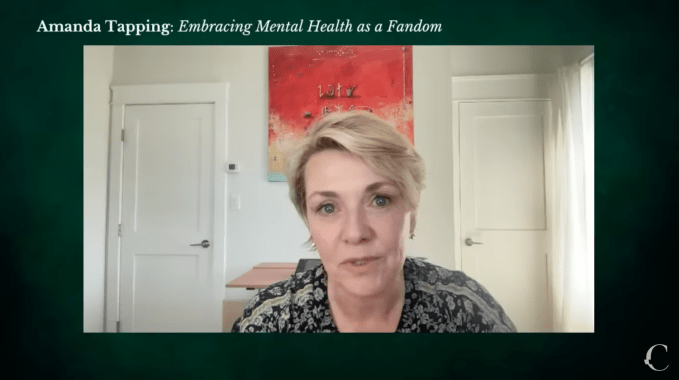
She talked about how hearing people’s stories means so much to her, how it’s had such a big impact on her. Apparently her favourite stories are the ones about what the characters mean to people and how those connections have made them feel stronger (she mimed hugging everyone, which was really cute). The number of stories like that was really moving but there were also so many stories about how people felt that Amanda herself had saved them and Rebecca asked her what that felt like. You could see how deeply that moved her – continues to move her – and she sniffed so I think it had actually moved her to tears. She could see how much Sam Carter meant to all of these people, especially young women and that felt like a huge sense of responsibility, that Carter was – and still is – this huge role model. She felt like she couldn’t let the show screw up her story so she would fight the writers on certain decisions despite not being a confrontational person. She’s talked about that a lot and it always makes me think how lucky we all were to have Amanda Tapping cast as Samantha Carter because someone else might not have pushed so hard for the character and for the audience.
The final story described Amanda as being “a light in the darkness” and she was clearly quite overwhelmed by that (something that I found both surprising and really touching, considering how often she must’ve seen messages like this over the years): “Wow, um, the only thing I can say to that is that, um, it works both ways and that, in my hours of darkness, the fandom has helped me see the light and feel okay. It’s not that you’re just helping each other, you’ve certainly helped me and I know a lot of other actors who go, ‘Oh, like, people do care and people do like us…’ And, for me, I…. It’s really important to me to connect to fans when I meet them… It’s given me a whole other world of experience. But it does, it goes both ways. It absolutely goes both ways. I’ve been lifted up out of fires more than you guys could possibly know, by your kindness and your generosity and your love.” She was visibly emotional again and I was practically weeping. It’s easy to think that we, as individuals, don’t affect her but clearly we do and that’s a lot of feeling that I’m not entirely sure what to do with.
Eventually they wrapped up the livestream and Amanda wished us all goodbye: “I love you all and it’s been a real honour to be a part of this fandom. It’s been such a huge gift in my life so thank you.” She blew us a kiss and then it was over. It was moving and thoughtful and considerate and generous and a really lovely experience. I really hope that they do do more of these conversations – Amanda said that she wants to revisit all of this, how this is just the start, just scratching the surface of a very big conversation – because it was very inspiring and I think they really could do good, even if none of us know what that looks like yet.
It was a lovely hour and I really hope that they continue to do these discussions. And seeing Amanda on my screen again, hearing her talk about all of these things that are so important to all of us, I would so love to see her again. I would have reversed my decision on the post stream meet and greet sessions on the spot. She’s visiting London for London Film and Comic Con in July and I’ve been going back and forth about going for months, even more so after the livestream. I would love to meet her again – so much has changed since the last time I saw her (not that I’d be filling her in on everything but I feel different and this me would like to meet her) – but conventions feel so scary and overwhelming, overstimulating on every level. But then I got an email that she was doing a talk too and, after a long conversation with my Mum, I’ve decided to try. There are other cool people there but I’m not going to try and take on too much, just going to Amanda’s talk and meeting her. Hopefully I will be able to handle it – the noise, the people, the anxiety – and have a good time; the tickets have been purchased and now I guess we just have to wait and see.
International Women’s Day 2021
Posted on March 8, 2021
To celebrate International Women’s Day 2021, I thought I’d share fifteen awesome fictional women that have inspired me or empowered me or made me feel seen in a world where I often feel invisible. Originally I thought I’d do a list of awesome women from real life but with everything I’ve got on my plate right now, I didn’t feel that I could do a good enough job in time. And given that these would be real people who just might see what I’d written (unlikely, yes, but still possible), I’d hate to do a rush job; I’d want to be able to dedicate some serious time to it to make sure I did these women justice.
This post will involve spoilers for the characters and the books or TV shows they’re a part of so if you don’t want to have a story spoiled, please skip the character and move on to the next character!
1. Sephy Hadley (Nought & Crosses, Knife Edge, and Checkmate by Malorie Blackman) – The story of the Noughts & Crosses trilogy (now a series) takes place in a world where the dark skinned Crosses are revered and the light skinned Noughts are reviled. Sephy is the younger daughter in a prominent, privileged Cross family and, naïve to the racism she’s been largely sheltered from, she’s confused and frustrated when her childhood friend, Callum – a Nought whose family lives on the poverty line – starts pulling away and taking his frustration with the way he and all Noughts are treated out on her. As much as she loves him, their conflict and her difficult home life result in her escape to a boarding school, where she becomes involved in politics and the fight for equality, becoming a Noughts Right activist. But all of her plans are destroyed when she is kidnapped by the Liberation Militia, a terrorist organisation that Callum joined after she left for boarding school. Despite (and sometimes due to) her privilege, she suffers deeply, both due to her own destructive decisions and the destructive decisions of others. She struggles with her mental health, with the guilt over certain choices she makes and the resulting consequences, and how to prevent past mistakes from irreparably damaging the future. Forced to grow up fast and face some major challenges, she does deal with a lot of insecurity but it all comes from a place of such deep, unconditional love: for Callum and for their daughter, Callie Rose. Pretty much everything she does is due to her desire to protect Callie Rose but past trauma causes her to make mistakes, often making their relationship a contentious one. It’s been a long time since I read the books but I always felt for Sephy, admired just how vast her love for Callum and Callie Rose was even when she wasn’t good at showing it and I empathised with how she was constantly trying only to make things worse. The conversation where she finally manages to make things right feels just as special and cathartic as if you, the reader, are experiencing that redemption yourself.
2. Ros Myers (Spooks) – Ros was one of the first TV characters that I fell in love with and whose storyline I found myself seriously invested in. After playing a vital role in foiling a coup against the Prime Minister led by her boss and funded by her father, a prominent figure in the government, she transfers from MI6 to Section D of MI5 (the unit the show follows). Given that she makes no effort to connect with the rest of the team (earning her the reputation of ‘the ice queen’), it takes a while for her to find her place there but eventually her impressive skills and unwavering loyalty (especially to Harry, the head of the unit) win her the trust of the team and eventually the position of Section Chief. She’s not a straightforward character and that was something I always found fascinating about her. Her willingness to sacrifice anything and everything to protect her country is beyond admirable but it did, on several occasions, conflict with her other most dominant trait: her loyalty. At one point, she betrays the team because she thinks she sees a better solution to the problem they’re facing and at another, she is forced to sacrifice the life of a teammate to protect a room full of people the world probably couldn’t function without, even though many of them are pretty awful human beings. Plus she frequently puts herself in serious danger without a hint of fear or doubt. Her dedication, her loyalty, and her strength… they’re all traits I hold in the highest regard. She also has this unshakable sense of purpose, this absolute certainty in what she does; that’s definitely something I’d like to find (or build, if that’s the way it works) at some point in my life.

3. Emily Prentiss (Criminal Minds) – Criminal Minds follows the BAU, the Behavioural Analysis Unit, a team that use psychological profiling to track down and catch criminals, most commonly serial killers. Despite arriving under somewhat of a cloud, Emily becomes an integral, irreplaceable part of the team (one of the things that’s really nice about the show is that each of the team have slightly different relationships with one another and Emily is no different in that regard; each of her relationships with the team is unique and I could delve into the details of each one and why they are the way they are because I find that really interesting but I won’t – otherwise we’ll be here forever). She’s tough and stubborn and positively allergic to bullshit, willing and definitely able to defy those in power or positions of authority when necessary; she’s a force to be reckoned with. Bonus points for being hilariously sarcastic. She’s incredibly intelligent and a brilliant profiler, but she also cares as deeply as she thinks. She’s compassionate, both with her team members and the victims they work with, and she clearly feels things very intensely, from long ago traumas to the haunting outcomes of many of their cases; while she prides herself on her professionalism and her ability to compartmentalise, she isn’t afraid to be vulnerable with the people she trusts. Despite some fairly wonky writing at times, she’s an interesting and multifaceted character, one that we see grow a hell of a lot over her time on the show: we see her go from an awkward and insecure new agent to a highly respected agent and eventually to Unit Chief, something that, for me at least, felt particularly satisfying given her loyalty to the team and her commitment to what they do. And as much as I love her for all of these things, I think what I love and admire most about her is her absolute, unwavering loyalty to her team. For example, one of my favourite storylines involves an enemy from her past reappearing and threatening the team to punish her for her part in what happened to him. Instead of telling the team and putting them in even more danger, she goes rogue and attempts to take him down herself with dire consequences.

4. Helen Magnus (Sanctuary) – I’m honestly not quite sure how to sum up Helen Magnus (played by Amanda Tapping) in one paragraph. At the beginning of the show, we know that she was born in England during the Victorian Era and is 157 years old due to a dangerous biological experiment she and her Oxford colleagues conducted on themselves (while they were in their thirties). As well as being an M.D., she has doctorates in Teratology, Cryptozoology, Xenobiology, and Biology, and is the Head of the Global Sanctuary Network, a series of facilities that tracks down, protects, and learns from the unknown and extraordinary creatures and people that inhabit the world, described in the show as Abnormals. She heads the Sanctuary in Old City which, in addition to its scientific functions, both serves as a permanent and temporary residence for many Abnormals. Despite being born in an era where women were at a distinct disadvantage, Magnus was always strong-willed and forthright. She’s beautiful, enigmatic, and incredibly intelligent (an expert on multiple subjects, fluent in several languages, and the foremost authority on Abnormals, just for starters); she’s also an excellent diplomat and commands the attention of every room she walks into. She is or was personally acquainted with multiple famous historic figures, including multiple world leaders, Albert Einstein, Amelia Earhart, and Dr Martin Luther King Jr. Louis Pasteur was a close friend of her father and was her godfather. She’s at ease and confident in high pressure social situations, comfortable taking charge with a no-nonsense approach that most likely stems from her Victorian upbringing. She’s also well trained when out in the field, extremely competent at multiple forms of hand to hand combat, comfortable with a wide variety of weaponry, a skilled pilot, and technologically savvy. While she stays true (and proudly so) to her traditional English heritage (a dedicated tea drinker with great distain for coffee, her preference for staying busy, and so on), she is driven by her desire to learn, about anything and everything, in order to help and protect Abnormals. Her longevity has been a real asset in that regard, not that she ever takes a break; she frequently works through the night, entirely dedicated to the task at hand. But despite the advantages of her longevity, she has long considered it a curse as it ultimately means she will outlive everyone she knows, everyone she loves. This has caused her immeasurable pain and explains her guardedness (although that likely originated from her Victorian upbringing). But she never gives up; she never stops fighting or looking for a solution. She was one of the first television characters that I saw as a role model: I deeply admire her, her passion for knowledge, her drive to help people… She makes me want to be the best possible version of myself and to help and give the most I can. (I have actually met Amanda Tapping briefly and I did try to thank her the impact Magnus has had on my life but I was so overwhelmed that I don’t think I did a very good job; all being well, I do have another opportunity coming up, pandemic permitting, so hopefully I’ll be able to make actual, eloquent sentences this time.)

5. Alexandra Udinov (Nikita) – As hard as it was to choose between Alex and Nikita herself (if I included every awesome female character I love, this list would’ve had us all running for the hills due to it’s length so, at the very least, I tried to stick to one character per show/book/etc), Alex just won. I love them both but I think I connected to Alex in a way that I never quite did with Nikita, even when I didn’t agree with her actions. Anyway, context… After the murder of her prominent Russian family when she’s only thirteen, Alex ends up a victim of human trafficking and a drug addict in the US where Nikita tracks her down and gets her clean. In an attempt to give Alex a reason to live, Nikita reveals that the rogue Black Ops division that trained her were behind Alex’s parents’ death and together they attempt to bring the unit down. But it’s obviously far more complicated than that. Alex is a really interesting character because she’s gone through so much and yet she’s still so young; she’s always been defined by others and never been able to figure out who she is on her own terms. Hiding all of her vulnerability behind a tough exterior as both a coping mechanism and a form of protection, she comes to define herself by her pain (of which there is a significant amount) but the more she learns about her parents and her childhood as well as the best and worst of the people around her, the more she starts to realise that that isn’t a sustainable way to live and how it’s preventing her from moving forward in her life. And so she has to learn how to fight through and process her trauma, learn to let go of the parts that are damaging and how to use her experience to find her place in the world.

6. Samantha Carter (Stargate SG-1) – A member of SG-1, the front line team for the US Air Force classified organisation Stargate Command, Samantha Carter (also played by Amanda Tapping; this was pre Sanctuary and Helen Magnus) is the resident genius, an astrophysicist and Air Force Officer who progresses from Captain to Colonel during the timeline of the franchise. Stargate Command has multiple SG teams travelling to other planets using a device known as a Stargate, which creates a wormhole that connects to the Stargates on other planets, to form alliances and attain whatever technology they can to defend themselves against the dominant, malicious species in the galaxy, determined to control as many planets as possible. Carter is usually the one to save them – the team, the SGC, the planet – whenever they get into trouble, something that happens to them relatively often as the flagship team. She’s often forced to choose between the two sides of herself: she’s incredibly intelligent, curious and keen to explore and learn, but she’s also an impressive soldier and pilot, more than competent with weapons and in hand to hand combat. This combination quickly earns her great respect among those involved in the Stargate project, although it does cause conflict on occasion. She’s also intensely compassionate – her first instinct to be kind and to help. She’s very close to her three teammates and would do anything for them. One of the ongoing storylines revolves around her relationship with her commanding officer, Col. Jack O’Neill: they slowly develop feelings for each other but when they’re eventually confronted about them, they agree to ignore them to keep the team together (the Air Force would never allow them to have a relationship and remain on the same team) and continue doing the jobs they do so well. However, that’s easier said than done, especially when they repeatedly meet parallel universe versions of themselves who are together, who didn’t have the Air Force regulations standing in their way. Sam Carter has always meant a lot to me, with her core drives to learn and to help being the same as mine. She’s also always inspired me, inspired me to be the absolute best that I can be (she actually inspired me to study Physics when, until then, it had just been a hobby) and to remember that there’s a solution to every problem, even if it’s not always easy to find.

7. Ellie Linton (Tomorrow Series by John Marsden) – The series begins when a group of teenagers go on a camping trip in the Australian bush and come home to find that their country has been invaded. Everyone they know and love has been captured and the only safe place for them is their camping hideaway, locally known as ‘Hell.’ It has the potential to be a bit of a cliché – kids forced to be heroes – but with such a focus on how emotionally complicated and morally complex the situation is, it never feels predictable or stale. The story is narrated by Ellie as she writes down everything that happens to them, an idea they quickly adopt so that, maybe, what they go through and sacrifice won’t be forgotten or lost in the chaos of it all. She documents everything from her emotional turmoil, and the conflicts within the group to their attacks on the enemy, the losses of people they love, and the devastation over what’s happening. She feels everything incredibly deeply and although there are, of course, periods of time where she has to shove her emotions aside, she is profoundly affected by what she is forced to do and what happens to her throughout the war. It’s never explicitly stated but it’s clear that she’s dealing with a serious amount of trauma. Fortunately for her, she’s strong willed and determined despite the often overwhelming fear and uncertainty; she never, ever gives up, even when it seems that there is nothing left to do. Regardless of the almost inconceivable odds against them, she still believes (or forces herself to believe) that she and her friends can make a difference and that’s more than a little inspiring to me.
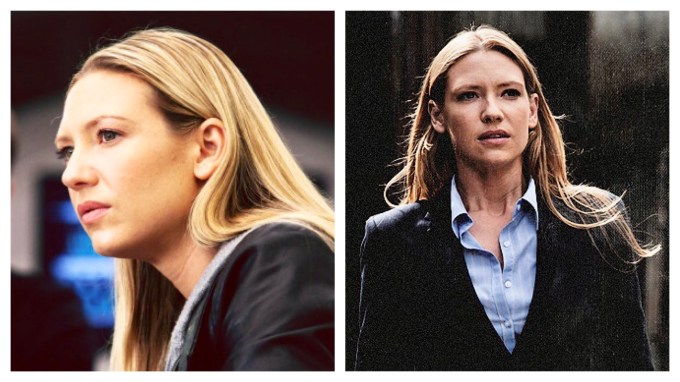
8. Olivia Dunham (Fringe) – FBI Agent Olivia Dunham begins working in a new, highly classified unit after a series of strange, science or technology based events start happening, many of them fatal for the people involved. She works with Agent Astrid Farnsworth, Dr Walter Bishop (a genius but mentally unstable scientist specialising in fringe science who, until ‘the pattern’ started, had been institutionalised for nearly two decades), and Peter Bishop, Walter’s estranged son, who is brought in as a civilian consultant by Olivia to essentially look after his father, although he proves his intelligence and wide range of skills, making him just as valuable to the team as his father. Olivia is driven by a strong sense of justice, working relentlessly to solve every case and while she keeps her own emotions tightly under wraps, she is compassionate with victims and loving with her sister and young niece. Throughout the seasons, we learn about her traumatic childhood and how that has informed who she is and through alternate timelines and parallel universes, we see how things might’ve been different. This also gives Olivia a chance to re-evaluate her life and what she really wants. This show is so complicated that it would take thousands of words to properly explore her character but I loved Olivia from the start because of her strong sense of right and wrong and because of how unbelievably hard she worked because getting justice for the victims of the fringe events mattered, even if no one would ever know the truth due to the classified nature of the work. It was never about credit; it was always about the people and how every single one mattered, regardless of who they were or how important society believed them to be. They were all important to her. But beyond that, I loved watching her evolve over the course of the show. Fundamentally, she was the same person with the same core values but slowly, she became more open, more trusting, more loving. Having been pretty much alone and self reliant up to becoming part of the Fringe team, it was actually quite emotional to see her lower her guard and let people be a real part of her life, even if there were some (serious) bumps in the road. At the beginning of the show, she didn’t really have anyone and by the end, she had so much more than I think she ever thought possible. There was something really beautiful about that, about how much life can change and change you, often for the better.
9. Olivia Benson (Law & Order: Special Victims Unit) – After twenty two seasons of Olivia Benson (played by Mariska Hargitay), it’s hard to know how to sum her up. From a Detective in the Manhattan Special Victims Unit (that primarily investigates sexual offences), she rises through the ranks to where she is now, the Captain and Commanding Officer of the unit. Watching her become Captain was incredibly satisfying and emotional because she gone through so much and worked so damn hard; she’s come so far and she’s earned it beyond a shadow of a doubt. She’s grown so much and become so self assured, so confident in her abilities. It’s been an amazing journey to watch. She’s incredibly strong, determined, and resourceful, probably a combination of a painful childhood and everything that’s happened to her while she’s been on the job; she’s been in more dangerous, traumatising situations than one can count. Having said that, the show and Mariska’s performances do a good job of normalising therapy and showing the positive effects it can have. Olivia is also very intelligent (for example, she speaks multiple languages including Italian, Russian, as well some French and Spanish) and has become very skilled at dealing with people within the Justice system, has the respect and reputation and knows how to wield them to get the best outcome for the people they’re trying to help. She’s deeply empathetic and she’s always been good with the victims of their cases, gentle but empowering, helping them to regain their confidence and agency. At her very core, she’s driven to help people – I’m not sure what she’d do if she couldn’t help people – and I think that’s why she’s lasted so long in a job that often burns people out in just a few years. She’s been a big inspiration to me ever since I started following the show, for all the characteristics I’ve just mentioned. If I can be half as good a person as she is and do half the good that she does, then I’ll be happy.

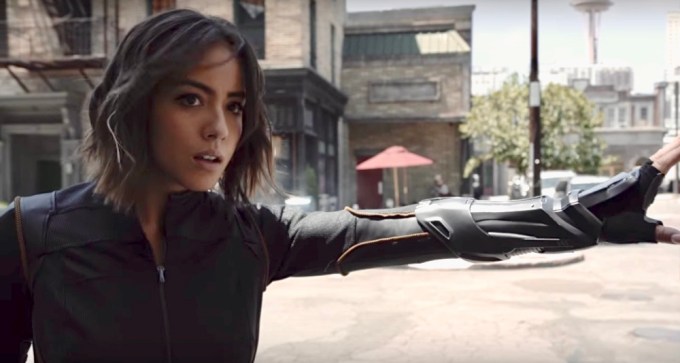
10. Daisy Johnson (Agents of S.H.I.E.L.D) – As I said in my post about Daisy, I could write a thesis on her and her character arc (if you want to read my mini-thesis, head to that post). I loved her right from the beginning. She’s funny and smart and tough but she also feels her emotions deeply and is incredibly driven, often by those deep emotions and her sense of what’s right and wrong. From a hacktivist living in a van to a loyal, dedicated agent and superpowered hero (she’s able to manipulate vibrations, to the extent that she’s caused earthquakes as a result of losing control of her emotions), she grows up and goes through a lot but in the end, she finds family in her team and a place to belong in SHIELD, two things she’s spent her whole life searching for. To quote myself from my previous post: “She’s not perfect, of course – she makes her fair share of mistakes and bad decisions. Sometimes she hurts the people she loves. But while every blunder becomes a part of her, she doesn’t allow them to define her. She’s defined by the future, by what she does next. She inspires me to be the same. And above all else, her motivation is to help people and that’s something that’s never changed; it’s something that’s at the very core of her and I find that really inspiring too.”
11. Cassie Stuart (Unforgotten) – I’ve loved Nicola Walker for years, loved the various characters I’ve seen her play, but I think DCI Cassie Stuart is my favourite. She heads a team within the Metropolitan Police Service that we’ve now watched investigate multiple cold cases (although this seems to be more of a coincidence than by design, i.e. they’re not a cold case unit but the cases featured have involved crimes committed decades previously). These cases are not only difficult due to the loss of evidence over time, the deaths of people involved, and so on, but also because they’re often interviewing family and friends who have been grieving (or, maybe worse, hoping) for years, which is obviously a lot of emotion to be on the receiving end of. Cassie is a fantastic detective, smart and experienced, but she’s also extremely compassionate: she feels it all and that makes these cases unbearable at times. There’s so much more I could say about her but that’s the thing I admire most about her, how compassionate she remains in the face of such pain and distress, both because that’s what the other person needs and because that’s just who she is. She cares about people and while that makes her who she is, it isn’t an easy burden to carry. I relate to that on a visceral level, as a person who has always cared deeply about others, sometimes to my detriment. But having said that, I wouldn’t change it. Nor, I think, would Cassie, not really. It takes a lot of strength but caring that much, it makes the world so much bigger and so much more vivid and real in a way it could never be if you didn’t.
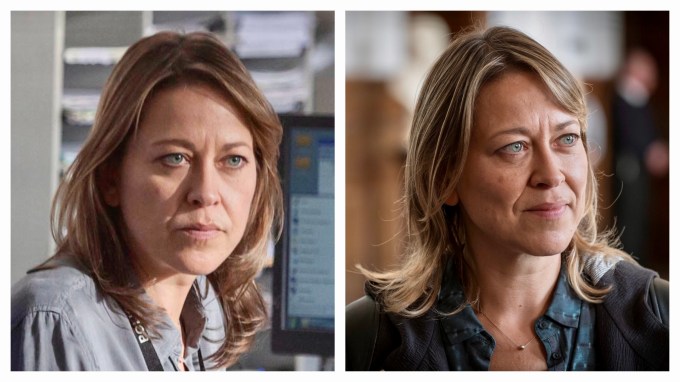
12. Aza Holmes (Turtles All The Way Down by John Green) – I was so excited when I learned that John Green was writing a book with a main character struggling with OCD and I absolutely loved it, loved Aza and really related to her, to how she thinks and how she processes the world. Aza is sixteen years old, trying to manage school, friends, and life in general, while desperately struggling with constant anxiety about bacteria, infection, and dying from Clostridium Difficile Infection (also known as C. diff). She describes the anxiety as ‘thought spirals’ or ‘invasive thoughts,’ over which she has no control. The only way she’s able to manage it is to check and clean a permanently open cut on her finger, proving to herself that she doesn’t have C. diff. We struggle with a lot of the same things, from the littlest things to the biggest things: with ‘thought spirals’; with her sense of identity (she describes her search for her self as opening Russian dolls, looking for the final solid one but never finding it; with relationships (“I can’t have a normal life if I can’t kiss someone without freaking out.”), which is actually pretty comforting since there are so many stories where a relationship is the thing that makes a person’s mental health better; with the loss of her father and how much it affects her, even years later (“And the thing is, when you lose someone, you realize you’ll eventually lose everyone,” “I remember after my Dad died, for a while, it was both true and not true in my mind… My father died suddenly, but also across the years. He was still dying really – which meant, I guess, that he was still living too,” and how she imagines the moments they should’ve had, so clearly that sometimes she forgets that they didn’t happen), which is so painfully real for me. I was deeply affected by the breakdown of Aza’s mental health, having experienced similar downward spirals myself, where my mental illness has me doing things I would never rationally do. And the climb back up was similarly moving because it was so agonisingly relatable: “Everyone wanted me to feed them that story – darkness to light, weakness to strength, broken to whole. I wanted it too.” She feels so fragile after everything she’s been through and her thought spirals are still there, her life suffocated by her anxiety. At one point, she says, “I could never become a functioning grown up like this; it was inconceivable that I’d ever have a career,” and that is one of the hardest and scariest parts for me when it comes to managing mental illness and disability. But over time, Ava starts to accept the reality of her mental health (“I would always be like this, always have this within me. There was no beating it. I would never slay the dragon, because the dragon was also me. My self and the disease were knotted together for life,”) and slowly, things start to improve, which we notice in the way she thinks about herself and her life: “You’re the storyteller and the story told. You are somebody’s something, but you are also your you.” Real progress is often slow and subtle and we don’t even necessarily notice it at the time but it is progress. And seeing the progress she makes gives me hope. I’m pretty sure this paragraph is a bit more chaotic than the others but that is just because I relate to Aza and her experiences so strongly, even if the actual events aren’t that similar. But it was like my thoughts and feelings were being put into words and that was such a profound experience. I don’t think you can really know how important it is to have a character you relate to until you can’t find one. Reading the book made me feel less alone. It made me feel seen. It made me feel understood. And I’m so, so grateful for that.
13. Ginny Weasley (The Changeling by Annerb, a Harry Potter series fanfiction) – In the original books, I preferred Hermione to Ginny but then we obviously saw a lot more of the former. While rereading old favourites from my fanfiction days (I both read and wrote it during my teenage years but revisited it a few years ago as a relaxation strategy), I discovered this story, where Ginny is sorted into Slytherin instead of Gryffindor. The story creates real depth around the houses and the traits that define those within them: for example, we learn about what ambition, loyalty, conflict, and rules mean to Slytherins, from both positive and negative perspectives. This life-altering moment, this complete change in how she’d expected her life to pan out, obviously has a dramatic effect on her development as a person and how she experiences the events described in the series. She’s strong willed and reserved: she knows the value of secrets, knows it so well that she becomes an incredibly skilled Occlumens and Legilimens. But she’s also deeply loyal and takes her responsibility for others very seriously, sometimes to her own detriment: that’s one of her consistent qualities, that she always puts others ahead of herself. She can think twenty steps ahead in every direction so she’s prepared for any possible circumstance and outcome, a skill that saves multiple lives throughout the story. She’s also beyond passionate about quidditch, the one thing that seems to make her feel completely in sync with the world and with herself. That’s another one of her consistent qualities: she gives her all to everything she does. This, I think, is what I admire most in her and something that I try to emulate whenever and wherever possible.
14. Marisa Coulter (His Dark Materials) – It’s been years since I read the books and if I’m honest, I don’t remember them well (I mean, I did read all three in four days). And when the TV show was announced, I wanted to give it a fair chance where I wasn’t constantly comparing between the show and the books so I didn’t reread them beforehand. Set in a world world where all humans’ souls manifest as animal companions called daemons, Lyra, an orphan living at Jordan College in Oxford, sets serious change in motion when she goes in search of her missing friend. Given the complicated nature of the His Dark Materials trilogy, there is so much more context that I could include here but, for the sake of brevity, I’ll leave it there as this post is about characters more than the fictional worlds they live in (unless it’s absolutely necessary to include extra context for my thoughts to make sense). As much as I love Lyra in the TV adaptation, there is just something (many somethings) about Mrs Coulter (Lyra’s absent mother) that are just utterly fascinating, that have completely captivated me from the beginning. I swear, I finish every episode and say, “Ruth Wilson should’ve won an award for that episode.” She might be a villain but to call her something so commonplace is almost insulting for she is far more nuanced than that. She’s exceedingly intelligent, beautiful, and enigmatic, effortlessly commanding the attention of every room she enters. To anyone watching, she seems utterly composed and yet, under the surface, she is, without a doubt seethingly dangerous. She is ruthless in her pursuit of power, whether that be political or over a single person. Control is everything. She retains fierce control over her emotions and on the few occasions her control has slipped, the explosions of repressed emotion are almost painful to witness (something I think we can put down to Ruth Wilson’s incredible acting skills). She has even managed to exercise all but complete control over her daemon, a golden monkey, which is to say that she has all but complete control over her own soul, something no other human seems capable of without unbearable pain and distress. In the present, she presents as unconcerned by the separation from her daemon but, with such a tight grip on her emotions, who knows what she truly feels and one has to wonder what she experiences every time she punishes her daemon for offering affection. Why does she do it? What does it say about how she feels about herself? Is she punishing herself for giving into the temptation and sin that result in Lyra and her own ruined reputation or is she doing all that she can to suppress any expression of emotion in order to succeed in their brutally patriarchal society? Is it both? How did she even manage it? There are so many questions and so few answers. We know she had an awful childhood, we know her affair with Lord Asriel (Lyra’s father) damaged her reputation possibly beyond repair, we know she’s had to fight for everything she has, even the things that people think they’ve given her… This obviously doesn’t excuse the terrible things she’s done but make for a fascinating character and for fascinating discussions around what makes people who they are and do what they do. Clearly, she’s not a role model but she is a pretty incredible example of the complexity of human beings, of the damage sexism, discrimination, guilt, and self hatred can do, of how people choose to wield the power they have (and if we didn’t know she was powerful before, her display of controlling the soul consuming spectres – something that was previously unheard of and yet something she seems to do effortlessly – has proven that), and how far someone will go to get what they want. She’s a character I don’t think I’ve ever seen before, one so complex that she may be impossible to completely unravel. I think her self control is what I think most about, what that must be like – not that I’d ever want to emulate it. If she can control her emotions so fully – control her soul so fully – what does that make her? What does she feel? Does she feel at all, apart from those rare moments where her emotions seems to erupt out of her like lethal molten lava? What does that do to a person? Are they even a person anymore? I would’ve thought it would make a person feel powerful, would feel satisfying to have that much power over yourself, but I’m pretty sure that’s not a safe road to head down. For how long can you follow it before you can’t turn back? As I said, a complex character and so, so many questions. But I think that’s good. We need characters that challenge us and challenge our thinking. That’s one of the great gifts of art, in whatever form it comes.
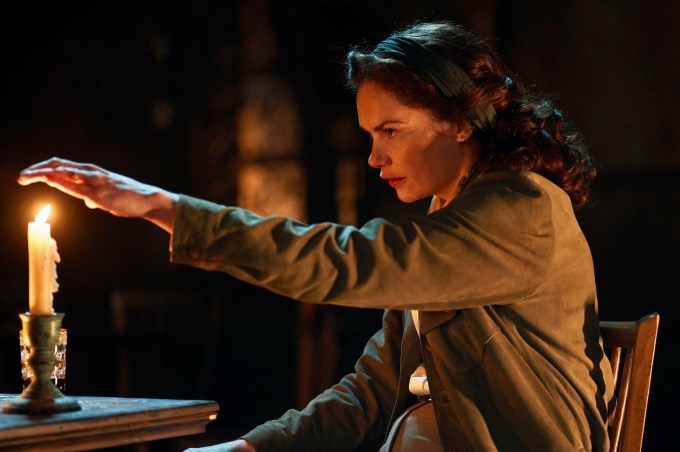
I just had to include this quote because I think it sums up Mrs Coulter so well: “She’s also a deeply intelligent complex woman in her own right, and her suppressed rage and cruelty clearly stem, in large part, from her own history and experiences. Her hard exterior is clearly a necessary result of a life lived in a deeply patriarchal society—the only way she gains any modicum of respect and power for herself is to behave, at all times, as though she were a man. Her iron-like self-control and vicious repression of her emotions are all clearly a means to an end, and the few moments when her icy veneer breaks are all the more terrifying for both their violence and their rarity. Even her relationship with her daemon is different. Mrs. Coulter’s golden monkey is the one daemon in His Dark Materials that doesn’t speak or have a name, and often functions as the id that reveals the hidden cost of her iron control over her own demeanor. (And its loving interaction with Lord Asriel’s leopard Stelmaria in the first season’s final episode is an admission of an entirely different type.) It’s the constant visual evidence that she’s not as removed or in control as she seems. Externally, she knows the façade she needs to present to the Magisterium, Asriel and everyone else around her. Internally, she’s often barely hanging on, as evidenced by her violence toward her monkey—and by extension herself. Mrs. Coulter has even trained herself and her daemon (after what must have been years of nightmarish experimentation) to push through the pain of separation, so much so that they can now both function at great distances from one another. Since HBO’s His Dark Materials has largely underplayed the primacy of the human-daemon connection in the name of budgetary restrictions, this ability (and the constant suffering it entails) perhaps does not seem as big of a deal as it ought to. But it really is. This is a woman willing to put herself and her very soul through tremendous torment in the name of getting what she wants.” (x)
15. Emily Byrne (Absentia) – The TV show, Absentia, was one of my 2020 discoveries and I instantly found myself invested in Emily and her story. An FBI Agent with a husband (also FBI) and young son, she goes missing while tracking a serial killer and is eventually declared dead in absentia. However, six years later, she’s found alive, having been tortured but with almost no memory of who abducted her or what happened to her. She’s deeply traumatised and reuniting with her family is emotional and painful: her husband has remarried, her son has no memory of her, and she and her brother had serious issues between them that aren’t magically solved by his relief that she’s alive. The FBI relaunch their investigation into her abduction while she struggles to regain some sense of normality (side note: it’s one of the only shows I’ve seen that is truly invested in representing a character’s mental health, showing the effects of her trauma, the triggers both expected and unexpected, the steps forward, the slips back). When the investigation starts to suggest that Emily kidnapped herself and was the accomplice of the serial killer she’d been chasing when she disappeared, she goes on the run in an attempt to find out the truth and consequently prove her innocence. Stana Katic is incredible in the role: Emily is tough and determined and doesn’t give up for anything; she’s relentless. She’s stubborn and more than a little reckless, a trait I wouldn’t be surprised to learn she possessed before she was abducted but one that I’m sure was heightened by what she went through. She’s also incredibly resourceful, sometimes unbelievably so. But despite the fierceness she presents to the world, she’s still a gentle person at heart. She loves Flynn, her son, more than anything and would do anything for him; as they reconnect, you can see how much pure joy she gets just from seeing him. On a related note, we see such a range of emotions from Emily: most likely due to her trauma still being so fresh, her emotions are unbearably raw and right on the surface all the time. She ricochets between them with alarming speed. But despite said emotions, she’s still strong enough to fight her way through it all, face her triggers, evade the FBI manhunt, and begin to unravel the mystery of what happened to her. I can’t say that I relate to her because I’ve never been through that sort of trauma but I have been through some shit and her strength really inspires me. Her ability to balance being tough and being gentle, her willingness to do anything for the people she loves, the willpower she possesses to move forward with her life despite everything that’s happened to her… I just really respect the hell out of her.

So that turned out far longer than I’d expected or intended it to be but I hope it was interesting. There are many more amazing female characters that I could’ve included but given how long this post became, I thought I’d stop at fifteen. But it’s awesome that there are so many great women in the media for us to look up to, to inspire us and motivate us and make us feel seen. There’s a way to go – marginalised groups are still very much underrepresented in fiction, especially mainstream fiction – but things are improving and I’m hopeful. And I’m grateful for the wonderful characters we currently have.
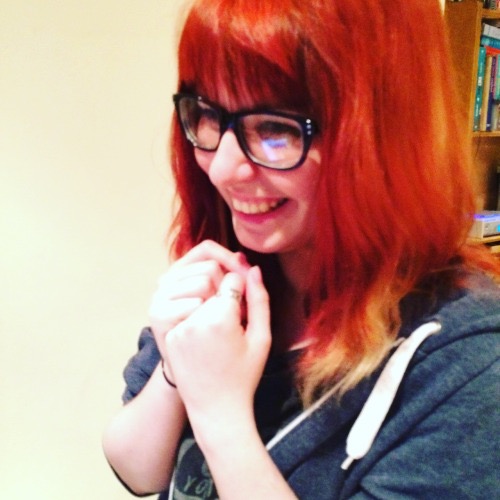
 Finding Hope