 Finding Hope
Too Much And Not Enough, Vol. 1 – Out Now!
Posted on February 28, 2026
“This EP isn’t just music; it’s connection, validation, and advocacy wrapped in melody.” (x)
My proudest achievement of 2025 was releasing new music: two singles and an EP! Having not released a project since my Honest EP in 2020 (although I later released the acoustic version in 2021), I’ve been so desperate to release more music but health stuff got in the way and it took a long time to get back to a place where I was even close to capable of managing the stress of putting out a new project (and stressful it was). Given everything that happened between late June and December, I didn’t have the headspace, the physical ability, the time, or any combination of the three to write about it properly. But I didn’t want to skip it because it is so important to me and to the last year so – finally – here is the post about my recent EP, Too Much And Not Enough, Vol. 1. This is – hopefully – the first in a series about my experiences of being autistic, inspired by how lonely and isolating it was to grow up, never seeing or hearing my life represented in books, film, TV, music, and so on. It’s taken a long time to feel ready to take on a project like this but now that I am, I know without a doubt that this is the art that I’m meant to be making.
“What makes Too Much And Not Enough, Vol. 1 powerful is its dual role as personal diary and shared lifeline. Hooper writes for her younger self, for others navigating similar realities, and for those who may be hearing these experiences articulated for the first time. The result is a project that doesn’t just speak – it listens back, offering connection in a world that often overlooks the voices that need to be heard most.” (x)
To reintroduce myself and to lay the foundation of the EP, I released two singles at the beginning of the year called ‘Write This Out‘ and ‘In The Mourning.’ When I was planning the EP and choosing which songs to include on it, which songs felt like the most important to include on a first EP – my first EP – about being autistic, I felt like neither of them were quite the right fit. But they still felt like important parts of the story that I wanted out in the world so they became the two singles released ahead of the EP and its official first single. And even though they’re separate releases, they’re deeply connected on a thematic level and so, to represent that connection, I used photos from the EP photoshoot for the cover artwork of each single.
“Every line in ‘Write This Out’ carries the grounded honesty of someone who has learned to create calm in the middle of chaos. It’s heartfelt without ever feeling heavy, and the sincerity behind her words lands with real clarity.” (x)


(Photography by Thomas Oscar Miles and editing by Richard Sanderson)
“Another personal moment that stood out to me was how the song leaves you with a sense of companionship, as if she’s reminding listeners that they’re not alone in the messier parts of their thoughts… It feels like the beginning of an important new chapter for her.” (x)
I’m so proud of them both, for so many different reasons, and each of them felt so key to setting the scene for the EP. ‘Write This Out’ is driven by the need to get overwhelming emotions out of my body but keep them documented and protected while ‘In The Mourning’ reflects my stream of consciousness after being diagnosed as autistic. I felt like both this feeling and this emotional process were important pieces of the picture that I hoped this EP would paint and releasing them first could only make for a deeper understanding of it. Obviously I can’t ensure that people listen to them ahead of the EP, now that it’s out in the world, but something has to determine in what order the music gets released and when the chronology of this music means a lot to me, why not?
“The songwriting is exquisitely vulnerable, with metaphors and lyrics that cut deep without ever losing hope.” (x)


(Photography by Thomas Oscar Miles and editing by Richard Sanderson)
“And then there’s ‘The Loneliest Whale,’ a track that feels like both a personal lament and a communal sigh – isolation turned into shared understanding.” (x)
The first official single of the EP was ‘The Loneliest Whale.’ As I talked about in the blog post I shared when I put this song out, I wrote it about The Loneliest Whale, a whale that sings at a higher frequency than other whales, making it impossible for them to communicate with each other; I’ve been fascinated by it for as long as I can remember and I’ve always wanted to write a song about it. I deeply related to this idea of feeling isolated from everyone around me, both before and after my diagnosis, and so I used the whale as a metaphor for the loneliness I have experienced as an autistic person. But it’s also about connection.
Before I sat down to write the song, I did some research to make sure all of my facts were up to date and discovered the extensive amount of art that has been made by people who have been moved by the story of The Loneliest Whale. So, so many individuals and communities relate to this story, to the emotions this whale represents, and I was so inspired by that. I’d originally expected the song to be a sad one but, after seeing how many people felt connected to this whale and having the epiphany of how connected we are to each other through these shared feelings, the song transformed into something more positive and uplifting. And because connection is the whole point of this EP, of all of the music I make, it was the obvious choice for the first single.
“With this album, both tender and powerful, Lauren Alex Hooper reminds us that music can be a space of refuge, truth, and connection. A rare and necessary project.” (x)


(Photography by Thomas Oscar Miles and editing by Richard Sanderson)
“In a world where pop often leans into glossy generalities, Too Much And Not Enough, Vol. 1 by Lauren Alex Hooper feels like a rare act of rebellion – not loud or brash, but intimate, precise, and unwaveringly honest. The five-track EP is a deeply personal exploration of Hooper’s experience as an autistic woman, told in vivid lyricism and delicately layered alt-pop production. It’s not just a collection of songs; it’s a lived reality, shaped into art.” (x)
While ‘The Loneliest Whale’ was the lead single, the EP opens with ‘Armour,’ a tumultuous track about the difficulty of masking as an autistic person in a neurotypical society. When I sat down to write this song, I was all set to write about how far I’d come with learning to unmask, only to realise that I hadn’t made as much progress as I’d thought. I’ve done a lot of work on it but I think that’s only made me realise how much more there is to do and that was more than a little bit overwhelming. After that particular revelation, my writing shifted and a theme I kept coming back to was how suffocated I feel by masking and the conflict between wanting to be my true self and the fear of rejecting the protection that masking can and has provided. It was clear to me very early on that this was the opening track because it’s a statement about trying to be more honest and authentic, a process which begins in earnest with this song, and it’s precisely the reason that this EP exists.
“Opening with ‘Armour,’ the artist lays bare the quiet violence of masking and the daily effort to hide neurodivergent traits for social acceptance. It’s a haunting introduction, with delicate instrumentation that mirrors the tension between self-protection and self-erasure.” (x)
Next up is ‘Eye To Eye,’ which builds on the intensity of the first track by digging into the tension and vulnerability of making eye contact, a well documented struggle for many autistic individuals for a whole spectrum of reasons. I’ve always found it difficult and while there were a handful of different things I could’ve focussed on, I most wanted to explore how deeply vulnerable it feels to be eye to eye with someone, to feel like they can see everything you’re feeling and everything you’ve been through. It was hard to write, especially the bridge, and it would’ve been so easy to be less vulnerable but, when that is the whole point of the song, it was really important to me to stay the course and not take the easier road.
“‘Eye to Eye’ and ‘The Loneliest Whale’ are masterclasses in metaphor, turning everyday autistic struggles into poignant pop poetry.” (x)
‘The Loneliest Whale’ sits in the middle of the EP’s tracklist at track three. I’ve already talked about it a bit above and I wrote more about the inspiration behind this song and the creative process – in this post – when it came out. It felt like such a special song right from the beginning and I’m so happy that I was able to release it despite it being pretty unconventional, subject matter-wise, for a pop song.
“‘The Loneliest Whale’ is the metaphor-rich centerpiece, capturing the feeling of calling out into the world and not knowing if anyone is listening.” (x)
The fourth song on the EP is ‘Overexposed,’ which is about my experience of sensory overload, about how overwhelming the world can be, and how hard it can be to exist in the world when it feels so bright and loud and emotional and intense. This is the oldest song on the EP: I wrote the original draft not long after I was diagnosed, on one of my first trips to Nashville with one of my best friends there, Caylan Hays, who is a beautiful songwriter and artist. It’s evolved quite a bit since then: I have a clearer understanding of sensory overload and I’m better at articulating my experience of it and both of those things have, of course, changed the song. But the central imagery of an overexposed photograph always stuck with me so I was keen to revisit it when writing for the EP.
“In ‘Overexposed,’ sensory overload is rendered sonically through layered textures and dynamic shifts, allowing the listener to feel the push-pull of intensity and withdrawal. Hooper’s voice remains the constant – warm, clear, and unwavering, even in the most vulnerable admissions.” (x)
The final track of the EP is ‘Last One Standing.’ I wrote this from the point of view of the Agents of Shield character, Daisy Johnson, who has been one of my special interests from the moment I started watching the show (I’ve written more about her and some of the reasons I love her so much here and here) and, songwriting being my biggest and oldest special interest, I’d been thinking about how to bring the two together for a long time. I must’ve spent hours watching edits and fanvideos on YouTube, noting the scenes from the show that featured repeatedly and analysing the songs chosen, from the emotional undercurrent of the track to the lyrical themes to the production choices. It gave me such an insight into what other fans of the character loved about her, what resonated with them, the themes and sounds they associated with her. When I eventually brought the idea to Richard, I knew exactly what I wanted the song to sound like: an anthem of tenacity and perseverance and strength… all of the things that Daisy Johnson has always represented to me. And as I wrote the lyrics, I tried to channel the hours I’ve spent absorbing the show and so I shaped the language around her speech patterns, deliberately favouring some words and avoiding others. One review called it “unapologetically nerdy” and that may be the biggest compliment I could receive for this song, especially given the creative process behind it. I’m pretty sure it’s the biggest deep dive into not just one but two special interests that I’ve ever done; it’s my truest expression of autistic joy. But regardless of how deeply for me this song – and the creative process behind it – is, it ended up being a song that I really wanted to release because I think there are multiple meaningful messages in it. It’s a celebration of determination and resilience – and of autistic joy, particularly when that joy is a form of resistance and defiance – but it also represents, to me at least, the ongoing struggle that is being autistic in the often resistant, inflexible society that we live in, just to be seen and treated and accepted in the same way that our allistic peers are; you need self-belief and strength of will to keep taking steps forwards, to keep standing up for yourself and fighting for what you need and what you deserve. I needed a song to empower me, to remind me of this when I forget it, to lend me that energy on the days that I can’t find it within myself. It means a lot to me to have that and I hope it can do the same for those who listen to it.
“‘Last One Standing’ closes the set with hope and fierce individuality. It’s a love letter to the passions and inner worlds that sustain so many autistic people – and a powerful reclamation of identity.” (x)


(During the writing of the project)
“Lauren Alex Hooper’s Too Much And Not Enough, Vol. 1 is a raw and open-hearted collection that speaks with quiet strength. Across five tracks, she explores identity, mental health, and neurodivergence without holding back or dressing things up. Her songwriting is honest in a way that feels lived-in, not performative. Each lyric feels like a page from a journal you were never meant to read but are lucky to experience.” (x)
The project started out very solitary as I figured out what I wanted to say and started writing the songs but as it grew, I got to work with more and more awesome people; I love the intimacy and laser focus of a small project but getting to bring in people who believed in the songs and the project… it felt like we were just feeding it more and more oxygen, which was really exciting. I love writing by myself – as evidenced by ‘Write This Out’ and ‘In The Mourning’ – but I also love collaborating: I wrote ‘The Loneliest Whale’ with one of my MA classmates, a super cool artist called lukeistired, and ‘Overexposed’ with my friend, Caylan, as I’ve already mentioned. I also took drafts of multiple songs to my longtime collaborator and writing partner, Richard Marc. Richard and I have been making music together for ten years now: we worked on my first single together, my first EP, and enough unreleased music to fill multiple hard drives. He’s a fantastic producer, songwriter, and guitarist (multi-instrumentalist, really) and we’ve always been good collaborators – and good at having fun while doing it. I’ve always been involved in the production of my songs but, with this project, I really dug into it with Richard, making both micro and macro choices and guiding the songs to sound like the colours I heard when I sang them. I’ve always found production quite overwhelming – and overstimulating – so to take new steps into that space and that process was really empowering and inspiring.
“Light touches of electronic instrumentation sit beside organic guitar parts and minimal beats. Nothing feels too polished, and that’s part of the charm. You’re not listening to a performance; you’re sitting next to someone telling their truth. […] It didn’t scream for attention, and that’s exactly why I kept thinking about it. There’s power in letting things exist without apology.” (x)


(Writing and recording with Richard Marc)
“In a world saturated with processed emotion, Too Much And Not Enough, Vol. 1 by Lauren Alex Hooper is a breath of fresh air – a quiet rebellion told in lush dream-pop textures and honest lyricism. The five-track EP is a deeply personal dive into Hooper’s lived experience as an autistic woman. From the whispering melancholy of ‘Armour’ to the anthemic tenderness of ‘Last One Standing,’ the project feels less like a performance and more like an intimate conversation. Acoustic warmth and subtle folk influences run like threads through each track, anchored by Hooper’s soft, expressive voice. It’s a voice that invites, reassures.” (x)
During the recording process, I was able to bring in several friends to build the sonic world of the songs. Richard and I invited our friend, Lasse Corus – who is an incredible drummer – to record live drums on several of the tracks, going back to Bluebarn Studios where we’ve recorded multiple times before. That was a really lovely way to bring some of the history behind this EP into the creation of it. I also invited my wonderful friend, Luce, to sing backing vocals on some of the songs: she’s a brilliant songwriter and a gorgeous singer, known as LUCE, and it was so special to have her voice on this project. She’s witnessed this project take shape from a core idea to everything it is now along with all of the growth that came with it, not dissimilarly to how I’ve watched her upcoming project blossom from the original idea into something so much bigger and bolder. Creating such personal projects in parallel was so inspiring to me – I truly can’t wait for her to put her project out into the world – and so it meant a lot to me to have her singing on the project.
“It’s vulnerable but never self-pitying, wounded but unafraid to bite back.” (x)


(Lasse recording the drums for one of the tracks // Richard, Luce, and I listening back to Luce’s backing vocals)
The tracks were mixed and mastered by Josh Fielden of Sprogglet Studios, who has worked on all of the music that Richard and I have made together and he always does such a fantastic job. I love the richness he’s able to bring out of my voice and the arrangements. He’s also the patron saint of patience when it comes to my perfectionistic tendencies.
“The EP’s production balances indie-pop accessibility with singer-songwriter intimacy. Electronic elements weave around acoustic foundations, creating a space where personal storytelling meets contemporary sonic design. This balance allows the themes to resonate without feeling didactic; the songs invite empathy rather than demand it.” (x)


(The day of the EP photoshoot)
“Lauren Alex Hooper’s Too Much And Not Enough, Vol. 1 is a revelation. With five strikingly personal tracks, Hooper dismantles the myth of the “universal” pop experience by offering something rarely heard: an unfiltered, autistic lens. The EP is both emotionally raw and musically refined – a delicate balance that showcases her songwriting depth and willingness to confront difficult truths.” (x)
I also had the utter joy of working with Thomas Oscar Miles on the cover art. I’d discovered his photography on Instagram and we talked about collaborating on a project for years – beginning in 2021, I think. Then, in 2024, we finally got to work together on the photoshoot for the EP’s artwork. We spent hours on Zoom, discussing the themes and sending moodboards back and forth, and we got on really well so, in many ways, I was really looking forward to the photoshoot. But I was also incredibly nervous: I was in a really bad place with my issues around body image and I was so anxious that, regardless of how much I was looking forward to working with Thomas, I would end up hating the photos because of those issues. I so wanted to love them and be proud of how they represented the project but I was stuck in an endless loop of anxiety about it, convinced that I would never even be able to like them because they were photos of me.
Fortunately, we got on just as well in real life as we had online. It was absolutely freezing that day – Thomas’ train had actually been delayed because of snow – and I couldn’t feel my face, hands, or feet by the time we decided that we had everything we needed, after almost two and a half hours of taking photos. But I didn’t want it to end! It was such a fun shoot and we laughed so much and it felt so inspiring and creative and collaborative. We did a quick flick through the photos at the end, I was so excited by what I saw. I loved them! Thomas edited them beautifully and then Richard finished them up to be cover art ready. I’ve truly loved the artwork of every project I’ve released but these ones feel beyond special; they’re going to be incredibly difficult to outdo on the next project…
“A powerful five-track EP that marks her most personal and resonant work to date. With this project, Hooper doesn’t just share songs; she shares herself. Drawing from her lived experience as an autistic woman, the EP dives deep into the emotional terrain of neurodivergence with honesty, clarity, and a quiet but undeniable strength. In a pop landscape that too often glosses over complexity, Hooper offers something different: a raw, nuanced, and deeply human portrait of life lived in contrast to the neurotypical norm.” (x)
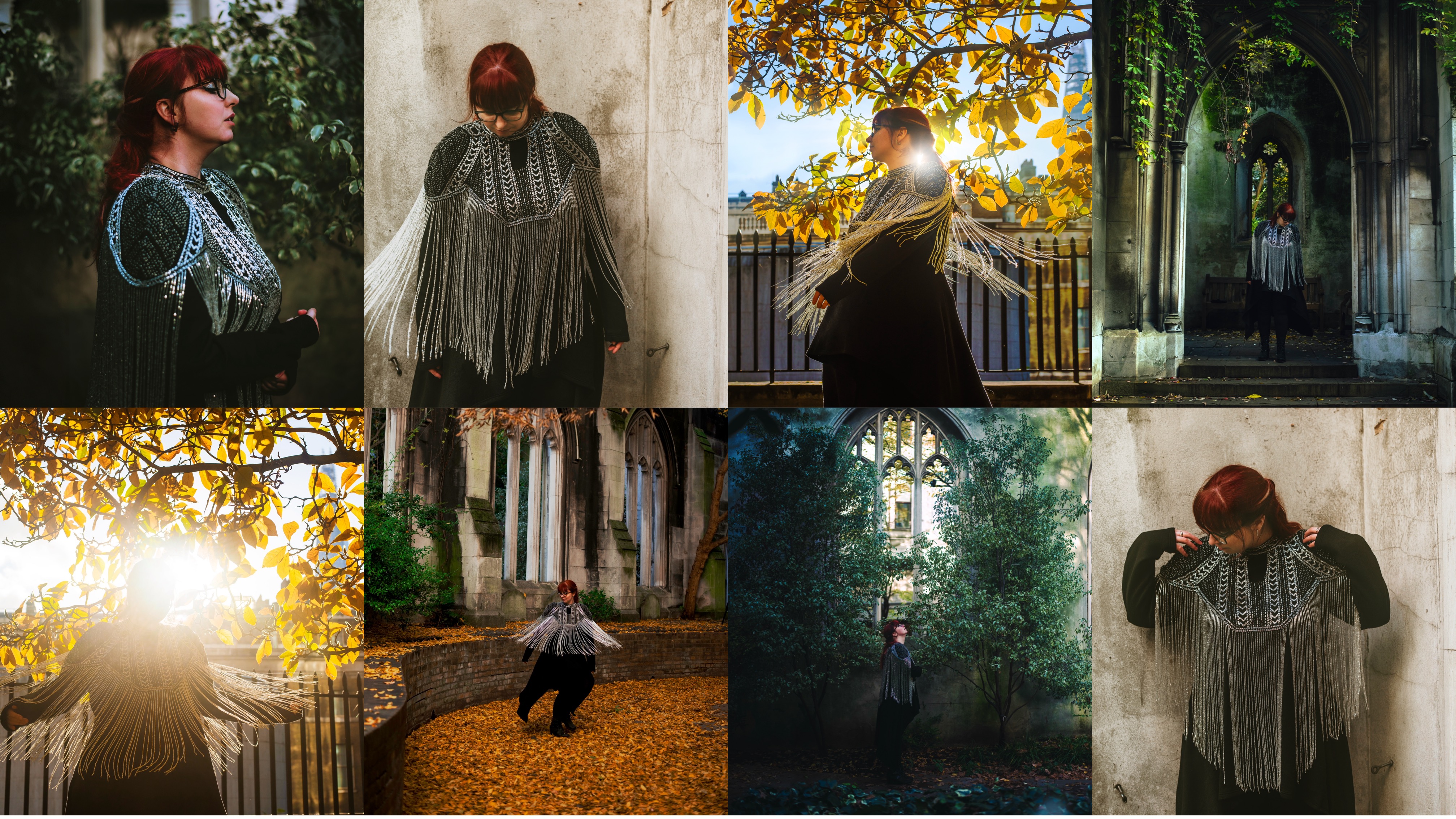
(Photography by Thomas Oscar Miles)
“In a world that constantly asks autistic people to shrink themselves – to be quieter, more adaptable, more like everyone else – Lauren Alex Hooper is doing the opposite. On her new EP, Too Much And Not Enough, Vol. 1, she’s louder in the best way: more honest, more direct, more herself. The result is one of the most emotionally gripping alt-pop releases of the year. A seasoned songwriter with a delicate but defiant voice, Hooper has always used music as a way to process and communicate her inner world. But this time, she’s not holding back. Each of the five tracks on the EP offers a deeply personal window into the complexities of living as a neurodivergent woman.” (x)
I knew going in that the promotion of the EP was going to be the hardest part for me, both before and during the rollout: I am so grateful to Tahnee, to Abi, and to Amelia and her team at Decent PR for all of their advice and their help and, perhaps most of all, their belief in me and my music. I so appreciate all of the time and effort that they put in to helping me get this EP in front of people who really heard the songs, who connected to them, and who really understood what I was trying to say, what I was hoping people would hear. And as a result of that, I’m so grateful to those people who listened to it and felt so moved by it that they wrote about it and encouraged other people to listen to it, because they felt it mattered that much. There have been so many wonderful reviews that I’m honestly still reeling because I never imagined hearing something I’d made described this way:
- “This is not just a strong EP – it’s an essential one.” (x)
- “A rare and necessary project.” (x)
- “A sonic memoir that defies convention.” (x)
- “It’s raw, real, and really important.” (x)
- “[She] doesn’t just claim space – she expands it.” (x)
- “It’s a quiet revolution.” (x)
And, of course, I cannot say thank you enough to those of you who have listened to the EP, those of you have who have streamed it, bought it, blasted it in the car or cried to it under your duvet… To everyone who has listened to it, watched the videos, and followed my social media over this last year, I am so deeply grateful for you. I can’t believe how many people these songs have reached in just over twelve months: I’m a super small artist – I don’t have thousands of listeners on Spotify or thousands of social media followers – so the fact that these songs have been streamed over 100,000 times is amazing to me. I can only hope that they’ll go on to reach more people over time and that this is just the beginning of something even bigger and more beautiful.
“[Too Much And Not Enough, Vol. 1] feels like a rallying cry wrapped in melody – not loud or angry, but insistent, intimate, and brave. For those who’ve long felt like their stories were too much, or not enough, Hooper offers a reminder that they’re exactly right, just as they are.” (x)
And so, many months later, we have the round up of my most recent EP, Too Much And Not Enough, Vol. 1. It was a cathartic, empowering, and challenging process but I’m so proud of it and I’m so grateful for the love it has received ever since I put out the first single in January 2025. Putting out music, especially as an independent artist, is an expensive, complicated, and risky endeavour and so to have it received so warmly made it all worth it. Calling it a rollercoaster would be an understatement, especially considering the most recent logistical nightmare – all of the music I’ve ever released disappearing from every music platform (years off my life, I swear!) – but I never expected making music as an autistic (and disabled) person to be easy; I always knew that it would take everything I had and then some. But these songs, and the experiences that inspired them, are so important to me and, somewhat unbelievably, I’m starting to see how important they are to other people too. All I’ve ever wanted to do is to make honest and vulnerable music and to help other autistic people feel less alone in the world and if this project has done that for even one person, then all of the difficulties will have been worth it. And going forward, hopefully my music can help two people, and then three, and then four… If that’s how my music career is ultimately measured then I could not be more proud.
“What sets this EP apart is this creative’s refusal to simplify or sanitize her truth. She doesn’t shape her experience into something more palatable. She lets it stand as it is: complicated, beautiful, and often misunderstood. Her lyricism is sharp and evocative, her voice rich with sincerity, and the production choices consistently elevate the emotional core of each track. Too Much And Not Enough, Vol. 1 is a cultural milestone. Lauren Alex Hooper is forging a new path for autistic representation in music, and she’s doing it with honesty, grace, and undeniable talent.” (x)
“This EP doesn’t just tell a story – it reshapes how stories like these are told. Hooper has found her voice, not in spite of her autism, but through it. And with Too Much And Not Enough, Vol. 1, she’s made a compelling case that the future of pop is broader, braver, and more inclusive than we imagined.” (x)
Thank you so much for reading and you can listen to the EP here.
Increasing The Phenelzine (June – July 2023)
Posted on September 23, 2023
TW: Mentions of depression and suicidal thoughts.
NOTE: I wrote this a few months ago but waited to post it. There were a couple of things that I felt I wanted to comment on in the conclusion but I needed a little bit longer before I felt confident enough to do so. So I let things play out a bit but then some life stuff happened and this post got away from me for a bit. But here we are. Here it is.
Things had improved since I’d settled on the daily 30mg of Phenelzine but it still didn’t feel like enough. I wasn’t crushingly depressed but there were still problems, still areas of my life that weren’t back to what they used to be. So, for a while, I’d been thinking about increasing the Phenelzine, upping it to the high dose of 45mg (with my psychiatrist’s permission, of course). I had tried it before and it wasn’t the right thing for me – it was like the lights were too bright all of the time – but I hadn’t been coming from as low a place as I was this time; I hadn’t been trying to pull myself out of such a bad place. So, with that in mind, I wondered whether the higher dose would help, whether it would give me the additional rungs on the ladder that it seemed I still needed.
So I saw my psychiatrist and while he was quick to comment on how much of a change he could see since I’d started on the Phenelzine again, he listened to what I had to say and we discussed trying the higher dose. He asked me what the most important thing to me was and I said that I wanted my songwriting ability back. I’d written a couple of songs since I started taking the Phenelzine again and I loved them but they’d taken so much time and effort to write, much more than it would usually take. I used to write multiple songs a week with ease but, on the 30mg of Phenelzine, it was taking me months to drag one song out of my brain. So I wanted to write like I used to again. He listened and ultimately agreed: he said we’d use my creativity as a benchmark, using how many songs I was writing as a measure of whether the increase was helping or not (alongside whether I had any negative side effects, of course).
For a while, life was overwhelmingly busy and chaotic and there were things I needed to be able to do, that I needed to rely on my body and my behaviour (as much as I could normally, at least) to manage. So it was a while before I was able to increase from 30mg per day to 45mg per day. I started the increase on 17th June 2023 and took notes for the first six weeks (since the side effects and general effects can be quite subtle), finishing this record on 29th July.
And, as always when talking about medication, this is just my experience. Please don’t start, change, or stop taking any medications without the advice and support of a medical professional.
WEEK 1 (15mg in the morning and 30mg at night)
For most of the week, I didn’t feel any different. I have been more keen to engage with stuff, especially new stuff, but that’s not new exactly; it might’ve increased a bit but I couldn’t be sure. I was consistently tired and, on more than one occasion, I fell asleep before I could take my medication at night; I was also really drowsy during the day, needing naps to function, to make it to a decent bedtime. My back pain was relentless too, although my TENS machine did help.

Come the end of the week, my sleep was a mess and I was completely exhausted. I ended up needing multiple naps during the day and still barely making it to a respectable bedtime, forgetting my pills again. But I was managing to do a lot: I worked through my to-do list, went out to see some cool art, managed to avoid a meltdown when a creepy guy wouldn’t leave me alone, and spent my short evening snuggling with the neighbour’s puppies. But even though I hadn’t really had the time to sit down and do any writing, my brain was like a firework show, ideas appearing one after another at a dizzying speed. It was more than a bit overwhelming. I didn’t manage to find out, exhausted as I was, whether I could turn those ideas into anything but it was a definite start.

WEEK 2
The beginning of the week was so hot (the result of a hideous but thankfully short heatwave) that it felt almost impossible to do anything; moving around just made me even hotter, sickeningly so (heat like that makes my POTS symptoms go haywire, which just makes everything harder). For the most part, I dozed, cuddled up with one of the puppies. I was easily overstimulated and exhausted but I made it home to Brighton (with an impromptu nap on the train) and had a quiet evening before going to bed, falling asleep before I could take my pills or turn the light off.


The rest of the week was a really mix. I slept better, longer and deeper – and I actually remembered to turn off the lights and take all of my pills before falling asleep – but I was so tired; I kept falling asleep on the sofa or in the car or really anywhere I sat down. I was just so exhausted. I struggled during the day, unable to concentrate even though it felt like my brain was full of ideas and things I wanted to do. But I just felt like I was being sucked down by sleep and staying awake took so much effort. It made me feel like I might start crying at any moment.
I had some really bad days, where I felt overwhelmed and overstimulated and miserable and just so tired that I couldn’t do anything, which, on top of it all, left me feeling so frustrated. I had a horrible time in therapy and was just feeling really fragile. Plus, I was really stressed about the puppy situation: I want her so badly and I have no idea what’s going on; the idea of losing her from my life makes my heart ache.
But despite all of the difficulties, I was surprisingly productive, and was busier than I’ve been in years. At least that’s what it felt like. I started to work on some of the song ideas that I’ve been turning over in my head; I hung out with friends; I managed to swim; I went to see the fantastic Candi Carpenter play a show in London (I’d missed their last UK shows because I was self-isolating) and then we all went to the pub afterwards and had a great time (highlights include all of us singing Taylor Swift karaoke and running into uni friends I haven’t seen in years); I even did a drawing class. It was all really good but it was just A LOT. It was hard to process it all.
WEEK 3
For the first half of the week, things were okay. My sleep was pretty good: I was sleeping long and deep, although I did have the weird, busy dreams that I’ve come to associate with a medication change. I was still incredibly tired during the day (I fell asleep upright on the sofa several times) but I did manage to get some stuff done. And even though my back was hurting, I did manage some hydrotherapy.
Mentally, I wasn’t doing super well. I just felt really overwhelmed, drained and fragile. It felt like my depression was just hanging around, deep down, all the time. I was still functional and I even managed to do quite a bit of songwriting, more than I’d done in a while, but it was hard. I went to an amazing Maren Morris concert with my friend, Richard, and although I had an amazing time at the show, everything leading up to it and then the aftermath was a really struggle: getting there was exhausting and painful; the disability accommodations were as stressful as always; I was exhausted and freezing by the end of the gig; and it took forever to get home. I had a slow start the next morning, exhausted and aching after the concert, and despite the decent night’s sleep, I was a mess: I was completely overwhelmed and ended up in tears multiple times.


The second half of the week was really difficult. My sleep was a mess, making me a zombie during the day, and my emotions were all right at the surface, raw and ragged. I was beyond stressed and overwhelmed by everything that was coming up over the coming weeks; it felt like it was all barrelling towards me at an unstoppable speed. Both my body and my emotions felt so heavy and I was constantly bursting into tears.
WEEK 4
This week was pretty much dominated by my overwhelming, paralysing anxiety and stress over trying to get Taylor Swift tickets and the hurt and devastation of being treated so badly as a disabled person. I wrote about that here so I won’t rehash it all but I wanted to include what a devastating effect the experience had on my emotional and mental states. While the experience is, of course, separate from whatever the Phenelzine was doing, both are tied up with my emotional regulation and the effect my feelings have on me. As I said in my post, I was basically in various states of meltdown for all three days of the tickets presale. And it wasn’t just the suffocating anxiety of not getting a ticket: the way that Wembley Stadium treated disabled fans was appalling and it was just such a gut-punch to realise that they either didn’t care about us or they didn’t even remember that we exist. It was really distressing. I was so stressed and so depressed, even after I managed to get tickets. Just the thought of not getting to see this show, having looked forward to it for five years, had my emotions so big and loud and devastating that I felt this overwhelming compulsion to scream until my throat tore, to rip my skin off. With so little bringing me joy these days (and my chronic suicidality ever present and oppressive as a dark cloud), the thought occurred to me that, rather than endure the excruciating pain I know I would feel if the shows happened and I couldn’t be there, I should just kill myself to avoid it all. That thought just made me feel even more fucked up than I usually do. My emotions are so big and so precarious that even the smallest thing can tip me into serious and scary lows and this isn’t the smallest thing, given how much Taylor means to me. As I said in my post about the experience, these feelings are due to my mental health, to my depression and my chronic suicidal thoughts, not specifically to seeing Taylor; it’s about the fear of losing one of the few sources of joy when you’re in a really dark place. Those things will be different for everyone but the fear of losing them is so overwhelming that words don’t really do it justice.
The exhaustion and residual stress from that whole… experience had completely drained me of energy and, for several days, I was so tired that I could barely function (although I’d get sudden jolts of adrenaline, thinking I should still be on the phone, that I’d fucked up and forgotten, and was losing my chance). My sleep had been screwed up by my anxiety and I had pain from the physical tension I’d been holding in my body for three long days; both of those took most of the week to settle back to normal, normal being exhausted and sleepy and not able to do much. That was causing me a lot of anxiety too: I had so many things that needed doing but I was just too tired to do them and the anxiety over how they were piling up was starting to get overwhelming. I did manage to spend some time with friends, which was really nice, but I struggled to feel connected while still feeling so emotionally drained.
WEEK 5
The last week had exhausted me and it showed over the following weeks in various different ways. I was going to bed early, sleeping long and deep, and often struggling to wake up. And even with a long night under my belt, I was tired and drowsy during the day, often falling asleep on the sofa (and sometimes at my laptop); I struggled to concentrate, my eyes were tired and straining by the end of a day, and sentences stopped making sense. I was just completely done in. I hadn’t emotionally recovered either. I felt utterly overwhelmed, fragile and miserable; I was suicidal in the face of what just felt like too much. It wasn’t particularly surprising when I had an awful meltdown.
I did manage to be vaguely productive though, despite it all. I worked hard at my hydro and physio; I went to therapy; I managed some writing; I saw a couple of friends and had a good time with them, even if I didn’t feel as present as I usually would; I went to a show a friend runs (and the whole thing made me very emotional); I attended an interesting webinar about ADHD. But, even with how much I was struggling to be present in my mind, nothing felt quite enough, like I hadn’t done enough or gotten as far as I’d wanted to. I’ve been trying not to beat myself up but I’ve never been very good at that, being kind to myself that is.
WEEK 6
Another week and my sleep still wasn’t great. I was still falling asleep early (sometimes forgetting to turn the light off or put in my retainer) and sleeping long hours, although I was starting to wake up at a more reasonable time. I was still really tired during the day, taking some accidental naps, and struggling to focus. It was getting better but, as I said, it wasn’t great.
I was working hard to build in better habits too, alongside the medication and therapy. I worked hard at hydrotherapy and started physiotherapy too. The physio was a bit of a shock to my system and I was sore for the first few days (which disrupted my sleep but then pain always does). But, midweek, I ran for a train and actually caught it, despite thinking that there was no way I was fast enough or strong enough to make it (I would’ve had to wait an hour on a cold platform for the next one so I was certainly motivated). There’s no way that, a year ago, I could’ve managed that; I was so ridiculously proud of myself. So the hydrotherapy has definitely made a difference and I feel confident that the physiotherapy will only complement that.

I was also trying to drink more water. I definitely don’t drink enough and, given that the Autonomic Dysfunction I struggle with as part of my Ehlers Danlos leaves me prone to chronic dehydration, I should be drinking a lot more than the average person. I’m nowhere near that yet but I’m already drinking more than I was when I first measured my liquid intake.
It’s hard to know for sure but I felt like I was more productive and motivated than I had been previously. I was actually getting things done and getting them done at a faster pace: blog writing, songwriting, researching. I even went to an online writing workshop that I really, really enjoyed: the session was fun, the people were really nice, and I was really excited about what I wrote. My brain was just desperate for new things and new information; it was excited to learn. I don’t really know how to explain it any other way. I also went out and spent time with friends, went to a songwriters’ circle, and saw family friends. I was more social than I’d been in ages but I was kind of feeding on that, which is really unusual for me. But it was nice. And exciting. Oh, and I also started mentoring sessions for my creative projects, which I felt really optimistic about.
Unfortunately, the week didn’t end as well as it had begun, my depression hitting me like a tidal wave at full strength. It was so overwhelming that I felt like I couldn’t breathe, couldn’t do anything. I was also really stressing about food and eating, feeling guilty as soon as I ate anything. I was miserable and exhausted and couldn’t focus on anything; I slept on and off during the day, dizzy and ears ringing. One side of my body was tingling too and we were this close to calling the doctor. It was horrible. I also found that I physically couldn’t relax: my body felt tensed up even though I wasn’t tensing my muscles (so I obviously couldn’t relax them if I wasn’t actually causing the problem). After several hours, my muscles started to hurt but I still couldn’t unclench them. My legs were twitching too and when I thought about it, I realised that that wasn’t new, that it had been happening on and off for weeks, as had the tensing in certain muscles. The more I thought about that, the more stressed out I got. I know that certain doses and/or extended use of certain medications, including Phenelzine can cause Tardive Dyskinesia, a movement disorder with symptoms including sudden and irregular movements in your face and body. It’s something that gets worse over time and the idea of developing it was really distressing to me.
In the following weeks, my sleep evened out, helped by CBD gummies and the occasional Diazepam or Zolpidem. I spoke to my psychiatrist about the twitching and whether it could be Tardive Dyskinesia. He felt that it was unlikely, that a much more likely cause was the physiotherapy, which I’d started around the same time the twitching started; he thought it was more likely that it was just my muscles waking up with the exertion I was putting them through for the first time in so long. So my anxiety was abated.
But now, several months later, the twitching is still happening and my anxiety is growing again. I’m going to go and see my psychiatrist and have a proper conversation about it because if it is something – something that needs to be dealt with rather than something that’ll just resolve in time – I need to know so that, at the very least, I can think about the options, whatever they are. It’s hard to believe they’ll be anything but bad though; past experience doesn’t exactly fill me with confidence.
World Suicide Prevention Day 2023
Posted on September 10, 2023
TW: Discussions of suicidal thoughts, suicidal urges, self harm, and irrational thinking. PLEASE think carefully before reading further if these things may trigger you or cause you distress. Please always put yourself and your mental health first.
This, I think, is the first time I’ve written directly about my experience with suicidal thoughts and urges. I’ve mentioned it in relation to the side effects of medication and written around the edges of it but I don’t think I’ve ever talked about it in such detail. I have omitted certain moments and details since it’s been proven that sharing about plans and methods can lead to further suicides but this is as honest as I can manage, even though it terrifies me. But as hard as it is, I’m sharing these experiences because I think it’s so deeply important for people to understand what it’s like to feel this way, to live in so much pain, to feel so desperate. Keeping these stories in the dark only increases the shame and stigma so, even though it’s difficult and uncomfortable and scary, we need to talk about them. It’s the only way the world will get better at supporting people who are struggling.
I’ve experienced suicidal thoughts on and off since I was a teenager but for a long time, they were passive. Walking to school, I’d cross the road and, dreading the day ahead, I’d imagine getting hit by a car. But the thought would leave as quickly as it arrived. I thought it was normal. To quote Ned Vizzini, “Who hasn’t thought about killing themselves, as a kid? How can you grow up in this world and not think about it?” (I may have hated that book but that line really resonated with me.) This was before I was diagnosed as autistic* and I thought everyone felt as overwhelmed by their emotions, by their anxieties, as I did – as I do – but were just better at managing it.
*Autistic individuals, especially autistic women, are at a much higher risk of suicide than the general population; the factors include mental health problems (especially if they go untreated), the impact of a late diagnosis, challenging life events such as bullying and ableism, the burden of masking, isolation, and cognitive inflexibility, which can lead to difficulty in seeing any option but suicide. (x)


(Left: During secondary school // Right: During sixth form college)
I continued to experience passive suicidal thoughts and then, during my second year of sixth form college, I started to struggle with depression and my ever-present anxiety reached all-new heights (although, in comparison to what I experience now, I’d happily go back to it). Almost a decade, multiple diagnoses, and more than twenty medications later, my depression is the worst it’s ever been and I’ve been actively suicidal for almost two years. There have been short periods over the years (always in concert with the times I tried medications other than Phenelzine) where I’ve struggled with suicidal thoughts but, for the last two years, they have been almost constant.
They began in earnest when I started taking Xaggatin for my ADHD (and had to stop taking Phenelzine because my ADHD clinician was insistent that the side effects were unsustainable – I disagreed for multiple reasons but this isn’t the post for that story). I thought the intensity of the thoughts – and their slow, scary manifestation into urges and intentions and plans – was a side effect but it wasn’t long before my depression crept back in, sucking me down. Between that and the other awful side effects, my psychiatrist switched me to another medication, Bupropion, an antidepressant that’s supposed to help with ADHD but it only made things worse: I was so anxious, depressed, and suicidal that I couldn’t function. I tried a few more antidepressants, was traumatised by several more doctors, and had the crisis team called out (although they didn’t do anything, including the things they’d said they’d do). I quit treatment entirely for a while, unable to mentally handle it; I basically retreated to my bed and stayed there. I couldn’t engage with the world: it just hurt too much. But without treatment (I didn’t even have a therapist at this point, another thing that had spun my life out of control), the claws of my depression dug deeper and deeper. I remember one day where I had the sickening realisation that I wasn’t doing anything worthwhile with my life, that I had wasted my time and my education, that I was a complete waste of space. There was another day when I realised that something had broken inside me, something that could never be fixed, and I was no longer the person I had been and would only ever be a defective, inferior version of her. I avoided mirrors for months. On New Year’s Eve of 2021, I stared at the fairy lights in my living room and thought about how I had no desire to survive even the next 365 days. It wasn’t a resolution but I felt it with a quiet certainty. I thought about it everyday but then somehow that dreaded day arrived and I was still here, despite that certainty, despite my plans. I hated myself for it, feeling like a pathetic, weak-willed coward. It was a terrible night, not that I remember much of it given the distress I was in.
Somehow I ended up on Phenelzine again, despite my revulsion at the thought; I still don’t really know how it happened and I still find myself so angry about it that it feels like it might consume me. But, for a while, the chronic suicidality was relocated to the side burner: it was all still there but it wasn’t the only thing in my brain anymore. I could ignore it for sometimes days at a time. But after a while, my depression seemed to billow back in, like ink in water. The suicidal thoughts and urges became – and still are – the constant undertow to my thoughts and sometimes it’s all so overwhelming that I can barely breathe. Self harming has long stopped being an effective coping strategy as it just makes me feel pathetic for not doing more damage. I don’t know why I haven’t acted on these thoughts. I don’t know why I’m still here. If asked, I’d probably say, “because I’m a coward,” even though I know that I’d likely get a verbal thrashing from anyone I voiced that feeling too. I can practically hear my therapist (yes, I’m back in therapy) encouraging me to dissect that feeling. I know it’s not a healthy, rational thought but it is a real one. It’s a weird state to live in and the conflict of planning for a future I don’t particularly want to exist in is disorientating and miserable. It’s exhausting. But I know what my fate is, whether it comes sooner or later, and I have for years.
Following a slightly different train of thought, it’s very strange to me that people can’t seem to tell, just because it’s such an overwhelming experience for me. I feel like I have a massive neon sign over my head: “SUICIDAL.” But then I wouldn’t be surprised if people just don’t comment because they don’t know what to say. The last time I self-harmed, I cut my face because I needed to look as broken as I felt (or inasmuch as I could physically manage, which wasn’t enough – more shame and self-hatred) and almost nobody even mentioned it. (Not that that was the point but it did surprise me. Most of the time I avoided the question. I only lied once: I was in a weird headspace already and the question took me off guard and I just didn’t have the emotional energy to explain.) The cut got infected and took weeks to heal. I’m glad it left a scar but I resent it for not being bigger: the disfigurement doesn’t accurately reflect the feelings, not by a long shot.


(Left: The dressing on my face after I self harmed // Right: The scar after it finally healed, having got infected.)
In some ways, I feel like I’m already disappearing: I struggle to make sense of my face in the mirror and, while I don’t know about this year, there are fewer than ten photos of me in 2022; my autistic masking is so ingrained that the real, brutally honest me who is struggling and suffering (who so desperately needs to be seen) gets locked away so tightly that she might as well not exist, while a socially acceptable and palatable projection of me – the only version of me that people could want, says the voice in my head – takes over my body, acting almost without my permission; I feel like no one knows the real me any more, not after months in bed, besieged by suicidal thoughts and impulses. I feel permanently damaged by it but people are still treating me as who I used to be and not who I am now (not that I think it’s their fault – while the damage feels so deeply clear to me, I know that it’s not visible to anyone else). I remember the old me. I remember the person who could be proud of being different and who advocated for acceptance, even though she still felt broken. It was a balancing act but there was balance. Now the broken feeling has broken the scale. I feel unrecognisable. I noted down somewhere – last year at some point, I think – that feeling like this feels like one elongated near death experience. Almost every day for more than eighteen months, I’ve been so close to death that I can feel it’s presence in the air when I breathe in; I can feel it in my lungs. One decision – one split second – away. Maybe it’s just dying in slow motion. Feeling this way… I don’t know how it doesn’t change you.
I was reading various articles as I both researched and procrastinated this post and, in one of them, the author had written this: “Because depression, as we all know, is almost always treatable.” The statistics vary, depending on where you look, but a high percentage of people (this page claims between 80% and 90%) do eventually respond well to treatment. After ten years, over twenty medications, and more hours in multiple therapies than I can count, I’ve only ever managed periods of being mentally well. The longest period was, I think, two and a half years at the most. Only one medication actually helps and I’ve run out of new ones to try. The other options, according to a consultant in another very distressing appointment, would be the Ketamine trials or Electroconvulsive Therapy, neither of which doctors fully understand (the same could be said for antidepressants). Given how abnormally I respond to multiple medications, I’m terrified of how these treatments might affect me. I’m terrified of how Phenelzine is affecting me. With all of that in mind, I can’t help but wonder – and have wondered for a long time – if I’m included in that small percentage that doesn’t respond to treatment. And if that’s the case, it means that this is forever and that is an unbearable thought.
I’ve spent a lot of time talking with my therapist about this – and no doubt this post will spark multiple new discussions – and we did talk briefly about what I could write for this post, what would feel actually helpful to someone reading (I never figured that out, by the way, so I have no idea if this is helpful or not). She said that the most important thing is to talk about it and that it’s much more dangerous not to talk about it. I agree with the latter part but I’m not convinced that talking about it is helping me; I often feel like I’m just going around in circles and exhausting myself. She asked me what I would say to someone I loved if they expressed all of this to me and the truth is that I honestly don’t know. I don’t know because I’ve never heard anything that’s helped me. I think we all have the knee-jerk reaction to say, “Please stay. I love you and I’d miss you.” It’s true and it’s heartfelt but is it fair to ask someone to live in agony, in unbearable misery, because you’d miss them? We want to say, “Things will get better.” But we don’t know that. We can’t promise that. We want to say, “How can I help?” But it’s unlikely that there’s any one thing a person can do to help, although that one is more specific to the individual person. If someone asked me that, I couldn’t give them an answer because there is nothing they can do to help. It’s so much bigger than one person, than them or than me. Maybe these help some people. For me, none of these things change the reasons I’m suicidal and they’ve only added unhelpful pressure and stress. I’d hate to do that to someone else. I’m not saying the right words aren’t out there. I’ve just never heard them. Or discovered them.
Obviously I haven’t shared everything. As I said, I didn’t want to share things that have been proven to push people passed their limits (although I hope everyone read the warning and acted accordingly and prioritised their mental health) but there are also certain things that are too hard to share, too raw, too loaded. But I wanted to share my experience today, not just because it’s an overwhelming aspect of my life, but because sharing our experiences and our feelings is, as I said in my introduction, one of the few ways (and possibly the most powerful way) that the world gets better at helping people. People can only do that if they understand the battles being fought and the support that’s needed. I hope that sharing my story can help with that, even if it’s just a drop in the ocean.
RESOURCES:
 Finding Hope