
Posted on November 7, 2020
I really wasn’t convinced when the government reopened the gyms. It seemed to me that they were (and still are) much more concerned about the economy than people’s actual lives and I couldn’t imagine how many gyms would be able to create a safe environment with good ventilation and social distancing. I was particularly worried about this in a swimming pool.
Because of my Chronic Fatigue Syndrome (CFS) and joint problems (which we now know are linked to being hypermobile), swimming is my only good source of exercise really. All weight-bearing exercise causes me extreme, disproportional fatigue and pain in my joints that can last for days. Half an hour can essentially end my day. So I’ve always relied on swimming for exercise, which I was obviously not able to do during the lockdown. And when the pools opened again, I really wasn’t convinced that it was safe. I was desperate to swim again (I can’t believe how much I’d missed exercising – my teenage self would not believe it, although, to be fair, I had always enjoyed swimming) so I was really keen to find a safe way of doing it, if there actually was one.
We spoke to the gym where I’m a member and tried to come up with a plan. Pre-pandemic, I would swim super early in the morning when the pool was all but empty but they wouldn’t be opening that early post lockdown because of a lack of lifeguards. That meant that, even if we arrived as soon as it opened, there were likely to be many more people than we were used to and that made me very nervous. They offered to rope off half the smaller pool that’s used as a family or therapy pool (for me as a disabled person) and suggested coming as early as possible as that was when it likely to be the least busy. I was very anxious but we decided to give it a try.
There was no one in the small pool when we got there and we got into our roped off section. It felt amazing to swim and stretch my muscles. I was almost giddy with joy. But the other side and the main pool started filling up fast, with no real social distancing. I could feel the panic rising: I could almost feeling the air becoming more and more contaminated (I know it was my anxiety and my overactive imagination but that’s how it felt). As much as I loved swimming again, eventually the stress just got too much and we had to go. I don’t think we’d even been in the pool twenty minutes. It was something though and my Mum and I discussed what we wanted to do, whether we wanted to try different times, and so on.
And then literally the next day, the gym emailed to say that they felt confident with their safety measures and so would be opening the pool up to more people which, as desperate as I was to keep swimming, killed my desire to go completely. It hadn’t felt massively safe during our first trip so I couldn’t even imagine coping with more people around. The whole situation just felt incredibly stressful and scary and my anxiety would rise just thinking about putting myself in that environment.
Mum met with the person in charge of the smaller pool and raised our concerns. They said they would get back to us after a wider staff meeting the next week but they never did. Mum went a couple of times at different times of the day and thought going right before they closed was a possible option but I still wasn’t convinced; my anxiety was just so high. Even thinking about being there made it feel difficult to breathe.
In the meantime, we looked for other options, other pools that weren’t necessarily attached to gyms but where you might be able to book a slot in a lane. We went through several possibles with no success but after a while, Mum found a pool that were booking out lanes in the evenings, an hour at a time. She had them talk her through all their safety measures, which were extensive, before going to try it out. She came back with positive reviews so I thought seriously about whether I felt comfortable trying it out too.
It took a few weeks before I felt okay about going and their serious safety measures were comforting: everyone was wearing masks (right up until they were in the water); they took everyone’s temperature as we went in; we changed in little tent-like pods, each numbered, and then put our bags on chairs of the same number, situated by the changing room door (that way they knew which ‘changing pods’ had been used so that they could disinfect them, ready for the next group of people); and then once in the pool, the lanes were wide enough that you could properly social distance. So the whole set up felt significantly safer. And an extra bonus: they turned off the main lights so the room was lit with just the pool lights, creating a very calming atmosphere. It was gorgeous. And, as an autistic person, it made the whole thing a lot easier as a sensory experience. The glaring lights at swimming pools can be a bit of a challenge sometimes. So this was wonderful.
It was utterly glorious. I had such a good time. Being in the water, feeling weightless, swimming lengths, swimming down to the bottom at the deepest point, exercising my muscles… It was awesome. I loved every second. I was completely exhausted by the time I got out but it was the good kind of exhausted. It felt great. And I’d felt as safe as I think I possibly could have in the present circumstances. It was giddy with joy but also gutted that I had to wait a whole week to experience it again. I would’ve loved to do that more than just once a week.
Unfortunately the second trip wasn’t quite as pleasant. Either the rules had changed or my understanding of them had been incorrect because they were putting people from different ‘social bubbles’ or (whatever they’re called) in the same lane, which, as far as I could tell, didn’t allow for social distancing. I ended up having something that was somewhere between a meltdown, a panic attack, and an ‘episode’ of Misophobia/Germophobia (I don’t know if I’d say I have this phobia, but I’ve definitely had ‘attacks’ of it when the fear of germs or feeling contaminated is so overwhelming that I’m almost unable to function). Anyway, I was frozen there, hanging onto the wall of the deep end, unable to do anything. Like I said earlier in the post when talking about the other pool, I could almost feel the air becoming cloudy with the virus, feeling it coating everything, even the water. It was horrifying, like being trapped in a film where the world ends.
The staff were apparently very concerned and desperate to help but I couldn’t do anything but hang on to the wall; I don’t know if I would’ve had the wherewithal to swim if I’d slipped underwater. But eventually my Mum was able to coax me back to swimming, even though I kicked and cried, utterly terrified in a way that I can’t really explain now. It must’ve taken half an hour at least; I was freezing cold and apparently my lips had gone blue. After a while, I did manage to recover to some extent, at least enough to swim a bit, to warm up and not waste the time we had in the pool. The swimming felt good but the experience as a whole had been horrible and exhausting and I really wasn’t sure whether I felt safe there anymore.
View this post on InstagramA post shared by Lauren Alex Hooper (@laurenalexhooper) on
The busyness of that night proved to be an anomaly so, although I was anxious – and to a certain degree, reluctant – I kept going and it was better. I loved it: the weightlessness, the stretching of my muscles, the exercise that came with just a proportional amount of pain afterwards, the aching of long unused muscles, rather than agony that felt like the crunching of glass in every joint. It was wonderful.
Several weeks in, I had my hypermobility appointment, which was really interesting in the context of my gravitation towards swimming because swimming and even hydrotherapy are recommended for hypermobile individuals; it allows you to exercise and strengthen your core in particular (the commonly weak part of hypermobile bodies, although it often ‘refers’ pain to other parts of the body) without putting undue pressure on your joints. This made so much sense to me, particularly as I’d been struggling with ache-y muscles in my chest and stomach after swimming when I’d expected to feel that ache in my arms and legs. That appointment resulted in a referral for hydrotherapy but the doctor also recommended some particular exercises to do in the pool in the meantime.
However, before I could even get back to the pool again, the second national lockdown was announced. So, just as I was making progress (and getting some real joy out of exercise), I was running headfirst into a massive brick wall. I agree that, with Covid-19 cases rises in England, we need another lockdown but I can also be gutted that I can no longer swim, at least not for a while. And the sacrifice would actually feel worthwhile if this was a real lockdown but while schools and universities are open – allowing students to mix with any number of other people – it’s not. It’s not going to make a significant difference and it’s just going to sow the seeds of doubt about whether lockdowns work, which THEY DO IF DONE PROPERLY. Anyway, I’ve gone on a tangent. I don’t know when I’ll be able to swim again but I’m grateful to have somewhere that takes the safety measures so seriously to go when it is possible. I’m looking forward to it. I’m really, really looking forward to it.
Category: anxiety, autism, chronic fatigue, covid-19 pandemic, diagnosis, meltdowns, treatment Tagged: anxiety, anxiety attack, asd, autism, autism spectrum disorder, autistic, autistic adult, autistic meltdown, autistic meltdowns, cfs, chronic fatigue, chronic fatigue, contamination, coronavirus, covid-19, exercise, exhaustion, fatigue, germophobia, gym, hydrotherapy, hydrotherapy referral, hypermobile, hypermobility, hypermobility diagnosis, joint pain, lockdown, lockdown 2020, meltdown, misophobia, pain, pandemic, pandemic 2020, panic attack, social bubble, social bubbles, social distancing, swimming
Posted on September 26, 2020
Not long ago, I volunteered for a research study into ME/CFS (Myalgic Encephalomyelitis/Chronic Fatigue Syndrome) and part of it involved keeping a photo diary as a visual representation for how my life is affected by my CFS. Obviously my life before the pandemic and my life now are quite different and so the researcher asked me to include pre-pandemic photos as well, to ensure that both experiences were recorded for the study. The collection of photos (and descriptions) I sent her was very long but I thought I’d do an abridged version to post here because it was a really interesting exercise.
(It’s worth noting that this was put together before I started back at university, hence why there aren’t any current references to classes or assignments.)
PRE-LOCKDOWN

1. During my BA, I frequently took naps in quiet corners of my university between classes and then at my best friend’s flat when he moved onto the same street as the university. I found the commuting exhausting and the classes were long (some of them three hours) and took a lot of concentration. By the end of the semester, I was often really struggling to wake up to go back for the next class. A few times, I slept straight through both my alarm and my class. Fortunately that only happened a couple of times!

2. I’m currently doing a Masters Degree in songwriting part time and pre-lockdown, I’d go up to London usually once or twice a week for lectures, workshops, and cowriting sessions. This is an example of one of the assignments we had during the first module, which was called Creative Process.
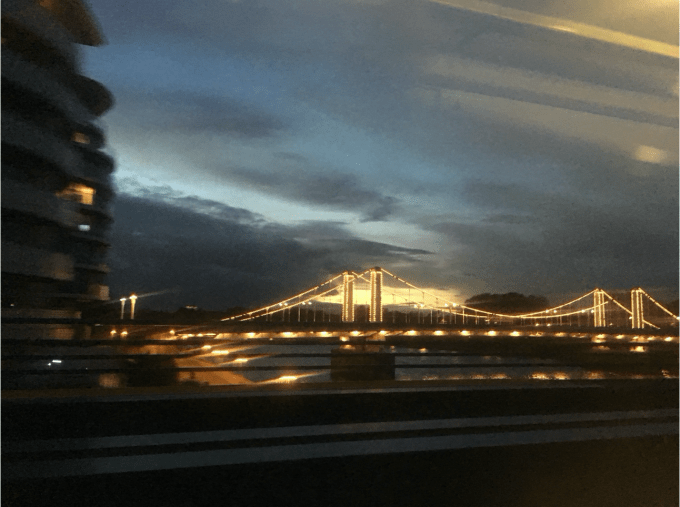
3. Because living alone would be too much for me – I wouldn’t have the energy to look after myself, let alone do anything more – I commute to university (pre-pandemic anyway), involving lots of underground travel and multiple train journeys a week, something that I find exhausting. This is one of the reasons I chose to do my Masters part time because it reduced the amount of travelling and therefore allowed me to spend more energy on the course/work rather than on travelling.
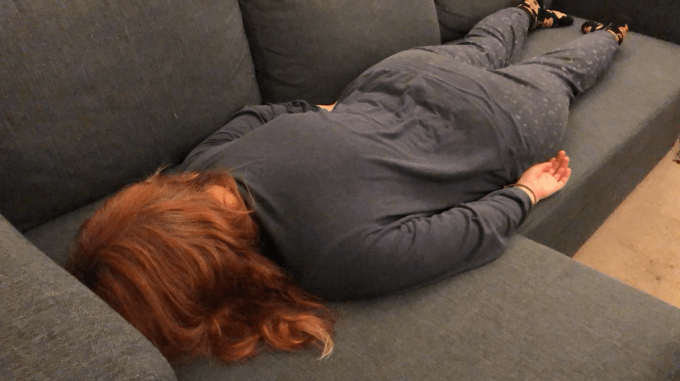
4. At the end of any day that involves hard work or anxiety, I’m utterly exhausted and usually end up horizontal on the sofa or going to bed as soon as I get home from wherever I am. In this instance, I’d just done the assessment presentation for the first module of my Masters – which I’d been incredibly anxious about – and was completely exhausted. Plus the day had involved practicing it in the morning as well as travelling to London and back. I was so tired that I could barely stay awake long enough to eat dinner before going to bed.
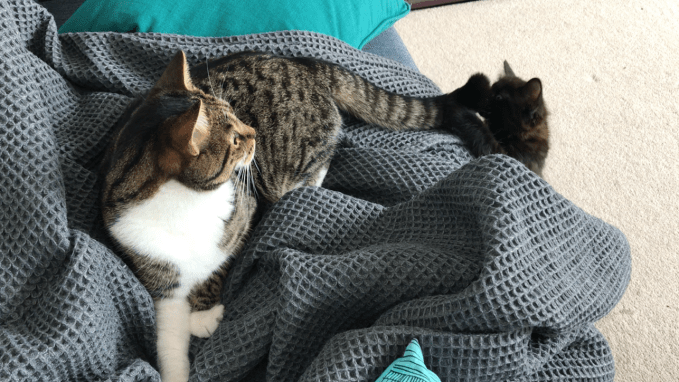
5. I spent most of my days out of uni on the sofa, working on music, my mental health blog, or catching up with my diary, a favourite movie or TV show on in the background because I work better with background noise. I’m usually joined by a cat or two.

6. As a singersongwriter, I try to perform as often as I can, both in terms of opportunity and having the energy (I once played three gigs in three days after which I could barely function for over a week because I’d just used up so much physical, mental, and emotional energy). That’s not a common problem – managing my energy around the amount of gigs – as there aren’t a huge number of opportunities with so many aspiring singers in the two cities I perform in, London and Brighton. I love performing. It’s the place I most feel myself, especially if I’m singing songs that I’ve written. I don’t feel any fatigue while I’m performing – I’m feeling so much joy that it’s like I’m flying – and I don’t feel any fatigue until the adrenaline wears off, anywhere between thirty minutes and several hours later.

7. Since getting an Autism Spectrum Disorder diagnosis, I’ve been able to get access to disabled seats at concerts, which does (in certain ways) improve my concert experience. It can be more stressful and it can make no difference at all but at the very least, it makes me feel better. I am in the disabled section and therefore no one can judge me or think that I don’t deserve to be at the show because I’m not dancing around, not ‘enjoying myself enough.’ That makes me feel more able to sit as I need to, which does make the concert experience easier on me and my body. Having said that, I’m not always so sensible out of sheer enthusiasm.
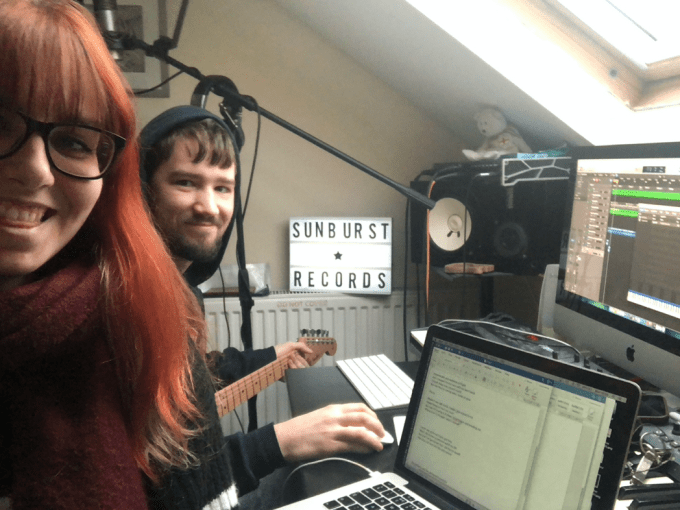
8. Before the pandemic, my best friend, Richard, and I had almost weekly writing and production sessions. My current EP was made almost entirely by the two of us in various rooms in the various places we’ve lived in over the last few years. These sessions are so fun and invigorating and even when it’s a struggle to find the right words or get the production to sound exactly how I want it to sound, it always feels right. I often feel very drained afterwards because it involves a lot of concentration and communication and we often work for four hours or more at a time. We have had sessions that last all day where I’m barely coherent by the end.
SINCE LOCKDOWN
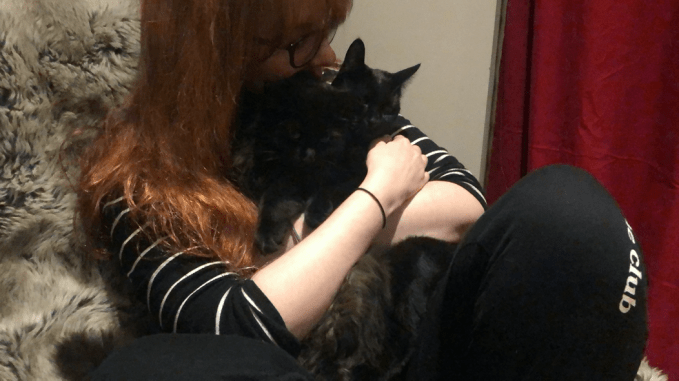
1. We have five cats in the house and I’ve been spending a lot of time with them. They’ve always been really good for my anxiety – probably because they are so mindful and live so fully in the moment – but they’ve been an extra comfort during these stressful times. I always try to get a good cuddle in the evenings since I get particularly anxious before bed because I’ve been sleeping so badly and having lots of nightmares during lockdown.

2. I generally drink at least two Red Bulls a day to keep myself awake and somewhat alert, although I don’t think they work as well as they used to. I’m sleepy all the time, but whether that’s from the CFS or the side effects of my anti-depressants or both, I don’t know. I hate feeling like I need to drink it and I worry about the effects on my health but it’s currently the only way I can stay awake for at least most of the day. My Mum and I are investigating other options, or we were until the pandemic brought everything to halt. We haven’t given up though.

3. This is my usual day-to-day view at the moment. I have a desk designed for bed or sofa use so that I can work from the sofa, which is more comfortable for me than working at my desk since I’ve been have problems with pain during lockdown (I’ve been referred to various hospital departments but I’m still waiting for the appointments). I’m usually working on my laptop – on my mental health blog, on my diary, on music stuff, etc – and there’s usually a cat draped over me.

4. I usually have the TV on in the background because I seem to be more productive with familiar background noise, like a familiar TV show or movie. But I’ve also been watching new things during lockdown, both to escape from all of the stress around the pandemic but also as inspiration for my music as not much is happening in my personal life to draw from for songs. This is the very last episode of Agents of Shield, my favourite TV show and I was hugely sad to see it end although the ending was as perfect as the end of something you love can be.
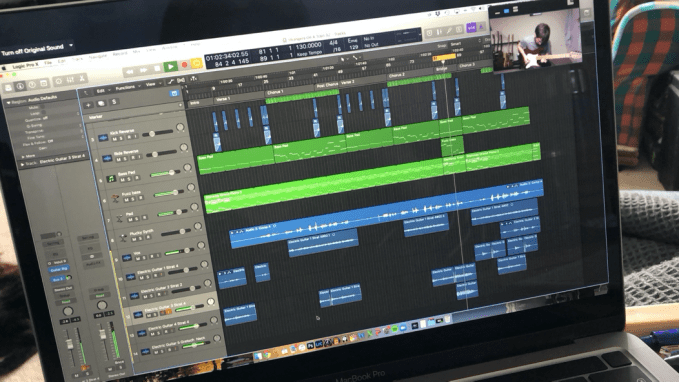
5. Since face-to-face writing sessions aren’t safe at this current time, I’ve been doing all of my writing sessions via Zoom. I’m currently doing about two a week, mostly with my writing partner, Richard. We alternate sessions: one on my songs and then one on his songs and so on. It’s harder work and not quite as fun or productive as a normal pre-pandemic session (who would’ve thought that not being able to point at something would trip up the creative process?) but it allows us to keep creating, which I’m grateful for. I’m always careful not to plan anything too difficult afterwards because these sessions are really draining and after about four hours, my ability to concentrate starts to fade.
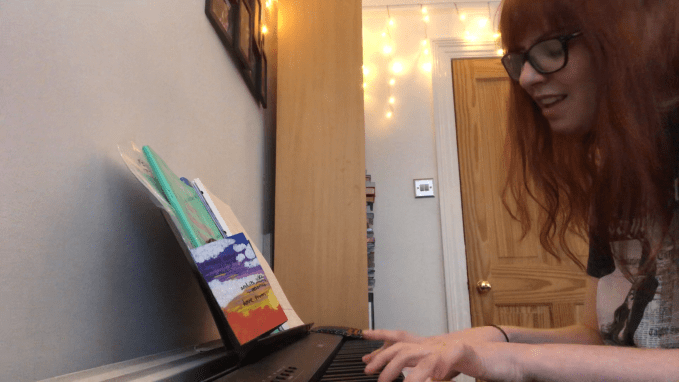
6. I’ve been playing a lot of piano during lockdown. It distracts me from all that’s going on, I want to improve my skills, and I just genuinely love playing, especially in the lower octaves. I find them very soothing. I can play for hours without noticing the passing time; it’s lovely. Playing and singing for hours is, of course, tiring but it’s worth it because I get so much enjoyment out of it.

7. Because of my fatigue, I spend a lot of time on the sofa, which can get boring and frustrating, but it’s not so bad when I have my Mum (she’s self-employed, primarily working from home – especially now) and the cats around.
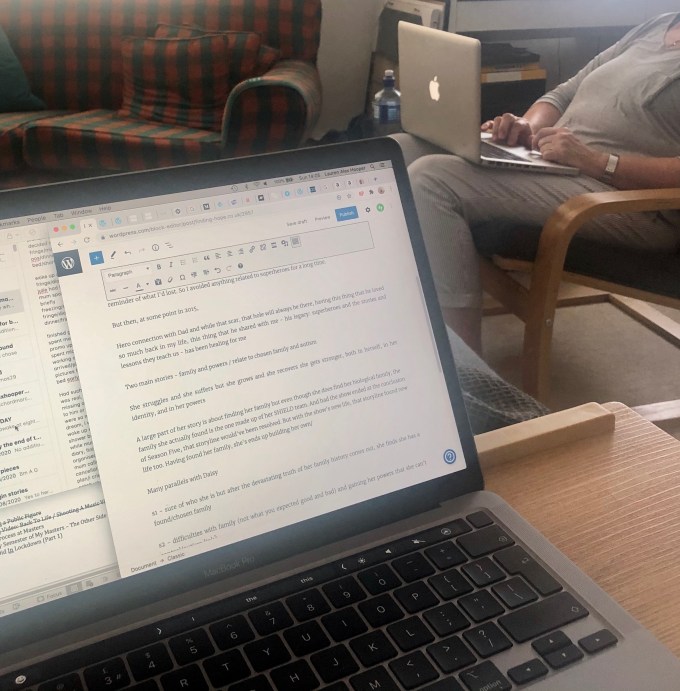
8. Most days consist of sitting on the sofa, working on my laptop. I’m writing a lot of posts for my mental health blog at the moment, preparing for when university starts again and I have less time to write. My Mum often does emails similarly, keeping me company even if we aren’t actively engaging with each other.
So that’s my condensed photo diary for the study. There are, of course, other areas of my life and other areas of my life that my CFS affects, like food and exercise but I don’t have any photos relating to those. For example, swimming is my main form of exercise but pre-pandemic I wouldn’t take my phone further than the locker room and since lockdown began, I’ve been struggling to find a way to swim that feels safe. I may have found one but I’m trying not to get too excited: I’ve missed it so much and I’m so desperate to get back to it, for my physical health, my mental health, and my relationship with my body. I was also reluctant to include other people; my exception was Richard because our work and social media presence are so intertwined. So there are obviously gaps but I tried my best to give an overview. Hopefully it will be a useful contribution to the research.
Category: about me, animals, anxiety, body image, chronic fatigue, covid-19 pandemic, depression, medication, mental health, music, research, sleep, university Tagged: agents of shield, asd, autism, autism spectrum disorder, autistic, blogging, caffeine, cat, cats, cfs, chloe bennet, chronic fatigue, chronic fatigue, commuting, concentration, concert, cowriting, daisy johnson, degree, desk, diary, diary writing, disability, disabled, energy, energy levels, exhaustion, family, fatigue, film, friends, inspiration, laptop, lockdown, lockdown 2020, logic pro x, masters degree, me/cfs, myalgic encephalomyelitis, pain, pandemic, pandemic 2020, pandemic anxiety, performing, photo diary, piano, production, recording, red bull, remote writing session, research, research study, research volunteer, richard marc, richard marc music, singer, singersongwriter, singersongwriter life, sleep, sleepiness, songwriter, songwriting, songwriting degree, songwriting session, student, tv show, university, work from home, writing session, zoom
Posted on May 9, 2020
When I’m not spiralling into an anxiety-induced meltdown over the pandemic, the resulting quarantine, and (particularly) the thought of a loved one getting sick, I can look at living in lockdown in a somewhat detached, practical sense (something that has taken over a month to be able to do). Intellectually speaking, we’re living in unprecedented times, experiencing something that our parents are experiencing with us for the first time – something that very rarely occurs. There are very few people alive who have witnessed the last pandemic of this scale: the Spanish Influenza in 1918. So this is a big deal, one that will be written about in history books and studied in the future – from political, sociological, and psychological points of view to name just a few. I’ve been thinking about that a lot recently and I can’t help thinking how often history is told from the point of view of the powerful and how terribly, appallingly wrong that is, especially given the number of mistakes being made by the people in power during this period (I’m speaking from the UK but I think we’re all aware of the mistakes being made by other governments, especially that of the US). So, if we want that to change, we have to write it ourselves, write our own experiences of living in lockdown, both for the history books but also for our own sake, so that we don’t forget what this experience has been like and how our lives have been changed by it. And as true as it is that we’re all in the same position – all in lockdown with limited access to our families and friends, the world outside, and our ‘normal lives’ – each of us will be experiencing this differently so I think the more experiences written about the better. So here I am, writing about mine, both for the reasons I’ve already listed but also to keep from drowning in it all, in the anxiety and the fear and the attempt to keep going as if this isn’t a traumatic experience.
I was aware of the Coronavirus before it even moved out of China but it felt like such a horror movie scenario and caused me such anxiety that I worked really hard not to think about it too much. It seemed unlikely that it would get all the way to the UK so I focussed on the anxieties in front of me and got on with my life. Besides, surely the government would be prepared should it reach us, given how much warning they had. I didn’t vote for this government nor do I trust them but I assumed that their egocentric motivations would have them preparing the country as best they could, for themselves if not for their people.
But then the virus started to move from country to country and more and more people in the UK began to take the idea that it might reach us seriously. I battled with my anxiety around it, trying to act responsibly without thinking so hard about it that it sent me into anxiety induced meltdowns. To an extent, I felt fairly unafraid of getting the virus as a young, physically healthy person but having said that, I was very aware that I was in regular contact with immunocompromised people and I was terrified of getting it and passing it on to them. So I was careful to wash my hands, use hand sanitiser, and avoid busy areas and travel times where possible. My anxiety had already been high before the virus made the news so it was a daily battle, as it often is.
Then everything seemed to happen at once. One day I was making plans with a friend for later in the week and the next she was on a plane back to her home country because of the travel ban. I didn’t even get to say a proper goodbye (that’s my little bit of self-pity done because I know, without a doubt, that she made the right choice and I absolutely support her decision). Before that week of classes began, our course came together (electronically) and decided that we didn’t feel it was safe for us or others if we were travelling to and from uni, etc, so suddenly my weekly routine was gone, my education disrupted, and my friends were all going home, again without any of us actually getting to say goodbye to each other. I know we can all talk via social media and video calls and that this isn’t forever but depending how long this goes on, we may never come together as a course again and that is an idea I find really difficult to get my head around emotionally.
I think it was the next week that we went into official lockdown. My university pulled out all the stops to support us and within days, our classes had been moved online but prerecorded lectures and a forum aren’t the easiest ways to have discussions and a sudden lack of access to the library and facilities wasn’t an easy adjustment. I found the online classes difficult. Don’t get me wrong – I really appreciate how hard they worked to keep our education up to date and as normal as possible – but it’s not the way I learn best. It’s just a personal thing. It also made working on the assessment essay much more challenging. Fortunately, I had a tutor who was incredibly supportive and with his help (and my Mum’s), I managed to get it in with good time, despite the added stress and the impact that had.
The essay, despite the anxiety it caused me, was actually a good distraction. As soon as it was done and submitted, I really started to feel the effects of being in lockdown. After all, up until then, I was pretty much doing what I would’ve been doing anyway: spending all my time on my assignment. But with that done, it all started to sink in.
The most obvious struggle is that I miss and worry about my family. I have four parents, only one of which I’m living with, and the others are all on their own; my brother is living by himself in London; my Mum’s Mum is also living by herself, a significant distance from any of us, even if we were allowed to visit each other (I’m thinking more in the case of an emergency where we would obviously keep our distance from each other and be very careful); and I have multiple family members categorised as vulnerable. So I have a lot of people to worry about and worry about them I do. The constant anxiety is exhausting. And as grateful as I am for video calls, it’s just not the same. I miss BEING with them. I desperately miss HUGGING them. I try not to dwell on it – or stress about how much longer we’ll be separated – because that is only more damaging to my mental health but it’s hard. It’s really hard.
On a similar note, I also really miss my friends. We have video calls, regular calls, texting, social media, movie dates on platforms like Netflix Party, and so on but again, it’s not the same. It’s not the same as hanging out with them, or hugging them, or going on coffee dates, or having writing sessions. As I’ve already said, I’m trying not to think about how long it could be before I see them again. We’ll manage, thanks to the technology we have, but it will be really wonderful to see them again.
The other thing that I’m really struggling with right now is my mental health. For those of you who know me or have followed this blog for a while, you’ll know that, amongst other things, I struggle daily with anxiety and depression. These are the particular problems that have only gotten worse since the appearance of Covid-19 and the lockdown.
I’ve still been having therapy, but via Zoom instead of in person. In theory, it shouldn’t be that different but somehow it is. I’d never really considered how important it is to have a space to work through all the hard stuff and then be able to walk away from it, which you just can’t do when you’re having therapy in your living room. Plus, Zoom calls are exhausting – here’s a good article about that – which only adds to how exhausting therapy can be. Then, when it comes to the content of a session, it all feels a bit frozen: it’s hard to tackle difficult emotions when we’re in the middle of different difficult emotions. And when I’m just about coping, feeling so fragile, I don’t want to trigger something and make life even more emotionally difficult for myself than it is already. So the whole thing is really tricky and confusing. Having sessions is definitely better than not having them but it’s not straightforward. It’s not as easy as I thought it would be when we made the plan just before lockdown.
And just to add to that, I’ve been struggling with sleepiness as a side effect of my medication for months but that’s gotten a lot worse since self isolating (perhaps from the increased anxiety – I don’t know). I’m exhausted by the smallest things and I seem to need so much more sleep. And that hasn’t been helped by a sudden, intense bout of hay fever, which has bestowed upon me the additional symptoms of an itchy, blocked nose and sore, itchy eyes. It’s been so bad that even having the windows open makes it dramatically worse so going outside definitely hasn’t been an option (I can’t take antihistamines because of my other medication). So I can’t even go in the garden, making me feel all the more trapped. Inhaling steam helps but only for short periods of time. The recent rain has been a blessing, giving me several days of relief. I’m cautiously hopeful that it’s started to settle – I’ve managed a couple of trips into the garden without incident – but I don’t want to speak too soon.
And lastly, for now at least, I’m really struggling with how uncertain everything is, uncertainty having always been something that causes me anxiety. We don’t know when the lockdown will end, we don’t know when we’ll be safe again, we don’t know when we’re going to see our friends and family again. I don’t know what’s going to happen in terms of my university course. And so on and so on and so on. So on top of the ongoing fear, there’s nothing solid to hold onto. Many of my summer plans have become impossible or at least difficult, while some have been cancelled outright, which has obviously been very upsetting and left me without anything to look forward to or anchor me. I feel very lost. I’m sure that’s true for a lot of people at the moment. I try to focus on each day as it comes but it’s hard. We’re all so used to looking and planning ahead.
One more thing… I found this on Twitter the other day and wanted to share it:
Let me be clear (a thread):
Those "all over the place" feelings you've been having? They are symptoms of stress, NOT personal failures of yours.
Do you feel FLAKEY + INCONSISTENT? That's b/c your brain doesn't know what news to brace for next, or what next month will hold.
— Alexis Rockley (@alexisrockley) April 14, 2020
Feeling CREATIVELY BLOCKED? That's because your brain has temporarily diverted all its creativity (aka ability to solve novel problems) to "how do I avoid dying?" while in a narrowed, slow burn, fight-or-flight state.
— Alexis Rockley (@alexisrockley) April 14, 2020
Your plans, creativity, energy, focus + motivation are on a YO-YO right now, b/c your brain believes you need to be EXTREMELY ADAPTIVE.
You will not be on this rollercoaster forever. Be patient with your brain.
Sincerely,
a positive psychology-certified coach + fellow human
— Alexis Rockley (@alexisrockley) April 14, 2020
I found it really helpful to have various explanations as to why I’m struggling, to know that my brain isn’t actually broken. Of course, knowing this stuff doesn’t actually fix the problems but being able to take a breath and reassure myself that there is a reason and that it won’t last forever has been helpful.
I hope you’re all safe and coping the best you can. And if you’re in the UK and they do loosen the lockdown this coming week, please continue to be careful. I hate being in lockdown but I’m absolutely terrified of what will happen if the government relax the rules, of how many more people will get sick and die. I’m scared out of my mind that someone I love will catch it. I can only speak for myself but I’m sure I’m not the only one with such fears. So please, please be careful. For all of us.
Category: covid-19 pandemic, death, medication, meltdowns, mental health, music, sleep, therapy, university Tagged: anxiety, assessment, collaboration, concentration, coronavirus, covid-19, cowriting, depression, drowsiness, emotions, essay, exhaustion, family, fatigue, focus, friends, hay fever, history, lockdown, masters degree, masters degree in songwriting, mental illness, netflix, netflix party, online classes, pandemic, planning, plans, quarantine, self isolating, sleepiness, social history, songwriting, summer, technology, travel ban, trigger, twitter, uncertainty, video calls, writers block, writing session, zoom, zoom calls

Hi! I’m Lauren Alex Hooper. Welcome to my little blog! I write about living with Autism Spectrum Disorder (ASD), ADHD (Inattentive Type), and Hypermobile Ehlers-Danlos Syndrome (hEDS), as well as several mental health issues.
I’m a singer-songwriter (it’s my biggest special interest and I have both a BA and MA in songwriting) so I’ll probably write a bit about that too.
My first single, ‘Invisible,’ is on all platforms, with all proceeds going to Young Minds.
My debut EP, Honest, is available on all platforms, with a limited physical run at Resident Music in Brighton.
I’m currently working on an album about my experiences as an autistic woman.
Hi! I’m Lauren Alex Hooper. Welcome to my little blog! I write about living with Autism Spectrum Disorder (ASD), ADHD (Inattentive Type), and Hypermobile Ehlers-Danlos Syndrome (hEDS), as well as several mental health issues.
I’m a singer-songwriter (it’s my biggest special interest and I have both a BA and MA in songwriting) so I’ll probably write a bit about that too.
My first single, ‘Invisible,’ is on all platforms, with all proceeds going to Young Minds.
My debut EP, Honest, is available on all platforms, with a limited physical run at Resident Music in Brighton.
I’m currently working on an album about my experiences as an autistic woman.
Finding Hope