 Finding Hope
A Four Month Detour…
Posted on December 24, 2025
I really didn’t mean to abandon this blog but the last four months have been completely miserable, healthwise.
Less than a week after I last posted, I started experiencing what felt like electric shocks in my lower back. It was so painful that, at times, all I could do was scream. Even when the electric-shock-like spasms weren’t actively happening, I was in – quite possibly – the worst pain I’ve ever experienced. And given my experience with chronic pain, that’s saying something. It was horrendous, especially as the painkillers that usually give me some relief weren’t having any effect. Eventually I managed to get some stronger painkillers from my GP and they were so strong that, for the first few days, I could barely keep my eyes open: I was asleep for around twenty hours each day. Thankfully, that did wear off after a while but I still felt slow and blurry while taking them.
It was a completely new kind of pain for me and while we had a few theories from the network of health professionals I’ve worked with, we still didn’t know what was causing it, how long it would go on for, or if it was a permanent change. The massage therapist I’ve done some work with – who has both personal and professional experience of Hypermobile Ehlers-Danlos Syndrome and chronic pain – was a godsend and thankfully, my Mum found a new physiotherapist nearby who had professional experience with hEDS and who was able to come to the house to see me. He was fantastic: he was thoughtful and thorough and explained everything with great care (sometimes multiple times); he really listened to me and took my priorities into account when choosing the exercises for me to do; I felt like he actually cared about me as a whole person, which has not been a common experience. He assessed me and felt that I had a pinched nerve in my lumbar spine, which typically heals in about eight to twelve weeks. That felt like an interminably long time but I was relieved to hear that he expected the pain to go away. He gave me some very gentle exercises to do as I felt able to, with the goal of strengthening the muscles in my back to support my especially hypermobile lumbar spine (and hopefully reduce my chronic pain). Between the pills (despite the side effects), the massage, the physiotherapy exercises, and the time that I was forced to take to rest properly, the pain finally started to decrease and I was able to slowly increase my mobility – I’m still working on that.
Unfortunately that was only the first part of the story. In early October, I started to struggle with multiple symptoms that I’ve rarely experienced, including stomach pain, nausea, acid reflux, and difficulty swallowing. It made eating so difficult that I could barely keep any food down and it made sleeping difficult because I felt worse when I was lying down. I felt awful but my Mum had been unwell a week or so earlier and so I assumed that it was the same thing and would pass relatively quickly; I thought I just had to rest and wait it out, like I often do with a seasonal illness or the symptoms of my chronic illnesses. But that didn’t happen. The symptoms got more intense until I wasn’t eating at all – sips of water were all I could manage – and the POTS symptoms I experience everyday had become debilitating. I hate going to the doctor but if there was ever a time, this was it.
I managed to get an appointment with one of the GPs pretty quickly – not my usual GP but that isn’t unusual and I did manage to get an appointment with her for later in the week – but when I explained what was happening, this doctor said that there wasn’t time to explore each of the symptoms so she questioned me about the difficulty swallowing, prescribed me a medication, and sent me on my way. I was deeply unimpressed and had no confidence in her diagnosis or the medication: treating one symptom when several are presenting at the same time… that seemed very unlikely to help whatever was causing the multiple symptoms. I’m passionate about the NHS (and about improving it) but it’s not exactly straightforward when I’ve been repeatedly invalidated and mistreated by medical professionals.
I didn’t have time to even take the medication before the stomach pain got so bad that I couldn’t move. We ended up calling 111 and their recommendation was to call an ambulance and head to A&E. The idea of being in an ambulance – as an already overstimulated autistic person – felt horrific and I almost had a meltdown; I didn’t know what I was supposed to do when I felt like I could barely move. Eventually my Mum had to all but drag me into a cab to go to A&E. For once, being autistic was a help rather than a hindrance because the receptionist moved us straight from the initial waiting room into the actual A&E department where people were being assessed and treated. We still had a considerable wait ahead of us, which felt incredibly long given how much pain I was in. It wasn’t exactly a restful environment either: besides the patients and nurses coming in and out, there were paramedics and police and one young woman who cried the entire time she was there. If I hadn’t been in so much pain and so overstimulated, I might’ve been impressed – and a lot more sympathetic. But I was running on empty and on the edge of sensory overload and all I wanted was some quiet; it was a rough night – for everyone clearly.
After a couple of hours, several different nurses did a series of tests, including taking blood and doing an ECG (during which my cannula from the blood draw was jostled, leading to the bruise pictured below – that hurt for a while). A little while later, another nurse gave me a low dose of morphine that did, thankfully, slowly bring my pain level down. But after that, we were left for several hours; even when we were the only people left in the little waiting area, no one came for us or even gave us an update. I was starting to think we’d been forgotten about.
When a doctor did finally call my name, he didn’t have any real answers for me. He did at least have a reasonable understanding of hEDS and how it can cause strange or skewed test results: a hEDS body does not react to anything the same way a non-hEDS body does, surprise surprise. So there was no obvious explanation for my symptoms but he prescribed antibiotics and recommended getting a referral to the hospital’s Gastroenterology department if the symptoms weren’t resolved by the antibiotics. I don’t love the approach of just throwing medication at a problem and hoping it helps but I was desperate and that was the only option being offered.


(Left: the bruise left by my cannula, having being knocked during A&E tests // Right: me, asleep on the sofa the day after the night spent in A&E with Izzy keeping me company)
We got home around seven and I was asleep the moment I lay down on the sofa. I was just completely exhausted. I took the antibiotics I’d been prescribed but then, when I saw my actual GP, she was surprised by how high the dose was, adjusted it, and prescribed another antibiotic, as well as sending the referral to the Gastroenterology department at the hospital. Again, it wasn’t exactly reassuring since we still didn’t know what the actual problem was and I was starting to spiral a bit about the possibility that this was more than just a passing illness, that it was something much more serious that was getting overlooked (with the potential to lead to an even more debilitating outcome). But I tried not to go down that rabbit hole. I was trying to at least give the various medications a chance to work.
Over the next few weeks, I just lay on the sofa and tried to eat when I felt able to. Between my body trying to fight whatever was going on and the fact that it was trying to function on very little fuel, I was barely able to do anything. I was forced to rest, to literally just rest; I couldn’t even do the most passive of activities. I was physically, mentally, and emotionally exhausted. My body and my brain were barely functioning: a good day consisted of a shower and watching TV (and eating what I could). But the medications started to work and, very slowly, I started to feel better and the symptoms started to decrease in intensity, even if I was still building back up my capacity after so long with so little fuel in my body. And then, just as I was finishing the courses of medication, I started to feel actually well again and I don’t think describing my mood as “overjoyed” would be an exaggeration. Eating went from being a struggle to being joyful (a word I don’t think I’ve ever used in the context of eating) and I was sleeping well, not only for the first time in weeks but in months: I was feeling so good that it felt more than a little surreal but I wasn’t complaining. It was a huge relief after eight weeks of feeling so terrible.
But less than a week later, the symptoms started to reappear and I started to feel really unwell again. I had bloodwork done (which had been ordered way back when I’d first gone to the doctor) but all of the tests came back fine or inconclusive again. I was wondering if the medications had been treating just the symptoms and not the underlying issue, which made me deeply anxious about what that underlying issue could be. I wasn’t sure what the next step was supposed to be but I’ve had a lot of conversations with a lot of different people in my various circles and, long story short, it seems that these digestive issues were a delayed response to the increase of one of my long term medications: some (professionally guided) experimentation has proved as much as is possible that my digestive system can’t handle this medication over a certain dosage so I’m currently taking a break from it (which is something you can safely do with this medication) while getting my food routine and some of my energy and strength back. After Christmas, or maybe the New Year, we’ll reassess and I’ll likely start taking it again at the lower dose since I had had a positive experience with it until that final dosage increase.
So that is where I’ve been: too sick to do anything, too sick to even write a blog post about being sick. When I say it’s the most unwell I’ve ever felt, I’m not exaggerating. I’ve dealt with a wide range of symptoms and various levels of pain during my life but never have I been so ill, in the way we typically picture illness. I’ve dialled everything right back to absolute basics and I am starting to feel a bit more normal, despite a few bumps in the road. Fingers crossed, I’ll be feeling more like myself again by the time the New Year rolls around…
A Day In My Life (University With Autism Spectrum Disorder)
Posted on November 28, 2020
As opposed to my usual week-in-the-life posts, I thought I’d do something slightly different this time and zoom in on what it’s like to be an autistic student at university (one doing an MA in COVID-19 times anyway). This is obviously just my experience – as the saying goes, ‘if you’ve met one autistic person, you’ve met one autistic person’ – but I thought it might be an interesting post to write. I feel like it’s so important to share our experiences as autistic people, especially when media is being created that can be harmful to us (i.e. everything that’s been going on with Sia’s new film – I feel like I should be writing about that but I still don’t know how to; it makes me so upset that I can’t really write anything that feels articulate enough to represent the significance of the issue). So I hope this is an interesting read.
THE NIGHT BEFORE
Monday was hugely busy, with a production session, two doctors appointments, and working on the essay of the module in the spaces between. I’ve been working on it somewhat steadily but since I have a feedback session coming up, I’ve been a bit more random in my approach to writing it – fitting writing time in wherever I can or just writing about certain things as they occur to me – so that I can get as much out of that session as possible.
So it was one of those days where I barely had time to think.
On Monday evenings, the Masters course have a song sharing session between 7.30pm and 9.30pm. I’ve been a couple of times but I tend to find it too much. I’m most creative at night and so filling my head with new songs and song analysis right before I try to sleep really messes up my ability to sleep, which I have to try to do relatively early with my first class on a Tuesday at 9am. And if I don’t get enough sleep on a Monday night, I’m useless in every class on the one day I have classes. So, unless there’s a really good reason, I can’t really prioritise them.
I also find them quite hard socially: as much as doing the Masters course part time was the right thing for me, it has meant that for both years, I’ve never quite felt part of the group. There’s a handful of us in the same position and I can’t speak for them but it’s always left me feeling a bit ‘other,’ like I don’t really fit anywhere – not quite part of the group in the first year and even less part of the group in this second year. Everyone on the course is lovely but it does have a pretty big impact on the social side of the course. And when you struggle with feeling like you don’t fit in, it’s hard to feel it in yet another area of your life. So sometimes that factor just makes it too hard on my mental health. Maybe it will feel easier when one of my best friends rejoins the course in January.
So, instead, I used the time to do some more work on my essay before emailing everything required for the feedback session to my tutor (I wanted to make sure he had enough time to go through it all before we met on Wednesday afternoon). Then I tried to unwind a bit. Somehow I still ended up going to bed too late – not that 11pm is hugely late but for me, the night before a class, it’s on the border of being dangerously late.
I have a prescription for sleeping pills because my anti-depressants can cause problems with my sleep but I try to avoid them where I can. Having said that, knowing how exhausting a uni day can be, I usually take one the night before to make sure I’ve had enough sleep to give me the best chance of getting through said long uni day.
THE DAY ITSELF
I wouldn’t say I slept well and I struggled to get up but I’ve had worse nights so I just tried to push through the fatigue. I got dressed and made up and then collapsed on the sofa for a rest. Standing for the time it takes to shower, get dressed, and do my make up makes me feel weak, and lightheaded, and sick – something we’re still investigating with, unfortunately, very little progress – but getting up as early as I had meant that I did have enough time for some recovery time. It’s all down to planning. My life is dependent on planning. I also managed to eat some breakfast and take all of my pills. I’m taking quite a few at the moment – more than the ‘normal’ ones that help me maintain my mental health – because of a Vitamin D deficiency and horrible nerve pain down my left side (I’ve been waiting for a hospital appointment for the latter since about April or May, which may be my personal record for appointment waiting times).
My seminar started at nine (if you’ve read my previous university posts, you’ll remember that I’m doing all of my classes online this semester). My normal tutor (who is legitimately one of the loveliest people I’ve ever met) started the class before handing us over to a guest tutor who gave us a two hour class on arranging strings and horns. He was incredibly knowledgeable and engaging and so it was really interesting. Plus, Tiger came and sat with me for most of it, which was very nice. University with cats is a definite advantage of online lectures.
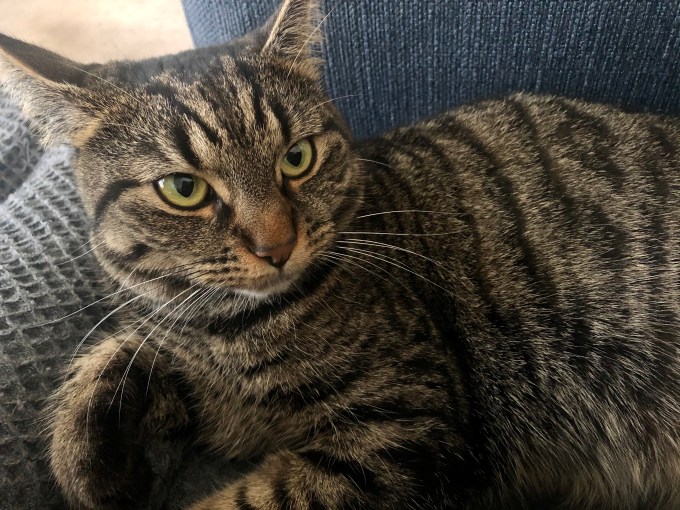
I was struggling to concentrate by the end of the class so I was relieved when we wrapped up. It was a lot of knowledge and sensory information to try to process and sort through and digest. I felt more than a bit dazed. Fortunately, the session was recorded so I can either go back and listen to it in shorter sections or go back and search for something specific.
My next class wasn’t until five so I had rather a lot of time to fill. Pre-pandemic, I’d hang out at uni and do cowrites, go to the favourite local coffee shop with friends, or work on whatever was on the list at the time but I’m finding it much harder to use this time effectively, whether that’s due to having my classes online or down to the pandemic just really screwing with my brain. Stuff that wasn’t hard before is now and the only thing I can put it down to is the pandemic, even if I don’t know precisely why. All I know is that it’s a weird time and so it shouldn’t be surprising that certain things aren’t the same as they were before. But it’s still frustrating to have such a big block of time that I could be using productively and not have my brain cooperate. Early in the semester, I ended up staring at my laptop screen, desperately trying to work on stuff and just not being able to. I got more and more frustrated and demoralised and eventually I just had to accept that this is not productive time. So I’ve been trying to come up with ways to fill it that aren’t too demanding but still feel like there’s a point to them; I don’t want to feel like I’ve wasted it by just staring at my phone or mindlessly jumping between the open windows on my laptop because that’s just not good for my general mental health. So I’ve been trying things like reading or watching new movies or TV shows – these have been good sources of inspiration in a time where I’ve struggled to find inspiration – or having a nap if I need one… Things that don’t require a lot of energy but still feel worthwhile (most of the time).
I did a quick scroll through my social medias to see if there was anything that needed replying to and then did some admin work: replying to emails, updating my bullet journal, and so on. Just as I was about to move onto something else, I got a load of notifications from social media, all Taylor Swift announcing her acoustic concert film going up on Disney+, folklore: the long pond studio sessions. That was so exciting that it temporarily scrambled my brain, in both a good and a bad way. As an autistic person, I’m really not a fan of surprise drops because I just get hit by a tidal wave of emotions and I feel so overwhelmed that I actually feel sick. I don’t want to sound ungrateful for the film because I am so, so grateful for all that Taylor has been putting out during the pandemic (her work really has been one of the things that’s helped me during this time) but the suddenness with which she’s been announcing things has been difficult because that doesn’t give me enough time to do the emotional processing that I need to do. So although I eventually settled into being really excited, I spent a lot of the day feeling painfully twisted up and anxious over the mess of emotion I was experiencing.

That did leave me floundering quite a bit, I have to confess. So, to try and take my mind off of everything I was feeling, my Mum and I caught up with the latest episode of His Dark Materials. It did help a bit. It’s such a great show; the casting, the acting, the sets, the interwoven storylines, etc are all so beautifully done. I loved the first series and I’m really enjoying the second one. I love Dafne Keen as Lyra (I so related to Lyra’s reaction to popcorn – it was freaking hilarious) and Amir Wilson as Will but I think it was Ruth Wilson as Marissa Coulter and Lin-Manuel Miranda as Lee Scoresby who really stole the show this week (pun actually not intended – if you know me, you’ll know I love a good pun). Their big scene together was just so powerful and how Ruth Wilson played the aftermath was particularly emotive.
I spent an hour or so working on a new blog post but after a while, I was just getting slower and slower and eventually I gave up and had a nap. I slept for about two hours before struggling up for my second class at five. I could’ve easily slept longer but I did my best to shake it off and concentrate on the workshop. This is where we (in this case, all of the 100% online students – the rest are blended and do the workshop in person onsite) share the songs we’ve been working on over the week and get feedback from the rest of the group. For most of the semester, we’ve had briefs each week but now we’re just working on whatever’s right for us. So, for example, I didn’t have a song to present because I’ve been working on the feedback for previous songs and the essay, rather than a new song (although I did recently write a rap, although I’m not sure whether I ever want anyone to hear it). Everyone else had songs to play though so I could still participate and give feedback, although I’m not sure how helpful I was because of how tired I was. But I tried. Some days I was just have less energy to work with than others.
I had an hour break before the evening session, which runs from seven to nine; they’re technically extra-curricular but I try to attend them when I can, especially now that they’re online and therefore more accessible. I don’t want to miss out on anything I don’t have to.
During my break, I had a quick dinner and catch up with my parents. The Grammy nominations had also been announced so I went through those. I’m super pleased for Taylor Swift: folklore is such a great album. Six nominations – Album of the Year, Song of the Year, Best Pop Solo Performance, Best Pop Duo/Group Performance, Best Pop Vocal Album, Best Song Written For Visual Media – is incredible and I’m really excited for her. Personally, I think she deserves at least several of those, especially considering the other nominees. I’m absolutely psyched for Ingrid Andress and her three nominations: Best New Artist, Best Country Song, and Best Country Album. I’ve been following her for years, having met her in Nashville at least a couple of years before her album was released. She’s an amazing writer and it would be just so awesome for her to win even one Grammy award this early in her career. But I’m concerned about her chances; she has some serious competition in all of those categories. The Best Country Song category, for example, is incredible, full of so many amazing songwriters that I love so much: Natalie Hemby (‘Bluebird’ by Miranda Lambert and ‘Crowded Table’ by The Highwomen, a group of which she’s a member), Maren Morris (‘The Bones’), and then Ingrid, of course. I want them all to win it. I was disappointed that Halsey still hasn’t been nominated. Manic is such an incredible album, as is Badlands (Live from Webster Hall), and it’s so frustrating that she doesn’t get the industry recognition she deserves. Especially given how popular ‘Without Me’ was, I’m really shocked that she’s never been nominated.
I just made it in time for the late session, which involved two of last years graduates presenting their final projects, one about using songwriting to explore different aspects of personality and the other about the experience of their gender transitioning and how sharing that story has the potential to increase understanding and empathy and break down barriers. They were both really cool projects but it was also massively helpful to see their processes, how they’d developed their ideas and researched them and how that research had lead them to writing the songs they wrote. It was fascinating and I definitely feel more prepared for my own project. I’ve got several ideas I’ve been turning over and the presentations have been helpful in my decision making process too. So I got a lot out of it, even if I was completely exhausted by the time the session finished.
It was about half nine and I probably could’ve gone straight to bed but I went and spent some time with my Mum, watching some TV together as we both wound down from the day. But it wasn’t long before we were both falling asleep so we put the cats to bed (they sleep in the kitchen so that we’re not woken up at five – the time they start demanding breakfast) and headed to bed ourselves.
THE NEXT MORNING
I’m not one of sleeping in so I always set an alarm. Then I can get up and start doing things (I have a real problem with needing to be productive) but usually, the day after a uni day, I sleep through the alarms I set. It doesn’t seem to change anything though. I keep setting alarms and sleeping through them. But that morning was special. I dragged myself out of bed at eight to watch folklore: the long pond studio sessions, as soon as it was available. It wasn’t particularly enjoyable to get up when I was so exhausted but it was absolutely worth it. The film was amazing, so amazing that I still haven’t figured out how to put all my feelings into words yet.
Since this post is just about my day at uni, I won’t write much more but just as I wrote about the Monday night, I thought I’d write about the Wednesday morning. Usually there isn’t a brand new Taylor Swift film to watch so I try to rest and recover my energy – physical, mental, and emotional – from the day before. As I said, I’m struggling with this need to be productive all of the time so with that in mind, I try to schedule undemanding tasks for Wednesdays. That particular day, I had a couple of half hour tutorials with tutors, so I spent the morning making sure I was ready for those. I’d already made notes of what I want to ask and discuss so I spent the rest of the morning going through those to make sure I felt as prepared as possible.
So, as you can probably tell, it takes a lot of planning and prioritising and rationing of energy to make it possible for me to go (or at the moment, ‘go’) to university, to make it possible to live my life in the most positive and productive (to a healthy extent) way. This isn’t an unusual day for me. While stuff like big Taylor Swift announcements and the Grammy nominations don’t happen every day, there’s often something that can cause emotional reactions like the ones described and I deal with fatigue and anxiety everyday. It’s one big juggling act. Every day. One enormous, exhausting juggling act every day.
 Finding Hope