 Finding Hope
Everyday Essentials
Posted on July 1, 2023
Given my health situation – living with multiple chronic illnesses that require daily management – I thought it might be interesting to make a list of the things I need and use everyday and maybe if any of you guys live with chronic illnesses, you could compare it to what you use. Are these things helpful to you? Might they be? Are there things that are helpful to you that aren’t on this list?
GLASSES – This is a pretty obvious one. I can’t see three feet in front of my face without them; I am incredibly short-sighted. Both of my biological parents are or were short sighted and I believe that certain forms of Ehlers Danlos Syndrome (EDS) can affect your eyesight. Regardless, I’m not going anywhere without my glasses.
MEDICATION – I have certain medications that I have to take everyday, as well as some that are situation dependent. The most important are my anti-depressant, Phenelzine, and the beta-blocker, Propranolol, and I really feel it if I don’t take them; while it took them a while to take effect at the beginning, it can through everything off course if I miss a day. So taking your meds… very important!
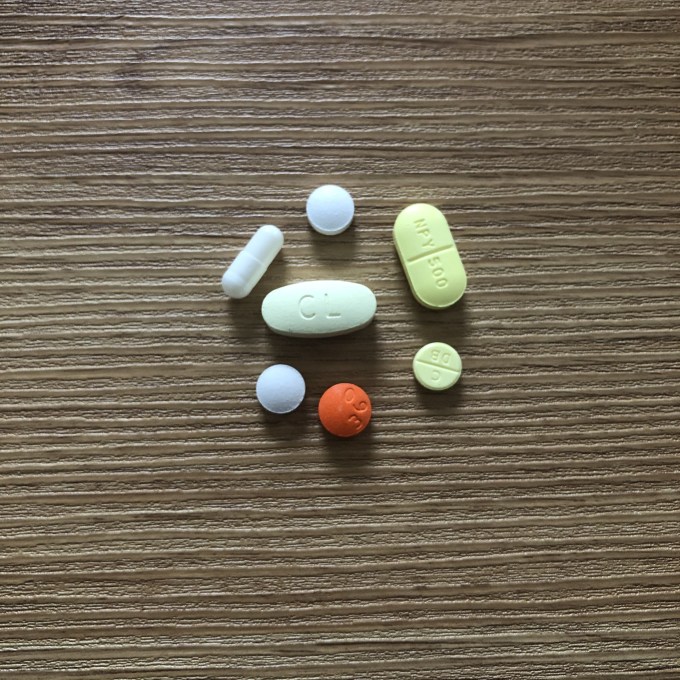
PAINKILLERS – Okay, this isn’t an everyday occurrence but it’s very common, especially at the moment (I hurt my back about a month ago – a story for another time). I have them on me all the time and I regret it if I don’t. Pain can be so debilitating and if I don’t have something to manage them, if only to get home, then I’m in really trouble. I also get migraines that absolutely incapacitate me so having the pills that help with those is vital. I often feel like a walking pharmacy but I’ve learned the hard way – several times – that it’s better to be prepared.
LOTS OF WATER – Generally, none of us are drinking enough water but as a person with Hypermobile Ehlers Danlos Syndrome (hEDS), I’m sure I’m not, as hard as I try. When I was diagnosed, the recommendation was that I drink more than double what a person without hEDS is supposed to drink (x); I’ve been trying to build up my water intake but it’s a slow process. I also have Postural Orthostatic Tachycardia Syndrome (POTS), which often occurs with hEDS, and includes symptoms like dizziness, light-headedness, swelling in the legs after standing for short periods of time, palpitations, fainting, and more, all of which can increase in intensity when a person is dehydrated, after exercising, or during hot weather (I want to write a more in depth post about all of this when I have more time). Dehydration has also been linked to an increase in pain sensitivity (x). Increasing water intake has proven to help POTS symptoms so I’m doing my best to always have water with me (or cordial if the taste of water becomes a struggle, something my nutritionist okayed, given that I’d still be getting the fluids) and I think it’s helping me to drink more (x). It’s surprisingly hard though, to drink that much water.
MY PHONE – I know that many people talk about needing breaks and time away from their phones but, in general, having my phone around is more helpful than it isn’t. I find social media pretty triggering for my anxiety so I rarely find myself scrolling through Facebook or Twitter or Instagram (and I hate TikTok more than I can even articulate) whereas I find the apps for setting alarms and timers helpful, Duolingo really good for my anxiety (and mental health in general), and the Notes app vital to writing down thoughts and ideas to follow up on. I do find it stressful that it means anyone has access to me, can contact me whenever they want, but then Airplane Mode is right there… But generally, my phone is more helpful than not.
MY BULLET JOURNAL – Between my ADHD and my general anxiety about being organised, my bullet journal (or what began as a bullet journal and has evolved into a more personalised version of the system) is all but permanently attached to me. It has my list of commitments, the list of things I want to get done during the day, and anything else that might be relevant, like stuff to do with the cats or the house. I honestly don’t know what I’d do without it.
FIDGET TOYS – My hair pulling has been particularly bad recently (plus I’ve seriously struggled with chewing the callouses on my fingertips and tearing at a scar on my face) and after years of dealing with it, I have a slightly ridiculous collection of fidget toys that I rotate using as the urge to pull varies; sometimes certain fidgets are more effective than others. So I usually have at least within reach, whether that’s wherever I am or in my bag.
NOISE-CANCELLING HEADPHONES – Having had some very unpleasant experiences with just how loud the world is (you may remember this particular disaster), I got an amazing set of noise-cancelling headphones that have made navigating my hometown, London, transport systems, etc so much easier. I’ve recommended them to multiple people and those who got them have agreed that they make life – and all of its noise – a lot more manageable.
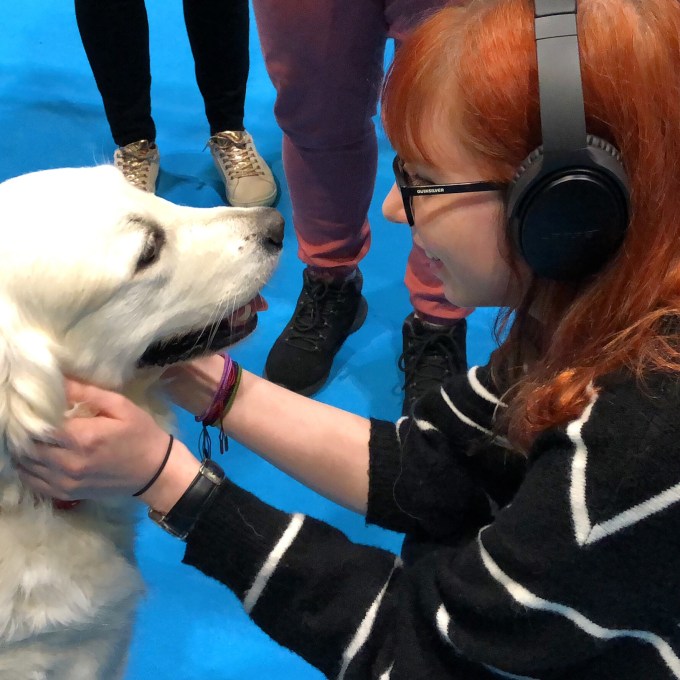
FACE MASK AND HAND SANITISER – I know that, for a lot of people, it feels like the pandemic has ended but, for many, many others, it hasn’t. I know immunocompromised people, those struggling with Long COVID, people who are still getting COVID and getting seriously sick so it certainly doesn’t feel over to me. If I’m out, I’m pretty neurotic about hand sanitiser and wearing a mask; I’m not perfect and I do sometimes forget, especially if I’m feeling overwhelmed in a social situation and there’s no prompt of other people wearing masks, but I’m still pretty on the case about it all.

A HIDDEN DISABILITIES SUNFLOWER LANYARD – I’m not sure when I first got my sunflower lanyard and I can’t honestly say it’s changed my life but there are certain places that it does make life easier, like at airports and concerts (and getting support in those sorts of places is so important). Mostly I wear it when travelling around London because having a big ‘autistic’ label around my neck reminds people to take care and hopefully be a bit more aware of what they’re doing and what’s going on around them. I’m sure there are people who see it and it makes them uncomfortable or contrary or belligerent (because, in my experience, those people tend to be everywhere) and I think there are places where it probably makes me more vulnerable but, on the whole, it tends to be helpful if I use my judgement.
JOINT SUPPORTS – Because of my hEDS, I struggle with a lot of pain in my joints (the gift that keeps on giving) so I have a handful of different supports and braces. I mainly use them for my knee and for my wrists, but I also have one for my back. They not only really help with my stability – something I’m struggling with more and more – but, as with my sunflower lanyard, they remind people that I am kind of fragile and that they need to be careful around me, especially on trains and the underground etc.
POLARISED SUNGLASSES – The last time I went to get new glasses, I mentioned that I have hEDS and the optician recommended getting polarised sunglasses because they can help with light sensitivity, something that many people with EDS struggle with: our eyes are sensitive can get really tired because they are made up of 80% collagen, which is – as we know – what EDS negatively affects. And if you can reduce the strain on your eyes – which these glasses do, even if you’re inside but it’s still very bright – then you can hopefully reduce the chances of developing problems with your eyes (again, EDS: the gift that keeps on giving).
LIP BALM – A common symptom of multiple types of EDS is sensitive skin and that can manifest as dry lips (and cracked lips that take ages to heal) so I try to always have a good lip balm around. My personal preference is the EOS Crystal Lip Balm in Hibiscus Peach, which I’m not totally sure they make anymore but it’s still available through various online stores. But it’s their crystal lip balms that are best for hydrating your lips (but it’s worth reading this article because some people have had allergic reactions to certain ingredients); the previous, more waxy versions were nice but I didn’t find them to be super effective. This one helps my skin recover really quickly (and stay hydrated) and I can barely feel it on my lips, a plus considering that the sensory experience of make up and skincare can be really difficult for me. But there are a lot of great ones out there; I’ve used several from The Body Shop that I would recommend too.
CBD GUMMIES – Over the last couple of years, my sleep schedule – for the most part – has been awful. Most nights I was getting a fractured few hours and then there were nights where I didn’t sleep at all. It was horrible and it just made my mental health even worse, which was pretty impressive given how bad it was when my sleep was at its worst. I felt like I’d tried every strategy ever suggested, including some pretty strong prescription sleeping pills; they worked-ish but I suffered from some pretty miserable side effects for not much reward. I’d always been vaguely resistant to trying CBD based products for some reason – I’m not really sure why – but I was desperate and ended up trying a few different types of CBD gummies. Within a few days, my sleep was deep and reliable again. Months later, it’s remained pretty good. Plus it’s helped me avoid relying on prescription pills, which I’ve had to do in the past even though it’s not generally advised (this was with the approval of my doctor); taking them every night can increase your tolerance and so they stop working and no one really knows what the long term effects are, although some people become addicted and can experience symptoms like hallucinations. So avoiding that is definitely a pro on the pro-con list. Research is still being done around CBD but so far it seems that the only problems are certain drug interactions, which would just involve a conversation with a doctor. None of those interactions were a problem for me so I’ve been taking them consistently ever since and my sleep has been so much better. They’re a constant presence on my bedside table.
So I hope that was of some interest, at least. As I said in my introduction, let me know if you use these things; let me know if you use other things; let me know if there are things that might work better than the ones on this list! Over to you!
#ToHelpMyAnxiety
Posted on June 3, 2023
TW: Mentions of self harm and Trichotillomania.
So the theme set by the Mental Health Foundation for Mental Health Awareness Week this year was anxiety. They pushed the hashtag #ToHelpMyAnxiety to raise awareness but I didn’t see it once on social media so I decided to write a whole blog post on the topic, on what helps my anxiety as well as what I’ve heard from others about what helps them. I ranted recently about how people engage with Mental Health Awareness Week, and awareness days in general, but I do think that sharing coping mechanisms for anxiety is a useful thing to do and a good use of those days.
I live with very severe anxiety, so bad that nothing I do actually banishes it, but I have found certain things that help to manage or reduce it. And I’ve spent a lot of time talking with friends and acquaintances about anxiety, discussing how we all try to cope with it. So I have a lot of tried and tested methods that have all worked for at least one person and therefore will hopefully be useful to at least one of you. If any of these ideas help just one person, then it’s worth the work to compile them. (Some of these have been pulled from my experience as an autistic person but many of them are useful for anxiety so I figured it was worth including them.)
I do think it’s worth mentioning that not all of my coping mechanisms are good, healthy ones. I’m focussing on the healthy ones because those are the ones we should all be aspiring to practice but I felt it would be remiss to not even mention them.
General Tips:
- Maintaining a healthy lifestyle – Getting enough sleep, eating healthily, moving your body, and, in some cases, taking additional supplements (I am not knowledgeable about this, nor qualified, to give advice but I do personally take supplements on the advice of a nutritionist, one who has experience with my health problems) are all important in managing anxiety. Not getting enough sleep or not eating enough can drastically increase anxiety, as you’ll know if you’ve struggled with anxiety in the past (and present).
- Make sure I’m breathing properly – I know people who swear by deep breathing exercises but I don’t usually need to go that far; I often find myself breathing very shallowly and need to reset, take a deep breath and remind myself what normal breathing is. At home, singing is really useful for this, I think because it forces me to control my breathing, plus it’s something I love to do.
- Consciously relax my body – When I’m really anxious, I’ll suddenly find my body so tense that I’m like a coiled spring. I have to focus and physically relax my muscles – drop my shoulders, unclench my fists, uncurl my toes, etc – sometimes multiple times a day. I usually find the tension creeping in again but making the effort to relax over and over does seem to help.
- Avoid loud noises – Loud noises are a serious trigger for my anxiety so I try to avoid them as much as possible, although some environments seem to be exceptions, like concerts for example. Most of the time noise cancelling headphones do the trick so I’m very grateful to have such a great pair.
- Avoid certain fabrics – This is probably more Autism anxiety than general anxiety but I thought it might be useful to someone. The sensory irritation of some fabrics (I particularly struggle with acrylic and polyester) slowly overload my brain until my anxiety makes it impossible to concentrate. So sticking to safe textures, like cotton, is a good strategy, even if it does mean I miss out on cool clothes occasionally.
- Fidget toys or fidget jewellery – We all stim (shortened from self-stimulatory behaviour) to some degree, both neurodivergent and neurotypical people, and one of the most common reasons for stimming is anxiety. Many stimming behaviours aren’t harmful (and many autistic individuals enjoy their stims) but sometimes they are and sometimes they can draw unwanted attention. This is where fidget toys and fidget jewellery can be really helpful because it fulfils the same need as stimming but allows that behaviour to stay under the radar, if that’s what you want. I’m not ashamed of being autistic or of my stimming behaviours but some of them are harmful and need redirecting and some of them are such that I don’t always want them to be people’s first impression of me; I prefer to choose when I reveal that sort of information but still need to stim in the meantime.

- Creating something with your hands – I’m not very artistic, not in the making of physical art anyway, but I do find it soothing to make things with my hands, whether that’s doing origami or making friendship bracelets. This is apparently a very common thing, as it allows our brains to essentially switch off and take a break from the relentless noise pouring in.
- Bullet journalling – Organising and updating my bullet journal (or my version of it that’s accidentally evolved over the years) and to-do list help me to keep track of what’s happening so I don’t have to worry that I’m forgetting something.
- Learning a language – This is something I’ve learned over the last year. I started using Duolingo and found it to be a really good way to distract myself when I was anxious, plus I was learning something new at the same time. I would like to use the language and, in theory, I will but even if I don’t, I did manage to reduce my anxiety, learn a new language, and feel better about myself.
- Socialising (to the best of my ability) – Depending on what’s best for you, a certain level of socialising can be really good for managing anxiety (especially if you have someone to talk to who understands what you’re going through). It’s a bit of a balancing act because it can help up to a point and then become overwhelming, but if you can walk that line, you can find relief from anxiety in both socialising and alone time (as many of us know from experience, too much of either can just make the anxiety worse).
- Therapy – If your anxiety is ongoing or seriously impacting your life, therapy might be something to consider. I talk about my anxiety in therapy a lot: what I’m anxious about, what I can do to mitigate it, short term and long term strategies, what else it might be connected to. I’ve learned a lot about myself and my anxiety and although some anxieties are impossible to avoid, I have learned how to manage some of them.
At Home:
- Blanket – Unless it’s absolutely sweltering, I usually have a blanket draped over my legs and lap. It’s not a weighted blanket because those are just too much for me but a light blanket provides just enough weight to be calming, to be grounding.
- Controlling the temperature – I’m more able to handle my anxiety when I’m comfortable, regulating my temperature included. So that I don’t have to adjust the whole house, I have a little electric blanket that I can sit on if I’m cold (also great for my chronic pain) and an amazing fan (noiseless because the noisy ones can trigger my anxiety) and that way I can adjust the temperature really easily as I need to.
- Burning my favourite candle – When I’m feeling anxious, burning my favourite candle (my personal choice is the pink pepper grapefruit candle from The Candle Bar, but really any pink grapefruit candle will do) helps to relax me; I feel safer and calmer and like I can breathe more easily.
- Stroking my cats – It’s been scientifically proven that spending time with animals lowers our stress levels and I absolutely know it to be true from my personal experience. Being around my cats relaxes me and it’s only when I’m away from them – even for only a few days – that I realise just how much they reduce my anxiety. So being with animals, if possible, is definitely a good tactic and fortunately, these days, there are many ways to do that if it’s not possible to own a pet yourself.


- Favourite movies and TV shows – When I’m having a bad day, returning to my favourite movies and TV shows (even if I have to work on stuff while I watch them) is very calming. The familiarity and nostalgia of those stories and characters makes me feel safe, pushing the outside world and all its stresses away for a while. As psychologist Pamela Rutledge says, “It can become really therapeutic, especially if you are feeling anxious. Watching the same piece multiple times reaffirms that there’s order in the world and that it can create a sense of safety and comfort on a primal level.”
- Diary writing – I feel like, with every day that passes, I’m carrying around more and more memories and the longer I go without writing them down and putting them somewhere safe, the more anxious I get. This is where my OCD chimes in. Complying with that need to write everything down may feed my OCD but it also brings me huge relief, both in that it relieves the weight that I feel like I’m carrying – and the anxiety that I could forget those memories and that they’d therefore be lost forever – but also in that it helps me process what I’ve been going through; the act of writing out my thoughts and feelings helps me untangle and make sense of them. I couldn’t cope without it.
Out and About:
- Have a well packed bag – It often ends up being a little over excessive (and heavy) but by making sure I have everything I know I’ll need (or might need), I can avoid a lot of anxiety and uncertainty; it’s my safety net. The contents depend a little on where I’m going but I usually have my phone (and portable charger so that I’m always able to reach someone if I need to), my noise cancelling headphones, my ID, my wallet (and travelcard), my keys, my sunflower lanyard, a bottle of water, a face mask (and a spare), hand sanitiser, medication (for anxiety and pain), my bullet journal, a fidget toy, and something to distract myself with if necessary, like a book. I think that’s everything. But if I’m prepared for everything, I’m less likely to end up in a situation that triggers my anxiety because I already have a solution.
- Exercise – I think there’s a bit more nuance to this one than is often made clear. Because of my mobility and chronic pain problems, exercise is hard for me and swimming is the only thing I can reasonably do at this point, which isn’t something I can just get up and do. But I do love it and I do find that it makes me feel better. I do agree that moving your body is helpful but I think that you get more out of it when it’s a form of exercise you enjoy, rather than exercise for the sake of exercise. Some of my friends love running and find that really centering and yoga is often recommended as a good choice of exercises, particularly because of the relationship you develop with your breathing, another well known coping mechanism for anxiety.

Other People’s Tips:
- A change of scenery – Sometimes we can just get stuck in the spiral of anxious thoughts and one way to break that spiral is to literally move to a different place. Our brains are super sensitive to changes in our surroundings and new experiences are closely linked to reward and positive feelings.
- Gardening – While gardening is not something that helps me, it’s something that many people find really helpful, whether that’s tending a full garden or looking after plants and window boxes. My Mum loves to garden and when I asked her why she finds it relaxing, she said that part of it is that she’s outside and away from work, but also that it requires all of her attention and that there’s always progress to be made. I can definitely understand that even if plants specifically aren’t my thing.


- Reduce caffeine – I don’t understand the science, but it has been scientifically proven that reducing caffeine reduces stress. As far as I can tell, caffeine has no effect on me at all – energy-wise, at least – so I have no idea if it affects my stress levels. But if you’re ingesting a lot of caffeine, it might be worth cutting down your intake and seeing how you feel.
- Listening to music – Some people find listening to music deeply relaxing and it’s true that, as an activity, it lowers your heart rate and cortisol levels. Personally, it might physically relax me but since music is my job, it’s not very relaxing for my brain. I think they call it ‘a busman’s holiday.’
- Reading – Reading is also proven to lower your heart rate and ease tension in your muscles so it’s a technique worth trying but, of course, reading isn’t everybody’s cup of tea.
- Puzzles – My friend loves doing puzzles and, as it turns out, puzzles actually help release dopamine in your brain, which is why we feel good when we do puzzles. I prefer doing puzzles with people rather than doing them alone and I’m sure that that has its own benefits too.
- Self care – The idea of doing something that helps you feel good, mentally and physically, seems obvious but it’s so easy for all of us to get caught up in everything we need to do and everything we’re worried about, that we often forget. For some people, this is taking a long bath, for others it’s painting their nails, or catching up with a friend, sleeping in, or keeping a gratitude journal. The list of potential options is probably longer than The Lord of the Rings books so I’m sure there’s something useful there for all of us; it just might take a while to find the right thing.
- Meditation – I don’t know a whole lot about meditation (and all of the different types) but I know that some people swear by it. Not only does it reduce symptoms of anxiety, depression, and PTSD, it can also improve your sleep, blood pressure, and heart rate. Regular meditation can also physically change the structure of your brain, improving your senses, your concentration, and ability to process emotions. Knowing it can do all of that, it definitely seems worth researching.
- The 333 rule – I’ve seen many variations of this technique so you don’t have to stick to these rules, just the ones you set for yourself, the ones that work best for you. In this example, when you’re anxious, you try to redirect your focus to three things you can see, three things you can hear, and three things you can touch. I’ve heard some people say that this is too easy and doesn’t distract them enough, leading to all sorts of imaginative versions of this idea: my favourites, I think, are three things you can fit in your pocket, three things you can balance on top of each other, etc. Whatever works for you, if it works for you.
Other notes:
- I’ve been taking medication for my anxiety for a long time now, Diazepam as and when I need it (although it does have to be monitored, which it is). It has been incredibly helpful although I’m careful about never getting dependent. There are ebbs and flows in my anxiety where I take it more and I’ll take it if I know I’m about to do something stressful, like have a stressful meeting or take a flight, but it’s very much a balance of taking them and using other strategies like the ones I’ve listed.
- As I said, I do think it’s also worth noting that I have some harmful, self-destructive methods of coping with my anxiety. I’ve been self harming on and off since I was twelve because I just needed to give all of the intense feelings an escape route out of my body, like a pressure valve (it’s always been sporadic though – I’ve never been a really serious self-harmer, not in comparison to how much some people struggle with it). My hair pulling is worse though. I’m not sure if it’s Trichotillomania or if I’m stimming but either way, it’s not good: I’ve always been able to avoid it being visible but I have so many patches of hair at different lengths and my scalp gets so sore. I’ve also developed problems in my hand, wrist, elbow, and shoulder from the repetition of pulling. But it’s so hard to stop and trying to resist the urge to pull causes me incredible stress and anxiety so I just end up pulling to escape it. I’m talking about it in therapy though so maybe we’ll make some progress with that.
So I hope this has been helpful. Hopefully there are enough ideas here that there’s something for everyone, to try at least. If you’re reading this and struggle with anxiety, I feel for you and I’m in this with you and I hope that you find something to help you manage it. Severe anxiety is not something that we just have to accept, just have to live with. There are ways to make it easier – maybe there are even ways to shed it – and I hope you find them because you deserve to enjoy your life. You deserve to feel everything, not just anxiety.
A Love and Hate Relationship with Autism Spectrum Disorder
Posted on March 30, 2022
Being autistic is complicated (to state the obvious). It’s never just one thing, in my experience at least. It’s not even one thing on one day, one thing in one moment. It’s good things and bad things all wrapped up together and while I can advocate and applaud ‘Autistic Pride,’ I’m not sure I’m there yet. But I can appreciate the good and the bad and so, considering it’s World Autism Acceptance Week, I thought I’d post something about just that: the good and the bad and learning to live with them…
Autism, as we know, is a neurobehavioural condition so the traits associated with it are right down in our wiring, just like the rest of our personality traits: being autistic is at the very core of us and everything else is built upon that foundation. There are some things about being autistic that mean a lot to me, things about myself that I love and value, including…
- A NEED FOR AUTHENTICITY – Obviously I can’t control whether or not other people act authentically but I need to be authentic. If I act differently to how I feel, it has a negative impact on my mental health and on my happiness. So, to be happy and mentally healthy, I have to act on how I feel and be who I really am and it’s in following that rule (for lack of a better word) that I’ve had the best experiences and created the things I’m most proud of. As I said, I can’t make that choice for other people but I do think that, on the whole, I get on better and make stronger connections with people who are authentic.
- PASSIONATE ABOUT THE THINGS THAT ARE IMPORTANT TO ME – If I love something, I love it with everything I have. I will fully immerse myself in said thing; I actually find it hard not to. That can sometimes make doing normal, day-to-day things hard because all I want to be doing is engaging with this thing I love but I’d rather love wholeheartedly than feel ambivalent about stuff.
- LOYALTY – When I care about somebody, I’m all in. I’ll do anything for my friends, sometimes to a pretty extreme degree: like, once I improvised travelling home from Nashville because my flight was cancelled and I’d promised a friend I’d be home for something or like, once I woke myself up every hour to check whether a friend who was in hospital had tried to get in touch because she was scared about being in hospital alone at night. Putting that much into a friendship or relationship does mean I’m more likely to get my heart broken (and it already has been) but like all of the things that matter to me, I’m never going to want to care less about people. I mean, on the bad days, sometimes I do – it would make life easier – but, as a person, I like that I care that much. It’s not always easy (or healthy) but overall, I always think it’s better to care more than less.
- STUBBORNNESS – I am stubborn as hell and sometimes it’s a pain; sometimes I can’t let things go even when I want to. But being stubborn has also gotten me through a lot of hard stuff and helped me make a lot of good stuff happen.
- IT GAVE ME PURPOSE – All I want to do is make the world a little bit better. That’s all I want. I hate seeing people unhappy or things not working so I’m always looking for ways to help and make things better but the world is a big place with lots of problems and it’s easy to feel overwhelmed and helpless. But finding out that I’m autistic, that gave me a place to start and the more I’ve learned, the more I want to help make being autistic an easier, less harmful, and ultimately better experience. And that’s what I’m trying to do, whether that’s with this blog, my music, or by trying to improve the accessibility and understanding wherever I go.
But there are also things about being autistic that I hate, that I struggle with, that cause me problems, and upset me deeply. I know it’s not healthy to focus on the difficult parts (unless you’re, for example, working on something specifically in therapy or counselling) but I do believe that acknowledging the negatives is important and validating. Endless positivity is not helpful and can end up being harmful so here are some of the things that I hate about being autistic…
- LACK OF INDEPENDENCE – With the sensory issues, fatigue, mental health problems, etc, my independence is severely hindered. And as hard as I work to improve my stamina and my mental health and so on, I don’t know how I’m ever going to be completely independent. If it’s even possible. The idea of living by myself is one that I can’t even really imagine ever being realised. And with that being such a standard rite of passage that holds such weight, it’s hard not to feel inadequate or broken.
- FEELING FROZEN – I still don’t really know how to describe this feeling and I can’t say for sure what caused it or when it kicked in but I feel very stuck, particularly in the developmental sense. I feel stuck somewhere between teenager and adult; I feel all the pressure of being an adult but I also feel incapable of doing a lot of the things that make it impossible to meet all of those expectations. All of the things that impede my independence come into play here too, like my lack of energy and my issues with pain. Just existing is an exhausting experience; living as everyone else does feels like an impossible dream.
- THE SENSORY DIFFICULTIES (WITH FOOD IN PARTICULAR) – Sometimes just being is really hard. Every light is too bright, every sound is too loud, every smell is overpowering, every fabric is itchy… and so on. It’s not like that everyday, at least not for me. But it is like that a lot. And most of the time, it makes doing normal things like eating, drinking, going about my day, etc, just that bit harder. I would love to not be phased by restaurants for example: to not worry about the fact that there’s probably nothing I can eat, or potentially even drink, apart from water (and even then it usually has lemon or lime or cucumber in it). Even small things feel so complicated. I’d love to be able to just meet a friend for coffee and that be that but between whatever we eat or drink, how loud it is, and all of the other sensory factors (and that’s not even thinking about all the sensory stuff involved in the travelling), it’s just exhausting. And I wish it wasn’t.
- THE RESULTING MENTAL HEALTH PROBLEMS – While we will never know for sure, I (and the mental health professionals that I trust and have worked with for years now) strongly suspect that many of the mental health issues I deal with, are at least partly down to being autistic, and specifically, being diagnosed as autistic so relatively late. Anxiety, depression, OCD, BPD, and ADHD are all comorbid to Autism. Maybe some of them would have developed on their own but I’m sure the Autism did not help and the amount of distress that these problems cause isn’t something I can easily put words to. Every day is a struggle because of them. Let’s leave it at that for now.
- THE LACK OF UNDERSTANDING, FROM EVERYONE (INCLUDING MEDICAL PROFESSIONALS) – Everywhere I go, I have to teach people about Autism, even the most basic stuff. From friends, to teachers, to doctors, even to people whose entire job revolves around accessibility. No one seems to know anything, or at least anything beyond the basic stereotypes. There’s almost no decent representation out in the world, in the media (which makes it very easy to feel alone and/or broken) – the vast majority of it is harmful. So many people still don’t even know that Autism manifests differently in girls. Autism is a complicated thing so I don’t mind helping people understand it, understand some of the nuance, but I hate how bad the general understanding is, especially when it’s people who should know better (when it’s part of their job, for example). This is why so many people are diagnosed so late and struggle so much: even the people who should have a working knowledge of Autism don’t and it’s really not good enough.
So, this was a bit more exposing than I’d expected when I started writing. But there it is. Almost a decade later and I’m still figuring out what it means, to me, to be autistic. It’s complicated and it’s hard and some days I’m really proud that this is who I am. I guess the goal is to have more of those days.
 Finding Hope