
Posted on December 24, 2025
I really didn’t mean to abandon this blog but the last four months have been completely miserable, healthwise.
Less than a week after I last posted, I started experiencing what felt like electric shocks in my lower back. It was so painful that, at times, all I could do was scream. Even when the electric-shock-like spasms weren’t actively happening, I was in – quite possibly – the worst pain I’ve ever experienced. And given my experience with chronic pain, that’s saying something. It was horrendous, especially as the painkillers that usually give me some relief weren’t having any effect. Eventually I managed to get some stronger painkillers from my GP and they were so strong that, for the first few days, I could barely keep my eyes open: I was asleep for around twenty hours each day. Thankfully, that did wear off after a while but I still felt slow and blurry while taking them.
It was a completely new kind of pain for me and while we had a few theories from the network of health professionals I’ve worked with, we still didn’t know what was causing it, how long it would go on for, or if it was a permanent change. The massage therapist I’ve done some work with – who has both personal and professional experience of Hypermobile Ehlers-Danlos Syndrome and chronic pain – was a godsend and thankfully, my Mum found a new physiotherapist nearby who had professional experience with hEDS and who was able to come to the house to see me. He was fantastic: he was thoughtful and thorough and explained everything with great care (sometimes multiple times); he really listened to me and took my priorities into account when choosing the exercises for me to do; I felt like he actually cared about me as a whole person, which has not been a common experience. He assessed me and felt that I had a pinched nerve in my lumbar spine, which typically heals in about eight to twelve weeks. That felt like an interminably long time but I was relieved to hear that he expected the pain to go away. He gave me some very gentle exercises to do as I felt able to, with the goal of strengthening the muscles in my back to support my especially hypermobile lumbar spine (and hopefully reduce my chronic pain). Between the pills (despite the side effects), the massage, the physiotherapy exercises, and the time that I was forced to take to rest properly, the pain finally started to decrease and I was able to slowly increase my mobility – I’m still working on that.
Unfortunately that was only the first part of the story. In early October, I started to struggle with multiple symptoms that I’ve rarely experienced, including stomach pain, nausea, acid reflux, and difficulty swallowing. It made eating so difficult that I could barely keep any food down and it made sleeping difficult because I felt worse when I was lying down. I felt awful but my Mum had been unwell a week or so earlier and so I assumed that it was the same thing and would pass relatively quickly; I thought I just had to rest and wait it out, like I often do with a seasonal illness or the symptoms of my chronic illnesses. But that didn’t happen. The symptoms got more intense until I wasn’t eating at all – sips of water were all I could manage – and the POTS symptoms I experience everyday had become debilitating. I hate going to the doctor but if there was ever a time, this was it.
I managed to get an appointment with one of the GPs pretty quickly – not my usual GP but that isn’t unusual and I did manage to get an appointment with her for later in the week – but when I explained what was happening, this doctor said that there wasn’t time to explore each of the symptoms so she questioned me about the difficulty swallowing, prescribed me a medication, and sent me on my way. I was deeply unimpressed and had no confidence in her diagnosis or the medication: treating one symptom when several are presenting at the same time… that seemed very unlikely to help whatever was causing the multiple symptoms. I’m passionate about the NHS (and about improving it) but it’s not exactly straightforward when I’ve been repeatedly invalidated and mistreated by medical professionals.
I didn’t have time to even take the medication before the stomach pain got so bad that I couldn’t move. We ended up calling 111 and their recommendation was to call an ambulance and head to A&E. The idea of being in an ambulance – as an already overstimulated autistic person – felt horrific and I almost had a meltdown; I didn’t know what I was supposed to do when I felt like I could barely move. Eventually my Mum had to all but drag me into a cab to go to A&E. For once, being autistic was a help rather than a hindrance because the receptionist moved us straight from the initial waiting room into the actual A&E department where people were being assessed and treated. We still had a considerable wait ahead of us, which felt incredibly long given how much pain I was in. It wasn’t exactly a restful environment either: besides the patients and nurses coming in and out, there were paramedics and police and one young woman who cried the entire time she was there. If I hadn’t been in so much pain and so overstimulated, I might’ve been impressed – and a lot more sympathetic. But I was running on empty and on the edge of sensory overload and all I wanted was some quiet; it was a rough night – for everyone clearly.
After a couple of hours, several different nurses did a series of tests, including taking blood and doing an ECG (during which my cannula from the blood draw was jostled, leading to the bruise pictured below – that hurt for a while). A little while later, another nurse gave me a low dose of morphine that did, thankfully, slowly bring my pain level down. But after that, we were left for several hours; even when we were the only people left in the little waiting area, no one came for us or even gave us an update. I was starting to think we’d been forgotten about.
When a doctor did finally call my name, he didn’t have any real answers for me. He did at least have a reasonable understanding of hEDS and how it can cause strange or skewed test results: a hEDS body does not react to anything the same way a non-hEDS body does, surprise surprise. So there was no obvious explanation for my symptoms but he prescribed antibiotics and recommended getting a referral to the hospital’s Gastroenterology department if the symptoms weren’t resolved by the antibiotics. I don’t love the approach of just throwing medication at a problem and hoping it helps but I was desperate and that was the only option being offered.
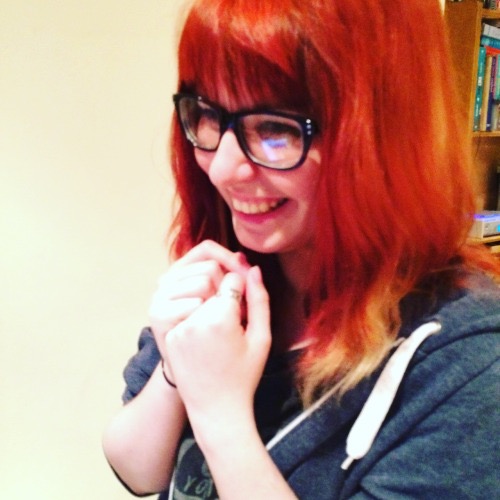
(Left: the bruise left by my cannula, having being knocked during A&E tests // Right: me, asleep on the sofa the day after the night spent in A&E with Izzy keeping me company)
We got home around seven and I was asleep the moment I lay down on the sofa. I was just completely exhausted. I took the antibiotics I’d been prescribed but then, when I saw my actual GP, she was surprised by how high the dose was, adjusted it, and prescribed another antibiotic, as well as sending the referral to the Gastroenterology department at the hospital. Again, it wasn’t exactly reassuring since we still didn’t know what the actual problem was and I was starting to spiral a bit about the possibility that this was more than just a passing illness, that it was something much more serious that was getting overlooked (with the potential to lead to an even more debilitating outcome). But I tried not to go down that rabbit hole. I was trying to at least give the various medications a chance to work.
Over the next few weeks, I just lay on the sofa and tried to eat when I felt able to. Between my body trying to fight whatever was going on and the fact that it was trying to function on very little fuel, I was barely able to do anything. I was forced to rest, to literally just rest; I couldn’t even do the most passive of activities. I was physically, mentally, and emotionally exhausted. My body and my brain were barely functioning: a good day consisted of a shower and watching TV (and eating what I could). But the medications started to work and, very slowly, I started to feel better and the symptoms started to decrease in intensity, even if I was still building back up my capacity after so long with so little fuel in my body. And then, just as I was finishing the courses of medication, I started to feel actually well again and I don’t think describing my mood as “overjoyed” would be an exaggeration. Eating went from being a struggle to being joyful (a word I don’t think I’ve ever used in the context of eating) and I was sleeping well, not only for the first time in weeks but in months: I was feeling so good that it felt more than a little surreal but I wasn’t complaining. It was a huge relief after eight weeks of feeling so terrible.
But less than a week later, the symptoms started to reappear and I started to feel really unwell again. I had bloodwork done (which had been ordered way back when I’d first gone to the doctor) but all of the tests came back fine or inconclusive again. I was wondering if the medications had been treating just the symptoms and not the underlying issue, which made me deeply anxious about what that underlying issue could be. I wasn’t sure what the next step was supposed to be but I’ve had a lot of conversations with a lot of different people in my various circles and, long story short, it seems that these digestive issues were a delayed response to the increase of one of my long term medications: some (professionally guided) experimentation has proved as much as is possible that my digestive system can’t handle this medication over a certain dosage so I’m currently taking a break from it (which is something you can safely do with this medication) while getting my food routine and some of my energy and strength back. After Christmas, or maybe the New Year, we’ll reassess and I’ll likely start taking it again at the lower dose since I had had a positive experience with it until that final dosage increase.
So that is where I’ve been: too sick to do anything, too sick to even write a blog post about being sick. When I say it’s the most unwell I’ve ever felt, I’m not exaggerating. I’ve dealt with a wide range of symptoms and various levels of pain during my life but never have I been so ill, in the way we typically picture illness. I’ve dialled everything right back to absolute basics and I am starting to feel a bit more normal, despite a few bumps in the road. Fingers crossed, I’ll be feeling more like myself again by the time the New Year rolls around…
Category: animals, autism, blog, chronic fatigue, chronic pain, food, heds, medication, pots, sleep, treatment Tagged: a&e, accident and emergency, acid reflux, antibiotics, anxiety, asd, autism, autism spectrum disorder, autistic blogger, back pain, blood tests, chronic illness, chronic pain, chronically ill, eds, ehlers danlos syndrome, heds, hospital referral, hypermobile ehlers danlos syndrome, ill, illness, medical anxiety, medical trauma, medication, medication intolerance, medication side effects, nausea, nhs, pain medication, physiotherapy, pinched nerve, postural orthostatic tachycardia syndrome, pots, recovery, rest, sick, sickness
Posted on November 19, 2023
This week – from Monday 13th to Sunday 19th November – is Self Care Week, a UK-wide awareness week established and run by the Self Care Forum, a charity that aims to spread understanding about the positive impact of self care and helping people to implement it into their everyday lives. This includes the benefits of good nutrition and exercise, of taking vitamins (like vitamin D, especially for those whose health means they spend all or most of their time inside), of managing our mental health; they also guide people in making more positive lifestyle choices (to no one’s surprise, ‘homelessness’ is not on their list – fuck you, Suella Braverman), go into schools to help improve health literacy, and support people in understanding how to manage both short and long term health conditions. All good things!
I can’t speak to their understanding of neurodivergent or Autism focussed self care – I haven’t been able to find anything on their website – although much of their advice applies to all of us as human beings with the same basic needs. I thought that, in recognition of this week and the importance of self care, I’d put together a list of strategies that I personally rely on, many of which I’ve developed to help me manage as a neurodivergent person.
Obviously not all of these will work for every person, the personal ones that is: the physical ones apply to all of us to a certain degree, depending on our individual circumstances and needs. But when it comes to the personal ones, it’s unlikely that all or even most will work for everyone. But hopefully, given how many I’ve included, there will be something that’s helpful – or just worth trying – to anyone who reads this…
PHYSICAL:
When I’m struggling, I know that I need to check in with my body. I’m really not very good at noticing my body’s signals – my interoception is pretty poor, something that isn’t unusual in neurodivergent individuals – so I often have to go through this list consciously to figure out what it is my body is asking for. Others are better at this but it’s always worth checking to make sure that there isn’t a straightforward way of understanding why you might be feeling the way you do and of improving both your physical and mental state…
PERSONAL:
Here is a short list of the things that help me to manage when I’m struggling, when I’m feeling overwhelmed and burned out, when my mental health isn’t great. It’s a constantly evolving list, depending on what’s going on in my life and what my needs are, but this is my current list of self care strategies, ones that are the most helpful at this point in time.
I’ve been working on my self care this year and there are times when I can really see the difference it’s made: I’m really enjoying exercise for the first time in my life; I’m drinking more water than I ever have; my relationship with social media is better than it’s ever been; I feel more confident in my friendships; and so on. There are still plenty of aspects to work on but I can see the positive effect it’s had on my life.
I’d love to know how you guys feel about all of this, about self care in general and on a personal level. What self care strategies do you use? Which ones do you find the most effective? Here’s a great list if you need more ideas.
Category: about me, animals, anxiety, autism, body image, book, chronic fatigue, chronic pain, depression, emotions, exercise, family, favourites, food, hydrotherapy, medication, mental health, music, pots, sleep, special interests, therapy, tips, writing Tagged: animal, asc, asd, autism, autism spectrum condition, autism spectrum disorder, awareness week, body, body image, book, breath, breathe, breathing, breathing techniques, breathwork, cat, cats, chronic fatigue, chronic pain, crafts, demands, diary, dog, emotional needs, exercise, family, favourites, film, food, friends, health, hunger, hydration, hydrotherapy, interoception, journal, journaling, mental health, mum, neurodivergent, pet, pets, physical health, physical needs, physiotherapy, puppy, relaxation, relaxation techniques, rest, self care, self care awareness week, self care forum, self care week, sleep, social media, special interests, support group, swimming, therapist, tv show, wellbeing, writing
Posted on August 27, 2023
TW: Mentions of ableism, severe depression, suicidal thoughts and ideation.
Us international Taylor Swift fans have been waiting for The ERAS Tour to come and visit us for months and finally, we have dates! (Through some bizarre twist of fate, the announcement, the registration, the extra dates announcement, and the opening of resale tickets all occurred while I was at therapy, so I don’t think it would surprise anyone to learn that I rescheduled the sessions that were booked for the days of the actual ticket sales – thank god for my very understanding therapist).
So the tour is coming – possibly the most exciting event of next year – but before I could be excited about that, the ticket sales had to be navigated. And given how horrific the US sale had been, I was – at the very least – very apprehensive. I hoped that, after the previous fiascos, this sale would be smoother but, having witnessed the anxiety and misery and disappointment, I couldn’t help but worry that this sale would be just as bad, with the added hurdle of trying to get accessible seating.
Having pre-ordered the Midnights album during the period in which it granted you a code for tour dates, I had access to the ticket sales a week earlier than the ticket sales for which you had to register. That was definitely helpful, in some ways at least. In the week leading up to this first sale, my Mum and I spoke to the Wembley accessibility people several times, trying to get the most accurate information about getting tickets through them. My Mum had to actually make the calls since making a phone call is something that is a real struggle for me as an autistic person, especially when the phone call has high stakes or I have anxiety about it (I can handle other forms of communication – I just can’t gather enough information from just a voice to keep up a conversation in real time and the anxiety of screwing up just makes the processing worse and the whole thing snowballs until I become non-verbal or descend into a meltdown). So Mum made the phone calls and we tried to get the clearest picture we could, but the information changed with every call and, on the Friday (with the tickets going on sale on Monday morning), they still weren’t sure of anything. They were really only certain of one thing: they were very, very aware of how high the demand was, part of the reason why they were so reluctant to commit to any of the information they did have. It was very stressful and I spent the weekend consumed with anxiety over whether or not I would be able to get tickets to even one show, having hoped to go a couple of times with different friends and family members. The dread I felt at the thought of not getting to go was paralysing.
Most people don’t seem to understand the intensity of my emotions. Technically, it could be part of being neurodivergent or mentally ill but it’s always just felt like part of me: it’s me, hi, I feel everything at 500%, it’s me. I feel every emotion with my whole body; it’s just always been that way. And people have always been weird about it (especially when it comes to loving Taylor actually – I’ve been mocked and harassed for years for being a fan of hers, often for reasons that completely baffle me). It hurts – and that hurt is very intense too – but I’d always rather love things, regardless of what people say. Taylor and her music (and seeing her live) are and always have been so important to me, getting me through hard times and bringing me such life affirming joy; as hard as it can be, it doesn’t surprise me that the thought of not getting to see her live after waiting so long feels like a lifeline being cut.
Monday morning, I woke up so anxious that I couldn’t eat. I couldn’t do anything. When the time came, when the online queue and phone lines ‘opened,’ Mum rang the accessibility number. It rang and rang until it went through to an automated message before hanging up. We tried again. And again and again and again. We kept getting the same message and we were still calling when the queue moved from the first of the Wembley shows in June to the first of the Wembley shows in August in the early afternoon. We were still calling as the clock inched towards five and the closing of the phone lines. I’d been sitting with Mum, unable to do anything and on the edge of the meltdown all day. I was exhausted, in pain, and swinging between misery and rage, in tears over how awful the experience was. It was (and still is) so desperately distressing that it seemed literally impossible to get a ticket for accessible seating, to access the concerts as a disabled person. It just felt – and feels – like yet another part of the world telling us that we’re not worth the effort, that we don’t matter as much as everyone else. It’s a deeply hopeless feeling. And as if the situation wasn’t hard enough on its own, I’ve been struggling with suicidal thoughts and impulses for a while now and between the dwindling possibility of getting accessible tickets and the crushing display of ableism, those thoughts were only getting louder and more difficult to block out.
Tuesday was more of the same, just with an awful day and awful night’s sleep under my belt. Mum and I were glued to the sofa again, calling over and over and over. Morning turned into afternoon, another show disappearing. Wembley Stadium had tweeted a response to the criticism on social media: “Due to unprecedented demand waiting time for Taylor Swift | The Eras Tour Disabled Access is longer than normal. For those unable to wait on the phone we have a call-back system.” Seeing that filled me with the urge to throw my phone across the room: when we’d spoken to them, the ‘unprecedented demand’ was the only thing they had known about. I wanted to scream.
The night before, a friend had suggested looking at Twitter to see if other disabled fans had posted about having a similar experience. I didn’t remember her suggestion until the afternoon but once I did, I went searching and found my experience repeated over and over. On one hand, it was reassuring because I wasn’t alone but on the other, here was this huge number of people who weren’t able to get tickets because Wembley’s accessibility department wasn’t doing its job. I spent the afternoon tweeting back and forth with this group of people: trying to find a better way, sharing different phone numbers that different people had had success with, updating each other on our progress, sharing the successes and the miseries and frustrations. One fan, Faith Martin (she wrote a great piece for Metro about what the experience was like was disabled fans), spent an amazing amount of time trying to help people get tickets, long after she got tickets for herself; I really appreciated her support and encouragement. (I’m sure there were other fans doing this, helping other fans for other UK venues but Faith is the person I saw doing this, the person who helped me.) Having that little community in such a fraught time was comforting; I’ve never had anything like that before.
Eventually, just before the lines closed for the day, we got through and were finally, finally able to get tickets. When my Mum hung up the phone and triumphantly announced that we had tickets, I collapsed back onto the sofa and burst into tears. I was overwhelmingly relieved but also totally overwhelmed by the exhaustion and anxiety making my hands shake, by the excruciating pain in my limbs, back, neck, and skull. But most of all, I was just completely overwhelmed by how hurt I felt by the ableism of the process (especially compared to the ease of the online general ticket sale), by how little my very existence meant to them even though I was paying them for the space I would be inhabiting. God, you know it’s bad when you’re paying to take up space and still no one cares because of the ‘inconvenience’ you present. I was pleased – of course, I was – but all the other big emotions were drowning it out. I knew I’d be thrilled later on, once I’d recovered from the unbelievable stress of those two days.
And it’s true. It took a couple of weeks to fully return to my day-to-day state but now that I have, I am really, really excited. But having said that – and I know I’ll say it a lot over the next year – I still feel hurt by how Wembley handled it all, how they treated their disabled patrons. I’m hurt and I’m angry and if there was anything I could do that would affect any change, that would be more than me simply shouting into the void, then I’d do it. Without a second thought. But if there is, I have no idea what it would be. So here I am, sharing my experience about, if only to remind people that this sort of thing – and worse, of course, much, much worse – happens every day. Even the processes set up supposedly to help us are failing us, and worse, hurting us.
I’ll leave you with what I tweeted after I got my tickets: “I knew that getting #ErasTour tickets would be hard but I didn’t expect the level of ableism. By making it so much harder for us, they’re essentially telling us that we aren’t as important as everyone else, that we don’t matter as much, and that was deeply, deeply upsetting.”
And here are some of the articles that have been written about this, including the experiences of several disabled fans. (Note: please don’t read the comments sections of these articles because the dismissive, ableist bile coming from people – most of whom are totally missing the point – is honestly painful and there is no reason to subject yourself to that if you don’t have to.)
Category: about me, anxiety, autism, chronic fatigue, chronic pain, depression, emotions, family, heds, meltdowns, mental health, music, special interests, suicide Tagged: ableism, ableist, accessibility, accessible seating, anxiety, asc, asd, autism, autism spectrum condition, autism spectrum disorder, autistic, autistic adult, bullying, carer, carer's ticket, chronic fatigue, chronic fatigue syndrome, chronic pain, companion ticket, concert, depression, disability, disabled, disabled access, eds, ehlers danlos syndrome, emotional rollercoaster, enjoyment, eras tour, eras tour 2024, eras tour london, exhaustion, fan, fans, fatigue, fibromyalgia, fun, heds, hypermobile ehlers danlos syndrome, institutional ableism, joy, live music, mental illness, mum, music, pain, phone calls, recovery, rest, safety, special interest, stress, suicidal ideation, suicidal thoughts, swifties, taylor swift, tension, therapy, ticket, ticket sales, tickets, twitter, wembley, wembley stadium

Hi! I’m Lauren Alex Hooper. Welcome to my little blog! I write about living with Autism Spectrum Disorder (ASD), ADHD (Inattentive Type), and Hypermobile Ehlers-Danlos Syndrome (hEDS), as well as several mental health issues.
I’m a singer-songwriter (it’s my biggest special interest and I have both a BA and MA in songwriting) so I’ll probably write a bit about that too.
My first single, ‘Invisible,’ is on all platforms, with all proceeds going to Young Minds.
My debut EP, Honest, is available on all platforms, with a limited physical run at Resident Music in Brighton.
I’m currently working on an album about my experiences as an autistic woman.
Hi! I’m Lauren Alex Hooper. Welcome to my little blog! I write about living with Autism Spectrum Disorder (ASD), ADHD (Inattentive Type), and Hypermobile Ehlers-Danlos Syndrome (hEDS), as well as several mental health issues.
I’m a singer-songwriter (it’s my biggest special interest and I have both a BA and MA in songwriting) so I’ll probably write a bit about that too.
My first single, ‘Invisible,’ is on all platforms, with all proceeds going to Young Minds.
My debut EP, Honest, is available on all platforms, with a limited physical run at Resident Music in Brighton.
I’m currently working on an album about my experiences as an autistic woman.
Finding Hope