 Finding Hope
A Week In My Life (June 2023)
Posted on July 29, 2023
The last Week In My Life post seemed to go down well and I have fun writing them so I might do them on a semi-regular basis, if I’ve got a week with some interesting stuff in it. I’ve been super busy recently and will be for a while so there may be a handful of weeks worth writing about; I guess we’ll see. This week was crammed full of interesting experiences, exciting and inspiring, but it was also really hard between the heat and my ongoing, searing back pain, plus the relentless mess that is my mental health. It seemed like a week that would be both interesting to write about and potentially read about.
The week in this post started on Monday 19th June 2023 and ended on Sunday 25th June 2023.
MONDAY
I got up early-ish, had a shower, and settled at my desk in the living room. I worked through my daily habits, like my daily Duolingo Dutch lessons (trying to revive my connection with my honorary Dutch heritage), and got to work on some blog writing and research. It was a quiet morning, which was good given how chaotically busy I’ve been and still am.
Early afternoon, I had a physiotherapy appointment to hopefully figure out what was going on with my back and how we might help it heal, help me manage the pain. But we got there and it wasn’t in their schedule: there’d been some administrative confusion but she had some time the next day and fortunately, the practice wasn’t far from my house so it wasn’t a huge amount of time wasted. We were back home pretty quickly and I could get back to work.
I wrote more of the blog post I’d been working on, did some diary catch up, and sent some emails that I’d been procrastinating. Emails are actually one of the ‘mundane’ things that I really struggle to do, I think because I had a deeply traumatic experience involving an email when I was a teenager that I’m still trying to get over. But still, every time I have to open what feels like a high stakes email, the level of anxiety I experience is overwhelming… and exhausting. I’m still working on it but I’ve trying different things since I was in my twenties, when I realised what a problem it was. I’m thinking about hypnotherapy…
I also had a couple of cool things to do. I worked through a series of interview questions for Indiefferential Magazine and sent them off (I think the issue is out at this point) and I revived my cat instagram, aprideofcats. I get so much joy out of posting pictures of my cats but I’m sure people would get bored of constant cat pictures, plus my main instagram account is basically my work account (that does sometimes involve pictures of my cats because sharing my life as a singersongwriter, neurodivergence and mental health activist, etc does mean sharing from all parts of my life and my home life is pretty full of cats, hence the ‘pride’ in the title).
They’re just so cute! So it’s going to be good fun to get to post about them more often again, hopefully making social media a happier space for myself after some difficult times on various platforms.
In the evening, I had a hydrotherapy session booked but my back pain was still so bad that the thought of going through the exercises and then having to shower afterwards made me feel nauseous. My back shouldn’t still have been hurting – the painkillers should’ve done the job according to the doctor – but I was still in so much pain even when taking the medication. Moving around without it was unbearable. So I needed to go back to the practice and ask what to do: the doctor had told me to give the drugs a couple of weeks and then come back if it wasn’t improving and it wasn’t. So, time for another trip to the GP.
So I put on a movie, did some more writing, had a scroll through social media, and went to bed at around eleven, although I didn’t get to sleep for a couple of hours.
TUESDAY
I woke up just before nine but lay in bed for a while, working on my habits, scrolling through social media, and replying to some messages that I hadn’t had the energy to reply to the night before. Then I had a shower and set myself up in the living room. spending several hours writing more blog stuff. It was set to be a chilled but productive morning but then the pain in my back slowly started to build. By the time a couple of hours had passed – just as it was time for my physiotherapy appointment – the pain was so bad that I couldn’t actually move. The slightest movement sent pain roaring through my back and what was even worse – and quite scary – was that I also had pain creeping down my leg until I couldn’t move that either. It was awful; it might be the worst pain I’ve ever been in, worse than the cracked rib, worse than when we’ve had to call ambulances because of migraines. I don’t know what I did – and neither does anyone else, it seems – but clearly I seriously fucked up something in the muscles in my back.
Because the physiotherapist was so close, she was nice enough to run down and come and talk to me where I was stretched out on the sofa. She was lovely and suggested physiotherapy when I’ve recovered from the pain, which she’d be happy to guide me through, as well as recommending a TENS machine – a little gadget with wires and electrodes that passes electric pulses through your muscles to relieve pain – to help with the pain while I recovered. I’d never heard of them but her explanation was enough to convince me and when she left, I ordered a highly recommended one straight away.
Pausing to look at social media, I saw that Candi Carpenter – whose EP I’ve been (and still am) completely obsessed with – was playing a show in London, a rare occurrence since they live in Nashville. I missed their show last time, I think because I was still too anxious around COVID so I wasn’t missing this one. I booked tickets, for both me and my Mum, who is also a big fan. It was gonna be a blast; I couldn’t wait. (Spoiler alert: it was fucking fantastic.)
The pain eventually receded and I spent a couple of hours working on blog posts before going to therapy. My therapist and I had both created lists of things that we feel need to be discussed and worked through and we compared them, merged them; it wasn’t fun. In fact, it was pretty miserable and stressful. I know therapy isn’t supposed to be sunshine and rainbows but god, sometimes it feels like peeling layer after layer of skin off until there’s nothing left. Sometimes it feels unbearable. But I got through it and there have been harder ones since.
I walked out and when I checked my phone, I saw that Taylor Swift had released all of the international dates of the ERAS Tour (I swear, she always announces or releases stuff when I’m therapy – it’s weird). That is super exciting news because I want to go so, so badly but it was also really stressful, thinking about what an absolute disaster the ticket sales in the US had been. I’m not keen to go through an experience like that; it’s meltdown territory for sure.
I flung myself into the car and started the registration process on my phone as we rushed home. I set up multiple screens at my desk to register properly and register on behalf of a couple of family members; being ‘the Taylor Swift girl’ does result in this kind of scenario occasionally, not that I really mind. It wasn’t stress-free process, especially after the mess that was the US ticket sales. And the venue accessibility doesn’t seem to make it any easier; in fact, it’s probably harder because there are fewer accessible seats. So that was stressful but I did have a handful of chaotic and funny conversations with friends who were also trying to register. We’d all love to go together but I’m not sure we’re organised enough for that; I guess we’ll see when the tickets actually go on sale. It would be so, so fun though.
I spent the rest of the evening having a somewhat calmer catch up with some friends. I was too tired to do much more than that. I did do some (very) early Christmas shopping, something that’s consistent with my previous experiences with Phenelzine: for some reason, my brain just gets hyper-focussed on the idea and the urge to be prepared takes over and suddenly I’ve bought presents for half of my family (December and January are always a lot because, as well as Christmas, most of the family have birthdays in those two months – it can get very expensive so starting this early isn’t necessarily a terrible idea even if it looks weird on the surface).
I also continued making bead bracelets, inspired by the ERAS Tour and my current ADHD hyperfixation; it’s really soothing and it’s fun to make them for people, with colours and words that are relevant to them.
I went to bed too late and then couldn’t sleep; I was still awake at three, which wasn’t fun.
WEDNESDAY
I woke up around nine to a very warm day. I was struggling very quickly (hot weather makes the symptoms of my hEDS and POTS even worse, especially if I get dehydrated), as were the cats…

This is Tiger in her classic ‘IT’S TOO HOT’ position. I felt for her but I can’t help but laugh too because she just looks so funny. I felt even more for our two fluffy cats (who were nowhere to be found – most likely in a cool spot somewhere).
I worked through my daily habits and then got ready for the day, plus packing for the next day since I’d be staying over in London. Then Mum and I got on a train and headed into London and over to South Kensington to experience Dopamine Land. I’ve heard several people say that it was a bit lame but I absolutely loved it. Maybe it’s the ADHD and the craving of dopamine but I had such a great time, playing in all of the different rooms with different lights and colours and environments; it all just made my brain so happy, like it was singing to the same frequency as everything happening in the rooms. It was just a really joyful (and actually quite inspiring) experience.
I kept my Instagram post quite brief but I thought I’d include some more pictures and thoughts here because it was just so fun and made my brain so happy; I wanted to share my favourites and why I loved them so much, although I am tempted to make a longer post about the whole experience. I guess, we’ll see.
The first room was similar to Yayoi Kusama’s Infinity Rooms, which I’ve always loved so I had a blast in there and wished I could’ve stayed longer (that was one of the few that had a time limit)…


I’ve been thinking about it a lot – apart from it being colour and pretty and cool to watch – and I’m not sure I know how to explain why I love them, both Kusama’s Infinity Rooms and this room; there’s just something about them that presses all of the right buttons in my brain and I just feel so joyful in that environment. I could happily have a sensory room in my house like that for when I’m struggling, not that I could probably ever afford it.
Another of my favourites was called Lucid Dreams with a looping video of all these different visual effects with different colours, different sounds, and what look like different textures. It was beautiful and soothing and mesmeric and I didn’t just want to touch it, I wanted to live inside of it. I’d love to know who designed it and who created it; it was just so beautiful and I could’ve sat there, watching it over and over again for hours.


And my other favourite was called Fire Lantern and it was probably the most soothing of the whole experience. It was almost completely dark with all of these lanterns hanging from the ceiling and big beanbags strewn around on the floor. I could’ve wiled away hours and hours, lying on one of the beanbags, looking up at the lanterns in the quiet, just the murmur of other people’s voices in the background. Again, it was another space that would be welcome in my house for when I get stressed and overwhelmed and need to disappear from the world.

The description for that room read: “Give a moment to appreciate those around us, and those who are not, as you bask under our canopy of glimmering light. Dopamine plays a part in encoding and consolidating memories and fire lanterns hold an important role in many culture’s social events and festivities, lighting the way for souls of the ancestors. Contemplate the beauty of these mesmeric lanterns and remember fondly those with whom you have parted ways.” I thought that was really gorgeous and a nice counterpoint to the more mindless fun of, say, the shadow puppets and the ball pit.
When Mum and I finished there, we headed over to my London home base, to one of my other parent’s flat, and found her and her neighbour in the garden with the neighbour’s two dogs and their puppies (I can’t remember if I’ve talked about them on here before). The little girl, Skye, seemed to just choose me from the moment she saw me when she was a few weeks old and with every visit, she somehow seems even more excited to see me, basically defying gravity to climb up my leg and into my arms. Once there, she settles right down and all is calm again – apart from the other two. It’s one of the most adorable things I’ve ever seen and I’m completely besotted at this point. I tried to stay detached but, with how we’ve bonded, I don’t think I could have, even with all of the willpower in the world.

After catching up with everyone, Skye firmly snuggled into my chest (often tucked under my chin or with her head resting on my shoulder), the two of us lay down on the sofa bed and had a nap together. I was exhausted – from the travel, from running around Dopamine Land, from the still significant pain – and fell asleep with Skye stretched out on top of me.
I woke up a couple of hours later and Skye was still there – she is just too cute to handle. She was staying for a sleepover, practicing being away from the rest of her family but she remained curled up with me for most of the time we were both there. The three of us had pizza from the amazing Italian place around the corner (the human three of us – Skye was not included regardless of how badly she clearly wanted to be) and watched a movie before going to bed nice and early since Mum and I had to be out of the house at about eight. I didn’t sleep particularly well, anxious about the next day and the potential for triggering more pain in my back, but every time I woke up Skye was either stretched out on top of me or pressed up against me; if I had to keep waking up, that was the way to do it.
THURSDAY
So, before I talk about this day, I need to talk about Breathing Room by Anna Berry, an installation I came across when I was searching for autistic artists during the final project for my Masters.

Breathing Room by Anna Berry (x)
It’s a tunnel-like structure made up of panels covered in paper cones; to me, they look like petals or leaves or feather but I don’t know what other people see. The outside is rigged to recycled bicycle parts that seem to move at random, causing the panels to shift almost imperceptibly and making it look like the structure is breathing. You almost can’t see it, it’s that subtle. I instantly fell in love with it and waited impatiently for it to travel further south, Bristol having been the closest exhibition site to me. But the week before, I’d seen on Instagram that it was coming to London and not only could I finally visit it, I could volunteer to help put it together in the days before. I was beyond excited. I had to think about it seriously because the back pain was still brutal and I was worried about whether I would be capable of doing everything they’d want me to do but this was an experience that I desperately wanted to do, one that was potentially once-in-a-lifetime. So I decided to try and do my best with the mobility (and strategies) that I had and having talked the whole thing through with my Mum, she decided to volunteer too, both to support me and because she knows how passionate I am about it and we thought it would be fun to do together. So, all caught up…
The morning was a struggle, especially with Skye trying to help me with every task (none of which required the help of a dog, although it was cute), but Mum and I managed to get up and out of the house on time and drove over to the site of the installation. We did get very lost and confused but we made it, only a little late, and everyone there was really lovely (between the permanent team and the volunteers, there were probably about fifteen of us in total). They briefed us on the different cones and how to attach and arrange them and then we got to work. It was quite meditative work, following the instructions over and over again. My only difficulty was the material of the rods, which you could give you some pretty nasty splinters, hence the gloves. But even with the gloves, every now and then I felt like there were tiny slivers of fibreglass burying under my skin and the stinging sensation didn’t go away for days, which wasn’t particularly pleasant.
For most of the session, we were in the direct sun, which did get pretty hot and I managed to get a pretty solid sunburn along one of my arms. And, of course, it’s the only time in my life where a sunburn has turned into a tan and because of the gloves, the line is noticeably high up my wrist – I’ve had it for over a month now and I’m not kidding when I say that it entertains me every time I see it. It just looks so silly.
It was a really cool experience and serendipitously, I ended up getting to meet Anna Berry herself. She was really lovely and we talked about how I’d researched the piece for my MA, how it fitted into a songwriting MA (I might do a whole post about it because I love it so much and find it so fascinating), which got us into a very exciting creative conversation that will hopefully lead somewhere. Well, it will lead somewhere; it could just lead to a handful of different interesting places. All of them could be very cool.
I would’ve loved to have stayed and do the second shift but I was getting tired and my back was really hurting, even with painkillers. So we said goodbye to everyone (that involved walking through a completed section of the tunnel, which took my breath away – it was just stunning) and headed home (London home). I was completely exhausted and ended up crashing on the sofa and sleeping for about three hours. Four hours of coning was surprisingly tiring but I guess I was also trying to cope with the pain.
When I struggled up, we had an early dinner together before me and Mum drove out to High Wycombe to see Tim Minchin; it was the only date that had any tickets at all and even then, me and Mum couldn’t sit together. But we were there for the show and had plenty of time in the car to talk about it afterwards so it was all good. We were just happy to be there. And holy shit, we were right to be. The show was amazing. There’s a weird sort of cognitive dissonance to being at a Tim Minchin concert without any comedy songs although, to be fair, many of his ‘serious’ songs do have lyrics here and there that have a humorous twist. And even though he plays very few, if any, of his iconic songs, the show is incredibly compelling (I found it particularly mesmerising being so high up and watching him play the piano, plus watching him make mistakes was both entertaining and oddly comforting because it showed such a deeply human side to him when often we see him just as this hugely skilled musician and writer). He talked about the theme of the show being songs from different people’s points of view but I thought it gave us a really unique insight into him in a way that his comedy songs don’t. Getting to see both kinds of songs live was really special. I was just lost in the magic of it from start to finish.
When introducing one of the songs, he started talking about neurodivergence and I suddenly got very nervous – almost panic attack nervous – expecting him to make some naively ignorant and offensive comment as so many people do. But he didn’t. He clearly had a nuanced understanding of it and while I doubt it was perfect – none of us get it perfect all of the time – it meant a lot to hear him talk about it:
“There’s a punchline to all this self-indulgent reflection on my capacity… or my tendency, to write songs from other people’s points of view, which involves the extraordinary prevalence of autistic people in my audiences… and my family […] and how they’re so much better than normal people. ‘Normal!’ [Laughs] [Audience laughs] Neurotyps. My daughter is on the Autism spectrum – we talk about ‘neuro-quirky’ – and obviously these days there’s all this terminology. People talk about neurodiverse people, if we’re into policing language, which we seem to be these days: ‘It’s the most important thing: get the language right and all of history’s problems will go away!’ [Audience laughs] ‘Wagging the tail of the dog and the dog’s happy!’ [Audience laughs] Anyway… We’re all just all about words these days. Post modernism. It’s fucking great… [Audience laughs] Words… words, of course, are powerful. So we talk about neurodivergence as well as neurodiversity, [which] is what we all are. Neurodivergence is a certain… is Autism and ADHD and these categories, which of course will change as we discover more. The umbrellas will go inwards and outwards and stuff. [He told a story about a woman asking him to play a song, ‘So Much Love,’ from a musical he worked on about twenty years ago.] Anyway, the woman who slipped into my DMs and asked for that song explained to me that the reason she loves it is because she’s autistic and she finds it very, very hard to communicate with people how she’s feeling and often upsets people because she struggles with… you know, she’s masking all the time and finds it hard to have genuine relationships with people so that song means a lot to her, which meant a lot to me… that she shared that with me. What’s extraordinary is that it’s certainly not the first time I’ve had a message from a neurodivergent person because, since I wrote Matilda, I have had hundreds and hundreds and hundreds […] of messages from autistic people, ASD people, parents of non-verbal ASD people, um… talking about ‘Quiet’ and what it means to them and it’s one of the great joys of my career is that somehow, by writing from the point of view… by me trying to step into the shoes of a six-year-old with a big brain… I’ve managed to tap into an experience of what it might be like to live in the crowded or busy or difficult brain of an ASD person. And it’s kind of also weird because it’s all sort of come full circle because my other connection with Autism is that my daughter has ASD, which is interesting because the song I wrote about her when she was three weeks old, ‘White Wine in the Sun,’ has been donating its proceeds to Autism charities for sixteen and a half years, many, many years before we knew Vi had ASD. And so… I think what I’m trying to say is I always thought I was, like, the absolute definition of the neurotypical person. [audience laughs] I… Really. And I still think I am. My autistic fans and my daughter are, like, [makes a face that looks like ‘are you serious?’] [audience laughs] But… Obviously, understanding what ASD has expanded greatly since my cousin who is very high needs ASD was diagnosed many years ago. What I’ve realised is the thing that I think makes me most neurotypical, which is that, when someone presents me with data that flies in the face of a previously held assumption, I just change my mind. And I’m like, ‘That’s what a normal person does. Like, they’ve got these feelings, then someone presents data that invalidates their feelings and so they go, okay, I’ll feel something differently. And that’s, like, normal, right? And it’s like, that’s not normal. [Audience laughs] And it’s very, very frustrating and probably the source of most of my comedy career is my frustration with the fact that people prioritise their feelings over data. But anyway, fucking humans, eh? I don’t know why we fucking bother. Anyway, here we go, here’s ‘Quiet.’ Just one more thing, my audience as I said earlier tilt neurodivergent and I… I FUCKING LOVE how interesting my audiences are. It’s like… If I feel doubt about my work, I look at the types of people who come and watch me and I just go, ‘Fuck, I’m doing something right.’ [audience cheers]”
That speech almost had me in tears. I don’t think I’ve ever felt so recognised and so valued by a public figure before and I appreciate it more than I can express. I actually wrote him an Instagram message but I have no idea if he ever saw it; he must get so many.
It was an amazing show and even though I was exhausted, I was emotionally and creatively invigorated by it, by the whole day. I’d been thinking about the song inspired by Breathing Room and the show had me scribbling in my notebook despite the dark with multiple different song ideas. If I hadn’t been so tired (and my hands hadn’t been stinging so badly), I would’ve gone home and sat down to write then and there. But when we did finally get home, I was so tired that I just had to go to bed. I think I was asleep in less than five minutes.
FRIDAY
I slept in and then lay in bed for a while, doing my habits – Duolingo, reading a bit, and so on – and having a quick look at social media before getting up just before twelve. After a shower, I settled in the living room and spent a couple of hours working on various blog posts, as well as replying to various texts and social media messages that I hadn’t had the time or the brain space to deal with over the previous few days.
At two, I had my weekly Zoom date with one of my uni friends and we got caught up – and went on many, many tangents – for several hours before watching an episode of Primeval, the show we’re watching at the moment (we both watched it when we were younger and decided that we had to revisit it – we laugh a lot…). It was a really nice call. We always have really nice calls; they’re always a highlight of my week.
We ran over my soft deadline, as usual, (we both have ADHD and neither of us are particularly good with time) and then I ran around like a headless chicken, trying to get everything done and find the stuff I needed before I had to leave for therapy. We talked about a lot of things – I felt very all over the place – and while it wasn’t a brutal session like some of them can be but it wasn’t easy and I was exhausted by the time we finished, plus my back was killing me. I’d ended up almost lying on the sofa in my therapist’s office, trying to find even one position that didn’t make me want to cry or throw up.
When I got home, I discovered that the TENS machine the physiotherapist had recommended had arrived so I tried to figure that out. We attached the electrodes to the most painful parts of my back and, once I’d found the right settings for me, the pain seemed to just smoothly dissipate. It was such a relief that my knees nearly buckled. And after wearing it for a little while, the pain was all but gone; suddenly I could actually move again, although I still had to be careful. The pain would slowly reappear when I turned it off but it did give me real periods of relief, which felt so, so good.
Given that I was heading up to London again the next day, I went to bed early and actually managed to drift off relatively quickly.
SATURDAY
I woke up painfully, before six, and couldn’t get back to sleep. I worked on my habits, had a scroll through social media, and sent some messages when it got late enough that I wouldn’t be waking people up. Then I got up, had a shower, and settled in the living room. I did some blog writing but I struggled to concentrate after such a bad night. But it wasn’t long before Mum and I were packing our stuff and heading for the train.
The Royal Docks isn’t the easiest place to get to and it took a long time – and a lot of effort and pain – but eventually we made it, reaching a complete and beautiful Breathing Room. We sat for a bit and had some lunch, watching people go in and out; I was surprised by how many people just walked past without investigating, especially since it was free. If I saw something that weird, that intriguing – and it was free – I’d be inside in a heartbeat.
It was an incredible experience, even better than I’d expected in all of the time I’ve been waiting to visit it (over two years at this point). It was pretty quiet and after a while of walking up and down inside it, I just sat in the corner of one of the turns and absorbed the experience. I watched it ‘breathe’ as the panels moved, the cones quivering almost imperceptibly, and listened to the gentle creaks and groans. I loved it. I wanted to live in it. I could feel the song ideas spooling out in front of me, like balls of string unrolling and I just breathed it all in. It was one of the most breath-taking experiences I’ve ever had (I know I’m using a lot of breath related language but that’s just what’s coming naturally). Emotionally, I could’ve sat there for hours but between my physical limitations and my time commitments, that wasn’t exactly practical. So, eventually, I very reluctantly dragged myself outside and sat on the edge of the water with Mum. It was so hot and I was so tired that I actually fell asleep for a little bit and then desperately struggled to wake up, drifting off over and over again (which one of the guys on the team found very funny – totally fair).

But eventually we were up and moving again, parting at the DLR station. I said goodbye to Mum and was sitting, waiting for my train when everything started going wrong (not seriously but in a very not fun way). A man approached me and asked if I could check whether he was on the platform for his destination and because trying to help is my default position, I helped him with his route and then politely made conversation until the train arrived. But then he had me semi-trapped and started oversharing about his life and asking me out (even though he must’ve been at least ten years older than me). And when I said no, he just kept reframing the question and basically trying to emotionally manipulate me into saying yes, trying to make me feel bad for him so that I’d say yes; I couldn’t escape and early on, I’d stupidly mentioned when I was getting off so I was stuck. He wasn’t doing anything but I felt distinctly unsafe and pressured and when we finally stopped at my stop, I flew off the train and was up the escalator and halfway down the street before I turned to see if he’d followed me (that is something that’s happened before and I was not leaving that opportunity open again). I didn’t see him but, shaken, I called one of my parents as I tucked myself into the bus stop and we talked the anxiety down. Writing it out, it seems silly to have felt so freaked out by it but that’s the truth; that’s how the experience made me feel.
By the time I’d done my bus trip and reached my London home, my heart rate had returned to normal and I felt pretty much like myself again. And being greeted by six dogs was definitely a good way to completely distract me and change my mood entirely. Skye climbed up my leg and into my arms, which was possibly even more adorable than it usually is, and we all went inside so that I could lie down on the sofa… at which point all six dogs tried to sit on me. That started out being very cute and ended up being deeply chaotic given that they all got jealous of whoever was being stroked at the time (obviously it’s a bit hard to stroke six dogs at once, even if they are very little dogs). After that, it wasn’t long before most of them went home and me and Skye curled up together and me and my parent settled in for the rest of the afternoon and evening. I’d thought that I’d tried to do some work but, in the end, I just didn’t have the energy and snuggling with Skye and having a family catch up and hang out felt like a more important use of my time.
I did make sure to post some cute pictures on my cat instagram though…
We’ve been trying to sit down and binge watch Citadel, something we both love doing together with a new show when we have the time. We got ourselves pizza (we do actually eat vegetables when we have pizza, by the way – just to reassure you guys that I’m not in danger of developing scurvy) and settled in to watch. We didn’t quite manage it all before the both of us started falling asleep (and Skye was long asleep but I think it’s safe to say that she isn’t Citadel’s target demographic). So we decided to finish it in the morning and I stretched out and went to sleep, Skye tucked into my side. I was so tired that I forgot to take my pills, which shocked the hell out of me: in ten years of taking medication, I could probably count the number of times I’ve done that on one hand.
SUNDAY
I woke up early again, although not as early as the day before, but I couldn’t really mind: it just gave me more time to snuggle with Skye, who was still all warm and sleepy. She just wanted to be close and I was very happy to oblige. So we spent a couple of hours that way; I stroked Skye with one hand where she was curled up on my chest and went through my habits, messages, and social media on my phone with the other. There are certainly worse ways to start the day.
Then, after a shower and some breakfast, we finished Citadel (Season 1). I’ll obviously be writing about it more in my end of the year, media review post, but I really enjoyed it on the whole. There were moments that were a bit too clichéd for my taste but I liked the characters, the storyline, and the stunts looked fantastic. I’m intrigued to see where they’ll take the second season.
It was a very, very hot day, so hot that, even though I absolutely adored Breathing Room, I grudgingly decided not to go; the idea of getting there and back in that heat felt overwhelming. I’m not sure I actually good have done it, between my pain and autonomic dysfunction. So, instead of rushing off, I hung out in the garden with the little community of neighbours, which was really nice. Because of the personal stuff that isn’t mine to discuss – before the last couple of months – it’s been a long time since I’ve been visiting consistently and so I haven’t really been present in that space and multiple people have moved in and out of the block of flats in that time so, since coming back, I haven’t really felt part of the little community of neighbours but now I’m starting to and it’s really, really nice. We had a nice time hanging out, even if I was running on less brainpower because of the heat.
I didn’t take many pictures that day but here is a collage of the photos I took of Skye over the weekend…
I just can’t get enough of her.
The stars aligned and another of my parents was also heading home from London so we managed to meet at a convenient station to catch the train home together. As I was walking there – very slowly because breathing in that heat was like trying to breathe underwater – I listened to the new Maisie Peters album and absolutely fell in love with it on first lesson. I honestly can’t pick a favourite song, or even five favourites; there are a couple that I don’t love quite as much as the rest but I basically love every track. I’ll write about it more in my National Album Day 2023 post when I’ve had more time to listen and think but I think it’s already safe to say that it’s one of my top albums of the year.
I dozed on the train home, even though it was hot and busy and loud, and then, when I got home, I fell asleep properly on the sofa (it was an exhausting week, what can I say) and slept for a couple of hours until screaming pain in my hip woke me up. That was unpleasant. After I worked the pain out of the joint, I struggled up and Mum and I spent the evening catching up, watching a movie, and I did a bit of blog writing. But even with all of my naps, I was still exhausted and went to bed earlier than usual. And I was so tired that not only did I forget to take my pills again but I also fell asleep without turning the light off; I was that tired. I woke up confused in the middle of the night and turned it off and it wasn’t until the next morning that I realised what had happened. Life is really pushing me to my limits at the moment.
So, a busy, emotional week. This was back in June and I was definitely burning myself out, if only because I was so excited to feel joy again (the hard stuff was still there, of course, but I haven’t felt real joy in so, so long – it’s hard to turn opportunities for it away when they present themselves). I kept pushing for another few weeks before I really had to take a break, both for my physical energy levels and my emotional energy levels; it was all getting too much. But exciting things are still happening, even as I try to slow the pace down a bit.
Seeking Help For Chronic Pain (Year One)
Posted on July 8, 2023
After the Hypermobile Ehlers-Danlos Syndrome diagnosis, one of my many referrals was to the Pain Clinic (something I didn’t know existed). At that point, I’d been in pain for about eight months and the fact that this thing even existed had me feeling optimistic for the first time in ages. But then the weeks started passing and that feeling faded. In that time, I believe there were a number of other referrals from the Physiotherapy and Occupational Therapy services so I don’t know how many times they actually had requests about me but someone finally got in touch five months after the initial referral.
This post spans from May 2021 to April 2022.
MAY 2021
The initial contact was over the phone. We got a call from one of the Pain Clinic team and we had a long conversation; we were on the phone for an hour. She asked me loads of questions and got a detailed history; she also talked me through what the Pain Clinic does and what they can provide. She went away to go over the notes she’d made and figure out what a good next step would be and we had a chance to think about what might be the right path for me.
JULY 2021
Seven weeks after the first call, we got a second call from a different woman; apparently she had a different background to the first woman we’d spoken with and had a load of different questions. We spent another hour on the phone and before we hung up, she told us that she would be taking her notes to the team (which is made up of a group of different clinicians and therapists) and that they would get back to me with their suggestions.
Two weeks later, she called back and, after some discussion, we decided that seeing a pain psychologist was the best way forward – understanding pain, understanding chronic pain, figuring out the triggers, learning how to manage it, and so on – and she set up the first of the six sessions.
AUGUST 2021
The first session was an hour long video call. We’d somehow missed the information packet that the pain psychologist had sent but she was kind enough to go through a lot of the information – a basic understanding of pain – during the session. It was okay but it was very focussed on managing pain, which felt incredibly frustrating: I was fine until May 2020 and then suddenly I was in pain and at no point had anyone stopped and asked why and I want to know why. But no one seems interested in figuring out the why. I got very upset: I spend my whole life just managing things. I don’t even really feel like a person anymore, just a collection of problems that need managing that leave me no space or energy for actually living. The call ended in tears with me curled up in a depressed ball on the sofa.
Given how much the appointment had taken out of me, we decided that it was just too much while I was in the final stretch of my Masters, which the psychologist was really supportive of, and we arranged to start again when it was over so that I could really make the most of the sessions.
OCTOBER 2021
I had my second session five weeks after I finished my Masters (I was completely exhausted from the final semester and, with my Granny’s death, it took me a while to find my feet again). It was mostly a catch up about how my pain had been since the first session; we talked about how constant it had been (just sometimes better, sometimes worse), how it doesn’t seem to be triggered by anything specific. I got so distressed just talking about it that the psychologist suggested that we talk to the advanced practitioner for more insight into hEDS related pain. She said she’d talk to their team and recommended I talk to my GP about a better pain medication. We, again, agreed to pause the sessions until we had some clarity on those two things. I still haven’t found a pain medication that works reliably but it wasn’t long before we got a letter for an appointment with the advanced practitioner.
NOVEMBER 2021
At the beginning of November, I had the appointment with the advanced practitioner. In hindsight, it was probably doomed from the start, considering how unwell I was having just started the ADHD meds – I had to stand outside for a good ten minutes trying to get the nausea under control. And then, just because things had to get worse, I got hit by the electric shock like pain in my back right as the appointment was starting; I could barely hear what everyone was saying, the pain was so debilitating.
As it turns out, there had been some sort of confusion or miscommunication because the two doctors were under the impression that they were showing me some physio-like exercises rather than give me guidance about hEDS related pain as I had discussed with the pain psychologist. One of them just kept talking about all of the “ingredients” of pain – like diet, sleep, exercises, medication, levels of anxiety, emotional state, and so on – and after a while, I just couldn’t keep my mouth shut. I was upset, in pain, and feeling so sick; I just couldn’t listen to another person give me vague advice without telling me how to actually apply these things to my life with all of my problems. And, on top of that, I was sick of everyone dodging my questions: why would this pain just start and why is ‘management’ the only thing being talked about? Why is no one interested in finding out why it started and whether it can be fixed? When the pain started, the only thing that had changed was my anxiety over the pandemic and it’s not like I was the only person who was experiencing that. So why did it start? If it can just appear, what’s to say it can’t disappear again if I do the right things (which obviously relies on me knowing what the right things are)?
Eventually this doctor gave me a somewhat murky explanation: that the trauma of the autistic challenges and the anxiety relating to the pandemic, compounded by the de-conditioning of the stabilising muscle in the early months of the pandemic, has resulted in the pain I’ve been experiencing. I’m not convinced by this but it’s the closest thing to an explanation that I’ve received so far. Anyway, they said that they’d take my case to their multi-disciplinary meeting and see what the suggestions were. I’ll take what I can get but I didn’t have a lot of hope: the last time I was in a similar situation, the Chronic Fatigue Service told me my case was too complicated and then just abandoned me. I’ve also had NHS doctors tell me that the NHS can’t help me and that I should go private – like that’s the automatic next step. They do know how expensive private healthcare is, right? Particularly if you have a chronic condition? So I did not leave that appointment feeling optimistic.
Later that month, we got a letter informing us that the original referral to the Pain Clinic from December 2020 had just gone through. Eleven months that took. I’m trying to be grateful that one of the other referrals went through faster but it was hard when it felt like we hadn’t made any progress at all.
APRIL 2022
The pain had reduced some by the end of 2021 but it flared up again (mostly in my hips and lower legs) in early February, which was likely exacerbated by my lack of movement while struggling with the effects of the ADHD meds – extreme nausea, depression, insomnia – and therefore not swimming. Things were better for a while – between more daily movement and starting hydrotherapy – but then it flared up again in late April, with awful pain in my elbows, arms, and hands.
When I realised how long this post was getting, I decided to split it up by year (yeah, because the whole process took actual years). This is the first instalment from Spring 2021 to Spring 2022. The next part will be up soon.
Everyday Essentials
Posted on July 1, 2023
Given my health situation – living with multiple chronic illnesses that require daily management – I thought it might be interesting to make a list of the things I need and use everyday and maybe if any of you guys live with chronic illnesses, you could compare it to what you use. Are these things helpful to you? Might they be? Are there things that are helpful to you that aren’t on this list?
GLASSES – This is a pretty obvious one. I can’t see three feet in front of my face without them; I am incredibly short-sighted. Both of my biological parents are or were short sighted and I believe that certain forms of Ehlers Danlos Syndrome (EDS) can affect your eyesight. Regardless, I’m not going anywhere without my glasses.
MEDICATION – I have certain medications that I have to take everyday, as well as some that are situation dependent. The most important are my anti-depressant, Phenelzine, and the beta-blocker, Propranolol, and I really feel it if I don’t take them; while it took them a while to take effect at the beginning, it can through everything off course if I miss a day. So taking your meds… very important!
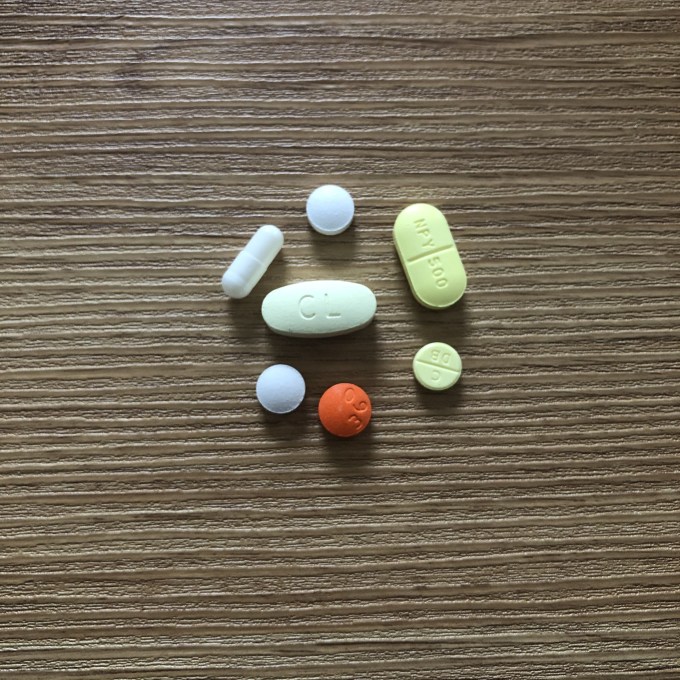
PAINKILLERS – Okay, this isn’t an everyday occurrence but it’s very common, especially at the moment (I hurt my back about a month ago – a story for another time). I have them on me all the time and I regret it if I don’t. Pain can be so debilitating and if I don’t have something to manage them, if only to get home, then I’m in really trouble. I also get migraines that absolutely incapacitate me so having the pills that help with those is vital. I often feel like a walking pharmacy but I’ve learned the hard way – several times – that it’s better to be prepared.
LOTS OF WATER – Generally, none of us are drinking enough water but as a person with Hypermobile Ehlers Danlos Syndrome (hEDS), I’m sure I’m not, as hard as I try. When I was diagnosed, the recommendation was that I drink more than double what a person without hEDS is supposed to drink (x); I’ve been trying to build up my water intake but it’s a slow process. I also have Postural Orthostatic Tachycardia Syndrome (POTS), which often occurs with hEDS, and includes symptoms like dizziness, light-headedness, swelling in the legs after standing for short periods of time, palpitations, fainting, and more, all of which can increase in intensity when a person is dehydrated, after exercising, or during hot weather (I want to write a more in depth post about all of this when I have more time). Dehydration has also been linked to an increase in pain sensitivity (x). Increasing water intake has proven to help POTS symptoms so I’m doing my best to always have water with me (or cordial if the taste of water becomes a struggle, something my nutritionist okayed, given that I’d still be getting the fluids) and I think it’s helping me to drink more (x). It’s surprisingly hard though, to drink that much water.
MY PHONE – I know that many people talk about needing breaks and time away from their phones but, in general, having my phone around is more helpful than it isn’t. I find social media pretty triggering for my anxiety so I rarely find myself scrolling through Facebook or Twitter or Instagram (and I hate TikTok more than I can even articulate) whereas I find the apps for setting alarms and timers helpful, Duolingo really good for my anxiety (and mental health in general), and the Notes app vital to writing down thoughts and ideas to follow up on. I do find it stressful that it means anyone has access to me, can contact me whenever they want, but then Airplane Mode is right there… But generally, my phone is more helpful than not.
MY BULLET JOURNAL – Between my ADHD and my general anxiety about being organised, my bullet journal (or what began as a bullet journal and has evolved into a more personalised version of the system) is all but permanently attached to me. It has my list of commitments, the list of things I want to get done during the day, and anything else that might be relevant, like stuff to do with the cats or the house. I honestly don’t know what I’d do without it.
FIDGET TOYS – My hair pulling has been particularly bad recently (plus I’ve seriously struggled with chewing the callouses on my fingertips and tearing at a scar on my face) and after years of dealing with it, I have a slightly ridiculous collection of fidget toys that I rotate using as the urge to pull varies; sometimes certain fidgets are more effective than others. So I usually have at least within reach, whether that’s wherever I am or in my bag.
NOISE-CANCELLING HEADPHONES – Having had some very unpleasant experiences with just how loud the world is (you may remember this particular disaster), I got an amazing set of noise-cancelling headphones that have made navigating my hometown, London, transport systems, etc so much easier. I’ve recommended them to multiple people and those who got them have agreed that they make life – and all of its noise – a lot more manageable.
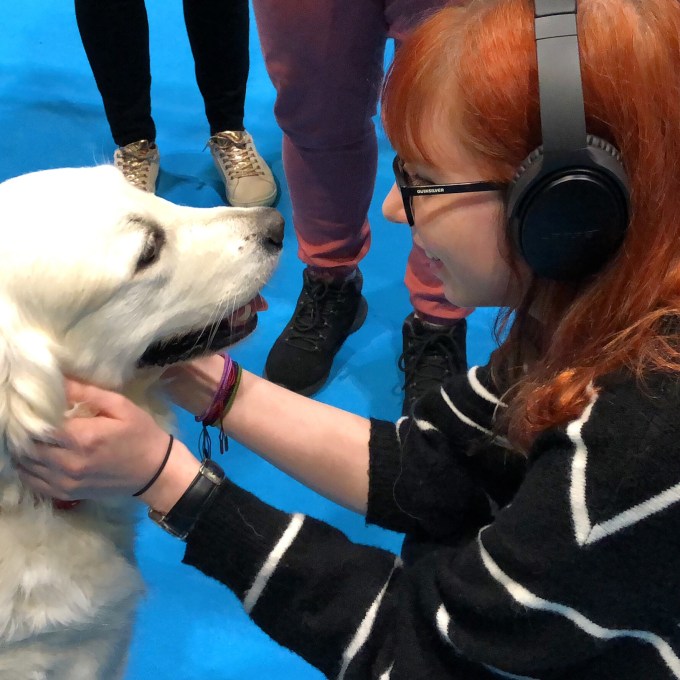
FACE MASK AND HAND SANITISER – I know that, for a lot of people, it feels like the pandemic has ended but, for many, many others, it hasn’t. I know immunocompromised people, those struggling with Long COVID, people who are still getting COVID and getting seriously sick so it certainly doesn’t feel over to me. If I’m out, I’m pretty neurotic about hand sanitiser and wearing a mask; I’m not perfect and I do sometimes forget, especially if I’m feeling overwhelmed in a social situation and there’s no prompt of other people wearing masks, but I’m still pretty on the case about it all.

A HIDDEN DISABILITIES SUNFLOWER LANYARD – I’m not sure when I first got my sunflower lanyard and I can’t honestly say it’s changed my life but there are certain places that it does make life easier, like at airports and concerts (and getting support in those sorts of places is so important). Mostly I wear it when travelling around London because having a big ‘autistic’ label around my neck reminds people to take care and hopefully be a bit more aware of what they’re doing and what’s going on around them. I’m sure there are people who see it and it makes them uncomfortable or contrary or belligerent (because, in my experience, those people tend to be everywhere) and I think there are places where it probably makes me more vulnerable but, on the whole, it tends to be helpful if I use my judgement.
JOINT SUPPORTS – Because of my hEDS, I struggle with a lot of pain in my joints (the gift that keeps on giving) so I have a handful of different supports and braces. I mainly use them for my knee and for my wrists, but I also have one for my back. They not only really help with my stability – something I’m struggling with more and more – but, as with my sunflower lanyard, they remind people that I am kind of fragile and that they need to be careful around me, especially on trains and the underground etc.
POLARISED SUNGLASSES – The last time I went to get new glasses, I mentioned that I have hEDS and the optician recommended getting polarised sunglasses because they can help with light sensitivity, something that many people with EDS struggle with: our eyes are sensitive can get really tired because they are made up of 80% collagen, which is – as we know – what EDS negatively affects. And if you can reduce the strain on your eyes – which these glasses do, even if you’re inside but it’s still very bright – then you can hopefully reduce the chances of developing problems with your eyes (again, EDS: the gift that keeps on giving).
LIP BALM – A common symptom of multiple types of EDS is sensitive skin and that can manifest as dry lips (and cracked lips that take ages to heal) so I try to always have a good lip balm around. My personal preference is the EOS Crystal Lip Balm in Hibiscus Peach, which I’m not totally sure they make anymore but it’s still available through various online stores. But it’s their crystal lip balms that are best for hydrating your lips (but it’s worth reading this article because some people have had allergic reactions to certain ingredients); the previous, more waxy versions were nice but I didn’t find them to be super effective. This one helps my skin recover really quickly (and stay hydrated) and I can barely feel it on my lips, a plus considering that the sensory experience of make up and skincare can be really difficult for me. But there are a lot of great ones out there; I’ve used several from The Body Shop that I would recommend too.
CBD GUMMIES – Over the last couple of years, my sleep schedule – for the most part – has been awful. Most nights I was getting a fractured few hours and then there were nights where I didn’t sleep at all. It was horrible and it just made my mental health even worse, which was pretty impressive given how bad it was when my sleep was at its worst. I felt like I’d tried every strategy ever suggested, including some pretty strong prescription sleeping pills; they worked-ish but I suffered from some pretty miserable side effects for not much reward. I’d always been vaguely resistant to trying CBD based products for some reason – I’m not really sure why – but I was desperate and ended up trying a few different types of CBD gummies. Within a few days, my sleep was deep and reliable again. Months later, it’s remained pretty good. Plus it’s helped me avoid relying on prescription pills, which I’ve had to do in the past even though it’s not generally advised (this was with the approval of my doctor); taking them every night can increase your tolerance and so they stop working and no one really knows what the long term effects are, although some people become addicted and can experience symptoms like hallucinations. So avoiding that is definitely a pro on the pro-con list. Research is still being done around CBD but so far it seems that the only problems are certain drug interactions, which would just involve a conversation with a doctor. None of those interactions were a problem for me so I’ve been taking them consistently ever since and my sleep has been so much better. They’re a constant presence on my bedside table.
So I hope that was of some interest, at least. As I said in my introduction, let me know if you use these things; let me know if you use other things; let me know if there are things that might work better than the ones on this list! Over to you!
 Finding Hope