 Finding Hope
Everyday Essentials
Posted on July 1, 2023
Given my health situation – living with multiple chronic illnesses that require daily management – I thought it might be interesting to make a list of the things I need and use everyday and maybe if any of you guys live with chronic illnesses, you could compare it to what you use. Are these things helpful to you? Might they be? Are there things that are helpful to you that aren’t on this list?
GLASSES – This is a pretty obvious one. I can’t see three feet in front of my face without them; I am incredibly short-sighted. Both of my biological parents are or were short sighted and I believe that certain forms of Ehlers Danlos Syndrome (EDS) can affect your eyesight. Regardless, I’m not going anywhere without my glasses.
MEDICATION – I have certain medications that I have to take everyday, as well as some that are situation dependent. The most important are my anti-depressant, Phenelzine, and the beta-blocker, Propranolol, and I really feel it if I don’t take them; while it took them a while to take effect at the beginning, it can through everything off course if I miss a day. So taking your meds… very important!
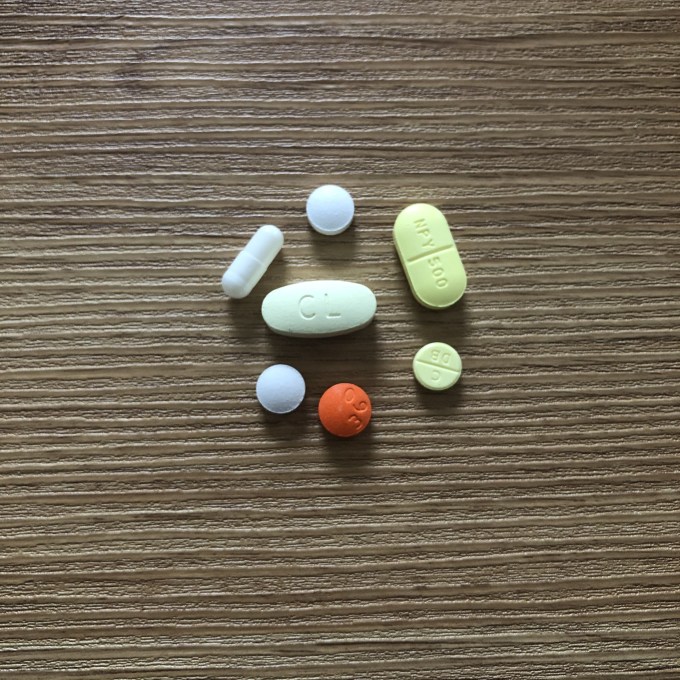
PAINKILLERS – Okay, this isn’t an everyday occurrence but it’s very common, especially at the moment (I hurt my back about a month ago – a story for another time). I have them on me all the time and I regret it if I don’t. Pain can be so debilitating and if I don’t have something to manage them, if only to get home, then I’m in really trouble. I also get migraines that absolutely incapacitate me so having the pills that help with those is vital. I often feel like a walking pharmacy but I’ve learned the hard way – several times – that it’s better to be prepared.
LOTS OF WATER – Generally, none of us are drinking enough water but as a person with Hypermobile Ehlers Danlos Syndrome (hEDS), I’m sure I’m not, as hard as I try. When I was diagnosed, the recommendation was that I drink more than double what a person without hEDS is supposed to drink (x); I’ve been trying to build up my water intake but it’s a slow process. I also have Postural Orthostatic Tachycardia Syndrome (POTS), which often occurs with hEDS, and includes symptoms like dizziness, light-headedness, swelling in the legs after standing for short periods of time, palpitations, fainting, and more, all of which can increase in intensity when a person is dehydrated, after exercising, or during hot weather (I want to write a more in depth post about all of this when I have more time). Dehydration has also been linked to an increase in pain sensitivity (x). Increasing water intake has proven to help POTS symptoms so I’m doing my best to always have water with me (or cordial if the taste of water becomes a struggle, something my nutritionist okayed, given that I’d still be getting the fluids) and I think it’s helping me to drink more (x). It’s surprisingly hard though, to drink that much water.
MY PHONE – I know that many people talk about needing breaks and time away from their phones but, in general, having my phone around is more helpful than it isn’t. I find social media pretty triggering for my anxiety so I rarely find myself scrolling through Facebook or Twitter or Instagram (and I hate TikTok more than I can even articulate) whereas I find the apps for setting alarms and timers helpful, Duolingo really good for my anxiety (and mental health in general), and the Notes app vital to writing down thoughts and ideas to follow up on. I do find it stressful that it means anyone has access to me, can contact me whenever they want, but then Airplane Mode is right there… But generally, my phone is more helpful than not.
MY BULLET JOURNAL – Between my ADHD and my general anxiety about being organised, my bullet journal (or what began as a bullet journal and has evolved into a more personalised version of the system) is all but permanently attached to me. It has my list of commitments, the list of things I want to get done during the day, and anything else that might be relevant, like stuff to do with the cats or the house. I honestly don’t know what I’d do without it.
FIDGET TOYS – My hair pulling has been particularly bad recently (plus I’ve seriously struggled with chewing the callouses on my fingertips and tearing at a scar on my face) and after years of dealing with it, I have a slightly ridiculous collection of fidget toys that I rotate using as the urge to pull varies; sometimes certain fidgets are more effective than others. So I usually have at least within reach, whether that’s wherever I am or in my bag.
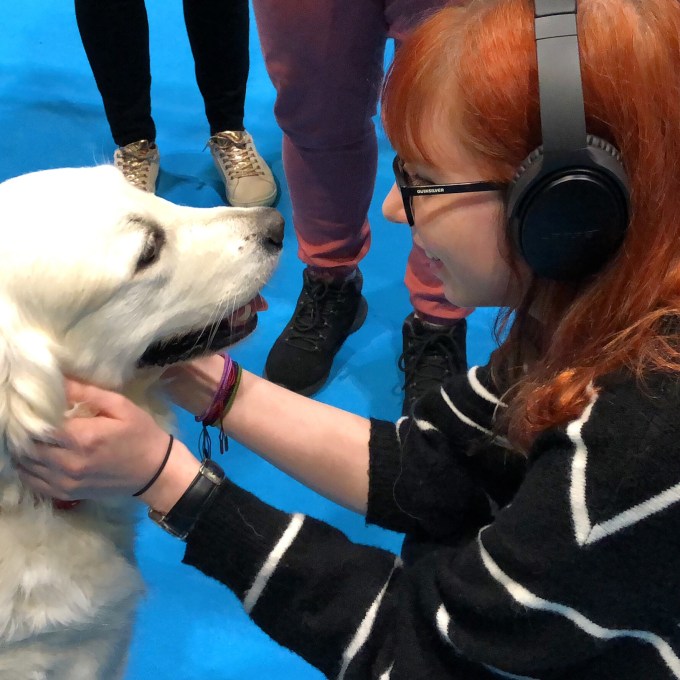
NOISE-CANCELLING HEADPHONES – Having had some very unpleasant experiences with just how loud the world is (you may remember this particular disaster), I got an amazing set of noise-cancelling headphones that have made navigating my hometown, London, transport systems, etc so much easier. I’ve recommended them to multiple people and those who got them have agreed that they make life – and all of its noise – a lot more manageable.
FACE MASK AND HAND SANITISER – I know that, for a lot of people, it feels like the pandemic has ended but, for many, many others, it hasn’t. I know immunocompromised people, those struggling with Long COVID, people who are still getting COVID and getting seriously sick so it certainly doesn’t feel over to me. If I’m out, I’m pretty neurotic about hand sanitiser and wearing a mask; I’m not perfect and I do sometimes forget, especially if I’m feeling overwhelmed in a social situation and there’s no prompt of other people wearing masks, but I’m still pretty on the case about it all.

A HIDDEN DISABILITIES SUNFLOWER LANYARD – I’m not sure when I first got my sunflower lanyard and I can’t honestly say it’s changed my life but there are certain places that it does make life easier, like at airports and concerts (and getting support in those sorts of places is so important). Mostly I wear it when travelling around London because having a big ‘autistic’ label around my neck reminds people to take care and hopefully be a bit more aware of what they’re doing and what’s going on around them. I’m sure there are people who see it and it makes them uncomfortable or contrary or belligerent (because, in my experience, those people tend to be everywhere) and I think there are places where it probably makes me more vulnerable but, on the whole, it tends to be helpful if I use my judgement.
JOINT SUPPORTS – Because of my hEDS, I struggle with a lot of pain in my joints (the gift that keeps on giving) so I have a handful of different supports and braces. I mainly use them for my knee and for my wrists, but I also have one for my back. They not only really help with my stability – something I’m struggling with more and more – but, as with my sunflower lanyard, they remind people that I am kind of fragile and that they need to be careful around me, especially on trains and the underground etc.
POLARISED SUNGLASSES – The last time I went to get new glasses, I mentioned that I have hEDS and the optician recommended getting polarised sunglasses because they can help with light sensitivity, something that many people with EDS struggle with: our eyes are sensitive can get really tired because they are made up of 80% collagen, which is – as we know – what EDS negatively affects. And if you can reduce the strain on your eyes – which these glasses do, even if you’re inside but it’s still very bright – then you can hopefully reduce the chances of developing problems with your eyes (again, EDS: the gift that keeps on giving).
LIP BALM – A common symptom of multiple types of EDS is sensitive skin and that can manifest as dry lips (and cracked lips that take ages to heal) so I try to always have a good lip balm around. My personal preference is the EOS Crystal Lip Balm in Hibiscus Peach, which I’m not totally sure they make anymore but it’s still available through various online stores. But it’s their crystal lip balms that are best for hydrating your lips (but it’s worth reading this article because some people have had allergic reactions to certain ingredients); the previous, more waxy versions were nice but I didn’t find them to be super effective. This one helps my skin recover really quickly (and stay hydrated) and I can barely feel it on my lips, a plus considering that the sensory experience of make up and skincare can be really difficult for me. But there are a lot of great ones out there; I’ve used several from The Body Shop that I would recommend too.
CBD GUMMIES – Over the last couple of years, my sleep schedule – for the most part – has been awful. Most nights I was getting a fractured few hours and then there were nights where I didn’t sleep at all. It was horrible and it just made my mental health even worse, which was pretty impressive given how bad it was when my sleep was at its worst. I felt like I’d tried every strategy ever suggested, including some pretty strong prescription sleeping pills; they worked-ish but I suffered from some pretty miserable side effects for not much reward. I’d always been vaguely resistant to trying CBD based products for some reason – I’m not really sure why – but I was desperate and ended up trying a few different types of CBD gummies. Within a few days, my sleep was deep and reliable again. Months later, it’s remained pretty good. Plus it’s helped me avoid relying on prescription pills, which I’ve had to do in the past even though it’s not generally advised (this was with the approval of my doctor); taking them every night can increase your tolerance and so they stop working and no one really knows what the long term effects are, although some people become addicted and can experience symptoms like hallucinations. So avoiding that is definitely a pro on the pro-con list. Research is still being done around CBD but so far it seems that the only problems are certain drug interactions, which would just involve a conversation with a doctor. None of those interactions were a problem for me so I’ve been taking them consistently ever since and my sleep has been so much better. They’re a constant presence on my bedside table.
So I hope that was of some interest, at least. As I said in my introduction, let me know if you use these things; let me know if you use other things; let me know if there are things that might work better than the ones on this list! Over to you!
The First Six Months of Hydrotherapy
Posted on August 13, 2022
When I was first diagnosed with Hypermobile Ehlers-Danlos Syndrome back in October 2020, hydrotherapy was recommended both for general fitness and muscle strength (which would, in theory, help with the back and leg pain I was struggling with) and to build up my core muscles, which are a notoriously weak area for hypermobile people. I was up for that since I’ve always enjoyed being in the water but COVID made the whole process very complicated and very slow.
As far as I can tell, with the way things currently are, it seems that the way to get a referral for hydrotherapy is to be referred for physiotherapy and then a physiotherapist assesses you and refers you on to the hydrotherapy department. I’d been referred for physio three times, I think, by three different doctors between May 2020 and when I finally got an appointment in November 2021. I find myself feeling a level of righteous indignation over waiting eighteen months for a simple referral, especially when I was in pain pretty much every day, but I know it was all more complicated than that. COVID was the obvious cause for the delay but the NHS waiting lists are also incredibly long anyway. But, as soon as it all started happening, it all happened at once.
At the beginning of November 2021, I met with a physiotherapist and he referred me on to the hydrotherapy department and at the end of the month, I had an appointment with them. I will admit that, after waiting eighteen months for an appointment, I was a bit appalled that the appointment consisted of just a half hour run-through of exercises to do without a huge amount of guidance. But this is how the system works and I’ll take what I can get.

While I continued swimming in my ‘normal’ pool, I struggled to find a pool that allowed me to do all of the exercises I’d been assigned: the height of the water needed to be within a certain range, I needed to be able to walk in the water, I needed a step of a specific height and width, and so on. And finding a pool that fitted all of the requirements was difficult, and that was without all of my COVID related anxieties being factored in. We finally found a pool just as Omicron started rearing its head and I had a meltdown leaving the first session; I was massively overstimulated and my anxiety was just overwhelming. Those weren’t exactly fond memories that I was keen to revisit but it wasn’t going to work anyway as the steps didn’t allow me to do the step related exercises and there are too many of those not to have access to the right kind of steps. I was managing a modified version of the exercises in my usual pool while we searched for another hydro-friendly pool but then Omicron hit in earnest and we all retreated inside to insure Christmas could go ahead as planned.
From December 2021 to early March 2022, I was incredibly unwell because of the ADHD medication I’d been trying, too unwell to swim at all. But, in that time, my Mum had found another pool. The first session went well (although it was really hard work after so little movement for a couple of months) and the set up of the pool meant I could do all of the suggested exercises. I got a few sessions in before I left for Nashville in late March.
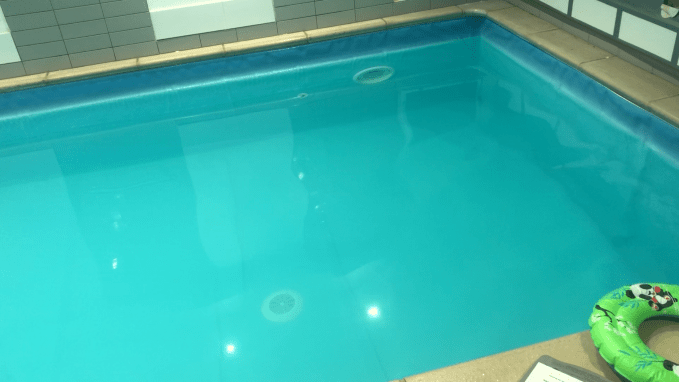
Back from Nashville and semi-recovered from the jet lag in late April, I got back in the pool, both to swim and to do my hydro exercises. It took a bit of work and scheduling but after a while, I managed to build in two sessions a week while I got used to the routine and started building up my strength and stamina after so little proper exercise for so long. I’ve had multiple conversations with multiple health professionals about my tendency to throw my all into stuff and how I need to take things slowly if it’s going to actually help so, even though it’s very frustrating, I am trying my best to push down that irritation and just focus on the exercises.
So, that was my first six months of hydrotherapy. There’s a few months between where this post finishes and where I am now but I thought those first six months were important to document. Since then, I had to stop using one pool and tried out another – which I love – despite difficulty actually getting out to swim because my mental health has been so bad.
Although it hasn’t been a priority (and still isn’t one really – one thing at a time), I do want to find a new all-round gym since the gym I used to go to closed down after the multiple lockdowns. I want to get fitter; I’m just having to take a longer route than I would’ve previously thought.
It’s A New Dawn, It’s A New Day, It’s A New… Medication
Posted on March 12, 2022
TW: Mentions of self harm and suicidal thoughts.
In the last week of January, my psychiatrist told me to stop taking the Bupropion since it was so obviously having such a detrimental effect. In theory, after the wash out period was complete, I’d start taking a new antidepressant, Moclobemide. It’s an MAOI, like Phenelzine (the antidepressant that I’ve ever had the best response to – the only one I’ve had a halfway decent response to), so my psychiatrist thought it was the best option. But I was so depressed that I just couldn’t take it: knowing how these medications affect me, I just didn’t feel emotionally capable to handle the change.
But then, after a hellish few days and some kind of breakdown, I started taking Moclobemide. At that point, it was self preservation: I didn’t want to but I knew that I couldn’t keep feeling that awful – or worse – because something terrible was going to happen if something didn’t change.
This change was somewhat complicated by the fact that I was taking other medications at the same time. I was taking a lot of Diazepam with my anxiety so bad and I was also taking 20mg of Propranolol (recommended for anxiety and POTS – which was diagnosed by a cardiologist after a first round of tests – although I’m not sure it’s doing anything for either).
As is always the case with posts about medication, this is just my experience. Please don’t start, change, or stop taking any medications without the advice and support of a medical professional.
WEEK 1 (150mg twice daily)
The first week was bad. I was completely overwhelmed by my anxiety and needed constant Diazepam to be even vaguely functional, just to get out of bed. I was very depressed, feeling exhausted and hopeless and worn down. I was still having thoughts about self harm and suicide although not as much as I had been but I just felt utterly overwhelmed, by everything the world wants from me. Life just felt like too much.
I was still struggling to fall asleep (there was one night when I was still awake at seven thirty am). My sleep schedule was completely fucked up; I was almost nocturnal. And even then, I was falling asleep in the day, regardless of how hard I tried not to. As I said, it was a whole mess. I was exhausted all of the time.
My struggles with food continued too. I could barely eat and on the rare occasion where I did feel able to eat, nothing appealed – at all – or satisfied the feeling. But between my mental health and my sleep issues, food felt like the least of my problems.
I also spent more than half the week with at least a low level migraine, which wasn’t exactly pleasant.
WEEK 2
The second week was also pretty tough, although in a few different ways.
I was still feeling very anxious – the Diazepam was only doing so much – and my depression was still very present. I just couldn’t engage. I was miserable. I felt very overwhelmed; life just felt like it was too much.
At the beginning of the second week, I started taking Temazepam – prescribed by my GP – to help with my sleep. It gave me a couple of good nights but after that it didn’t seem to do much. Most nights, I was still awake for hours and struggling up in the afternoons; waking up was miserable. I was exhausted and sleepy and kept falling asleep in the day, despite drinking Red Bull, something I haven’t felt I needed in ages.
I did have one pretty intense day: despite only getting about three hours sleep, I was up early and writing a song from start to finish – something I haven’t been able to do in months. It’s usually a sign of how good or bad my mental health is: things are getting bad if I can’t write. I’m not jumping for joy just yet but I am cautiously optimistic that if this is possible, things are improving. I felt really good for a couple of hours but then all of the bad stuff crept in again: I went to bed feeling exhausted and overwhelmed by my anxiety and depression.
At the end of the week, I spent two days in and out of a hospital in London, having tests done (I wasn’t taking the Propranolol for a few days as advised so that it wouldn’t affect the results). Just being in the hospital and the staff’s general lack of understanding around Autism was stressful and frustrating and exhausting. The first day was quiet but it was hard to relax with the blood pressure monitor going off every twenty minutes. The second day was more involved with more than three hours of tests. It was exhausting – I could barely stay awake for the rest of the day – and my whole body hurt afterwards, so badly that even getting upstairs when we got home was a struggle. I don’t have a whole lot of faith that these tests will show anything different than the first round (which resulted in the POTS diagnosis) or in medical tests in general anymore but I guess we’ll find out what they say in a few weeks.

WEEK 3
At the beginning of the week, I officially gave up on Temazepam since it didn’t really seem to be doing anything. My GP had prescribed melatonin for when the Temazepam ran out so, with her blessing, I started taking that instead. It definitely improved my ability to sleep: after months of being awake for hours on end, I was falling asleep within half an hour every night. But I was still sleeping late – into the afternoon – and feeling sleepy in the day. I had several RedBulls in a week for the first time in months, which is a step backwards that I’m not happy about. I don’t know whether it was the melatonin or a side effect of the Moclobemide (not unlikely since I had the same side effect with Phenelzine) but, regardless, I hate it. This was one of the reasons I was so excited to try the ADHD meds; I thought I might finally feel something other than exhausted or sleepy or tired.
My chronic pain kicked up again, which was deeply unpleasant. My whole body hurt all week: every joint felt ache-y and crunchy and grind-y. I took painkillers throughout the day but the pain woke me up at night almost every night. But the only painkillers that help are ones that I can only take for a few days at a time and when those three days ran out, I was back to Ibuprofen and Paracetamol – neither of them do much – which was miserable and so frustrating: this has been going on – on and off – for almost two years and all I have are sporadic three day periods where I’m somewhat pain-free. The lack of progress is enough to reduce me to tears.
Mental health wise, things were up and down. Some days were okay and I actually got things done for the first time in ages, but some days were really hard. My anxiety was still bad and I was restless and uneasy; I didn’t know what to do with myself. I just felt like I was making everything I worked on worse. I was depressed, feeling overwhelmed and hopeless.
WEEK 4 (450mg daily)
I was sleeping but sleeping restlessly and waking up a lot. And come morning, it was such a struggle to wake up. I would fall asleep again and again; staying awake felt impossible. I don’t know if that’s the melatonin or something else but it’s pretty miserable. I feel like I cannot open my eyes, cannot make my hands work. It’s not fun. At the other end of the day, things are generally better. It can take a while to get to sleep but it’s nothing like it used to be. It can take a while to get comfortable, wind down, relax but I’m still getting to sleep easier than I was without the melatonin.
In the daytime, I was getting sleepy within an hour of getting up and drinking Red Bull almost daily again. It’s not something I want to make a habit of but I was just too tired to figure out what the right thing to do was so I just focussed on getting through the day. But even with the Red Bull, I was tired and sleepy and all I wanted to do was close my eyes. Again, I don’t know if this is the melatonin or the Moclobemide but either way, I don’t know what to do. If it’s the melatonin, I can stop taking that and hope my sleep stays okay but if it’s the Moclobemide, then I’m pretty stuck. I really don’t want to spend my whole life feeling tired and sleepy because this is the only medication that works.
I’ve started working again – a bit, given how unpredictable everything’s been recently – after being completely unable to since the end of last year. That’s been good and hard (and completely exhausting) in equal measure, socialising too. It’s nice to be in contact with people again but so often, at the moment at least, it also makes me feel defective and broken. My friends are telling me about their jobs and their relationships and so on and all I have to talk about are the new meds I’m trying and the new therapy I’ve been thinking of trying. When you’ve been depressed and suicidal for the past four months, there aren’t a lot of light and fun conversation topics to reach for. So I just felt very lonely. I’m not putting that on my friends – I want to hear about their lives – but the disconnect is hard.
My chronic pain was bad too. My whole body was hurting, my joints aching, even my fingers. I still haven’t heard anything from the Pain Clinic so all I’ve got are over the counter painkillers that I can only take for a few days at a time. What I’m supposed to do on the other days, I don’t know; nothing else helps at all.
I’ve realised that I’ve been feeling cold a lot, pretty much all of the time. I’m not sure when it started but it’s been going on for a while. Even with a thick jumper, a scarf, wooly socks, and a blanket, I’m freezing.
Mentally, it was a tough week. I felt very anxious and overwhelmed. My depression was pretty bad too, although not as crippling as it has been, and I was just miserable really. I cried a lot. So, yeah, a tough week.


WEEK 5 (600mg)
My energy and sleep continues to be troublesome. It’s so hard to wake up in the morning: I keep going back to sleep, I can’t keep my eyes open, and my hands won’t work. I’ve found that eating right away helps but I hate it as a strategy; food is the last thing I want right after I wake up. Despite the difficulty, I have been managing to wake up earlier than I have been over the last few months and getting to sleep has been a bit easier (with the help of the melatonin – although it does sometimes feel like I have to focus really hard on falling asleep sleep, which seems to be somewhat counterproductive). But I was still very sleepy during the day, falling asleep accidentally a couple of times, and so tired, although it was a busier week. I was doing more, socialising more, and feeling everything more intensely. There were some really good moments but it was hard too.
And, of course, more activity has resulted in more pain. I’ve been in pain constantly but it’s gotten worse. Multiple long car journeys and more time on my feet has caused problems with my back; I’m sure that with time, sensible exercise, and slowly building up my stamina, things will get better but it’s really hard to be patient. The pain has also been really bad in my hands (from my elbows down to my finger joints), which instantly instills a cabin fever-like feeling inside my own skin. I’m still waiting to hear from the Pain Clinic but experience doesn’t exactly encourage high hopes for what they’ll come back with, if they ever do.
My mental health has been all over the place. Five weeks of this medication and I still don’t feel like I’ve got my head on straight. As I said, I’ve had some good moments this week but I’m still struggling, more than I feel like I should at five weeks of a medication. I’ve had a lot of anxiety and my depression is still very present. My suicidal thoughts aren’t as constant as they were but they are still there. I guess, I just would’ve hoped that, at this point, I’d be feeling better mentally. It’s hard to not lose hope.
So, I’ve been taking Moclobemide for five weeks and while things are very different from day one, I’m still not feeling great. My depression is still a constant, day-to-day battle, which is one thing if I’m waiting for medication to kick in and for it to get better but if this is it, it’s not enough. I’m grateful that things are better – that I can write songs again – but living like this is really, really hard. I just want to feel better. I don’t want every day to feel like a mountain that I have to climb. I guess, I just want to feel normal. Although, having said that, I don’t know if I even know what normal feels like.
 Finding Hope