 Finding Hope
Seeking Help For Chronic Pain (Year One)
Posted on July 8, 2023
After the Hypermobile Ehlers-Danlos Syndrome diagnosis, one of my many referrals was to the Pain Clinic (something I didn’t know existed). At that point, I’d been in pain for about eight months and the fact that this thing even existed had me feeling optimistic for the first time in ages. But then the weeks started passing and that feeling faded. In that time, I believe there were a number of other referrals from the Physiotherapy and Occupational Therapy services so I don’t know how many times they actually had requests about me but someone finally got in touch five months after the initial referral.
This post spans from May 2021 to April 2022.
MAY 2021
The initial contact was over the phone. We got a call from one of the Pain Clinic team and we had a long conversation; we were on the phone for an hour. She asked me loads of questions and got a detailed history; she also talked me through what the Pain Clinic does and what they can provide. She went away to go over the notes she’d made and figure out what a good next step would be and we had a chance to think about what might be the right path for me.
JULY 2021
Seven weeks after the first call, we got a second call from a different woman; apparently she had a different background to the first woman we’d spoken with and had a load of different questions. We spent another hour on the phone and before we hung up, she told us that she would be taking her notes to the team (which is made up of a group of different clinicians and therapists) and that they would get back to me with their suggestions.
Two weeks later, she called back and, after some discussion, we decided that seeing a pain psychologist was the best way forward – understanding pain, understanding chronic pain, figuring out the triggers, learning how to manage it, and so on – and she set up the first of the six sessions.
AUGUST 2021
The first session was an hour long video call. We’d somehow missed the information packet that the pain psychologist had sent but she was kind enough to go through a lot of the information – a basic understanding of pain – during the session. It was okay but it was very focussed on managing pain, which felt incredibly frustrating: I was fine until May 2020 and then suddenly I was in pain and at no point had anyone stopped and asked why and I want to know why. But no one seems interested in figuring out the why. I got very upset: I spend my whole life just managing things. I don’t even really feel like a person anymore, just a collection of problems that need managing that leave me no space or energy for actually living. The call ended in tears with me curled up in a depressed ball on the sofa.
Given how much the appointment had taken out of me, we decided that it was just too much while I was in the final stretch of my Masters, which the psychologist was really supportive of, and we arranged to start again when it was over so that I could really make the most of the sessions.
OCTOBER 2021
I had my second session five weeks after I finished my Masters (I was completely exhausted from the final semester and, with my Granny’s death, it took me a while to find my feet again). It was mostly a catch up about how my pain had been since the first session; we talked about how constant it had been (just sometimes better, sometimes worse), how it doesn’t seem to be triggered by anything specific. I got so distressed just talking about it that the psychologist suggested that we talk to the advanced practitioner for more insight into hEDS related pain. She said she’d talk to their team and recommended I talk to my GP about a better pain medication. We, again, agreed to pause the sessions until we had some clarity on those two things. I still haven’t found a pain medication that works reliably but it wasn’t long before we got a letter for an appointment with the advanced practitioner.
NOVEMBER 2021
At the beginning of November, I had the appointment with the advanced practitioner. In hindsight, it was probably doomed from the start, considering how unwell I was having just started the ADHD meds – I had to stand outside for a good ten minutes trying to get the nausea under control. And then, just because things had to get worse, I got hit by the electric shock like pain in my back right as the appointment was starting; I could barely hear what everyone was saying, the pain was so debilitating.
As it turns out, there had been some sort of confusion or miscommunication because the two doctors were under the impression that they were showing me some physio-like exercises rather than give me guidance about hEDS related pain as I had discussed with the pain psychologist. One of them just kept talking about all of the “ingredients” of pain – like diet, sleep, exercises, medication, levels of anxiety, emotional state, and so on – and after a while, I just couldn’t keep my mouth shut. I was upset, in pain, and feeling so sick; I just couldn’t listen to another person give me vague advice without telling me how to actually apply these things to my life with all of my problems. And, on top of that, I was sick of everyone dodging my questions: why would this pain just start and why is ‘management’ the only thing being talked about? Why is no one interested in finding out why it started and whether it can be fixed? When the pain started, the only thing that had changed was my anxiety over the pandemic and it’s not like I was the only person who was experiencing that. So why did it start? If it can just appear, what’s to say it can’t disappear again if I do the right things (which obviously relies on me knowing what the right things are)?
Eventually this doctor gave me a somewhat murky explanation: that the trauma of the autistic challenges and the anxiety relating to the pandemic, compounded by the de-conditioning of the stabilising muscle in the early months of the pandemic, has resulted in the pain I’ve been experiencing. I’m not convinced by this but it’s the closest thing to an explanation that I’ve received so far. Anyway, they said that they’d take my case to their multi-disciplinary meeting and see what the suggestions were. I’ll take what I can get but I didn’t have a lot of hope: the last time I was in a similar situation, the Chronic Fatigue Service told me my case was too complicated and then just abandoned me. I’ve also had NHS doctors tell me that the NHS can’t help me and that I should go private – like that’s the automatic next step. They do know how expensive private healthcare is, right? Particularly if you have a chronic condition? So I did not leave that appointment feeling optimistic.
Later that month, we got a letter informing us that the original referral to the Pain Clinic from December 2020 had just gone through. Eleven months that took. I’m trying to be grateful that one of the other referrals went through faster but it was hard when it felt like we hadn’t made any progress at all.
APRIL 2022
The pain had reduced some by the end of 2021 but it flared up again (mostly in my hips and lower legs) in early February, which was likely exacerbated by my lack of movement while struggling with the effects of the ADHD meds – extreme nausea, depression, insomnia – and therefore not swimming. Things were better for a while – between more daily movement and starting hydrotherapy – but then it flared up again in late April, with awful pain in my elbows, arms, and hands.
When I realised how long this post was getting, I decided to split it up by year (yeah, because the whole process took actual years). This is the first instalment from Spring 2021 to Spring 2022. The next part will be up soon.
#ToHelpMyAnxiety
Posted on June 3, 2023
TW: Mentions of self harm and Trichotillomania.
So the theme set by the Mental Health Foundation for Mental Health Awareness Week this year was anxiety. They pushed the hashtag #ToHelpMyAnxiety to raise awareness but I didn’t see it once on social media so I decided to write a whole blog post on the topic, on what helps my anxiety as well as what I’ve heard from others about what helps them. I ranted recently about how people engage with Mental Health Awareness Week, and awareness days in general, but I do think that sharing coping mechanisms for anxiety is a useful thing to do and a good use of those days.
I live with very severe anxiety, so bad that nothing I do actually banishes it, but I have found certain things that help to manage or reduce it. And I’ve spent a lot of time talking with friends and acquaintances about anxiety, discussing how we all try to cope with it. So I have a lot of tried and tested methods that have all worked for at least one person and therefore will hopefully be useful to at least one of you. If any of these ideas help just one person, then it’s worth the work to compile them. (Some of these have been pulled from my experience as an autistic person but many of them are useful for anxiety so I figured it was worth including them.)
I do think it’s worth mentioning that not all of my coping mechanisms are good, healthy ones. I’m focussing on the healthy ones because those are the ones we should all be aspiring to practice but I felt it would be remiss to not even mention them.
General Tips:
- Maintaining a healthy lifestyle – Getting enough sleep, eating healthily, moving your body, and, in some cases, taking additional supplements (I am not knowledgeable about this, nor qualified, to give advice but I do personally take supplements on the advice of a nutritionist, one who has experience with my health problems) are all important in managing anxiety. Not getting enough sleep or not eating enough can drastically increase anxiety, as you’ll know if you’ve struggled with anxiety in the past (and present).
- Make sure I’m breathing properly – I know people who swear by deep breathing exercises but I don’t usually need to go that far; I often find myself breathing very shallowly and need to reset, take a deep breath and remind myself what normal breathing is. At home, singing is really useful for this, I think because it forces me to control my breathing, plus it’s something I love to do.
- Consciously relax my body – When I’m really anxious, I’ll suddenly find my body so tense that I’m like a coiled spring. I have to focus and physically relax my muscles – drop my shoulders, unclench my fists, uncurl my toes, etc – sometimes multiple times a day. I usually find the tension creeping in again but making the effort to relax over and over does seem to help.
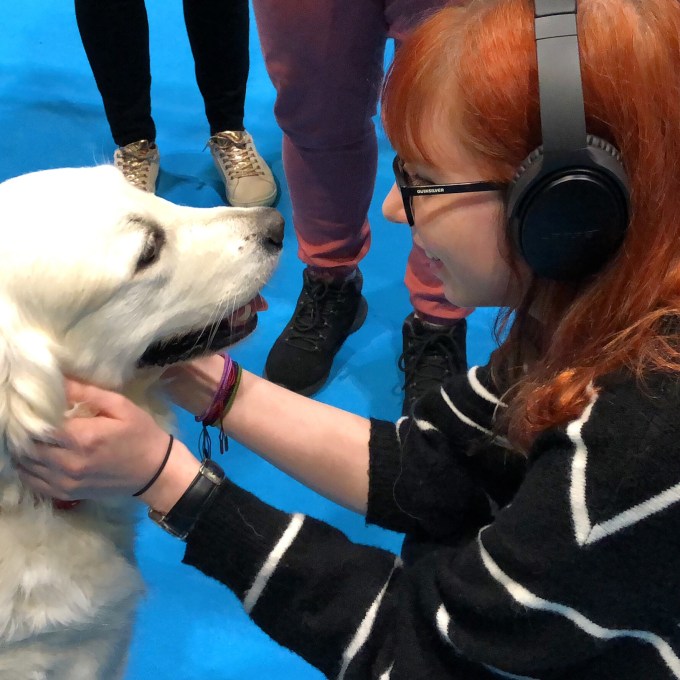
- Avoid loud noises – Loud noises are a serious trigger for my anxiety so I try to avoid them as much as possible, although some environments seem to be exceptions, like concerts for example. Most of the time noise cancelling headphones do the trick so I’m very grateful to have such a great pair.
- Avoid certain fabrics – This is probably more Autism anxiety than general anxiety but I thought it might be useful to someone. The sensory irritation of some fabrics (I particularly struggle with acrylic and polyester) slowly overload my brain until my anxiety makes it impossible to concentrate. So sticking to safe textures, like cotton, is a good strategy, even if it does mean I miss out on cool clothes occasionally.
- Fidget toys or fidget jewellery – We all stim (shortened from self-stimulatory behaviour) to some degree, both neurodivergent and neurotypical people, and one of the most common reasons for stimming is anxiety. Many stimming behaviours aren’t harmful (and many autistic individuals enjoy their stims) but sometimes they are and sometimes they can draw unwanted attention. This is where fidget toys and fidget jewellery can be really helpful because it fulfils the same need as stimming but allows that behaviour to stay under the radar, if that’s what you want. I’m not ashamed of being autistic or of my stimming behaviours but some of them are harmful and need redirecting and some of them are such that I don’t always want them to be people’s first impression of me; I prefer to choose when I reveal that sort of information but still need to stim in the meantime.

- Creating something with your hands – I’m not very artistic, not in the making of physical art anyway, but I do find it soothing to make things with my hands, whether that’s doing origami or making friendship bracelets. This is apparently a very common thing, as it allows our brains to essentially switch off and take a break from the relentless noise pouring in.
- Bullet journalling – Organising and updating my bullet journal (or my version of it that’s accidentally evolved over the years) and to-do list help me to keep track of what’s happening so I don’t have to worry that I’m forgetting something.
- Learning a language – This is something I’ve learned over the last year. I started using Duolingo and found it to be a really good way to distract myself when I was anxious, plus I was learning something new at the same time. I would like to use the language and, in theory, I will but even if I don’t, I did manage to reduce my anxiety, learn a new language, and feel better about myself.
- Socialising (to the best of my ability) – Depending on what’s best for you, a certain level of socialising can be really good for managing anxiety (especially if you have someone to talk to who understands what you’re going through). It’s a bit of a balancing act because it can help up to a point and then become overwhelming, but if you can walk that line, you can find relief from anxiety in both socialising and alone time (as many of us know from experience, too much of either can just make the anxiety worse).
- Therapy – If your anxiety is ongoing or seriously impacting your life, therapy might be something to consider. I talk about my anxiety in therapy a lot: what I’m anxious about, what I can do to mitigate it, short term and long term strategies, what else it might be connected to. I’ve learned a lot about myself and my anxiety and although some anxieties are impossible to avoid, I have learned how to manage some of them.
At Home:
- Blanket – Unless it’s absolutely sweltering, I usually have a blanket draped over my legs and lap. It’s not a weighted blanket because those are just too much for me but a light blanket provides just enough weight to be calming, to be grounding.
- Controlling the temperature – I’m more able to handle my anxiety when I’m comfortable, regulating my temperature included. So that I don’t have to adjust the whole house, I have a little electric blanket that I can sit on if I’m cold (also great for my chronic pain) and an amazing fan (noiseless because the noisy ones can trigger my anxiety) and that way I can adjust the temperature really easily as I need to.
- Burning my favourite candle – When I’m feeling anxious, burning my favourite candle (my personal choice is the pink pepper grapefruit candle from The Candle Bar, but really any pink grapefruit candle will do) helps to relax me; I feel safer and calmer and like I can breathe more easily.
- Stroking my cats – It’s been scientifically proven that spending time with animals lowers our stress levels and I absolutely know it to be true from my personal experience. Being around my cats relaxes me and it’s only when I’m away from them – even for only a few days – that I realise just how much they reduce my anxiety. So being with animals, if possible, is definitely a good tactic and fortunately, these days, there are many ways to do that if it’s not possible to own a pet yourself.


- Favourite movies and TV shows – When I’m having a bad day, returning to my favourite movies and TV shows (even if I have to work on stuff while I watch them) is very calming. The familiarity and nostalgia of those stories and characters makes me feel safe, pushing the outside world and all its stresses away for a while. As psychologist Pamela Rutledge says, “It can become really therapeutic, especially if you are feeling anxious. Watching the same piece multiple times reaffirms that there’s order in the world and that it can create a sense of safety and comfort on a primal level.”
- Diary writing – I feel like, with every day that passes, I’m carrying around more and more memories and the longer I go without writing them down and putting them somewhere safe, the more anxious I get. This is where my OCD chimes in. Complying with that need to write everything down may feed my OCD but it also brings me huge relief, both in that it relieves the weight that I feel like I’m carrying – and the anxiety that I could forget those memories and that they’d therefore be lost forever – but also in that it helps me process what I’ve been going through; the act of writing out my thoughts and feelings helps me untangle and make sense of them. I couldn’t cope without it.
Out and About:
- Have a well packed bag – It often ends up being a little over excessive (and heavy) but by making sure I have everything I know I’ll need (or might need), I can avoid a lot of anxiety and uncertainty; it’s my safety net. The contents depend a little on where I’m going but I usually have my phone (and portable charger so that I’m always able to reach someone if I need to), my noise cancelling headphones, my ID, my wallet (and travelcard), my keys, my sunflower lanyard, a bottle of water, a face mask (and a spare), hand sanitiser, medication (for anxiety and pain), my bullet journal, a fidget toy, and something to distract myself with if necessary, like a book. I think that’s everything. But if I’m prepared for everything, I’m less likely to end up in a situation that triggers my anxiety because I already have a solution.
- Exercise – I think there’s a bit more nuance to this one than is often made clear. Because of my mobility and chronic pain problems, exercise is hard for me and swimming is the only thing I can reasonably do at this point, which isn’t something I can just get up and do. But I do love it and I do find that it makes me feel better. I do agree that moving your body is helpful but I think that you get more out of it when it’s a form of exercise you enjoy, rather than exercise for the sake of exercise. Some of my friends love running and find that really centering and yoga is often recommended as a good choice of exercises, particularly because of the relationship you develop with your breathing, another well known coping mechanism for anxiety.

Other People’s Tips:
- A change of scenery – Sometimes we can just get stuck in the spiral of anxious thoughts and one way to break that spiral is to literally move to a different place. Our brains are super sensitive to changes in our surroundings and new experiences are closely linked to reward and positive feelings.
- Gardening – While gardening is not something that helps me, it’s something that many people find really helpful, whether that’s tending a full garden or looking after plants and window boxes. My Mum loves to garden and when I asked her why she finds it relaxing, she said that part of it is that she’s outside and away from work, but also that it requires all of her attention and that there’s always progress to be made. I can definitely understand that even if plants specifically aren’t my thing.


- Reduce caffeine – I don’t understand the science, but it has been scientifically proven that reducing caffeine reduces stress. As far as I can tell, caffeine has no effect on me at all – energy-wise, at least – so I have no idea if it affects my stress levels. But if you’re ingesting a lot of caffeine, it might be worth cutting down your intake and seeing how you feel.
- Listening to music – Some people find listening to music deeply relaxing and it’s true that, as an activity, it lowers your heart rate and cortisol levels. Personally, it might physically relax me but since music is my job, it’s not very relaxing for my brain. I think they call it ‘a busman’s holiday.’
- Reading – Reading is also proven to lower your heart rate and ease tension in your muscles so it’s a technique worth trying but, of course, reading isn’t everybody’s cup of tea.
- Puzzles – My friend loves doing puzzles and, as it turns out, puzzles actually help release dopamine in your brain, which is why we feel good when we do puzzles. I prefer doing puzzles with people rather than doing them alone and I’m sure that that has its own benefits too.
- Self care – The idea of doing something that helps you feel good, mentally and physically, seems obvious but it’s so easy for all of us to get caught up in everything we need to do and everything we’re worried about, that we often forget. For some people, this is taking a long bath, for others it’s painting their nails, or catching up with a friend, sleeping in, or keeping a gratitude journal. The list of potential options is probably longer than The Lord of the Rings books so I’m sure there’s something useful there for all of us; it just might take a while to find the right thing.
- Meditation – I don’t know a whole lot about meditation (and all of the different types) but I know that some people swear by it. Not only does it reduce symptoms of anxiety, depression, and PTSD, it can also improve your sleep, blood pressure, and heart rate. Regular meditation can also physically change the structure of your brain, improving your senses, your concentration, and ability to process emotions. Knowing it can do all of that, it definitely seems worth researching.
- The 333 rule – I’ve seen many variations of this technique so you don’t have to stick to these rules, just the ones you set for yourself, the ones that work best for you. In this example, when you’re anxious, you try to redirect your focus to three things you can see, three things you can hear, and three things you can touch. I’ve heard some people say that this is too easy and doesn’t distract them enough, leading to all sorts of imaginative versions of this idea: my favourites, I think, are three things you can fit in your pocket, three things you can balance on top of each other, etc. Whatever works for you, if it works for you.
Other notes:
- I’ve been taking medication for my anxiety for a long time now, Diazepam as and when I need it (although it does have to be monitored, which it is). It has been incredibly helpful although I’m careful about never getting dependent. There are ebbs and flows in my anxiety where I take it more and I’ll take it if I know I’m about to do something stressful, like have a stressful meeting or take a flight, but it’s very much a balance of taking them and using other strategies like the ones I’ve listed.
- As I said, I do think it’s also worth noting that I have some harmful, self-destructive methods of coping with my anxiety. I’ve been self harming on and off since I was twelve because I just needed to give all of the intense feelings an escape route out of my body, like a pressure valve (it’s always been sporadic though – I’ve never been a really serious self-harmer, not in comparison to how much some people struggle with it). My hair pulling is worse though. I’m not sure if it’s Trichotillomania or if I’m stimming but either way, it’s not good: I’ve always been able to avoid it being visible but I have so many patches of hair at different lengths and my scalp gets so sore. I’ve also developed problems in my hand, wrist, elbow, and shoulder from the repetition of pulling. But it’s so hard to stop and trying to resist the urge to pull causes me incredible stress and anxiety so I just end up pulling to escape it. I’m talking about it in therapy though so maybe we’ll make some progress with that.
So I hope this has been helpful. Hopefully there are enough ideas here that there’s something for everyone, to try at least. If you’re reading this and struggle with anxiety, I feel for you and I’m in this with you and I hope that you find something to help you manage it. Severe anxiety is not something that we just have to accept, just have to live with. There are ways to make it easier – maybe there are even ways to shed it – and I hope you find them because you deserve to enjoy your life. You deserve to feel everything, not just anxiety.
Grateful 2022
Posted on December 24, 2022
TW: Mentions of depression and suicidal thoughts.
I think it’s safe to say that this has been the worst year of my life. I’ve been so depressed and suicidal and that has just swallowed up the whole year. And feeling like that, it’s hard to access gratitude, even when you know that there are things to be grateful for. So I’m trying, according to my yearly tradition, to focus on the things that I know I’m grateful for, even if I can’t always feel it properly.
My Mum – What can I say, my Mum is amazing. So much of this year has been so awful and she’s been with me through all of it; she’s never given up, even when I kind of wish she would. She has been my champion. She’s the best and I honestly don’t know what I did to deserve her.
My family – I’m not sure what more I can say about my family, about how great they are. I have not been easy and my issues have taken up a lot of energy and yet, they have been there for me, supporting me in whatever way I needed at the time without judgement. There are so many different things I could write about, moments I could mention, but the most important thing to say is that I love them, more than I could possibly express.
The friends who’ve supported me – I am grateful for all of my friends but I wanted to give a special shout out to the friends who’ve been especially supportive over this last year. I’ve felt very alone and when friends reached out to me, it meant (and means) a lot. They didn’t necessarily do anything (although a few friends gave me gifts this year that I feel utterly undeserving of but am deeply grateful for nonetheless) but they sat with me in it, whether that meant actually talking about it all or watching TV together.
New friends – Despite the fact that I haven’t been out much this year, I have actually made some new friends this year, which has been nice. The pandemic hasn’t exactly been conducive to meeting new people and neither has my depression but the new friends that I have made, especially the ones that I have some quite heavy stuff in common with, have been a gift.
The connections that survived the pandemic – There were friends and acquaintances that I didn’t see for a long time because of the pandemic, several of those in Nashville for example, that I worried wouldn’t be the same after so long. Part of that is just my relentless anxiety that maybe no one actually likes me but part of that is also that everyone has a life, has their own stuff, and went through a trauma with the pandemic; I wasn’t sure if some of my relationships would survive all of that and I wouldn’t have held it against them if they hadn’t. But to my surprise and delight, many of these connections did survive the pandemic and even managed to grow over the year.
The cats – I don’t know what I’d do without my gorgeous cats; I really don’t. They’re adorable, they’re snuggly, they’re funny, they’re comforting… The list goes on. I feel very lucky to have them; there’s always one around to cuddle up with or make me smile. Lucy ushers me to bed when I stay up too late and keeps watch until she’s sure I won’t get up again. Tiger headbutts me until I stroke her and then she purrs like I’ve bestowed the greatest honour upon her. Mouse is slowly becoming more affectionate, having always been less sociable than her mother and her sibling, and has started seeking us out for strokes and cuddles. Sooty gets obviously impatient if I don’t make space for her on the sofa and then instantly settles down, stretched out and pressed up against me. Sweep appears and flops dramatically on top of her mother, like they’ve been separated for weeks (and, bless her, still struggles with the cat flap occasionally despite it having been there her whole life). They’re all the sweetest of little souls and I love them dearly.

Finding a private pool for hydrotherapy – It took many months and several attempts but we finally found a private pool that was a good fit for me to do my hydrotherapy exercises. Many of the preceding ‘failures’ didn’t allow me to do certain exercises or required travelling a fairly significant distance, so I am very pleased to have found such a gorgeous pool that has everything I need almost on my doorstep (plus the owners are lovely and their passion for decorating the pool for each holiday always makes me smile). When my routine is running smoothly, I manage to get there three times a week, which is great; sometimes it’s less than that but such is life. I’m doing my best here.
The fictional worlds I can escape into – One of my main coping mechanisms this year has been watching TV shows, old favourites mostly, and reading fanfiction and escaping into those familiar, comforting worlds. They’ve been both an escape and a relaxation technique. They give my thoughts somewhere safe to go when everything else, inside my brain and out in the world, doesn’t feel safe, when all of that stuff feels like a terrifying minefield. I’m grateful to have these worlds to lose myself in, even if only for a while.
When I feel like this, like I’m drowning in my depression with these near constant suicidal thoughts, things to be grateful for feel like a double edged sword. Sometimes they’re things that make me feel like I can keep hanging on, even if just for a little bit longer, and sometimes they feel like weights tied to my ankles, keeping me here when I desperately don’t want to be and I have to admit I resent them for that. So it’s anything but simple. It’s good and bad and hard and confusing; I can feel differently, ten different times in a day sometimes. But these are the objectively good things in my life and I can recognise that. I wanted to honour them for that.
 Finding Hope