 Finding Hope
Seeking Help For Chronic Pain (Year Three)
Posted on July 6, 2024
It’s been more than three years since I started pursuing support for the pain I experience and still I have nothing from the NHS. I go to hydrotherapy as often as I can, although I’m still waiting for the second NHS Hydrotherapy appointment to assess the exercises as I feel I need a harder routine and have been waiting almost six months for that. It’s helpful and I do often enjoy it but I’m still in pain a considerable amount of the time. My GP has said several times that she’ll reach out to the Pain Clinic but we still haven’t heard from them; I haven’t had contact with them since the appointment in November 2021.
This post spans from April 2023 to March 2024.
SINCE LAST UPDATE
Since the last update, I had periods of unpleasant pain but nothing worse than my usual levels of pain. I usually experienced it in phases where it got bad and then receded to all but nothing. I had days where I felt like the only problem was muscle weakness rather than actual pain (despite the hydrotherapy) but most of the time there was some kind of pain in some part of my body; I just didn’t always notice it because I’m so used it at this point. Sometimes I forget to take painkillers because I don’t recognise that what I’m feeling is pain.
JUNE 2023
Everything was normal – I was still waiting for an appointment with the NHS Hydrotherapy Department and my GP was still chasing up the Pain Clinic – until I managed to seriously hurt my back. I don’t know what I did. I really don’t. I was sitting on the ground, playing with my neighbours puppies, and then, when I tried to get up, my back was so painful that I could barely move. At first I figured that sitting on the ground without any support for my back had just resulted in a strained muscle or something and that a few hours on my heat pad would sort it but hours later, I still thought I’d collapse or scream or throw up if I so much as turned slightly to one side or the other; it was horrendous. I think it was honestly the worst pain I’ve ever experienced in my life; at the very least, it’s in the top five. It was worse than the cracked rib, no question.
Again, I thought a few days of the heat pad and painkillers would, at the very least, get the healing going but almost a week later, I was still barely able to move and the muscles spasmed several times that resulted in me sobbing on the floor, unable to get up – actually physically unable. We had to call 111 several times because of the days and times of those moments (and because I genuinely felt like I couldn’t move and therefore get up and go to the doctor). I was taking my strongest painkillers but they weren’t making that much difference and I could only take them for three days at a time; I dreaded the days when I couldn’t take them. Plus my sleep was terrible because the pain woke me up every time I turned over.
Eventually I had to go to the doctor and he was convinced by my pain straight away, given that I was hobbling like someone who’d just celebrated their hundredth birthday. He was understanding and sympathetic and recommended medication for a few weeks before reassessing. He ran through the options (I’ve already tried most of them and found them ineffective) and almost prescribed me Tramadol (a drug my arthritic dog used to take, which amused me) but then he discovered that it would’ve interacted badly with my antidepressant, Phenelzine (something I’d already assumed before he could even look it up). So he gave me a combination of weaker ones and said that, if those hadn’t worked in a couple of weeks, then we would revisit and try something different.
I had to keep my movement extremely limited but I also used a back brace when I did need to do things. It wasn’t the most comfortable thing but the support allowed me to do a bit more and live some life that wasn’t confined to the sofa. The pain killers helped somewhat, at least at the peak of their effectiveness, but it wasn’t until a physiotherapist we know suggested a TENS machine that things really changed (this was about three weeks after the pain started). We attached it to my back, turned it on, and the relief was so overwhelming that I thought my knees would collapse under me. The pain was gone. Well, gone where the pads were attached and it was amazing. It’s not a perfect system – although, if I bought a ridiculously expensive one, it might be – but with that attached to me, I could move around, I could lean, I could actually do things. And I wasn’t constantly exhausted and miserable from the pain.

JULY 2023
More than a month after I originally hurt my back, it was still troubling me, although not at all to the same degree as it had been; between painkillers, the TENS machine, and slowing moving more and more, I got back to almost full movement without pain. I still had to be a bit careful about stretching, and twisting, and lifting but, for the most part, I was back to normal – my normal, at least. Because my normal almost always involves some level of pain in some part of my body.
It was around the month mark that I got back to swimming and hydrotherapy and I was vaguely appalled by how much stamina I’d lost in the time since I’d last been going to the pool consistently (which had almost been two months between the back pain, my trip to Germany, and a closure at the pool). I had to work really hard not to overdo it and go back to my old routine straight away, building up again, but it was extremely frustrating. My work in the pool did aggravate my back a bit and it took some TLC after each session but very, very slowly, things started to get back to normal.
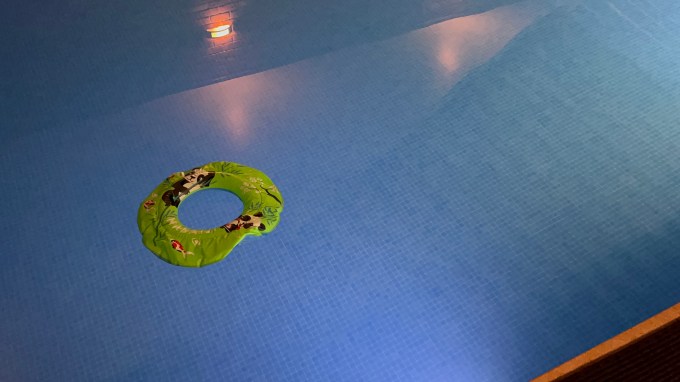
In mid-July, I also started physiotherapy, trying to build up the strength and stability of my muscles, especially my core, as is recommended for Hypermobile Ehlers Danlos Syndrome (she said some really interesting things about hypermobility – specifically as it applied to exercise but it was also interesting in general – and I couldn’t wait for this post to talk about it so I posted about that here). It felt like a somewhat humiliatingly ‘easy’ routine to be completely exhausted by but if it’s going to help with the pain, help me swim more, help me survive the Taylor Swift concerts next summer… I’ll do whatever it takes. The early days of the exercises were tough but it was kind of exciting, knowing that I was moving forward bit by bit, slowly getting closer to my goals. I can’t remember ever feeling strong or in complete control of my body and while I don’t feel that way at this point, I can’t help the little surge of hope that all of this will get me there one day.
I also read about a charity swim in September and that got me really excited. I swear, almost all charity challenges are fitness related – always charity walks or runs – which I find deeply frustrating because I want to help and be involved but I just can’t handle those; I can’t even walk very far without it feeling like there’s glass grinding in my joints. But a swim is perfect. And likely because it’s in aid of a charity, it’s very accessible, the idea being that you choose the length of swim that will challenge you without pushing you to an unsafe or uncomfortable point (one of the lengths is getting in the pool, which I think is fantastic, because, for some people, just getting in a pool is a huge challenge). During my next session at the pool, I tested myself to see how far I could go before it felt like I might regret trying to do more, like pushing harder might be problematic, and that turned out to be just over 400m. I don’t think that’s all that bad, considering I haven’t exercised consistently in over a month. So I could do the 400m length swim in September easily; the next goal is 800m but who knows what will happen between now and then…
AUGUST 2023
I continued working on my hydrotherapy and physiotherapy (although I had to take a week off at one point when an ear infection absolutely floored me – pain, deafness, and balance related problems made it all but impossible to walk, let alone do any sort of coordinated exercise). I had my second physiotherapy appointment and that went well; we increased the resistance on some of the exercises and added a few more. My muscles started twitching after I started physio (which initially really freaked me out) before subsiding and that started again with the increase but now we know why it happens, it’s just mildly irritating.
I also tested how far I could swim, about a month after that first experiment, and I managed almost double my original distance and managed it easily; I could’ve gone further had I not run out of time at the pool. I’m really proud of that progress, of the progress I’ve made in both. It’s been so long since I could even do this level of exercise and I can see it translating to the rest of my life, even if it’s slow going.
I wrote about this here but I was also diagnosed with Fibromyalgia. I won’t rehash it, especially since I’m still not sure how I feel about the whole experience, but I don’t want to ignore it, given that one of the main traits of the condition is pain. It’s just that I don’t know how the diagnoses of hEDS, Chronic Fatigue Syndrome, and Fibromyalgia fit together and, after everything, I’m so deeply wary of (and triggered, to various degrees, by) doctors. Anyway. In theory at least, that’s part of the picture.
SEPTEMBER 2023
September was a bit of a wild ride that I could’ve done without on the whole. I had ongoing shoulder and elbow pain (no doubt due to my repetitive hair pulling, excruciating lower back pain for over a week (which almost consistently disrupted my sleep, waking me up every time I tried to turn over, so I was tired and unproductive and frustrated too), and several days of awful knee pain, although that was probably my fault: I think I overworked it one night when doing my hydrotherapy exercises and, had I taken the next day to rest it, it probably would’ve recovered quickly but I ended up going to London (and having an almost meltdown on the street), which I’m sure only made it worse. So that wasn’t great but it wasn’t the worst it’s been so I’m not complaining (much).
I had my second hydrotherapy appointment and the hydrotherapist was both impressed and pleased by my commitment and my progress, which was very nice (and encouraging to hear – sometimes it feels hard to tell whether anything is actually changing so it’s comforting to hear from someone who really knows that I am). We discussed the exercise I’d had to cut because it hurt my arm and she gave me a new one that had the same final result but wouldn’t aggravate my elbow joint. Then she gave me about ten new exercises to work on, which I’m excited to get started on. They’ll be working different parts of my body so it’ll be interesting to see what that feels like and what that means for my stability and stamina (if I’m able to tell). I don’t get any more appointments so hopefully these two exercises will keep me going, at least for the foreseeable future. Given my history, I wouldn’t be surprised if I was back at some point with a different problem that needs support; my hEDS is just the gift that keeps on giving. During the rest of my pool time, I’ve also managed to swim a kilometre and do it pretty easily. I thought a lot about the charity swim I’d been planning to do and eventually decided that, instead of the one I’d originally planned to do, I’d rather do one for Mind, for World Mental Health Day. That would be a really meaningful way to celebrate my progress and do something that helps a cause really close to my heart, especially since I can’t do the more traditional charity runs.

I also had another physiotherapy session and my physiotherapist was also really pleased with how I was doing; she commented on it the second I walked into the room, that I was standing better. As I said, I find it really hard to tell if things are changing so the fact that she could see it that immediately was good (and interesting) to hear. We talked about the pain in my shoulder and elbow and she massaged both, which felt amazing; having felt both of the joints, she said she thought I probably had Bursitis in my shoulder and Tendonitis in my elbow. We went through my exercises and she gave me a new exercise in place of one that was hurting my elbow. She also gave me a couple that would strengthen my shoulder and elbow. I started doing them straight away and I could definitely feel them working!
The only other things of note, I guess, are that, one, I had all of the blood tests done that the doctor (the man who’d diagnosed me with Fibromyalgia) had requested and, two, I had my COVID jab (my fourth vaccination, I think), which had my arm hurting for several days. I had to slow down on the physiotherapy (less so the hydrotherapy) but it wasn’t long before I was back to my normal routine.
OCTOBER 2023
I started October, focussed on swimming in order to do my 5km for Mind: the plan was to swim 1km per swim over the course of the week leading up to World Mental Health Day. And then, suddenly, it was time to do the thing. After the work I’d put in, it actually wasn’t too difficult (although I gratefully took some time to rest afterwards) and I really enjoyed it. And family, friends, colleagues, and strangers generously donated over £600! I’d like to do another one at some point but I don’t want to push myself too hard and I really don’t want to take advantage of my community by repeatedly asking them to donate when the cost of living crisis is hitting everyone really hard. So I’ll choose my event and time of year carefully.
As much as I loved the swimming, I had really missed my hydrotherapy exercises, which I’d had to neglect to build up my stamina and then get the 5km done in five different swims. So it was really nice to get back to them and build in the new exercises I’d gotten from the hydrotherapist. I started feeling them in my core straight away, which was very satisfying: it’s proof that the exercises are working the muscles they’re supposed to be.
NOVEMBER 2023
I continued with my physiotherapy and hydrotherapy, although pain in my hip did make it hard and I had to reduce the amount of exercises I was doing. But I did finally get some compression socks to help with my POTS and I definitely felt the difference when standing or walking. They’re not life-changing but I’ll take anything I can get.
Otherwise, things have been okay, although I did fall down while walking along the South Bank in London. It’s all concrete so it was a pretty hard fall but, at this point, I’ve learned how to fall so that it doesn’t do much damage or hurt too much; usually I just feel a bit shaken up. I was with family and several people came over so I was well checked over but I was fine.
DECEMBER 2023
I was having serious pain in my back, on and off throughout the month, which did limit my ability to exercise – and to just move at all. The exhaustion of being in pain made moving my body hard too; it wasn’t a fun time. Between that and Christmas, New Year, and the associated family commitments, I ended up accidentally taking a couple of weeks off anyway.
JANUARY 2024
In the new year, I slowly got back to my swimming, hydrotherapy, and physiotherapy – with an updated routine. I also started to do a bit of indoor cycling, although that was a lot harder. But it’s all, hopefully, going to help with building up my strength and stamina and stability. It did all became much harder work when I changed the medication I take for POTS, switching from Propranolol to Ivabradine because all of my symptoms got worse: I was constantly out of breath and shaky, unsteady and exhausted. It was a rough changeover. I also fell down while in London again. This time was on grass so it really wasn’t a big deal physically: it didn’t hurt at all but I do always feel shaken up, like my skeleton has been rattled around inside my body. It also makes me feel less secure, less in control of my body, which isn’t a nice feeling.
I was still struggling with pain in my back, as well as pain in my hips. Oh, and my elbows. It stopped me from doing my exercises on and off for several weeks, which was frustrating. I’ve told both my doctor and my physiotherapist but no news yet on whether there’s a problem – other than general chronic pain – and what to do about it.
FEBRUARY 2024
The back pain only got worse and was dramatically limiting my exercises as well as my general movement; it was also waking me up at night. I was almost constantly on the only painkillers that seem to make any difference but I can only take those for a few days at a time before I have to take a break. That really sucks because then I undo all of the good – all of the recovery – that the time on painkillers has allowed me to do. So it’s a never ending cycle without any progress. The physiotherapy and hydrotherapy that I did manage to do were really hard and not enjoyable at all.
So it’s been a year of rough ups and downs, steps back and forward and back again. I’ve had some more support this year but I feel like the pain has been worse and consistently so, particularly in my back. I don’t really know what to do at this point but nothing seems to help it. I was hoping things would be better by now (especially because I want to really be able to enjoy the Taylor Swift concerts coming up) but they feel worse, at least to me, than they did at the beginning of the year.
Everyday Essentials
Posted on July 1, 2023
Given my health situation – living with multiple chronic illnesses that require daily management – I thought it might be interesting to make a list of the things I need and use everyday and maybe if any of you guys live with chronic illnesses, you could compare it to what you use. Are these things helpful to you? Might they be? Are there things that are helpful to you that aren’t on this list?
GLASSES – This is a pretty obvious one. I can’t see three feet in front of my face without them; I am incredibly short-sighted. Both of my biological parents are or were short sighted and I believe that certain forms of Ehlers Danlos Syndrome (EDS) can affect your eyesight. Regardless, I’m not going anywhere without my glasses.
MEDICATION – I have certain medications that I have to take everyday, as well as some that are situation dependent. The most important are my anti-depressant, Phenelzine, and the beta-blocker, Propranolol, and I really feel it if I don’t take them; while it took them a while to take effect at the beginning, it can through everything off course if I miss a day. So taking your meds… very important!
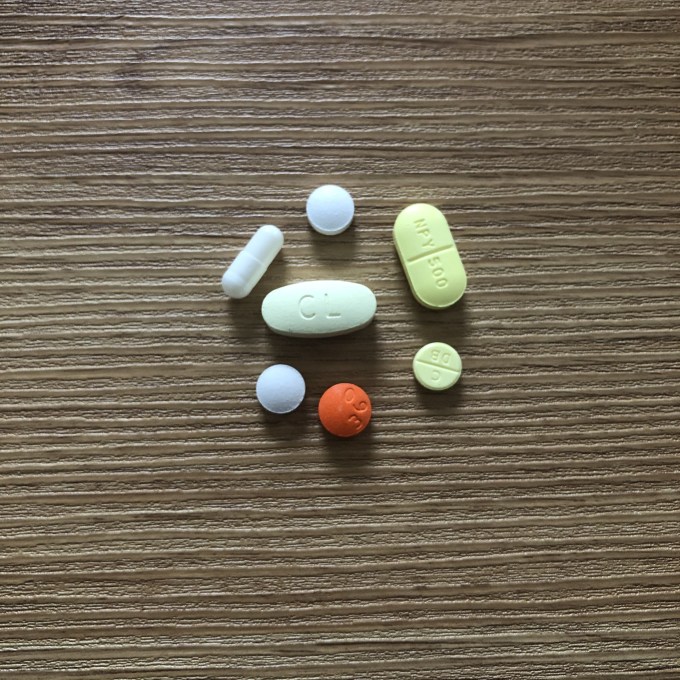
PAINKILLERS – Okay, this isn’t an everyday occurrence but it’s very common, especially at the moment (I hurt my back about a month ago – a story for another time). I have them on me all the time and I regret it if I don’t. Pain can be so debilitating and if I don’t have something to manage them, if only to get home, then I’m in really trouble. I also get migraines that absolutely incapacitate me so having the pills that help with those is vital. I often feel like a walking pharmacy but I’ve learned the hard way – several times – that it’s better to be prepared.
LOTS OF WATER – Generally, none of us are drinking enough water but as a person with Hypermobile Ehlers Danlos Syndrome (hEDS), I’m sure I’m not, as hard as I try. When I was diagnosed, the recommendation was that I drink more than double what a person without hEDS is supposed to drink (x); I’ve been trying to build up my water intake but it’s a slow process. I also have Postural Orthostatic Tachycardia Syndrome (POTS), which often occurs with hEDS, and includes symptoms like dizziness, light-headedness, swelling in the legs after standing for short periods of time, palpitations, fainting, and more, all of which can increase in intensity when a person is dehydrated, after exercising, or during hot weather (I want to write a more in depth post about all of this when I have more time). Dehydration has also been linked to an increase in pain sensitivity (x). Increasing water intake has proven to help POTS symptoms so I’m doing my best to always have water with me (or cordial if the taste of water becomes a struggle, something my nutritionist okayed, given that I’d still be getting the fluids) and I think it’s helping me to drink more (x). It’s surprisingly hard though, to drink that much water.
MY PHONE – I know that many people talk about needing breaks and time away from their phones but, in general, having my phone around is more helpful than it isn’t. I find social media pretty triggering for my anxiety so I rarely find myself scrolling through Facebook or Twitter or Instagram (and I hate TikTok more than I can even articulate) whereas I find the apps for setting alarms and timers helpful, Duolingo really good for my anxiety (and mental health in general), and the Notes app vital to writing down thoughts and ideas to follow up on. I do find it stressful that it means anyone has access to me, can contact me whenever they want, but then Airplane Mode is right there… But generally, my phone is more helpful than not.
MY BULLET JOURNAL – Between my ADHD and my general anxiety about being organised, my bullet journal (or what began as a bullet journal and has evolved into a more personalised version of the system) is all but permanently attached to me. It has my list of commitments, the list of things I want to get done during the day, and anything else that might be relevant, like stuff to do with the cats or the house. I honestly don’t know what I’d do without it.
FIDGET TOYS – My hair pulling has been particularly bad recently (plus I’ve seriously struggled with chewing the callouses on my fingertips and tearing at a scar on my face) and after years of dealing with it, I have a slightly ridiculous collection of fidget toys that I rotate using as the urge to pull varies; sometimes certain fidgets are more effective than others. So I usually have at least within reach, whether that’s wherever I am or in my bag.
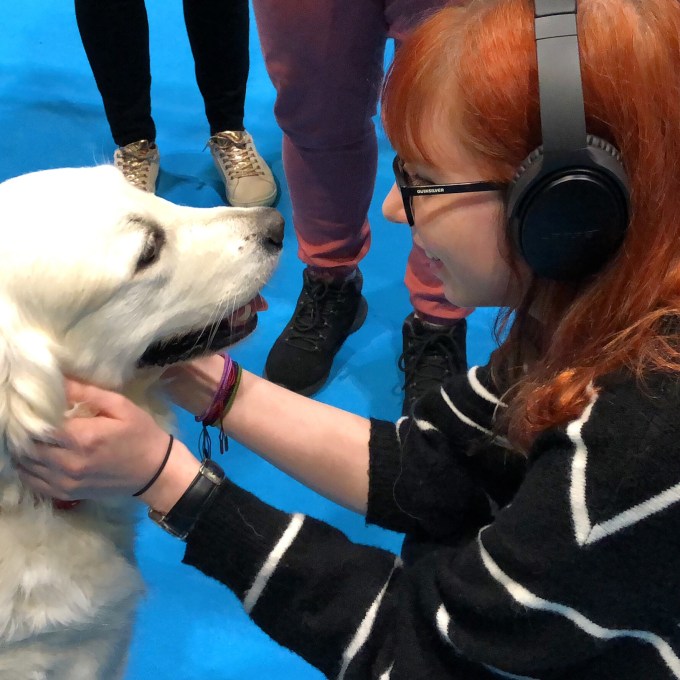
NOISE-CANCELLING HEADPHONES – Having had some very unpleasant experiences with just how loud the world is (you may remember this particular disaster), I got an amazing set of noise-cancelling headphones that have made navigating my hometown, London, transport systems, etc so much easier. I’ve recommended them to multiple people and those who got them have agreed that they make life – and all of its noise – a lot more manageable.
FACE MASK AND HAND SANITISER – I know that, for a lot of people, it feels like the pandemic has ended but, for many, many others, it hasn’t. I know immunocompromised people, those struggling with Long COVID, people who are still getting COVID and getting seriously sick so it certainly doesn’t feel over to me. If I’m out, I’m pretty neurotic about hand sanitiser and wearing a mask; I’m not perfect and I do sometimes forget, especially if I’m feeling overwhelmed in a social situation and there’s no prompt of other people wearing masks, but I’m still pretty on the case about it all.

A HIDDEN DISABILITIES SUNFLOWER LANYARD – I’m not sure when I first got my sunflower lanyard and I can’t honestly say it’s changed my life but there are certain places that it does make life easier, like at airports and concerts (and getting support in those sorts of places is so important). Mostly I wear it when travelling around London because having a big ‘autistic’ label around my neck reminds people to take care and hopefully be a bit more aware of what they’re doing and what’s going on around them. I’m sure there are people who see it and it makes them uncomfortable or contrary or belligerent (because, in my experience, those people tend to be everywhere) and I think there are places where it probably makes me more vulnerable but, on the whole, it tends to be helpful if I use my judgement.
JOINT SUPPORTS – Because of my hEDS, I struggle with a lot of pain in my joints (the gift that keeps on giving) so I have a handful of different supports and braces. I mainly use them for my knee and for my wrists, but I also have one for my back. They not only really help with my stability – something I’m struggling with more and more – but, as with my sunflower lanyard, they remind people that I am kind of fragile and that they need to be careful around me, especially on trains and the underground etc.
POLARISED SUNGLASSES – The last time I went to get new glasses, I mentioned that I have hEDS and the optician recommended getting polarised sunglasses because they can help with light sensitivity, something that many people with EDS struggle with: our eyes are sensitive can get really tired because they are made up of 80% collagen, which is – as we know – what EDS negatively affects. And if you can reduce the strain on your eyes – which these glasses do, even if you’re inside but it’s still very bright – then you can hopefully reduce the chances of developing problems with your eyes (again, EDS: the gift that keeps on giving).
LIP BALM – A common symptom of multiple types of EDS is sensitive skin and that can manifest as dry lips (and cracked lips that take ages to heal) so I try to always have a good lip balm around. My personal preference is the EOS Crystal Lip Balm in Hibiscus Peach, which I’m not totally sure they make anymore but it’s still available through various online stores. But it’s their crystal lip balms that are best for hydrating your lips (but it’s worth reading this article because some people have had allergic reactions to certain ingredients); the previous, more waxy versions were nice but I didn’t find them to be super effective. This one helps my skin recover really quickly (and stay hydrated) and I can barely feel it on my lips, a plus considering that the sensory experience of make up and skincare can be really difficult for me. But there are a lot of great ones out there; I’ve used several from The Body Shop that I would recommend too.
CBD GUMMIES – Over the last couple of years, my sleep schedule – for the most part – has been awful. Most nights I was getting a fractured few hours and then there were nights where I didn’t sleep at all. It was horrible and it just made my mental health even worse, which was pretty impressive given how bad it was when my sleep was at its worst. I felt like I’d tried every strategy ever suggested, including some pretty strong prescription sleeping pills; they worked-ish but I suffered from some pretty miserable side effects for not much reward. I’d always been vaguely resistant to trying CBD based products for some reason – I’m not really sure why – but I was desperate and ended up trying a few different types of CBD gummies. Within a few days, my sleep was deep and reliable again. Months later, it’s remained pretty good. Plus it’s helped me avoid relying on prescription pills, which I’ve had to do in the past even though it’s not generally advised (this was with the approval of my doctor); taking them every night can increase your tolerance and so they stop working and no one really knows what the long term effects are, although some people become addicted and can experience symptoms like hallucinations. So avoiding that is definitely a pro on the pro-con list. Research is still being done around CBD but so far it seems that the only problems are certain drug interactions, which would just involve a conversation with a doctor. None of those interactions were a problem for me so I’ve been taking them consistently ever since and my sleep has been so much better. They’re a constant presence on my bedside table.
So I hope that was of some interest, at least. As I said in my introduction, let me know if you use these things; let me know if you use other things; let me know if there are things that might work better than the ones on this list! Over to you!
A (Fairly) New Development: Chronic Pain
Posted on March 27, 2021
This post feels like it has been a long time coming but I didn’t want to post anything before I had more to say than ‘I’m in pain’ and, at long last, I do. But first, context: I started struggling with chronic pain about halfway through the first UK lockdown, early last year, and it’s been really, really tough. But recently I finally got some answers and started to get some support. And while it’s not a journey that’s over – if that’s even a possibility – I’ve come far enough that I feel like I can talk about it with a certain level of knowledge and emotional distance. So, here we go…
It started out as sporadic pain in my left hand and arm. I’ve experienced this on and off before, due to my extensive writing and my compulsive hair pulling, so I wasn’t overly concerned. Waking up to my hand being numb and tingly was unusual and a bit unnerving but given how much I was writing and how much hair I was pulling out – both of them being outlets for stress – during that first lockdown, I figured that I was just straining that arm a bit more than usual and that it would probably go back to normal as my anxiety decreased.
But then I started developing an ache in my left leg. I don’t really know how to explain it but it felt like it was coming from somewhere deeper than the centre of my leg, deeper than was physically possible. And then what started out as a painful but sporadic ache turned into attacks of debilitating pain, like electric shocks shooting through my leg at random. They were (and are when they still happen) excruciating and had me collapsing on the floor every time, sobbing or even screaming. There were a few so bad that I ended up hyperventilating so hard and long that I nearly passed out. And if that wasn’t bad enough, both the ache and random electric shock attacks spread up to my lower back. None of the common painkillers did anything and I was living in constant fear of the pain hitting me with no warning.
Eventually I was prescribed painkillers but I could only take them for a few days at a time to avoid their addictive nature. They actually – FINALLY – helped; it was such a relief. But the days in between were miserable and the painkillers I was taking in between was barely making a dent. I was also referred to Rheumatology at the hospital.
That was in May (of 2020) and I had to wait until December for an appointment. While, objectively, I can completely understand that, given how overworked hospitals are due to the pandemic, the waiting was also horrendous: I was in constant pain and desperate for help. It was hard to be patient, especially when it was affecting my education because the pain was so bad that I could barely play any of my instruments. It was a really hard time, and that was without all of the COVID-19 and other life stuff.
Eventually the appointment arrived. We didn’t learn much but it got things moving. The hypermobility diagnosis was confirmed and the possible diagnosis of Fibromyalgia was dismissed. I was referred to various departments, including Occupational Therapy, Hydrotherapy (although the consultant wasn’t sure when it would be available due to the pandemic), and, after discussing multiple different medications (many of which I’ve already taken and had negative reactions to), Pain Management. The consultant recommended I have an ECG every five years or so as heart problems can occur with connective tissue disorders and booked my first one for me, as well as an MRI, just to double check my back. She said we’d have another appointment in three months, after the ECG and MRI (it’s been more than three months at this point but I’m hopeful it will be soon since I’m still in a lot of pain).
After the wait for that appointment, I was expecting to wait for ages but we received a call about the MRI less than a week later. The woman who arranged it for us was really thorough and really aware of what might be helpful for me as an autistic individual, suggesting and putting in place so many things to reduce any of my anxiety; for example, I could have Mum in the room with me, I could play music, I could hear the sounds the MRI made before getting in it, she suggested taking Diazepam first, and so on. So that was really helpful. Surprising (I don’t think that’s ever happened before an appointment or procedure before) but very helpful.
The MRI itself was actually a really interesting experience. It was completely manageable and I actually found it quite soothing in a weird way. And, of course, my musician brain couldn’t help but wish I could sample the different sounds the MRI made to use in various tracks. It was over pretty quickly and the whole process was super efficient. I really want to see the images; I don’t know if she’ll bring it up but I’m gonna ask the consultant if I can see them at the next appointment. I’m weirdly intrigued. I mean, I’ve always been kind of fascinated by how my body works specifically (seeing my brainwaves was super cool, for example, and one day I’d love to see images of my brain) so I’m just really curious about what my spine looks like. Like every other spine, I’m sure, but I’m still curious.
(Throughout this time I had been swimming where possible – according to what felt safe and as lockdown allowed – and I’d started incorporating the basic hydrotherapy exercises that the hypermobility specialist had recommended.)
I was prescribed a new daily pain medication but I didn’t really feel like it helped (and I’m still not convinced that it’s actually doing anything helpful). The only thing that helped – and still the only thing that helps is the painkiller that I can only take for a few days at a time; it’s the only thing that has consistently given me pain free periods of time. But, as I said, I can only take it for a few days at a time and the other days are pretty awful.
Around New Year (2020-21), I noticed that the pain was spreading and by the end of January 2021, I was struggling with pain from my toes all the way up to my neck. I rarely experienced pain in my whole body all at once but it had reached a point where there was practically no area of my body that didn’t experience this specific type of pain and often for extended periods of time. My hands, arms, lower back, and lower legs were the worst.
I began Occupational Therapy in February for the pain in my hands. The therapist gave me compression gloves (I have tiny, skinny hands and so they turned out to be too big and I had to buy a smaller pair) and a series of ‘gentle’ exercises that would supposedly allow me to control the hyperextension in my fingers. Right from the start they were painful and I had to drop one of them straight away; it just hurt too much. But I worked hard at the others, whilst simultaneously trying not to work too hard and accidentally regress.
The therapist also discovered that the Pain Management referral hadn’t gone through and put a rush on it – apparently, because the pain is directly affecting my education, I should move me up the waiting list more quickly than if I wasn’t currently doing my Masters. So I guess that’s good news. Hopefully it makes up for the time lost with the referral not going through. She also had some suggestions around swimming during lockdowns, which unfortunately didn’t come to anything but it gave me hope and it was something to work on. That was better than just waiting.
In the following OT session, we talked about the pain caused by the exercises and she reduced them to every other day, which has been better, but I’m still in pretty much constant pain to some degree. But she was pleased with the progress I’d made. Unfortunately though, she thinks I’m probably in the group of people that take the longest to see real change. That’s not massively surprising to me – I’ve been in similar positions before – but it’s still frustrating. Like, out of all of this stuff, couldn’t one thing not be super hard? Couldn’t one thing have the best possible outcome? Anyway. It’s pointless to speculate about that stuff; it’s not like I can change it.
I’d been doing some research on hypermobility but as far as I can tell, it’s a symptom rather than a condition or disorder, like Joint Hypermobility Syndrome or Hypermobile Ehlers-Danlos Syndrome. And since only ‘hypermobility’ had been mentioned up to that point, I asked what my actual diagnosis was and after some conferring between the various people involved, they agrred on a Hypermobile Ehlers-Danlos Syndrome, which explains both the chronic pain and the chronic fatigue (I don’t know what this means for the Chronic Fatigue Syndrome diagnosis – at some point, we’re all going to have to sit down and work out which diagnoses are still relevant and which are now out of date), as well as multiple other problems. So there was this huge rush of relief and that lasted several days before I just felt overwhelmed. It’s an experience I’ve had before: finally knowing is amazing but then the reality of it all sinks in and it’s just a lot to process. Life is suddenly different. It’s not what you thought it was. So, yeah, it’s a lot. I’m sure you know what I’m talking about if you’ve been through a similar experience. But I’m getting there. The dust is starting to settle.
We’re still waiting on some of the other things, like the Pain Management referral and the second appointment with the Rheumatologist. And I’m continuing with the OT; I’ll be graduating to a new set of exercises soon. I’m also super excited to swim again when it becomes possible. We’ve already got several slots booked at our favourite pool. Plus, I’m due to get my first COVID vaccine soon, which will make me feel safer about swimming, even at this pool that takes the safety precautions so seriously.
So this is where we are. As I said, I didn’t want to write this post until there was a natural stopping point in the writing of it. And this seemed to be that moment: we have the beginning, the diagnosis (or diagnoses), and now we have the treatment. Obviously that’s ongoing and there are still different areas to pursue for support. So, I guess, all we can do now is see how things go and hope the pain improves.
 Finding Hope