 Finding Hope
Staying Creative in Lockdown
Posted on November 10, 2020
During the first lockdown, I really struggled to be creative but eventually, I accepted it (as much as I could) because the pandemic was new and scary and I was just trying to take things day by day. The pandemic is, of course, still scary and disruptive, at the very least. But I’m back at university now and I need to be productive and creative and write songs so I thought I’d try and create a list of things that might help with that. And hopefully they’ll help you too. There may be a songwriting slant to these ideas but I do want to try and make sure that they’re applicable to as many creative disciplines as possible.
- TAKE CARE OF YOURSELF – We all know that it’s difficult to be productive and focussed if you’re physically struggling. So try and make sure you’re getting enough sleep, food, exercise, and water. They may not be actively involved in the creative process but it’s a lot harder to engage in anything when your body isn’t functioning properly.
- CREATE A SCHEDULE WITH ALLOTTED TIME FOR YOUR CREATIVE PURSUIT – Some people work really well to a tight schedule and if you’re one of them, set yourself a specific amount of time at a particular point in the day to work on your creative project. If you’re not a strict timetable person, perhaps try it out but with a looser approach. Think about the time of day when you usually feel most creative and productive and each day, sit down and try to work on your project or skill. It doesn’t have to be for a pre-set period of time, it’s just about giving yourself a regular prompt so that the time doesn’t just pass you by.
- SET YOURSELF LITTLE GOALS – Setting yourself small goals that are relatively easy to achieve is a good, gentle way of getting out of that ‘stuck’ place and back into a creative mindset. That sense of achievement can really help with your motivation and so it’s easier to keep going and keep creating. And over time, those goals can get bigger and they won’t feel impossible to achieve.
- CHALLENGE YOURSELF WITH PROMPTS OR CHALLENGES – Sometimes our thinking gets stuck in repetitive patterns and shaking things up with a challenge or a prompt (here, here, and here are some good ones for songwriters) can divert our thinking and inspire new thoughts and ideas to pursue. I often find with challenges (thirty day challenges, for example, with a prompt every day) that the majority of things I produce don’t go further than the day of their creation but then I’m really proud of a handful of the raw pieces that I go on to turn into songs, poetry, etc that I never would’ve thought to write otherwise.
- COLLABORATE – A second voice in the process can, again, push you in a different direction, away from the paths you would naturally take and into new creative territory. Another person can act as a sounding board, challenge your ideas and thought processes, provide insight that you might not have considered working alone, and offer encouragement if you lose confidence. Working with another person can be really scary to start with but it can be really galvanising. And working with someone you really click with creatively can result in the most amazing art.
- TRY LEARNING FROM THOSE WHO PRACTICE YOUR CRAFT – We all practice our craft uniquely, from the slightest difference to a completely different approach. Reading up (or watching documentaries, interviews, etc) into how different people work can give you an insight into different approaches, as well as a new perspective on your own. Both looking into those who work similarly to you and those who work differently can be helpful; I think it just depends on what you’re looking for and what you’re feeling restricted by.
- TRY AN ONLINE COURSE (IF YOU HAVE THE TIME/FUNDS) – Having a structure with assignments and guidance can be really motivating and just get you into the groove of creating again if you’ve gotten stuck. Sometimes your own internal motivation isn’t quite enough and you need some outside pressure to kickstart your creative engine again. There are plenty of courses (especially online, what with the pandemic preventing face to face courses at the present moment) and classes that are designed with particular creative pursuits in mind. And, of course, if you’re looking for a more personalised, self paced approach, YouTube is full of videos with advice on just about everything.
- READ OR WATCH SOMETHING NEW – I’ve recently become a big fan of this as a source of inspiration. Many of us use our real life experiences when creating but that has been much more difficult since the pandemic began and our lives shrunk down into these tiny bubbles. Fiction can inspire all sorts of new ideas, whether they spark old thoughts or memories to re-explore, provide an escape into a different life, or trigger a whole new project through a specific moment or sentence. There’s so much potential inspiration right there waiting. And even if you don’t get a specific idea from watching a new movie, for example, there’s so much to learn from the pacing, colouring, atmosphere of a scene that you can apply to your artistic discipline, even if it isn’t a visual one.
- TRY SOMETHING NEW – Trying something new is scientifically proven to increase your creativity because it presents new challenges that stimulate our creative brain. Just within your discipline, a new project or style presents you with new challenges for you to explore and overcome, forcing you to problem solve and expand your thinking. You could go even further by trying a completely new creative discipline or hobby and see where it leads you and what ideas it sparks.
- CHANGE UP WHO YOU’RE FOLLOWING ON SOCIAL MEDIA – Most of us look at social media everyday and if the things you’re seeing are triggering negative emotions, it could be helpful to unfollow them and remove that influence from your life. And try looking for new people to follow, people who post content that makes you feel good, inspires you, and motivates you; a specific post or just the influx of new, different content could inspire new creative ideas.
So hopefully some of these tips are somewhat helpful to all of us. Being creative and making art, as a career or for the sheer enjoyment, are more important than ever in these difficult times. So even when it gets hard, don’t give up. Try something new, look for inspiration elsewhere, or take a break. Do whatever you need to do to support your ability to create.
EXTRA NOTE: Here are several articles that I read while writing this post that I found to be really interesting and potentially useful resources: (1) (2) (3) (4) (5)
Category: covid-19 pandemic, emotions, music, research, tips Tagged: art, art form, challenges, collaboration, content, creative, creative block, creative process, creativity, goals, health, inspiration, learning, lockdown, lockdown 2020, mental health, physical health, prompts, schedule, setting goals, social media, songwriting, tips, tips for creativity
Creative Difference: Exploring Art And Autism
Posted on October 24, 2020
Recently I attended a webinar hosted by the Autism research charity, Autistica, about the relationship between Autism and art and it was really interesting. The panelists were Professor Jonathan Green (Autistica Trustee, Professor of Child/Adolescent Psychiatry at Manchester University, and artist), Sarah Jane Bellwood (artist and gallery owner), Lizzie Huxley-Jones (editor and author of Stim: An Autistic Anthology), and Jane Elizabeth Bennett (multi-disciplinary artist and researcher).
Each person introduced themselves and then the discussion began. I found the whole thing really fascinating so I thought I’d pull a few quotes from the video that I thought were particular highlights, but I thoroughly recommend watching the whole video to hear all of the points made.
So here are some quotes that I found really interesting…
JANE ELIZABETH BENNETT: “I think art is the first language that I really kind of learnt. So, for me, art is a way to speak, it’s a way to communicate, it’s a way to convey emotion, and they’re not always things that I’m fantastic at doing in a kind of neurotypical way. For me, art is a very atypical way of communicating. You do it through colour, you do it through gesture, you do it through sound.“
I love this description of art and it’s something I really relate to as an artist. I definitely use my songwriting to tell stories and relay experiences and share emotions. I do that through the lyrics, through the melody, the vocal performance, the arrangement and instrumentation, as well as the production. While, for me, the song is the piece of art in its purest form, the performance, the arrangement, and the production are all a vital part of conveying and enhancing the emotional experience. I definitely experience Synaesthesia to some degree: sounds have colours (and some even have specific tastes) as do emotions and so a big part of my process is trying to bring those experiences together; I’m often only happy with a song when the emotions, sounds, and colours are completely in sync.
JONATHAN GREEN: “And I was totally absorbed in doing this drawing, like nothing else existed except what I was doing. And I came out of it an hour or two later or something and I think I felt, ‘That’s the most real thing that’s happened to me for a long time… is that connection, with that plant through drawing.’ And I think that’s, for me, why I held on to it… was that it felt… it gave me an access to something that was so real… It’s allowed me to feel really real.“
Having just written and finished a song is when I feel most real, most alive. Sometimes I feel like I don’t really exist and when I finish a song I’m proud of, it’s like a realisation that I really do exist. It’s the only time I feel in sync with the universe. I never feel so connected to myself as when I finish a song, or to other people as when I perform a song I’ve written and they respond to it. We’re all in this single moment, experiencing this thing together and it’s magical.
LIZZIE HUXLEY-JONES: “We should have the space within an industry to create whatever we want.“
JANE ELIZABETH BENNETT: “I think it’s very important that as an autistic artist… it’s very important to have that space to make work that isn’t about Autism. Just because I’m autistic doesn’t mean I have to be, like, the voice of Autism but I think my Autism – just as a personality or as a writing style – is gonna be inherent in the work I make.“
LIZZIE HUXLEY-JONES: “The way I describe it is, ‘we experience everything autistically so why wouldn’t everything we create be a little bit autistic as well?‘”
I think these are really important points: just because we’re autistic, it doesn’t mean that we have to create art about being autistic. Many do because it’s an outlet for their individual experiences or because it’s a way to make sense of themselves but we should never be pigeon holed into just creating Autism related work. How much space Autism takes up in our lives is different for everyone and we obviously feel and experience unrelated things that we want to make art about so not all autistic artists will choose to make art about Autism. But as Jane points out, being autistic likely will influence the work we make because it influences the way we perceive the world. Day to day that can be incredibly frustrating but when it comes to art, it can be something that makes our work special and different.
JONATHAN GREEN: “I think, for me, making art or the process of making art does help me make sense of things or sort my mind out in some way. I always feel, kind of, more in harmony after I’ve been making art. Internally, you know? Kind of rebalanced, or something like that.“
I can absolutely relate to this. I definitely feel most calm, in mind and body, when I’ve just finished a song. It’s not too far from the experience I described earlier, about feeling real and alive and in sync. I also feel this real sense of inner calm. It’s like everything within me has been shaking and it’s suddenly stopped. It’s like all these disconnected pieces have come together and everything makes sense. It’s not dissimilar to how I imagine getting high feels.
There were a couple of things that bothered me though. I felt like having three visual artists and one writer wasn’t the best representation of artistry; they could’ve had a musician or sound artist, an animator, a photographer, etc and that would’ve created a more varied discussion because the forms of art were more varied. The discussion was really interesting as it was but I think a wider variation of art forms would’ve only added to that.
There was one thing specifically that I really didn’t like and that was the repeated use of the word ‘obsession’ in place of ‘special interest,’ the term more commonly used in Autism. I know that some people don’t like the phrase ‘special interest’ (I must admit I don’t love it) but I don’t think that that’s a good reason to revert to the word ‘obsession,’ a word that has some very negative connotations. Various definitions of ‘obsession’ involve the terms ‘unhealthy’ and even ‘disturbing’ and while I can’t speak for anyone else, I find those associations with my special interests uncomfortable and actually upsetting. I’ve had a handful of special interests in my life and none of them have been unusual in subject (animals, writing, singing, songwriting, to name some), but the intensity of that interest and fascination is what stood out. Definitions of ‘obsession’ also include the idea that they dominate a person’s thoughts, that they have control over you (which links back to the idea that they’re unhealthy), which, again, I personally wouldn’t associate with my special interests. While I think about my special interest – songwriting – a lot and would prefer to spend all of my time doing it, I can think and do other things and I can recognise when I’m spending too much time doing it and neglecting the other areas of my life. And during my research into the difference between ‘obsession’ and ‘special interests,’ I found several articles about how helpful and positive engaging with special interests are for autistic people (here and here). In the former, the writer, Laina Eartharcher, makes many good points that I feel I should quote rather than attempt to paraphrase:
- “They soothe and calm me.”
- “My interests do not dominate my thoughts the way that is consistent with an obsession. It’s not like I can’t think about–or talk about–anything else. It’s not like I can’t set my other interests aside and focus on my daily work. It’s not like I can’t get anything else done. If my interests were indeed obsessions, none of that would be true; my life outside of the interest would have come to a full stop.”
- “For me, it’s all about relaxation and curiosity. I want to learn, focus, explore. And I want to do so in depth, with a sense of completeness. I don’t want pieces of the picture, I want the whole picture. I want to connect dots. I want to reach understanding. I want to feel solid in my knowledge. Tidbits and soundbites just don’t do it for me. They’re pointless and unsatisfying. It’s like, what’s the point of spending time gathering a bunch of soundbites and headlines? Meh. Give me the whole story, or don’t bother me with it.”
- “I would like to see the ‘obsession’ association fall out of favor. It’s not accurate. It’s not nice. It lacks understanding.”
I relate to all of these statements and fully agree with her. ‘Special interest’ may not be the perfect word but the use of ‘obsession’ can be damaging and create misunderstandings about Autism. So it did really bother me how many times this word came up and the fact that it was never addressed, even briefly. I want to talk about special interests more in the future – I think it definitely deserves its own blog post as a subject – but as it came up here, I felt like it was important to talk about.
But that issue aside, I found the webinar to be a really informative, enjoyable experience and I look forward to similar events that Autistica puts on. I’ve followed several of the speakers on social media and have enjoyed delving deeper into the work they’ve created. As an autistic person, I’m always intrigued by the work of other autistic people and to what degree they experience and interpret the world in the same way I do and then (if they do) how they translate that into art.
Category: autism, book, diagnosis, emotions, music, response, tips, uncategorized, video, writing Tagged: actuallyautistic, art, art and autism, artist, artists, asd, author, autism, autism spectrum disorder, autistic, autistic adult, autistic artist, autistica, communication, creative difference, creativity, emotion, exploring art and autism, jane elizabeth bennett, jonathan green, laina eartharcher, language, language of autism, lizzie huxley-jones, music, obsession, obsessions, perspective, quote, quotes, representation, sarah jane bellwood, songwriting, special interest, special interests, synaesthesia, webinar, writer
Finding Home and Finding Hope
Posted on September 13, 2017
Last night I got to see Cecilia Knapp perform her one woman show, Finding Home, for the second time. It’s a show that discusses some of the really big stuff, like family, growing up, loss, suicide, and hope, and again, I was completely blown away. She’s an incredible writer, an incredible poet. It’s a fantastic show and if you’re able to see it, you really should.
This post could easily be a list of reasons why I love Cecilia, and her writing, and I’d quite happily write that but that wasn’t why I wanted to write this post. I wanted to write this post because she’s doing something really important. She advocates using writing, and creativity in general, to share stories and to help us cope with the things that happen to us, and this is something I’ve always really thought too. I think it can change everything; it certainly has for me. Writing has given me a way to make intangible things tangible and process things that had always felt too big to think about. I can’t say it better than Cecilia does here, in her TED Talk:
And on the other side of that, I also want to highlight the power of art and words, and the effect they can have. I’ve been in a pretty bad place for the last few months and I’ve really struggled with feeling hopeless. But listening to those words, it kind of felt like all of the colour had rushed back into my life, all of the feeling back into my body. I felt alive again. And that was amazing.
Of course, one experience can’t alleviate depression but what is change but a series of experiences? And regardless of whether or not this feeling lasts, it won’t be any less special if it doesn’t. I’ll keep the memory safe and replay it whenever I need to remind myself of that moment, that feeling. Given this experience, I’m even prouder that this blog’s title was inspired by this show.
You can find out more about Cecilia and her work here.
Category: event, mental health Tagged: art, brighton, cecilia knapp, depression, finding home, finding hope, hope, hopeless, hopelessness, mental illness, performance poetry, poetry, ted talk, tedtalk, writing
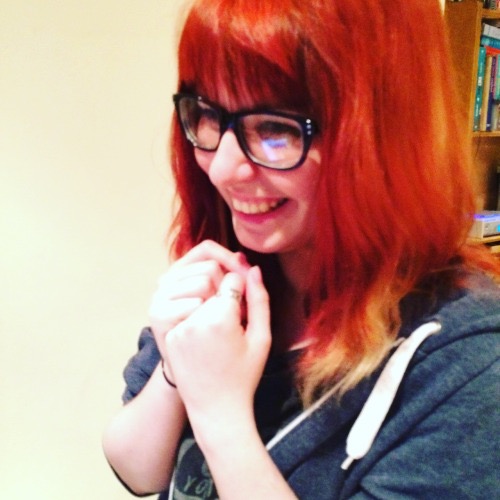
About Me
Hi! I’m Lauren Alex Hooper. Welcome to my little blog! I write about living with Autism Spectrum Disorder (ASD), ADHD (Inattentive Type), and Hypermobile Ehlers-Danlos Syndrome (hEDS), as well as several mental health issues.
I’m a singer-songwriter (it’s my biggest special interest and I have both a BA and MA in songwriting) so I’ll probably write a bit about that too.
My first single, ‘Invisible,’ is on all platforms, with all proceeds going to Young Minds.
My debut EP, Honest, is available on all platforms, with a limited physical run at Resident Music in Brighton.
I’m currently working on an album about my experiences as an autistic woman.
Links
Categories
Recent Posts
Archives
- April 2026 (1)
- March 2026 (3)
- February 2026 (1)
- January 2026 (1)
- December 2025 (1)
- August 2025 (1)
- July 2025 (1)
- June 2025 (4)
- May 2025 (3)
- April 2025 (2)
- March 2025 (1)
- February 2025 (1)
- January 2025 (1)
- December 2024 (2)
- November 2024 (1)
- October 2024 (1)
- July 2024 (1)
- May 2024 (1)
- April 2024 (3)
- March 2024 (1)
- January 2024 (1)
- December 2023 (4)
- November 2023 (6)
- October 2023 (5)
- September 2023 (6)
- August 2023 (4)
- July 2023 (5)
- June 2023 (5)
- May 2023 (7)
- April 2023 (4)
- December 2022 (4)
- November 2022 (1)
- October 2022 (1)
- September 2022 (1)
- August 2022 (3)
- June 2022 (2)
- May 2022 (6)
- April 2022 (10)
- March 2022 (9)
- February 2022 (3)
- January 2022 (1)
- December 2021 (7)
- November 2021 (5)
- October 2021 (7)
- September 2021 (4)
- August 2021 (1)
- July 2021 (2)
- June 2021 (4)
- May 2021 (10)
- April 2021 (11)
- March 2021 (14)
- February 2021 (6)
- January 2021 (6)
- December 2020 (8)
- November 2020 (9)
- October 2020 (8)
- September 2020 (10)
- August 2020 (8)
- July 2020 (4)
- June 2020 (6)
- May 2020 (8)
- April 2020 (7)
- March 2020 (9)
- February 2020 (5)
- January 2020 (7)
- December 2019 (7)
- November 2019 (1)
- October 2019 (1)
- August 2019 (1)
- July 2019 (2)
- June 2019 (3)
- May 2019 (5)
- April 2019 (5)
- March 2019 (5)
- February 2019 (6)
- January 2019 (5)
- December 2018 (7)
- November 2018 (3)
- October 2018 (5)
- September 2018 (5)
- August 2018 (5)
- July 2018 (9)
- June 2018 (7)
- May 2018 (7)
- April 2018 (6)
- March 2018 (11)
- February 2018 (5)
- January 2018 (6)
- December 2017 (7)
- November 2017 (7)
- October 2017 (7)
- September 2017 (6)
- August 2017 (5)
About Me
Hi! I’m Lauren Alex Hooper. Welcome to my little blog! I write about living with Autism Spectrum Disorder (ASD), ADHD (Inattentive Type), and Hypermobile Ehlers-Danlos Syndrome (hEDS), as well as several mental health issues.
I’m a singer-songwriter (it’s my biggest special interest and I have both a BA and MA in songwriting) so I’ll probably write a bit about that too.
My first single, ‘Invisible,’ is on all platforms, with all proceeds going to Young Minds.
My debut EP, Honest, is available on all platforms, with a limited physical run at Resident Music in Brighton.
I’m currently working on an album about my experiences as an autistic woman.
 Finding Hope