 Finding Hope
Increasing The Phenelzine (June – July 2023)
Posted on September 23, 2023
TW: Mentions of depression and suicidal thoughts.
NOTE: I wrote this a few months ago but waited to post it. There were a couple of things that I felt I wanted to comment on in the conclusion but I needed a little bit longer before I felt confident enough to do so. So I let things play out a bit but then some life stuff happened and this post got away from me for a bit. But here we are. Here it is.
Things had improved since I’d settled on the daily 30mg of Phenelzine but it still didn’t feel like enough. I wasn’t crushingly depressed but there were still problems, still areas of my life that weren’t back to what they used to be. So, for a while, I’d been thinking about increasing the Phenelzine, upping it to the high dose of 45mg (with my psychiatrist’s permission, of course). I had tried it before and it wasn’t the right thing for me – it was like the lights were too bright all of the time – but I hadn’t been coming from as low a place as I was this time; I hadn’t been trying to pull myself out of such a bad place. So, with that in mind, I wondered whether the higher dose would help, whether it would give me the additional rungs on the ladder that it seemed I still needed.
So I saw my psychiatrist and while he was quick to comment on how much of a change he could see since I’d started on the Phenelzine again, he listened to what I had to say and we discussed trying the higher dose. He asked me what the most important thing to me was and I said that I wanted my songwriting ability back. I’d written a couple of songs since I started taking the Phenelzine again and I loved them but they’d taken so much time and effort to write, much more than it would usually take. I used to write multiple songs a week with ease but, on the 30mg of Phenelzine, it was taking me months to drag one song out of my brain. So I wanted to write like I used to again. He listened and ultimately agreed: he said we’d use my creativity as a benchmark, using how many songs I was writing as a measure of whether the increase was helping or not (alongside whether I had any negative side effects, of course).
For a while, life was overwhelmingly busy and chaotic and there were things I needed to be able to do, that I needed to rely on my body and my behaviour (as much as I could normally, at least) to manage. So it was a while before I was able to increase from 30mg per day to 45mg per day. I started the increase on 17th June 2023 and took notes for the first six weeks (since the side effects and general effects can be quite subtle), finishing this record on 29th July.
And, as always when talking about medication, this is just my experience. Please don’t start, change, or stop taking any medications without the advice and support of a medical professional.
WEEK 1 (15mg in the morning and 30mg at night)
For most of the week, I didn’t feel any different. I have been more keen to engage with stuff, especially new stuff, but that’s not new exactly; it might’ve increased a bit but I couldn’t be sure. I was consistently tired and, on more than one occasion, I fell asleep before I could take my medication at night; I was also really drowsy during the day, needing naps to function, to make it to a decent bedtime. My back pain was relentless too, although my TENS machine did help.

Come the end of the week, my sleep was a mess and I was completely exhausted. I ended up needing multiple naps during the day and still barely making it to a respectable bedtime, forgetting my pills again. But I was managing to do a lot: I worked through my to-do list, went out to see some cool art, managed to avoid a meltdown when a creepy guy wouldn’t leave me alone, and spent my short evening snuggling with the neighbour’s puppies. But even though I hadn’t really had the time to sit down and do any writing, my brain was like a firework show, ideas appearing one after another at a dizzying speed. It was more than a bit overwhelming. I didn’t manage to find out, exhausted as I was, whether I could turn those ideas into anything but it was a definite start.

WEEK 2
The beginning of the week was so hot (the result of a hideous but thankfully short heatwave) that it felt almost impossible to do anything; moving around just made me even hotter, sickeningly so (heat like that makes my POTS symptoms go haywire, which just makes everything harder). For the most part, I dozed, cuddled up with one of the puppies. I was easily overstimulated and exhausted but I made it home to Brighton (with an impromptu nap on the train) and had a quiet evening before going to bed, falling asleep before I could take my pills or turn the light off.


The rest of the week was a really mix. I slept better, longer and deeper – and I actually remembered to turn off the lights and take all of my pills before falling asleep – but I was so tired; I kept falling asleep on the sofa or in the car or really anywhere I sat down. I was just so exhausted. I struggled during the day, unable to concentrate even though it felt like my brain was full of ideas and things I wanted to do. But I just felt like I was being sucked down by sleep and staying awake took so much effort. It made me feel like I might start crying at any moment.
I had some really bad days, where I felt overwhelmed and overstimulated and miserable and just so tired that I couldn’t do anything, which, on top of it all, left me feeling so frustrated. I had a horrible time in therapy and was just feeling really fragile. Plus, I was really stressed about the puppy situation: I want her so badly and I have no idea what’s going on; the idea of losing her from my life makes my heart ache.
But despite all of the difficulties, I was surprisingly productive, and was busier than I’ve been in years. At least that’s what it felt like. I started to work on some of the song ideas that I’ve been turning over in my head; I hung out with friends; I managed to swim; I went to see the fantastic Candi Carpenter play a show in London (I’d missed their last UK shows because I was self-isolating) and then we all went to the pub afterwards and had a great time (highlights include all of us singing Taylor Swift karaoke and running into uni friends I haven’t seen in years); I even did a drawing class. It was all really good but it was just A LOT. It was hard to process it all.
WEEK 3
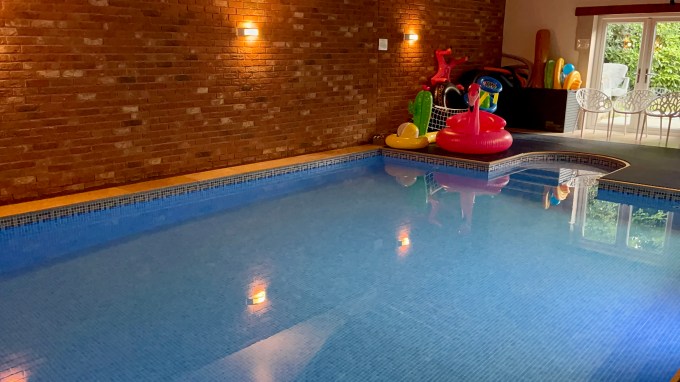
For the first half of the week, things were okay. My sleep was pretty good: I was sleeping long and deep, although I did have the weird, busy dreams that I’ve come to associate with a medication change. I was still incredibly tired during the day (I fell asleep upright on the sofa several times) but I did manage to get some stuff done. And even though my back was hurting, I did manage some hydrotherapy.
Mentally, I wasn’t doing super well. I just felt really overwhelmed, drained and fragile. It felt like my depression was just hanging around, deep down, all the time. I was still functional and I even managed to do quite a bit of songwriting, more than I’d done in a while, but it was hard. I went to an amazing Maren Morris concert with my friend, Richard, and although I had an amazing time at the show, everything leading up to it and then the aftermath was a really struggle: getting there was exhausting and painful; the disability accommodations were as stressful as always; I was exhausted and freezing by the end of the gig; and it took forever to get home. I had a slow start the next morning, exhausted and aching after the concert, and despite the decent night’s sleep, I was a mess: I was completely overwhelmed and ended up in tears multiple times.


The second half of the week was really difficult. My sleep was a mess, making me a zombie during the day, and my emotions were all right at the surface, raw and ragged. I was beyond stressed and overwhelmed by everything that was coming up over the coming weeks; it felt like it was all barrelling towards me at an unstoppable speed. Both my body and my emotions felt so heavy and I was constantly bursting into tears.
WEEK 4
This week was pretty much dominated by my overwhelming, paralysing anxiety and stress over trying to get Taylor Swift tickets and the hurt and devastation of being treated so badly as a disabled person. I wrote about that here so I won’t rehash it all but I wanted to include what a devastating effect the experience had on my emotional and mental states. While the experience is, of course, separate from whatever the Phenelzine was doing, both are tied up with my emotional regulation and the effect my feelings have on me. As I said in my post, I was basically in various states of meltdown for all three days of the tickets presale. And it wasn’t just the suffocating anxiety of not getting a ticket: the way that Wembley Stadium treated disabled fans was appalling and it was just such a gut-punch to realise that they either didn’t care about us or they didn’t even remember that we exist. It was really distressing. I was so stressed and so depressed, even after I managed to get tickets. Just the thought of not getting to see this show, having looked forward to it for five years, had my emotions so big and loud and devastating that I felt this overwhelming compulsion to scream until my throat tore, to rip my skin off. With so little bringing me joy these days (and my chronic suicidality ever present and oppressive as a dark cloud), the thought occurred to me that, rather than endure the excruciating pain I know I would feel if the shows happened and I couldn’t be there, I should just kill myself to avoid it all. That thought just made me feel even more fucked up than I usually do. My emotions are so big and so precarious that even the smallest thing can tip me into serious and scary lows and this isn’t the smallest thing, given how much Taylor means to me. As I said in my post about the experience, these feelings are due to my mental health, to my depression and my chronic suicidal thoughts, not specifically to seeing Taylor; it’s about the fear of losing one of the few sources of joy when you’re in a really dark place. Those things will be different for everyone but the fear of losing them is so overwhelming that words don’t really do it justice.
The exhaustion and residual stress from that whole… experience had completely drained me of energy and, for several days, I was so tired that I could barely function (although I’d get sudden jolts of adrenaline, thinking I should still be on the phone, that I’d fucked up and forgotten, and was losing my chance). My sleep had been screwed up by my anxiety and I had pain from the physical tension I’d been holding in my body for three long days; both of those took most of the week to settle back to normal, normal being exhausted and sleepy and not able to do much. That was causing me a lot of anxiety too: I had so many things that needed doing but I was just too tired to do them and the anxiety over how they were piling up was starting to get overwhelming. I did manage to spend some time with friends, which was really nice, but I struggled to feel connected while still feeling so emotionally drained.
WEEK 5
The last week had exhausted me and it showed over the following weeks in various different ways. I was going to bed early, sleeping long and deep, and often struggling to wake up. And even with a long night under my belt, I was tired and drowsy during the day, often falling asleep on the sofa (and sometimes at my laptop); I struggled to concentrate, my eyes were tired and straining by the end of a day, and sentences stopped making sense. I was just completely done in. I hadn’t emotionally recovered either. I felt utterly overwhelmed, fragile and miserable; I was suicidal in the face of what just felt like too much. It wasn’t particularly surprising when I had an awful meltdown.
I did manage to be vaguely productive though, despite it all. I worked hard at my hydro and physio; I went to therapy; I managed some writing; I saw a couple of friends and had a good time with them, even if I didn’t feel as present as I usually would; I went to a show a friend runs (and the whole thing made me very emotional); I attended an interesting webinar about ADHD. But, even with how much I was struggling to be present in my mind, nothing felt quite enough, like I hadn’t done enough or gotten as far as I’d wanted to. I’ve been trying not to beat myself up but I’ve never been very good at that, being kind to myself that is.
WEEK 6
Another week and my sleep still wasn’t great. I was still falling asleep early (sometimes forgetting to turn the light off or put in my retainer) and sleeping long hours, although I was starting to wake up at a more reasonable time. I was still really tired during the day, taking some accidental naps, and struggling to focus. It was getting better but, as I said, it wasn’t great.
I was working hard to build in better habits too, alongside the medication and therapy. I worked hard at hydrotherapy and started physiotherapy too. The physio was a bit of a shock to my system and I was sore for the first few days (which disrupted my sleep but then pain always does). But, midweek, I ran for a train and actually caught it, despite thinking that there was no way I was fast enough or strong enough to make it (I would’ve had to wait an hour on a cold platform for the next one so I was certainly motivated). There’s no way that, a year ago, I could’ve managed that; I was so ridiculously proud of myself. So the hydrotherapy has definitely made a difference and I feel confident that the physiotherapy will only complement that.

I was also trying to drink more water. I definitely don’t drink enough and, given that the Autonomic Dysfunction I struggle with as part of my Ehlers Danlos leaves me prone to chronic dehydration, I should be drinking a lot more than the average person. I’m nowhere near that yet but I’m already drinking more than I was when I first measured my liquid intake.
It’s hard to know for sure but I felt like I was more productive and motivated than I had been previously. I was actually getting things done and getting them done at a faster pace: blog writing, songwriting, researching. I even went to an online writing workshop that I really, really enjoyed: the session was fun, the people were really nice, and I was really excited about what I wrote. My brain was just desperate for new things and new information; it was excited to learn. I don’t really know how to explain it any other way. I also went out and spent time with friends, went to a songwriters’ circle, and saw family friends. I was more social than I’d been in ages but I was kind of feeding on that, which is really unusual for me. But it was nice. And exciting. Oh, and I also started mentoring sessions for my creative projects, which I felt really optimistic about.
Unfortunately, the week didn’t end as well as it had begun, my depression hitting me like a tidal wave at full strength. It was so overwhelming that I felt like I couldn’t breathe, couldn’t do anything. I was also really stressing about food and eating, feeling guilty as soon as I ate anything. I was miserable and exhausted and couldn’t focus on anything; I slept on and off during the day, dizzy and ears ringing. One side of my body was tingling too and we were this close to calling the doctor. It was horrible. I also found that I physically couldn’t relax: my body felt tensed up even though I wasn’t tensing my muscles (so I obviously couldn’t relax them if I wasn’t actually causing the problem). After several hours, my muscles started to hurt but I still couldn’t unclench them. My legs were twitching too and when I thought about it, I realised that that wasn’t new, that it had been happening on and off for weeks, as had the tensing in certain muscles. The more I thought about that, the more stressed out I got. I know that certain doses and/or extended use of certain medications, including Phenelzine can cause Tardive Dyskinesia, a movement disorder with symptoms including sudden and irregular movements in your face and body. It’s something that gets worse over time and the idea of developing it was really distressing to me.
In the following weeks, my sleep evened out, helped by CBD gummies and the occasional Diazepam or Zolpidem. I spoke to my psychiatrist about the twitching and whether it could be Tardive Dyskinesia. He felt that it was unlikely, that a much more likely cause was the physiotherapy, which I’d started around the same time the twitching started; he thought it was more likely that it was just my muscles waking up with the exertion I was putting them through for the first time in so long. So my anxiety was abated.
But now, several months later, the twitching is still happening and my anxiety is growing again. I’m going to go and see my psychiatrist and have a proper conversation about it because if it is something – something that needs to be dealt with rather than something that’ll just resolve in time – I need to know so that, at the very least, I can think about the options, whatever they are. It’s hard to believe they’ll be anything but bad though; past experience doesn’t exactly fill me with confidence.
A Year of Autonomic Testing and A Discovery of POTS
Posted on May 21, 2022
After I was diagnosed with Hypermobile Ehlers-Danlos Syndrome, my Mum and I did quite a bit of research. There were a lot of things that suddenly made sense and one thing that caught our attention was mention of autonomic issues, like dizziness, fatigue, chronic pain, brain fog, problems with heart rate and blood pressure… These were all problems I’ve either struggled with or had investigated in the past so, with the hEDS diagnosis and the help of my GP, we started following that path to see if it yielded any answers.
As you can see, this post has been a long time in the writing. I didn’t want to post anything until I had something to say really, beyond descriptions of the tests, but then it all just went on and on and on. Everything moves so slowly and it’s very draining. I have to hope that things are better for knowing what I’ve learned from all of this but it’s also been a very trying, sometimes traumatic experience.
MARCH 2021
It began with a phone call appointment with a neurologist, a specialist from a neurology unit in London (which I talked about in this post). It wasn’t a fun experience. The call came two hours late, it wasn’t the person it was supposed to be, and then he spent twenty five minutes of the half hour call telling me that there were tests that they could do but that they’d probably be a waste of time. It just left me feeling really confused and upset. He had eventually said he’d write to my GP about doing some tests but after the way he’d been talking, I didn’t feel very hopeful about it all. After he hung up, I didn’t quite have a meltdown – it was like I didn’t have the energy that a full on meltdown requires to happen, like a rocket needing a certain amount of fuel or whatever to launch – but it was close.
MAY 2021
Despite his apparent reluctance, the neurologist did in fact write to my GP and the blood pressure monitoring was arranged. It took forever – I think because of a shortage of the monitors – but the day did eventually arrive (I wrote more about it in this post). I went to the hospital to have the monitor fitted and to get all of my instructions; the whole thing was relatively chill (not my general experience when it comes to the medical field) and the two women who went through it all with me were really great.
It wasn’t too bad. The cuff got very tight so it was hard to forget it was there and just do the day as normal but it was fine. I did find it hard to get to sleep but the squeezing didn’t wake me up, which I was grateful for. My arm did hurt like hell in the morning, like I’d been punched repeatedly; I was convinced my arm would be bruised afterwards but it wasn’t. I couldn’t get the monitor wet so I couldn’t have a shower until after I returned it but since that’s usually when the blood pressure related symptoms present, we faked a shower: I stood for the same amount of time in the bathroom with the shower on (so that the hot, steamy environment was the same as if I were having a shower) and let the monitor take its readings. I felt shaky and dizzy and lightheaded so it should have read as if I really had had a shower.
I got through the rest of the twenty-four hour period and then took it off, to my great, great relief. My arm was sore from the squeezing and the cuff was pinching in various places. I also had that Autism thing where the constant pressure for so long was causing me anxiety, like wearing my retainer for too long. The anxiety had been growing for most of the second day so I was very relieved to be free.
JULY 2021
The second round of monitoring involved a little stick-on patch with sensors over my heart, which had a little monitor that could be attached (and then detached for a shower) to measure my heart rate. I was supposed to wear it for a week and while it wasn’t exactly comfortable and sleeping with it attached wasn’t great, the first few days went smoothly for the most part.
But, after several showers, the patch started to peel off. The sensation of it constantly brushing my skin and the itchiness of the glue (or whatever it is) as it disintegrated was quickly overwhelming and I was regularly finding myself in meltdown territory. It was creating so much anxiety that we got in contact with the people who’d sent it and they said that after roughly four days of readings, it would be fine to take it off, that they would have enough data. Removing it actually really hurt and I think me and my super sensitive skin had some kind of reaction to the adhesive because it kind of looked like I’d been burned where the patch had been for a couple of days after.
AUGUST 2021
Alongside the blood pressure and heart rate monitoring, there were a series of other tests but it was a while before I got the letter to tell me that they’d been scheduled. The first of the two appointments was in August and was a bit of a mixed bag as an experience. Despite the letter from my GP that said I’m autistic and have an anxiety and therefore need to have someone with me for hospital appointments, the receptionist almost didn’t let my Mum come in with me. I was somewhere between walking right back out and having a panic attack (said receptionist actually asked me if I was okay, which I thought was a bit rich) but fortunately it was all sorted out and after a little bit of time to collect myself, the testing went ahead. The doctor for this particular appointment (I don’t think I’ve seen a single doctor more than once through this entire process) was nice and didn’t rush me at all after the somewhat upsetting start.
The testing was fairly straightforward. They wrapped me up in monitors (I’m not going to lie – I kind of loved all of the hand ones for taking my pulse and stuff because it kind of felt like I was having superpowers measured or something, which was much more fun to think about) and then ran me through a series of tests: standing for certain periods of time, breathing exercises (which reminded me a lot of the warm up exercises I used to do during singing lessons), squeezing an inflated pressure cuff (my hypermobile fingers made this one pretty difficult), and so on. There was still the tilt table test to go but I had to come back on a separate day for that one.
Just like with the day of blood pressure monitoring, they didn’t tell me anything about the test results. Once they had all of the data from all of the tests, they’d call me in to discuss it all. I could understand that but it was frustrating when the whole thing was taking so long.
SEPTEMBER 2021
Late September, I was back at the hospital for the tilt table test. I was all wrapped up in the monitors again and they strapped me (not uncomfortably) to the exam table so that when it moved from horizontal to almost vertical, I wouldn’t slide or fall. Everything was fine while I was lying down and they got all of their readings and then they adjusted the table so that I was almost upright.
It took about twenty five minutes before I started to feel noticeably bad. Like, more than just not great. My hands felt numb and tingly, my legs were shaky, my chest started to hurt and I got very breathless; they let me take my mask off (everyone else was still masked and I’d tested negative before going to the hospital) but I was still breathing too fast, on the way to hyperventilating. While they had an approximate end time for the test, they decided to stop there; presumably they had the information they needed and I was honestly relieved to lie back down for a few minutes. I was breathless for a long time, my head hurt, and I was pretty nauseous. I had to sit for about ten minutes before I felt solid enough to get up and back to the car.
A week later, we were called in by the cardiologist to go over the results. It was a frustrating appointment: my information wasn’t there and we had to wait while the doctor called around and tried to get a hold of it all and then, when he got it, he waffled a lot without really saying anything so getting a clear explanation wasn’t easy. As far as I can tell, my heart rate goes a little haywire when I stand for a long time or exercise too vigorously. The cardiologist diagnosed me with Postural Orthostatic Tachycardia Syndrome and prescribed me Propranolol to help with the symptoms. I’m not sure we’ve managed to get the dosage quite right yet but it is now in the right range and has been helping a bit: I’m less dizzy and breathless although that hasn’t gone away entirely (yet, hopefully).
FEBRUARY 2022
We had been offered more thorough testing at UCLH in London and we figured that it couldn’t hurt to have more information, especially from an institution that apparently has more knowledge and understanding, better resources, and so on. I was in and out of there for two days (ish), doing tests and helping them gather data on whatever weird thing is going on with my autonomic system. It was a lot but I was cautiously optimistic that what we learned would make managing the symptoms easier.
DAY ONE – We had to be there super early, which was a real struggle because the ADHD meds were seriously messing with my sleep, but I did somehow make it on time. Despite my doctor’s letter, the people at the desk and then the nurse didn’t want to let my Mum in with me. I was ready to walk out – I’ve been traumatised enough times by medical personnel that I wasn’t keen to add another tally mark to that particular chart – but Mum managed to talk to them and get them to understand. I was fitted with a blood pressure monitor, like the one from my first test, and gave me a diary to keep for the next twenty-four hours. It was similar to that first test but it required a lot more detail in the recording: I had to do certain activities at certain times, which were recorded by the monitor. It was quite a stressful and exhausting day, with the monitor bleeping continuously. I was incredibly tired (I fell asleep on the sofa more than once) and I struggled to keep up with the activities they wanted me to do – it feels like the ADHD meds have fried my brain somewhat. And then, because my sleep was so messed up, I didn’t get to sleep until after three.
DAY TWO – Waking up and get to the hospital for eight am was excruciating and the fact that I was only about ten minutes late was a miracle. Fortunately, they weren’t completely on time either. The testing that day was all done in the hospital, in one room, with one woman who was, fortunately, really nice. I spent most of the appointment lying on the exam table, hooked up to various monitors and performing different tests. Quite a few were the same as the first tests I did but there were some new ones too, like having my hand wrapped in an ice-pack for what felt like ages (although it wasn’t actually that long but my god, my hand hurt afterwards). She tried to draw blood for additional information but she couldn’t get a vein in either arm (I think that may have been due to the fact that I’d been lying down for a couple of hours at that point and so my blood pressure was weird but I’m not a doctor so what do I know) and that was uncomfortable with nothing to show for it but oh well; it apparently was a bonus if they got it.
The last part was the tilt table test and I wasn’t as affected as I had been the first time I’d gone through it but it still wasn’t pleasant. And after that, I was done. After lying (and then standing) in one position for so long, I was really stiff and my hip and knee joints were so sore that I could barely walk. I was absolutely exhausted. I made it back to where we were staying and fell asleep on the sofa straight away. I woke up for food (I hadn’t been able to eat before the appointment) and then went straight back to sleep. I was utterly drained and it took me a few days to recover fully.
Again, they didn’t have all of the results for me at the end of the appointment: those would go to the team meeting that was within the next two weeks and then they would call me with a plan, another appointment, or whatever. I think it’s safe to say at this point that my expectation of it taking more than two weeks was correct.
MAY 2022
UCLH sent a letter with a brief explanation of their findings and a time for a follow up call where they would explain those findings in more detail and discuss next steps. That took a while to schedule because of other commitments so it didn’t happen until May.
It was a short call but the nurse was really nice and so knowledgeable. She ran through the test results and what they showed and confirmed the diagnosis of Postural Orthostatic Tachycardia Syndrome. She explained the effects of the Propranolol in more detail and said that I would be receiving an invitation to their next online meeting about managing the symptoms of POTS, which will hopefully be helpful. And on top of that, she gave me a few tips to try in the meantime. So it was a good appointment and I’m looking forward to seeing if her tips help and to the meeting, which should be within a couple of months or so.
So now I’m waiting to hear about the online meeting. I haven’t had many good experiences with sessions like these but I’m nothing if not chronically optimistic; maybe this one will be better. But just knowing that POTS is the cause of the symptoms is a step forward. And the Propranolol seems to be helping although I’m not sure that we’ve got the dose quite right yet.
I wanted to write and post more about Borderline Personality Disorder during BPD Awareness Month but I’ve been really struggling with my depression and changing medications and it’s all been a bit too much; I’ve found it hard to write anything at all. I’m still trying and hopefully I’ll have something BPD related up next week, plus I have a few other posts that I’ve started that I hope to finish and post in the not too distant future.
The Pros and Cons of Winter
Posted on October 23, 2021
I love every season but by the end of it, I’m always ready for the next one. But, as a neurodivergent person with multiple physical and mental health conditions, different seasons present both different excitements and different challenges. With winter around the corner, I thought I’d share some of the good things and some of the difficult things, along with how I’m learning to cope with the difficult things. This list is, of course, specific to me and my location so it’s not going to match everyone’s experience but hopefully they’ll be something useful to you in here, even if your experience of the season isn’t the same as mine.
PROS:
- The sensory experience – I think winter is my favourite season as a sensory experience. I love the crispness of the air; I love looking at all of the beautiful lights and pretty Christmas decorations; I love the smells associated with winter and Christmas (in my house, at least), like satsumas, the meals we generally only have in winter, the super sweet smells of sugary puddings and sweets, Christmas trees, and so on; the sight, sound, smell, and warmth of a fire. There are, of course, downsides, like busy shops and blaring Christmas carols but, over the years, I’ve gotten pretty good at avoiding those things.
- Fires in the evening – My Mum and I both love having a fire to end the day, like a little treat for ourselves. As I said above, I love the sensory experience and we both find it a really good destresser. One of our favourite things about this house is the gorgeous fireplace and every year, we both get really excited about having fires again.
- Potential for snow – I love snow. It makes me so happy: watching it fall, standing in it as it falls, how beautiful it looks first thing before anyone has disturbed it, the way it crunches when you walk through it, watching the cats try to make sense of it, and so on. And because we get it so rarely, it’s always special. No, it’s not guaranteed but I still enjoy being excited about the possibility.
- Christmas – I struggled with Christmas in my late teens and early twenties, which I think was largely to do with how much I was struggling with my mental health and ASD. But as I’ve gained a greater understanding of the long-term issues I deal with and talked about them with my family, Christmas has become much more relaxed and enjoyable. They’ve been fantastic at working with me so that I can do the parts that I really enjoy and not do the parts that I struggle with. It’s become such a better holiday since then. I see friends and family (COVID depending, obviously), spend warm and relaxed evenings with my favourite people, get a Christmas tree and decorate it with the decorations my family have been collecting for years, not feel guilty (or at least feel less guilty) about doing things I don’t usually feel like I have time for (like reading books or watching movies all day), exchange presents, and so on. We’ve found a way to make it a really special, enjoyable time.
- The cats spend more time inside – With the colder weather, my cats (whose presence I find very soothing) spend most of the day inside when, in the summer, they spend almost all of their time outside. So having them around more is lovely. They’re usually in the living room with me, curled up on the cat tree or sprawled across the furniture, or, even better, snuggled up with me on the sofa. They’re gorgeous and it’s one of my favourite things about winter.
CONS:
- The cold – I hate being cold. You can usually find me in a big jumper or wrapped in a blanket. I’m often cold in the summer so it’s even harder to stay warm in the winter. I’m super grateful for the heating, the fire, my electric blanket, and so on.
- Managing temperature – I really struggle with temperature regulation. I get hot or cold really quickly but then it can take hours to return to normal (and then it can suddenly jump to the other extreme). And going from really cold outside to really warm inside can just make that even more tricky. Layering helps but only to a certain extent. I have been doing some research and there are brands that make clothes to help with this so I really want to investigate these as I can afford it. (x)
- Different fabrics – Clothes for cold weather can cause sensory difficulties. They can be bulky, heavy, itchy, and so on, as well as making me feel claustrophobic and trapped in my own clothes, which can cause a lot of anxiety. As I said above, I tend to do a lot of layering with the clothes I’m comfortable in but that isn’t a fix all. I’m still looking for a coat that doesn’t stress me out and I really hate wearing gloves. But I’m still trying to find the best option.
- Ice – I might love snow but the amount of ice around in winter can be pretty perilous. And between my less than perfect balance and my chronic pain making me somewhat unstable, I do worry that every step could disappear underneath me and land me on cold, hard pavements with painful consequences. Given how bad my pain has been recently, a fall could be very painful and that pain could linger for quite a while.
- More difficult to meet friends – Especially with COVID in the mix, I find it much harder to meet up and hang out with my friends in the colder months. It’s so much easier (and cheaper) when we can hang out in a park or on the beach or something like that, plus it feels safer considering the times we’re currently living in. But finding somewhere to hang out inside poses certain challenges, like COVID anxiety, meeting everyone’s dietary needs, the costs of hanging out in a cafe for example for an extended period, and so on. It’s just that bit more complicated and harder to organise and I find that plans often get pushed back again and again. So I often end up seeing my friends less in winter which makes me sad.
- Feeling sealed inside – In an attempt to keep the heat in and save money on the heating, we keep the windows and doors closed as much as we can. And while that does the job we’re trying to do, the side effect is that I often feel a bit claustrophobic, like I’m sealed into my house with only the same air circulating (obviously this isn’t scientifically true or I would’ve suffocated long ago). And that feeling really stresses me out. Mum has taken to leaving the windows cracked open at night to get some fresh air in, which does help, but the feeling does still start to creep in by the end of the day. So I’m still working on that.
- Less light, more darkness – While I like how cozy the house feels when it gets dark early, I do sometimes find it stressful; it feels like the day is actually shorter and I have less time to get done everything I need to do. Plus, autistic individuals are often low in Vitamin D so with fewer daylight hours than usual, that can become a bigger problem. I’m already low in Vitamin D so I take a supplement prescribed by my doctor to avoid a serious deficiency that could cause health problems.
I don’t know if this is helpful but when I sat down to do some research for this post – to see what other autistic/neurodivergent individuals find good and difficult about winter – I couldn’t find anything for autistic adults. Everything I found was directed at parents helping their children to adjust to the change in season but that doesn’t just go away as we grow up, although the challenges might change. So, since I couldn’t find a single post or article relating to adults, I felt it was all the more important to write something on the subject. So I hope this has been helpful in some way. Let me know what you would include on your list or how you manage the seasonal change!
 Finding Hope