 Finding Hope
2017 in Review
Posted on December 31, 2017
It’s become a bit of a tradition for me to summarise the year on Instagram with a collage of photos and a sappy caption but since I have the blog this year, I thought I’d write something a bit more in depth (although I will still do my Instagram, fear not). I want to collect my thoughts and take a look at what I loved and lost and learned.
This has been a hard year, mainly because of my mental health. I struggled with my medication for a long time before having the worst meltdown I’ve ever had and that was the trigger for a really bad bout of depression that I still haven’t really recovered from. It’s not as bad as it was but it’s been really hard. Because of that, I decided to change medications and that process has swallowed up most of the year. Honestly, that’s been awful. I’ve been in a really bad mental place, it’s made me physically unwell, and probably the worst part is that it’s affected my cognitive functioning, making me unable to write. That has been unbearable. But it hasn’t been all bad, mental health wise. I confronted someone who really hurt me, I got involved with research studies into Autism, I applied to ‘Behind The Scars’ and talked openly about my experiences with self harm. I somehow got over my paralyzing anxiety about moving house and I’ve started communicating more with my family. So while it’s been a really difficult time, I can see that I have made some significant strides this year.
Another big thing was graduating university. I had always wanted to graduate with First Class Honours and while I expected it of myself, I still can’t quite believe that I managed it. I want to write something much more in depth about my experience at uni because there were a lot of ups and downs but ultimately, it was a great experience and I’m really proud of everything I achieved there. I also made some amazing friends who I will hopefully have in my life forever. The UEL graduation was stressful and exhausting but the ICMP graduation was satisfying and fun. And going out afterwards was a bizarre experience but I was proud of myself for defying my anxiety. My only regret about finishing uni and then graduating is that my depression overwhelmed them: when I found out I’d got a First, I didn’t feel anything. I wanted to be ecstatic but I couldn’t feel it. And yet, I would’ve been devastated had I not got a First. I’m trying to accept that situation for all it was though; I can’t change it now.

And then, of course, there is the music. This was obviously massively affected by my mental health but there were still some great moments this year. I wrote my most important song so far and I’ve been working on its release ever since (fingers crossed for early 2018) and that is so amazing to me. I’m so excited for it. I’ve also had some really fun recording sessions and I’ve had some awesome performing experiences: I got to play a songwriters’ circle with Lauren Aquilina, I hosted another songwriters’ circle at my friend’s charity benefit for TWLOHA, I played a showcase for a record label, and I got to play for my local Autism charity, Amaze. I mean, how cool is that? I also had another really special trip to Nashville. And last but certainly not least, I’ve been to some incredible concerts this year, including: The Shires, Sasha, East of Eli and Chyler Leigh, Country2Country, Tin Pan South Festival, Willemijn Verkaik, Kelsea Ballerini, Lady Antebellum, NADINE, and Maren Morris. Concerts are so, so important to me. Those are the moments where I really feel alive and so I always keep money aside for when they come around. They’re the only thing that I really spend money on.


I’m not sure whether it’s even possible to classify this year as a good one or a bad one. It would be easy to file it away as a bad year because of the difficult mental health stuff but there have been a lot of amazing moments. I went back to my two favourite places in the world, I listened to great music and saw some incredible art pieces, I saw my kittens all grown up, and I had some amazing experiences with the lovely people I’m so lucky to call my friends. I even started drinking alcohol for the first time; that’s been an experience! Thus far, I don’t really like it but I’m really, really, REALLY enjoying not feeling controlled by my anxiety, at least not in that area of my life.
Overall, this year has been a year of waiting. It really has: waiting for the medication to work, waiting to feel better, waiting to release my first single, waiting to move, waiting to graduate… Even when I was still at uni, I was counting down the days until we finished (because I didn’t want to leave and I was stressed about getting everything done in time). Always, always waiting. This year has been measured in seconds, minutes, hours, days, rather than experiences, far more than any other year. So that’s my hope for the new year: to wait less and do more. I know that many of these things were out of my control and when there were things I could influence, I did my best to do so. And I did some pretty cool stuff while I was waiting for other things. But I really want next year to feel different. I can’t remove waiting from my life but I’d like to not feel so stuck when I do have to wait.
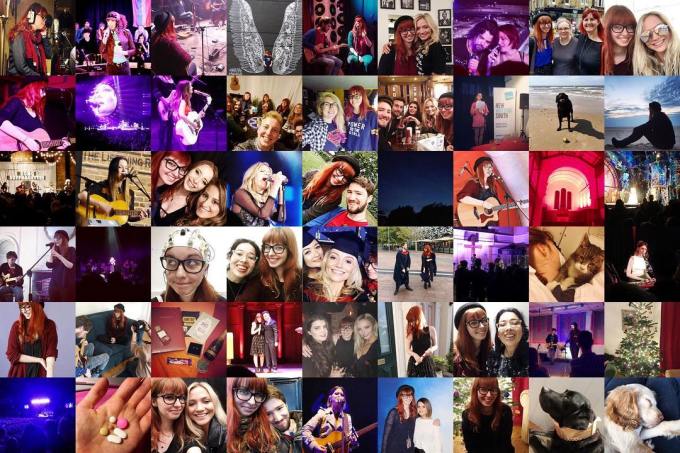
“2017 was the year of waiting: waiting to release music, waiting to move house, waiting for medication to start working, waiting to feel better. It’s been slow and painful so I’m grateful to be moving on. But there have been some great moments this year too. I wrote some songs I’m really proud of, saw some amazing concerts, and went back to Nashville. I tried to see my friends as much as possible and worked hard on my mental health. Hopefully I’ll start to see some of that work pay off in 2018.” (x)
100 Days of Venlafaxine
Posted on December 29, 2017
I meant to post this yesterday, which actually was the 100th day, but then I managed to break my memory stick, where the file was saved. So that threw a spanner in the works. But here we are. The files were recovered. No harm done.
I’ve been taking Venlafaxine for 100 days now so I thought it was time I compiled my notes and summed up the whole thing. I know that when I started taking it, it would’ve been really helpful to know about someone’s experience. My psychiatrist gave me all the medical information but that didn’t really prepare me for what it felt like. So if you’re about to start taking Venlafaxine or are thinking about it, maybe this will help you. And if not, maybe this will give you a little insight into one experience of taking medication for a mental illness.
Week 1 (Dose: 37.5mg)
The nausea was so strong that all I could think about was not throwing up. I was very dizzy and tired all the time. But it was much easier to wake up in the mornings, quickly rather than having to drag myself into consciousness.
Week 2
The nausea faded a bit. I had headaches and was exhausted all the time. I continued to wake up early.
Week 3 (Dose: 75mg)
I was so tired that I fell asleep at random but I was still waking up early. I felt very faint and was too shaky to do anything but I had no concentration so I couldn’t do much anyway.
Week 4
The week was overshadowed by severe, unexplained leg pain. I had several doctors’ appointments to rule out the medication and DVT, the next most likely explanation, but eventually it faded by itself. Aside from that, I felt a bit lighter emotionally.
Week 5
I had some leg pain but it faded much more quickly. I was exhausted and very sleepy, regardless of how much sleep I got.
Week 6
I was so very, very tired, so tired that I could barely do anything. But I was still waking up very early.
Week 7
Again, still very, very tired but I was also feeling very anxious and depressed. I also noticed lots of bruising, especially on my legs that didn’t seem to have a cause. All I had to do was lean on something hard, like the edge of a table, and I’d have a bruise.
Week 8 (Dose: 150mg)
A bad week. I felt very disconnected and depressed. I was also exhausted so I didn’t have the energy to do any of the things that can help. I was also pretty unwell for a couple of days but I don’t know if that was related or just a coincidence.
Week 9
I started struggling desperately to wake up. It was like being trapped between being awake and asleep. It took all my concentration to wake up but all I had to do was blink and all that effort is wasted and I have to start all over again. I was exhausted and sleepy all the time.
Week 10
I was struggling desperately to wake up and still exhausted and sleepy all day.
Week 11
I reduced the Quetiapine from 125mg to 100mg (which I was prescribed while taking Phenelzine to help me sleep – I’d wanted to come off it straight away but was advised to wait so that I wasn’t dealing with reactions from both medications), which made waking up easier but I was still exhausted, depressed, and without any motivation.
Week 12
The sleepiness started to creep back in and I was still exhausted and without motivation.
Week 13
Again, I was really struggling to wake up; I couldn’t stay awake but I also couldn’t get back to sleep either. I managed to get the Quetiapine down to 50mg but I wasn’t sure if it was helping or not. I still had very little concentration and motivation which was really difficult and upsetting.
Week 14 (Dose: 225mg)
To combat the sleepiness, I reduced the Quetiapine to 25mg so my sleep was very all over the place. I was waking up really early and not getting more than about six hours. But I did feel more awake and alert which was a relief. I had several really productive days and wrote two songs after not being able to write for more than six months. That gave me an evening of complete joy, something I can’t remember feeling. Unfortunately that only lasted one night and my mood dipped afterwards because I missed it so much.
Week 15
My mood was fairly stable, no major ups or downs. I wasn’t depressed but I wasn’t feeling that positive either. I was tired and sleepy and feeling a bit lost.
I just wanted to draw particular attention to how long this process can take. When I started my last medication, I felt better very quickly but it’s been a very different story this time. It’s not as simple as taking the pills and feeling better. There’s the time it takes to decide or justify that you need a new medication (or a first medication), the time it takes to come off the old one, the time it takes to build up and adjust to the new one… I started this process in May and it’s now December. Seven months and I still don’t feel that much better. I’m hanging on to hope that things will start to get better – I’m holding on to that one really good day – but it’s hard.
I think there is a lack of understanding when it comes to this stuff. From the outside, it can seem like you’re not doing anything to get better and there’s a lot of guilt attached that, from other people and from yourself. But on top of whatever mental health problem you’re dealing with, there’s adjusting to the medication and whatever side effects come with it. That’s a lot. It’s exhausting physically, mentally, and emotionally and you shouldn’t feel pressured to do things you feel unable to or feel guilty about whatever you need to do to get through it. I’m still trying to learn this. I constantly feel like I’m not trying hard enough, even when I’m so exhausted that I don’t think I can get out of bed. But that’s a topic for another day.
I hope you all had a lovely Christmas and I’ll see you in the next post.

I’m Grateful
Posted on December 24, 2017
A while back, my social media feeds were flooded with posts about being grateful and appreciative and thankful. Yes, it was Thanksgiving. I live in the UK and I find it a bit of a weird experience seeing so much celebration and festivity in my online world and have none of that reflected in the world around me. But I do think it’s important to take the time to feel grateful for what I have and I always feel especially grateful at Christmas so I thought I’d write a short post about some of the things I’m grateful for, some big, some small, and some strange.
My family, my friends, my people – This year has been a particularly difficult year but if it’s taught me anything it’s how incredible the people in my life are. Time and time again, they’ve come through for me, supported me, and encouraged me and I couldn’t be more grateful. A few years ago, my relationships felt a bit all over the place (especially my friendships: old ones were separated by university and new ones were still tentative) but this year, I feel like I’ve fallen in love again with all the lovely people in my life, from the people I talk to online to my friends (both from university and from before) to my closest family. And I’m trying my best to make sure they know it.
My therapist – My god, I’m so grateful for my therapist. Not a day goes by that I don’t think about how lucky I am to have her. I can’t even put it into words. Having someone I can trust with anything and everything is incredible (although it’s very scary for me to feel so reliant on a person). I’ve told her things I never thought I’d tell anyone and she’s helped me through things I never thought I’d get through. I can’t thank her enough for all she does.
My animals – I’ve already written about my animals so I won’t ramble on too much but they deserve a mention here. They bring me such joy and help me so much with my depression and anxiety. I’m so, so grateful to have them in my life.
My final year at university – My first two years of uni were really, really hard. They were a real struggle. I learnt a lot and I met some great people but the bad stuff going on often overwhelmed the good stuff. But third year was a blast. I loved it. I had a great group, some great tutors, and I wrote some great songs. I also built some great friendships. I think the best way to describe it was that I was finally feeling in sync, with everyone else but also with myself. I was working on all the things I wanted to work on, I was working with some awesome people, and I was getting some really good responses. It felt so right. Leaving was really hard but having such a great last year means I look back on the whole experience positively even though there were some really hard times.
My health – My health is a struggle and it’s something I wrestle with daily but I am so grateful that it’s not worse. I don’t think it’s helpful to compare your health situation to others’ because someone else’s experience doesn’t mean you aren’t allowed to feel and struggle with your own. I also think it’s unhealthy to focus solely on the positive and repress your feelings about the negatives. But I do think that it’s important to keep a sense of perspective. I’m grateful for all the things in my body that do work. I’m grateful that I do have days where I can walk the dog, go out with my friends, and stay out late. I’m grateful that my mental functioning seems to be getting better. I’m grateful for how resilient my body is. I need to learn from that.
The benefits I receive – I want to write a more in depth post about benefits and the process of getting them because it really can’t be explained sufficiently within this post but I really wanted to include this because I am so very grateful to get the benefits I do. It’s something that just removes one layer of anxiety and that’s such a big deal. I’m also really grateful for the Christmas bonus. I haven’t had a Christmas where I’ve been on benefits so far and the extra £10 with the recent payment just made me so happy.
Clear skin – My Mum laughed when I told her that I was putting this on the list but I am so, so grateful that, for the majority of the time, I have clear skin. It was something I was so insecure about as a teenager. Looking back at the photos, it doesn’t look too bad but I remember so vividly how upset I’d get over it so I’m grateful for every day I look in the mirror and see clear skin. I don’t take it for granted.
Redbull – Redbull should sponsor me. Seriously. I’m actually drinking Redbull as I write this. I only discovered it recently (I’d had to avoid caffeine while taking my previous medication) and it’s been a very exciting find, especially while I’m struggling so much with low energy levels. It gives me such a boost; it makes me feel like a normal, functional human being, not like one who has to constantly assess her energy levels and emotional state. It’s like the fog of fatigue rolls back and I can actually feel all the other emotions, like excitement and joyfulness. I’m aware that I shouldn’t drink it too often but while I’m following every other avenue to improve my energy, it’s a really good back up plan for when there’s something I need to do.
Agents of Shield – Another one that isn’t life changing but oh my god, I look forward to every new episode. I love it. It’s definitely my favourite TV show. For a long time, I avoided everything superhero-related because it just made me miss my Dad but almost ten years on, it’s something that feels really special. I can imagine the conversations we’d have, the debates over how the storylines played out. I can almost hear his voice down the phone, talking me out of a panic attack by saying, “Think of Daisy. What would Daisy Johnson do?” It used to hurt but now that world makes me feel close to him. On a different note, I love it because I find watching it makes me feel empowered. It reminds me that, superpowers or not, doing good – being a hero – is about the choices you make. It’s a weekly reminder to try to do better and to be better. Plus Chloe Bennet (who plays Daisy) is just freaking awesome. The whole cast is.
Taylor Swift – Yes, I am grateful for Taylor Swift. People have made fun of me for liking Taylor Swift for as long as I’ve been a fan but I honestly do not care. She is a fantastic songwriter and I love her music. I’m grateful to have a new album this year but the thing I’m really, really grateful for is who she is as a person. Since announcing the new album, she’s met literally hundreds of people who’ve always wanted to meet her; she’s made hundreds of people’s dreams come true, not for financial gain, not for the publicity, but because her fans matter to her as much as she matters to her fans. How lovely is that? I think that’s amazing. I’m also grateful to her for using her platform to spread awareness about sexual assault, as I am grateful to every person who has done the same. We are not obligated to share our traumas; our only obligation is to ourselves and our healing. Sharing difficult experiences and opening yourself up to the opinions of others is so brave and should never be undervalued. Her level of fame makes any potential fall out worse but it also means she made a huge impact: the RAINN hotline saw a 35% increase in the number of calls they received after she won her trial. She has so much power to affect people’s lives and she strives for that impact to be a positive one. So yeah, I’m grateful for Taylor Swift.
I could keep going – there’s a lot I’m thankful for – but I’ll stop there. I’m wishing you all a safe, happy, and healthy Christmas and I’ll see you on the other side.
 Finding Hope