Self Care Week (2023)

This week – from Monday 13th to Sunday 19th November – is Self Care Week, a UK-wide awareness week established and run by the Self Care Forum, a charity that aims to spread understanding about the positive impact of self care and helping people to implement it into their everyday lives. This includes the benefits of good nutrition and exercise, of taking vitamins (like vitamin D, especially for those whose health means they spend all or most of their time inside), of managing our mental health; they also guide people in making more positive lifestyle choices (to no one’s surprise, ‘homelessness’ is not on their list – fuck you, Suella Braverman), go into schools to help improve health literacy, and support people in understanding how to manage both short and long term health conditions. All good things!

I can’t speak to their understanding of neurodivergent or Autism focussed self care – I haven’t been able to find anything on their website – although much of their advice applies to all of us as human beings with the same basic needs. I thought that, in recognition of this week and the importance of self care, I’d put together a list of strategies that I personally rely on, many of which I’ve developed to help me manage as a neurodivergent person.

Obviously not all of these will work for every person, the personal ones that is: the physical ones apply to all of us to a certain degree, depending on our individual circumstances and needs. But when it comes to the personal ones, it’s unlikely that all or even most will work for everyone. But hopefully, given how many I’ve included, there will be something that’s helpful – or just worth trying – to anyone who reads this…


PHYSICAL:

When I’m struggling, I know that I need to check in with my body. I’m really not very good at noticing my body’s signals – my interoception is pretty poor, something that isn’t unusual in neurodivergent individuals – so I often have to go through this list consciously to figure out what it is my body is asking for. Others are better at this but it’s always worth checking to make sure that there isn’t a straightforward way of understanding why you might be feeling the way you do and of improving both your physical and mental state…

  1. BREATHE – When I’m struggling, I often feel like I can’t take a deep breath, something that only makes me feel worse. Learning breathing techniques, like box breathing, have been really helpful but the most effective and my personal favourite way to regulate my breath is to sing: it’s something I love doing and something I can get lost in, focussing on the words and the melody, so I don’t even notice the breathwork. I find it much easier and much more soothing to concentrate on hitting each note, rather than on counting, for example.
  2. HYDRATE – We all know how important it is to stay hydrated and yet most of us are constantly battling some level of dehydration, finding it difficult to drink the recommended amount of water. I’ve been working on drinking more and I am doing better than I used to but I still find it really hard to actually drink as much as I should. I’ve found that reminders (or an app that reminds me), a bottle that I find pleasing, and consistently carrying that bottle with me all help.
  3. EAT – Sometimes making sure that our bodies are fuelled can feel like a massive task; I certainly struggle with it and when I’m struggling, it’s usually the first thing to get abandoned. Sometimes I only manage one meal a day, as I promised my first therapist, and I try to keep her words in mind: if a cupcake, for example, is all I can manage then that’s better than nothing. You can work up from there. And it’s so important to remember that, in this world where food can feel like such a minefield, it’s totally okay – and good for your mental health – to indulge in your favourite snack, your favourite meal, your favourite takeaway, just as long as you don’t end up living on it.
  4. REST – Living in a society that is constantly ‘encouraging’ us to do more (see: telling us that we’re never working, or even trying, hard enough), most of us are constantly tired. I know I am, especially when you throw in the neurodivergence and chronic fatigue. We all need more rest. Dr Saundra Dalton-Smith has broken rest down into seven categories – physical, mental, social, sensory, creative, emotional, and spiritual – and asserts that only by fulfilling all of these can we be truly rested. After reading this article, I’ve been inspired to think of rest as something more nuanced than just whether I’m getting enough sleep or not – although that is, of course, important too.
  5. EXERCISE (OR JUST MOVE YOUR BODY A LITTLE) – We’ve all been told countless times how important exercise is for our bodies and it is, of course, true. Having said that, it’s not going to be very useful as a self care strategy if you’re hating every second of it. Finding a way of exercising that is fun and empowering is so important, both in terms of self care and in terms of exercising regularly. Because of my chronic fatigue and chronic pain, I’ve long struggled with exercise because it put such strain on my body and because I suffered so much afterwards. But then I started swimming again and, apart from the lockdowns, I haven’t stopped since. It’s a great form of non-weight-bearing exercise and it feels amazing to exercise (or just move my body gently if I’m having a bad energy or pain day) without feeling so much distress. It makes me feel able and strong, both things I haven’t felt since I was a kid, and it always boosts my mood. Plus, if I go at quiet times or even have the pool to myself, I don’t feel such anxiety about how I look in a swimming costume. Other things I’ve found really helpful are both hydrotherapy and physiotherapy. In and out of the pool, I feel more confident knowing that I have the support and advice of a trained professional, especially given how unreliable my body can be.
  6. HYGIENE – Feeling clean always feels good so, aside from the obvious physical health benefits, it’s always good for your mental health to have a shower or a bath (or even just clean up in the sink if that’s all you can manage at that moment in time – I find just washing my face can help clear my head). A bath or shower can be as luxurious or as functional as you want: it’s your headspace so you should do what’s going to help you the most. Some people really enjoy a long bath with fun or relaxing products and a book to read, while some people find that too much and prefer a simple, straightforward wash in the shower. I’m the latter – one of the symptoms of POTS makes both the heat and the standing involved in taking a shower dizzying and strenuous – but that is enough to improve my mood, to make me feel decontaminated and renewed. Those may sound like strange words to use but it’s how I feel and those feelings do, for the most part, lift my mood.
  7. MEDICATION – This won’t apply to everyone but taking your prescribed medication, or any over the counter medications that you need, (all safely and as directed, of course) is obviously very important; not only has a (hopefully) knowledgeable and experienced professional recommended you take them to improve your quality of life but missing a dose or stopping the routine suddenly can have nasty side effects. So making sure that you’re up to date on any medication can be crucial to maintaining your physical and/or mental health.

PERSONAL:

Here is a short list of the things that help me to manage when I’m struggling, when I’m feeling overwhelmed and burned out, when my mental health isn’t great. It’s a constantly evolving list, depending on what’s going on in my life and what my needs are, but this is my current list of self care strategies, ones that are the most helpful at this point in time.

  1. REDUCE DEMANDS ON MYSELF – The first thing I do when I’m feeling overly stressed and at the end of my rope is reduce my commitments and plans, giving myself time and space for my energy levels – all of my energy levels – to recover. Sometimes there are things that I can’t miss and I just have to shoulder my way through, accepting that it will then take longer to recover. And sometimes it does just take longer than others anyway. But if I don’t immediately take time for my mental health, my mental health will force me to and for likely a lot longer than I would’ve originally needed.
  2. RETREAT TO MY BUBBLE – Not long after I moved into my current house, I discovered that a really good way to reduce my stress was to spend my time in what I quickly dubbed my ‘bubble’: the front room of the house that, with the sun and the outside world muted by the drawn, light-coloured curtains, was gentle on my senses, making it much easier to work and get things done. That discovery showed me how great the sensory demands that I was experiencing were and having a space where I could reduce those demands has been pretty life-changing.
  3. CREATE SOME ORGANISATION IN MY LIFE – If I’m feeling overwhelmed and/or burned out, it’s likely that I’m trying to do too much, or that that is at least part of the problem. So, after taking the time to recover, I try to adjust my approach going forward: what commitments I say yes to, how much time I build in between commitments, how much time I’m making for important things like swimming and physiotherapy, and so on. When my schedule is more intentional and less chaotic, I find that the balance in my life never tips too far in any direction.
  4. TIME FOR SPECIAL INTERESTSResearch has shown how important it is for autistic people and our wellbeing to engage in our special interests so, although we should be making time for them anyway, I would consider it self care to make additional, deadline-free time to just immerse myself in the things I love so much. Engaging with something that absorbs you so completely and triggers such a wealth of emotion is always going to be good for the soul, I think.
  5. TALK TO MY MUM – My Mum has seen me through everything, all of the highs and lows (and catastrophic lows), and always been so supportive, regardless of whether it’s my health, my creative ambitions, or my relentless dissecting of fictional stories and their characters. I can tell her anything and often talking things out with her helps me gain a clarity that I might struggle to find otherwise.
  6. TALK TO MY FRIENDS – Sometimes I just need some time and some space to recover my social battery but, for pretty much the first time in my life, I have an amazing group of friends that I feel like I can really rely on, that I can always talk to, and that I can trust with anything. That is kind of mind-blowing to me, in a good way. Being able to talk to them – long WhatsApp chats, afternoons spent on Zoom, texting silly memes back and forth, and so on – has been so lovely. I’m very grateful to have them in my life.
  7. TIME WITH MY PETS – Spending time with my cats and/or my new puppy, Izzy, is one of the most soothing experiences I know of. They’re so present, so unaware of everything going on in the world; it’s hard not to get sucked into that, even just for a little while. Sometimes you need a break from all of the terrifying things going on in the world and their little pocket of it is the perfect place to escape to.
  8. TAKE A BREAK FROM SOCIAL MEDIA – While there are parts of social media that I enjoy, I’ve found that taking a complete break from social media has the power to rebalance my mental state and give me space to breathe, a space I didn’t realise I needed until my mental health forced me to take a break. Since I’ve been back on the apps, I’ve found it easier to recognise when I’ve had enough, when it’s getting to me, and when I need to log off. Social media can provide us with unique inspiration and access to fantastic art that we wouldn’t otherwise have seen, as well as communities that can be harder to access in the real world, but sometimes the level of toxicity or just curation can get overwhelming, making it harder to maintain your balance and sense of identity. Taking a break can feel really hard – the fear of missing an important update or losing out on an opportunity are valid anxieties – but in my experience, taking a break can help you to recalibrate and figure out where you really want to be focussing your energies. You want to be making that choice, not the algorithms.
  9. BUY SOMETHING I NEED / SOMETHING SMALL THAT I WANT – Sometimes you just need something to look forward to, whether it’s a new planner, a necklace you’ve been waiting to go on sale, or a new toy for your pet. It really doesn’t have to be complicated or expensive: if it gives you a boost to get through a hard week or a scary appointment, then it may be worth it.
  10. WRITE IN MY DIARY – I’ve long found that the process of turning my thoughts into comprehensible sentences and getting them written down somewhere safe, whether that’s in a notebook or on my laptop, to be a great source of stress relief. Not only does it help me to make sense of my thoughts and feelings and experiences but it also takes the weight off my mind: it makes me feel like, having stored those thoughts in a safe place, I don’t have to consciously hold on to them for fear of them disappearing. Not unlike having a dramatic haircut, I feel much lighter for being able to offload everything in my head.
  11. CONTACT MY THERAPIST – At this moment in time, it’s never that long until I’ll be seeing my therapist next and I can talk to her about what I’m struggling with, or we can talk through everything that’s going on if the hard stuff is feeling somewhat nebulous. And if that feels too long, I can email her, if only to get my thoughts out of my head and allow her to get a head start on where my head is before I arrive at my next session. Therapy – with a therapist I feel safe with – is a really important space for me, with everything I’ve gone through and everything I live with on a day-to-day basis.It’s really hard a lot of the time but, for the most part, I’m better going than not.
  12. GO TO A SUPPORT GROUP – This year I’ve started to attend support groups for some of the conditions I live with and for some of the experiences I’ve had, online for the most part, and although the format and the social and emotional etiquette have taken a bit of getting used to, I’ve found the experiences to be really positive and validating. I don’t always feel the need to go but it helps to know they’re there if I need some extra support.
  13. CRAFT PROJECT – Sometimes I find that having something creative to do with my hands, something without any stakes, is really could for an anxious mind and body. Over the years, I’ve slowly filled a notebook with inspiring quotes, made cards out of spirograph designs, learned origami, made both thread and beaded friendship bracelets… The concentration it requires just shuts everything else out and gives my brain a break. These obviously aren’t the only options: whatever works for you is a good option.
  14. READ A BOOK – I recently got back into reading after a very long break and I’d forgotten how completely you can lose yourself in a book. I’ve been revisiting old favourites and working through my ‘To Read’ list and it’s been so lovely to be so absorbed in stories and worlds and characters again, in a way that has the rest of the world just fading away. I’m enjoying audiobooks too, although I still prefer physical books.
  15. WATCH A FAVOURITE FILM OR TV SHOW –  I’ve consistently found that both watching new films and TV shows and rewatching old favourites are a really good way to relax. Similarly to reading, I find them to be a great way to take a break from the emotions of the real world, plus I love exploring the characters and the storytelling and so on (to a point where it might be a special interest actually); it can really boost my creativity and my joy around creating. Getting sucked into something new is always exciting and watching something old is very comforting, both of which are – I think, at least – positive emotions to dig into when you’re struggling emotionally.

I’ve been working on my self care this year and there are times when I can really see the difference it’s made: I’m really enjoying exercise for the first time in my life; I’m drinking more water than I ever have; my relationship with social media is better than it’s ever been; I feel more confident in my friendships; and so on. There are still plenty of aspects to work on but I can see the positive effect it’s had on my life.

I’d love to know how you guys feel about all of this, about self care in general and on a personal level. What self care strategies do you use? Which ones do you find the most effective? Here’s a great list if you need more ideas.

Ideas To Help With Hair Pulling

Trigger warning for Trichotillomania/hair pulling. Please don’t read this if this is something that will upset or trigger you. I only want this to be helpful, never harmful.

Having just written about some of the things that can trigger episodes of Trichotillomania, I wanted to post a list of ideas that have the potential to help someone struggling with hair pulling. There are lists all over the internet with various collections of ideas but I felt that it would be irresponsible to post about the triggers of Trich without offering some kind of help, especially the kind of help that you can practice yourself without having to wait to see a specialist (although I would encourage you to seek out professional support as well). These aren’t cures obviously – there are currently no proven cures for Trichotillomania – but numerous accounts have shown that many of these strategies have helped people manage and reduce their urge to pull, which is obviously a big deal. I also wanted to share which strategies have helped me – if you relate to other things that I’ve posted maybe they’re a good place to start.

There are a number of things I want to mention before getting into this list:

  • You have to remember to forgive yourself for not being perfect. Trying to stop pulling is an incredibly difficult (although incredibly rewarding) task. Your progress isn’t always linear. Sometimes you’ll manage an amazing streak and then not even manage a day. But just as you can struggle, you can succeed. However, beating yourself up for ‘going backwards’ won’t help you move forward; it’s a waste of precious energy that you could be dedicating to your attempts to stop pulling.
  • One strategy won’t necessarily work forever. It may work for a time and things may improve. But then, if you start pulling again, it may not be helpful the second time around. For example, I wore a hat consistently for months and that slowly stopped me pulling my hair out. I didn’t pull for a year but when I started again, wearing a hat just made me feel anxious and claustrophobic. So I had to try different methods.
  • If you’ve ever tried to stop pulling before, you’ll know that you have to be committed. Seriously committed. As dramatic as it sounds, you have to be thinking about it all the time. And if you’ve been doing it long enough, there will be a degree of habit so you don’t even notice yourself doing it and yet you still have to have an awareness of it. It’s really hard. Really, really hard. But it is possible to reduce the pulling to some degree at least.

Now, onto the list…


* = I’ve tried this.

** = I’ve tried this and it helped.

  • Wear a hat or bandana**

IMG_7388

(I wore a hat for months, possibly more, consistently – to the extent that it’s become part of my look as a singersongwriter and I have been recognised because of it – and that helped me stop pulling for over a year. However, as I said earlier in the post, when I started pulling again, it didn’t help because I started pulling from a different area of my scalp.)

  • Wet down your hair**
  • Cut your hair short (or if necessary, shave your head)
  • Wear a wig
  • Sit on your hands until the urge passes or you’re distracted
  • Snap a hair band or rubber band against your wrist
  • If you use tweezers to pull, put them out of the way of your daily routines or throw them out if necessary**
  • Squeeze a stress ball or something similar*
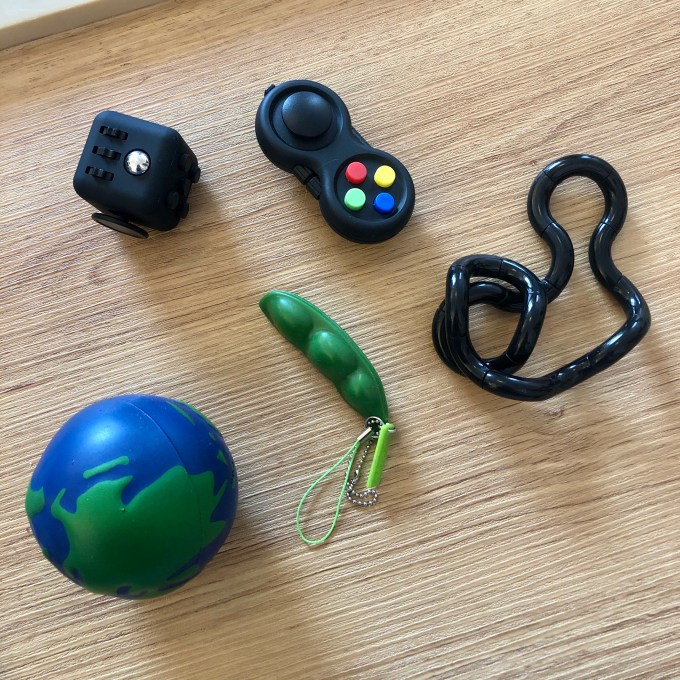
  • Use a fidget toy (you may need to try several different ones to find one that works for you)**
IMG_7638

(These fidget toys are my personal favourites. I have more that I’m slowly donating to family and friends and acquaintances who have expressed interest in them. Personally I prefer plastic over metal because the metal toys make my hands smell. I also prefer the ones with buttons etc, rather than ones that you squeeze, like stress balls. But different fidgets appeal to different people).

  • Put vaseline on your fingers or the hair you would be pulling
  • Put plasters on your fingertips
  • Wear gloves
  • Journal about your experiences*
  • If you feel comfortable doing so, ask your friends or family to point out when you start pulling*
  • If there’s a room or environment you normally pull in, try changing your environment
  • Play an instrument**
  • Stroke or play with an animal*
  • Exercise
  • Start with small goals (periods of time where you don’t pull, for example) and increase as you can**
  • Use a chart or app to track the amount of time between pulling ‘sessions,’ inspiring/motivating  yourself not to break your streak**

cplAZ2pxlEfFTBXqFuvejhgAefN39g2

(There are multiple phone apps that count days; it mostly comes down to whether there are any extra features that might help you, what kind of aesthetic you prefer, and whether you feel you need one that you’d have to pay for.)

  • Try a hobby that occupies your hands, like origami or knitting*
  • Brush your hair instead of pulling
  • Come up with a saying that you repeat out loud until the urge to pull passes or say “No” out loud
  • Form a ball with your fist and tighten the muscles in that arm
  • If your pulling is triggered by texture or colour, try dyeing  or care for your hair to minimise pulling**

(Hairs with a coarse texture is a really trigger for my pulling so I’ve been searching for a good product that at least reduces that problem for years. I love Aussie’s Miracle Moist Collection – the shampoo, conditioner, conditioner spray, and the 3 minute deep conditioner – because it makes my hair really sleek. It’s the best product I’ve found. I am trying to find a vegan, cruelty-free replacement but I do have to balance that search with how bad my Trich is and the state of my finances. I’m determined to keep looking though.)

  • Fiddle with dental floss or thread
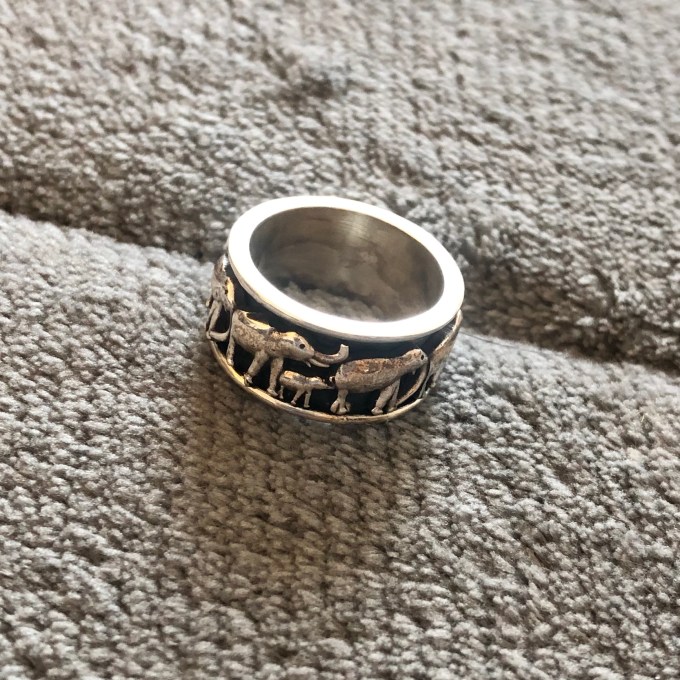
  • Wear jewellery you can fiddle with/wear specially designed fidget jewellery**
IMG_7639

(I had a spinner ring for several years that I adored. It was silver with elephants on it and I was constantly wearing it and spinning the outer band. But recently it broke and the replacement isn’t quite the same: it isn’t as comfortable and so I don’t wear it as much.)

  • Use positive reinforcement (reward yourself even in the smallest way, like treating yourself to your favourite snack or having an extra indulgent bath or shower, when you achieve a certain period of time without pulling)
  • Weed the garden
  • Cut your nails short or wear acrylic nails, making it difficult to get ahold of strands
  • Style your hair in a way that prevents access to the area you pull from*
  • Try meditation or mindfulness*
  • Pull from or fiddle with the hairs of paintbrushes
  • Use a hand grip strengthener*
  • Make yourself aware of the action (putting essential oil or perfume on your hands, for example)
  • Attach a weight to your pulling hand

My latest strategy has been to use a strip of elastic (like the kind used in clothing or sewing) and attach one end to my portable desk, the other loosely around my wrist. Technically I can still reach my hair if I really try but it’s awkward and uncomfortable and so far, just the sensation of the elastic pulling against my wrist has stopped me trying to pull. It hasn’t been long so I don’t know how successful it will be long term but it seems to be working so far.

IMG_7554

It’s also worth mentioning that there are therapies, and then issue specific therapies within those therapies, such as Habit-Reversal Therapy (several studies from 1980 concluded that it had a 90% symptom reduction rate), which was born out of CBT. Hypnotherapy has also shown results for some people. However, access to CBT can take a long time via the NHS and these therapies can become incredibly expensive if you venture into the world of private healthcare.

There are also support groups, both online and in person (although not currently due to the COVID-19 pandemic). Search out Trichotillomania organisations and charities for general online support groups. You can also search for Facebook groups for both general and location specific support groups. I can’t speak to the effectiveness of these as I’ve never personally used them – I didn’t personally feel that that sort of support was one that would be helpful – but I know they make many people feel less alone and allow people to share tips and strategies.


I hope this list has been informative. Hopefully some of these tips have been or will be helpful. At the very least, it’s a varied collection of things to try. If you’re struggling with Trichotillomania, I’m thinking of you and I hope that something on this list will help.