 Finding Hope
Dopamine Land: A Multisensory Experience
Posted on November 11, 2023
Over the summer, I was able to go (twice!) to this cool, immersive exhibition called Dopamine Land: “Dopamine Land is a multisensory experience that combines media, technology and play in one place. It’s an interactive museum made up of colourful installations that channel the limitless imagination of your inner child into reality. Take a break from your everyday life, have some fun, take some photos and boost your happy emotions!” (x) It’s made up of, I think, eleven rooms, each with a different artistic and sensory-stimulating environment inside. Some of them I absolutely loved, some of them I simply enjoyed, and some that I actively struggled with. But I loved the experience, first with my Mum and then with a friend of mine who also has ADHD (something which I do think made it a slightly different experience, although I’m not sure I could clearly explain why).
Before you enter the exhibition, there are two signs on the wall, explaining what dopamine is and how their rooms boost it, which I found super interesting: “Here at Dopamine Land we aim to trigger a gentle release of Dopamine in each of the spaces in different ways as you travel through the gallery. But what is dopamine? Dopamine is a chemical released in the brain that makes you feel. It is responsible for allowing you to feel pleasure, satisfaction, and motivation. A dopamine ‘reward’ can be caused by many pleasant experiences, including eating nice food, feeling loved, winning a game, and earning money, and having the right amount of dopamine is important both for your body and your brain. When you feel good that you have achieved something, it’s because you have a surge of dopamine in the brain.” and “How do the spaces trigger dopamine? There are many different types of triggers for dopamine, across all your senses, and each individual will experience dopamine in different ways. Therefore we have designed the experience to go through a variety of types of spaces, from energetic, to nostalgic, to meditative rooms. You may feel joy in a childhood memory, or from a wonderful aroma. You may experience a warmth from visually satisfying images, or a creative moment may trigger your feel-good hormone. Or perhaps a mesmerising, calming environment is best for you to find your happy place.”
There will be major spoilers in this post so, if you want to go and want to be surprised by the experience, don’t read any further because I will be talking about the different rooms and the fun little details and basically the whole experience. However, if you’re interested, please read on…
The first room (I forgot to take a photo of its name and description) was deeply reminiscent of Yayoi Kusama’s Infinity Rooms, which I always completely adored so I loved that room and just wished I could’ve stayed longer (it was one of the few that had a time limit)…


As I said in my Week In My Life post a few weeks back, I can’t really explain why I love this environment so much. There’s just something about it that makes my brain feel so right and joyful, like a symphony finally in harmony (that metaphor just flowed out as I was writing and it really took me by surprise – it’s a very apt metaphor given that my brain often feels very noisy). It is deeply pleasing on a sensory level in a way that I rarely experience.
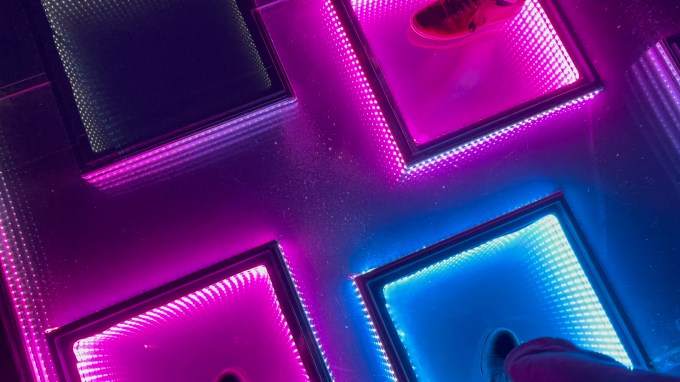
I also forgot to take a photo of the sign outside this room with the name and description of it but I’ll do my best to explain it. There were square panels in the floor throughout the room and when you stepped on one, it changed colour. It’s a bit disconcerting though because they look like there is just endless space below, like you could fall through it and just keep going. My friend and I had a good time though, trying to step on different ones and getting the colours to sync up. Yes, we’re actual children…
Another of my favourites was called Lucid Dreams with a looping video of all these different visual effects with different colours, different sounds, and what looked like different textures. The explanation outside read: “Let your mind immerse you into an infinite dreamscape and allow your imagination to fly free. This space explores the concept of ASMR content (Auto Sensory Meridian Response): something that evokes light and pleasurable tingles, sparkles, fuzziness or waves of relaxation in the neck, spine, and body.” I’ve never been a huge fan of ASMR but I loved this room. It was definitely one of my favourites; I could’ve watched it all day. It was definitely the room I spent the most time in. It was just gorgeous and oddly compelling and as I said when I talked about it before, I didn’t just want to touch it – I wanted to live inside of it. I tried to find out who designed and created it but when I contacted Dopamine Land to ask, they said that they didn’t give out that information. It seems unfair to me, that the artists aren’t getting clear credit for the work that they’ve done.


I honestly couldn’t choose a favourite moment of it; I loved the whole thing.
The Writing Room wasn’t a favourite but I thought it was kind of cool, although I would’ve put it at the end for people to write about their Dopamine Land experiences if they wanted to: “Pause for reflection and give a moment for gratitude. Tell us what makes you full of lust, love, and laughter, tell us what you’re grateful for or what you dream of. Write a note to yourself, recalling a feel-good moment of joy, the warmth of love, or perhaps something a little more primal. Post it to yourself in one of the post boxes, or leave it for others to enjoy.”


These were my messages that I left tucked into various corners.
The next room, Creating Calm, was pretty nostalgic, with fridge magnet words to rearrange and lights for shadow puppets: “Let’s get busy and create something! Brash, bold, thoughtful, creative, artistic, or beautifully silly; all creations welcome here! A creative act can focus the mind due to its calming effects on the brain and body, releasing dopamine, a natural antidepressant. It is also thought that higher dopamine levels drive our motivation to explore and boost creativity. So let’s get making!”

I find shadow puppets all but impossible to do but it was fun to watch other people try and I had fun with the fridge magnet words. I like how, when the word you want isn’t available, you have to take the sentence in a different direction, usually ending up with something you never expected. Sometimes it ends up being nonsense but sometimes it ends up being really cool.
The next room was the ball pit but I forgot to take a picture for the explanation. Having said that, I think it’s safe to say that a ball pit turns everyone into a kid; there’s something very nostalgic about them and I couldn’t help but laugh hysterically as I ended up flailing around like an idiot when I couldn’t get back up again. It wasn’t at the top of my favourites list but there’s something wonderfully childlike about flopping into a big container of plastic balls and burying yourself in them until not even your face is visible; it’s just so joyful.


That one was probably the hardest on my back though, when the pain was bad. The whole thing wasn’t great for my back pain but I was wearing a brace and the support was a life-saver. I wasn’t pain-free but between the brace and my industrial strength painkillers, I was just about coping (a favourite coming up was the perfect antidote to all the standing and throwing myself into the ball pit). As I said, the ball pit was the most painful and I did regret my enthusiasm a little afterwards; the strain it put on my back was just a bit too much.
Another of my absolute favourites was called Fire Lantern: “Give a moment to appreciate those around us, and those who are not, as you bask under our canopy of glimmering light. Dopamine plays a part in encoding and consolidating memories and fire lanterns hold an important role in many cultures social events and festivities, lighting the way for souls of the ancestors. Contemplate the beauty of these mesmeric lanterns and remember fondly those with whom you have parted ways.” I thought that was really beautiful and I was absolutely mesmerised by the space, by staring up at the lanterns as I lay on the big bean bags on the floor. The quiet – just the low voices of the other people talking as they lay on their own bean bags – was really soothing and I honestly could’ve stayed there all day. It would’ve been easily done too because time seemed to move differently in there. I’d love a space like that in my house, just to decompress in. I don’t think that’s gonna happen though.

I was so excited to see it a second time and it was nice to start with but then two different families arrived with their kids, none of whom could’ve been older than ten, and they were running around the room and shouting and dragging the bean bags from place to place and it just completely ruined the gentle atmosphere. It was really disappointing.
The penultimate room, Keep Calm, looked like an abstract forest: “When dopamine is released it can produce a reaction where you feel calm yet also energised. Experience an immersive digital nature; a forest of the surreal! A natural space of great calm and beauty conjured through lights, mirrors, and the scent of natural wood, yet contrasted by hard lines, creating a shifting, shimmering, layered forest.” It was weird but beautiful and reminded me of wandering through the woods as a kid.


It wasn’t at the top of my list but I did really like it; it was very soothing. But then, again during my second visit, the families with kids ruined that. The kids were running around and shrieking and kicking up the wood chips covering the ground, sending them spraying in our direction. It was deeply frustrating, and more so that their parents didn’t seem to care that they were disrupting the experience for everyone else.
The final room, apart from the social space on the way out, was called Pillow Fight! and the explanation outside read: “The penultimate stop on our voyage. Release your inhibitions and dance in the eye of the storm! Euphoria will wash over you as the energy levels are raised. Take the pillows, giggle and release some tension as you return to your childhood, and settle some old scores in a friendly pillow fight.”

(x)
It looked super cool and I liked the idea but the music was so loud – too loud. It was overwhelming. Even the people I went with, neither of whom are autistic, found it unbearably loud. It was just too much so we didn’t linger long in that room either time. That was a shame because it looked amazing and I loved the idea of a pillow fight. But I just couldn’t handle the noise.
The last space was The Bubble Bar where you could get drinks and snacks, named to fit the theme of the exhibition. Around the room, there were little corners with what were essentially cute photo opportunities.


Some of them were fun but we didn’t spend very long there. I can’t speak for anyone else but I was still holding the special moments close and didn’t really want to hang around, letting them dilute in a halfway space before leaving. I understand the appeal of finishing the exhibition with an opportunity to sit and eat and drink but it wasn’t for me.
Apart from the annoying kids during the second visit, both experiences were really cool and I really enjoyed it as an exhibition. So many of the rooms just made my dopamine-deprived brain really happy and that was really special. I think my only qualm was that we don’t get to know who created each room; I’d love to know what they go on to do.
Rare Birds, The New Neurodivergent Clothing Line – Review
Posted on August 12, 2023
Several months ago, I got an email with a survey for a new clothing line that prioritises neurodivergent people, known as Rare Birds. They already had plans to make the clothes soft, seamless, without labels, and so on, all things that neurodivergent individuals often struggle with; problems like these can trigger anything from difficulty concentration to full-blown meltdowns. This definitely appealed to me, having struggled with clothing and fabric issues all my life, and I eagerly filled out the first and then the second survey with my preferences, what a clothing line would ideally provide me with. Then, back in July I think, they launched the line and I bought a handful of items, hopeful that I’d find things I loved but also just curious about what they did with the survey results and how that data has translated into the actual clothes.
So here are my thoughts on my order, on the clothes that I bought.
My first impression when I unpacked them (apart from the overwhelming smell of plastic that plumed out of the box – it was so strong it actually gave me a headache and I knew I’d have to wash whatever I kept a handful of times before I could wear them) was that the fabric wasn’t what I’d been hoping for. I’m a 100% cotton girl and the clothes felt more lycra-like, more stretchy and slippery, which didn’t thrill me. But I wasn’t going to be put off just by that; I felt like I had to give them a real chance. First impressions and all that…
So, because I wanted to get a real sense of what the line was like, I’d bought several things (which ended up being pretty expensive but I’ll come back to that later):
Everyday Short-Sleeve T-Shirt (in black) – This big, loose t-shirt is described as “gentle on the skin and super soft to the touch” and in their ThermoSoft range, made of 68% Bamboo, 28% Organic Cotton, and 4% Elastane. It’s reported to be stretchy, durable, super soft, breathable, and thermo-regulating (the bamboo helps to regulate your body temperature, making sure you stay cool when it’s hot and warm when it’s cold). It was comfortable, if not my fabric preference, but not more comfortable than most of the t-shirts I already own and I wouldn’t wear it out; it’s a bit shapeless and I felt kind of frumpy in it.
Everyday Long-Sleeve T-Shirt (in black) – Part of the CloudComfort collection, this soft long-sleeve top is made from 95% Modal (made from beech trees and considered more eco-friendly than cotton) and 5% Elastane. They describe it as ultra soft, durable, lightweight, and breathable. The last part is what I liked most about it: it felt very light and airy, even if the fabric isn’t quite my preference. I think it would be good for summer, especially since I’ve semi-recently developed the compulsive urge to be covered up at all times. It’s a nicer shape than the short-sleeve t-shirt too. It was probably my favourite of the things we bought, although I’m still not sure how comfortable I’d feel wearing it outside the house; it’s not as flattering as I would have liked (and I don’t mean tight – I wouldn’t want it to be tight – I mean in regards to its shape).
Everyday Leggings (in black) – Made of 86% Organic Cotton and 14% Elastane, these leggings from the FlexSoft range (described as blending “the softness of Organic Cotton with the stretchiness of Elastane to create a fabric that maintains its shape with ease while being gentle on the skin”) are supposed to be soft and comfortable (even for the very sensitive skin), stretchy but strong, lightweight, and will retain their shape despite frequent wash and wear. They were strong and supportive but I’m not completely convinced by the shaping of them: the waistband was uncomfortably tight at a strange point of my torso, which was particularly unpleasant when sitting.
Everyday Joggers (in black) – Also in the ThermoSoft range, these thin sweatpants are made of 68% Bamboo, 28% Organic Cotton, and 4% Elastane: stretchy, durable, super soft, breathable, and thermo-regulating. I found them light and thin (not heavy, like the fabric of some sweatpants) and I think they’d be particularly good in the summer but they’re far too like pyjamas to ever wear out. And while I know sweatpants are about comfort and not about looking good, I felt actively unattractive in them, which I think I would struggle with long term. (The idea of Dopamine Dressing is something that I’m intrigued by and want to test out at some point to see if it does improve my mood and confidence and motivation).
DreamSeam Socks (in black) – They were beautifully soft, I have to give them that, made of 75% Bamboo, 23% Polyester, and 2% Elastane, and I love that they don’t have seams (I’ve been wearing my socks inside out for years in order to avoid them) but I couldn’t even bear to open them when I saw how expensive they were (£10 for one pair of socks – when I’d made the order, Mum and I had been talking about it, she’d done it on her laptop, and either she didn’t mention the pricing to me or I missed her telling me). That’s just too expensive (especially in the case of the socks when you can just turn them inside out).
And that was something I wanted to talk about in general. A significant percentage of the neurodivergent population are unemployed for various reasons and so to charge so much for basic items makes them, as far as I can tell, pretty unavailable to the people they’re making them for. I want to support them and I can understand many of the reasons why they may need to cost what they do but I certainly can’t afford it as a general practice. It’s all too expensive for me to base my wardrobe around; they are simple, basic pieces after all and not fashion or statement pieces for which you’d expect to spend more. I want to support them but while they’re this expensive, there’s a limit to what I could buy.
Another general issue that I noticed is that none of the clothes have sizes bigger than XL. Other than excluding anyone who wears sizes bigger than this, it’s not uncommon for neurodivergent people to want their clothes loose to avoid feeling uncomfortable or overstimulated; while it’s true that most of these clothes are roomy, I’d imagine that anyone who’s size L or above and looking for baggy clothes will struggle without bigger sizes. Maybe this is something they’ll introduce over time but I have noticed it while perusing their website.
And on a personal note, I didn’t feel good in pretty much any of it: I felt unattractive and like, to others, as if I hadn’t put any effort into my appearance. I know they’re meant to be the basics but still, they didn’t make me feel good about how I looked or confident in my appearance, which we know is really important when it comes to our mental health, our confidence, our relationships… As I mentioned earlier, the idea of Dopamine Dressing – dressing in a way that boosts your mood, your productivity, your confidence – is real, even if the evidence is still largely anecdotal in the neurodivergent population: if I’m excited about the clothes I’m wearing and how I look, I’m likely to feel more confident and social and motivated because I feel good in myself. I can’t believe I’m the only person who feels this way. That is something I think is lacking here and hopefully will be addressed in the future.
Although I didn’t have a hugely positive experience this time, I think that overall, it’s a really positive thing. Different people want different things so I can hardly be annoyed that it’s not everything I wanted right off the bat; I guess I just hoped that I’d like it more than I do. But as I said, I think it’s a really great venture that I am excited about and will continue to support. It’s brand new and you’ve got to start somewhere; there are so many avenues that they can explore from this point. I’ll be keeping an eye on it to see what they go on to release and whether that is more my thing.
Everyday Essentials
Posted on July 1, 2023
Given my health situation – living with multiple chronic illnesses that require daily management – I thought it might be interesting to make a list of the things I need and use everyday and maybe if any of you guys live with chronic illnesses, you could compare it to what you use. Are these things helpful to you? Might they be? Are there things that are helpful to you that aren’t on this list?
GLASSES – This is a pretty obvious one. I can’t see three feet in front of my face without them; I am incredibly short-sighted. Both of my biological parents are or were short sighted and I believe that certain forms of Ehlers Danlos Syndrome (EDS) can affect your eyesight. Regardless, I’m not going anywhere without my glasses.
MEDICATION – I have certain medications that I have to take everyday, as well as some that are situation dependent. The most important are my anti-depressant, Phenelzine, and the beta-blocker, Propranolol, and I really feel it if I don’t take them; while it took them a while to take effect at the beginning, it can through everything off course if I miss a day. So taking your meds… very important!
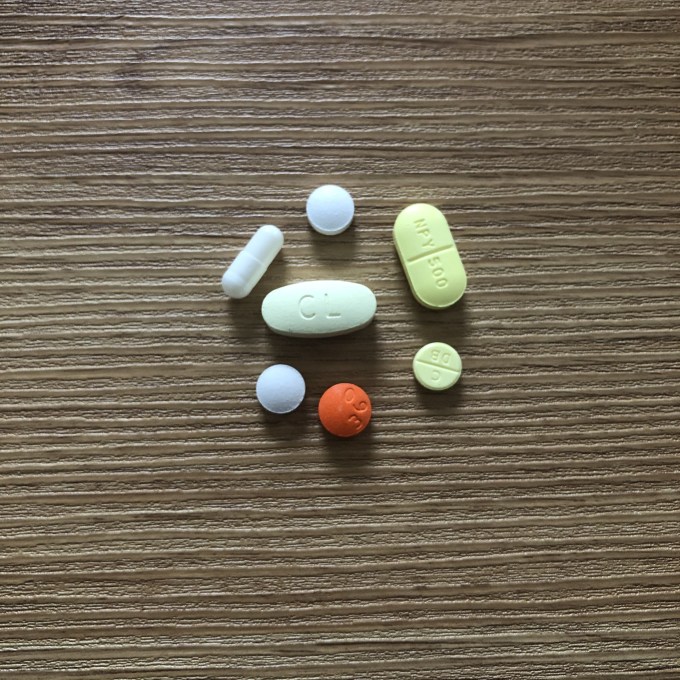
PAINKILLERS – Okay, this isn’t an everyday occurrence but it’s very common, especially at the moment (I hurt my back about a month ago – a story for another time). I have them on me all the time and I regret it if I don’t. Pain can be so debilitating and if I don’t have something to manage them, if only to get home, then I’m in really trouble. I also get migraines that absolutely incapacitate me so having the pills that help with those is vital. I often feel like a walking pharmacy but I’ve learned the hard way – several times – that it’s better to be prepared.
LOTS OF WATER – Generally, none of us are drinking enough water but as a person with Hypermobile Ehlers Danlos Syndrome (hEDS), I’m sure I’m not, as hard as I try. When I was diagnosed, the recommendation was that I drink more than double what a person without hEDS is supposed to drink (x); I’ve been trying to build up my water intake but it’s a slow process. I also have Postural Orthostatic Tachycardia Syndrome (POTS), which often occurs with hEDS, and includes symptoms like dizziness, light-headedness, swelling in the legs after standing for short periods of time, palpitations, fainting, and more, all of which can increase in intensity when a person is dehydrated, after exercising, or during hot weather (I want to write a more in depth post about all of this when I have more time). Dehydration has also been linked to an increase in pain sensitivity (x). Increasing water intake has proven to help POTS symptoms so I’m doing my best to always have water with me (or cordial if the taste of water becomes a struggle, something my nutritionist okayed, given that I’d still be getting the fluids) and I think it’s helping me to drink more (x). It’s surprisingly hard though, to drink that much water.
MY PHONE – I know that many people talk about needing breaks and time away from their phones but, in general, having my phone around is more helpful than it isn’t. I find social media pretty triggering for my anxiety so I rarely find myself scrolling through Facebook or Twitter or Instagram (and I hate TikTok more than I can even articulate) whereas I find the apps for setting alarms and timers helpful, Duolingo really good for my anxiety (and mental health in general), and the Notes app vital to writing down thoughts and ideas to follow up on. I do find it stressful that it means anyone has access to me, can contact me whenever they want, but then Airplane Mode is right there… But generally, my phone is more helpful than not.
MY BULLET JOURNAL – Between my ADHD and my general anxiety about being organised, my bullet journal (or what began as a bullet journal and has evolved into a more personalised version of the system) is all but permanently attached to me. It has my list of commitments, the list of things I want to get done during the day, and anything else that might be relevant, like stuff to do with the cats or the house. I honestly don’t know what I’d do without it.
FIDGET TOYS – My hair pulling has been particularly bad recently (plus I’ve seriously struggled with chewing the callouses on my fingertips and tearing at a scar on my face) and after years of dealing with it, I have a slightly ridiculous collection of fidget toys that I rotate using as the urge to pull varies; sometimes certain fidgets are more effective than others. So I usually have at least within reach, whether that’s wherever I am or in my bag.
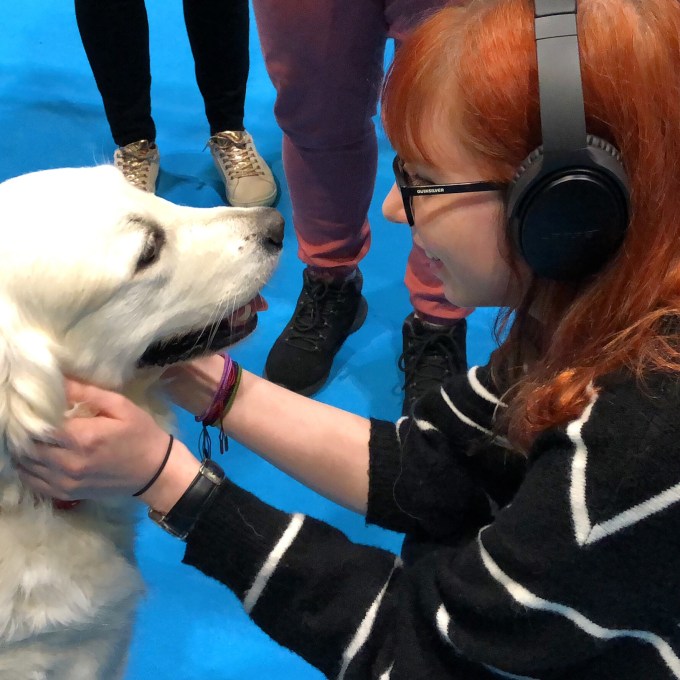
NOISE-CANCELLING HEADPHONES – Having had some very unpleasant experiences with just how loud the world is (you may remember this particular disaster), I got an amazing set of noise-cancelling headphones that have made navigating my hometown, London, transport systems, etc so much easier. I’ve recommended them to multiple people and those who got them have agreed that they make life – and all of its noise – a lot more manageable.
FACE MASK AND HAND SANITISER – I know that, for a lot of people, it feels like the pandemic has ended but, for many, many others, it hasn’t. I know immunocompromised people, those struggling with Long COVID, people who are still getting COVID and getting seriously sick so it certainly doesn’t feel over to me. If I’m out, I’m pretty neurotic about hand sanitiser and wearing a mask; I’m not perfect and I do sometimes forget, especially if I’m feeling overwhelmed in a social situation and there’s no prompt of other people wearing masks, but I’m still pretty on the case about it all.

A HIDDEN DISABILITIES SUNFLOWER LANYARD – I’m not sure when I first got my sunflower lanyard and I can’t honestly say it’s changed my life but there are certain places that it does make life easier, like at airports and concerts (and getting support in those sorts of places is so important). Mostly I wear it when travelling around London because having a big ‘autistic’ label around my neck reminds people to take care and hopefully be a bit more aware of what they’re doing and what’s going on around them. I’m sure there are people who see it and it makes them uncomfortable or contrary or belligerent (because, in my experience, those people tend to be everywhere) and I think there are places where it probably makes me more vulnerable but, on the whole, it tends to be helpful if I use my judgement.
JOINT SUPPORTS – Because of my hEDS, I struggle with a lot of pain in my joints (the gift that keeps on giving) so I have a handful of different supports and braces. I mainly use them for my knee and for my wrists, but I also have one for my back. They not only really help with my stability – something I’m struggling with more and more – but, as with my sunflower lanyard, they remind people that I am kind of fragile and that they need to be careful around me, especially on trains and the underground etc.
POLARISED SUNGLASSES – The last time I went to get new glasses, I mentioned that I have hEDS and the optician recommended getting polarised sunglasses because they can help with light sensitivity, something that many people with EDS struggle with: our eyes are sensitive can get really tired because they are made up of 80% collagen, which is – as we know – what EDS negatively affects. And if you can reduce the strain on your eyes – which these glasses do, even if you’re inside but it’s still very bright – then you can hopefully reduce the chances of developing problems with your eyes (again, EDS: the gift that keeps on giving).
LIP BALM – A common symptom of multiple types of EDS is sensitive skin and that can manifest as dry lips (and cracked lips that take ages to heal) so I try to always have a good lip balm around. My personal preference is the EOS Crystal Lip Balm in Hibiscus Peach, which I’m not totally sure they make anymore but it’s still available through various online stores. But it’s their crystal lip balms that are best for hydrating your lips (but it’s worth reading this article because some people have had allergic reactions to certain ingredients); the previous, more waxy versions were nice but I didn’t find them to be super effective. This one helps my skin recover really quickly (and stay hydrated) and I can barely feel it on my lips, a plus considering that the sensory experience of make up and skincare can be really difficult for me. But there are a lot of great ones out there; I’ve used several from The Body Shop that I would recommend too.
CBD GUMMIES – Over the last couple of years, my sleep schedule – for the most part – has been awful. Most nights I was getting a fractured few hours and then there were nights where I didn’t sleep at all. It was horrible and it just made my mental health even worse, which was pretty impressive given how bad it was when my sleep was at its worst. I felt like I’d tried every strategy ever suggested, including some pretty strong prescription sleeping pills; they worked-ish but I suffered from some pretty miserable side effects for not much reward. I’d always been vaguely resistant to trying CBD based products for some reason – I’m not really sure why – but I was desperate and ended up trying a few different types of CBD gummies. Within a few days, my sleep was deep and reliable again. Months later, it’s remained pretty good. Plus it’s helped me avoid relying on prescription pills, which I’ve had to do in the past even though it’s not generally advised (this was with the approval of my doctor); taking them every night can increase your tolerance and so they stop working and no one really knows what the long term effects are, although some people become addicted and can experience symptoms like hallucinations. So avoiding that is definitely a pro on the pro-con list. Research is still being done around CBD but so far it seems that the only problems are certain drug interactions, which would just involve a conversation with a doctor. None of those interactions were a problem for me so I’ve been taking them consistently ever since and my sleep has been so much better. They’re a constant presence on my bedside table.
So I hope that was of some interest, at least. As I said in my introduction, let me know if you use these things; let me know if you use other things; let me know if there are things that might work better than the ones on this list! Over to you!
 Finding Hope