 Finding Hope
A Week In My Life (May 2023)
Posted on June 26, 2023
It’s been a long time since I did a Week In My Life post but I thought they’d be fun to revisit. I don’t really have typical weeks anymore – every single one looks different with all of the different things I’m doing and experiencing – but I thought that might add to what makes them interesting; the format remains the same but the contents will always be completely different. This was a super busy week because, on the Monday morning after it ended, I was flying out to Germany so I had to get a lot of stuff done; there could be no putting it off and my ADHD brain did not like that. So it was stressful and busy and chaotic but there were also some really cool, fun, joyful moments too. So it was an interesting one to record.
The week in this post started on Monday 22nd May and ended on Sunday 28th May.
MONDAY
I was up at eight thirty and pretty much straight out to the hairdressers to have my hair coloured in preparation for going to Germany (I’d had it cut the week before). I find it takes several days to settle, for the sharp lines to soften and the colours to blend together nicely. I get so used to seeing it faded (because it’s expensive to get redone – I often top it up out of a box but needed it to look particularly nice on this occasion so didn’t) that seeing it fresh and bold is shocking, in the best way. I love it; it looks amazing every time and I can’t believe that I ever considered doing something different with it (apart from wanting blue hair because who doesn’t). It makes me feel so much more confident; it makes me feel like me.
Back home, I got stuck into some admin work. It took a lot of effort because my brain really didn’t want to do it but I got the necessary emails sent, submitted my Amanda Tapping story for her livestream (which I wrote about in my last post in case you missed it), did some diary catch up, and worked on several upcoming blog posts. I feel like there is never any time to breathe anymore, like I’m always only just keeping up so there isn’t even a moment to stop and think before moving onto the next thing. It’s really stressing me out.
When I had a brief look at social media, Twitter specifically, because of it being Mental Health Awareness Week, all I saw were the usual vague platitudes, corporate statements that didn’t mean anything, and pictures of the royals going to various events. The whole thing infuriated me and I started ranting, tweet after tweet until the thread was barely coherent and I nearly posted it but then I stopped and thought about what I was doing. The thoughts were rushed and frustrated, it’s so easy be taken out of context when you have so few characters, and Twitter can be a pretty toxic place. So I saved the tweets and resolved to elaborate on the thoughts in a better medium, like this blog (which I did and it turned into this post.)
I spent the evening packing since I was going to London the next day and then went to bed relatively early for me, around midnight. But unfortunately, I couldn’t sleep, despite doing everything that usually helps (a routine I have long since refined); I couldn’t seem to relax, my whole body shaking. I was still awake at four, practically vibrating with tension even as I tried to relax enough to sleep. I’ve had sleep paralysis before and it wasn’t that so I don’t know what was going on; I just kept finding my jaw clenched, my hands in fists, and even my toes curled. It was hideous and exhausting.
TUESDAY
I struggled up at nine thirty, got myself showered and dressed, and settled on the sofa with my laptop. I had some more admin work to do, more emails to send, and so I worked through that list before taking a break and scrolling through social media for a little bit. Then I spent several hours working on blog posts and an academic paper about Taylor Swift’s songwriting that I had to submit before I left for Germany; the paper itself was already written but I had a list of edits to work on plus two re-recordings and a new album to integrate into the existing relevant parts of the paper. I don’t mean to be so cryptic but I don’t want to talk too much about the specifics of it until there’s more certainty surrounding the project; it still feels very up in the air, to me at least. But maybe that’s just because it’s the first time I’ve done anything like this.
Mid-afternoon, I had therapy. I don’t want to get too deeply into what we talked about; that is very personal after all. But we did talk about all of the things I had to do before leaving for Germany, as well as how I was going to handle the trip to Germany itself. Sometimes my therapist brings a friend’s dog with her, which is always a bonus. I love her and she loves me and we have some great cuddles, which are very good for balancing out some of the hard stuff we talk about. But no such luck that day (it’s fine though – it’s not like I go for the dog). We finished on time and I managed to get to the station in time to catch my train. It isn’t a long journey but I filled the time, working on blog stuff. I had to make every minute count with so much to do before the week ended and I headed off to Germany.
I got off the train at Victoria station to a very strange sight. I’d paused several feet beyond the barrier to rearrange some of the stuff in my hands and pockets and saw a man standing with a wheelchair and a dog. As I stood there, he encouraged the dog into the wheelchair and it jumped up, turning around and sitting down like it knew exactly what to do. And then, out of his pocket, this man pulled a lizard – a bearded dragon, maybe – and placed it on the dog’s back. Again, it was like both of these animals had done this a hundred times and knew exactly what they were supposed to do. And off they all went, the man pushing the two of them in the wheelchair. It was so surreal to witness. I got the rest of my stuff rearranged and headed for the tube station, fascinated that nobody else seemed to have found this a strange moment to be present for. But then it is London, I guess; everyone is very ‘stay in your lane.’ The whole situation was just so bizarre and I was very aware that I was probably watching something that I’d never see again.
Usually I stay with one of my parents when I do an overnight in London but she already had someone staying so there wasn’t room for me. I ended up staying with family friends – as did my Mum actually since she was was working in a school in London, starting early the next morning – which was really nice because I hadn’t seen them for ages. So it was really nice to catch up. We were all tired and had early starts so we didn’t last long (and had to create a schedule to get everyone in and out of the bathroom in order for everyone to leave on time, which I don’t think I’ve had to do since I was a teenager in secondary school). It took me a while to decompress and go to sleep but it was still quite early by my standards, thank goodness.
WEDNESDAY
I had to get up at half six to get ready, which is most definitely the earliest I’ve had to get up in years. I had a shower, got ready, had some breakfast, and headed for the underground. An organisation I’m a part of, The F List, which supports female and gender minority researchers in music research, particularly research that supports gender equality in music and music research was holding an event, The F List Gender in Music 2nd Annual Research Hub Conference, at my university and I was keen to learn as much as possible – my brain finds learning new things positively addictive, something that I don’t think is uncommon for people with ADHD – even if I was a bit nervous about how long I could stay focussed for. But fortunately that wasn’t too bad and they’d made accommodations for anyone who needed them, although they were very neurodivergent sounding accommodations (as it turned out, there were so many neurodivergent people there that I was starting to wonder if we were all members of the club). As they said on their website: “The F-List Research Hub aims to expand and better introduce the existing feminist and interdisciplinary collective of researchers, dedicated to evidence-led activism which aims to create an environment in which women and gender expansive people in the music industries will be able to more successfully start and sustain their music careers for longer.” And the theme was ‘identity’: “Identity is a central theme in feminist research, which sees ‘who we are’ intimately entangled with ‘what we research.’ The definition above is deliberately broad and (we hope) inclusive to all who seek to research gender issues in music.“
They ended up asking me to write the blog post for the event, which was really exciting. I would be taking notes all day anyway so I just added some extra notes about how the event worked, how everyone socialised, how things felt, in order to sum up the day accurately. We came up with a plan for what the blog would focus on and how long it would be and I played around with it in my head as I listened to the speeches and presentations.
Professor Sophie Daniels, one of the directors of The F List, the head of the songwriting program at ICMP, and my tutor for years, gave the keynote speech, which was really cool. This is what I wrote for the F-List blog because I’m not sure I could say it better: “After a bit of mingling, the day began with the Keynote speech from Professor Sophie Daniels, where she discussed, amongst other things, her career in the music industry, her founding of the songwriting program at ICMP, her artist project, Liberty’s Mother, and it’s associated advocacy work, as well as her research into why we write songs. I first met Sophie in 2014 and she was my teacher on and off for seven years while I studied at ICMP; so while I knew much of what she was sharing, it was really insightful to hear it presented this way, through the lens of feminism, particularly in the music industry and music education. Sophie has always inspired and supported me – as a songwriter, an artist, a researcher, a mental health and Autism advocate, and, ultimately, as a person – and so it was very special to watch her give the Keynote speech.” And it was: it was really special. I will never get tired of hearing ‘I Can Love You From Here.’ It makes my heart ache now just as it did when I first heard it eight years ago.
It was a lot of information but the presentations were short, about fifteen minutes each, which was the perfect length for my ADHD brain and each one was really interesting; I don’t know if it’s the neurodivergent brain but learning new things is always fun for me. The topics ranged from Trans and Non-binary inclusion in the music industry to support for those with ADHD in the music industry to exploring black feminism in the music industry to investigating the interwar generation of women composers at the Royal College of Music, as well as a conversation with the CEO of the Independent Society of Musicians. At one point, she talked about how badly the arts are treated and how they’re so important because they give life meaning: “They lie at the heart of what it means to be a human being.”
Oh, and I greatly enjoyed being introduced to this song…
I found all of it interesting – I really did – (although I did need some time in the quiet space because it was a lot of information and a lot of noise) but I think I was most engaged by the presentations on support for neurodivergent individuals in the music industry, by the one on the emerging trends in the careers of women in the music industry, and the one investigating the interwar generation of women composers at the Royal College of Music. I did wonder whether my Granny would actually be part of that group but when I worked it out, I realised that she wouldn’t have enrolled until after the end of the period of study. It would’ve been so bizarre if her name had appeared in that research.
When the presentations finished, we congregated in the attached cafe to socialise and network, which turned into a commemoration Tina Turner dance party, which was a fun if bizarre way to end the day. It was hard to leave: it was such a nice group of people plus I was dreading the long journey home. But it was a good day; I learned a lot, I fell into some really cool opportunities, and spent time with friends, old and new.
I did eventually make my way to the station and catch a train home. My Mum very kindly picked me up – I was beyond exhausted from so much standing and socialising and focussing all day – and when I got home, I went straight to bed. I had a look at social media for a while, decompressing from the outside world, before going to sleep around one, which isn’t bad for me at the moment.
One of the opportunities that came out of the day was the chance to do the write up – a blog post – of the day. You can find that here.
THURSDAY
I spent most of Thursday at my laptop, working on my Taylor Swift paper. I was really on a roll; I felt like the Kermit the Frog at a typewriter meme. I had already been writing and making progress with it but I hadn’t really managed to get on a roll until that morning and having finally hit my stride, I was having a blast. I was expanding on ideas already present in the paper and building in new ones; the only problem was that I was just increasing the word count and the task of cutting it down was looming. But I was enjoying the fun parts while they lasted and I vaguely resented being interrupted when I had to go out.
It’s been a really long time since I had my last appointment with my psychiatrist, although we’ve stayed in touch. He was in a new office – with a gorgeous view of both the Downs and the sea – and it was much nicer than the last one, which had felt incredibly medical and sterile. I like this one a lot more. And, in the waiting room, there was a painting that I instantly fell in love with: a seascape by a local artist called Sara Hill. I would love to own something like this, to get to look at it everyday. It was completely gorgeous and I found it very soothing to look at, which I suppose is fitting for a psychiatric office.

The appointment went well. My psychiatrist and I talked through my experience with the Phenelzine and what has improved and what’s still a struggle. I’d wanted to discuss increasing the dosage, which we did. It had been too much last time – I felt very overstimulated all of the time – but I thought that, given that I’ve been trying to climb out of a deeper, darker place, a higher dose might be what I needed to make it that extra distance. We talked through that idea – and how much I want to write more again, which I just haven’t been able to – and he agreed. And, proving how well he knows me after all of this time, he suggested we judge the effectiveness by how much I’m writing. Sounds good to me.
Back home, I tried to re-harness my previous focus on my paper and while it wasn’t quite as effective, I did manage to get another good chunk of work done. I even had some time to do a bit of blog writing since I doubted I’d have much time to write while in Germany, I needed to have something prepared for the Saturday at the end of the trip. By the time I went to bed, I was completely exhausted and my brain felt vaguely like I’d put it in the microwave for too long.
FRIDAY
Despite going to bed so late, I was able to drag myself up early for a very important Zoom call. I don’t want to talk about who it was with and what it was about yet, not until things are more certain. But it was a very exciting call and, all being well, some awesome life things will come out of it. That’s all I’ll say for now.
I didn’t have long until my next Zoom call so I spent about ninety minutes or so working on blog stuff. I just needed some decompression time and I find blog post writing very soothing for some reason; I think it just allows my brain to turn over an idea, over and over and over until it makes sense, and getting the words into a satisfying rhythm.
I had a really nice Zoom call with one of my best friends and we ended up talking for about two hours. We can talk about anything, from movies to the really big stuff in our lives, and we can talk for days without needing a break; we can just go off on these tangents that go on for hours and then we eventually backtrack to our original conversation topic, only to go off on another tangent. We have a lot in common and we have so much fun together. At one point, we tried to figure out how we became friends – having met on the MA – but we couldn’t: it seems that we both thought we were already friends and just skipped the whole ‘becoming friends’ part of the friendship, which is actually pretty on brand for us now that we are really good friends. I have no idea if that makes any sense but that’s how it is.
We hung up so that I could get ready and go to therapy. Again, I don’t really want to talk in detail about what we discussed but, in general, we talked about going to Germany, the things I was anxious about, and how I might manage them. I wasn’t feeling too stressed (which turned out to be ridiculous because I found the whole trip incredibly stressful) so it wasn’t too bad.
When I came out of therapy and checked my phone, I saw that Taylor Swift had made an announcement, the release of Midnights (The Late Night Edition) and the new song, ‘You’re Losing Me.’ Someone had already shared it online. Had the song been released somewhere where I could listen to it legally where Taylor would get paid for my purchase or stream, I absolutely would’ve done so – I’ve always felt very passionate about that – but since it’s only available on a CD one can buy at tour dates, I don’t feel bad listening to it online. And what a song it is; it immediately joined my 2023 in Songs post because I love it so much, especially the lyrics. I’ve talked about it more there (I’ll add the link when that post goes up in December) but the ongoing medical imagery is heartbreaking, the way the bridge just keeps building is one of my favourite Taylor techniques, and the imagery in the lyrics all had me absolutely hooked (I particularly love “Remember lookin’ at this room, we loved it ’cause of the light / Now, I just sit in the dark and wonder if it’s time,” “And I wouldn’t marry me either / A pathological people pleaser / Who only wanted you to see her,” and “Do something, babe, say something / Lose something, babe, risk something / Choose something, babe, I got nothing / To believe / Unless you’re choosin’ me / You’re losin’ me”). It’s a gorgeous, gorgeous song and weeks later, I’m still listening to it over and over. So that was a moment to have missed because of therapy.
Back home, I went back to working on my paper. One of my parents stopped in for dinner and we had a good catch up before I got back to work. Then I had some decompression time, writing more of my Mental Health Awareness Week blog post before going to bed.
SATURDAY
I spent the morning working on my paper before catching a train to London. I used the trip to keep writing and then navigated the tube system to get to the Thin Air exhibition at The Beams near London City Airport. And it was absolutely stunning…
The exhibition was made up of several different rooms, designed by different artists or artistic collaborations. I didn’t like all of them but of the ones I liked, I absolutely loved:
- The first was a hallway filled with moving lights and low frequencies. The lights were mesmeric and the low frequencies felt heavy in my chest, which was a weird feeling: on the one hand, it felt a little like my chest was about to implode but on the other, it was like I could feel every vibration in the room passing through my lungs. The description at the beginning of the piece read,”In Cleanse/Mantra, laser light travels down a corridor at 11o Hz per second, which is a wavelength of just under 3 metres. As visitors pass through the installation, their viewing distance is sliced into even sections. This creates a visual mantra: a repeated series of waves, which increase in amplitude. 110 Hz is known as the ‘human pitch,’ stimulating the right side of the brain, where art spirituality, and emotion are centred.” It was made by James Clar, an artist who works with light and technology with an interest in how new media technologies shape human behaviour. Many of his works play with perception using sculptural elements that appear to warp between dimensions, using a wide range of materials and systems, such as multi-channel video installations, lasers, LEDs, and 3D printed elements. He combines these elements to create complex narratives that reference mythology and global history, while questioning our engagement with digital culture.
- The second one was a big, warehouse like room where red and white light seemed to flash sporadically, plunging you into darkness as sporadically. It played strangely with your vision and the same low, heavy frequencies pressed in on you despite the huge space; the contrast was very weird. I found it very compelling; I felt it drawing me in even as the pressure of the low frequencies began to hurt. The space was designed by404.zero, a collaboration between the artists Kristina Karpysheva and Alexandr Letsius. The duo specialises in real-time, generative, and code-based art, which is presented in large-scale installations, performance and music. They combine noise with randomised algorithms to stimulate visceral and awe-inspiring reactions. Through their use of digital technology, they question the power structures of the Anthropocene and global politics, revealing them as invisible yet impregnable environments of the contemporary condition. On their Instagram, they describe it by saying, “In our artistic installations, we endeavour to eschew narrative descriptions, encouraging individuals to introspect rather than rely on external interpretations. We challenge visitors to delve deeper into their own perceptions and explore the depths of their personal experiences!”
- The third of the rooms was a similar warehouse-like room but with lines of lights across the ceiling, the lights speeding overhead almost like cars on a road at night or flashing on and off suddenly. It was beautiful, the colours changing; one of colour combinations stuck out in my mind because it reminded me of a lion fish. Around the room, there were big bean bags that you could sit or lie on and look up at the lights. We ended up staying there for ages, even though the low frequencies of the room were creating so much pressure in my body. While part of me liked that feeling, it did start to feel painful after a while; other than that, it was incredibly relaxing and I could’ve sat there for hours. It was called Lines, made by S E T U P, a studio founded by Znamensky Dmitry, Novikov Stepan, Zmunchila Pavel and Kochnev Anton in 2018, that works with light, programming and sculpture to create installations that sharpen physical perception, merging the lines between multimedia art, lighting & stage design, and performance programming.
- The fourth room was much smaller with a screen on the floor that we all stood around and watched as the points of multiple lasers moved across the screen as if carving out pathways in a landscape; they’d follow the same route but always slightly different, like the erosion of rivers made from light. It was hypnotic and very soothing to watch; I could’ve watched it for hours had there been somewhere to sit. It was called ‘Phosphor’ by Robert Henke and the description read: “In Phosphor, an ultraviolet laser paints temporary traces, on a layer of phosphorus. Retained for just a moment, the lines are ever evolving, combining into marks that evoke natural patterns of erosion.” Ha, I’d forgotten it said that so the imagery it was trying to evoke definitely certainly worked. Anyway. Robert Henke is a digital artist who works with algorithmically generated images, laser installations and early personal computer hardware. Also a co-creator of the cult music software Ableton Live, Henke has redefined the way we create and experience electronic music.
- And the last room that really inspired me was one full of red lasers that were aimed around the room. The shape of the space it created reminded strongly of being inside a circus tent. It was very surreal to move through it because you kept expecting to walk into a fence – which the lines of light looked very much like – and bounce back but then, of course, you moved through them. I had great fun pretending I had superpowers, pretending that I was creating the beams of light. It was created by Matthew Schreiber and the description read: “A site-specific light sculpture, Banshee 2023 responds to the volume of the room it inhabits. The precise placement of lasers produces a series of geometric patterns frozen in space. Evoking the tools of the entertainment industry and its production of spectacle, visitors are invited to move within a static light show, seeing it change as we shift our position in the room.” Matthew Schreiber is a multi-disciplinary artist best known for his large-scale laser light sculptures, such as this one and visitors are often invited to interact with his work. Interested in how physics, technology and perception can alter our experience of the world, he reimagines light and space to explore unseen forces.
It was really cool and I’m really glad we got to see it before it closed (while we were in Germany). I would’ve stayed longer if I could’ve but I still had so much to do and they do encourage you to keep moving through the rooms.
Then it was back on the train home and even though I was exhausted, I continued working on the paper and on the upcoming blog posts. I also managed to reply to some of the messages I’d been unintentionally procrastinating over, accidentally pushing them back in favour of getting more work done. So that felt like an achievement too. I was pretty much getting things done out of sheer willpower – something that absolutely does not always work but did this time for some reason – which I was very relieved by. Of course, so pleased to be on a successful streak and unwilling to break it, I ended up going to bed much too late.
SUNDAY
It was a very goal focussed day. I managed to get my blog post of the week – So That Was #MentalHealthAwarenessWeek… – done and published relatively early in the day and then I moved on to the piece about The F List conference. I had all of my notes from the actual day and I’d been making notes since then: thoughts that felt important to include, anecdotes that would make it more personal, and so on. I got that done mid afternoon, I think, and sent it off (they really liked it and it was published and shared a few days later).
Afternoon and evening, I packed for Germany. I was going to be there for a week but I am a terrible packer – I just find it really hard. I wonder if that’s an ADHD thing, given that it’s an organisation and planning based skill. Interesting; I’d never thought of that. I don’t know but possibly. I’ll have to do some research. Anyway, as I said, I’m a really bad packer (I once packed for five weeks in Australia two hours before I left for the airport – the dread and procrastination were so bad) so I struggled through that as a task. Eventually I got that done, with probably much more than I’d need.
I spent the rest of the evening trying to finish my Taylor paper. This edit was essentially finished – apart from one section, which I couldn’t work on until I got some of the literature they’d promised to send me (and now have sent me) – but it was way over the word limit and, as hard as I tried, I couldn’t get it down without cutting out significant parts of whatever point I was making or the evidence for it. But I kept trying and trying and trying, as well as tidying the whole thing up. In the end, around two in the morning, I decided that I would send it as it was and ask the organisers – all of them accomplished academics – for their advice on the word count. I’ve never done this before but they have; hopefully they can help me get it down to the required length without compromising the content on the next edit. So I stopped at two and went to bed, my laptop on the bedside table so that I could send it first thing in the morning.
It was a very anxious week: there was the pressure of trying to get everything done, the unknowns of the conference, and the anxieties around going to Germany. It was hard. But it’s also really nice to be productive again, to be working and producing, even if my mental health and neurodivergence do make that a struggle sometimes; over the last couple of years, I’ve been so paralysed by my mental health problems – by my depression and anxiety specifically – that I’ve barely been able to do anything. So just to do things at all, let alone the amount of things I’ve been doing, is kind of amazing to me.
Ideas To Help With Hair Pulling
Posted on February 13, 2021
Trigger warning for Trichotillomania/hair pulling. Please don’t read this if this is something that will upset or trigger you. I only want this to be helpful, never harmful.
Having just written about some of the things that can trigger episodes of Trichotillomania, I wanted to post a list of ideas that have the potential to help someone struggling with hair pulling. There are lists all over the internet with various collections of ideas but I felt that it would be irresponsible to post about the triggers of Trich without offering some kind of help, especially the kind of help that you can practice yourself without having to wait to see a specialist (although I would encourage you to seek out professional support as well). These aren’t cures obviously – there are currently no proven cures for Trichotillomania – but numerous accounts have shown that many of these strategies have helped people manage and reduce their urge to pull, which is obviously a big deal. I also wanted to share which strategies have helped me – if you relate to other things that I’ve posted maybe they’re a good place to start.
There are a number of things I want to mention before getting into this list:
- You have to remember to forgive yourself for not being perfect. Trying to stop pulling is an incredibly difficult (although incredibly rewarding) task. Your progress isn’t always linear. Sometimes you’ll manage an amazing streak and then not even manage a day. But just as you can struggle, you can succeed. However, beating yourself up for ‘going backwards’ won’t help you move forward; it’s a waste of precious energy that you could be dedicating to your attempts to stop pulling.
- One strategy won’t necessarily work forever. It may work for a time and things may improve. But then, if you start pulling again, it may not be helpful the second time around. For example, I wore a hat consistently for months and that slowly stopped me pulling my hair out. I didn’t pull for a year but when I started again, wearing a hat just made me feel anxious and claustrophobic. So I had to try different methods.
- If you’ve ever tried to stop pulling before, you’ll know that you have to be committed. Seriously committed. As dramatic as it sounds, you have to be thinking about it all the time. And if you’ve been doing it long enough, there will be a degree of habit so you don’t even notice yourself doing it and yet you still have to have an awareness of it. It’s really hard. Really, really hard. But it is possible to reduce the pulling to some degree at least.
Now, onto the list…
* = I’ve tried this.
** = I’ve tried this and it helped.
- Wear a hat or bandana**

(I wore a hat for months, possibly more, consistently – to the extent that it’s become part of my look as a singersongwriter and I have been recognised because of it – and that helped me stop pulling for over a year. However, as I said earlier in the post, when I started pulling again, it didn’t help because I started pulling from a different area of my scalp.)
- Wet down your hair**
- Cut your hair short (or if necessary, shave your head)
- Wear a wig
- Sit on your hands until the urge passes or you’re distracted
- Snap a hair band or rubber band against your wrist
- If you use tweezers to pull, put them out of the way of your daily routines or throw them out if necessary**
- Squeeze a stress ball or something similar*
- Use a fidget toy (you may need to try several different ones to find one that works for you)**
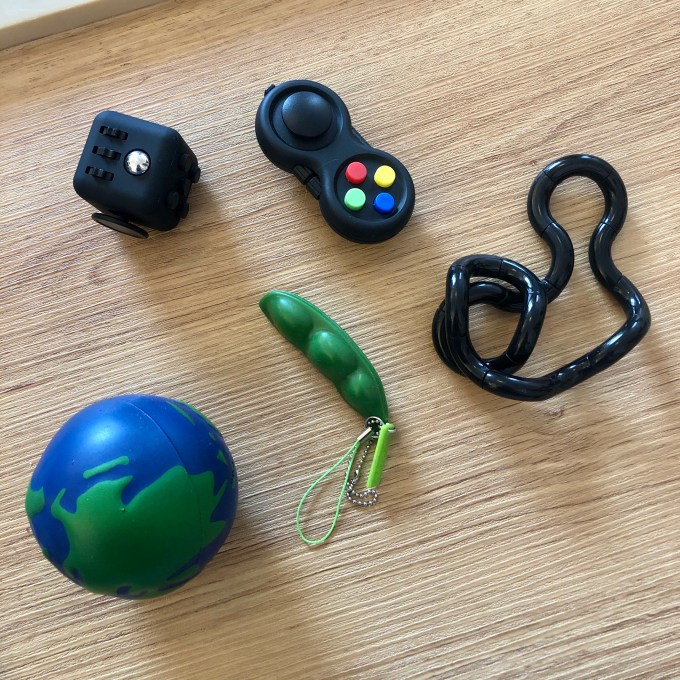
(These fidget toys are my personal favourites. I have more that I’m slowly donating to family and friends and acquaintances who have expressed interest in them. Personally I prefer plastic over metal because the metal toys make my hands smell. I also prefer the ones with buttons etc, rather than ones that you squeeze, like stress balls. But different fidgets appeal to different people).
- Put vaseline on your fingers or the hair you would be pulling
- Put plasters on your fingertips
- Wear gloves
- Journal about your experiences*
- If you feel comfortable doing so, ask your friends or family to point out when you start pulling*
- If there’s a room or environment you normally pull in, try changing your environment
- Play an instrument**
- Stroke or play with an animal*
- Exercise
- Start with small goals (periods of time where you don’t pull, for example) and increase as you can**
- Use a chart or app to track the amount of time between pulling ‘sessions,’ inspiring/motivating yourself not to break your streak**

(There are multiple phone apps that count days; it mostly comes down to whether there are any extra features that might help you, what kind of aesthetic you prefer, and whether you feel you need one that you’d have to pay for.)
- Try a hobby that occupies your hands, like origami or knitting*
- Brush your hair instead of pulling
- Come up with a saying that you repeat out loud until the urge to pull passes or say “No” out loud
- Form a ball with your fist and tighten the muscles in that arm
- If your pulling is triggered by texture or colour, try dyeing or care for your hair to minimise pulling**
(Hairs with a coarse texture is a really trigger for my pulling so I’ve been searching for a good product that at least reduces that problem for years. I love Aussie’s Miracle Moist Collection – the shampoo, conditioner, conditioner spray, and the 3 minute deep conditioner – because it makes my hair really sleek. It’s the best product I’ve found. I am trying to find a vegan, cruelty-free replacement but I do have to balance that search with how bad my Trich is and the state of my finances. I’m determined to keep looking though.)
- Fiddle with dental floss or thread
- Wear jewellery you can fiddle with/wear specially designed fidget jewellery**
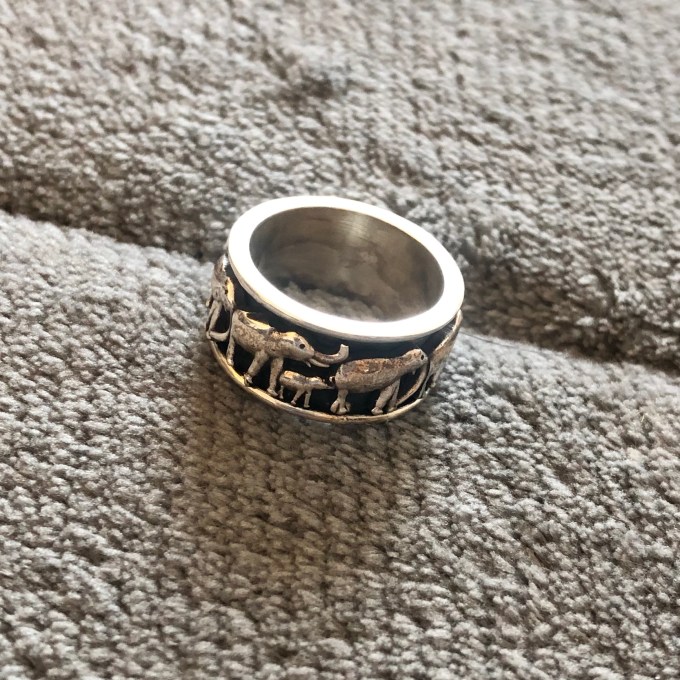
(I had a spinner ring for several years that I adored. It was silver with elephants on it and I was constantly wearing it and spinning the outer band. But recently it broke and the replacement isn’t quite the same: it isn’t as comfortable and so I don’t wear it as much.)
- Use positive reinforcement (reward yourself even in the smallest way, like treating yourself to your favourite snack or having an extra indulgent bath or shower, when you achieve a certain period of time without pulling)
- Weed the garden
- Cut your nails short or wear acrylic nails, making it difficult to get ahold of strands
- Style your hair in a way that prevents access to the area you pull from*
- Try meditation or mindfulness*
- Pull from or fiddle with the hairs of paintbrushes
- Use a hand grip strengthener*
- Make yourself aware of the action (putting essential oil or perfume on your hands, for example)
- Attach a weight to your pulling hand
My latest strategy has been to use a strip of elastic (like the kind used in clothing or sewing) and attach one end to my portable desk, the other loosely around my wrist. Technically I can still reach my hair if I really try but it’s awkward and uncomfortable and so far, just the sensation of the elastic pulling against my wrist has stopped me trying to pull. It hasn’t been long so I don’t know how successful it will be long term but it seems to be working so far.

It’s also worth mentioning that there are therapies, and then issue specific therapies within those therapies, such as Habit-Reversal Therapy (several studies from 1980 concluded that it had a 90% symptom reduction rate), which was born out of CBT. Hypnotherapy has also shown results for some people. However, access to CBT can take a long time via the NHS and these therapies can become incredibly expensive if you venture into the world of private healthcare.
There are also support groups, both online and in person (although not currently due to the COVID-19 pandemic). Search out Trichotillomania organisations and charities for general online support groups. You can also search for Facebook groups for both general and location specific support groups. I can’t speak to the effectiveness of these as I’ve never personally used them – I didn’t personally feel that that sort of support was one that would be helpful – but I know they make many people feel less alone and allow people to share tips and strategies.
I hope this list has been informative. Hopefully some of these tips have been or will be helpful. At the very least, it’s a varied collection of things to try. If you’re struggling with Trichotillomania, I’m thinking of you and I hope that something on this list will help.
Trichotillomania Triggers
Posted on February 13, 2021
Trigger warning: This post is dedicated information and experiences with Trichotillomania so if this is a difficult subject for you, please don’t read on. I would hate for you to be triggered. Having said that, immediately following this post will be one on a list of ideas and tips to help with hair pulling.
It’s been a while since I talked about Trichotillomania, whether about my experience or about the disorder in general. I’ve been learning more and more about what triggers me so I thought I’d do some research into triggers more generally and after doing all that reading, I thought I’d collate some of it in case it could be helpful to any of you guys.
CAUSES
Scientists still don’t know what causes Trichotillomania – and other BFRBs (Body-Focused Repetitive Behaviours) – but there are various theories, including:
- A way of dealing with stress or anxiety
- A genetic factor, like a chemical imbalance in the brain, similar to obsessive compulsive disorder (OCD)
- A change in hormone levels during puberty
- A type of self-harm to seek relief from emotional distress
- A trauma in childhood
Pulling can then become a type of addiction. The more a person pulls their hair out, the more they feel the need to keep doing it.
TRIGGERS
While there isn’t much definitive research into the causes of Trich, we are learning more and more about what drives people to pull once they’ve started pulling, the internal and external triggers that occur right before someone pulls. External triggers include certain people, or places, or situations while internal triggers include certain thought processes, emotional states, or physiological sensations. When the particular trigger (or one of multiple triggers) is experienced, a person who struggles with compulsive hair pulling may be ‘triggered’ to pull. The pulling satisfies something, like creating a feeling of relief or calm for example.
These triggers can be sorted into a multitude of categories, these being some of the most common…
- Emotional – The emotions behind hair pulling can be very complicated and multi-layered. For many individuals with Trichotillomania, pulling is a way of dealing with negative or uncomfortable feelings, such as stress, anxiety, boredom, or frustration, to name just a few. Several studies have shown that stress was reported to be the most common trigger for increased hair pulling. This may be because pulling out hair relieves stress; when someone is anxious, the tension in their body increases and the sensation (and sometimes pain) of pulling can help to release some of that energy. I can definitely relate to all of this. When the pulling is focussed (as opposed to automatic – something I’ll come to later in the post), it can almost be a mindful activity, centering in on what your hands are doing and allowing some of the anxiety in your system to dissipate. Pulling can feel satisfying and create a sense of relief, which can reinforce the urge to pull, especially when trying to cope with negative feelings; we all want something to make us feel better when we’re struggling.
- Sensory – Many people will pull out particular hairs that have a certain feel to them, such as being thicker or longer than the rest of their hair. Texture can also be a huge trigger, if certain hairs feel crinkly or just stand out when touching one’s hair, for example; this is huge one for me. My hair is mostly straight (if vaguely wavy) but the individual hairs are very smooth so when I find a crinkly hair, it really stands out and it’s all I can think about until the tension is so high that I can’t concentrate unless I pull it out. Sometimes that’s it but sometimes that causes a period of pulling that can last for days, or until my pulling arm gets so painful that I physically can’t lift it to reach my hair. The location (like the parting or hairline – another relatable experience) and the physical sensations that hair can create against the skin can also trigger someone to pull in order to relieve a person of those sensations.
- Environmental – A person may have particular locations and situations where they are more likely to pull. The privacy of rooms like a bedroom or a bathroom may make pulling more tempting; these rooms are also ones where you’d mostly likely find mirrors and tweezers, items that could also serve as triggers. There are also certain activities that create opportunities for pulling, such as using a computer, reading, watching TV, and so on, all of which have certain things in common: these activities are generally stationary and your posture during these situations gives your hands more access to your hair, if you pull from your scalp or eyebrows for example.
- Cognitive – Cognitive triggers are often connected to thoughts about imperfection. I can definitely relate to this as a lot of the triggers for my hair pulling are related to perfectionist thoughts and feelings. And these thoughts can manifest as hair pulling in multiple ways. The imperfection could be with the hair itself: that it feels too thick, too curly, that it’s the wrong colour, or that it doesn’t match the rest of your hair. And when the hair starts growing back, a person may feel compelled to pull out more hair to balance out the length of the regrowth. Sometimes the imperfection comes in the forms of attempting to stop pulling. For example, if a person challenges themselves not to pull for a day and then they pull just one hair, then they may think that they have failed. ‘Failing’ to meet those goals can results in even more pulling, out of frustration and a low sense of self worth. Pulling can also be triggered by perfectionist thoughts in other areas of their lives, like school or work or relationships, etc. When one (or many) of these areas start to break down and a perfectionist can’t fix it, the loss of control can be overwhelming, leading to the developments of problems like Trichotillomania where they feel that they do have some sense of control. At least to begin with anyway: when they feel out of control, they can pull out their hair and think, “Look, I can control what I look like; I am still in control.” However, when hair pulling spirals into the disorder that is Trichotillomania and stopping feels impossible, the perfectionist thoughts only get worse because now you’ve lost control in another aspect of your life.
There are two ‘types’ of pulling: focused pulling and automatic pulling.
- Focused pulling is when a person pulls their hair out intentionally. This may be due to feeling a hair that’s too thick or too coarse or out of place somehow, to relieve stress or anxiety in their lives, or to get some relief from the overwhelmingly strong urge to pull. Or it could be a combination of things.
- Automatic pulling is when a person pulls out their hair without realising it, or without fully realising it. Automatic pulling may occur while working on a computer, watching TV, reading a book, or really anything that can be done one-handed. Similar to this, some people are completely aware that they’re pulling but feel absolutely unable to stop themselves, like their hands have a mind of their own. This can be due to how long a person has been struggling with Trich or the strength of the urge to pull, for example.
Some people do one or the other but many people do both.
This is obviously not a medical or scientific guide. I completely encourage you to research the subject further if any of this resonates with you. The NHS, for example, has a great page about Trichotillomania but I wanted to share what I’ve learned while researching and my experience with some of the areas that came up. And as I said at the beginning of this post, I will be sharing a collection of suggestions for managing and potentially reducing your pulling directly after this post.
EXTRA NOTE: Here are some of the articles I read while researching that I found to be really interesting and potentially helpful: (1) (2) (3) (4) (5) (6) (7)
 Finding Hope