 Finding Hope
A Fibromyalgia Diagnosis Was Not On My 2023 Bingo Card…
Posted on September 9, 2023
I’ve been trying to write this post for a couple of weeks now but I’ve been finding it difficult to accurately describe my feelings about the whole experience. To cut a long story short, I have been diagnosed with Fibromyalgia (on top of the Hypermobile Ehlers-Danlos Syndrome and Chronic Fatigue Syndrome) but, given my traumatic history with doctors and the medical system, it’s left me feeling shaken up and vulnerable…
Several weeks ago, I went to the hospital for an appointment with the Rheumatology Department. It was my annual follow up, post my diagnosis and then confirmation of Hypermobile Ehlers-Danlos Syndrome, despite it being a different hospital, a different doctor, and having had no support for it since the diagnosis. I was, let’s say, perplexed by the purpose of the appointment, given the lack of contact with them but apparently the appointment was important to insure that I wasn’t discharged from the system; I’m not entirely sure how being in the system is helpful (given the lack of contact and support) but I wearily (and warily – I’ve had so many traumatic experiences at the hands of medical professional that just walking through the door can trigger a panic attack or a meltdown) agreed to go.
I’m not sure the doctor knew exactly what the purpose of the appointment was either because he meandered through a series of questions without an apparent destination. But when he asked about pain and I described the ebb and flow of the chronic pain I live with day-to-day, he started talking about Fibromyalgia, whether I’d heard of it, and whether I’d ever been assessed for it. I told him that I had been and wasn’t found to have it, a snarky comment – “I thought doctors didn’t believe in Fibromyalgia” – slipping out. Over the last decade or so, my apprehension (read: trauma response and resulting severe anxiety) in medical situations tends to manifest either as becoming non-verbal or triggers a snarky, provocative attitude (depending, I think, on whether I’m more upset or angry – what determines that, I’m not really sure). That day, apparently, the snark was winning out. I don’t particularly like this about myself but the emotions are always so overwhelming that I feel about as in control of it as I do the non-verbal periods – as in, not at all. My therapist and I are talking about it but sixteen years of traumatic experiences aren’t going to be solved in a handful of sessions. Fortunately the doctor didn’t seem offended.
He asked me to fill out a couple of questionnaires and I scored ridiculously high on both of them, indicating Fibromyalgia. He asked me a few more questions and then had me lie on the gurney, pressing on the Fibromyalgia Tender Points and rotating various joints. To his credit, he told me exactly what he was going to do before he did it – with the explicit option to say no – and he was as careful and gentle as was probably possible while still learning was he needed to. Usually an appointment that involves a medical professional touching me ends in emotional disaster (panic attacks, meltdowns, etc) and while there’s no world in which I could describe myself as relaxed during the exam, it didn’t end in tears, literally or figuratively. He also carefully examined my hands, given how much pain I have in them. He couldn’t find anything specific but acknowledged that that didn’t mean there wasn’t a problem and said he’d arrange an ultrasound to be sure. That surprised me; in my experience, most doctors stop at not finding a problem. I don’t think I’ve ever had a doctor run tests ‘to be sure.’
He diagnosed me with Fibromyalgia (my thoughts on that in a moment) and ran through the (limited) available options. He listed various medications to manage the pain, none of which I can take due to previous bad reactions or because they’re contraindicated with my anti-depressants; he said he’d look into some funding for more hydrotherapy since the NHS only gives you maximum two, although I’d be very surprised if he managed that; and he said he’d refer me to an inpatient centre that specifically takes people with hEDS (but just the thought of the inpatient format makes me very anxious, unsurprising as an autistic person who finds change difficult to say the least). So I don’t feel particularly convinced by any of that but I have to give him credit for trying; I don’t usually get even that.
So, according to at least five different doctors, I have Chronic Fatigue Syndrome, Chronic Pain, Hypermobile Ehlers-Danlos Syndrome, and now Fibromyalgia. These conditions can and do exist together but I remain unconvinced that I have all of these conditions when so many of the same symptoms occur in all or multiple conditions, such as pain (in both joints and muscle), muscle stiffness and/or weakness, severe fatigue, difficulty sleeping, difficulty with concentration and memory, headaches, heart rate irregularities, dizziness, and low mood. I feel reasonably sure about the hEDS – given the joint hypermobility and instability, as well as the autonomic dysfunction, the postural tachycardia (and the connection with neurodiversity makes for an even stronger case) – and I definitely struggle with something or some things that involve severe pain and severe fatigue, but I don’t know how to be sure which diagnosis or diagnoses those fall under. In an ideal world, I’d be able to trust these doctors and the diagnoses they bestow upon me, even if the number of them and the overlap of symptoms feels unlikely (to my admittedly untrained eye). But my experience and the trauma I live with as a result of how medical professionals have treated me, reinforced by the all but unanimous lack of support, has left me unable to trust them and trust them with something as precious and fragile as my health, physical and mental. So I find it very, very hard to take any of them at their word and then to believe that they’ll do what they say they’ll do; I’ve long stopped having expectations.
Even though I remain skeptical about the Fibromyalgia diagnosis and the options I’ve been presented with, I was reassured a little when the doctor asked if I’d mind having a series of blood tests done (including ones for thyroid function, liver function, and cortisol) and more so when he was happy to include a couple more – ones relating to my ADHD – that I’d been waiting to ask my GP about; I was more than a little taken aback that he was listening and willing to help, even though it wasn’t a part of his job. I was surprised again when he rang to check whether there were any problems because he was still waiting on the results (I’d had to postpone the tests when I was felled by an ear infection); that’s a diligence I’ve seen so rarely that I could probably count the occasions on one hand. So I am grateful for that, even though I find it unsettling, even though the whole thing was very stressful.
A new diagnosis (and yet more time in medical establishments with medical professionals) isn’t a road I wanted to go down and the confusion and internal conflict over how Fibromyalgia fits into the picture (especially since I’ve been told in the past that I don’t have it, making the whole thing even more confusing) have been really draining; my anxiety has been running high, especially around medical stuff (which made going to the doctor for the aforementioned ear infection a difficult and distressing experience). I’ve been talking to my therapist a lot about these experiences (more on this in a separate post, I think) but, given how long this traumatic cycle has been going on, it’s not something that I can simply deep breathe my way through. No, it’s going to take rather more than that, I think.
Everyday Essentials
Posted on July 1, 2023
Given my health situation – living with multiple chronic illnesses that require daily management – I thought it might be interesting to make a list of the things I need and use everyday and maybe if any of you guys live with chronic illnesses, you could compare it to what you use. Are these things helpful to you? Might they be? Are there things that are helpful to you that aren’t on this list?
GLASSES – This is a pretty obvious one. I can’t see three feet in front of my face without them; I am incredibly short-sighted. Both of my biological parents are or were short sighted and I believe that certain forms of Ehlers Danlos Syndrome (EDS) can affect your eyesight. Regardless, I’m not going anywhere without my glasses.
MEDICATION – I have certain medications that I have to take everyday, as well as some that are situation dependent. The most important are my anti-depressant, Phenelzine, and the beta-blocker, Propranolol, and I really feel it if I don’t take them; while it took them a while to take effect at the beginning, it can through everything off course if I miss a day. So taking your meds… very important!
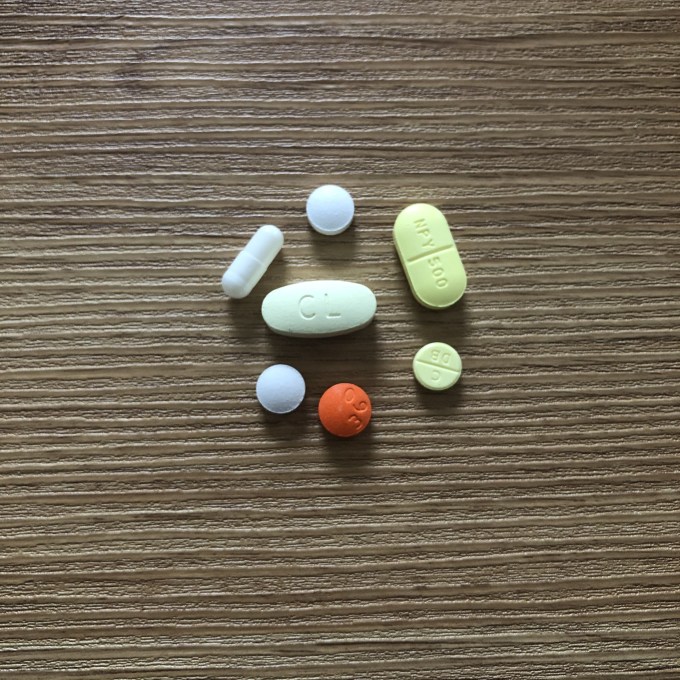
PAINKILLERS – Okay, this isn’t an everyday occurrence but it’s very common, especially at the moment (I hurt my back about a month ago – a story for another time). I have them on me all the time and I regret it if I don’t. Pain can be so debilitating and if I don’t have something to manage them, if only to get home, then I’m in really trouble. I also get migraines that absolutely incapacitate me so having the pills that help with those is vital. I often feel like a walking pharmacy but I’ve learned the hard way – several times – that it’s better to be prepared.
LOTS OF WATER – Generally, none of us are drinking enough water but as a person with Hypermobile Ehlers Danlos Syndrome (hEDS), I’m sure I’m not, as hard as I try. When I was diagnosed, the recommendation was that I drink more than double what a person without hEDS is supposed to drink (x); I’ve been trying to build up my water intake but it’s a slow process. I also have Postural Orthostatic Tachycardia Syndrome (POTS), which often occurs with hEDS, and includes symptoms like dizziness, light-headedness, swelling in the legs after standing for short periods of time, palpitations, fainting, and more, all of which can increase in intensity when a person is dehydrated, after exercising, or during hot weather (I want to write a more in depth post about all of this when I have more time). Dehydration has also been linked to an increase in pain sensitivity (x). Increasing water intake has proven to help POTS symptoms so I’m doing my best to always have water with me (or cordial if the taste of water becomes a struggle, something my nutritionist okayed, given that I’d still be getting the fluids) and I think it’s helping me to drink more (x). It’s surprisingly hard though, to drink that much water.
MY PHONE – I know that many people talk about needing breaks and time away from their phones but, in general, having my phone around is more helpful than it isn’t. I find social media pretty triggering for my anxiety so I rarely find myself scrolling through Facebook or Twitter or Instagram (and I hate TikTok more than I can even articulate) whereas I find the apps for setting alarms and timers helpful, Duolingo really good for my anxiety (and mental health in general), and the Notes app vital to writing down thoughts and ideas to follow up on. I do find it stressful that it means anyone has access to me, can contact me whenever they want, but then Airplane Mode is right there… But generally, my phone is more helpful than not.
MY BULLET JOURNAL – Between my ADHD and my general anxiety about being organised, my bullet journal (or what began as a bullet journal and has evolved into a more personalised version of the system) is all but permanently attached to me. It has my list of commitments, the list of things I want to get done during the day, and anything else that might be relevant, like stuff to do with the cats or the house. I honestly don’t know what I’d do without it.
FIDGET TOYS – My hair pulling has been particularly bad recently (plus I’ve seriously struggled with chewing the callouses on my fingertips and tearing at a scar on my face) and after years of dealing with it, I have a slightly ridiculous collection of fidget toys that I rotate using as the urge to pull varies; sometimes certain fidgets are more effective than others. So I usually have at least within reach, whether that’s wherever I am or in my bag.
NOISE-CANCELLING HEADPHONES – Having had some very unpleasant experiences with just how loud the world is (you may remember this particular disaster), I got an amazing set of noise-cancelling headphones that have made navigating my hometown, London, transport systems, etc so much easier. I’ve recommended them to multiple people and those who got them have agreed that they make life – and all of its noise – a lot more manageable.
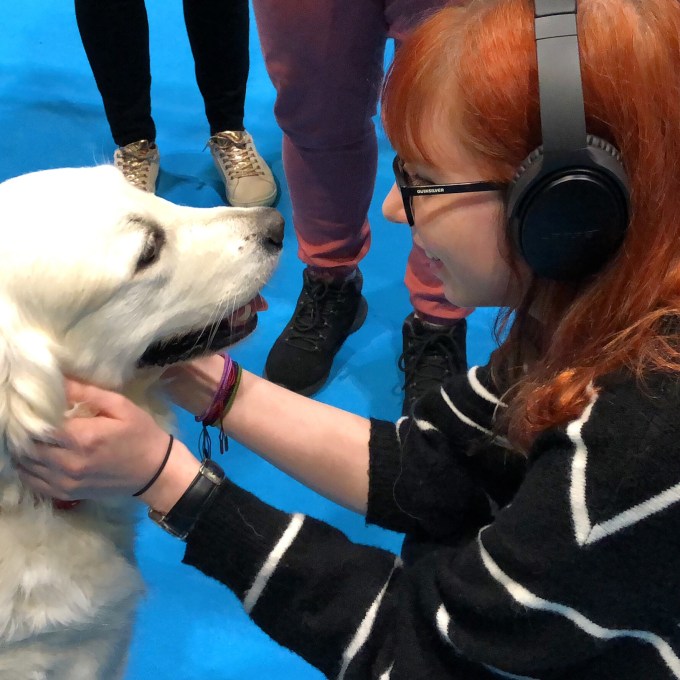
FACE MASK AND HAND SANITISER – I know that, for a lot of people, it feels like the pandemic has ended but, for many, many others, it hasn’t. I know immunocompromised people, those struggling with Long COVID, people who are still getting COVID and getting seriously sick so it certainly doesn’t feel over to me. If I’m out, I’m pretty neurotic about hand sanitiser and wearing a mask; I’m not perfect and I do sometimes forget, especially if I’m feeling overwhelmed in a social situation and there’s no prompt of other people wearing masks, but I’m still pretty on the case about it all.

A HIDDEN DISABILITIES SUNFLOWER LANYARD – I’m not sure when I first got my sunflower lanyard and I can’t honestly say it’s changed my life but there are certain places that it does make life easier, like at airports and concerts (and getting support in those sorts of places is so important). Mostly I wear it when travelling around London because having a big ‘autistic’ label around my neck reminds people to take care and hopefully be a bit more aware of what they’re doing and what’s going on around them. I’m sure there are people who see it and it makes them uncomfortable or contrary or belligerent (because, in my experience, those people tend to be everywhere) and I think there are places where it probably makes me more vulnerable but, on the whole, it tends to be helpful if I use my judgement.
JOINT SUPPORTS – Because of my hEDS, I struggle with a lot of pain in my joints (the gift that keeps on giving) so I have a handful of different supports and braces. I mainly use them for my knee and for my wrists, but I also have one for my back. They not only really help with my stability – something I’m struggling with more and more – but, as with my sunflower lanyard, they remind people that I am kind of fragile and that they need to be careful around me, especially on trains and the underground etc.
POLARISED SUNGLASSES – The last time I went to get new glasses, I mentioned that I have hEDS and the optician recommended getting polarised sunglasses because they can help with light sensitivity, something that many people with EDS struggle with: our eyes are sensitive can get really tired because they are made up of 80% collagen, which is – as we know – what EDS negatively affects. And if you can reduce the strain on your eyes – which these glasses do, even if you’re inside but it’s still very bright – then you can hopefully reduce the chances of developing problems with your eyes (again, EDS: the gift that keeps on giving).
LIP BALM – A common symptom of multiple types of EDS is sensitive skin and that can manifest as dry lips (and cracked lips that take ages to heal) so I try to always have a good lip balm around. My personal preference is the EOS Crystal Lip Balm in Hibiscus Peach, which I’m not totally sure they make anymore but it’s still available through various online stores. But it’s their crystal lip balms that are best for hydrating your lips (but it’s worth reading this article because some people have had allergic reactions to certain ingredients); the previous, more waxy versions were nice but I didn’t find them to be super effective. This one helps my skin recover really quickly (and stay hydrated) and I can barely feel it on my lips, a plus considering that the sensory experience of make up and skincare can be really difficult for me. But there are a lot of great ones out there; I’ve used several from The Body Shop that I would recommend too.
CBD GUMMIES – Over the last couple of years, my sleep schedule – for the most part – has been awful. Most nights I was getting a fractured few hours and then there were nights where I didn’t sleep at all. It was horrible and it just made my mental health even worse, which was pretty impressive given how bad it was when my sleep was at its worst. I felt like I’d tried every strategy ever suggested, including some pretty strong prescription sleeping pills; they worked-ish but I suffered from some pretty miserable side effects for not much reward. I’d always been vaguely resistant to trying CBD based products for some reason – I’m not really sure why – but I was desperate and ended up trying a few different types of CBD gummies. Within a few days, my sleep was deep and reliable again. Months later, it’s remained pretty good. Plus it’s helped me avoid relying on prescription pills, which I’ve had to do in the past even though it’s not generally advised (this was with the approval of my doctor); taking them every night can increase your tolerance and so they stop working and no one really knows what the long term effects are, although some people become addicted and can experience symptoms like hallucinations. So avoiding that is definitely a pro on the pro-con list. Research is still being done around CBD but so far it seems that the only problems are certain drug interactions, which would just involve a conversation with a doctor. None of those interactions were a problem for me so I’ve been taking them consistently ever since and my sleep has been so much better. They’re a constant presence on my bedside table.
So I hope that was of some interest, at least. As I said in my introduction, let me know if you use these things; let me know if you use other things; let me know if there are things that might work better than the ones on this list! Over to you!
More Tips For Travelling As An Autistic Person
Posted on June 10, 2023
Back in 2018, I wrote a post about travelling as an autistic person and my personal tips for making it smoother and less stressful and anxiety-inducing. In that post, I included:
- Plan ahead
- Speak to a travel agent
- Choose your accommodation carefully
- Write a list of everything you’ll need and have someone check it
- Pack an emergency kit in your carry on baggage
- Bring your own food
- Prepare specifically for the flight
- Build in time out and don’t feel guilty for it
I still stand by all of these strategies but since then, having travelled more and gained more experience (apart from the lockdown and pandemic times – the latter of which we are arguably still in but obviously travel is now more possible for many, many people), I have more thoughts that I thought might be helpful to share.
FIND A GOOD TRAVEL AGENT – I wrote about talking to a travel agent last time but I wanted to share my personal experience with our travel agent, a guy we first met when we travelled to the US in 2016. Since then, we’ve booked every trip we’ve taken with his help – we go to him for everything – and developed a solid relationship. It really helps, I think, that he has a working knowledge and understanding of Autism so, even though he didn’t know me and my struggles personally, he picked up what I could and couldn’t handle very quickly, which has made things so much smoother than they might’ve been otherwise. He always goes above and beyond for us, something I would attribute to the working relationship we’ve built with him, and I so, so appreciate it.
TAKE INSPIRATION FROM YOUR MOST EXTREME NEEDS WHEN YOU PACK – It’s easy to optimistically assume that you’ll have a normal day every day you’re away but that’s not only unlikely because our minds and bodies don’t cooperate just because we want them to but also because the stress and anxiety of travelling and being in a new, unfamiliar place can do a number on us. I always find being away from home for more than a few days incredibly stressful, which can screw up my energy, my pain, my anxiety, my sensory issues… So packing with bad days in mind is probably a good idea; I’ve started carrying my heat pad (for pain), my joint supports (which I don’t always need but, of course, always seem to need when I’ve left them at home), a number of different fidget toys, medication for migraines (not a super common occurrence but debilitating when they do happen) and so on…
LEARN SOME BASIC PHRASES – If you’re planning to go somewhere where the language is different to that of your home country, it’s definitely worth learning at least a few common phrases. I know this is often considered to be common courtesy and I don’t disagree but when you have a lot of health stuff to deal with or get really overwhelmed in new environments, it’s not that simple; with all of your other preparations, it can just slip down the priority list and then off the list altogether. I recently went to Germany and between the ridiculously long hours trying to get everything done before I left and then the total overwhelm when I got there, I somehow didn’t clock that I didn’t speak any German until a couple of days in. How bizarre is that?! Then, of course, I panicked and did my best to speed learn words and phrases like, “Yes, please,” “No, thank you,” “English please,” “Excuse me,” and “I’m sorry.” Fortunately for me, German isn’t completely alien and the spellings and pronunciations – at least for the simple stuff – are relatively close, or at least they felt that way in my brain. So I picked those up easily, which was a relief. I think that having some language can really reduce your anxiety because you don’t feel so lost (and potentially helpless) and it makes moving around and engaging with where you are a little easier.
ASSISTANCE SERVICES AT THE AIRPORT – I’ve now done multiple trips through airports where we’ve arranged for the assistance services to help us out. So now I get wheeled (in a wheelchair or one of those electric buggies) from check out to not just the gate but down the gangplank to the actual plane. Because I struggle with standing and walking for extended periods of time, this has not only reduced both my pain and fatigue, it’s also reduced my anxiety about the time it takes and the recovery time I’ll need later. Apart from a few mix ups (uncommon but it has happened), they’ve been super efficient and very nice. I’ve found a couple of them to be a bit intimidating but I think that’s just because they’re utterly focussed on the job (and the next one and the next one); no one has ever been anything but polite and even funny. On my recent trip to Germany, one of the women was really, really nice and we had a good laugh despite the language hurdles to navigate. The one confusion that I’ve experienced is that, at some airports (and always in the US), they operate on a tip system but no one’s ever told us that one way or the other. Maybe it’s the straightforward, autistic approach to things but, to me, a service provided by the airport implies that the airport pays them for the work they’re doing but clearly not. So that did take me by surprise and I haven’t always been prepared for that, financially or emotionally.
IF YOU’RE TRAVELLING FOR A SPECIFIC EVENT, FAMILIARISE YOURSELF WITH WHERE YOU ARE AND WHERE YOU NEED TO BE – If you’re travelling for an event like a wedding or a birthday, it’s well worth doing things like checking out and practising the route (or routes you’ll have to travel) so that you know how to get where you’re going and how long it will take. You don’t want to be stressing about being late or getting lost on the important day itself. And if you have to let go of everything else just to make sure that you can attend and engage with the event you’re there for, then that’s what you need to do; it’s hard not to feel guilty or upset about not ‘taking advantage’ of the opportunities that travelling has presented you with but most likely, if you’ve travelled for a particular event, it’s really important to you and has to be your priority. Chances are that you’ll feel better for putting it first.
HYDRATE – If I have learned anything over the last few years, it is how important it is to stay hydrated. We all know this, of course – we’re told often enough that none of us are drinking enough water – but autistic individuals often struggle with it specifically due to problems with our interoception (plus, thirst signals are generally weaker than other internal signals, making them harder to recognise). Being dehydrated can make everything so much harder, causing headaches and exhaustion to name a few, and when you’re away in an unfamiliar place, that’s the last thing you want.
IF YOU HAVE TO GO HOME EARLY, THAT’S OKAY – Sometimes shit happens and plans have to change. And that has to be okay. Whether it’s your physical health, your mental health, something going on at home, sometimes you just have to figure out how to accept the need for change and go home. Sometimes it’s a case of choosing the ‘lesser of two evils’ – staying is hard but so is leaving – and making the choice that feels the most right, even if both of them feel wrong to a certain extent. I usually need some time to come to terms with what the right decision is but then, once I know what I need to do, I just have to figure out how to make it happen.


Friedrichshafen in Germany: Lake Constance (known as Bodensee in German) and some gorgeous flowers I saw. (x)
As always, I feel sure that I’ve missed some. But hopefully these will be somewhat helpful to somebody. If any of you guys have any tips you’d like to share, please stick them in the comments!
 Finding Hope