 Finding Hope
World Mental Health Day 2024 (Mental Health In The Workplace)
Posted on October 14, 2024
Yes, my World Mental Health Day post is late but – somewhat ironically perhaps – my mental health has been so bad recently that, on World Mental Health Day itself, I couldn’t actually get out of bed or engage with anyone or anything. But I did want to share some thoughts about this day before we leave it too far behind…
I’ve been struggling with the themes for World Mental Health Day for several years now and this year turned out to be no different. When it was announced that the theme was to be ‘Mental Health in the Workplace,’ I could barely suppress an eye roll. It is, of course, a valid cause: anyone struggling with their mental health should be able to go to a designated person or department and get whatever support they need. But, if I’m honest, I feel like this is something that should already be in place, something that should fall under the Equality Act. I also can’t help thinking that mental health support in the workplace isn’t an area that an awareness day can actually create change around: that’s on each individual workplace. So, on a societal level, it requires very little work (and, in my opinion, nothing is likely to change – as cynical as that sounds).
And this brings me to my ever-growing frustration with World Mental Health Day: it feels increasingly performative. The themes and call to action are vague at best and, at this point, the day itself is just lacking inspiration and innovation. As far as I can tell, there’s no campaign, very little effort to fundraise, and – honestly – I wouldn’t even know it was happening if I didn’t have these days noted in my planner. Then the day comes around and it’s all empty, performative platitudes on social media before everyone forgets again. Cynical, I know, but that is my experience of World Mental Health Day every single year.
I also feel the need to point out that this year’s theme feels, at least, somewhat ableist: there is a massive group of people who are unable or who have never been able to work due to mental ill health and this theme excludes them without a second thought. The irony of this would be laughable if it wasn’t so depressing, considering how desperate the UK government is to force disabled and mentally ill people into the workforce – regardless of the damage it will do to this group of people. This callous, single-minded approach strikes terror in the hearts of every single person I know who is part of this community. This is an area where a focussed, passionate campaign from The Mental Health Foundation could actually do some good. Time and money and effort put into improving the mental health services and support systems, and therefore the mental health of those not currently able to work, would allow so many people to work, whether it be after time off or for the very first time.
Before we go any further, I do just want to note that, personally, I think that our current capitalist model of work is abusive and exploitative and damaging and that there are so many other systems that would benefit both the individual and the industry they work in but, for the sake of the theme and this post, we’ll continue on the basis that it isn’t as horrific as it is (otherwise I will literally spiral into a pit of despair).
The point I’m making here is that I don’t know anyone who’s been unable to work due to mental ill health, whether that’s for short or long periods of time, who doesn’t want to contribute in some way, whether that’s to a specific workplace or industry, to society as a whole, or simply to the needs of their family and community. The number of people on benefits who don’t feel any inclination to work or who are faking in order to get benefits is a lot smaller than we were brainwashed – by The Conservative Party – to believe. I fully believe that human beings want to help and create and contribute and, if the mental health services were better and allowed more people to access support, more people would be doing those exact things.
But, of course, helping those with life-altering mental health struggles is a lot harder and requires a lot more time and effort and money and, at my most cynical, I feel like these areas are being avoided by organisations like The Mental Health Foundation because they require a lot of all of those things. Real change requires more than downloadable social media graphics and tweeting clichés.
I’m tired of the performances, of the empty promises. Maybe it’s my autistic, black and white thinking but I just don’t understand why improving the mental health services isn’t a priority since ANY improvement would make a significant difference. This seems to be the most obvious, most efficient solution, even if it isn’t the fastest. Especially, as I said, ANY improvement would create positive change. And the more work that goes into these services, the more people they can help and, therefore, the more people there will be returning to the workplace (given that that seems to be the government’s ultimate priority, whereas mine is simply that more people are able to access support and hopefully improve their mental health, maybe even recover from certain mental illnesses). I’m sure it comes down to money – because it always does, doesn’t it? – but this seems like such an obvious solution with such clear long term benefits. I just don’t understand and I’m tired of workplaces, healthcare professionals, organisations, and government caring so little about such a big group of people that they are responsible for.
And because this has been a very cynical and depressing post, here is a picture of my dog – we all know how good animals are for our mental health, even if only for a momentary boost…

Mental Health Awareness Week 2022
Posted on May 14, 2022
I have to admit that I often struggle with Mental Health Awareness Week, particularly the flooding of social media with “it’s okay not to be okay” and “reach out to someone if you need help”; it makes me want to scream in frustration because we are so far past that. If we’re going to create better support for mental health, we need more than that. This year, the theme is loneliness, which is an apt one, two years and change into this pandemic. I’m certainly seeing a lot of loneliness around at the moment: those with mental health issues, disabled individuals, people who are still shielding and feeling abandoned by society because of the dropped mandates… I can’t imagine what it’s like to be in or from Ukraine right now…
All of these situations need to be talked about and since the Mental Health Foundation is encouraging everyone to share their experiences with loneliness for Mental Health Awareness Week, I thought I’d write about my experience, as a disabled person with mental health issues.
This is something I find kind of hard to talk about. I guess talking about it – and writing about it – makes me feel a little guilty because I’m not alone. I know I’m not alone. I have a great family and some really wonderful friends who have been there for me through some really tough stuff. They try so hard to make sure that I don’t feel alone. Fortunately, we – as people – don’t need to understand each other’s experiences point for point to find friendship and create those important, supportive bonds: I have a friend who has experienced very different trauma to me but there have been a lot of similarities throughout both of our journeys that have made it possible for us to relate to each other. I’m grateful for that, more than I can say.
But it’s also true that I do, often and increasingly, feel alone, feel lonely. And I think that that’s because no one – no one I’ve found at least – really understands what it’s like to be in my head, in my body, in my life, dealing with the problems that I have and the ripple effect that they can create. I’ve had multiple doctors and medical services simply stop helping me (or refuse to help me at all) because my case is “too complicated.” These are the professionals – the people who are supposed to really know and understand this stuff – and even they don’t know what to do with me (and those abandonments, plus other abandonments in my life, have left me with a lot of issues and fears that I have to work on every day). I think the issue is compounded by the fact that I have multiple diagnoses so, even though I may fit into the autistic community, I still don’t feel like I fit in because I also have OCD and BPD and so on; I can’t imagine there are many people who fit into the same community as me when the criteria is so narrow. I’m also not entirely convinced by the idea of community based on diagnosis either, to be honest, especially when the diagnosis covers such a range of symptoms, behaviours, and experiences, like Autism Spectrum Disorder. Anyway, my point is that I don’t feel like I fit in, even with the people that, on paper, I would likely get along with.
As I said, I’m not alone. Even though I’ve never felt like I quite fitted in, I have some great friends and friends from all areas of my life: school, sixth form, uni, Masters, as well as stuff outside education… But I can’t always keep up with my friends, with my peers, and I can’t always do the things I wish I could and I find that so hard. I always end up feeling like there’s a gap between me and everyone else and it’s lonely. Not being able to physically keep up with those around me means that I often feel left out – even if that’s nobody’s intention. And there’s a level of embarrassment and shame about being the one who can never keep up, the one who is always asking people to wait, always having to double check or change or cancel plans. I don’t know where that comes from – I know my friends would never want me to feel like that. But still, it’s there. It widens the gap and it makes that loneliness worse.
The older I get, the more I notice it – the gap. While I spend my time trying different medications, going to appointments for my physical and mental health, and resting after doing what I can manage to do, a lot of my friends are pursuing PhDs, establishing careers, living independently, and building lasting relationships. Our life experiences are just so different. And the longer it goes on, the bigger the disconnect feels. It just feels like the future is full of loneliness and I don’t know what to do with that.
I know this is kind of a depressing post. It’s a depressing truth, although it might have come out differently if I weren’t coming off my antidepressants; if I were in a better place mentally, I might have a more hopeful outlook. I don’t know.
I don’t think it’s a bad theme – loneliness can have a devastating impact on a person’s mental health – but the Mental Health Foundation’s website says that they want to “shatter the stigma around loneliness” and while I can’t say that there’s no stigma associated with loneliness, I can think of so many things that might have more impact as a theme, might make more of a difference, like access to mental health support or the impact of social media or… I don’t know, something more specific than loneliness or nature (last year’s theme). (I talked about this more in my Mass Observation Day post.) As I said at the beginning of this post, I find Mental Health Awareness Week difficult because I so often feel like the information being circulated is somewhat obvious, that we could – and should – be going deeper. I guess it all just feels a bit surface level but I don’t know how that changes, if anyone else even feels this way. It just doesn’t feel like enough. It’s one week a year and it doesn’t feel like enough.
Mental Health Awareness Week 2021
Posted on May 10, 2021
So May is here and Mental Health Awareness Week has rolled around again. This year the theme is nature, which I was initially unsure about but after reading The Mental Health Foundation’s website, it made a lot more sense to me, even if I wouldn’t have necessarily made the same choice…
- “During long months of the pandemic, millions of us turned to nature. Our research on the mental health impacts of the pandemic showed going for walks outside was one of our top coping strategies and 45% of us reported being in green spaces had been vital for our mental health. Websites which showed footage from webcams of wildlife saw hits increase by over 2000%. Wider studies also found that during lockdowns, people not only spent more time in nature but were noticing it more. It was as if we were re-discovering at our most fragile point our fundamental human need to connect with nature.”
- “Nature is so central to our psychological and emotional health, that it’s almost impossible to realise good mental health for all without a greater connection to the natural world… During Mental Health Awareness Week 2021, we will pull together the evidence that demonstrates the powerful benefits of nature for our mental health. We will look at nature’s unique ability to not only bring consolation in times of stress, but also increase our creativity, empathy and a sense of wonder. It turns out that it is not just being in nature but how we open ourselves up and interact with nature that counts. We will show that even small contacts with nature can reduce feelings of social isolation and be effective in protecting our mental health, and preventing distress.”
- “We have two clear aims. Firstly, to inspire more people to connect with nature in new ways, noticing the impact that this connection can have for their mental health. Secondly, to convince decision makers at all levels that access to and quality of nature is a mental health and social justice issue as well as an environmental one.”
- “2021 is going be a huge year for nature: a new Environment Bill will go through the UK Parliament which will shape the natural world for generations to come; the UK will host the G7 nations where creating a greener future will be a key priority and a historic international UN Climate Change Conference of the Parties (COP26) will be hosted in Glasgow in November. There could not be a more important time to understand the links between nature and mental health.”
So, with all of that in mind, I thought I’d make a list of all the nature-related things that make me happy. The list started out pretty short but the more I thought about it, the more things came to mind. I could’ve kept going but I decided to stop before the post got out of control. We all know me and lists…
1. THUNDERSTORMS / RAIN
I love thunderstorms. I mean, I freaking love them. I love the thunder; I love the lightning; I love the pouring rain; I love how the air feels. I read that thunderstorms release negative ions into the atmosphere and that’s what makes the air feel electric and invigorating after a storm (x); I love that feeling. There’s something so incredible and powerful and emotional about thunderstorms; I don’t really know how to explain that response but that’s how they feel. They make me feel really alive in a way that nothing else does.
“There was a crash of thunder, the sky shattering right above our heads.” – Abby Geni
2. THE CATS PLAYING IN THE GARDEN
As soon as it starts getting warmer and drier, my cats are out in the garden all day every day. We basically only see them for meals. Most of the time they lounge around in the grass, soaking up the sun, or in shady corners, when it gets too hot, but they also play, which is just the most adorable thing in the world. They dig, they chase butterflies and bees, they pounce on unseen things, they bat at the wavy grasses, they chase each other, rolling around and leaping in the air… It’s so cute. It’s like nothing else exists, something that’s been a source of calm for me over the last eighteen months.


“Concrete is heavy; iron is hard — but the grass will prevail.” – Edward Abbey
3. THE BEACHES IN NORFOLK
I mean, I’ll take any beach going because I love beaches but the beaches in Norfolk have always been extra special for me. I can’t really explain it. Those beaches are one of the few things that make me feel like I’m in sync with the world when usually I feel like I’m not, like I’m on a different frequency to everyone else. But the sand, the sea, the sky, the air… it makes me feel more real. If that makes any sense at all.

“Nature’s law is stronger than any little law you have made for yourself.” – Frank A. De Puy
4. MY YELLOW ROSES / MAGNOLIA TREES
When we moved into the ‘new’ house, there was a yellow rose bush and every year, it blooms magnificently. It’s utterly stunning with these huge, liquid gold roses and I fell in love with it from the first flower. I look forward to them every year and I love watching more and more buds open and practically shine in the sun. The petals are big and soft and gorgeous too. The plant itself is taller than me now and even as the family member least inclined to gardening, I’d do anything to keep it alive and healthy.


I’ve loved Magnolia trees since I was a child: my Granny had one in her big, beautiful garden and me and my brother used to climb into it (it wasn’t very big so we’d sort of climb inside it rather than climb up it), hidden by the flowers, and play in our massive imaginary worlds. I’ve always had a fondness for them ever since. Then there was a huge one outside my therapist’s office and it always used to make me feel better when therapy felt overwhelming and just too hard. We have one in our garden now although it’s still a baby and has a way to go before it’s a ‘real’ tree.
“Flowers rewrite soil, water, and sunshine into petal’d poetry.” – Terri Guillemets
5. SITTING IN THE SUN ON THE DECK
I don’t often sit out on the deck – I’m not very good at just relaxing and not doing anything – but when I do, I love the feeling of the breeze in my hair and the sun on my skin. The word kind of makes me cringe but it feels so nourishing. I have to be a bit careful though: for some reason, my skin seems only able to take a certain amount of direct sunlight before reacting, getting red and overheated (so far no one has figured out what causes it). But in small doses, I love it and I can almost feel an inner meter going up, like a health meter in a video game.
“In nature, nothing is perfect and everything is perfect.” – Alice Walker
6. SWIMMING
While I’m not swimming in a ‘natural environment’ (especially with the pandemic, the water has enough chemicals in it to make your eyes burn), water itself is a natural environment so I’m going to include it anyway. Due to my chronic pain, swimming is currently the only exercise I can do – at the very least until my joints, strength, and stamina are better – and fortunately, I love swimming. As you can probably tell from the photos below. It’s always such a relief to get in the water and be essentially weightless, and I love being able to exercise and work hard without pain (even though I have been known to overdo it and suffer the consequences the next day). The whole experience makes me so joyously happy.
“I believe that there is a subtle magnetism in Nature, which, if we unconsciously yield to it, will direct us aright.” – Henry David Thoreau
7. SUNRISES / SUNSETS
I’ve always loved sunrises and sunsets. I don’t think there’s an incarnation of the sky I don’t find beautiful but, being a person that feels so emotionally connected to colours (especially the ones we see in the sky), sunrise and sunset are always particularly special to me. And the more striking they are, the more I love them. Like this one below: it was an ordinary day made extraordinary by the sunset. The really stunning ones always feel like a rare gift. Photos never really do them justice but I often find myself coming back to this photo because I remember just how beautiful it was and how it completely took my breath away.
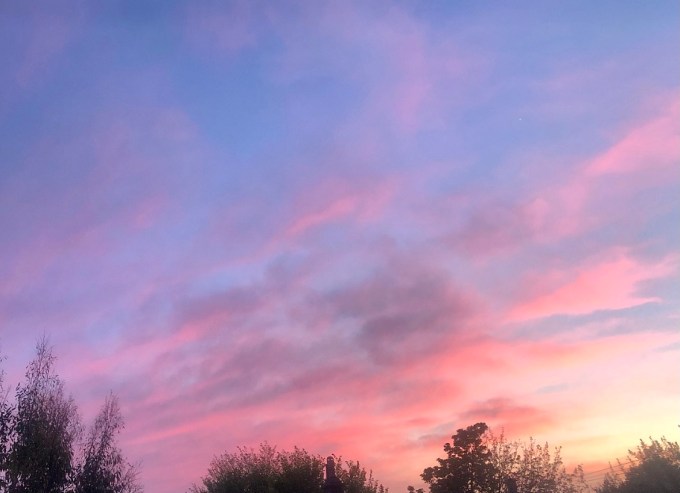
“Clouds blaze brilliant colours in a sky on fire.” – Terri Guillemets
8. STARS / THE NIGHT SKY
I’ve been going out to watch meteor showers (especially the Perseid meteor shower in August) for the last several years and I love it. I love staring up, barely breathing as you wait for a meteor. Then suddenly one will streak across the sky; sometimes they’re so light that they’re like a white pencil barely touching black paper and sometimes they’re so bright, like a knife cutting through the roof of the tent and giving you a split second glimpse of blinding sun. I’ve only seen a few of those but they’re breath taking every single time. The whole experience is just magical. And just looking at the sky, I love how the longer you look at the stars, the more you see, like you’re seeing further and further into space. It’s amazing (although a little scary if you think about it too hard).
“The stars are the street lights of eternity.” – Unknown
9. NATURE DOCUMENTARIES
I know it’s not exactly ‘engaging in nature’ but I think it’s still staying connected to nature, just in an indirect way. It’s not like any of us can just jump on a flight and see these animals in real life on a whim so a documentary is the next best thing. Me and my brother used to watch all of the David Attenborough documentaries with my grandparents when we were little so they’re a huge part of my childhood; they’re probably a big part of why I’ve always loved animals so much. I especially loved the ones with big cats, although I never liked the parts where they killed other animals (I know it’s essential for their survival but I still don’t like watching it happen).
“Nature is new every morning, but its cycles are ancient, independent of all our anxieties, oblivious to our plans.” – Barbara Cawthorne Crafton
10. ICELAND
I’m not sure that this is something that really fits on this list because it’s not like a place you can just visit whenever you feel like it but if we’re talking about nature and the power of nature, then I have to mention my trip to Iceland. Seeing the waterfalls, the mountains, the glaciers, the Northern Lights… I’ve never felt as connected to nature as I did there. Even the air felt different as I breathed in and out. It was one of the most amazing places I’ve ever visited and I really hope that one day I’ll get to go back, one day when I’m stronger and fitter and can manage the more difficult walks and therefore see even more.


“Study nature, love nature, stay close to nature. It will never fail you.” – Frank Lloyd Wright
So here are ten of my most important nature-related things. If you made a list, what would go on yours?
The Mental Health Foundation has a lot of resources on their website for this week but they’re also issuing a challenge…
“During Mental Health Awareness Week, we are asking you to do three things:
- Experience nature: Take time to recognise and grow your connection with nature during the week. Take a moment to notice and celebrate nature in your daily life. You might be surprised by what you notice!
- Share nature: Take a photo, video or sound recording and share the connections you’ve made during the week, to inspire others. Join the discussion on how you’re connecting with nature by using the hashtags #ConnectWithNature #MentalHealthAwarenessWeek
- Talk about nature: Use our tips, school packs, research and policy guides to discuss in your family, school, workplace and community how you can help encourage people to find new ways to connect with nature in your local environment.”
EDIT: This post is in response to The Mental Health Foundation’s Mental Health Awareness Week theme of ‘nature,’ which is important when it comes to managing your general mental health, but I do think it’s important that we all acknowledge and are aware that managing your mental health is not the same as living and coping with a mental illness. I think, too often, they’re lumped together as the same thing when they’re very different. Maybe we need a different week or separate days for different conditions because whilst connected, managing your mental health and managing a mental illness are not the same and can require vastly different approaches.
 Finding Hope