 Finding Hope
Too Much And Not Enough, Vol. 1 – Out Now!
Posted on February 28, 2026
“This EP isn’t just music; it’s connection, validation, and advocacy wrapped in melody.” (x)
My proudest achievement of 2025 was releasing new music: two singles and an EP! Having not released a project since my Honest EP in 2020 (although I later released the acoustic version in 2021), I’ve been so desperate to release more music but health stuff got in the way and it took a long time to get back to a place where I was even close to capable of managing the stress of putting out a new project (and stressful it was). Given everything that happened between late June and December, I didn’t have the headspace, the physical ability, the time, or any combination of the three to write about it properly. But I didn’t want to skip it because it is so important to me and to the last year so – finally – here is the post about my recent EP, Too Much And Not Enough, Vol. 1. This is – hopefully – the first in a series about my experiences of being autistic, inspired by how lonely and isolating it was to grow up, never seeing or hearing my life represented in books, film, TV, music, and so on. It’s taken a long time to feel ready to take on a project like this but now that I am, I know without a doubt that this is the art that I’m meant to be making.
“What makes Too Much And Not Enough, Vol. 1 powerful is its dual role as personal diary and shared lifeline. Hooper writes for her younger self, for others navigating similar realities, and for those who may be hearing these experiences articulated for the first time. The result is a project that doesn’t just speak – it listens back, offering connection in a world that often overlooks the voices that need to be heard most.” (x)
To reintroduce myself and to lay the foundation of the EP, I released two singles at the beginning of the year called ‘Write This Out‘ and ‘In The Mourning.’ When I was planning the EP and choosing which songs to include on it, which songs felt like the most important to include on a first EP – my first EP – about being autistic, I felt like neither of them were quite the right fit. But they still felt like important parts of the story that I wanted out in the world so they became the two singles released ahead of the EP and its official first single. And even though they’re separate releases, they’re deeply connected on a thematic level and so, to represent that connection, I used photos from the EP photoshoot for the cover artwork of each single.
“Every line in ‘Write This Out’ carries the grounded honesty of someone who has learned to create calm in the middle of chaos. It’s heartfelt without ever feeling heavy, and the sincerity behind her words lands with real clarity.” (x)


(Photography by Thomas Oscar Miles and editing by Richard Sanderson)
“Another personal moment that stood out to me was how the song leaves you with a sense of companionship, as if she’s reminding listeners that they’re not alone in the messier parts of their thoughts… It feels like the beginning of an important new chapter for her.” (x)
I’m so proud of them both, for so many different reasons, and each of them felt so key to setting the scene for the EP. ‘Write This Out’ is driven by the need to get overwhelming emotions out of my body but keep them documented and protected while ‘In The Mourning’ reflects my stream of consciousness after being diagnosed as autistic. I felt like both this feeling and this emotional process were important pieces of the picture that I hoped this EP would paint and releasing them first could only make for a deeper understanding of it. Obviously I can’t ensure that people listen to them ahead of the EP, now that it’s out in the world, but something has to determine in what order the music gets released and when the chronology of this music means a lot to me, why not?
“The songwriting is exquisitely vulnerable, with metaphors and lyrics that cut deep without ever losing hope.” (x)


(Photography by Thomas Oscar Miles and editing by Richard Sanderson)
“And then there’s ‘The Loneliest Whale,’ a track that feels like both a personal lament and a communal sigh – isolation turned into shared understanding.” (x)
The first official single of the EP was ‘The Loneliest Whale.’ As I talked about in the blog post I shared when I put this song out, I wrote it about The Loneliest Whale, a whale that sings at a higher frequency than other whales, making it impossible for them to communicate with each other; I’ve been fascinated by it for as long as I can remember and I’ve always wanted to write a song about it. I deeply related to this idea of feeling isolated from everyone around me, both before and after my diagnosis, and so I used the whale as a metaphor for the loneliness I have experienced as an autistic person. But it’s also about connection.
Before I sat down to write the song, I did some research to make sure all of my facts were up to date and discovered the extensive amount of art that has been made by people who have been moved by the story of The Loneliest Whale. So, so many individuals and communities relate to this story, to the emotions this whale represents, and I was so inspired by that. I’d originally expected the song to be a sad one but, after seeing how many people felt connected to this whale and having the epiphany of how connected we are to each other through these shared feelings, the song transformed into something more positive and uplifting. And because connection is the whole point of this EP, of all of the music I make, it was the obvious choice for the first single.
“With this album, both tender and powerful, Lauren Alex Hooper reminds us that music can be a space of refuge, truth, and connection. A rare and necessary project.” (x)


(Photography by Thomas Oscar Miles and editing by Richard Sanderson)
“In a world where pop often leans into glossy generalities, Too Much And Not Enough, Vol. 1 by Lauren Alex Hooper feels like a rare act of rebellion – not loud or brash, but intimate, precise, and unwaveringly honest. The five-track EP is a deeply personal exploration of Hooper’s experience as an autistic woman, told in vivid lyricism and delicately layered alt-pop production. It’s not just a collection of songs; it’s a lived reality, shaped into art.” (x)
While ‘The Loneliest Whale’ was the lead single, the EP opens with ‘Armour,’ a tumultuous track about the difficulty of masking as an autistic person in a neurotypical society. When I sat down to write this song, I was all set to write about how far I’d come with learning to unmask, only to realise that I hadn’t made as much progress as I’d thought. I’ve done a lot of work on it but I think that’s only made me realise how much more there is to do and that was more than a little bit overwhelming. After that particular revelation, my writing shifted and a theme I kept coming back to was how suffocated I feel by masking and the conflict between wanting to be my true self and the fear of rejecting the protection that masking can and has provided. It was clear to me very early on that this was the opening track because it’s a statement about trying to be more honest and authentic, a process which begins in earnest with this song, and it’s precisely the reason that this EP exists.
“Opening with ‘Armour,’ the artist lays bare the quiet violence of masking and the daily effort to hide neurodivergent traits for social acceptance. It’s a haunting introduction, with delicate instrumentation that mirrors the tension between self-protection and self-erasure.” (x)
Next up is ‘Eye To Eye,’ which builds on the intensity of the first track by digging into the tension and vulnerability of making eye contact, a well documented struggle for many autistic individuals for a whole spectrum of reasons. I’ve always found it difficult and while there were a handful of different things I could’ve focussed on, I most wanted to explore how deeply vulnerable it feels to be eye to eye with someone, to feel like they can see everything you’re feeling and everything you’ve been through. It was hard to write, especially the bridge, and it would’ve been so easy to be less vulnerable but, when that is the whole point of the song, it was really important to me to stay the course and not take the easier road.
“‘Eye to Eye’ and ‘The Loneliest Whale’ are masterclasses in metaphor, turning everyday autistic struggles into poignant pop poetry.” (x)
‘The Loneliest Whale’ sits in the middle of the EP’s tracklist at track three. I’ve already talked about it a bit above and I wrote more about the inspiration behind this song and the creative process – in this post – when it came out. It felt like such a special song right from the beginning and I’m so happy that I was able to release it despite it being pretty unconventional, subject matter-wise, for a pop song.
“‘The Loneliest Whale’ is the metaphor-rich centerpiece, capturing the feeling of calling out into the world and not knowing if anyone is listening.” (x)
The fourth song on the EP is ‘Overexposed,’ which is about my experience of sensory overload, about how overwhelming the world can be, and how hard it can be to exist in the world when it feels so bright and loud and emotional and intense. This is the oldest song on the EP: I wrote the original draft not long after I was diagnosed, on one of my first trips to Nashville with one of my best friends there, Caylan Hays, who is a beautiful songwriter and artist. It’s evolved quite a bit since then: I have a clearer understanding of sensory overload and I’m better at articulating my experience of it and both of those things have, of course, changed the song. But the central imagery of an overexposed photograph always stuck with me so I was keen to revisit it when writing for the EP.
“In ‘Overexposed,’ sensory overload is rendered sonically through layered textures and dynamic shifts, allowing the listener to feel the push-pull of intensity and withdrawal. Hooper’s voice remains the constant – warm, clear, and unwavering, even in the most vulnerable admissions.” (x)
The final track of the EP is ‘Last One Standing.’ I wrote this from the point of view of the Agents of Shield character, Daisy Johnson, who has been one of my special interests from the moment I started watching the show (I’ve written more about her and some of the reasons I love her so much here and here) and, songwriting being my biggest and oldest special interest, I’d been thinking about how to bring the two together for a long time. I must’ve spent hours watching edits and fanvideos on YouTube, noting the scenes from the show that featured repeatedly and analysing the songs chosen, from the emotional undercurrent of the track to the lyrical themes to the production choices. It gave me such an insight into what other fans of the character loved about her, what resonated with them, the themes and sounds they associated with her. When I eventually brought the idea to Richard, I knew exactly what I wanted the song to sound like: an anthem of tenacity and perseverance and strength… all of the things that Daisy Johnson has always represented to me. And as I wrote the lyrics, I tried to channel the hours I’ve spent absorbing the show and so I shaped the language around her speech patterns, deliberately favouring some words and avoiding others. One review called it “unapologetically nerdy” and that may be the biggest compliment I could receive for this song, especially given the creative process behind it. I’m pretty sure it’s the biggest deep dive into not just one but two special interests that I’ve ever done; it’s my truest expression of autistic joy. But regardless of how deeply for me this song – and the creative process behind it – is, it ended up being a song that I really wanted to release because I think there are multiple meaningful messages in it. It’s a celebration of determination and resilience – and of autistic joy, particularly when that joy is a form of resistance and defiance – but it also represents, to me at least, the ongoing struggle that is being autistic in the often resistant, inflexible society that we live in, just to be seen and treated and accepted in the same way that our allistic peers are; you need self-belief and strength of will to keep taking steps forwards, to keep standing up for yourself and fighting for what you need and what you deserve. I needed a song to empower me, to remind me of this when I forget it, to lend me that energy on the days that I can’t find it within myself. It means a lot to me to have that and I hope it can do the same for those who listen to it.
“‘Last One Standing’ closes the set with hope and fierce individuality. It’s a love letter to the passions and inner worlds that sustain so many autistic people – and a powerful reclamation of identity.” (x)


(During the writing of the project)
“Lauren Alex Hooper’s Too Much And Not Enough, Vol. 1 is a raw and open-hearted collection that speaks with quiet strength. Across five tracks, she explores identity, mental health, and neurodivergence without holding back or dressing things up. Her songwriting is honest in a way that feels lived-in, not performative. Each lyric feels like a page from a journal you were never meant to read but are lucky to experience.” (x)
The project started out very solitary as I figured out what I wanted to say and started writing the songs but as it grew, I got to work with more and more awesome people; I love the intimacy and laser focus of a small project but getting to bring in people who believed in the songs and the project… it felt like we were just feeding it more and more oxygen, which was really exciting. I love writing by myself – as evidenced by ‘Write This Out’ and ‘In The Mourning’ – but I also love collaborating: I wrote ‘The Loneliest Whale’ with one of my MA classmates, a super cool artist called lukeistired, and ‘Overexposed’ with my friend, Caylan, as I’ve already mentioned. I also took drafts of multiple songs to my longtime collaborator and writing partner, Richard Marc. Richard and I have been making music together for ten years now: we worked on my first single together, my first EP, and enough unreleased music to fill multiple hard drives. He’s a fantastic producer, songwriter, and guitarist (multi-instrumentalist, really) and we’ve always been good collaborators – and good at having fun while doing it. I’ve always been involved in the production of my songs but, with this project, I really dug into it with Richard, making both micro and macro choices and guiding the songs to sound like the colours I heard when I sang them. I’ve always found production quite overwhelming – and overstimulating – so to take new steps into that space and that process was really empowering and inspiring.
“Light touches of electronic instrumentation sit beside organic guitar parts and minimal beats. Nothing feels too polished, and that’s part of the charm. You’re not listening to a performance; you’re sitting next to someone telling their truth. […] It didn’t scream for attention, and that’s exactly why I kept thinking about it. There’s power in letting things exist without apology.” (x)


(Writing and recording with Richard Marc)
“In a world saturated with processed emotion, Too Much And Not Enough, Vol. 1 by Lauren Alex Hooper is a breath of fresh air – a quiet rebellion told in lush dream-pop textures and honest lyricism. The five-track EP is a deeply personal dive into Hooper’s lived experience as an autistic woman. From the whispering melancholy of ‘Armour’ to the anthemic tenderness of ‘Last One Standing,’ the project feels less like a performance and more like an intimate conversation. Acoustic warmth and subtle folk influences run like threads through each track, anchored by Hooper’s soft, expressive voice. It’s a voice that invites, reassures.” (x)
During the recording process, I was able to bring in several friends to build the sonic world of the songs. Richard and I invited our friend, Lasse Corus – who is an incredible drummer – to record live drums on several of the tracks, going back to Bluebarn Studios where we’ve recorded multiple times before. That was a really lovely way to bring some of the history behind this EP into the creation of it. I also invited my wonderful friend, Luce, to sing backing vocals on some of the songs: she’s a brilliant songwriter and a gorgeous singer, known as LUCE, and it was so special to have her voice on this project. She’s witnessed this project take shape from a core idea to everything it is now along with all of the growth that came with it, not dissimilarly to how I’ve watched her upcoming project blossom from the original idea into something so much bigger and bolder. Creating such personal projects in parallel was so inspiring to me – I truly can’t wait for her to put her project out into the world – and so it meant a lot to me to have her singing on the project.
“It’s vulnerable but never self-pitying, wounded but unafraid to bite back.” (x)


(Lasse recording the drums for one of the tracks // Richard, Luce, and I listening back to Luce’s backing vocals)
The tracks were mixed and mastered by Josh Fielden of Sprogglet Studios, who has worked on all of the music that Richard and I have made together and he always does such a fantastic job. I love the richness he’s able to bring out of my voice and the arrangements. He’s also the patron saint of patience when it comes to my perfectionistic tendencies.
“The EP’s production balances indie-pop accessibility with singer-songwriter intimacy. Electronic elements weave around acoustic foundations, creating a space where personal storytelling meets contemporary sonic design. This balance allows the themes to resonate without feeling didactic; the songs invite empathy rather than demand it.” (x)


(The day of the EP photoshoot)
“Lauren Alex Hooper’s Too Much And Not Enough, Vol. 1 is a revelation. With five strikingly personal tracks, Hooper dismantles the myth of the “universal” pop experience by offering something rarely heard: an unfiltered, autistic lens. The EP is both emotionally raw and musically refined – a delicate balance that showcases her songwriting depth and willingness to confront difficult truths.” (x)
I also had the utter joy of working with Thomas Oscar Miles on the cover art. I’d discovered his photography on Instagram and we talked about collaborating on a project for years – beginning in 2021, I think. Then, in 2024, we finally got to work together on the photoshoot for the EP’s artwork. We spent hours on Zoom, discussing the themes and sending moodboards back and forth, and we got on really well so, in many ways, I was really looking forward to the photoshoot. But I was also incredibly nervous: I was in a really bad place with my issues around body image and I was so anxious that, regardless of how much I was looking forward to working with Thomas, I would end up hating the photos because of those issues. I so wanted to love them and be proud of how they represented the project but I was stuck in an endless loop of anxiety about it, convinced that I would never even be able to like them because they were photos of me.
Fortunately, we got on just as well in real life as we had online. It was absolutely freezing that day – Thomas’ train had actually been delayed because of snow – and I couldn’t feel my face, hands, or feet by the time we decided that we had everything we needed, after almost two and a half hours of taking photos. But I didn’t want it to end! It was such a fun shoot and we laughed so much and it felt so inspiring and creative and collaborative. We did a quick flick through the photos at the end, I was so excited by what I saw. I loved them! Thomas edited them beautifully and then Richard finished them up to be cover art ready. I’ve truly loved the artwork of every project I’ve released but these ones feel beyond special; they’re going to be incredibly difficult to outdo on the next project…
“A powerful five-track EP that marks her most personal and resonant work to date. With this project, Hooper doesn’t just share songs; she shares herself. Drawing from her lived experience as an autistic woman, the EP dives deep into the emotional terrain of neurodivergence with honesty, clarity, and a quiet but undeniable strength. In a pop landscape that too often glosses over complexity, Hooper offers something different: a raw, nuanced, and deeply human portrait of life lived in contrast to the neurotypical norm.” (x)
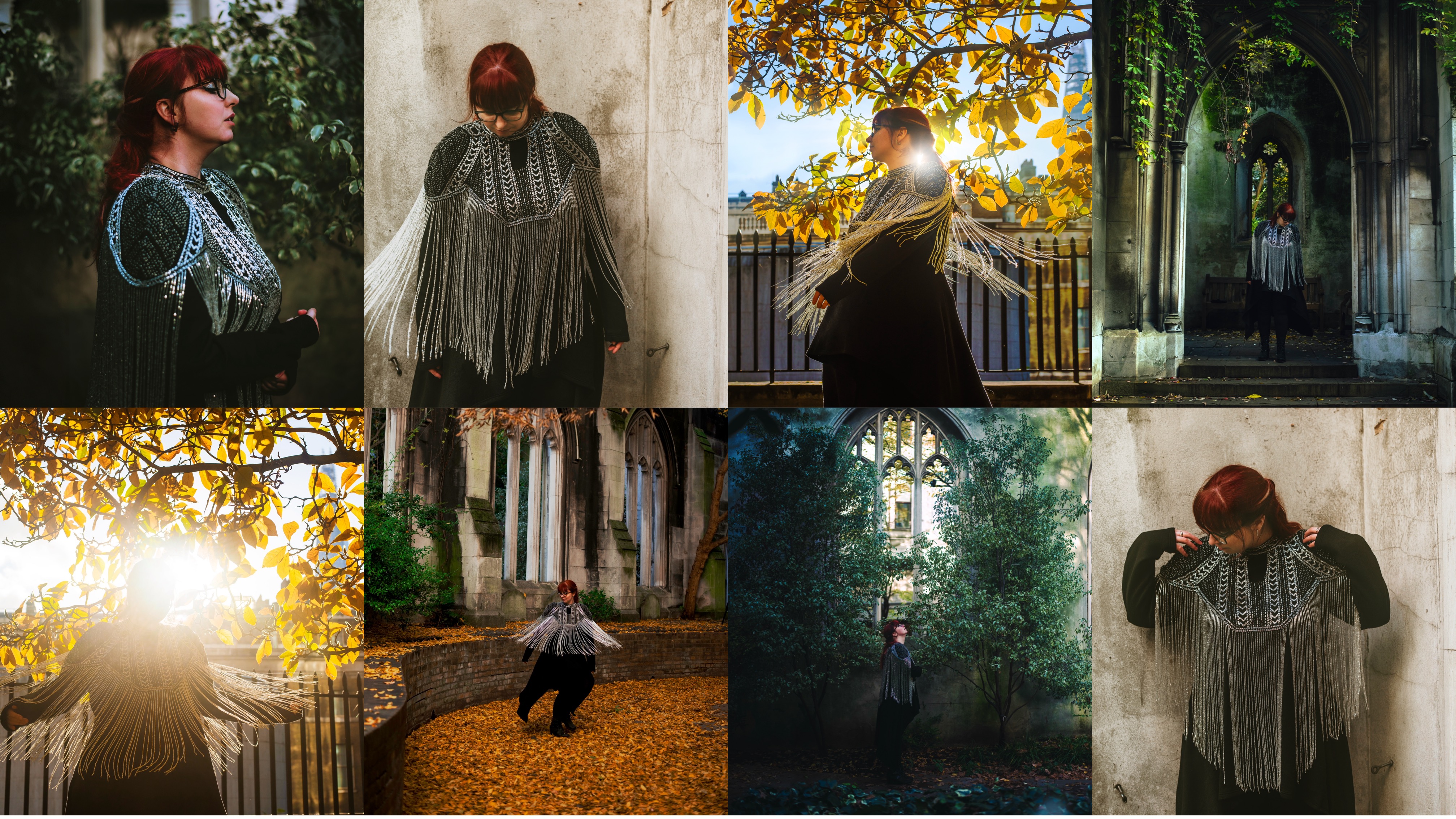
(Photography by Thomas Oscar Miles)
“In a world that constantly asks autistic people to shrink themselves – to be quieter, more adaptable, more like everyone else – Lauren Alex Hooper is doing the opposite. On her new EP, Too Much And Not Enough, Vol. 1, she’s louder in the best way: more honest, more direct, more herself. The result is one of the most emotionally gripping alt-pop releases of the year. A seasoned songwriter with a delicate but defiant voice, Hooper has always used music as a way to process and communicate her inner world. But this time, she’s not holding back. Each of the five tracks on the EP offers a deeply personal window into the complexities of living as a neurodivergent woman.” (x)
I knew going in that the promotion of the EP was going to be the hardest part for me, both before and during the rollout: I am so grateful to Tahnee, to Abi, and to Amelia and her team at Decent PR for all of their advice and their help and, perhaps most of all, their belief in me and my music. I so appreciate all of the time and effort that they put in to helping me get this EP in front of people who really heard the songs, who connected to them, and who really understood what I was trying to say, what I was hoping people would hear. And as a result of that, I’m so grateful to those people who listened to it and felt so moved by it that they wrote about it and encouraged other people to listen to it, because they felt it mattered that much. There have been so many wonderful reviews that I’m honestly still reeling because I never imagined hearing something I’d made described this way:
- “This is not just a strong EP – it’s an essential one.” (x)
- “A rare and necessary project.” (x)
- “A sonic memoir that defies convention.” (x)
- “It’s raw, real, and really important.” (x)
- “[She] doesn’t just claim space – she expands it.” (x)
- “It’s a quiet revolution.” (x)
And, of course, I cannot say thank you enough to those of you who have listened to the EP, those of you have who have streamed it, bought it, blasted it in the car or cried to it under your duvet… To everyone who has listened to it, watched the videos, and followed my social media over this last year, I am so deeply grateful for you. I can’t believe how many people these songs have reached in just over twelve months: I’m a super small artist – I don’t have thousands of listeners on Spotify or thousands of social media followers – so the fact that these songs have been streamed over 100,000 times is amazing to me. I can only hope that they’ll go on to reach more people over time and that this is just the beginning of something even bigger and more beautiful.
“[Too Much And Not Enough, Vol. 1] feels like a rallying cry wrapped in melody – not loud or angry, but insistent, intimate, and brave. For those who’ve long felt like their stories were too much, or not enough, Hooper offers a reminder that they’re exactly right, just as they are.” (x)
And so, many months later, we have the round up of my most recent EP, Too Much And Not Enough, Vol. 1. It was a cathartic, empowering, and challenging process but I’m so proud of it and I’m so grateful for the love it has received ever since I put out the first single in January 2025. Putting out music, especially as an independent artist, is an expensive, complicated, and risky endeavour and so to have it received so warmly made it all worth it. Calling it a rollercoaster would be an understatement, especially considering the most recent logistical nightmare – all of the music I’ve ever released disappearing from every music platform (years off my life, I swear!) – but I never expected making music as an autistic (and disabled) person to be easy; I always knew that it would take everything I had and then some. But these songs, and the experiences that inspired them, are so important to me and, somewhat unbelievably, I’m starting to see how important they are to other people too. All I’ve ever wanted to do is to make honest and vulnerable music and to help other autistic people feel less alone in the world and if this project has done that for even one person, then all of the difficulties will have been worth it. And going forward, hopefully my music can help two people, and then three, and then four… If that’s how my music career is ultimately measured then I could not be more proud.
“What sets this EP apart is this creative’s refusal to simplify or sanitize her truth. She doesn’t shape her experience into something more palatable. She lets it stand as it is: complicated, beautiful, and often misunderstood. Her lyricism is sharp and evocative, her voice rich with sincerity, and the production choices consistently elevate the emotional core of each track. Too Much And Not Enough, Vol. 1 is a cultural milestone. Lauren Alex Hooper is forging a new path for autistic representation in music, and she’s doing it with honesty, grace, and undeniable talent.” (x)
“This EP doesn’t just tell a story – it reshapes how stories like these are told. Hooper has found her voice, not in spite of her autism, but through it. And with Too Much And Not Enough, Vol. 1, she’s made a compelling case that the future of pop is broader, braver, and more inclusive than we imagined.” (x)
Thank you so much for reading and you can listen to the EP here.
Autism Dogs – The First Playdate
Posted on April 16, 2025
My first playdate with Daisy – in early July 2024 – came at the end of a very long, busy week and I was absolutely shattered but I wasn’t missing the opportunity to see Daisy again. The playdates are blocks of time where you get to spend time with your dog and start building the relationship that will help them to be the best assistance dog they can be for you. You also learn all of the commands that the dog has already been taught and start practicing them so that you can get comfortable using them and the dog can get used to responding to you. I was both excited and nervous, having officially matched with Daisy.
For this trip, it was Mum and I took Izzy so that Izzy could meet Daisy for the first time. On the previous trip, it had just been my Mum and I: we had been meeting Daisy for the time time, to get to know her a bit and to decide whether or not she would be a good fit for me and for us as a family (spoiler alert: she is!) plus Daisy had had a cough and we’d all agreed that we’d wait until the first official playdate for the two of them to meet.
We started the playdate in the paddock, just me and Mum and Izzy, and then one of the trainers brought Daisy out to meet us. She was so adorable and so excited, practically jumping up and down like she was on a trampoline. The moment the two dogs first saw each other was… A Lot. Izzy was barking. Daisy was barking. I was so glad I had my Loops in because they were very loud. I think Izzy didn’t like another dog encroaching on her person (me) and I think Daisy was just barking because she didn’t understand why Izzy was barking at her when she wasn’t doing anything wrong as far as she could tell. The trainer advised us to let them sort it out between themselves – let them set their boundaries and let them test those boundaries – and let them just get to know each other, something that was easier for them to do in an outside space since it gives them plenty of room to get closer and back off and so on. Based on that first meeting, it’s definitely going to take a while for the two of them to get used to each other.
After some solid time in the paddock, we went inside and I got to have a good cuddle with Daisy, which was lovely. Izzy clearly found that quite hard. While I was reconnecting with Daisy, she did at least have my Mum as a safe space but we also let the two dogs roam around the room and try to figure out how to exist together in a smaller space and figure out how to share me, essentially. That’s certainly going to take some time but we were reassured that it often takes an existing dog and a new assistance dog a while to build a relationship of their own; we just need to give them time and reward them for every positive interaction.


The next part was watching as one of the trainers ran through all of the commands that Daisy has learned so far. It was very cute: she was so eager to please (and to get a treat) that she was very enthusiastic in her responses, sometimes even anticipating them. Then it was my turn to try them all. I have to admit that I found it really hard: there were commands that I’d never used before, different ways to respond depending on how Daisy completed a task, and remembering which hands to use for different commands, etc. And, of course, Daisy knows them all so well that she’d often preempt me, which was very cute but didn’t exactly help me practice the commands. So it was hard, confusing and more than a bit stressful – it was a lot of information at once – but Daisy was so good and so eager to please and there was still plenty of time to go over it all so I wasn’t too worried.
After that, we went outside onto the lane and I was shown how to walk Daisy on a lead as a service dog, compared to how you would walk a pet dog (although she will get that too since there will be many situations, such as daily walking and exercising, where she will walk on a lead like a normal dog). It was a struggle! There are so many components going on at the same time, so many things that you need to remember: I have to check that she’s consistently looking at me and checking in; I have to remember what each of my hands are supposed to be doing; I have to remember when to reward her (while still walking, which I struggled with A LOT). I also have to make sure not to trip over something, or fall over my own feet, or walk into a hedge. Plus Daisy is a dog and she does get distracted so I do have to keep her on task, even if – for the most part – she was incredibly well behaved. Trying to hold onto all of those things at the same time was a real struggle and definitely the most stressful part so far; it is going to take A LOT of practice.


We also spent some more time in the paddock and practiced recall. Since her name had been changed from River to Daisy, the trainers had been spending a lot of time teaching her her new name. Apparently she’d picked up really quickly, which was good to know; the trainer we were working with that day said that they’d all had more trouble with it then Daisy herself had! We also gave Izzy and Daisy another chance to hang out in a big, open space and that didn’t go too badly. There was definitely less barking and they did manage to get closer to each other without Izzy in particular getting freaked out; they were also a little better about the other getting close to me. It was really interesting to watch them try and figure each other out and although it will definitely take a while for them to build a relationship, it felt like they made progress even in that one day. They even had a very brief nose-to-nose before Izzy decided that that was a bit too much too fast and it only resulted in a couple of barks. Izzy will be coming to future playdates so they’ll have more opportunities to get used to each other.
And that was the end of our play date! I think it went as well as it could have. I was quite overwhelmed by how much there is to know and how much there is to remember all at once, but there’s time to get used to that. There’s time to learn. So I’m not worried, just a bit overwhelmed. Me, Mum, and Izzy caught the train home, all three of us exhausted. We stopped in London to have dinner with one of my parents before getting in the car and driving home. I don’t think I’ve ever been so relieved to get home and lie down in my bed; I was absolutely beyond it, physically and mentally.
I basically spent the next few days sleeping; I was beyond exhausted, both from the playdate and the week leading up to it – I’d been part of a team putting on a symposium that I’d then presented at and then I’d worked on the team for a conference the next day, both at my old university. I’d held it together for the playdate but after that, I just crashed. I assumed that the exhaustion and general feeling of unwellness were due to completely overdoing it during that week but then, just to be safe before going out, I took a COVID test and tested positive. I was pretty confident where I would’ve caught it and apart from the playdate, I hadn’t been anywhere or seen anyone (other than my Mum who somehow managed not to catch it from me) so we got in contact with Autism Dogs and let them know; as far as I know, no one there had tested positive, which was a real relief. So hopefully it was only me that suffered and fortunately, my experience of it wasn’t that bad. I was honestly more annoyed that I’d broken my streak of NOT catching COVID, almost five years after news of COVID started spreading. So, for that, I’m very grateful.
Up next is the second playdate!

Dopamine Land: A Multisensory Experience
Posted on November 11, 2023
Over the summer, I was able to go (twice!) to this cool, immersive exhibition called Dopamine Land: “Dopamine Land is a multisensory experience that combines media, technology and play in one place. It’s an interactive museum made up of colourful installations that channel the limitless imagination of your inner child into reality. Take a break from your everyday life, have some fun, take some photos and boost your happy emotions!” (x) It’s made up of, I think, eleven rooms, each with a different artistic and sensory-stimulating environment inside. Some of them I absolutely loved, some of them I simply enjoyed, and some that I actively struggled with. But I loved the experience, first with my Mum and then with a friend of mine who also has ADHD (something which I do think made it a slightly different experience, although I’m not sure I could clearly explain why).
Before you enter the exhibition, there are two signs on the wall, explaining what dopamine is and how their rooms boost it, which I found super interesting: “Here at Dopamine Land we aim to trigger a gentle release of Dopamine in each of the spaces in different ways as you travel through the gallery. But what is dopamine? Dopamine is a chemical released in the brain that makes you feel. It is responsible for allowing you to feel pleasure, satisfaction, and motivation. A dopamine ‘reward’ can be caused by many pleasant experiences, including eating nice food, feeling loved, winning a game, and earning money, and having the right amount of dopamine is important both for your body and your brain. When you feel good that you have achieved something, it’s because you have a surge of dopamine in the brain.” and “How do the spaces trigger dopamine? There are many different types of triggers for dopamine, across all your senses, and each individual will experience dopamine in different ways. Therefore we have designed the experience to go through a variety of types of spaces, from energetic, to nostalgic, to meditative rooms. You may feel joy in a childhood memory, or from a wonderful aroma. You may experience a warmth from visually satisfying images, or a creative moment may trigger your feel-good hormone. Or perhaps a mesmerising, calming environment is best for you to find your happy place.”
There will be major spoilers in this post so, if you want to go and want to be surprised by the experience, don’t read any further because I will be talking about the different rooms and the fun little details and basically the whole experience. However, if you’re interested, please read on…
The first room (I forgot to take a photo of its name and description) was deeply reminiscent of Yayoi Kusama’s Infinity Rooms, which I always completely adored so I loved that room and just wished I could’ve stayed longer (it was one of the few that had a time limit)…


As I said in my Week In My Life post a few weeks back, I can’t really explain why I love this environment so much. There’s just something about it that makes my brain feel so right and joyful, like a symphony finally in harmony (that metaphor just flowed out as I was writing and it really took me by surprise – it’s a very apt metaphor given that my brain often feels very noisy). It is deeply pleasing on a sensory level in a way that I rarely experience.
I also forgot to take a photo of the sign outside this room with the name and description of it but I’ll do my best to explain it. There were square panels in the floor throughout the room and when you stepped on one, it changed colour. It’s a bit disconcerting though because they look like there is just endless space below, like you could fall through it and just keep going. My friend and I had a good time though, trying to step on different ones and getting the colours to sync up. Yes, we’re actual children…
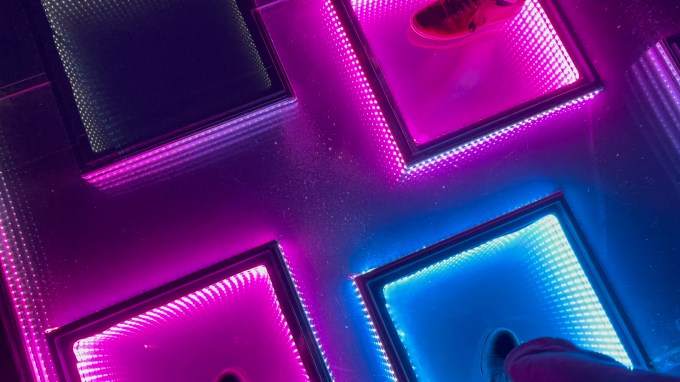
Another of my favourites was called Lucid Dreams with a looping video of all these different visual effects with different colours, different sounds, and what looked like different textures. The explanation outside read: “Let your mind immerse you into an infinite dreamscape and allow your imagination to fly free. This space explores the concept of ASMR content (Auto Sensory Meridian Response): something that evokes light and pleasurable tingles, sparkles, fuzziness or waves of relaxation in the neck, spine, and body.” I’ve never been a huge fan of ASMR but I loved this room. It was definitely one of my favourites; I could’ve watched it all day. It was definitely the room I spent the most time in. It was just gorgeous and oddly compelling and as I said when I talked about it before, I didn’t just want to touch it – I wanted to live inside of it. I tried to find out who designed and created it but when I contacted Dopamine Land to ask, they said that they didn’t give out that information. It seems unfair to me, that the artists aren’t getting clear credit for the work that they’ve done.


I honestly couldn’t choose a favourite moment of it; I loved the whole thing.
The Writing Room wasn’t a favourite but I thought it was kind of cool, although I would’ve put it at the end for people to write about their Dopamine Land experiences if they wanted to: “Pause for reflection and give a moment for gratitude. Tell us what makes you full of lust, love, and laughter, tell us what you’re grateful for or what you dream of. Write a note to yourself, recalling a feel-good moment of joy, the warmth of love, or perhaps something a little more primal. Post it to yourself in one of the post boxes, or leave it for others to enjoy.”


These were my messages that I left tucked into various corners.
The next room, Creating Calm, was pretty nostalgic, with fridge magnet words to rearrange and lights for shadow puppets: “Let’s get busy and create something! Brash, bold, thoughtful, creative, artistic, or beautifully silly; all creations welcome here! A creative act can focus the mind due to its calming effects on the brain and body, releasing dopamine, a natural antidepressant. It is also thought that higher dopamine levels drive our motivation to explore and boost creativity. So let’s get making!”

I find shadow puppets all but impossible to do but it was fun to watch other people try and I had fun with the fridge magnet words. I like how, when the word you want isn’t available, you have to take the sentence in a different direction, usually ending up with something you never expected. Sometimes it ends up being nonsense but sometimes it ends up being really cool.
The next room was the ball pit but I forgot to take a picture for the explanation. Having said that, I think it’s safe to say that a ball pit turns everyone into a kid; there’s something very nostalgic about them and I couldn’t help but laugh hysterically as I ended up flailing around like an idiot when I couldn’t get back up again. It wasn’t at the top of my favourites list but there’s something wonderfully childlike about flopping into a big container of plastic balls and burying yourself in them until not even your face is visible; it’s just so joyful.


That one was probably the hardest on my back though, when the pain was bad. The whole thing wasn’t great for my back pain but I was wearing a brace and the support was a life-saver. I wasn’t pain-free but between the brace and my industrial strength painkillers, I was just about coping (a favourite coming up was the perfect antidote to all the standing and throwing myself into the ball pit). As I said, the ball pit was the most painful and I did regret my enthusiasm a little afterwards; the strain it put on my back was just a bit too much.
Another of my absolute favourites was called Fire Lantern: “Give a moment to appreciate those around us, and those who are not, as you bask under our canopy of glimmering light. Dopamine plays a part in encoding and consolidating memories and fire lanterns hold an important role in many cultures social events and festivities, lighting the way for souls of the ancestors. Contemplate the beauty of these mesmeric lanterns and remember fondly those with whom you have parted ways.” I thought that was really beautiful and I was absolutely mesmerised by the space, by staring up at the lanterns as I lay on the big bean bags on the floor. The quiet – just the low voices of the other people talking as they lay on their own bean bags – was really soothing and I honestly could’ve stayed there all day. It would’ve been easily done too because time seemed to move differently in there. I’d love a space like that in my house, just to decompress in. I don’t think that’s gonna happen though.

I was so excited to see it a second time and it was nice to start with but then two different families arrived with their kids, none of whom could’ve been older than ten, and they were running around the room and shouting and dragging the bean bags from place to place and it just completely ruined the gentle atmosphere. It was really disappointing.
The penultimate room, Keep Calm, looked like an abstract forest: “When dopamine is released it can produce a reaction where you feel calm yet also energised. Experience an immersive digital nature; a forest of the surreal! A natural space of great calm and beauty conjured through lights, mirrors, and the scent of natural wood, yet contrasted by hard lines, creating a shifting, shimmering, layered forest.” It was weird but beautiful and reminded me of wandering through the woods as a kid.


It wasn’t at the top of my list but I did really like it; it was very soothing. But then, again during my second visit, the families with kids ruined that. The kids were running around and shrieking and kicking up the wood chips covering the ground, sending them spraying in our direction. It was deeply frustrating, and more so that their parents didn’t seem to care that they were disrupting the experience for everyone else.
The final room, apart from the social space on the way out, was called Pillow Fight! and the explanation outside read: “The penultimate stop on our voyage. Release your inhibitions and dance in the eye of the storm! Euphoria will wash over you as the energy levels are raised. Take the pillows, giggle and release some tension as you return to your childhood, and settle some old scores in a friendly pillow fight.”

(x)
It looked super cool and I liked the idea but the music was so loud – too loud. It was overwhelming. Even the people I went with, neither of whom are autistic, found it unbearably loud. It was just too much so we didn’t linger long in that room either time. That was a shame because it looked amazing and I loved the idea of a pillow fight. But I just couldn’t handle the noise.
The last space was The Bubble Bar where you could get drinks and snacks, named to fit the theme of the exhibition. Around the room, there were little corners with what were essentially cute photo opportunities.


Some of them were fun but we didn’t spend very long there. I can’t speak for anyone else but I was still holding the special moments close and didn’t really want to hang around, letting them dilute in a halfway space before leaving. I understand the appeal of finishing the exhibition with an opportunity to sit and eat and drink but it wasn’t for me.
Apart from the annoying kids during the second visit, both experiences were really cool and I really enjoyed it as an exhibition. So many of the rooms just made my dopamine-deprived brain really happy and that was really special. I think my only qualm was that we don’t get to know who created each room; I’d love to know what they go on to do.
 Finding Hope