 Finding Hope
Seeking Help For Chronic Pain (Year One)
Posted on July 8, 2023
After the Hypermobile Ehlers-Danlos Syndrome diagnosis, one of my many referrals was to the Pain Clinic (something I didn’t know existed). At that point, I’d been in pain for about eight months and the fact that this thing even existed had me feeling optimistic for the first time in ages. But then the weeks started passing and that feeling faded. In that time, I believe there were a number of other referrals from the Physiotherapy and Occupational Therapy services so I don’t know how many times they actually had requests about me but someone finally got in touch five months after the initial referral.
This post spans from May 2021 to April 2022.
MAY 2021
The initial contact was over the phone. We got a call from one of the Pain Clinic team and we had a long conversation; we were on the phone for an hour. She asked me loads of questions and got a detailed history; she also talked me through what the Pain Clinic does and what they can provide. She went away to go over the notes she’d made and figure out what a good next step would be and we had a chance to think about what might be the right path for me.
JULY 2021
Seven weeks after the first call, we got a second call from a different woman; apparently she had a different background to the first woman we’d spoken with and had a load of different questions. We spent another hour on the phone and before we hung up, she told us that she would be taking her notes to the team (which is made up of a group of different clinicians and therapists) and that they would get back to me with their suggestions.
Two weeks later, she called back and, after some discussion, we decided that seeing a pain psychologist was the best way forward – understanding pain, understanding chronic pain, figuring out the triggers, learning how to manage it, and so on – and she set up the first of the six sessions.
AUGUST 2021
The first session was an hour long video call. We’d somehow missed the information packet that the pain psychologist had sent but she was kind enough to go through a lot of the information – a basic understanding of pain – during the session. It was okay but it was very focussed on managing pain, which felt incredibly frustrating: I was fine until May 2020 and then suddenly I was in pain and at no point had anyone stopped and asked why and I want to know why. But no one seems interested in figuring out the why. I got very upset: I spend my whole life just managing things. I don’t even really feel like a person anymore, just a collection of problems that need managing that leave me no space or energy for actually living. The call ended in tears with me curled up in a depressed ball on the sofa.
Given how much the appointment had taken out of me, we decided that it was just too much while I was in the final stretch of my Masters, which the psychologist was really supportive of, and we arranged to start again when it was over so that I could really make the most of the sessions.
OCTOBER 2021
I had my second session five weeks after I finished my Masters (I was completely exhausted from the final semester and, with my Granny’s death, it took me a while to find my feet again). It was mostly a catch up about how my pain had been since the first session; we talked about how constant it had been (just sometimes better, sometimes worse), how it doesn’t seem to be triggered by anything specific. I got so distressed just talking about it that the psychologist suggested that we talk to the advanced practitioner for more insight into hEDS related pain. She said she’d talk to their team and recommended I talk to my GP about a better pain medication. We, again, agreed to pause the sessions until we had some clarity on those two things. I still haven’t found a pain medication that works reliably but it wasn’t long before we got a letter for an appointment with the advanced practitioner.
NOVEMBER 2021
At the beginning of November, I had the appointment with the advanced practitioner. In hindsight, it was probably doomed from the start, considering how unwell I was having just started the ADHD meds – I had to stand outside for a good ten minutes trying to get the nausea under control. And then, just because things had to get worse, I got hit by the electric shock like pain in my back right as the appointment was starting; I could barely hear what everyone was saying, the pain was so debilitating.
As it turns out, there had been some sort of confusion or miscommunication because the two doctors were under the impression that they were showing me some physio-like exercises rather than give me guidance about hEDS related pain as I had discussed with the pain psychologist. One of them just kept talking about all of the “ingredients” of pain – like diet, sleep, exercises, medication, levels of anxiety, emotional state, and so on – and after a while, I just couldn’t keep my mouth shut. I was upset, in pain, and feeling so sick; I just couldn’t listen to another person give me vague advice without telling me how to actually apply these things to my life with all of my problems. And, on top of that, I was sick of everyone dodging my questions: why would this pain just start and why is ‘management’ the only thing being talked about? Why is no one interested in finding out why it started and whether it can be fixed? When the pain started, the only thing that had changed was my anxiety over the pandemic and it’s not like I was the only person who was experiencing that. So why did it start? If it can just appear, what’s to say it can’t disappear again if I do the right things (which obviously relies on me knowing what the right things are)?
Eventually this doctor gave me a somewhat murky explanation: that the trauma of the autistic challenges and the anxiety relating to the pandemic, compounded by the de-conditioning of the stabilising muscle in the early months of the pandemic, has resulted in the pain I’ve been experiencing. I’m not convinced by this but it’s the closest thing to an explanation that I’ve received so far. Anyway, they said that they’d take my case to their multi-disciplinary meeting and see what the suggestions were. I’ll take what I can get but I didn’t have a lot of hope: the last time I was in a similar situation, the Chronic Fatigue Service told me my case was too complicated and then just abandoned me. I’ve also had NHS doctors tell me that the NHS can’t help me and that I should go private – like that’s the automatic next step. They do know how expensive private healthcare is, right? Particularly if you have a chronic condition? So I did not leave that appointment feeling optimistic.
Later that month, we got a letter informing us that the original referral to the Pain Clinic from December 2020 had just gone through. Eleven months that took. I’m trying to be grateful that one of the other referrals went through faster but it was hard when it felt like we hadn’t made any progress at all.
APRIL 2022
The pain had reduced some by the end of 2021 but it flared up again (mostly in my hips and lower legs) in early February, which was likely exacerbated by my lack of movement while struggling with the effects of the ADHD meds – extreme nausea, depression, insomnia – and therefore not swimming. Things were better for a while – between more daily movement and starting hydrotherapy – but then it flared up again in late April, with awful pain in my elbows, arms, and hands.
When I realised how long this post was getting, I decided to split it up by year (yeah, because the whole process took actual years). This is the first instalment from Spring 2021 to Spring 2022. The next part will be up soon.
Everyday Essentials
Posted on July 1, 2023
Given my health situation – living with multiple chronic illnesses that require daily management – I thought it might be interesting to make a list of the things I need and use everyday and maybe if any of you guys live with chronic illnesses, you could compare it to what you use. Are these things helpful to you? Might they be? Are there things that are helpful to you that aren’t on this list?
GLASSES – This is a pretty obvious one. I can’t see three feet in front of my face without them; I am incredibly short-sighted. Both of my biological parents are or were short sighted and I believe that certain forms of Ehlers Danlos Syndrome (EDS) can affect your eyesight. Regardless, I’m not going anywhere without my glasses.
MEDICATION – I have certain medications that I have to take everyday, as well as some that are situation dependent. The most important are my anti-depressant, Phenelzine, and the beta-blocker, Propranolol, and I really feel it if I don’t take them; while it took them a while to take effect at the beginning, it can through everything off course if I miss a day. So taking your meds… very important!
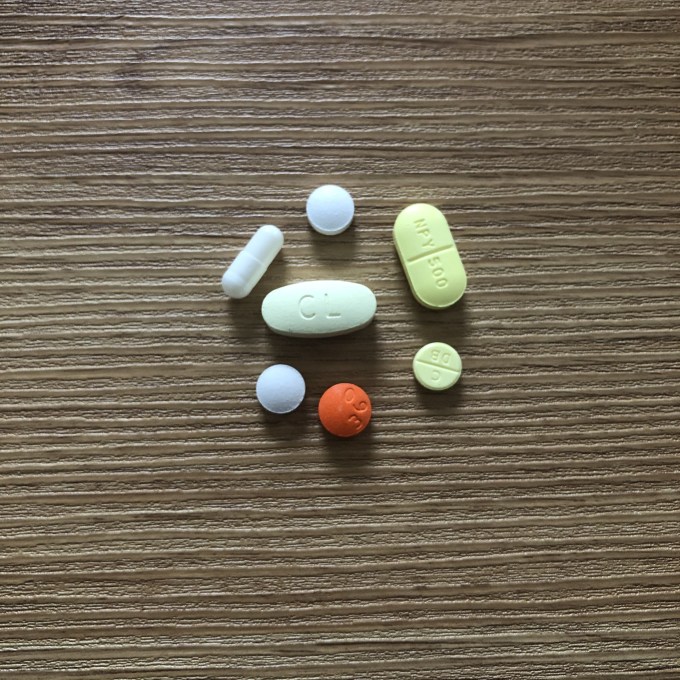
PAINKILLERS – Okay, this isn’t an everyday occurrence but it’s very common, especially at the moment (I hurt my back about a month ago – a story for another time). I have them on me all the time and I regret it if I don’t. Pain can be so debilitating and if I don’t have something to manage them, if only to get home, then I’m in really trouble. I also get migraines that absolutely incapacitate me so having the pills that help with those is vital. I often feel like a walking pharmacy but I’ve learned the hard way – several times – that it’s better to be prepared.
LOTS OF WATER – Generally, none of us are drinking enough water but as a person with Hypermobile Ehlers Danlos Syndrome (hEDS), I’m sure I’m not, as hard as I try. When I was diagnosed, the recommendation was that I drink more than double what a person without hEDS is supposed to drink (x); I’ve been trying to build up my water intake but it’s a slow process. I also have Postural Orthostatic Tachycardia Syndrome (POTS), which often occurs with hEDS, and includes symptoms like dizziness, light-headedness, swelling in the legs after standing for short periods of time, palpitations, fainting, and more, all of which can increase in intensity when a person is dehydrated, after exercising, or during hot weather (I want to write a more in depth post about all of this when I have more time). Dehydration has also been linked to an increase in pain sensitivity (x). Increasing water intake has proven to help POTS symptoms so I’m doing my best to always have water with me (or cordial if the taste of water becomes a struggle, something my nutritionist okayed, given that I’d still be getting the fluids) and I think it’s helping me to drink more (x). It’s surprisingly hard though, to drink that much water.
MY PHONE – I know that many people talk about needing breaks and time away from their phones but, in general, having my phone around is more helpful than it isn’t. I find social media pretty triggering for my anxiety so I rarely find myself scrolling through Facebook or Twitter or Instagram (and I hate TikTok more than I can even articulate) whereas I find the apps for setting alarms and timers helpful, Duolingo really good for my anxiety (and mental health in general), and the Notes app vital to writing down thoughts and ideas to follow up on. I do find it stressful that it means anyone has access to me, can contact me whenever they want, but then Airplane Mode is right there… But generally, my phone is more helpful than not.
MY BULLET JOURNAL – Between my ADHD and my general anxiety about being organised, my bullet journal (or what began as a bullet journal and has evolved into a more personalised version of the system) is all but permanently attached to me. It has my list of commitments, the list of things I want to get done during the day, and anything else that might be relevant, like stuff to do with the cats or the house. I honestly don’t know what I’d do without it.
FIDGET TOYS – My hair pulling has been particularly bad recently (plus I’ve seriously struggled with chewing the callouses on my fingertips and tearing at a scar on my face) and after years of dealing with it, I have a slightly ridiculous collection of fidget toys that I rotate using as the urge to pull varies; sometimes certain fidgets are more effective than others. So I usually have at least within reach, whether that’s wherever I am or in my bag.
NOISE-CANCELLING HEADPHONES – Having had some very unpleasant experiences with just how loud the world is (you may remember this particular disaster), I got an amazing set of noise-cancelling headphones that have made navigating my hometown, London, transport systems, etc so much easier. I’ve recommended them to multiple people and those who got them have agreed that they make life – and all of its noise – a lot more manageable.
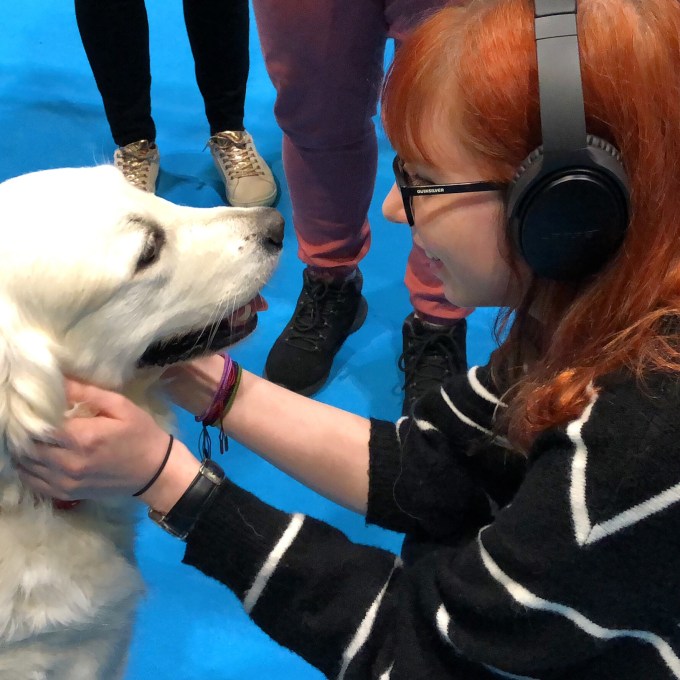
FACE MASK AND HAND SANITISER – I know that, for a lot of people, it feels like the pandemic has ended but, for many, many others, it hasn’t. I know immunocompromised people, those struggling with Long COVID, people who are still getting COVID and getting seriously sick so it certainly doesn’t feel over to me. If I’m out, I’m pretty neurotic about hand sanitiser and wearing a mask; I’m not perfect and I do sometimes forget, especially if I’m feeling overwhelmed in a social situation and there’s no prompt of other people wearing masks, but I’m still pretty on the case about it all.

A HIDDEN DISABILITIES SUNFLOWER LANYARD – I’m not sure when I first got my sunflower lanyard and I can’t honestly say it’s changed my life but there are certain places that it does make life easier, like at airports and concerts (and getting support in those sorts of places is so important). Mostly I wear it when travelling around London because having a big ‘autistic’ label around my neck reminds people to take care and hopefully be a bit more aware of what they’re doing and what’s going on around them. I’m sure there are people who see it and it makes them uncomfortable or contrary or belligerent (because, in my experience, those people tend to be everywhere) and I think there are places where it probably makes me more vulnerable but, on the whole, it tends to be helpful if I use my judgement.
JOINT SUPPORTS – Because of my hEDS, I struggle with a lot of pain in my joints (the gift that keeps on giving) so I have a handful of different supports and braces. I mainly use them for my knee and for my wrists, but I also have one for my back. They not only really help with my stability – something I’m struggling with more and more – but, as with my sunflower lanyard, they remind people that I am kind of fragile and that they need to be careful around me, especially on trains and the underground etc.
POLARISED SUNGLASSES – The last time I went to get new glasses, I mentioned that I have hEDS and the optician recommended getting polarised sunglasses because they can help with light sensitivity, something that many people with EDS struggle with: our eyes are sensitive can get really tired because they are made up of 80% collagen, which is – as we know – what EDS negatively affects. And if you can reduce the strain on your eyes – which these glasses do, even if you’re inside but it’s still very bright – then you can hopefully reduce the chances of developing problems with your eyes (again, EDS: the gift that keeps on giving).
LIP BALM – A common symptom of multiple types of EDS is sensitive skin and that can manifest as dry lips (and cracked lips that take ages to heal) so I try to always have a good lip balm around. My personal preference is the EOS Crystal Lip Balm in Hibiscus Peach, which I’m not totally sure they make anymore but it’s still available through various online stores. But it’s their crystal lip balms that are best for hydrating your lips (but it’s worth reading this article because some people have had allergic reactions to certain ingredients); the previous, more waxy versions were nice but I didn’t find them to be super effective. This one helps my skin recover really quickly (and stay hydrated) and I can barely feel it on my lips, a plus considering that the sensory experience of make up and skincare can be really difficult for me. But there are a lot of great ones out there; I’ve used several from The Body Shop that I would recommend too.
CBD GUMMIES – Over the last couple of years, my sleep schedule – for the most part – has been awful. Most nights I was getting a fractured few hours and then there were nights where I didn’t sleep at all. It was horrible and it just made my mental health even worse, which was pretty impressive given how bad it was when my sleep was at its worst. I felt like I’d tried every strategy ever suggested, including some pretty strong prescription sleeping pills; they worked-ish but I suffered from some pretty miserable side effects for not much reward. I’d always been vaguely resistant to trying CBD based products for some reason – I’m not really sure why – but I was desperate and ended up trying a few different types of CBD gummies. Within a few days, my sleep was deep and reliable again. Months later, it’s remained pretty good. Plus it’s helped me avoid relying on prescription pills, which I’ve had to do in the past even though it’s not generally advised (this was with the approval of my doctor); taking them every night can increase your tolerance and so they stop working and no one really knows what the long term effects are, although some people become addicted and can experience symptoms like hallucinations. So avoiding that is definitely a pro on the pro-con list. Research is still being done around CBD but so far it seems that the only problems are certain drug interactions, which would just involve a conversation with a doctor. None of those interactions were a problem for me so I’ve been taking them consistently ever since and my sleep has been so much better. They’re a constant presence on my bedside table.
So I hope that was of some interest, at least. As I said in my introduction, let me know if you use these things; let me know if you use other things; let me know if there are things that might work better than the ones on this list! Over to you!
The First Six Months of Hydrotherapy
Posted on August 13, 2022
When I was first diagnosed with Hypermobile Ehlers-Danlos Syndrome back in October 2020, hydrotherapy was recommended both for general fitness and muscle strength (which would, in theory, help with the back and leg pain I was struggling with) and to build up my core muscles, which are a notoriously weak area for hypermobile people. I was up for that since I’ve always enjoyed being in the water but COVID made the whole process very complicated and very slow.
As far as I can tell, with the way things currently are, it seems that the way to get a referral for hydrotherapy is to be referred for physiotherapy and then a physiotherapist assesses you and refers you on to the hydrotherapy department. I’d been referred for physio three times, I think, by three different doctors between May 2020 and when I finally got an appointment in November 2021. I find myself feeling a level of righteous indignation over waiting eighteen months for a simple referral, especially when I was in pain pretty much every day, but I know it was all more complicated than that. COVID was the obvious cause for the delay but the NHS waiting lists are also incredibly long anyway. But, as soon as it all started happening, it all happened at once.
At the beginning of November 2021, I met with a physiotherapist and he referred me on to the hydrotherapy department and at the end of the month, I had an appointment with them. I will admit that, after waiting eighteen months for an appointment, I was a bit appalled that the appointment consisted of just a half hour run-through of exercises to do without a huge amount of guidance. But this is how the system works and I’ll take what I can get.

While I continued swimming in my ‘normal’ pool, I struggled to find a pool that allowed me to do all of the exercises I’d been assigned: the height of the water needed to be within a certain range, I needed to be able to walk in the water, I needed a step of a specific height and width, and so on. And finding a pool that fitted all of the requirements was difficult, and that was without all of my COVID related anxieties being factored in. We finally found a pool just as Omicron started rearing its head and I had a meltdown leaving the first session; I was massively overstimulated and my anxiety was just overwhelming. Those weren’t exactly fond memories that I was keen to revisit but it wasn’t going to work anyway as the steps didn’t allow me to do the step related exercises and there are too many of those not to have access to the right kind of steps. I was managing a modified version of the exercises in my usual pool while we searched for another hydro-friendly pool but then Omicron hit in earnest and we all retreated inside to insure Christmas could go ahead as planned.
From December 2021 to early March 2022, I was incredibly unwell because of the ADHD medication I’d been trying, too unwell to swim at all. But, in that time, my Mum had found another pool. The first session went well (although it was really hard work after so little movement for a couple of months) and the set up of the pool meant I could do all of the suggested exercises. I got a few sessions in before I left for Nashville in late March.
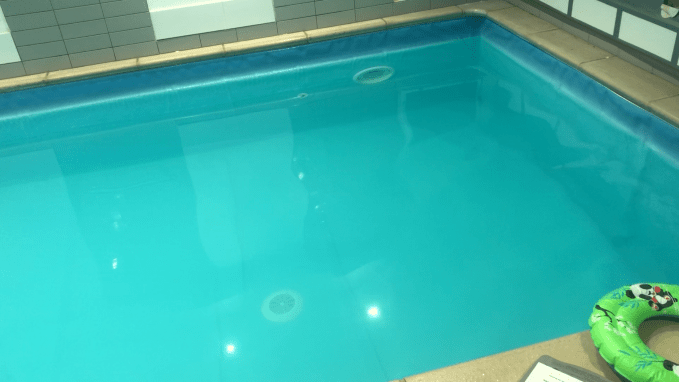
Back from Nashville and semi-recovered from the jet lag in late April, I got back in the pool, both to swim and to do my hydro exercises. It took a bit of work and scheduling but after a while, I managed to build in two sessions a week while I got used to the routine and started building up my strength and stamina after so little proper exercise for so long. I’ve had multiple conversations with multiple health professionals about my tendency to throw my all into stuff and how I need to take things slowly if it’s going to actually help so, even though it’s very frustrating, I am trying my best to push down that irritation and just focus on the exercises.
So, that was my first six months of hydrotherapy. There’s a few months between where this post finishes and where I am now but I thought those first six months were important to document. Since then, I had to stop using one pool and tried out another – which I love – despite difficulty actually getting out to swim because my mental health has been so bad.
Although it hasn’t been a priority (and still isn’t one really – one thing at a time), I do want to find a new all-round gym since the gym I used to go to closed down after the multiple lockdowns. I want to get fitter; I’m just having to take a longer route than I would’ve previously thought.
 Finding Hope