 Finding Hope
Quotes That Helped Me (BPD Edition)
Posted on May 7, 2022
While I do want to share some more in-depth posts this month, I wanted to post a few different things since different things are helpful and interesting. So, for my first post of Borderline Personality Disorder Awareness Month, here are some quotes about BPD, ranging from scientific explanations to emotional descriptions.
“I’m so good at beginnings, but in the end I always seem to destroy everything, including myself.” –
“Accepting a psychiatric diagnosis is like a religious conversion. It’s an adjustment in cosmology, with all its accompanying high priests, sacred texts, and stories of religion. And I am, for better or worse, an instant convert.” –
“To a large degree, a particular collision of genes and temperament with a suboptimal or hostile environment may explain the development of borderline personality disorder.” – Dolores Mosquera
“Most of the time, BPD arises from complex trauma and attachment wounds in childhood, and the symptoms of BPD are just defence mechanisms that protect these old wounds. For example, a person with BPD frantically avoids abandonment by shapeshifting to become who others want them to be, instead of who they truly are. They may also over-identify with painful emotions in an attempt to get other people to show them love and attention because this is the only way they received it in the past. They sometimes self-sabotage because they have a deep sense of shame that causes them to believe that they will fail, be left by others, and they would rather these happen on their terms, rather than blindsiding them.” – Hailey Shafir
“It is important to remember that those who are experiencing Borderline Personality Disorder come from a background of perceived or real chaos, abandonment, and other trauma in their childhood. As a result, their internal dialogue usually consists of, ‘I am not worthy of love,’ ‘People I love will leave me,’ or ‘I can’t trust anyone.’ As a result, when these persons become adults, their internal dialogue affects every aspect of their lives but is especially amplified in relationships. They learned early on to trust chaos in their families of origin. Therefore, they don’t trust peaceful situations or healthy relationships. This is why people with BPD are known for being ‘needy,’ ‘dramatic,’ ‘troublemakers,’ etc. They are following their internalized dialogue and consequently creating the one thing they fear: being abandoned and alone.” – Keischa Pruden
“In the life cycle of an intense emotion, if it isn’t acted upon, it eventually peaks and then decreases. But as Dr. Linehan explains, people with BPD have a different physiological experience with this process because of three key biological vulnerabilities: First, we’re highly sensitive to emotional stimuli (meaning we experience social dynamics, the environment, and our own inner states with an acuteness similar to having exposed nerve endings). Second, we respond more intensely and much more quickly, than other people. And third, we don’t ‘come down’ from our emotions for a long time. Once the nerves have been touched, the sensations keep peaking. Shock waves of emotion that might pass through others in minutes keep cresting in us for hours, sometimes days.” –
“Owing to a poorly defined sense of self, people with BPD rely on others for their feelings of worth and emotional caretaking. So fearful are they of feeling alone that they may act in desperate ways that quite frequently bring about the very abandonment and rejection they’re trying to avoid.” – Kimberlee Roth
“To stave off the panic associated with the absence of a primary object, borderline patients frequently will impulsively engage in behaviors that numb the panic and establish contact with and control over some new object.” – Christine Ann Lawson
“I don’t know what it’s like to not have deep emotions, even when I feel nothing, I feel it completely.” – A. R. Asher
“Imagine all the strongest emotions you have ever felt in your life: anger, hopelessness, rage, embarrassment, regret, lust, fear… Imagine that most days you feel forced to experience all of those in quick succession. How might one react to this? Dissociation in order to escape? Self-harm to bring about a strong physical stimulus to briefly replace these emotions? Thoughts of suicide? Feelings of worthlessness or wondering ‘what is wrong with me?’ and ‘why am I not worthy of loving relationships?’ Feeling the need to quickly exit relationships before people find out the ‘real you’? Finding relief and closeness in intense but brief sexual encounters? Rapidly and repeatedly changing identity in order to find a way to escape? This is the heart of BPD and common reactions people suffering from BPD have to everyday situations.” – Dr. Nicolas Sikaczowski
“There weren’t as many layers between her and the world as there were with the rest of us.” –
“My skin is so thin that the innocent words of others burn holes right through me.” – Unknown
“People with BPD are like people with third degree burns over ninety percent of their bodies. Lacking emotional skin, they feel agony at the slightest touch or movement.” –
“A borderline suffers a kind of emotional hemophilia; [s]he lacks the clotting mechanism needed to moderate [his or her] spurts of feeling. Stimulate a passion, and the borderline emotionally bleeds to death.” –
“I’ve grown up with an ethic, call it a part, that insists I hide my pain at all costs. As I talk, I feel this pain leaking out – not just the core symptom of BPD, but all the years of being blamed or ignored for my condition, and all the years I’ve blamed others for how I am. It’s the pain of being told I was too needy even as I could never get the help I needed.” –
“I couldn’t trust my own emotions. Which emotional reactions were justified, if any? And which ones were tainted by the mental illness of BPD? I found myself fiercely guarding and limiting my emotional reactions, chastising myself for possible distortions and motivations. People who had known me years ago would barely recognise me now. I had become quiet and withdrawn in social settings, no longer the life of the party. After all, how could I know if my boisterous humour was spontaneous or just a borderline desire to be the centre of attention? I could no longer trust any of my heartfelt beliefs and opinions on politics, religion, or life. The debate queen had withered. I found myself looking at every single side of an issue unable to come to any conclusions for fear they might be tainted. My lifelong ability to be assertive had turned into a constant state of passivity.” –
“This crack in your façade can be the first glimpse you have had to your real self. Ironically, your newly experienced vulnerability – the feeling that you are now exposed for all the world to see, that your weaknesses are now visible – is the very thing that can save you.” – Merri Lisa Johnson
“Certainly, it’s important to acknowledge and identify the effects of BPD on your life. It’s equally important to realize that it neither dictates who you are nor fixes your destiny.” –
“I still get very high and very low in life. Daily. But I’ve finally accepted the fact that sensitive is just how I was made, that I don’t have to hide it and I don’t have to fix it. I’m not broken.” – Glennon Doyle Melton
These were surprisingly hard to find so if you know of any more, please let me know!
A Love and Hate Relationship with Autism Spectrum Disorder
Posted on March 30, 2022
Being autistic is complicated (to state the obvious). It’s never just one thing, in my experience at least. It’s not even one thing on one day, one thing in one moment. It’s good things and bad things all wrapped up together and while I can advocate and applaud ‘Autistic Pride,’ I’m not sure I’m there yet. But I can appreciate the good and the bad and so, considering it’s World Autism Acceptance Week, I thought I’d post something about just that: the good and the bad and learning to live with them…
Autism, as we know, is a neurobehavioural condition so the traits associated with it are right down in our wiring, just like the rest of our personality traits: being autistic is at the very core of us and everything else is built upon that foundation. There are some things about being autistic that mean a lot to me, things about myself that I love and value, including…
- A NEED FOR AUTHENTICITY – Obviously I can’t control whether or not other people act authentically but I need to be authentic. If I act differently to how I feel, it has a negative impact on my mental health and on my happiness. So, to be happy and mentally healthy, I have to act on how I feel and be who I really am and it’s in following that rule (for lack of a better word) that I’ve had the best experiences and created the things I’m most proud of. As I said, I can’t make that choice for other people but I do think that, on the whole, I get on better and make stronger connections with people who are authentic.
- PASSIONATE ABOUT THE THINGS THAT ARE IMPORTANT TO ME – If I love something, I love it with everything I have. I will fully immerse myself in said thing; I actually find it hard not to. That can sometimes make doing normal, day-to-day things hard because all I want to be doing is engaging with this thing I love but I’d rather love wholeheartedly than feel ambivalent about stuff.
- LOYALTY – When I care about somebody, I’m all in. I’ll do anything for my friends, sometimes to a pretty extreme degree: like, once I improvised travelling home from Nashville because my flight was cancelled and I’d promised a friend I’d be home for something or like, once I woke myself up every hour to check whether a friend who was in hospital had tried to get in touch because she was scared about being in hospital alone at night. Putting that much into a friendship or relationship does mean I’m more likely to get my heart broken (and it already has been) but like all of the things that matter to me, I’m never going to want to care less about people. I mean, on the bad days, sometimes I do – it would make life easier – but, as a person, I like that I care that much. It’s not always easy (or healthy) but overall, I always think it’s better to care more than less.
- STUBBORNNESS – I am stubborn as hell and sometimes it’s a pain; sometimes I can’t let things go even when I want to. But being stubborn has also gotten me through a lot of hard stuff and helped me make a lot of good stuff happen.
- IT GAVE ME PURPOSE – All I want to do is make the world a little bit better. That’s all I want. I hate seeing people unhappy or things not working so I’m always looking for ways to help and make things better but the world is a big place with lots of problems and it’s easy to feel overwhelmed and helpless. But finding out that I’m autistic, that gave me a place to start and the more I’ve learned, the more I want to help make being autistic an easier, less harmful, and ultimately better experience. And that’s what I’m trying to do, whether that’s with this blog, my music, or by trying to improve the accessibility and understanding wherever I go.
But there are also things about being autistic that I hate, that I struggle with, that cause me problems, and upset me deeply. I know it’s not healthy to focus on the difficult parts (unless you’re, for example, working on something specifically in therapy or counselling) but I do believe that acknowledging the negatives is important and validating. Endless positivity is not helpful and can end up being harmful so here are some of the things that I hate about being autistic…
- LACK OF INDEPENDENCE – With the sensory issues, fatigue, mental health problems, etc, my independence is severely hindered. And as hard as I work to improve my stamina and my mental health and so on, I don’t know how I’m ever going to be completely independent. If it’s even possible. The idea of living by myself is one that I can’t even really imagine ever being realised. And with that being such a standard rite of passage that holds such weight, it’s hard not to feel inadequate or broken.
- FEELING FROZEN – I still don’t really know how to describe this feeling and I can’t say for sure what caused it or when it kicked in but I feel very stuck, particularly in the developmental sense. I feel stuck somewhere between teenager and adult; I feel all the pressure of being an adult but I also feel incapable of doing a lot of the things that make it impossible to meet all of those expectations. All of the things that impede my independence come into play here too, like my lack of energy and my issues with pain. Just existing is an exhausting experience; living as everyone else does feels like an impossible dream.
- THE SENSORY DIFFICULTIES (WITH FOOD IN PARTICULAR) – Sometimes just being is really hard. Every light is too bright, every sound is too loud, every smell is overpowering, every fabric is itchy… and so on. It’s not like that everyday, at least not for me. But it is like that a lot. And most of the time, it makes doing normal things like eating, drinking, going about my day, etc, just that bit harder. I would love to not be phased by restaurants for example: to not worry about the fact that there’s probably nothing I can eat, or potentially even drink, apart from water (and even then it usually has lemon or lime or cucumber in it). Even small things feel so complicated. I’d love to be able to just meet a friend for coffee and that be that but between whatever we eat or drink, how loud it is, and all of the other sensory factors (and that’s not even thinking about all the sensory stuff involved in the travelling), it’s just exhausting. And I wish it wasn’t.
- THE RESULTING MENTAL HEALTH PROBLEMS – While we will never know for sure, I (and the mental health professionals that I trust and have worked with for years now) strongly suspect that many of the mental health issues I deal with, are at least partly down to being autistic, and specifically, being diagnosed as autistic so relatively late. Anxiety, depression, OCD, BPD, and ADHD are all comorbid to Autism. Maybe some of them would have developed on their own but I’m sure the Autism did not help and the amount of distress that these problems cause isn’t something I can easily put words to. Every day is a struggle because of them. Let’s leave it at that for now.
- THE LACK OF UNDERSTANDING, FROM EVERYONE (INCLUDING MEDICAL PROFESSIONALS) – Everywhere I go, I have to teach people about Autism, even the most basic stuff. From friends, to teachers, to doctors, even to people whose entire job revolves around accessibility. No one seems to know anything, or at least anything beyond the basic stereotypes. There’s almost no decent representation out in the world, in the media (which makes it very easy to feel alone and/or broken) – the vast majority of it is harmful. So many people still don’t even know that Autism manifests differently in girls. Autism is a complicated thing so I don’t mind helping people understand it, understand some of the nuance, but I hate how bad the general understanding is, especially when it’s people who should know better (when it’s part of their job, for example). This is why so many people are diagnosed so late and struggle so much: even the people who should have a working knowledge of Autism don’t and it’s really not good enough.
So, this was a bit more exposing than I’d expected when I started writing. But there it is. Almost a decade later and I’m still figuring out what it means, to me, to be autistic. It’s complicated and it’s hard and some days I’m really proud that this is who I am. I guess the goal is to have more of those days.
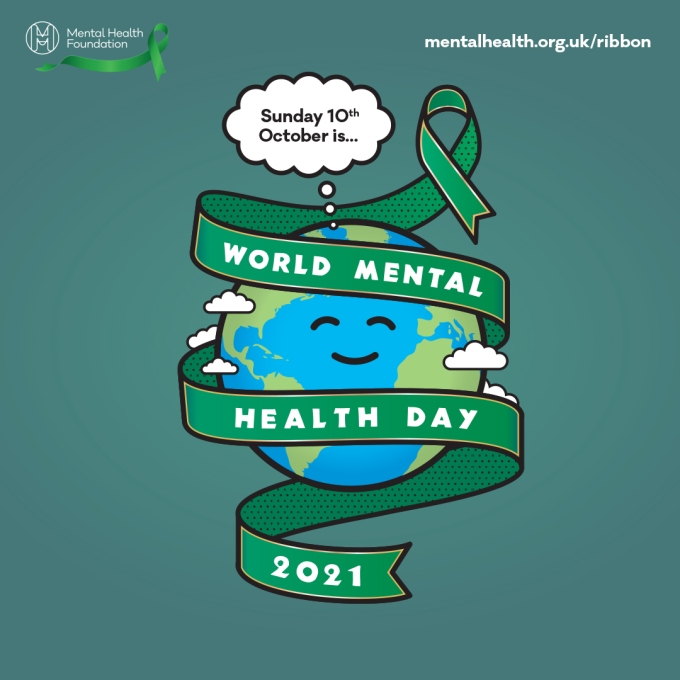
World Mental Health Day 2021
Posted on October 10, 2021
‘MENTAL HEALTH IN AN UNEQUAL WORLD’
As I’m sure many of you know, today is World Mental Health Day and the theme, chosen by the Mental Health Foundation, is ‘mental health in an unequal world.’ WHO seems to be building it around the pandemic, rather than as a problem of its own, but from what I’ve seen in the newsletters and on the social medias of many mental health charities and organisations, most seem to be following the lead of the Mental Health Foundation.
According to the Mental Health Foundation’s website: “2020 highlighted inequalities due to race and ethnicity, sexual orientation and gender identity, and the lack of respect for human rights in many countries, including for people living with mental health conditions. Such inequalities have an impact on people’s mental health. This theme, chosen for 2021, will highlight that access to mental health services remains unequal, with between 75% to 95% of people with mental disorders in low and middle-income countries unable to access mental health services at all, and access in high income countries is not much better.” It goes on to say: “Many people with a mental illness do not receive the treatment that they are entitled to and deserve and together with their families and carers continue to experience stigma and discrimination… The stigma and discrimination experienced by people who experience mental ill health not only affects that person’s physical and mental health, stigma also affects their educational opportunities, current and future earning and job prospects, and also affects their families and loved ones.”


Statistics provided by Mind (x)
I have my own experience with the mental health system – which I do want to touch on – and have heard from many others about their experiences but I wanted to read into the research around these inequalities further, both to get a better factual understanding and to put my own experience in context (beyond an anecdotal one). The research is sporadic at best but here are some of the statistics I found…
ACCESS TO MENTAL HEALTH CARE
- “NICE [The National Institute for Health and Care Excellence] recommends that people should be able to access services when they need them. However the proportion of people who felt they had definitely seen NHS mental health services enough for their needs reduced from 47% in 2014 to 43% in 2018.” (x)
- In 2020, it was reported that approximately 1 in 3 people who experience mental health problems are able to access the support they need. (x)
From these statistics, it’s clear that far too many people aren’t getting the support that they need.
INEQUALITIES IN ACCESS TO TREATMENT (x)
- For those with common mental health problems, 36.2% reported receiving treatment.
- Women are more likely than men to receive treatment for all mental health conditions, with 15% of women receiving treatment compared to 9% of men.
- Young people aged 16-24 were found to be less likely to receive mental health treatment than any other age group.
- White British people are more likely to receive mental health treatment (13.3%) compared to BAME groups (7%). The lowest percentage of people receiving treatment were those from black ethnic minority groups (6.2%).
These statistics clearly show the disparities in the availability of treatment, more supporting evidence for the statement that the Mental Health Foundation is making with the theme for this World Mental Health Day.
YOUNG PEOPLE
- “There is very little national information about mental health services for children and young people, and what information there is suggests quality is declining. [Research] indicates substantial cuts to services, increasing demand, increasing thresholds for treatment, very long waits (more than a year) for specialist services, and a resultant decline in accessibility.” (x)
- Approximately 1 in 3 children and young people with a diagnosable mental health condition get access to NHS care and treatment. (x)
- More than 338,000 children were referred to CAMHS in 2017, but less than a third received treatment within the year. (x)
- Around 75% of young people experiencing a mental health problem are forced to wait so long their condition gets worse or are unable to access any treatment at all. (x)
- In a YoungMinds survey, three-quarters (76%) of parents said that their child’s mental health had deteriorated while waiting for support from Child and Adolescent Mental Health Services (CAMHS). (x)
This research all indicates that young people in particular are being let down by the health care system.
SECONDARY [LONG TERM] CARE
- “Demand for secondary care (which generally treats people with severe mental health problems) is increasing, and there is evidence to suggest services are becoming less accessible… There is little information available on the outcomes that services achieve.” (x)
- “There is no high quality national information on waiting times for secondary mental health services. In a 2014 survey, 20% of people with severe mental illness who were offered talking therapy reported waiting more than a year to access it.” (x)
The statistics show not just that the need for mental health care is increasing but the need for long term mental health care is increasing but that it’s also very difficult to access.
HIDDEN WAITING LISTS (x)
“A study of 513 British adults diagnosed with a mental illness also reveals the damaging consequences that hidden waiting lists – the wait between referral and second appointments – have on the lives of patients living with severe or common mental illness.”
- “Of those on a hidden waiting list, nearly two thirds (64%) wait more than four weeks between their initial assessment and second appointment. One in four (23%) wait more than three months and one in nine (11%) wait longer than six months.”
- “Respondents living with severe mental illness – including eating disorders, bipolar disorder and PTSD – were left waiting up to two years for treatment. Others were left waiting up to four years for treatment for depression, anxiety and suicidal thoughts.”
- “Two-fifths (38%) reported that they, or someone on their behalf, had contacted emergency or crisis services while waiting for their second appointment, while 39% said that waiting led to a decline in their mental health.”
It’s clear that, beyond the difficulty of even getting into the mental health care system, once in it, the process of actually getting the support you need is much too slow – so slow in fact that it’s exacerbating the mental health problems that those waiting are seeking help for.
Now I want to look at my experience of getting support for my mental health…
- For more than two years, I was repeatedly dismissed and had my feelings and experiences invalidated by multiple doctors and services. No one took me seriously. Eventually, my Mum took me to a private psychiatrist and I was diagnosed with Generalized Anxiety Disorder, Social Anxiety Disorder, Depression, and OCD. Having had no idea what I was struggling with, I’d done a lot of research and asked about the quiet presentation of Borderline Personality Disorder, which my psychiatrist initially rejected but then reconsidered and diagnosed me with it after reading my research and personal notes (it has since been recommended to me multiple times – sometimes by doctors who don’t even know me – that I have this diagnosis removed from my file because “people might make assumptions”). Getting an NHS referral for an Autism Diagnostic Assessment was similarly difficult as he felt that I didn’t fit the classic presentation (I do apparently fit the classic FEMALE presentation though).
- There was no follow up after this diagnosis and we were told there was no support available so my Mum investigated private therapists. I tried CBT for a while but didn’t find it helpful so I tried DBT instead, which has been a much better fit.
- All of this private treatment is obviously not cheap and I am so beyond grateful that my family is fortunate enough to support me financially. I honestly don’t know where I’d be without it, whether I’d even be here. But the cost of it does cause me significant worry, only adding to the anxiety I already experience.
- With so many of my problems connected to my Autism, had this whole process been… easier, simpler, quicker, less traumatic, or something… so many of my health problems wouldn’t have deteriorated to the level that they have. Had I been diagnosed earlier – had even one medical professional believed me – things might’ve been so different. I try not to dwell on that because there’s no point wasting my energy on what might have been but it is the truth.
- Having said that, considering some of the stories that I’ve read or have had shared with me, my story isn’t that bad. I’m positively lucky compared to some and that’s a confusing, complicated thing to say, knowing how traumatic this has all been… and continues to be.
Since then, I’ve developed near constant chronic pain throughout my body – something that’s obviously had a big impact on my mental health – but over a year later, I’m still waiting for the NHS physiotherapy and hydrotherapy referrals to go through. I have started Occupational Therapy and with the Pain Clinic (both through the NHS) but with the end of my Masters, I had to take a break because they were too painful and/or upsetting to manage alongside all the work. I’m starting back this week. It still bothers me that no one’s ever even tried to find out why the pain started though.
Almost six years after my ASD diagnosis, the Neurobehavioural Clinic called to offer me an appointment, to do what I had no idea. But at the end of the two part session, I’d been diagnosed with Hypermobile Ehlers-Danlos Syndrome and ADHD – aged twenty six – both conditions having gone unnoticed because no one had ever taken my associated problems (problems that have been there my whole life) seriously. They’re both conditions that often occur alongside ASD. The hEDS diagnosis would, in theory, push my physiotherapy and hydrotherapy referrals but, as I said, I haven’t heard anything and almost a year later, my ADHD is still untreated. My psychiatrist was happy to ‘move’ that condition to his care but the consultant I saw didn’t want that, which is especially frustrating because she’s so difficult to get in contact with.
And finally, I may be getting answers to another ongoing medical problem: severe dizziness, light-headedness, nausea, physical weakness, and breathlessness when I stand up for too long. We’ve been trying to get support around this for so long that I can’t even remember when it started. This too may well be related to my Autism and I can’t help thinking that it’s another thing that should’ve been discovered sooner.
All of these things have had a profound impact on my mental health and going through the agonising process of diagnosis again and again has left me wary, fearful, and angry at medical professionals. It’s deeply ingrained in me to be polite and respectful but it doesn’t take much to send me flying off the handle; I walk into each appointment feeling like a tightly coiled spring. I leave pretty much every appointment in tears at best, raging at worst. Because I’m so. freaking. tired. of feeling like this. Of feeling like no one believes me, of being made to feel like I don’t know what I’m talking about, of being made to feel like I don’t know what I’m feeling. I feel so worn down by the constant let downs. At this point, I think I’m only going back because I don’t know what else to do.
I have no doubt that social media will be filled with nice words and encouraging quotes today. But we need more than that. World Mental Health Day is about more than that. Or it should be. It should be about pushing for change and improvement. The Mental Health Foundation is absolutely right that the inequalities in the mental health care system need to be addressed but looking at these statistics, it’s also clear that the standard of care needs to be better. For everyone’s sake. After all, there’s very little difference between not getting any support and being on a list waiting years for support.
 Finding Hope