 Finding Hope
2021 in Songs
Posted on December 21, 2021
This is one of my favourite posts of the year, as hard as it is to narrow it down to one song a month (or sometimes two, if I really can’t choose). It’s so easy for time to make things blurry and for songs to transcend time that I love being able to see exactly when songs impacted my life and what they meant to me. I kind of love the idea of looking back one day – sometime in the future – and knowing which exact songs I connected to, rather than just having a vague sense of which artists and albums I loved.
So, here is my soundtrack for 2021. I’ve made a playlist on Spotify so you can listen along here if you’d like to.
1. it’s time to go by Taylor Swift
The bonus tracks from Taylor’s album, evermore, started to circulate at the end of 2020 when people began to receive their physical copies but they weren’t released ‘officially’ until the beginning of 2021. It was a really hard choice between ‘right where you left me’ and ‘it’s time to go’ because they’re both such stunning songs but in the end, ‘it’s time to go’ won by a hair. The instrumentation is so delicate and vulnerable, just like the emotions she describes in the song. And the stories she’s telling are heartbreakingly sad with lyrics that may be some of her most poignant, including, “When the words of a sister come back in whispers that prove she was not,” “That old familiar body ache, the snaps from the same little breaks in your soul,” “Fifteen years, fifteen million tears, beggin’ ’til my knees bled,” “I gave it my all, he gave me nothing at all, then wondered why I left,” “He’s got my past frozen behind glass but I’ve got me,” and “Sometimes givin’ up is the strong thing, sometimes to run is the brave thing, sometimes walkin’ out is the one thing, that will find you the right thing.” It’s Taylor at her most vulnerable, something that is such an honour to be allowed access to, and it brings me to tears almost every time I listen to it.
Favourite Lyrics: “That old familiar body ache / The snaps from the same little breaks in your soul / You know when it’s time to go” AND “He’s got my past frozen behind glass / But I’ve got me”
2. Skyscraper by Demi Lovato // Forgive Or Forget by Sarah Close
I stumbled upon this song again when I was doing research for my Daisy Johnson song. I spent a lot of time watching fan videos on YouTube, listening to the songs that other people associated with her: the style of music, the instrumentation, the lyrics in the songs, the emotional undercurrents. And one of those videos used this song. It’s been years since I last listened to it and I’d forgotten how powerful and emotive it is. I love how it acknowledges the pain, whatever pain you find yourself hearing in it, but is ultimately empowering and uplifting, putting the real focus on overcoming that pain. Just listening to it makes me feel stronger; it definitely a good song to listen to before trying to do something difficult or painful.
Favourite Lyrics: “You can take everything I have / You can break everything I am / Like I’m made of glass / Like I’m made of paper / Go on and try to tear me down / I will be rising from the ground / Like a skyscraper”
I fell in love with this song from the first listen. I’ve listened to Sarah on and off for several years (she actually went to the same university as me) and I love her writing. Her lyrics and melodies are just gorgeous: rich but light, catchy without driving you absolutely bananas. It’s so good. I love the imagery, like “Just like in a film, now I’m standing outside your door, in the pouring rain, with a speech that I wrote between watching movies on the plane” and “So now I’ve shown up at your door, will my key work like it did before? And when I look inside, will your love be just the same?” They’re so vivid, like you’re right there in that moment she’s singing about. I loved it straight away and couldn’t stop singing it. I even did a little cover of it on Instagram…
Favourite Lyrics: “Should I forgive or forget, relive or regret? / I know I’m willing to change / So tell me, do you feel the same? / ‘Cause I won’t retrace all the mistakes / If you’re willing to change / I’m telling you, I feel the same” AND “So now I’ve shown up at your door, will my key work like it did before? / And when I look inside, will your love be just the same?”
3. Riser By Dierks Bentley (written by Travis Meadows) // Plan For Paris by Betsy Lane
I know that this would be considered a Dierks Bentley song since he released it but, to me, it will always be a Travis Meadows song. I first heard it when I saw him play at a Tin Pan South show while in Nashville for the first time and it was one of those moments that just sticks with you, one of those memories that somehow remains in perfect condition, like it’s been frozen in amber. The room seemed to be holding it’s breath, completely enraptured by his voice and his lyrics. And when he finished, the room seemed to snap out of its trance and gave him a standing ovation.
This song has meant a lot to me ever since but it was in March that I learned about the extensive surgery Travis Meadows had (at the time) recently gone through and the recovery he was working towards. A gofundme, A FundRiser, had been set up to support him and his family, which I immediately donated to and shared on all of my socials. He’s an incredible songwriter and just an incredible spirit. His music has given me so much that, although I wish these weren’t the circumstances, I’m grateful for the opportunity to give something back.
Favourite Lyrics: “I’m a riser / I’m a get up off the ground, don’t run and hider / When pushin’ comes to shovin’ / Hey, I’m a fighter / When darkness comes to town, I’m a lighter / A get-out-alive-r, of the fire, survivor”
I’ve loved Betsy’s music for a long time, so long that I can’t actually remember when I first heard a song of hers. But she’s a gorgeous writer and it was very cool to finally meet her when she came to the UK on a mini-tour in 2018 after years of listening to her music. She’s just the loveliest and the EP she was releasing at the time was great. But this song, although a step in a new direction, is on a whole new level: it’s a beautiful combination of her warm, intimate storytelling and exciting, new pop production. It’s feel-good and catchy and I absolutely love it.
Favourite Lyrics: “…I wish we could just / Go back to Paris / Catch a train through the south of France / Cross the border into Spain / Learn how to dance / Under the sky of the Spanish moon / Baby, hold my hand, I’m following you”
Note: My friend and frequent collaborator, Richard Marc, released his first single, ‘Put It In A Postcard,’ at the beginning of March but given that I cowrote the song, it felt weird to put it on this list when that isn’t the point of this list.
4. Mr Perfectly Fine (Taylor’s Version) (From The Vault) by Taylor Swift // Love and Great Buildings by Andrew McMahon In the Wilderness
As excited as I was for Taylor re-recording her albums, I didn’t feel a hundred percent good about it until Taylor herself made it clear that it’s been really rewarding and fulfilling – so far, at least. I hated the idea that it might be upsetting or taint her feelings about her previous work since it was something she was ultimately forced to do if she wanted to own her back catalogue. So I’m really glad that it doesn’t feel like that. It’s amazing and kind of surreal how she can sound just like her teenage self, how the album sounds so close to the original release. There are multiple songs I could choose from for ‘the one’ but ultimately ‘Mr Perfectly Fine’ came out on top (although ‘We Were Happy’ was a close second). Not only is it super catchy and has this really great, dynamic energy, but I love the balance of heartbreaking and then absolutely scathing lyrics, like, “‘Cause I hear he’s got his arm ’round a brand new girl / I’ve been pickin’ up my heart, he’s been pickin’ up her / And I never got past what you put me through / But it’s wonderful to see that it never phased you.” It’s emotionally complex, like the situation, but still such a jam. And the final chorus, with the switch from “Hello Mr. ‘Perfectly Fine'” to “Goodbye Mr. ‘Perfectly Fine'” and the key change, it’s a hugely satisfying end, lyrically, musically, and emotionally. I love it and played it over and over again.
Favourite Lyrics: “It takes everything in me just to get up each day / But it’s wonderful to see that you’re okay // Hello Mr. ‘Perfectly Fine’ / How’s your heart after breaking mine?” AND “‘Cause I hear he’s got his arm ’round a brand new girl / I’ve been pickin’ up my heart, he’s been pickin’ up her / And I never got past what you put me through / But it’s wonderful to see that it never phased you”
I heard this song on a TV show (I can’t remember which one now) and just fell in love with the concept. The imagery is gorgeous (with phrases like, “My heart is an apartment building on the verse,” “The market shifts can cause storm systems to converge,” and “Brick and plaster, beams and broken windows”) and I love the production, both for the sounds used and for the energetic, almost euphoric feeling it evokes. I spent many days with it basically on repeat because I just really needed that energy. My only quibble with it is that almost every single rhyme is a perfect rhyme (‘verge’ and ‘converge,’ ‘optimistic’ and ‘realistic,’ ‘endure’ and ‘cure,’ etc) and having just spent a semester learning about, discussing, and experimenting with techniques like different types of rhyme, that really stuck out to me. It felt a little clunky and I thought there could’ve been some stronger, more interesting rhyming in what is otherwise a really cool song.
Favourite Lyrics: “Love and great buildings will survive / Strong hearts and concrete stay alive / Through the great depressions / Yeah, the best things are designed to stand the test of time // Love and great buildings will endure / Blue skies and bloodlines are the cure / For the great deceptions in a world that’s such a blur / We’ll stand the test of time”
5. Coming Up For Air by Signals In Smoke // A Love Song by Ladyhawke
There’s something about this song that I just can’t quite explain. It’s so beautifully simple. I love lyrically dense songs, songs that you could turn into a feature length film, but what I love about this song is that it doesn’t need to do that. The lyrics are uncluttered, guiding the emotion but leaving you to fill in the details yourself. But they’re intimate and uplifting, enhanced by a deeply emotive and beautiful melody. The production is rich and atmospheric and enveloping; and the colours and textures I feel in it are just gorgeous (I don’t know if that response to music is part of being autistic or some form of synesthesia or something else entirely). It’s just stunning.
Favourite Lyrics: “It ain’t over, love / This I swear / We’re coming up for air”
I freaking love this song. I listened to so much Ladyhawke during the last semester of my Masters but this song won the top spot with ease. I love the energy (and the colours) of the arrangement and the production – there’s something so pleasing to my ears about synth-pop music – and I love the story it tells, or at least the story that I interpret from the lyrics. To me, it reflects the contradiction of what real love is, that it is both easy and hard to truly love someone. With lyrics like, “You’ve opened my eyes to the oldest tale of time,” alongside the gleaming production, the song embodies the ease of love, proven by the fact that we have been falling in love as long as we have existed. The song is a celebration of that love. But then it also contains lyrics like “I’m falling down, too much to drink again / You pull me up and tell me how it could end” because sometimes love is having the tough conversations and making the hard choices. And we always come back to the same line: “This is what a love song sounds like.” Both of these instances are expressions of love, of the love stories we write and the love songs we sing to one another. That’s what I love about this song, that it allows these two ideas to coexist (just as they can and do in real life) in such a beautiful way.
Favourite Lyrics: “This could be my life, but it’s only words / To make me feel right when the meaning’s blurred / You’ve opened my eyes to the oldest tale of time / This what a love song, love song sounds like // I’m falling down, too much to drink again / You pull me up and tell me how it could end / This is what a love song sounds like”
Note: My friend and frequent collaborator, Richard Marc, released his second single, ‘Close To You,’ at the beginning of May. I cowrote it so I’m not officially including it on this list but you guys should check it out because Richard is really awesome.
6. good 4 u by Olivia Rodrigo
This song is such a jam. As I said in a post a little while back, I struggled to get into Sour, I think just because she was everywhere and everyone was talking about her and I just felt a bit like it was being forced down my throat and my natural reaction to that is to be perverse and do the exact opposite of what I’m being pushed to do. Maybe that’s a bit childish but I think it worked out in the end because if I’d listened to the album then, I don’t think I would’ve liked it. After giving it some time, I did listen to it and I do like it; I think it being my choice made all of the difference. I like a good handful of the songs (most of them album tracks, which isn’t unusual for me) but this one is just irresistibly fun. I love how it toes the line between righteous anger over being treated badly (“It’s like we never even happened / Baby, what the fuck is up with that?”) and pettiness (“Remember when you swore to god I was the only / Person who ever got you? / Well, screw that and screw you”) – because, let’s face it, we’ve all been there in some way or another. We’re allowed to be angry and call people out for their bad behaviour (I’m talking on an emotional level – society often has other opinions) but we’re also not always our most mature selves when we’ve been hurt by someone and I think this song reflects those two states of emotion well. I also love the swearing but I think it only works because it feels natural and emotional and not at all affected. It’s hugely relatable (I can definitely see a significant relationship of mine in it) and very cathartic to sing along to. I’m a fan of the arrangement and production too. I love the rhythm of the bass, the arrangement of the backing vocals (they’re fantastic, album wide), and her vocal delivery is fantastic: she’s so expressive in her singing and there isn’t a line where it feels like she’s ‘just’ singing.
Favourite Lyrics: “And good for you, it’s like you never even met me / Remember when you swore to God I was the only / Person who ever got you? / Well, screw that and screw you / You will never have to hurt the way you know that I do” AND “Well, good for you, you look happy and healthy / Not me, if you ever cared to ask / Good for you, you’re doing great out there without me, baby / Like a damn sociopath / I’ve lost my mind, I’ve spent the night / Crying on the floor of my bathroom”
7. Way Out by Richard Marc & Jaz Beeson // Renegade (feat. Taylor Swift) by Big Red Machine
This song is so freaking catchy that every time I hear it, it’s stuck in my head for days afterwards; ever since I first heard it, I’ve been waiting impatiently for it to come out so that when people ask me what I’m singing or humming or whatever, I can actually point them to it. The melody is just perfect, smooth and rich and beautifully matches the moody production. It’s a hard call but it may be my favourite production from Richard’s EP. The different elements just work together so well and I love how it builds, especially in the bridge with more and more layers of backing vocals. It’s just so atmospheric. By the time we land in the final chorus and that building tension falls away, it’s like breaking the surface and taking a deep breath after being underwater for too long. I love both Richard and Jaz as singers but there’s something about the tone of their voices in this song that just gets me every time. They sound so good together; their voices really compliment each others.
Usually, I like detail in lyrics but there are definitely exceptions and this is one of them. There’s something really cool about the way it sounds like you’re listening in on a conversation between two people and, because it’s their conversation, they don’t need to explain the details to each other because they both already know. So, even if we’re left out of the narrative loop a little, there’s a really gorgeous sense of intimacy about this song that I don’t think could’ve been achieved if it hadn’t been a duet.
Favourite Lyrics: “Leave me in the fallout, tell me when you come down, can you find a way out, way out?”
This song leaves me feeling very raw. I really relate to this song but in lots of different and confusing ways. Sometimes I feel kind of called out by it; I can imagine a relationship coming to this (given everything I deal with, I’m sure I’d be difficult to love). But I can also see my relationship with myself in the song. “There was nowhere for me to stay, but I stayed anyway” reminds me of how many times I could’ve given up but haven’t; “And if I would’ve known how many pieces you had crumbled into / I might have let them lay” and “And if I would’ve known / how sharp the pieces were you crumbled into / I might have let them lay” makes me think about how this journey (with my mental health and the discovery that I’m neurodivergent and managing all of these things) always seems to get harder and what it would’ve been like if I’d known where I’d be a year, two years, five years down the line when everything started to unravel, back when I was a teenager; “Is it insensitive for me to say / ‘get your shit together, so I can love you?'” and “Is it really your anxiety that stops you from givin’ me everythin’ / Or do you just not want to?” make me wonder what it is that makes it so hard to treat myself with kindness and patience, why I’m so hard on myself; “You fire off missiles ’cause you hate yourself / But do you know you’re demolishing me?” reminds me – painfully – of how much damage I’m doing to myself, some unwillingly but some willingly. And so on and so on. It’s a lot. It makes me very emotional but, even though it’s hard, it’s important to me too; songs that describe how you feel, especially when those feelings are complicated, are so rare and so special. It’s a beautifully written song and despite the heaviness of the lyrics, it’s very soothing to listen to. The melodies are exquisite and Taylor’s voice sounds incredible. Justin Vernon is definitely my favourite of her duet partners. Their voices sound gorgeous together.
Favourite Lyrics: “There was nowhere for me to stay, but I stayed anyway” OR “Are you really gonna talk about timin’ in times like these? / And let all your damage damage me? / And carry your baggage up my street? / And make me your future history?” AND “Is it insensitive for me to say / ‘Get your shit together, so I can love you?’ / Is it really your anxiety that stops you from givin’ me everythin’ / Or do you just not want to?”
8. Alibi by Kalie Shorr // Darling by Halsey
While the whole of Kalie’s EP, I Got Here By Accident, is fantastic, ‘Alibi’ is such a vibe. The arrangement and production – the warm tone of the guitars and the bass, the satisfying punch of the drums, Kalie’s soft but striking vocals – creates this fantastic energy and the melodies are so catchy; the song is frequently on repeat in my brain and I’m not complaining one bit. I love it. And I relate to it so much: I would do anything for my friends (grand theft auto, arson, and accessory to murder may be a bit far but hopefully you get my point). “If someone’s breaking your heart / Hold my beer, I’ll fight ’em” is a situation I’ve been in and I’ve absolutely said both “Tell me who to hate, yeah / You don’t have to worry / I don’t have to meet ’em / I believe your story” and “If you’re in trouble, make it mine,” although probably less eloquently. So this is definitely my friendship anthem. I was even writing a song along a similar theme when it came out.
Favourite Lyrics: “Anyone can be your best friend at a party / But if you dig a hole, then I’ll bury the body / No questions, I won’t ask why / I’ll be your alibi” AND “If you asked / I’d pick you up when you’re drunk downtown / Or go burn down your ex’s house / It’s like that / Completely unconditional” AND “Tell me who to hate, yeah / You don’t have to worry / I don’t have to meet ’em / I believe your story” AND “If it’s for you, it’s not a lie / If you’re in trouble, make it mine”
There were multiple songs I could’ve chosen from Halsey’s newest album: I love every song but I do love ‘Bells in Santa Fe,’ ‘Darling,’ ‘1121,’ ‘The Lighthouse,’ and ‘Ya’aburnee’ in particular. But in the end, ‘Darling’ is the one that just gets me every single time. It sounds beautiful, with the delicate guitar and heartfelt vocals (as well as gorgeous backing vocals), and the lyrics are stunning, with – I have no doubt carefully chosen – really emotive imagery, like “Really can’t remember where I left my spine / Carrying my body in a bag for dimes / hidden in the pages of the New York Times at home” and “I’ll kidnap all the stars and I will keep them in your eyes / I’ll wrap them up in velvet twine / And hang ’em from a fishin’ line / So I can see them any time I’d like.” Making sense of our mortality and our place in the world is a massive subject and very personal for a lot of people, myself included, but listening to this song always eases my anxieties a little, even if I still don’t have the answers I want.
Favourite Lyrics: “Ever since a little girl, I found it sweet / Drivin’ past a graveyard on a lonesome street / All the little flowers gave me somethin’ to believe in” AND “Couldn’t really tell you where they’d leave a stone / To visit me when I am dead and gone” AND “I’ll kidnap all the stars and I will keep them in your eyes / I’ll wrap them up in velvet twine / And hang ’em from a fishin’ line / So I can see them any time I’d like”
9. Radio Silence by Natalie Hemby
I had fallen in love with this song before I’d even finished listening to it that first time and I just love it more with every listen. The lyrics, the vocals, the arrangement, and the production… they’re all so incredibly beautiful, so perfectly matched to convey the emotion of the song. Trying to hold onto something, like a friendship or relationship, even as you can feel it slipping away from you is so deeply sad and so painful and even though you know you should let it go, you can’t help longing for what it once was. I can relate to this song on so many levels, to so many people and experiences in my life. It frequently brings me to tears but usually it’s more a relief cry, down to listening to a song that so perfectly describes a feeling I’ve had so many times.
Favourite Lyrics: “I tried to reach you through the growin’ static / I tried to replicate the fading magic / Did everything to keep the signal from dyin’ / All I got was radio silence / I tried to tell you that it’s gonna get better / I tried to put the pieces back together / Did everything to keep the signal from dyin’ / All I got was radio silence”
Note: My friend and frequent collaborator, Richard Marc, released his fourth single, ‘Nashville,‘ on the 1st September. I cowrote it so I’m not officially including it on this list but you guys should check it (and his previous tracks) out because he is absolutely awesome.
10. Like A River Runs by Bleachers
I absolutely love this song; I think it may be my favourite Bleachers song, which is saying something given how much I love ‘Wild Heart,’ ‘I Wanna Get Better,’ and ‘What’d I Do With All This Faith?’ to name a few. I just feel it so deeply and I really relate to many of the things that Jack Antonoff has said about it. As I said in my post for National Album Day 2021, “it just resonates so strongly in all the right ways.” The production is fantastic and fits so beautifully with the emotion and with the lyrics. And the vocals are exquisite. Listening to it, it feels like Antonoff’s voice is coming from inside my own head somewhere, which only makes it feel more personal, like he’s speaking my feelings into life. Lyrics like “The summer’s gone and I’m alone / And I get the feeling that you’re somewhere close,” “The rhythm of your wild heart / It beats, been beating since you’ve gone,” “And I know you’re gone but still / I will remember your light,” and “And if you see me in the darkness / I hope you know I’m not alone / I carry you with every breath I take” all hit really close to home. The chorus is especially stunning, uplifting and deeply emotional at the same time: “When I fall asleep, I can see your face / What I lost in you, I will not replace / And I could run away, I could let them down / But I will remember your light.”
Favourite Lyrics: “When I fall asleep I can see your face / What I lost in you I will not replace / And I could run away, I could let them down / But I will remember your light” AND “The summer’s gone and I’m alone / And I get the feeling that you’re somewhere close” AND “And if you see me in the darkness / I hope you know I’m not alone”
11. All Too Well (10 Minute Version) (Taylor’s Version) (From The Vault) by Taylor Swift
‘All Too Well’ has always been at the top of my list of favourite Taylor Swift songs and while I loved the idea of the ten minute version, I don’t think I ever really thought we’d hear it. So while I don’t like the circumstances that brought us to the rerecordings, I am grateful for the positives that have come out of the whole mess. Like the ten minute version of ‘All Too Well,’ not that it feels like ten minutes when you’re listening to it. As much as I love the production of the 2012 version, I think it was important that they were different because they have very different emotional undercurrents and the production for the ten minute version matches the feel of the longer story, in my opinion at least. I’m also very pleased that it was Jack Antonoff who produced it since he is my favourite of Taylor’s collaborators.
I could talk about this song forever but I’ll try to be concise. The lyrics are beautiful, some of her best, and they tell us so much more of the story than the original cut. It connects to so many songs on the album, even more than it did before, and really broadens our understanding of both that time and what came after. I also love how naturally it flows through different phases of emotion (the fondness, the longing, the loss, the confusion, the shame, the anger, the pain, the invalidation, the grief…) without losing its way. And I think part of why it means so much to me (apart from my original attachment to the song and the album) is because of how, emotionally, it mirrors an experience I had. Lyrics like “And I was thinking on the drive down, any time now / He’s gonna say it’s love, you never called it what it was / ‘Til we were dead and gone and buried / Check the pulse and come back swearing it’s the same,” “You kept me like a secret, but I kept you like an oath,” “You said if we had been closer in age maybe it would have been fine / And that made me want to die / The idea you had of me, who was she? / A never-needy, ever-lovely jewel whose shine reflects on you,” and “Time won’t fly, it’s like I’m paralyzed by it / I’d like to be my old self again, but I’m still trying to find it” all bring back memories of that person and that time and while it was heartbreaking and traumatic, it is part of who I am. I think being able to pour all of that emotion into a song – and a song that good – is an incredible feat.
(‘All Too Well (10 Minute Version)’ was pretty much always a shoo-in for the top spot but I also really love ‘Nothing New.’ I love that we finally have a female-female duet and it’s such a beautiful song. The lyrics “I’ve had too much to drink tonight / And I know it’s sad / But this is what I think about,” “How long will it be cute / All this crying in my room / When you can’t blame it on my youth,” “How did I go from growing up / To breaking down,” “I know someday I’m gonna meet her / It’s a fever dream / The kind of radiance you only have at seventeen / She’ll know the way and then she’ll say she got the map from me / I’ll say I’m happy for her then I’ll cry myself to sleep,” and, of course, “And will you still want me when I’m nothing new?” all hit so hard. I definitely relate to it, both on a personal level and on a working-in-music level. I am kind of grateful that she didn’t release it on the original album because I think it would’ve been devastating, knowing that Taylor was feeling that way. I found ‘The Lucky One’ upsetting enough.)
Favourite Lyrics: [buckle in, folks!] “Oh, your sweet disposition and my wide-eyed gaze / We’re singing in the car, getting lost upstate” AND “I might be okay, but I’m not fine at all” AND “Wind in my hair, I was there / I remember it all too well” AND “You taught me ’bout your past, thinking your future was me” AND “And you were tossing me the car keys, ‘fuck the patriarchy’ / Key chain on the ground, we were always skipping town / And I was thinking on the drive down, any time now / He’s gonna say it’s love, you never called it what it was / ‘Til we were dead and gone and buried / Check the pulse and come back swearing it’s the same / After three months in the grave” AND “And I forget about you long enough to forget why I needed to” AND “‘Cause there we are again in the middle of the night / We’re dancing ’round the kitchen in the refrigerator light” AND “You kept me like a secret, but I kept you like an oath / Sacred prayer and we’d swear / To remember it all too well” AND “Well, maybe we got lost in translation / Maybe I asked for too much / But maybe this thing was a masterpiece / ‘Til you tore it all up / Running scared, I was there / I remember it all too well / And you call me up again just to break me like a promise / So casually cruel in the name of being honest / I’m a crumpled up piece of paper lying here / ‘Cause I remember it all, all, all / They say all’s well that ends well, but I’m in a new Hell / Every time you double-cross my mind / You said if we had been closer in age maybe it would have been fine / And that made me want to die / The idea you had of me, who was she? / A never-needy, ever-lovely jewel whose shine reflects on you / Not weeping in a party bathroom / Some actress asking me what happened, you / That’s what happened, you” AND “Time won’t fly, it’s like I’m paralyzed by it / I’d like to be my old self again, but I’m still trying to find it / After plaid shirt days and nights when you made me your own / Now you mail back my things and I walk home alone” AND “I’m a soldier who’s returning half her weight” AND “Just between us, did the love affair maim you, too?” AND “Just between us, did the love affair maim you all too well? / Just between us, do you remember it all too well? / Just between us, I remember it all too well”
Note: My friend and frequent collaborator, Richard Marc, released his fifth single, ‘I Don’t Know,’ at the start of the month. Again, I worked on the song with him so, again, it’s not officially on this list but I love it and it’s a great song; you guys should definitely check it out (along with his now complete EP) because Richard is just awesome.
12. All Too Well (10 Minute Version) (Taylor’s Version) (From The Vault) by Taylor Swift
Yes, I’m still absolutely in love with this song. It’s been on repeat – in real life and in my head – ever since it came out. I’m not surprised at all.
Will there ever be a year when I actually keep to the twelve songs a year rule? Probably not. It keeps expanding every year, both in songs and in favourite lyrics. I’m not complaining; I’ll never complain about finding more music to fall in love with. Having said that, I am aware that these posts can get long! But I hope it was fun or interesting or both and, again, here is the playlist link if you’d like to listen to the songs I’ve talked about.
Quotes That Helped Me (Songwriting Edition) – Part 3
Posted on December 11, 2021
I had intended to post a different blog today. I’ve been working on a companion to my folklore post – for sister album, evermore – and had hoped to post it today for the one year anniversary of it’s release but I’ve been so unwell over the last month – the side effects of my new ADHD medication have been brutal – that I just haven’t been able to finish it. I have a good chunk of it done so I’d like to finish and post it at some point but I guess we’ll see. I still wanted to post though and this is what I had finished. So I hope you enjoy these quotes (here’s part one and two, if you’re interested) and hopefully writing will start to feel easier soon.
“A painting is never finished – it simply stops in interesting places.” – Paul Gardner
“You wind up creating from silence, like painting a picture on a blank canvas that could bring tears to somebody’s eyes. As songwriters, our blank canvas is silence.” – Rodney Atkins
“Hearing about a visual artist’s approach can change the way you think about songwriting.” – St. Lucia
“When you don’t write songs for a while there’s a fear you won’t be able to do it again.” – Tim Wheeler
“Write until you can’t write anymore.” – Billie Myers
“If you’ve got a really strong concept, then it’s easy to write. Whereas if you’re not sure what the true story is, it’s bloody hard.” – Shelly Poole
“Often the simplest song is the hardest to write.” – Patti Smith
“All of my acoustic playing came from my songwriting. All of the chords I’ve learned and all of the voicings I play them in are a direct result of composing.” – Mat Kearney
“I don’t think about commercial concerns when I first come up with something. When I sit down at the piano, I try to come up with something that moves me.” – Lamont Dozier
“My task as an artist is to stay as close as I can to my own essence.” – Trixie Whitley
“A song is an ever-changing, ever-evolving and morphing thing.” – Simon Tong
“My songwriting has evolved, just as I’ve evolved as a person.” – John Oates
“I write about what I know and what I’ve experienced. That’s the only way it can be real to me. I love songwriting. There is something so satisfying in coming up with an idea and turning it into a song that means something to people…” – Aaron Tippin
“Songwriting is such an intricate part of me as an artist and as a person; I couldn’t just let someone else do it.” – Shakira
“It doesn’t stop. It really doesn’t stop. It’s the way I live every single day. I don’t do anything else. I have no other interest other than music. At all.” – Steven Morrissey
“No one can attack you when you’re songwriting; it’s you and a song, which is a great place to be.” – Gin Wigmore
“People haven’t always been there for me but music always has.” – Taylor Swift
“Songwriting is a great release. It helps me work through things.” – Jo Dee Messina
“I’ve always used songwriting as a way to help me organise reality.” – Jason Mraz
“You need to work at the craft of songwriting, but not only the craft. When I see people working both on themselves and the craft, and they combine those things… I just go, ‘That’s just fabulous.'” – Fred Eaglesmith
“Music is energy, emotion, expression, escapism, enlightenment. Music is so much more than just entertainment.” – Rasheed Ogunlaru
“I write a song because I want to. I think the moment you start writing it to make money, you’re starting to kill yourself artistically.” – Pete Seeger
“Something good happened to my writing when I stopped being afraid to do something simple, for the fear that people might think I couldn’t do something more complex. Don’t be confused by the word simple. Simple is not easy, it is clear voiced, and fearlessly elegant.” – Carrie Newcomer
“I always saw songwriting as the top of the heap. No matter what else you were going to do creatively – and there were a lot of choices – writing songs was king.” – Jakob Dylan
“Every musician out there wants to be judged on the merit of their songwriting, the merit of their performing abilities.” – Laura Jane Grace
“Nothing can stop a great song, so just keep songwriting.” – Manika
“Songwriting is the way of perpetual want. Songwriters are the blessed/cursed people. You will never have a moment’s peace in your life. You will always be wanting the next song.” – Jon Stewart
“Closed in a room, my imagination becomes the universe, and the rest of the world is missing out.” – Criss Jami
“You’re never quite sure where the song is going, because you might not find the word to rhyme with the end of the line. You have to find associative meaning to get you there. So it’s rather like doing a crossword puzzle backwards. A kind of strange, three-dimensional, abstract crossword puzzle.” – Annie Lennox
“Creativity is the greatest rebellion in existence.” – Osho
I hope these have been inspiring and thought-provoking. I’m always looking for more quotes so if you have any that you love, about anything, please stick them in the comments!
Lauren Alex Hooper, MA.
Posted on November 21, 2021
During this last year, as I worked through the second year of my Masters, I’ve been thinking a lot about graduation. Primarily, I thought a lot about whether it would even happen – in person, that is; last year’s graduation was done online – and what it would be like, what it would feel like to graduate with a Masters and a Masters completed for the most part during a global pandemic and multiple national lockdowns. The whole idea seemed surreal. I was mostly thinking about my university’s award ceremony, our unofficial graduation since we officially graduate from the University of East London (UEL) – such complications are a part of life at a specialised university, I guess. I hadn’t thought much about the UEL graduation; I’m glad I went for my BA but it doesn’t feel like my university so I wasn’t super invested in going one way or another. Even if it’s more symbolic than official, my university’s awards ceremony was what I thought about when I thought about graduation.
But, as is often the case, graduation was much more complicated than I’d imagined. It’s big and complicated and emotional but long story short, my graduation isn’t official yet. I’m not entirely sure when it will be but I’m following it all up. And as my final project supervisor said, “the graduation is not the achievement – that is in you. Regardless of when you receive the MA certificate, you are Lauren Hooper, MA.” That has really helped me, over and over again through this last part of the journey, and it definitely helped me make the most of the day.
There are various different parts or different layers to this day so I thought I’d split them up and look at them one by one…
DRESS
I stressed A LOT about what to wear to graduation. I’ve struggled with body image for a long time and, to be completely honest, I struggle daily not to get sucked down the rabbit hole of hating how I look. That, combined with just really wanting to feel good about myself for such a special occasion, meant I had multiple meltdowns and almost meltdowns over the whole thing. It’s just a very loaded thing for me, especially at the moment it seems. So that was a big thing to throw into an already complicated and emotional situation. I went back and forth on multiple options and only at around midnight the night before did I make the final decision.
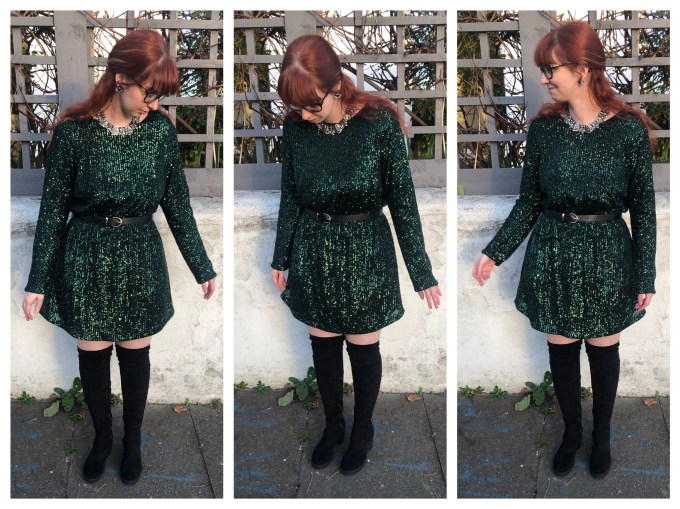
Probably because I’d spent so much time thinking about how I felt and how I felt about how I looked, it didn’t really occur to me to think about anyone else’s reaction; people commenting on my appearance isn’t something that happens very often. But suddenly, there were all of these people – including people I didn’t even know – saying really nice things and I didn’t really know how to respond to them. It was kind of surreal, nice but still surreal and strange. As I said, it’s just a really loaded and difficult place in my head. I loved the way it sparkled under the lights when I walked across the stage but then I look at the photos of myself and… I really struggle with looking at photos of myself. This whole topic really needs its own post but it was part of the day and so I didn’t want to leave it out. I’m trying to separate how I feel when I look at the photos and how it felt to hear people say positive things. That’s all I can do right now.
CEREMONY
Between a very early alarm and getting to London in time, it wasn’t the most relaxing start to the day and I found it very stressful (which didn’t help the migraine and nausea I had to battle all day – it was unfortunate that coming off my antidepressant and graduation overlapped). But we got there (Union Chapel is a beautiful venue and it was very cool to be graduating there), the COVID precautions were really good, and it wasn’t long before I was heading in with a handful of my coursemates.
There was the usual sprinkle of chaos. We had to get into order by surname, despite the fact that a not insignificant number of us had never met or even seen each other in the one set of online lectures we all had together. And it didn’t help that multiple people had been left out of the program (and some, myself included, didn’t get the official certificate after crossing the stage). So it was… interesting. But it was lovely to see some many people that have been a pretty significant part of the last two years of my life; I’m just sad that some of my favourite people couldn’t be there due to other commitments.
There were five or so courses that walked the stage before us, plus the head of each course gave a speech. Given how little time I was actually onsite during my course (not even six months of the two years), I was surprised how many people I knew. When you’re in the building, it’s not hard to end up becoming friends with people from other courses but with everything online, those casual encounters don’t happen and, to me at least, it felt like the different courses existed in their own bubbles. But having said that, I realised I knew a lot more people than I thought and it was an unexpected bonus to get to celebrate their achievements along with those of my close friends and coursemates. And some of the speeches were great, inspiring and moving; there were some great quotes there that I’ll take away with me.
When it was our turn, the head of our course gave a great speech and then, one by one, we were walking across the stage. Because they didn’t have my certificate (due to the aforementioned screw up around my graduation) but as I was receiving a separate award (more on that in a moment), they asked if I’d wait until the end of the line. That was fine with me; it was really nice to get to watch everyone do their walk and cheer for them.
AWARD
My name was finally called and I got to walk across the stage. It was kind of a blur of sensory information – lights, noise, the ground felt like it was moving under my feet – but I made it across the stage. I didn’t take it in at the time but watching the video my Mum had taken and hearing the cheer for me… it makes me pretty emotional. It’s a bit like with the dress: I guess I’m just not used to being noticed. I’ve spent so much of my life feeling invisible that being seen – feeling seen, really seen – kind of takes my breath away. I don’t know how to describe it, if I’m honest. It just means a lot to me.
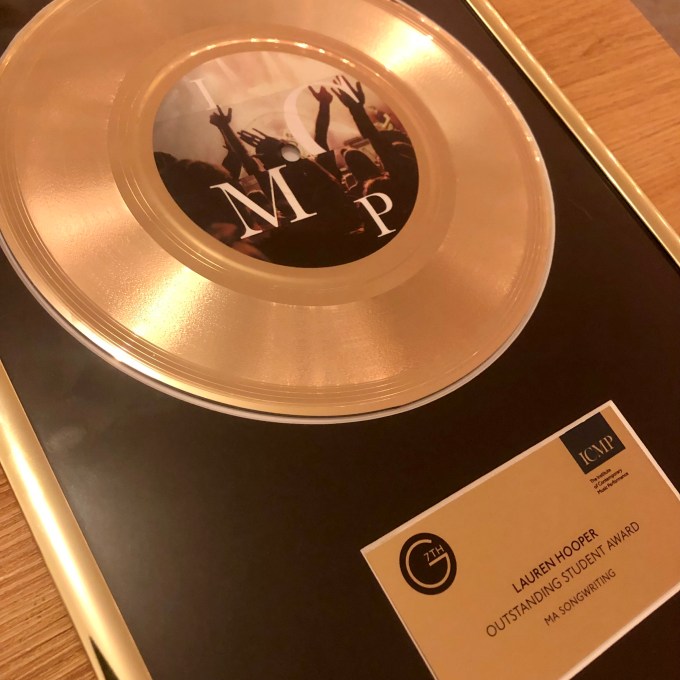
As I said, there wasn’t a certificate for me but each course gives an award to one student for ‘outstanding achievement.’ And given everything I’ve just said about feeling invisible, I was very emotional when I found out that I was being awarded it; I’m still processing it, to be honest. So, having crossed the stage, my head of course (who has also taught me on and off over the last seven years) had me stand to the side while she introduced the award. She said some really, really special things – particularly about my final project, which I absolutely poured every part of myself into – and presented me with the award. We took the picture and I slid back into the row with my coursemates. Everyone was so lovely about it and I’m just so grateful to all of them for making my Masters experience what it was; despite all of the hard stuff, I wouldn’t have had it any other way because of the people I met.
RECEPTION
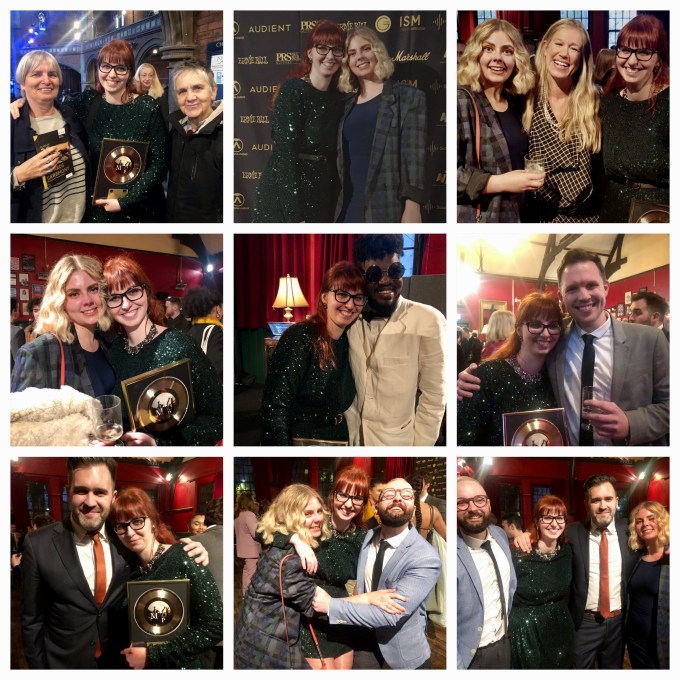
After the final few courses walked the stage and the last of the speeches, the ceremony concluded and we moved upstairs to the bar for the reception. It was somewhat surreal to be seeing and hugging and hanging out with people I’ve (pretty much) only seen online for the last eighteen months or so, surreal but wonderful. I saw so many of my friends; I got to meet their families; I caught up with a handful of my tutors, both from the MA and from my BA (some of them I haven’t seen properly since early 2020 at the latest since they didn’t teach on the MA and so I only ever saw them in the halls, something that obviously didn’t happen when we moved online). I had some really lovely, really special conversations that I will treasure. These last two years have been so weird – with such extremes of difficult and wonderful – and, with all of that still so fresh and still going on to varying degrees, I just felt so aware and so grateful for the good things, many of which are tied to my MA and therefore graduation.
I was absolutely exhausted and in a lot of pain afterwards. I could barely walk to the car. But all of the time on my feet, all the anxiety, the medication withdrawal, the emotion… it just hit me like a train. It took me days to recover – not an unusual experience – and, with my Granny’s Celebration of Life a few days after and the whole medication change, I don’t think I’ve fully processed it yet. It’s been such a weird, busy, emotional time and it’s just been hit after hit after hit. I’m doing my best to cope with it all but it’s a lot. But I did it. I finished my Masters. I am Lauren Alex Hooper, MA. Those two letters after my name mean so much to me because they represent how hard I worked to be here and I can’t be anything but proud of that.
 Finding Hope