 Finding Hope
The Companion’s ‘Stargate 60 for 60 Watchalong Challenge’ for Embracing Mental Health as a Fandom
Posted on May 10, 2024
NOTE: This is a very specific post that involves a lot of discussion about the show Stargate SG-1 and the lessons to be learned from various episodes. I know this won’t be a post for everyone so, if it isn’t for you, please feel free to skip it and wait for the next post; it will be coming soon. But I really needed to do this post for me, as this challenge has really supported my mental health over the last couple of months and so I wanted to archive it here.
TW: Brief mentions of depression and suicidal thoughts.
In the run up to the launch of the kickstarter for Embracing Mental Health as a Fandom, a collaborative book between Amanda Tapping and The Companion, the latter set several challenges to raise awareness for the fundraiser and the book. The challenge I took part in was the ‘60 for 60 Challenge,’ which involved watching sixty episodes of Stargate SG-1 – with the last episode coinciding with the launch of the kickstarter – and then discussing the themes and lessons of each episode on social media with other Companions.

Because so much has been going on in my life recently, my postings on social media and the discord have been pretty sporadic so I made sure to document my progress and my thoughts in this blog post.
As we watched each episode, we were encouraged to look for mental health and personal growth lessons…
14th March:
- Summit (5.15) – I feel like the obvious lesson from this one is to never trust someone who refuses to give you all of the details: how can you trust someone who only tells you half of the story, who only gives you the details they want to share or think that you need to know? It can make friendships, for example, impossible; no relationship can grow without honesty and trust.
- Solitudes (1.17) – I love this episode: Jack and Sam stranded on an ice planet while the SGC try to find and rescue them. The obvious message is to always make sure you have Sam Carter with you when you get stranded, but that’s not particularly applicable to real life, is it? A more realistic lesson might be that there is always something else you can try, that there is always another approach to a problem, and that you want to surround yourself with people who you can trust not to give up on you.
At this point, prompts were introduced to give people a discussion point, which made for a more structured analysis of the episodes, stories, and characters…
- Pretense (3.15) – There are so many lessons to be learned from the Tollan race and their rigidity. Their behaviour clearly demonstrates that arrogance can blind you to even the most obvious truths and that refusing to be wrong can turn a small a small problem into a much bigger one. And Teal’c’s behaviour demonstrates that there’s a time for loyalty and following the rules but sometimes we also need to recognise when it’s time to throw the rulebook out of the window and do the right thing.
PROMPT: Arrogance is a huge theme with regards to the Tollan, but self confidence is crucial to doing excellent work. Where is the balance?
Similarly to my original thoughts on the episode, it’s the Tollan’s absolute refusal to believe that they could possibly be wrong that proves to be their undoing; their arrogance and rigidity don’t allow for any doubt and I think it’s doubt, or at least questioning oneself, that allows us to grow and make more considered, more nuanced choices. Being more open to different opinions and different interpretations allows us to be more confident in ourselves and in our choices because, by being open, we know that we’ve done all that we can to take the best step forward.
15th March:
- Last Stand (5.16) – Continuing from ‘Summit’ (5.15), Daniel tries to disrupt the Goa’uld meeting while Lieutenant Elliot, carrying the Tok’ra symbiote, Lantash, guide the rest of SG-1 out of the collapsing Tok’ra base to safety. It’s a good, solid episode but the thing that stuck out most to me was how fantastic the acting of both Amanda Tapping (Sam Carter) and Courtenay J. Stevens (Lieutenant Elliot) was; their performances were really moving.
PROMPT: What’s your biggest lesson in Last Stand?
As I noted after watching Summit, a clear lesson from both episodes is that you shouldn’t ever fully trust someone who refuses to tell you the whole story, who doesn’t consider you important enough to share all of the details with. Daniel also demonstrates how important it is to be adaptable and Lieutenant Elliot’s storyline conveys to us how important it is to having meaning to your life and how important it is to say the important things while you still can.
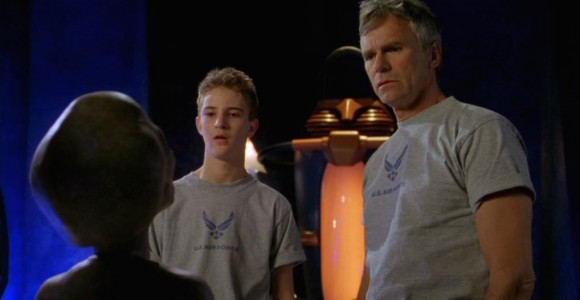
- Fragile Balance (7.03) – This isn’t one of my favourite episodes, story-wise, but I do enjoy the comedy of it, especially how much the rest of SG-1 are enjoying Jack being ‘aged-down’ to fifteen. And Michael Welch, who plays ‘Young Jack,’ is so good at recreating Jack’s mannerisms and speech pattern and humour; it’s a fantastic performance.
PROMPT: How would you re-live your life in 2024 as a 15-year-old?
The idea of being fifteen in 2024 is a terrifying one. I honestly can’t imagine how anyone, but especially children and teenagers, can be well-adjusted while growing up and forming their identity with everything going on right now: the social pressure and misinformation circulating on social media, the ongoing trauma from the pandemic, the political nightmare that we’re living in, the genocides we’re witnessing while being able to do so little to make a difference. It’s an awful time to be living in, one I never imagined, and, as much as I’m struggling with it, I can’t imagine what it’s like to be growing up with this being ‘normal.’
But if I were to go back to the 2010s and be fifteen again… that’s a very different question. Usually when I think about something like this, I’m wondering what things would’ve been like if I’d been diagnosed autistic back, but I don’t think this is what the question is asking. If I woke up and was suddenly fifteen again… I really don’t know. It’s such an overwhelming thought. With everything I’ve just written, I think I would be crushed under the weight of everything going on in the world right now, even more so than I am as an adult.
17th March:
- Fair Game (3.03) – Another episode about a political summit with the Goa’uld? People really voted these ones as the best episodes?! These are some of the most boring to me and I kind of can’t believe that these made the ‘best of’ list, especially looking at some of the episodes that weren’t even included. The machinations between the Goa’uld System Lords is interesting though and I enjoy it as an episode once the ‘negotiating’ ends and the action starts.
PROMPT: This episode starts with Sam Carter being promoted to the rank of Major. Truly, a seeing is believing moment. Who inspires you?
I was the first to post in response to the prompt, joking that we were probably all going to name Amanda Tapping: we were, after all, all there as fans of hers. One of the founders of The Companion commented that he probably should have specified someone other than her. She is a hero of mine so, when asked about who inspires me, my answer would be Amanda Tapping.
But if the question is ‘Who inspires you other than Amanda Tapping?’ I would have say that there are multiple people who inspire me: my Mum for more reasons than I can list; Daisy Johnson from Agents of Shield for multiple reasons, including her strength and her ability to always get back up when she’s knocked down, and Chloe Bennet for her acting ability and her kindness; Taylor Swift for her songwriting skill, her creativity, her desire to learn and experiment, and her warmth and openness; my friends for their creativity, for their determination, for their kindness; and that’s just a few. There are definitely more.
19th March:
- Evolution: Part 1 (7.11) – Ah, the first appearance of the super soldiers. The show did such a good job of making them really, really intimidating.
- Evolution: Part 2 (7.12) – The new threat is really interesting and, of course, it’s very cool to see Sam in charge. Learning all that she did under Jack O’Neill, I think she probably should’ve been promoted to Lt. Colonel much earlier but the writers obviously didn’t want to break up the team.
PROMPT: This is the super soldier episode, but it’s also when Sam Carter gets her first command of SG-1. What strategies or tools can you share when thrust in charge? Or add another theme you’d like to discuss.
Technically, this isn’t quite right since Sam was given command of SG-1 for the first time in ‘Spirits’ (2.13) when she was still a Captain. But I do really love seeing Sam in charge. She’s learned a lot as Jack’s second in command and taken on many of his qualities as a leader (his sarcasm often included) but she’s also very much her own person with her own strengths. While Jack’s approach was always (or at least usually) analytical to a certain degree, her analytical approach is quite different. I guess what I’m trying to say is that they have many of the same skills (some of which she did learn from him) but they often use them quite differently, both with successful results. It’s an interesting comparison.
Personally, especially as an autistic person, I think clear communication and a willingness to listen are some of the most important skills a person can have when in charge. Without those, a situation can devolve into chaos very quickly. But I also think it’s important to foster respect for everyone in their own roles so that when one person contributes, their knowledge and skills are listened to and given the respect they deserve.
- Descent (6.03) – I really love this episode, I think because of all of the team interactions; there’s just something about it that feels really natural and playful. I particularly like the back and forth between Jack and Sam: facing very near drowning with humour is very them but feels pretty notable considering what a high stakes situation it was. No one freaks out; they just roll with it. (Although they most certainly all could have done with counselling multiple times!) I also like the constant problem solving aspect of the storyline, especially once the ship begins flooding.
PROMPT: Jonas finally gets assigned to a mission and yet has to sit on the sidelines. How have you dealt with situations on a team where you feel like you could contribute more, but weren’t given the opportunity? Or add another theme you’d like to discuss.
I’ve often felt like this, like I could do so much if I was only given the opportunity (and often if people would only look past their first impressions of me: disabled, autistic, etc). So often I feel like, if I just had one person who would be willing to believe in me, then I could get so much further with my music because it’s incredibly hard to be an independent artist and it’s even harder to be a disabled independent artist.

21st March:
- Between Two Fires (5.09) – Tollana have reversed their policy of not sharing technology with less advanced races and offered Earth one of their ion canons in exchange for Trinium. The SGC debate the offer but Sam determines that just one would ultimately do more harm than good: they’d need thirty-eight to adequately protect Earth, excluding back ups. The fact that Tollana’s government even consider it is just deeply suspicious. They discover that the canons don’t work, that the Goa’uld have figured out how to counteract them. The Goa’uld, Tanith, has been forcing the government’s hand; they believe that, by doing what he wants and building explosives for him, they’re ultimately protecting Tollana. SG-1 forms a plan with Narim and he blows up the building with the bombs inside. The team manages to escape through the Stargate as the Goa’uld attack Tollana, likely destroying the planet.
PROMPT: Tollana’s government really operate in a toxic work environment, don’t they? How have you overcome a highly bureaucratic work environment? Or add another theme you’d like to discuss.
It seems like the Tollan, in their quest for efficiency, have become toxic in many ways: their rigidity, their arrogance and superiority, Narim’s obsession with Sam isn’t exactly healthy… and then, of course, everything that happens in this episode. The whole society has become extremely toxic. (There are some ‘consequences’ of their so-called perfect society that seem pretty unlikely, no crimes committed like murder or rape, for example. Being a technologically advanced society wouldn’t end crimes like that. And calling the act of the government lying to the people ‘worse than murder’ is just wild, particularly at this moment in time when the government does nothing but lie to the people.)
This is a hard question. I wouldn’t say that the music industry is necessarily bureaucratic but it’s definitely toxic, That’s not to say that all of the people are toxic but there are some really awful systems in place that serve only the highest positions while the songwriters, musicians, photographers, videographers, etc often make very little money, despite being the creators that everything rests upon. It’s also incredibly difficult to break into the industry as an independent artist since the higher ups prefer the industry as it is, rather than letting it evolve as music making itself has. It’s deeply frustrating. But I think that all you can do is focus on making your art and trying to build an audience that loves it; I think the only way we can change things is to do them differently and let the change happen as a consequence, especially in such a big industry.
- Children Of The Gods (1.01 & 1.02) – Understandably, there is SO MUCH world building in this episode. There’s also the dreaded ‘reproductive organs’ line but somehow, Amanda Tapping manages to pull it off without making you want to cringe yourself out of your skin. Sam is so adorable and so excited about everything related to the Stargate; the ‘science twins’ are just so funny and cute. And moment between Jack and Teal’c when Jack promises that he can save the hostages – the moment that convinces Teal’c to betray everything he’s ever known for the tiniest chance that he can free his people – is so powerful and moving. We learn so much in this first episode and it really set the show in motion with multiple storylines and new characters to learn about.
PROMPT: A major early theme is Daniel dealing with the Cassandra Complex, being right about aliens and yet nobody believes him. When this happens to us, this leads us to feelings of frustration and confusion. Or add another theme you’d like to discuss.
Since the show begins with proof that Daniel is right, I think grief is a stronger theme here. Jack has lost Skaara who is like a son to him (and goes on to lose Kawalsky); Daniel has lost Sha’re, Skaara, and his life on Abydos, and Teal’c has lost everything. And although Sam hasn’t directly lost everything, her life has dramatically changed too. The writers don’t spend much time on this at all, even though it would’ve been overwhelming for all of them. Plus they’re suddenly facing what must’ve felt like an impossible threat. It would’ve been so easy to just give up and just collapse under the weight of it all. I don’t think I realised until this rewatch how dark and heavy the beginning of the show is.
22nd March:
- The Torment of Tantalus (1.11) – So much of the mythology of the show is established in this episode and there are so many interesting themes to the story: there’s so much world-building; there’s so much about identity, given how Ernest lost everything when he was marooned and how he imagined Catherine so as not to be alone; Sam, at this very early point in the show, carries the weight of saving them all when she has to fix technology that she has so little understanding of and experience with; Daniel’s frustration at the loss of so much potential knowledge and Ernest’s wise question of whether knowledge is worth it if it can’t be shared. It’s not an episode that I would’ve ranked high on my list of favourites but it’s so good and so thoughtfully written, acted, and produced.
PROMPT: Following on from yesterday’s topic of people not believing you, share any stories and tools on how you’ve been patient and found ways to win people over. Or add another theme you’d like to discuss.
An example that jumps out at me straight away is how I convinced my psychiatrist to explore both BPD and Autism by presenting him with a stack of research at nineteen. I wasn’t trying to convince him I had either specifically but I wanted to show him that they were worth investigating: if I related to so much of the available information about both conditions, surely he should at least consider them rather than brush them off as unlikely. I was eventually diagnosed with both, although the traits of BPD were later absorbed by my diagnoses of ASD and CPTSD. Arguing with him wouldn’t have changed his mind but compiling as much research as possible and giving him tangible reason to change his mind was much more effective.
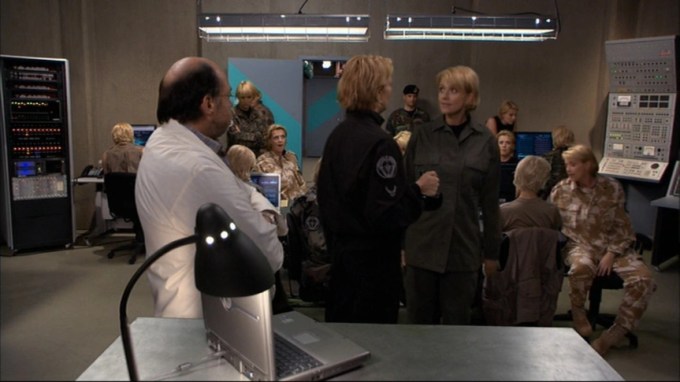
- Ripple Effect (9.13) – I LOVE THIS EPISODE SO MUCH (and I love thinking about how they made it). General Hammond describing the SGC as “the Grand Central Station of the multiverse” always makes me laugh. The multiple Sams situation is so cool but so funny and I love Cam and Sam’s conversation about there being so many of her (“Did she just say ‘we’?” “Uh, me and myself.” “Finally someone who can keep up with you?” “Yep.”). It would be so fascinating to talk to versions of yourself from alternate universes, but so incredibly weird too. And then they get to see Janet again! And Martouf too but it’s the Janet reunion that always makes me squeal; it’s so sweet to see how incredibly moved they all are to see her again. Getting everyone back to their own realities is a huge problem to solve and, as usual, the burden falls on Sam (although at least this time there’s more than one of her) but the pressure of that – to consistently come up with complex solutions to never before seen problems, to so often be the one brain between the earth and a terrible fate – sounds unbearable. The way the episode plays out with our team and the first team to come through from a different reality is so clever and funny and the ending with all of the goodbyes is really lovely. It’s one of the episodes that I just never get bored of.
PROMPT: Reuniting with lost friends. What’s something you wish you could share with someone you’ve lost or lost contact with? Or add another theme you’d like to discuss.
If I could talk to anyone, it would be my Dad. He died when I was thirteen, before I’d really even become a my own person yet, and what I wouldn’t give to sit down with him and talk about everything that’s happened in the last sixteen years. Sometimes I sit and imagine what it would’ve been like to have him present for all of the big moments – and the small moments – of my life but it’s never enough because I only ever had a child’s perception of him: it was adoring but limited. I never knew him as a whole person, just like he never got to know me as a whole person.
- Prometheus (6.11) – I do find it pretty unbelievable that anyone thought it would be a good idea to let a news crew anywhere near anything SGC related, even with someone poking around. But for some bizarre reason, they do and, of course, it results in the Prometheus getting hijacked. It’s cool to have an episode set on the ship, to see them using the features of the ship in the story. The team manage to stop the hijackers but the ship has been programmed to jump into hyperspace and they have no idea where in space they are. And to add to their problems, Thor chooses that moment to appear and ask them for help, the Replicators having taken over their home world.
PROMPT: The episode opens with Sam unexpectedly confronted with an intense allegation, and yet she deals with it calmly. She could have easily been defensive, gotten angry, or even aggressive. How have you dealt with confrontation and allegation and any tools to keep calm? Or add another theme you’d like to discuss.
I HATE confrontation so I don’t generally have to talk myself out of it; more often, I have to push myself to stand up for myself. I have been getting better at that recently because I know I don’t deserve to be treated like that but I still find it very stressful and upsetting.
23rd March:
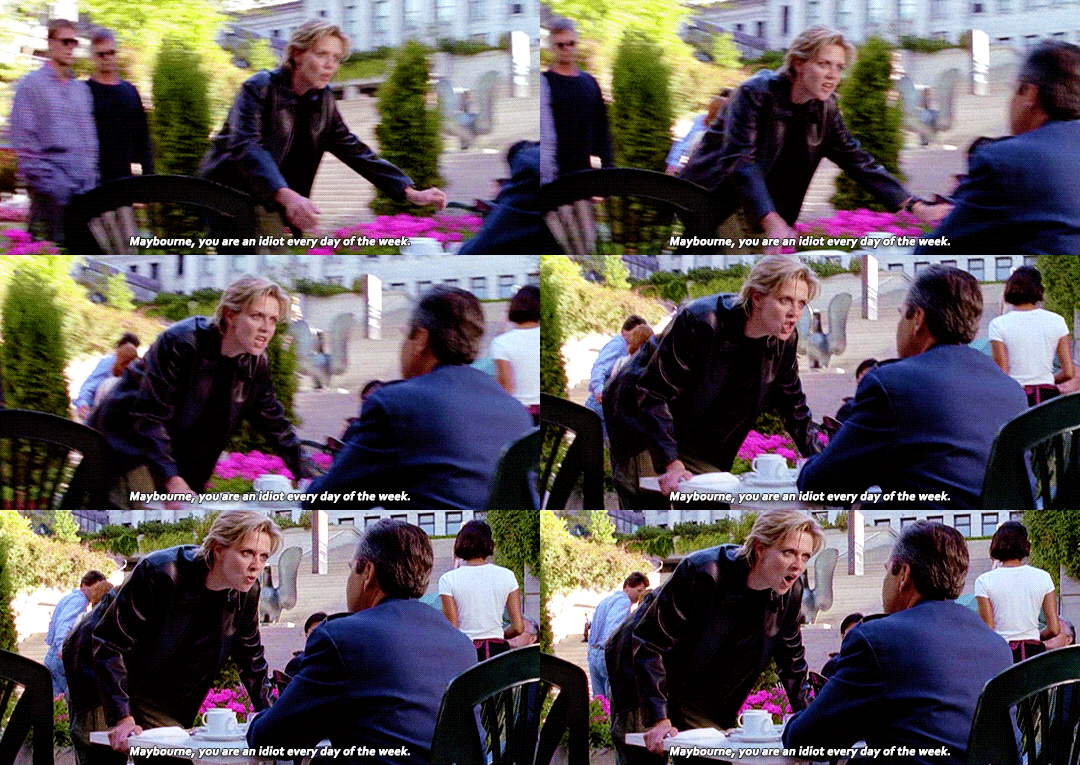
- Foothold (3.14) – I love this episode because Sam is just awesome from beginning to end, saving the whole SG-1 (and ultimately the planet). When the team come back from a mission, they’re immediately sedated, an unknown race having taken over the SGC by disguising themselves as the SGC staff. But Teal’c symbiote and Sam’s experience with Jolinar prevent them from being completely incapacitated and Teal’c helps Sam escape to get help. Teal’c is essentially tortured and Sam is gaslit by everyone she talks to: they all claim that a chemical spill is making her delusional and paranoid and for a moment, she almost believes it. Jack, Daniel, Maybourne, and Sam head back to the SGC and it’s a frequency on the plane that reveals Jack and Daniel to be imposters. It’s so cool to see how Sam figures all of these things out, even under intense pressure, finding solutions and adjusting them as her understanding of the situation changes. It’s so, so cool. It’s a great Sam episode, both in terms of action and dialogue: forgetting that she’s disguised as Daniel and shouting at Maybourne – “Maybourne, you are an idiot every day of the week. Couldn’t you have taken just one day off?” (iconic) – are particular highlights.
PROMPT: Imposters! A great opportunity to discuss this topic in any way you’d like. Feeling like an imposter, dealing with fake people, imposter syndrome… Or add another theme you’d like to discuss.
I don’t think I have anything to say about imposter syndrome that anyone else won’t have already said but the ongoing gaslighting of Sam really resonates with me. She’s told over and over again that what she’s experiencing isn’t real and I really relate to that: I’ve been told by so many medical and therapeutic professionals that what I’m experiencing is normal, isn’t a big deal, something I just need to get over or just live with… It’s awful but it also really wears you down. It’s hard to keep fighting against that ignorance and unkindness when it’s so constant. I usually end up putting it above my own needs, which just makes everything worse.

- Fallen (7.01) – So Daniel has appeared on a random planet, without any of his memories (or clothes). It would be so strange to have everyone know you when you don’t know yourself. Jack is hilarious, as usual. With all of the emotional, team stuff, the Goa’uld battle felt almost secondary, although Jonas being captured is a very ominous beginning to the series.
PROMPT: Daniel’s return means the reunion of the original SG-1 team, only Daniel doesn’t remember anything. Sometimes, as friends drift apart, the reunion can be tough and awkward. Friends and classmates remember things differently. How do you reconnect? Or add another theme you’d like to discuss.
I’ve never really experienced this so I thought I’d pull at a different thread: how our memories shape our identities. Daniel is quite different without his memories of Earth, Abydos, Sha’re, and SG-1 and his fears about remembering who he really is are so valid. I’m terrified of forgetting things, of forgetting the things that have really informed who I am; how would that affect my identity? I’m not sure I have the words to elaborate further on this idea but I can only imagine how difficult it would’ve been for Daniel to have these strange people appear out of nowhere and tell him that they know him, that they can tell him who he is and the sudden anxiety of whether or not he actually wants to know.
1st April:
- Beachhead (9.06) – The team playing basketball together is so cute; it’s nice seeing them hanging out together in their off time. It made me miss Sam (thank god, she was back from later on in the episode). I really don’t like General Landry; it doesn’t help him that Don S. Davis was so, so good as General Hammond but there’s just something about him that makes my skin crawl. Daniel and Vala are hilarious; it’s like Daniel’s trying to corral a really naughty cat or a bored toddler. SG-1’s plan would have failed if not for Vala, who was likely transported to the Ori galaxy for her efforts. She’s an interesting character, despite how often she was relegated to ‘the bouncy, quirky girl.’ I feel like they could’ve really developed her backstory if they’d dedicated some time to it; we know that she’s been through a lot so there was story to work with. She feels like the most trope dependent and least developed main character on the show.
PROMPT: There is no reasoning with a Prior of the Ori and the disagreements can become so hostile. It’s a reflection we see today in news and social media. Some people can get so angry and somehow violence has become an acceptable solution. The reality is most people are good people. What are some ways you believe we can live in a better world where we can disagree and yet still live peacefully together?
This is a really huge question so I doubt that I can come up with any half-decent answer. But I often think of the Amanda Tapping quote: “The best thing you can do is to make your corner of the world as good as possible.” The world can be an awful and terrifying place but I think that, if we focus on what we can do, that is more likely to affect positive change than if we let ourselves get overwhelmed by how enormous the conflicts and troubles can be.
- 200 (10.06) – (For some reason, this episode is called ‘Remember When’ on Amazon Prime, which is weird? Anyway.) I used to hate this episode but now I find it hilarious; I think I just needed to figure out how to appreciate it for what it is. Jack has got SG-1 roped into reviewing the Wormhole X-treme movie script, which is beyond ridiculous. And then, just as they think they’ve escaped the task and head out on a mission, the gate breaks down and they’re stuck looking at the script. It’s just wild and while I don’t love the clips – the reimagining of The Wizard of Oz, of Star Trek, with younger actors, and so on – I love watching the team interact as they pick through the script; they’re so funny and the face acting alone is brilliant. The invisible Jack scene is hilarious and I love that they keep milking the fishing scene. And, of course, there’s the wedding: Sam and Jack getting married. The way they look at each other right after that scene ends is so funny, like they know just how the wedding really went. The amount of inside jokes and fourth wall breaking that they do throughout the episode: “all these writers and they couldn’t come up with anything better” from Sam is so funny considering how many writers are listed on this episode; “throw up the title and get on with it” and then they do just that; Teal’c’s “I do not understand why everything must inevitably explode” with a completely straight face; Sam’s incredulity – “You’re counting?!” – at Cam counting his gate trips (which did make me wonder just how many gate trips she’s done and tempt me to watch the whole show again just to count); the jokes about Farscape are so funny, given that that was Ben Browder and Claudia Black’s show before they joined Stargate; “act three just ends!” and it does; I’m never sure if they’re just teasing Cam about him being born as a result of their trip to 1969; Martin talking about a big twist and then Jack walks through the door; talking about TV concepts within a TV show just makes for so many funny side eye moments; the episode ending with Martin shouting that the movie’s been cancelled but that they’ve renewed the series, which I’m pretty sure is what happened with Stargate. Maybe? The episode ends with Sam fixing the gate and SG-1, plus Jack, Landry, and Walter going through (there’s a cake on the other side to celebrate Cam’s two hundredth gate trip). But then there’s some weird extra stuff from the set of Wormhole X-treme while they’re making their two hundredth episode with the movie back on: all of the people on set are actually directors and writers and so on and the fake cast make so many jokes about the show (and Stargate SG-1, the show). They end with the Isaac Asimov quote: “Individual science-fiction stories may seem as trivial as ever to the blinder critics and philosophers of today – but the core of science fiction, its essence… has become crucial to our salvation if we are to be saved at all.” It’s a poignant end.
PROMPT: What’s the most ‘X-treme’ thing you’ve ever done? C’mon, secrets don’t make friends… Or add another theme you’d like to discuss.
I honestly don’t think I’ve ever done anything particularly extreme; extreme just isn’t enjoyable for me. I’ve done a handful of things that I could probably describe as strange, like going to multiple dates of a Taylor Swift tour or seeing Sara Bareillies in Waitress several times or going to meet Amanda Tapping at multiple conventions. But I think those things are only ‘weird’ or ‘extreme’ to the people who don’t do those sorts of things. I think for people who are fans of particular artists would get it. I think people who love Amanda Tapping would get it too. These are things that bring us joy and if we can make them possible, why would we deny ourselves that joy?
BETWEEN THE 2nd AND 8th APRIL, I WASN’T ABLE TO ACCESS STARGATE DUE TO BEING AWAY IN THE US SO I DID GET SOMEWHAT BEHIND IN THE WATCHALONG.
9th April:
- Flesh and Blood (10.01) – Following on from the huge space battle in ‘Camelot’ (9.20), all of the ships are depleted and Sam is stranded in space with dwindling life support. On the Ori ship, Vala has her baby, Adria, who grows at an alarming rate in order to lead the Ori. Everyone manages to get back to the Earth ship safely but they’re faced once again – as they were at the beginning of the show – with a far superior enemy that they shouldn’t be able to beat. But they won the war against the Goa’uld. It’s not impossible; there is hope. But they need to reevaluate, especially with Adria in the mix. They manage to pack a lot of story into a relatively stationary episode and it feels like a turning point in the Ori storyline.
PROMPT: Vala’s daughter, Adria, grows up so quickly in this episode. Although this is a sci-fi story, the reality is that time is fleeting for all of us. Who do you wish you could slow down time with and spend more quality time with? Or add another theme you’d like to discuss.
I don’t think there’s anyone I know that I wouldn’t want to slow down time to have more time with them. But my experience of time over the last few years has been very strange: the world feels like it’s moving so fast but I’m moving so slowly. It makes life feel very confusing and stressful and overwhelming. I constantly feel unanchored and at the mercy of everything happening around me and that’s a really hard way to live. I’ll suddenly realise that I haven’t seen one friend or another in months or that a deadline’s coming up and it just makes keeping track of my life very difficult and very stressful. I’d give anything for life to be even a little less stressful.
- Upgrades (4.03) – The Tok’ra arrive with armbands that they want to test on SG-1 (apart from Teal’c, whose symbiote would reject it), increasing their strength, speed, and skills. The effects of the armbands – and their enhanced abilities – get them into all sorts of trouble (including breaking out of the base for steak and getting themselves into a bar fight, which they’re all so funny and cocky about). When Hammond calls an end to the experiment, they find that they can’t remove the armbands and the resulting blood tests show that they’re all going into multiple organ failure. But despite that, they break out and go through the gate to destroy a Goa’uld mothership, which was what the Tok’ra were hoping for all along. As they escape, the armbands start to fall off, leaving Sam trapped on the ship, behind its forcefields. Fortunately, explosions around the ship bring the barrier down and they escape back to Earth with Teal’c’s help, who was authorised to go. They’re expecting to be courtmartialed but Hammond decides to write off their subordination due to ‘alien influence.’
PROMPT: In Upgrades, the team get stronger and faster but that also leads to irresponsible decisions. When have you made overconfident and impulsive decisions and what lessons did you learn? Or add another theme you’d like to discuss.
I am the opposite of impulsive. And overconfident. I think I can probably count on one hand the number of times I’ve done something spontaneous and/or reckless. I think it’s probably my autistic-need-to-follow-the-rules thing. Having said that, I have gotten up to some hijinks while away in Nashville (not particularly wild but still pretty big for me). The anxiety and stress that makes me feel so tightly wound just lessens a little and I find myself less resistant to going with the flow. I’ve spontaneously gone to shows, changed my plans, socialised with people I don’t know, grabbed opportunities that usually feel to scary. It’s very strange.

- Thor’s Chariot (2.06) – While I don’t love the less technologically advanced planet storylines, I do have a soft spot for Cimmeria and their relationship with the Asguard. It’s also cool to see SG-1 faced with trying to fix a mistake that they made in their inexperience; there are so many unknowns when exploring the universe so it’s surprising that there weren’t more mistakes made and damage done.
PROMPT: Thor reveals his true self as the grey aliens we’re so familiar with. Has there been a time when you discovered something new and it all just clicked in together? Or add another theme you’d like to discuss.
Discovering that I’m autistic really changed my life because suddenly so many of my experiences made sense and that happened again and again as I was diagnosed with comorbid conditions that explained more and more of the things that had been making my life difficult. Of course, a lot of these conditions still make my life difficult but at least I know why. When I didn’t know, I just felt so lost but as I’ve gained more and more knowledge about all of these issues, the less lost I’ve felt, at least in regards to my mental health, my physical health, and my disability.
10th April:
- Emancipation (1.04) – I’ve always had a soft spot for this episode because it’s the first time we get to see how tough Sam is but the episode itself is a racist, sexist, narrative mess: a white woman is the only one who can save the oppressed women of colour, the white woman is considered more beautiful and valuable for being white and blonde when it’s more likely that she would’ve been considered weird; the white woman is able to undo thousands of years of oppression in two days, which is celebrated when just days ago it was extremely important to their culture and everything is absolutely fine. It’s offensive and just deeply unrealistic. It’s very old and they had good intentions but it just doesn’t work. And not only that, it’s all treated very lightly and flippantly when what was actually happening (Sam being kidnapped and in danger of rape, the regular beating of the women, the selling of women for political gain, and so on) was really dark – Teal’c being Jaffa (and Apophis’ First Prime) often got them in serious trouble and put his life in danger, which they always took very seriously but that was very the case with Sam… Anyway. It was getting to see Sam be awesome for the first time that got me into it and I think that what I’ve liked about it is the potential it had, rather than the reality of it. There was a good story in there: at some point they would have likely gated to a deeply misogynistic, patriarchal society that put Sam’s life in danger and that would’ve been a really interesting story to explore.
PROMPT: The greatest episode in Stargate history… April Fool’s! But seriously, this episode deals directly with inequality and sadly that still exists today. How do you deal with inequality with others that live in ‘completely different ways?’ Or add another theme you’d like to discuss.
I’m acutely aware of how much I don’t know about people and so I always try my best to stay open and un-judgemental. There’s so much to learn about people, in the wider groups they belong to and as individuals. I’m often misunderstood because I’m autistic, because of mental health issues and my physical health issues, and I know how awful it feels to have people make assumptions and judgements without even trying to understand me. I never want to be someone who does that to people. Of course, we all have our internalised issues that we need to work through but I’m doing my best and I think that that’s all we can do as individuals.

- Redemption: Part 1 (6.01) – The people drafted in to replace Daniel aren’t lasting very long; Jack hasn’t been happy with any of them. Jonas is still base-bound but, when SG-1 go to Nevada to see the newly finished X-302, he’s invited along as his contributions of Naquadria have made it possible. But when news reaches them that Teal’c’s wife is ill, they head to Chulak only to discover that she has already died. Rya’c is furious with Teal’c for everything he’s done, the consequences of which made them outcasts and likely contributed to Drey’auc’s death. On Earth, Anubis is attacking the gate and SG-1, sans Teal’c who’s still on Chulak, try to stop him, try to contact the Asguard for help. Sam’s actually scared that she can’t fix it, even if she had more time.
- Redemption: Part 2 (6.02) – Sam is sure that McKay’s plan will fail and make things worse and then, when it does, she’s electrocuted and loses consciousness. Meanwhile, Teal’c, Bra’tac, and Rya’c try to disable Anubis’ weapon from their side of the gate. When Sam is back on her feet, it’s a comment from Jonas that inspires her to get the gate into space using the X-302 so that, when it explodes, no damage will be done to the Earth, even though it leaves them without a Stargate. Jack just manages to get it into hyperspace, parachuting out just in time, and Teal’c is able to fly back to Earth, Rya’c having destroyed the device. The SGC negotiates the other Stargate from the Russians in exchange for a Russian soldier on SG-1, at which point Jack announces that he’s already recruited Jonas.
PROMPT: Teal’c and Rya’c deal with a difficult father-son relationship. How is your relationship with your father (or other family member)? Anything you wish they could understand more about you? Or add another theme you’d like to discuss.
I was only thirteen when my Dad died so we never really had the opportunity to have anything other than a good relationship. We got on really well but I was still a kid – a very un-rebellious, well behaved kid – and I didn’t live with him so we never really had the chance to have a bad relationship. I like to think that that would’ve stayed the status quo – a good relationship – in general. I do wonder how he would’ve reacted to my being autistic though, whether it would’ve been something he accepted straight away or whether he would’ve struggled with it like some people have.
- Homecoming (7.02) – Having captured Jonas and learned of the Naquadria, Anubis attacks Kelowna, Jonas’ home, in order to take it for himself. The SGC agree to help Kelowna but only in cooperation with the two other states on the planet but even with their global ceasefire after Kelowna used their Naquadria bomb, it’s far from an easy alliance. Daniel manages to save Jonas, Anubis is defeated for the moment, and with Jonas going home to help with the peace delegations on his planet, Daniel rejoins SG-1.
PROMPT: In Homecoming, the oldest of the System Lords, Lord Yu, is beginning to suffer from dementia and we know it’s not easy on First Prime Oshu. We know many of you are caring for your aging parents and grandparents. We’d love to hear a wonderful story about them. Or add another theme you’d like to discuss.
This situation doesn’t really apply to me but my Mum’s Mum died in September 2021 at the age of eighty-three. It was really hard on my Mum but I’m not sure I’ve really dealt with it: I was too busy just trying to keep it together. But one of the things I loved about her was, despite not necessarily understanding my being autistic or my sibling’s exploration of gender and self expression, she always tried to understand and she always supported us. She wasn’t scared by not knowing; she was always open and empathetic in her approach to learning more. I very much admired that about her and hope that I will be able to respond to the world in a similar way. She was also an amazing piano player.
13th April:
- Shades of Grey (3.18) – I don’t love this episode because of the conflict between the characters. Sam, Daniel, and Teal’c (him perhaps most of all) are so confused and hurt by the way he’s acting and he goes for the jugular every time. And then he’s retiring off world and leaving them behind. I know he’s doing it for the greater good but I kind of hate the implication that the rest of the team couldn’t be trusted to at least know what was happening; the excuses of their reactions needed to be believable and the Asguard only wanting Jack involved feel kind of bullshit, like a writing work around rather than authentic choices for the story. Yes, he pulls off the mission, the rogue unit are apprehended, and trust is restored with the other alien races. But it still feels a bit… icky. And I think the team forgive him a bit too quickly. It’s probably good that they don’t let it fester and they’re probably more glad to have him back than they are angry and hurt by the end of the episode but it does feel a bit too easy.
PROMPT: Jack betrays Sam and Daniel throughout this episode. First, by stealing Tollan technology, and later learning that he’s been lying to Sam, Daniel, and Teal’c due to the insistence by the Asgard. Do the ends justify the means? Is it okay to lie for the greater good? Or add another theme you’d like to discuss.
While I think that there are probably some lies that are acceptable in the grand scheme of things, I don’t think this one was. As I said, I think it was shitty to put the team through that just because the Asguard asked – SG-1 could have been trusted – and I think they forgave him far too easily. I would’ve been really hurt. I think, in general, it’s always better to be honest, although sometimes it might be kinder to choose the moment rather than just blurting something out. But honesty has always been really important to me.
- Prometheus Unbound (8.12) – Daniel, General Hammond, and the crew of Prometheus are headed to Atlantic when Vala cons her way on board, dressed as a super soldier. While the rest of the crew are trying to survive of Vala’s damaged ship, Vala tries to manipulate Daniel into helping her. Their banter is so funny, right from the beginning. Vala is lying about having a good cause, of course (and we don’t even know her yet). They very nearly get killed by Goa’uld gliders but Daniel and the crew are eventually reunited, with Vala as their prisoner but then, of course, she escapes.
PROMPT: Ronan vs Teal’c? Nah? Rush vs Young? Nope. The greatest fight in Stargate history is between Daniel and Vala. What’s the best ever fight, break up, and make up you’ve ever had with your better half? Or add another theme you’d like to discuss.
Eh, unconvinced that that’s the greatest fight. It might be the funniest fight though. But whatever. Back to the prompt. I can’t imagine seeing a fight as a good thing so I don’t think I can respond to this prompt particularly well. I’ve only ever had petty spats that eventually everyone got over or devastating conflicts that ultimately ended the relationship. But seriously – seriously – I cannot comprehend looking at a fight of that scale (let alone more than one) and the word ‘best’ ever entering my mind.
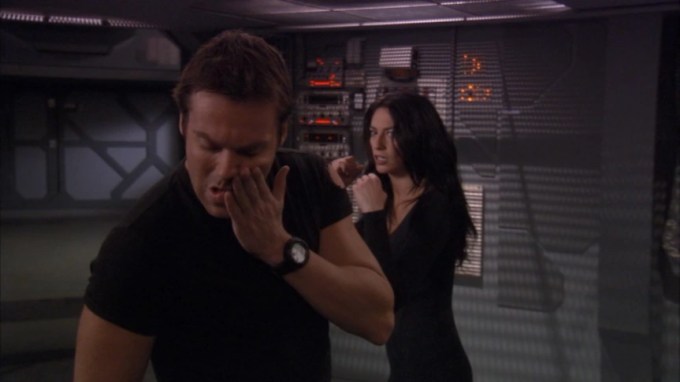
- Point of View (3.06) – An alternate universe Sam and Kawalsky come through the mirror. In their world, the SGC and planet Earth have been taken over by the Goa’uld and their Jack, who was Sam’s husband, had been killed. They’re asking for help but it’s not long before the other Sam is affected by Entropic Cascade Failure, a consequence of being in the same reality as that reality’s version of her. The Sams work on a plan to get Kawalsky and Sam back to their reality and make contact with the Asguard but the other Sam is very snarky and defensive: she’s struggling with the fact that our Sam saved the planet and she couldn’t, as well as seeing Jack while knowing that her Jack is gone (it’s very strange to see any version of Sam getting emotional over Jack this early in the show). Their wedding photo is very cute and I can’t help wondering if it was photoshopped or whether they actually dressed up to take it. The Sams manage to come up with a solution, which they manage to pull off, although there’s some obvious emotional confusion when the other Sam kisses our Jack goodbye. Our Sam is feeling something about it, although I’m not sure she knows what.
PROMPT: Dr. Carter or Major Carter, good Teal’c or bad Teal’c. Alive O’Neill or dead O’Neill. What are you like in an alternate reality? Or add another theme you’d like to discuss.
I think the most obvious alternate reality version of me would be one where I’m not autistic. It’s something I’ve wondered about a lot, what my life would be like. In the almost ten years since I was diagnosed, I haven’t often wished not to be autistic but over the last few years – in the worst depressive episode of my life – I have had periods of hating it and of ruminating over what it would be like to have been neurotypical. I can’t help thinking that life would’ve been easier, even though I know I would’ve just had different problems.
15th April:
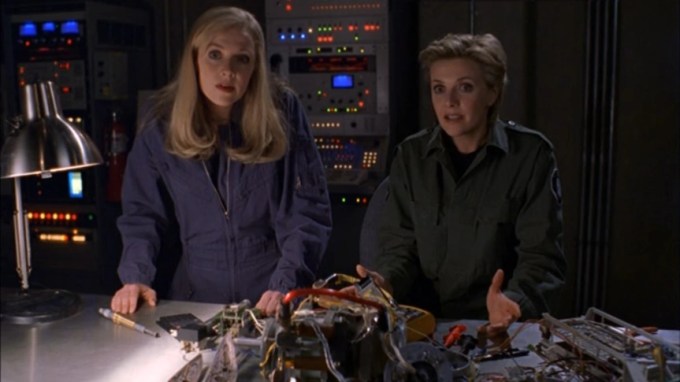
- Moebius: Part 1 (8.19) – After Catherine Langford’s death, Daniel inherits her entire collection and discovers a reference to a ZPM in Ancient Egypt. In the briefing, Daniel tries to convince Jack to let them go back in time to Ancient Egypt and steal the ZPM that Ra never knew he had (Jack is so not loving being the general and having to listen to all of the scientists but the way his hand squishes over Sam’s when he takes the file from her… Not very professional but deeply adorable of them). Jack can get them back with the puddle jumper and the original four of SG-1 head back to 3000 BC. They have to keep a low profile but Jack finds it very hard not to step in and help (interestingly the CGI of the Jaffa armour has gotten so much better since the show began). They manage to steal the ZPM but when they get back to the puddle jumper, they discover that sand has blown over it and made its position very obvious – the image of the sand blown over the invisible puddle jumper is deeply hilarious. Now that it has been discovered by Jaffa, they can’t recover it and get home without causing significant change. The only option left is to live quietly and blend in so that they don’t change the future. But the future has been changed: Daniel is teaching English as a foreign language and Sam is a super nerd, having her theories stolen by her boss and both of them jump at the chance to go to the SGC. Jack retired at colonel and now owns a boat but won’t come back to the SGC; he may be even more jaded than our original Jack. It’s a bit over comical for me, with too much cringe comedy, but I do appreciate how dorky they are, how they make fun of the ‘reproductive organs line,’ and so on. The original team made a video with Daniel’s camcorder, sealed it up, and the SGC eventually found it. The dorky versions of them are seeing the super cool versions of them, which is very entertaining. Sam and Daniel try to convince Jack to go to Chulak with them but he still refuses. The SGC also recovered the puddle jumper and McKay is in charge of figuring it out, dismissing Sam’s ideas completely. The episode ends with Sam and Daniel learning that they won’t be going on the mission but Jack, who’s returned, will be.
PROMPT: Back to back alternate reality episodes! Okay, you can change one thing in your past that would change the trajectory of your life today. What would that be? Or add another theme you’d like to discuss.
I’ve already rambled about autistic me vs. allistic me and while it would’ve absolutely changed the trajectory of my life, I don’t really want to go over that again; there are lots of complicated layers of thought and emotion that go into wondering whether or not you’d change being autistic because it would be to change something so fundamental to who you are. So something else I’d change? I’d change my Dad dying in 2008. That was the first big T trauma of my life and I’d do anything to have him back in my life.To have had him present for all of the big and small moments of my life… that would’ve changed everything.

- Moebius: Part 2 (8.20) – They all go through to Chulak and oh my god, Sam and Daniel are so unbelievably dorky; Daniel moaning about parking the puddle jumper so far from the settlement is so funny. At least Jack vaguely knows what he’s doing, having been in the Air Force before. Even so, they’re captured pretty much straight away and Daniel is tortured for information. And then, much to their surprise, Teal’c gives them back their gear and they escape. But before they can get very far, Teal’c reappears and shoots Daniel, explaining that he’d been implanted with a Goa’uld. With just Jack, Sam, and Teal’c left, they go back in time to find the original team, only to discover that only Daniel survived the rebellion they had joined (since it was already historical fact). Back in the puddle jumper, Jack and Sam try to figure out how it works and they’re both just so funny and awkward (I remember Amanda Tapping saying, in the audio commentary maybe, that she was pregnant at the time – it was still early so they could hide it with the dorky outfits – and her brain was so fuzzy that she could barely remember her lines, which somehow just makes this episode funnier). They end up kissing, of course, even as the rebellion outside succeeds. Back in the present, they assume that everything must’ve worked out, that they didn’t do anything that changed history. And they finally go fishing! Obviously for us, it’s the second time for us but it’s the first time for them… except now there are fish in Jack’s pond and in classic Jack O’Neill style, he quotes The Simpsons: “Close enough.”
PROMPT: Yesterday, you shared something you would change but this is such a huge topic. What’s something else you’d like to change? A romance, a fling, a relationship, or something else? Or add another theme you’d like to discuss.
I find this quite a hard question because most of the bad things that have happened to me have ultimately lead to good things. But now that I think about it, I’d change coming off my antidepressants to try ADHD medication: that was probably the worse decision of my life because it triggered a massive depressive episode that’s now been going on for almost three years. So I’d undo that. I was so excited for everything ahead of me after graduation and that medication change (and my reaction to it) stole it from me.

- Meridian (5.21) – I find this episode so difficult, borderline unbearable, to watch (I think I’ve watched it maximum three times, which is absurd compared to how many times I’ve watched other episodes of this show). Daniel is exposed to a lethal dose of radiation off-world when he tries to stop a malfunctioning weapons test and over the rest of the episode, we watch Daniel deteriorate, the others try to say their goodbyes, and Jonas desert his planet after seeing the way they’d treated Daniel and the glee on their faces when they realised how powerful the weapon was. Meanwhile, Oma Desala encourages Daniel to ascend, although she doesn’t make it particularly clear how one actually ascends. Talking with Oma, Daniel reveals that he feels his life has been a failure, that he hasn’t changed as much as he could have (I can’t help feeling that this is kind of arrogant, and self-pitying to a certain degree – he’s done more than most normal people ever even have the chance to do and it’s still not enough for him?). Jacob arrives and tries to heal Daniel but Daniel brings Jack into his pre-ascension space and tells him that he doesn’t want to be healed. Jack conveys Daniel’s message and Jacob stops, which allows Daniel to ascend.
PROMPT: We sadly say goodbye (thank goodness temporarily) to Daniel in this iconic episode. It’s full of grief, loss, and we reflect on the question of why do we wait to tell people about how we really feel. Let’s learn from that lesson. Send a text, drop a note, or give a call to someone you care about. Or add another theme you’d like to discuss.
I always had a sense of this, even as a child. But I think it really burrowed under my skin after my Dad died when I was thirteen. And for a while, it was a positive, reassuring thing but now it’s a constant anxiety, that something will happen if I don’t tell someone I love them when we part ways. It’s a miserable, stressful way to exist.
- Exodus (4.22) – SG-1 and the Tok’ra confront Tanith about being a double agents but he manages to escape. With Apophis once again an imminent threat and coming for them, Sam and Jacob want to blow up a sun, which would take out the entire (barren) solar system and Apophis’ fleet when it arrives. But just as they set the plan in motion, Tanith attacks their ship and they lose power. Jack and Teal’c chase after him in one of the gliders and when Tanith lands on the planet again, Teal’c crashes the glider in an attempt to kill him (I feel like Teal’c was taking the Jaffa revenge thing way too far – it’s one thing to risk his own life but it’s absolutely another to risk Jack’s life so cavalierly). Sam manages to fix the ship (I still find the ‘crystal technology’ pretty ridiculous) just as Apophis arrives but Teal’c has been shot by Apophis’ Jaffa and now he and Tanith are on Apophis’ ship. Sam and Jacob are able to rescue Jack but the sun is about to explode and they only escape by the skin of their teeth with Teal’c’s fate unknown. The hyperdrive strands them hundreds of years from Earth with both Apophis’ ship and another huge, unknown ship.
PROMPT: Sam and her father, Jacob, come up with a plan to blow up a sun. There are incredibly high stakes, high pressure, and the stress that comes with that. When there are great expectations placed on your shoulders, how do you deal with the stress? Or add another theme you’d like to discuss.
I’d like to say I’m good under pressure – and under certain sorts of pressure, I do handle myself pretty well – but, in general, high stress is not good for me. I mean, I’ve been in this depressive episode for a really long time so I’m not sure, if that were to change, things would be different. I’d like to think so. I’d like to think I’m not, in general, a complete mess.
- Enemies (5.01) – The massive ship saves them just in time and seems to leave Apophis’ ship empty. Exploring the ship, they discover that it’s infested with replicators. Back on their ship, they find Teal’c alive but he’s brought Apophis and his Jaffa with him, having been brainwashed into believing that he’s still First Prime and that he was only ever been pretending to be their ally. SG-1 are locked in a cell but the replicators have started to invade the ship and after a while, the cell door opens due to the damage they’re causing. They manage to hijack a cargo ship, kidnap Teal’c, and escape the ship before Apophis is overwhelmed by the replicators.
PROMPT: Teal’c is brainwashed and may never be the same again. How do you deal with poisoned friendships? How much time, support, and grace do you give to someone you’re so close to? Or add another theme you’d like to discuss.
I’m not sure I’d ever describe any of my friendships as having been ‘poisoned,’ but I have had other, less easy to label relationships that have suddenly turned very toxic. They – there were two obvious ones – happened a decade apart and, the first time, I was so hurt that it took me a long time to recover; there was no forgiveness involved. But the second time, I gave the other person several opportunities to explain themselves and they never could; they actually only made things worse. After that, there was no fixing the relationship so I walked away and there’s been no contact since. I think there are some things that are just unforgivable, although I don’t think that necessarily means you have to go on being weighed down by them.
- Abyss (6.06) – Manipulated by his Tok’ra symbiote, Jack is caputured by Ba’al’s Jaffa and then imprisoned and tortured by Ba’al. Ascended Daniel visits him to ‘console him’ but he maintains that he can’t help; he can but he’s not allowed to (not a particularly helpful visit then). I really get Jack’s frustration; there are definitely parallels to how my mental health affects me compared to how Ba’al tortures Jack. That has made it a harder watch than it used to be. But then the SGC attach the base, allowing him to escape and they all manage to get back to Earth. I can’t help but wish he’d gotten to see more of the after: it was a deeply traumatic experience so he undoubtedly had PTSD and withdrawal from the sarcophagus. I know that the show can’t spend time exmaing all of the trauma they go through (especially considering HOW MUCH trauma they go through) but it does frustrate me that it’s almost very revisited.
PROMPT: Jack is being tortured and killed over and over again by Ba’al. His old friend, Daniel, appears to provide comfort and guidance. In times of extreme stress, who do you turn to, manifest, or imagine to provide words of comfort and guidance to help. Or add another theme you’d like to discuss.
I relate to Jack a lot in this episode. My mental health has been so bad over the last couple of years that getting up each day often feels impossible. I had my therapist but after she traumatised me at the beginning of the year, I walked away. So now I don’t really have anyone to talk to, not that l’ve ever heard any advice that’s actually helped. Not with things being as bad as they are. Everything sounds clichéd or cringy and just doesn’t get remotely close to what I feel. I get Jack’s frustration with Daniel, that he could actually help but wouldn’t.
16th April:
- 2001 (5.10) – I love this two parter: doing ‘2010’ (4.16) and then revisiting that story tangentially with this one is so cool. SG-1 has come across a new race who are helping a less developed planet (they’ve created a star to increase the farming potential of the planet!), clearly willing to share their technology, something the SGC has always pursued but never managed to find. BUT – NO, NO, NO – it’s the Aschen! It’s the race that helped Earth only to sterilise them! The SGC are eager to pursue an alliance but they are aware that the Aschen may have come from the address they locked up when the mysterious note in Jack’s handwriting came through the gate. Diplomatic talks begin, involving Joe – Sam’s husband in the Aschen dictated future – as ambassador for Earth, but SG-1 investigates further. While helping one of the local population, Daniel and Teal’c discover an abandoned city below the surface of the planet where they find old newspapers describing how the original population were saved by the Aschen and then all became sick, leading Daniel to believe that the Aschen were behind it. Ahead of the final negotiations, Sam asks one of the Aschen to translate a word for her: sterility. The Aschen did wipe out the native race on the planet. But they have a plan. Abandoning the laptop with the gate addresses they’d planned to exchange, Sam begins to climb down a rope with the intention of dropping through the stargate before the Aschen can launch their biological weapon. Joe is supposed to follow her but is overwhelmed by Aschen guards and shouts for Sam to go, to prevent the weapon from going through the gate. Given how far she fell, hitting the ramp on the other side of the stargate must’ve been really painful but they get the iris closed, just in time to hear the thump of the weapon hitting the other side. And while the Aschen still have the gate addresses, the first one leading to a planet very close to a black hole. So that’ll be the end of them.
PROMPT: We finally find some technology with our new (old) friends, the Aschen! Intuition is powerful but if you only just blindly follow your gut, it can lead to deadly results. When have you ever thought one way about someone (or something) but then changed your opinion either negatively or positively? Or add another theme you’d like to discuss.
I often struggle to believe the worst in people so, even when there are red flags, I want to dismiss them or justify them. I think this is part of my being autistic because I can’t imagine doing something awful to someone, therefore I struggle to believe it in others – despite knowing that it absolutely does happen. So, to compensate for that, I have my own rule book: I know exactly how far I’ll go with something before I cut my losses, I always have a back up plan, and so on. The world, especially the social networks and constructs, feel very confusing and inconsistent to me so I feel that I have to follow my intuition because that doesn’t really change but that’s also hard because of the things I’ve just described. Being autistic in a social setting is really fucking hard.
- Within the Serpent’s Grasp (1.22) – The SGC is closing down but SG-1 want to go through the gate to the address that Daniel brought back from the alternate reality, to stop the Goa’uld from attacking like they did there. They manage to get through before anyone can stop them and find themselves on a ship; the gate address for Earth no longer works and they’re stuck there. Klorel commands the ship – with Apophis on a second ship – but Jack and Teal’c manage to kidnap him briefly and talk to Skaara. But then they’re captured themselves and it’s left to Sam and Daniel – the science twins – to rescue them. But when Klorel tries to kill Daniel, Jack is forced to shoot him and kill both Klorel and Skaara, although fortunately there is a sarcophagus on the ship so it isn’t permanent. The ship pulls up and they discover that they’re hovering over Earth. It’s a great cliffhanger for the first series.
PROMPT: SG-1 need to violate orders to save Earth from the slaughtering at the hands of Apophis. Have you ever done something against someone’s wishes because you knew it was for the best? Or add another theme you’d like to discuss.
I don’t think I’ve ever had to, fortunately, but I do know what it’s like to feel compelled to do what you know is the right thing, to feel like the right thing is so obvious but no one else seems to see it or seems willing to prioritise it.
- Small Victories (4.01) – They thought they’d destroyed the replicators when they crashed the infested Asguard ship into the ocean but clearly at least one survived. They’d lost the Stargate in their escape but with the Antarctica gate set up, they’re heading out on missions again. Sam goes with the Asguard, who have appeared asking for help, and Jack and Teal’c tackle the replicator infested submarine. Sam manages to destroy the replicators threatening the Asguard and then beam Jack and Teal’c out of the submarine just before it’s destroyed by a torpedo.
PROMPT: “Wait a minute, you’re actually saying you need someone dumber than you are?” Thinking laterally and creatively… how do you develop your skills in thinking outside the box? Or add another theme you’d like to discuss.
I think a huge part of my ‘creative’ problem solving is my autistic brain. Quite often, I see things differently to others and have to work backwards to figure out why they see it the way they do. Usually I’ve made some huge leaps that are weird to them so I’ve had a lot of strange looks when I suggest things, just because my explanation didn’t include things that I’d thought were obvious. Bringing these different plans together often results in a decent solution that suits everyone.
17th April:
- Revelations (5.22) – The team are still reeling after Daniel’s death/ascension. Sam is really struggling with losing him, as well as with the ambiguity of it all; Jack is back to business, although we can see that he’s feeling it too; and Teal’c is somewhere in the middle. Then the team discover that Thor has been killed, which also means that the protected planets are no longer protected. But once in the Asguard lab that they’ve been directed to, they learn that Thor is still alive but has been captured by Osiris. SG-1 manage to rescue Thor and get him back to the Asguard with the hope that they can help him. And then, as they’re leaving, an impossible breeze brushes past them, which Jack clearly thinks is a message from Daniel.
PROMPT: After having just lost Daniel in the previous episode, the season finale ends with Sam, Teal’c, and Jack grabbing a bite to eat. As they are about to leave, they feel a small breeze, presumably an ascended Daniel. How do you move on after losing a dear friend? Or add another theme you’d like to discuss.
This is a really big question, one that I could write a whole blog post about. I don’t think that losing someone you love is something you never really get over; it just becomes a part of you, a part that you end up not really knowing how to live with it. For me, it’s important to keep something about them – music they liked, their favourite book, a piece of their jewellery – close. It’s a reminder of them, a personal memorial.

18th April:
- Reckoning: Part 1 (8.16) – There’s a lot going on in this episode; there are multiple storylines happening at once. The Free Jaffa attack multiple System Lords but their allies haven’t appeared and they’re attacked by an unknown ship, which turns out to be A REPLICATOR SHIP. Teal’c wants the Free Jaffa to retake Darkara, at that point under Ba’al’s control, but “the holiest of sites” for Jaffa (I don’t love the Jaffa storyline – I just think it went on too long and moved too slowly, which I understand, but meant I struggled to engage with it after a while). Meanwhile, Jacob arrives at the SGC, bringing news that the replicators are attacking the Goa’uld and, if they win, Earth is next; they’re all over the galaxy. Sam and Thor try to rework the original weapon that the replicators had managed to adapt themselves to and, between the two of them, they think they’ve done it; they just need to test it. As they attempt to fight them off, Daniel is kidnapped by RepliCarter. She is determined to access the knowledge he had as an ascended being, knowledge he no longer has access to since Oma wiped his memories. After a while, he begins to see Oma Desala, which he figures out is a RepliCarter trick. But, digging into his memories, she has learned that Dakara is the one weapon that can destroy the replicators, as well as all life in the galaxy.
PROMPT: The Jaffa are having doubts on the rebellion against the Goa’uld. On top of that, there is intense threat of the Replicators. What are some tools and strategies you use to motivate others when under intense circumstances? Or add another theme you’d like to discuss.
I could respond to this prompt but something struck me as I was watching. What this episode makes me think of is how many apparently impossible battles they’ve won, how many undefeatable enemies they’ve defeated. There’s some artistic license there obviously but that’s really powerful: looking back at where they started, looking at how far they’ve come… Yes, there’s been luck involved but they’ve persevered again and again. And because of their determination, their teamwork and willingness to make alliances, their selflessness, their loyalty, they have overcome and survived more than they likely ever believed possible. I doubt that, back in Season 1 when they were battling Apophis, they imagined that they’d go on to defeat enemies like Anubis or the Replicators or the Ori.
- Reckoning: Part 2 (8.17) – Sam has figured out how to find the weapon at Dakara and they’ve recruited Ba’al to help, since he’s the only one who has been able to alter every stargate at once before. It is in his interest after all, since the replicators could wipe out all life in the galaxy and rebuild it in their image. They’re almost done when the replicators attack Ba’al’s ship and reach Dakara. At the last moment, the replicators freeze and back on Earth, they do the same (although Jack and the rest of the SG teams continue blasting them to smithereens). The few moments before they start moving again gives Selmak just enough time to finish the weapon just in time and while the weapon sequence is very cool, it’s unbelievably slow to work – talk about ‘by the skin of your teeth.’ Meanwhile, Daniel and RepliCarter are locked in, essentially, a battle of wills: he’s been getting into her head while she’s been getting into his. The only way she can stop him, and stop him controlling the replicators, is to stab him with her arm-turned-weapon. Ba’al is surrounded by Free Jaffa but beams himself out before they can take him prisoner. Back at the SGC, the battle over, Sam and Jack talk about the moment the replicators froze and whether Daniel had something to do with it. They’re much less quick to assume Daniel is dead these days…
PROMPT: The Replicators are trying to assimilate all of the ancient knowledge of Daniel. What would you prefer: to know everything about everyone (the good, the bad, the ugly) or to not know and become blissfully unaware? Or add another theme you’d like to discuss.
While it’s obviously more practical to know everything, I don’t know if I could cope emotionally if I knew everything about everyone; I feel things so deeply that I imagine it would be debilitating. But, then again, knowing that I absolutely understood what a friend or family member was going through would be so valuable; I’d be so much better equipped to help them, to support them, to make them feel better. Even with something as simple as buying someone a birthday present… I would know exactly what to get them, what they would be most happy to receive. So maybe it would have more positives than negatives.
27th April:
- New Order: Part 1 (8.01) – Jack is still frozen and Elizabeth Weir is in charge of the international talks over the weapon in Antarctica. SG-1 want to find the Asguard to save Jack and when Weir says no, Sam essentially holds her knowledge hostage to force her hand. The only condition is that Daniel has to stay behind; if something goes wrong, Daniel will be Jack’s only hope, which turns out to be a good decision when the ship is almost ripped apart by a nearby black hole. Fortunately, Thor is able to rescue them just in time. The replicators are escaping the time dilation field and have infested the ship. Teal’c and Sam are fighting them off when Sam is suddenly beamed away. Back on Earth, several of the System Lords have made contact to request a summit with Earth, which – predictably – doesn’t go well and they reveal that a ship is coming to attack Earth. But Daniel and Weir manage to keep the representatives on Earth in an attempt to keep the ship from attacking straight away, at the very least. When Sam wakes up, she realises that she’s on a replicator ship and, not only that, but Fifth’s replicator ship. He feels betrayed by her for leaving him in the time dilation field – she told him that he could come with them but then followed Jack’s order to leave him there – and tortures her, just to hurt her (Sam really should’ve had some sort of counselling after this – it was very traumatic). The Asguard ship has managed to follow them and attacks, leaving us in the dark as to whether Sam is still alive or not.
PROMPT: Dealing with betrayal. There are feelings of mistrust, rage, and revenge. As the kids say, the person betraying you lives “rent free” in your mind. How do you get over betrayal and move on? Or add another theme you’d like to discuss.
As an adult, I don’t think I’ve really experienced a typical betrayal but I have had experiences that I think are probably close enough to answer this question. I’m not sure that that type of trauma is something that a person can truly move on from – at least I don’t think I can – but I think the best way to stop it from relentlessly causing damage is to confront the person who hurt you and as quickly as you can manage. I had two betrayal-like experiences and I was still a teenager when I went through the first one so I had no idea how to handle it and I couldn’t shake it off for years; I’m still carrying some of that trauma even after all this time. It was only when I got to ask my questions that it got easier. And the second time, the confrontation was almost immediate and while it still had a bruising impact, I don’t feel anywhere close to how traumatised I felt the first time. I think that getting to say your piece and getting to ask your questions, whether the other person tells you the truth or not, is a powerful thing. It doesn’t stop me from thinking about it from time to time but it doesn’t hurt nearly as much and it hasn’t affected my self worth and my sense of self at all, which the first experience really did.
- New Order: Part 2 (8.02) – Sam wakes up (with long hair – I actually really like this look on her, unlike the awful wig from Point of View) on a farm and finds Pete feeding the animals. She doesn’t believe that it’s real but he keeps telling her it is, how they got there, their lives together. She refuses to give in and Pete morphs into Fifth: he thinks he’s in love with her and is trying to trick her into wanting to stay with him. But she tells him that she was rather die than stay there with him. Meanwhile, Thor has beamed up Daniel and Jack, who still in stasis, but Thor turns Jack’s consciousness into a hologram so that he can help them. Jack is building something using the Ancient knowledge still in his brain, which turns out to be a weapon to fight the replicators, after which Thor removes the knowledge – and the danger it poses – and revives him. They beam down to, Orilla, the Asguard homeworld to eradicate the replicators and search for Sam. The ship manages to kill all of the replicators except Fifth’s ship, which escaped at the last second, leaving Sam behind. The reunion is very touching: Sam hasn’t seen Jack since he went into stasis and Jack was revived to learn that Sam has been kidnapped. There’s a moment where he puts his hand on her leg as she’s sitting up and it’s just really tender; it really shows how deep their relationship goes, regardless of whether or not you interpret it as a romantic one or not. The relief is palpable. And later, back at the SGC, Jack announces that he took the job as commander of the SGC so that he could do “cool things” like promoting Sam to Lieutenant Colonel.
PROMPT: Jack gets promoted to Brigadier General, but it means he needs to become ‘The Man.’ When you taken up a new leadership position and how did you prepare to take on the new stresses that will come? Or add another theme you’d like to discuss.
Since I’ve never been thrown into a leadership role, I really don’t think I’m qualified to answer this question. And besides, I’d like to discuss a different theme: the episode ends on a really lovely note – Sam and Jack’s mutual relief at seeing each other again, alive and safe after their respective brushes with death – but, oh my god, Sam really should’ve had some counselling – at the very least – after all of that: it was actual torture. And considering everything they all experience throughout the show, all four of them would have been carrying around an incredible amount of trauma. But we never saw any of that: the impact of the traumas they experience through the ten seasons and two films is explored so little that I’m hesitant to even mention it. I think it would’ve been really fascinating to have had an episode here or there, or an arc during one of the later seasons, where that the writers really dug into how deeply affected they’ve all been, how they’ve coped or not coped, and so on. Maybe my special interest in all things mental health and neurodivergence related but I think that would’ve been a really interesting story to tell (as well as being an amazing opportunity to raise awareness about mental health, both in the armed forces and in general).


- Camelot (9.20) – Searching for Merlin’s device, SG-1 find themselves in a village where Cam has to fight yet another hologram knight, although it’s ultimately a girl from the village stops it. The team go to stop the supergate from activating but the Ori have already started dialling in, attacking as soon as they come through. Meanwhile, Teal’c has been taken prisoner by the Lucian Alliance but he manages to convince them to join the fight and it’s a truly awesome space battle (imagine what it must’ve been like for Sam watching it all, stranded out in space in just her space suit). As the episode ends, Vala goes into labour.
PROMPT: Do you ever feel like you’re cursed? There’s no logic anyone can say, no reasoning anyone can give you to break you from your spell. What ‘curses’ do you carry? Or add another theme you’d like to discuss.
When my anxiety really starts to get the best of me, I do feel cursed – even though I know that there’s no such thing. I just feel like the universe is telling me that I’m not allowed to be happy, that no good thing can happen without a bad thing coming right on its heels.
- The Shroud (10.14) – SG-1 witness a Prior arrive on a planet and discover that it’s Daniel, who has clearly been turned into a Prior by Adria since he was captured. They beam him up onto the ship and he suddenly seems to be Daniel, although he still has Merlin’s memories downloaded into his mind. SG-1 are starting to believe him but when the IOA see him as a threat and decide to freeze him in Antarctica, he proves just powerful he is and breaks out of his restraints. He beams the crew back onto Earth and beams Jack aboard, hijacking the ship and flying it out to the supergate. He appears to be a Prior again when Adria and some of her soldiers turn up but he turns against her and SG-1 send the weapon through the supergate to the Ori galaxy. Daniel is Daniel again. They don’t know if it worked and destroyed the Ori but even if it did, they still have thousands and thousands of followers. The supergate activates and ship after after ship comes through.
PROMPT: Evil Daniel Jackson… How do you help a friend who is struggling, has turned toxic, or all of a sudden changed into somebody completely different? Or add another theme you’d like to discuss.
I think there’s only so much you can do. If a friend doesn’t recognise the change or doesn’t believe that the relationship has become toxic, you’re only going to go round and round in circles. That’s been my experience, at least. Having said that, I do struggle to let people go and I grieve the loss of what was really hard. I give everything to my friendships, sometimes to my detriment, especially when they’re struggling but if they don’t want help or won’t accept help, all you can do is be there until they’re ready.
- The Quest: Part 1 (10.10) – Vala’s dream leads them to a planet where Merlin’s weapon is presumably hidden but when they arrive, they discover that Ba’al has already been there. They’re warned that no one who’s searched for it, for the Sangraal, has returned. Following the map, the find a crowd of frozen people and Sam determines that there’s a temporal distortion with only one way through and so they have to follow her gadget exactly. But when the field interferes with it, they’re stuck and only escape when Sam uses pebbles to gauge how far they can go in any direction. They end up inadvertently rescuing Ba’al only to run into Adria who wants to use them to get the Sangraal. They have to complete multiple tasks, from solving riddles to saving a child. Daniel realises that Adria can’t use her powers but he can’t pick up the Sangraal either: when he tries, a dragon is released.
PROMPT: SG-1 continues on their search for the Sangraal, a perilous quest. What’s a trial that you’ve gone through that was so incredibly hard? Or add another theme you’d like to discuss.
Trying to get support for my mental health, my physical health, and my difficulties as an autistic person is an ongoing trial. I’ve found so few medical professionals who are even willing to help and then they’re generally only available for a limited time, despite many of my health problems being long term, chronic conditions. Most recently I’ve been trying to get help for my depression and I’ve had to repeatedly turn myself inside out and share my worst, most painful feelings only to have them turn me away. How is it that trying to get help is only causing more damage? Ten years in, I have so much medical trauma that I can barely walk into a medical or therapeutic situation without having a meltdown or a panic attack. And it’s not going to change anytime soon with the government and the NHS the way they are.
- The Quest: Part 2 (10.11) – Daniel stops the dragon with name magic but they still can’t touch the Sangraal. Just as they’re giving up, all of them but Adria are teleported into another chamber where Merlin has been preserved. He wakes up and starts building something as the chamber seems to move from planet to planet. Weak from his advanced age, Merlin dies and Daniel uploads his memories into his own brain in order to keep building the device. But Adria is following them, each time tracking them more quickly, and when she does catch up with them, it’s only Daniel using Merlin’s powers that allows SG-1 to escape through the gate. But he isn’t able to follow them and Adria takes him with her.
PROMPT: Let’s discuss self worth. How have you avoided feelings of inferiority? How do you deal with know-it-alls? How much does it get to you and how do you overcome it? Or add another theme you’d like to discuss.
I’m definitely not an expert on this topic. I do not have good self-worth and I don’t really know how to change that. I can’t really imagine myself any different than the way I am currently, can’t really imagine myself with high self esteem.
- Unnatural Selection (6.12) – Despite being such an advanced race, the Asguard always seem to be in trouble and in need of help from Earth. They set a trap for the replicator but it didn’t work and now they need SG-1 to figure out why it failed and how to fix it. The replicators have reversed the time dilation field they were trapped in and so time is moving faster for them, giving them more time to replicate. When SG-1 goes in, they find people there, only to discover that they are, in fact, human form replicators. Shooting them does nothing and they can force their hands into the heads of human to learn about their experiences and emotions etc: for example, the one that chose Jack showed him Charlie’s death over and over again. They plan to blow up the ship but Sam runs into the one of the human form replicators, Fifth, before they can. He informs them that they’ve been invited for dinner but they just want to go into their minds over and over again. Fifth doesn’t want to – there’s something different about him, more human, about him – but First makes him. Sam lets him and he takes her to his mind to talk, which allows her to create a bond with him and persuade him to help them escape in exchange for taking him with them them. By the time she wakes up, he’s already fixed the time dilation device. They need him to give them a head start and Jack orders Sam to set it for five minutes while signalling three so that Fifth will be left behind while they escape, which she reluctantly does. Fifth is heartbroken when he realises, just before the device activates, and both Jonas and Sam feel guilty, even though Jack is sure it was the right thing to do.
PROMPT: SG-1 betray Fifth and puts the Replicators into a time dilation bubble. How do you deal with guilt? Or add another theme you’d like to discuss.
I’m terrible with guilt; I find it just takes over and it’s all I can think about. I obsess over it and how I can make it better until I’ve made it better. It’s not particularly healthy, I know, because you can’t always fix things but I’m working on it (although I have bigger things to work on at this moment in time).
2nd May:
- There But For The Grace Of God (1.20) – After touching a strange mirror, Daniel ends up in another reality where Earth is under attack from the Goa’uld. Catherine is in charge of the SGC, Jack is a General and engaged to Sam who never joined the military (I love that they’re together in basically every reality), and Hammond is a Colonel. Daniel is only able to convince them of the truth when he shows them his camcorder with the footage he’d taken on the mission before stepping through the mirror. Consequently they share a trasmission they’d recieved, which Daniel is able to translate as a gate address where the attack has presumably come from. A Goa’uld ship lands on top of the mountain and Daniel convinces Jack to try and talk Teal’c onto their side, using the camcorder footage. But the bomb that the SGC sent through the gate to Chulak killed his whole family and he kills Jack in revenge. Sam and Catherine both sacrifice their lives to get Daniel through the gate so that he can go back to his own reality and save his world.
PROMPT: Daniel goes through the Quantum Mirror into a world similar, but different. If you were transported to another dimension, what’s one thing in your life now, you hope would stay the same? What’s one thing you wish would be different? Or add another theme you’d like to discuss.
I’d want my family to be the same: I wouldn’t give them up for anything. As for what I’d hope would change, I think I’d wish for more support in making music. I’m assuming that these changes are only in my life because then my answers would be very different: there are so many changes I’d make globally and nationally. The world is a disaster zone right now (and has been for too long).
- The Serpent’s Lair (2.01) – The two ships are hovering over Earth and although Earth attacks, the shields protect them from any damage. SG-1 and Bra’tac come up with a plan to blow up the ships from the inside and then have to fight their way to the gliders. Daniel gets shot but since they all think they’re going to die anyway, he convinces them to keep going without him. But he manages to get himself into the sarcophagus and use the gate to escape. The rest of SG-1 and Bra’tac expect to die in the gliders but then some kind of Earth vessel or station appears to rescue them. They’re greeted back at the SGC to great applause and they’re reunited with Daniel, which is very adorable.
PROMPT: For Apophis and Klorel, things don’t go to plan and they must reluctantly retreat. When do you know it’s a time to retreat? How do you know if it’s a good time to quit something? Or add another theme you’d like to discuss.
I think knowing when to quit is a very personal thing but, for me, I know it’s time to walk away from something when it’s no longer serving me, when it’s draining more from me than it’s refilling. That’s the only way I can describe it. There are also occasions when my autistic brain just gets too overwhelmed and I have to remove some of the demands on me in order for me to just keep functioning. I often don’t feel good about doing it but I am learning to accept it, to a certain degree at least.
- A Matter of Time (2.16) – I love this episode: it’s so cool and I love how they play with the concepts of space and physics. It begins with such a wonderfully funny scene, with Jack whispering to Sam about not understanding wormholes and why they’re named after worms. Sam is so patient while explaining it to him and their face acting is just hilarious. But from then on, the mood completely changes when they discover that one of the SG teams has gated to a planet too close to a black hole and are now trapped there, dying in slow motion. The SGC find that they can’t shut down the gate due to the black hole’s gravity coming through the wormhole. When it starts affecting time, various members of the SGC leave for hours at a time, only to return a few minutes later; this turns out to be an advantage in that it gives Sam time to figure out a solution. But the team sent to ‘rescue’ them is lead by a Colonel Cromwell, who we learn abandoned Jack earlier in his career, resulting in months of imprisonment and torture in Iraq; it’s not surprising that Jack is far from thrilled to see him. Sam comes up with the idea to use a charge to force the wormhole to jump to a different gate – not unlike what happened to Sam and Jack when they ended up in Antarctica – but it requires Jack and Cromwell to abseil down to the gate, where the pull of gravity is even stronger. Cromwell ultimately falls to his death but Jack manages to set off the charge, breaking the connection and saving the planet.
PROMPT: Jack can’t forgive Cromwell for leaving him behind, even though Cromwell’s decision meant being able to save the team. Jack’s inability to forgive destroyed their friendship. How do you forgive a friend who you feel left you behind? Or add another theme you’d like to discuss.
I experienced this a lot when I was younger, friends abandoning me for other friends without a word. But I don’t know if any of us are particularly good at friendships when we’re young. I think that, as I grew up and got better at navigating relationships, I could recognise when a friendship wasn’t serving each of us anymore and I think that that makes it easier to walk away and to walk away on good terms.
I haven’t ever had a friend hurt me as badly as Cromwell hurt Jack so I don’t think my experiences are really comparable. But having said that, I don’t really believe in forgiveness. I mean, I think it’s possible but I don’t believe it’s necessary to move on. You don’t owe them anything after something like that and if you’re fine the way you are and don’t need to forgive them to move forward, then you can move on on you’re own. There are people in my life who I don’t think deserve forgiveness and I don’t personally need to forgive them to leave them behind. I don’t think it’s a requirement, at least not for everyone.
- 2010 (4.16) – So this episode takes place nine years after the previous episode, the whole season airing in 2001. It’s a new efficient world after Stargate SG-1 met a race called the Aschen who they made an alliance with, who saved them from the Goa’uld, and who provided advanced technology, medicine, and so on. But all isn’t as pretty as it seems: Kinsey became President, Jack is notably absent from the alliance anniversary celebrations (although he is still alive), and General Hammond died not long ago. Sam and her husband Joe have been unable to get pregnant and although her Aschen doctor told her that nothing was wrong, Janet’s assessment is that she’s infertile and that her doctor could not have missed this. They sneak into the Aschen facility where Sam works and Sam accesses their database, discovering that the birth rate has dropped dramatically, that the Aschen are essentially sterilising Earth’s population. When they tell the remaining members of SG-1, they decide that they have to go back in time and undo it so Sam goes to see Jack. There’s definitely some painful history there (between the two of them and probably with Joe too given Sam and Jack’s active non-relationship for so long) but she still asks. He says no but still shows up at the SGC where they’d all planned to meet. The one thing that they don’t have but desperately need is a GDO and while the others are somewhat skeptical, Sam is sure that Joe will get it for them. When she confronts him about the declining birthrate, he’s shocked but then says that it was never supposed to be so extreme. He knew about it all along. Sam is horrified but he insists that it was a deal breaker for the Aschen when building the alliance but she’s still furious with him. The next day Sam manages to predict a flare, proving that it is still possible. but Joe says he’ll only hand over the GDO is Sam isn’t involved (the history between Jack, Sam, and Joe is even more obvious here), which they reluctantly agree to in order to make the plan happen. The gate is heavily guarded, by Aschen and what seem to be heat-seeking lasers. As soon as they head for the gate and people start running in the opposite direction, Sam pushes Joe away and heads in anyway. Teal’c is killed by the lasers; Jack, despite heroic effort, doesn’t quite meet the gate with the note to send through; Daniel attempts to get it through but is killed before he can; and it’s Sam who finally tosses it through, just as she’s killed by the lasers. Back in 2001, the gate engages and since SG-1’s iris code is being transmitted – despite SG-1 being in the control room – they open the iris. The note comes through and Jack picks it up, recognising his own handwriting. Considering that there’s also blood on it, they follow its instructions and lock the address mentioned out of the system.
PROMPT: This episode deals with infertility. For people going through fertility challenges, it can feel like an incredibly lonely journey. One might feel shame, guilt, and feelings of grief. As part of #StargateMentalHealth, we want people to know they aren’t alone. If you’re able to, please share your story.
This isn’t something I can relate to personally but I do feel so many powerful emotions for anyone going through any difficult experience involving growing their family. I can only imagine how devastating it is and how isolating it must feel, even among the people supporting you. I’m sending all my love to anyone reading this who is struggling with any of the experiences related to this topic.
- Threads (8.18) – Sam thinks that it’s time to admit that Daniel is dead but Jack thinks that, since it’s only been a weak, that he could still show up. Meanwhile Daniel finds himself in a diner, where Oma Desala is the waitress; it’s very surreal. Back at the SGC, all but the Jaffa want to destroy the weapon and therefore Dakara. It’s too powerful for anyone to have control of: Anubis is already intending to wipe out all life and recreate the universe as he chooses. While the debate goes on, Sam brings Pete to the SGC to meet her Dad and it doesn’t go well: Jacob’s clearly not impressed. And then Sam is thrown for a loop when Pete shows her the house that he’s bought them. She ends up going to see Jack and they have an awkward, stumbling conversation where Sam reveals that she’s having second thoughts about the wedding and she’s clearly about to confess her feelings for him when Kerry – liaison between the CIA and SGC, working to clean up what’s left of The Trust – appears from inside the house: she and Jack are obviously dating. Sam backpedals and is momentarily saved by her phone ringing, only for the SGC to reveal that Selmak – her father’s symbiote – is dying and taking Jacob with her. They sit and talk and Jacob says that he just wants to know that Sam will be happy, that she can still have “everything” she wants. Given the Sam and Jack undertones in the episode and Jacob’s less than positive reaction to Pete, it sounds like he’s telling her to finally put herself and what she wants ahead of her duty to the Air Force and the planet (I know that this couldn’t explicitly happen on the show because their Air Force consultants said absolutely not but having said that – in-world – if you save the planet MULTIPLE TIMES TO THE POINT OF DOUBLE DIGITS and are so far beyond the level of ‘expert in your field,’ I think someone would’ve made an exception for them, provided that they were still able to do their jobs). Kerry also breaks up with Jack and explicitly asks him, “Is the Air Force the only thing keeping you two apart?” (The “you two” absolutely refers to Jack and Sam.) She tells him to retire, the implication being that then the two of them could be together. After she leaves, he goes down to sit with Sam, who’s watching over her Dad, and they have a very sweet, very poignant moment where she thanks him for being there for her and he simply responds with “always.” Jacob’s death is very sad and, I think, quite a big loss to the show (not that I necessarily disagree with the creative choice – just that we deeply feel his loss from the story). Later the same day, Sam breaks up with Pete, who takes it pretty well on the whole, even though he is a bit pathetically self-pitying (can you tell that I hate him?). Back with Daniel in the strange diner, he alternates between trying to get answers out of Oma and talking to only other person who will talk to him. He learns that Anubis tricked Oma into helping him to ascend and that the other ascended stopped him before he could fully ascend; as punishment, Oma has to watch as he wreaks destruction across the galaxy. And he can’t be killed in any traditional way. In an almost sickening reveal, we discover that the man Daniel has been talking to is Anubis, presumably the part of him that did manage to ascend, and he gleefully announces that the Jaffa are being slaughtered and that the physical part of Anubis is headed for Dakara. But Oma, who has been growing increasingly angry with him, attempts to stop him and – hopefully – give everyone a chance to stop him and his armies around the galaxy. The Kull Warriors become confused and the Jaffa are able to beat them but everyone agrees that the weapon at Dakara needs to be destroyed. The battles over, SG-1 sans Daniel are gathered in the briefing room and Jack proposes that it was Daniel who gave them that advantage. Daniel’s voice floats out of Jack’s connected office, announcing that it wasn’t him: he’s been un-ascended again and although he has all of his memories this time, he is naked again. Jack hands him one of the decorative flags and they all awkwardly (and hilariously) avert their gaze. And then, with Anubis finally destroyed, SG-1 goes fishing! It’s very cute and so, so deserved. Jack and Sam sit side by side on the dock and it’s relaxed and comfortable and finally, the air around and between them feels lighter. It’s very sweet and, for the first time, a relationship between them seems like it might actually be possible; it’s a very hopeful end to a very long storyline.
PROMPT: There are so many major storylines in this episode but a big one is when we learn Oma’s massive mistakes that end up costing millions of lives. When have you made a massive mistake and did you do anything to make it up? Or add another theme you’d like to discuss.
While I think this prompt is an interesting one, there’s a different storyline I want to write about. There aren’t massive amounts of time to focus on emotional development in an action show like Stargate SG-1 but, as much as I hated Pete, I did think that the storyline – up to dating him, dating him, and ultimately leaving him – was really interesting for both Sam’s character and emotional development. In this episode, Sam stops avoiding her doubts about Pete and decides not to marry him, to break up with him. The storyline embodies Sam’s worries about whether she’s made the wrong choices in her life: prioritising her career, giving up on a ‘normal life,’ holding on to her feelings for Jack, and so on. And while it isn’t explicitly discussed, it seems that Sam is trying to figure out what she actually wants: it’s still considered weird not to pursue a relationship and a family and I watch Sam date Pete and wonder if she feels whether she’s doing all of this because she thinks it’s what she’s supposed to want (something that I do really relate to). But as the wedding gets closer (and some of the red flags become more apparent), she realises that it isn’t actually what she wants, that she’d be doing it because it’s what she’s supposed to want rather than what she truly wants, even if that isn’t exactly traditional or what most people would agree with. So, instead of following that path (and settling), she does all of the hard things (like hurting Pete) and gets herself back on the path that makes her happy, that aligns with what she wants, even if it isn’t straightforward or easy. She can’t know whether she and Jack will have a future but the chance is worth the risk and she’s not going to settle for something that won’t fulfil her while there is still that chance. I think this whole storyline really shows how Sam’s confidence in herself – as a person, not just as a scientist or a soldier – has grown over the seasons and how much she has come to trust herself and her own intuition. And the episode ends with the team going to Jack’s cabin and the two of them fishing side-by-side on the dock. It’s a moment that tells us there’s still hope for them, that even though they can’t have everything now and don’t even know if they ever will, they can have this now. And for now, that’s enough.
- Nemesis (3.22) – The team has a week of leave because Daniel had to have his appendix removed. Jack’s going fishing and somewhat awkwardly invites Sam to go with him. But then Jack is beamed up by the Asguard: Thor is dying and replicators (the first time we’ve seen them) have taken over the ship. Jack projects a hologram of himself down to the SGC to ask for explosives, ordering the team not to join him because anyone who goes up won’t be going down again. Sam and Teal’c go up anyway, following Hammond’s orders. They plan to force the ship to burn up in Earth’s atmosphere and gate out with Thor; the SGC unpack the second gate and they can get back to Earth when they’re ready. They have to wait until the very last moment to blow the explosives and just when we think everything’s okay, one replicator emerges.
PROMPT: It’s time for a holiday! Jack asks Sam to go to the cabin but Sam kindly declines, preferring to analyse the decay of Naquadah but you know what they say: when you do what you love, you’ll never work a day in your life. What kind of work would that be for you? Or add another theme you’d like to discuss.
I love doing music and I would never want to change that but I do often wish that it could be a little bit easier, that it could be not quite such an uphill battle. It can be lonely and expensive and scary as an independent artist. If I had some people supporting me and some money going into the projects that wasn’t just mine, I think that I would feel a lot more confident and lot less stressed, at least from a logistical standpoint. Feeling alone in such a huge, terrifying, often toxic industry is really hard.
- Full Circle (6.22) – Anubis is coming for Abydos but Ascended Daniel is there to help. He also appears to Jack, telling him that Anubis wants The Eye of Ra, so SG-1 head to Abydos. Skaara is engaged and asks Jack to be the equivalent of his best man, which is so very adorable; then he asks if Jack will be coming to the wedding with Sam, the two of them greatly enjoying how desperate Jack looks for an escape from the conversation. They’re still searching for The Eye of Ra when Anubis attacks and they’re pinned down, resulting in a very funny exchange between Jack and the Jaffa. He threatens to blow up The Eye if they’re not allowed to go through the gate. Daniel has appeared on Anubis’ ship and warns Anubis against touching Abydos, but then Anubis reveals who, or more actually what, he is. The System Lords arrive, threatening to attack Anubis, to stop him from becoming even more powerful. Daniel bargains The Eye for Abydos’ safety but when he gets back down to SG-1, he learns that Skaara died from his injuries but had ascended and, since he wasn’t the one to help him, he deduces that Oma Desala is watching him. But he doesn’t care anymore. Anubis was a Goa’uld who part ascended and the ascended beings were originally the Ancients. Daniel wants SG-1 to find The Lost City, which he says has weapons capable of destroying Anubis, so they hand over The Eye and the Jaffa allow them to leave. The System Lords attack Anubis while Anubis attempts to destroy Abydos; Daniel, having reappeared on his ship, summons the power to stop him, only to be ripped away by the ascended. SG-1 manages to escape just before Anubis attacks again. When they go back through, everything seems fine but then they spot Skaara: Abydos was destroyed and everyone was killed but they were ascended, presumably by Oma Desala.
PROMPT: Ascending is not the final destination but the first step on a new journey and it’s a great metaphor for life. Every time you level up, you’re a novice again and on a new path to discovery. What new journey do you want to start? Or add another theme you’d like to discuss.
I’m in the middle of a lot of journeys now so I can honestly say that if I added another one, my head might explode. The next journey in sight is my next music project, once I’m into the flow of releasing the project that I’m currently finishing, and I’m really excited for that because I’ve been working on the current one for so long. So that will be fun. But I need to wrap up some things first because otherwise I really will grind to a halt (and curl up in a ball).
3rd May:
- 1969 (2.21) – Just before heading through the gate, General Hammond gives Sam a note and tells her to open it on the other side. But when SG-1 does go through the gate, the gate room disappears around them and a rocket appears above their heads. A test burn is initiated and Jack, Sam, and Daniel run around (not unlike headless chickens) trying to get someone to turn it off and let them out while Teal’c calmly looks up and zats the rocket (his level of complete unphased-ness is very funny), shutting it down. They’re taken prisoner and Sam deduces that they’ve gone back in time so they can’t tell anyone anything or attempt to change anything. They’re being shipped off somewhere when a young George Hammond reveals that the note in Sam’s pocket had told him to help them and, once Jack convinces him of the truth, he helps them escape (although they have to zat him to avoid him getting court martialed for his actions). They manage to get a ride with two hippies and their ridiculously decorated van, changing clothes to blend in (they look so funny dressed up in ’60s clothing). Sam figures out that a solar flare must’ve sent them back in time and that the dates in the note are the next solar flares, which they can hopefully use to get home. In disguise, they talk to a younger Catherine Langford to find out where the gate is but then, when they reach it, they’re discovered by security and are forced to go through slightly early, ending up in the future instead. They meet Cassie, who has lived a whole life, and she sends them back to their time. They’re so pleased to see Hammond and he’s so pleased to see them and he teasingly reminds Jack that he owes him over five hundred dollars in interest for the money he borrowed in 1969.
PROMPT: Road trip with friends! Was there a holiday, vacation, or road trip you took with friends that helped with your mental health? Or add another theme you’d like to discuss.
As an autistic person, I find holidays and trips very stressful, even when I’m doing something that I enjoy; it’s not necessarily an either/or situation. I had an amazing time in New Zealand when I was fifteen: there was just something about all of the places I visited that had me feeling really at home. I also love my trips to Nashville; there’s a lot during those trips that really feed my soul, even though I find so much about them so stressful. Possibly the best place for mental health is a little town I’ve been to multiple times with my family in Norfolk: it’s quiet and disconnected and just really grounding. Everything about it just seems to create more space in my brain and in my body, which I’m in constant need of (especially at the moment, although we haven’t been for a while).
4th May
- Heroes: Part 1 (7.17) – The primary storyline in the first episode of this two parter follows a team coming in to document the workings of the SGC and interview the personnel, presumably to soften the blow when the program eventually goes public. I really struggle with this episode because I hate the guy interviewing them, Bregman: he’s deeply annoying and so apathetic to how uncomfortable he makes them and why. He writes narratives for them rather than seeing them for they actually are and he constantly backs them into corners with his questions. All of the interviews are so awkward but particularly Sam’s: she’s so uncomfortable that I experience secondhand discomfort when I watch it (and I personally find the way Sam rambles about Jack, almost to the point of saying too much about their relationship, really out of character considering the way they’ve put their feelings aside for years). Ugh, I hate it. Meanwhile, an SG team studying Ancient ruins off-world is attacked and one of them, Airmen Wells, is hit by a staff weapon blast. The episode ends with multiple SG teams, including SG-1 and Dr Frasier, heading out to back them up.
- Heroes: Part 2 (7.18) – While Bregman is scrolling through the footage recorded so far and complaining about how boring it is, SG-1 and the other teams off-world are trying to fight off the Jaffa and get their injured personnel back to Earth. Then, in a heart-stopping moment, Jack is hit by a staff blast and then, suddenly, it’s hours later and we’re back at the SGC, which is ominously quiet. The interview team are hovering around, trying to capture anything, and then a devastated Sam comes down the corridor; Bregman pounces, full of questions (and what sound to me like pretty lackluster condolences but that’s just my opinion) but Sam shouts at him and disappears around a corner, other airmen blocking the path of the documentary team. Bregman argues with them again about having his access restricted, which results in him launching into a sermon about the importance of free press (this is likely an unpopular opinion but I’ve always disliked this speech since it comes on the heels of him basically harassing an extremely distressed Sam, not to mention that he’s there essentially because the President is worried about his reputation so his whole thing about the press being free from political influence doesn’t exactly stand up). The documentary team eventually learn that there have been multiple injuries and that someone has died. Meanwhile, we meet Richard Woolsey for the first time who has been sent in to interview the personnel involved in the rescue and assess whether bad choices or avoidable mistakes were made, threatening court-martials when SG-1 resist his interrogation. Later on, Bregman finds Daniel in his lab and, upon seeing his camera, realises that he had captured the whole thing. We see Daniel flashback to the planet, to he and Janet trying to save a severely injured Wells who begs Daniel to film him so that he can say goodbye to his wife and unborn child, and he refuses to hand over the footage. Bregman tries to talk him into it (I hate this scene and the way he tries to manipulate Daniel into sharing something so… I don’t even know what to call it – he can say that he wants to make a film about the selflessness and sacrifice and heroism of the SGC personnel but with every monologue, I just see a man trying to get what he wants regardless of everyone and everything around him) but Daniel won’t hand it over. Bregman then attempts to access the infirmary and although Hammond tries to order him off the base, Bregman calls the President and Hammond is ordered to hand over Daniel’s tape. Bregman and the documentary team watch it back and watch Wells trying to say his goodbyes, watch Daniel and Janet try to reassure him that he’ll be okay, watch Janet take a fatal staff blast hit. Just as they turn it off, they learn that both Jack and Airman Wells are expected to recover from their injuries but that Janet died. Meanwhile Sam goes to see Jack, who had survived the staff blast because of the body armour the SGC scientists had been developing, which was foreshadowed in the previous episode, and they’re both clearly devastated by everything that’s happened. More emotional than we’ve ever seen her, Sam clearly wants to say something to Jack and eventually she manages to say that she’s really glad that he’s okay, although it feels pretty obvious that there was more that she wanted to tell him. Maybe it’s the shipper in me but I’ve always thought that Jack knew exactly what she wasn’t able to say. He just pulls her into a hug. Their shared grief is all but tangible. Bregman returns the camera to Daniel and tells him that he’s not going to use it but Daniel asks him, explaining that the footage shows Janet giving literally everything she had to her patient and that that is who she was, that people should know that that was who she was (I can understand that but I’m still not completely convinced by it; I’m not sure that using footage of the moment someone dies can ever be truly justified). Hammond has asked Sam to speak at Janet’s memorial and a while later, Teal’c finds her crying in her lab as she tries to find the right words; he shares with her what he would say, given the chance. Then, at the memorial, Sam honours Janet with a list of the people Janet had saved, a list so long that the scene finishes before she’s finished. It’s incredibly moving (although the absence of Cassie, Janet’s adopted daughter, feels pretty glaring). Afterwards, Hammond and Bregman watch the documentary and Hammond concedes that it’s really good. Daniel visits Wells, his wife, and is introduced to their new baby, a girl that they’ve named Janet; the moment is beautifully executed and it always makes me cry, if I’m not already crying that is (which I usually am with this double episode). The final scene is of Jack quietly sitting down in front of the camera for his interview; it’s very poignant considering he’s spent the double episode avoiding the interview team at all costs. They often use humour and lightheartedness to cope with the stress and trauma of the job but this – the loss of Janet and potentially his own near miss – are too big and too raw for that; it’s reminded them all of the danger out there, that they go through the gate every day knowing that they could never come back. His perspective on the interview seems to have shifted: allowing the public to see the lengths to which everyone in the SGC will go to protect Earth, what they risk and what they lose to keep humanity safe… that matters. The public should know. And perhaps they even owe it to the friends and comrades they’ve lost to make sure that people know what they sacrificed, how much they sacrificed. I think it had a similar impact on the actors, given the way so many of them talk about Heroes and how important it felt; on the whole, they had so much fun working on the show and although I don’t think they ever forgot about their real life counterparts in the armed forces, I think this episode was a very powerful reminder of the people they were representing (for example, Robert C. Cooper – writer of the two episodes – said he’d never seen Richard Dean Anderson so serious on set). I love this scene, even though it’s barely a scene because it’s so short; I just think Richard Dean Anderson conveys so much even with so little movement and dialogue. My only issue with it is that the timeline is a little weird, considering that we’ve just seen Hammond and Bregman watch the finished film but even with that inconsistency, it’s a very powerful end to the episode.
PROMPT: Heroes is one the show’s best episodes. The story revolves around filming a documentary, ultimately a tribute to the heroes who serve in the military. We know many Companion members have served and we want to give a shout out to all of you who have or still do. We’d love to hear a few of your stories. Or add another theme you’d like to discuss.
I find these episodes incredibly difficult to watch; even talking about them has had me in tears. Between Janet’s death and Jack’s near death, it’s a deeply emotional episode; it’s widely considered to be the best episode (or episodes) of the show. In theory, I can understand that but I don’t personally agree. I found Bregman unbearable (I know he was supposed to be the main antagonist of the two episodes but I think that would’ve been possible without him being so manipulative and self-serving and basically irredeemable, which I’m pretty sure is an unpopular opinion) and personally, the level of cringe and awkwardness in the first episode makes it practically unwatchable. The second episode was better: I mean, there are some amazing character moments in the second part and the acting was really powerful, but I don’t like the way the episode is basically one long bait-and-switch, leading us on and making us think that Jack died when it was actually Janet. I felt like, by making the two options Jack or Janet, it became a ‘relief’ that it was Janet rather than Jack, which I really don’t like. I think there’s probably also an element of mismatching philosophies about the armed forces, given that the US have very different feelings about the military that we don’t share in the UK; the emotional response is just completely different. I can completely respect the individual and the sacrifices they make but the military as an institution… The situation’s just aren’t comparable, which I think means that the international response to the story is different to the American one. So, while I think the second episode is really well acted, hard hitting episode, I don’t think I’d describe the two episodes as the best ever episodes of Stargate SG-1.
The prompt topic isn’t something I can personally elaborate on so I’m going to write about a slightly different storyline. It was very clear, in-world, that Sam and Jack had feelings for each other but they never allowed themselves to explore that relationship because they knew that that would’ve meant that one of them would have to leave SG-1 and potentially the SGC. They were both so desperately needed in the fight against the Goa’uld, then Anubis, then the replicators, and then the Ori that it clearly felt selfish to both of them to put themselves and their desires above the safety of every person on Earth; they both have such a strong sense of duty and urge to protect others. It would be completely out of character for either of them to suddenly through out those intrinsic parts of themselves to pursue a relationship and neither of them would be willing to let the other sacrifice their career or risk humanity just for them; I don’t think either of them would consider themselves important enough in the face of those things. So ignoring those feelings and maintaining a professional relationship was the sacrifice they were willing to make for Earth and yes, it’s understandable but it’s also commendable. The cause is so much bigger than just the two of them but to give up the chance of a life together, to give up their personal happiness, is still an incredible sacrifice to make. It must’ve been incredibly hard and, at times, deeply painful to continually deny themselves something that had the potential to make them both so happy and yet they did it without a word of complaint or hint of resentment. Having said that, if they’d gotten together knowing the risk to Earth, the relationship may not have survived; that wouldn’t have surprised me. So I think they were right to wait and I’m very glad that we did get moments here and there that very much imply that they got together (and there are some truly excellent fanfictions to sustain us when the show couldn’t give us that).
5th May:
- Unending (10.20) – The whole team, plus Landry, meet with the Asguard who, now dying of a degenerative disease, want to upload all of their knowledge and technology into the SGC’s newest ship, the Odyssey. But as they’re finishing up, the Ori appear. The Asguard beam down to their planet and destroy it and the Odyssey destroys the Ori ship with ease. But with each jump through hyperspace, the Ori track them down and the only way to prevent that is to shut down the Asguard hyperdrive. But, because it’s tied into every system, it’s going to take too long so Sam beams the crew to safety and puts the ship into a time dilation bubble to protect them from the incoming weapons fire and to give her more time to come up with a solution, a project that could take months because she’ll have to build some of Merlin’s technology from scratch (an all but impossible feat). Daniel and Vala are driving each other crazy (although their banter is hilarious), Cam is running the corridors of the Odyssey, and Landry is growing a garden. Sam is forced to admit that her original plan won’t work so they’ll be stuck there even longer as she tries various different things (although she has built a matter generator so that they can create anything they need or want); they’re all very cranky, which I think is pretty rude and ungrateful considering how Sam is working her arse off to save them. Time passes: it’s very cute to see them in normal clothes; Sam starts learning the cello while the ship’s systems run simulations; Vala tries to seduce Daniel, which results in him shouting at her (which is unnecessarily shitty even under the circumstances they’re in) until she actually cries but then they end up kissing; Landry’s garden expands; they share meals together, including Christmas dinner, and become more and more like a family; Daniel and Vala clearly form a real relationship and at one point we see her crying and Daniel comforting her, the implication being that she’s had a miscarriage (something that was confirmed by Robert C Cooper in the audio commentary and by Claudia Black at a convention); Cam is still going stir crazy and destroys his room… Twenty years on and they’ve all gotten old (the wigs and makeup are so bad). Landry dies and Sam has given up of ever finding a way to save them. Fifty years after creating the time dilation bubble, Sam announces that she’s figured out how to fix but that sustaining the bubble has drained the ship’s power, making it impossible to use her solution. Cam suggests using the suspended beam of the Ori weapon, which could just work, sending them back to the moment before Sam created the bubble and installing her fix. The problem is that one of them is going to have to stay old to make it work while the others will go back to who they were at that exact moment in time. Teal’c volunteers because he naturally has a longer lifespan than the rest of them but he will have to remember it all while none of them will, which is just so sad. Watching time reverse is so cool and Teal’c manages to stop Sam and they carry out the future Sam’s solution and escape before the Ori beam hits them. Back at the SGC, Teal’c has obviously told them the outline of what happened to explain why he was able to do what he did but he won’t share any of the details. Sam acknowledges how, as hard as it is for them to not know, it must be even harder for him to not tell them. He’s obviously emotional (they all were, which wasn’t surprising since it was the last shot of the entire show) and agrees, the penultimate line of the show being Teal’c classic ‘Indeed.’ Landry sees them off on their next mission with a ‘Godspeed,’ another Stargate SG-1 tradition, and the team go through the gate together. It’s a gorgeous last scene and it makes me well up every time I watch it.
PROMPT: In the final episode of SG-1, the crew are stuck on the Odyssey, finding new ways to pass the time. In some ways, many of us experienced something similar during lockdown in the pandemic. What were new hobbies you learned to pass the time? Or add another theme you’d like to discuss.
I was completing my Masters during the pandemic lockdowns (we had three to various degrees in the UK) so I didn’t really have time to pick up new hobbies; I was busy researching and writing music. I did really get into the subject of intra and intertextuality in songwriting and presented a paper about how these techniques appear in Taylor Swift’s songwriting. That ended up leading me down a very unexpected road!

6th May:
- The Pegasus Project (10.03) – I found this episode (and the episodes surrounding Merlin’s device) to be very confusing out of order. The team head to Atlantis and Daniel and Vala attempt to use the the database to find Merlin’s weapon to defeat the Ori. They aren’t getting very far and Daniel eventually gives into Vala harassing him to just ask the straightforward question. He tells her it won’t work but concedes and to both of their surprise, she gives them a clear, concise answer. Daniel maintains that it shouldn’t have worked and figures out that she’s not a hologram but an ascended being. She had been misleading them because the ascended don’t want a war with the Ori but just as she does try to help them, they pull her away. Meanwhile, the rest of the team are trying to use a black hole to stop the supergates but are attacked by both the Ori and the Wraith. They manage to destroy both ships, which is a victory, but Daniel has come to the heavy conclusion that the ascended won’t help them against the Ori.
PROMPT: With the Ori threat increasing, SG-1 decide to seek help and visit Atlantis. This is a good opportunity about knowing when to ask for help. Do you have difficulty asking for help? Or add another theme you’d like to discuss.
I don’t have difficulty asking for help, per se: I’ve had a lot of practice as a disabled, autistic person with multiple mental and physical health conditions because I need help a lot. But it does cause me a lot of anxiety. I worry that I ask for help too often, that people will get sick of of me, that they’ll eventually start to see me as a burden and walk away. I’ve had multiple people reassure me that that won’t happen but I find it really difficult to believe: people are unpredictable but my disabilities are constant.
7th May:
- The Fifth Race (2.15) – There’s a lot of world building in this episode. SG-1 gates to what seems to be an inclosed space with no windows or doors but then a device reaches out of the wall and grabs Jack’s head. He slowly starts to speak an alien language and only Daniel can translate what he’s saying. Sam and Teal’c go looking for the Ancients in the hope that they’ll help but the DHD breaks and they’re stranded on a planet with two suns, the heat from which will kill them within the day. When Jack learns about this, he draws up plans to fix the gate and they’re able to get back. Then he builds a device that he attaches to the stargate, boosting its power; the gate then does something it’s never done before and goes outside the galaxy. Hammond says that he won’t stop him but that he can’t give Jack a GDO since they have no idea where he’s going but, at this point, Jack isn’t even responding anymore and clearly needs to go. He goes through the gate and they lose him on the system, the device he’d built burning out so they’re unable to follow him. Jack finds himself surrounded by Asguard and they realise that he wants help and removes all of the ancient knowledge from his brain; they tell him that the knowledge led him there to save his life but it wasn’t meant for the human brain, that they’re not advanced enough yet. The Asguard have been studying humans and think they have great potential but they aren’t yet ready to engage with the four great races: the Asguard, the Nox, the Furlings, and the Ancients (who built the stargates). Jack reminds them that they’re already out in the galaxy, that they’re a very curious race, to which the Asguard respond that they have taken the first steps to becoming the fifth great race. Back at the SGC, they haven’t been able to get Jack back but then he comes back himself, back to normal.
PROMPT: In The Fifth Race, we learn about humanity’s great potential. Set aside your place in the vast universe, even the world is such a big place. What is your perspective in how you fit into the world? What is your responsibility to the wider community? Or add another theme you’d like to discuss.
I don’t know what my place in the world is; I often feel like I’m only here as a reminder of what no one wants to be, as an example of a broken person. It’s not particularly rational or healthy but it is how I feel sometimes. More reasonably, I feel like it’s my responsibility to leave a place better than I found it, in whatever way I can, even if it’s only in the smallest of ways. Again, I think about the Amanda Tapping quote I referenced earlier: “The best thing you can do is to make your corner of the world as good as possible.” I’d like to think that I can help to make things better for autistic people, for people with mental health issues, but I don’t always feel confident about that. With the way the world is at the moment, it’s hard not to feel helpless, like nothing you do could ever possibly make a difference.
8th May:
- Window of Opportunity (4.06) – I love this episode so much. SG-1 are on a strange, red planet, working with an alien archeologist who suddenly turns on Daniel and starts manipulating an ancient device. It zaps the gate and suddenly Jack is back in the SGC commissary, eating fruit loops and listening to Daniel rant about something. In the briefing, both Jack and Teal’c state that they’ve already heard all of this, that they’ve done all of this before. Hammond postpones the mission but at the exact same moment as before, the gate crackles with energy and Jack finds himself back in commissary again. They repeat that day over and over again and have to convince everyone each time. They try going back to the planet to fix it or to convince the archeologist to fix it but the device begins activating on its own, sending Jack and Teal’c back again, but not before the archeologist accidentally using Sam’s name and revealing that he does know something about what’s happening. Jack determines that they’re in a timeloop and Sam plans to have them dial out so that the other gate can’t dial in and repeat the loop but it doesn’t work: the gate won’t engage and the other side dials in. Jack tries recording Daniel in a previous loop to make the device translations move more quickly but, of course, that hasn’t happened yet so there’s no recording: they’re going to have to learn more each time and relay it to Daniel to move forward with each loop. Their sessions with Daniel get more and more ridiculous, both of them slowly learning to juggle. They’ve lost track of how many loops they’ve gone through and Jack ends up taking a loop off with the classic scene where he squeezes ketchup and mustard into a face on a plate and screams about how he’s going to ‘lose his mind, go crazy, gonzo, three fries short of a happy meal, WACKO!’ Daniel comments that it’s kind of an opportunity to do whatever he wanted since things will always reset, resulting in bizarre and hilarious montage: Jack sing a pottery wheel on base, Jack cycling through the corridors of the SGC, Jack and Teal’c playing golf into an open wormhole, Jack resigning just to kiss Sam spectacularly before it all resets… He clearly enjoys reliving that one. Finally, Daniel thinks that he’s worked out how to shut down the loop and they head back to the planet but the archeologist has put up a shield to prevent them from getting too close and stopping him: he wants the loop to continue so that he can finish learning how to use the device to go back in time and be with his dead wife. Even though he wouldn’t be able to save her, he just wanted to be with her again. Daniel tells him that the device doesn’t work, that he’s keeping fourteen worlds stuck in a time loop, but he’s sure that he can do it. And when she dies again, he’ll go back again. Jack can empathise, having lost his son, but he knows that he could never live through that again. That gives the archeologist pause and he stops the machine. SG-1 arrive back home, the time loop broken. In the commissary, no one has ever enjoyed oatmeal so much (even though it looks gross, like soggy cardboard). Sam shares that the Tok’ra have been trying to contact them for over three months so they’d been stuck in the time loop for a least that long, maybe longer depending on when the Tok’ra tried to get in touch. Daniel asks whether Jack did anything crazy while he was looping, since there were no consequences to anything he did, and Sam just looks significantly at Sam before going back to his oatmeal. It’s a very funny, very enjoyable episode but it manages to balance that with some really poignant moments.
PROMPT: An incredibly fun episode with an important lesson on grief and moving on. What’s something in your life that was incredibly hard but you were able to find peace and move on from? Or add another theme you’d like to discuss.
I’ve talked about this sort of thing already so I want to look at it from a different perspective, from a different kind of grief. I have a lot of trauma from therapy, from therapists traumatising me. Earlier this year, my therapist traumatised me deeply during a session and then refused to apologise and gaslit me when I tried to get answers from her – I wrote about it in more depth in this post. It was a very difficult and distressing experience and it took me a while to get my feet under me. But I dealt with it in real time, rather than letting it ruminate for months, which I wouldn’t have been able to do before even if I had had the opportunity. I talked it through with a lot of people; I wrote about it a lot, which helped to me understand and express my emotions; and I didn’t repress my feelings about it. I haven’t felt able to do any of that in the past but I learned a lot from coping with such an experience this way and I think the biggest thing was learning to deal with every emotion as it hit me. I know that that’s not always possible because of what life is throwing you but I think it’s so much better for you than holding it in your body.
9th May:
- Lost City: Part 1 (7.21) – I love how this episode begins: Sam and Jack having a crossword competition where he’s deliberately putting in ridiculous answers. They’re so adorable. He’s even late to a very important briefing because he was sitting in his truck. In the briefing, Daniel wants to investigate another Ancient database (the headsucker from The Fifth Race) to help them find a weapon to defeat Anubis. They haven’t figured out how to remove it from the wall when Anubis attacks; they can’t take it and they can’t leave it for him to find. Jack goes to destroy it but they won’t find The Lost City without it.Daniel goes to put his head in it but Jack pushes him aside and does it instead; he clearly considers himself the most replaceable, the most expendable. Since they know how it’s going to play out, Jack takes the weekend to sort things out but Sam turns up, clearly wanting to say something to him but not able to get the words out. She says that she should have done it but Jack disagrees, calling her a national resource, a national treasure. Daniel and Teal’c turn up with the donuts and they just hang out together (although Daniel is a lightweight and gets drunk very quickly). Then Hammond shows up and tells them that he’s been ‘relieved of command’ and the SGC will be shut down for three month review. Meanwhile Senator-Now Vice President Kinsey and President Hayes have brought in Doctor Elizabeth Weir to take over the SGC and Kinsey wants Weir to fire Jack specifically. With all of this going on, Teal’c and Bra’tac go back through the gate and Jack’s starting to lose his ability to speak English.
PROMPT: Lost City is the introduction to the beloved character, Elizabeth Weir, who is thrust into an impossible position and yet, she demonstrates poise, integrity, and intelligence. What are some of the leadership qualities from Elizabeth Weir that you would like to take for yourself? Or add another theme you’d like to discuss.
The thing I really respected about Weir is that, despite everyone around her trying to push her one way or the other – even trying to manipulate or straight up blackmail her into what they wanted *cough*Kinsey*cough* – she stood her ground: she gathered all of the information she needed, spoke to all of the people she needed to speak to, and then made an informed decision on what she felt was best, even though – by her own admission – she was completely out of her depth. That steadfastness amidst chaos was really quite something.
10th May:
- Lost City: Part 2 (7.22) – Jack has figured out the gate address and he’s packing, although he doesn’t know what he’s packing for. On the flight there, Sam reveals to Jack that she’s been ordered to take charge once he’s no longer in control and so Jack resigns, making it easier for her. She’s about to say what she wanted to say at his house but he just says, “I know.” The planet is uninhabitable but Jack has packed hazmat suits. He uses the Ancient chair to learn that The Lost City, or the weapon, is in Antarctica so now they have to go back. He pulls out the ZPM powering the chair and get ready to leave. But Bra’tac has been ambushed and stabbed; however, because he longer has a symbiote, he’s not killed and fights back, winning the battle and beaming SG-1 back up. Jack heals Bra’tac and they head back to Earth. Teal’c tries to say his goodbyes to Jack but Jack just touches his arm and they share a silent but very touching moment. Back on Earth, Kinsey is still on his mission to have the SGC shut down and eventually President Hayes tells him to shut up; in response to his indignance, Hayes tells Kinsey that “[he] has enough on [him] to have [him] shot” (which will never not be hilarious. Meanwhile SG-1 arrive in Antarctica, where the Prometheus, cargo ships, and Air Force gliders protect them from Anubis’ fleet while they carry out Jack’s plan. It’s a truly epic battle, quite possibly one of the show’s best. Jack uses the Ancient chair to activate an energy weapon – that looks like a colony of strange jellyfish – and destroys Anubis’ fleet. But by that point, he’s fading, even with Sam wiling him to stay alive. They end up putting him in the stasis chamber and just before he’s frozen (essentially) he says goodbye. The three of them stand there watching him and Daniel comments that he doesn’t think that this is Atlantis so it’s not over yet. But Sam is clearly having a really hard time just leaving Jack there.
PROMPT: This is the final episode in our 60 For 60 Watchalong Challenge for mental health. What are some of your highlights over the last two months?
Wow, this is a hard question. My mental health has been extremely bad for a couple of years now: I’ve been in the worst episode of depression that I’ve ever experienced and I’m dealing with constant suicidal thoughts. It’s been really difficult and really painful. But there have been good moments and I’m so grateful for them: I’ve spent a ridiculous amount of time snuggled up with my gorgeous puppy; I worked on my upcoming EP, which I’m so excited about; I went to Nashville and, although it was incredibly stressful, I got to celebrate one my good friend’s album release and release show with them; I got to give my puppy her first pup cup; I got to experience the release of Taylor Swift’s new album, The Tortured Poets Department, and discover that it was actually a double album with over thirty songs; I went to visit Autism Dogs and played with some of their dogs in training; I got my first tattoo, which is a tribute to my Dad; I played a fun little show and got some really nice comments on my songs; I saw my old therapist again and it felt so good to be believed and understood; and I’ve been looking forward to meeting Amanda again at Basingstoke Comic Con. Living is really hard right now but watching this show, counting down to the Kickstarter and seeing Amanda… They’ve helped me to keep going and that means a lot.

I love Stargate SG-1 and it’s been so lovely to be immersed in this world again, especially when real life has been so, so hard. It’s been a real balm on my mental health, even if I haven’t been posting about it on social media much (social media is absolutely not a balm for my mental health).
Having said that, I’m somewhat horrified that certain episodes didn’t make IMDB’s top 60 list, which is where this set of episodes came from: Not Death Knell? Not Divide and Conquer? Not Grace or The Scourge or Collateral Damage? Not The Other Side or Line in the Sand, Morpheus or The Changeling? How could these episodes not make the list of best episodes when they’re so, so good?! I also kind of hated watching the episodes out of order; I found it really hard to remember what had happened already, who had met who, which battles had taken place, and so on.
But ultimately, those are just details. I watched the episodes I love alongside the challenge and it’s been so enjoyable. I just fell in love with the characters, the storylines, and the whole universe(s) again… And I just feel so lucky to have Stargate SG-1, Amanda Tapping, and The Companion in my life. I’m so excited to go to Basingstoke Comic Con this weekend and see so many of these awesome people and I can’t wait to see what this book looks like. Check out the Kickstarter now!
And with that, I leave you with this: my favourite Stargate SG-1 fan video of all time…
Amanda Tapping: Embracing Mental Health as a Fandom (Livestream)
Posted on June 18, 2023
I have been a fan of Amanda Tapping – Samantha Carter in Stargate SG-1, Helen Magnus in Sanctuary, actor, director, and more – for years, since I was about fifteen or sixteen (so over a decade). She’s an amazing actor, a fantastic director, a deep and creative thinker, and an incredibly generous person: for years, she did – amongst other things – annual weekend-long charity events, each one raising thousands and thousands of pounds for charity. I’ve always loved her performances, especially as these two characters, (and her commitment to the integrity of the characters) and they had a huge impact on me; even after all these years, there are moments from the shows and from the audio commentaries (that I listened to obsessively) that I see show up in my life and my creative approach. They – and she – really did change my life.
Back in 2016, I had the opportunity to meet her at her annual GABIT event, AT9. This event involved several Q&A sessions when she not only answered questions but told stories from her life and acting experiences. Attendees also got to take photos with her and get her autograph, getting little pockets of time to talk to her. Meeting her was an amazing experience, even if I was so unbelievably nervous that I could barely talk. But she was so sweet, holding my hands the whole time and just pulling me out of myself, making it a little easier. She really is the loveliest human being.
A few weeks ago, I got an email from The Companion, a website focussed on sci-fi media with this goal: “To create the most special, fun, and welcoming place where as a geek, you can be yourself and bring you closer to the creators, actors, experts… and each other. We launched The Companion in October 2020 during lockdown on this shared belief: geeks deserve a high quality home just like fans of sports, fashion, music, and other ‘premium’ genres.” Their think pieces, character and episode analyses, behind the scenes articles and so on are all really interesting and their interviews with so many people involved with these shows are always fascinating and good fun. It’s a great site, even without events like these. Back to said email…
“We’re absolutely thrilled to announce this very special event with Amanda Tapping – and all for a good cause. As one of our cherished Companion members, we wanted you to be the first in line for an opportunity to meet the legendary actor, director, and producer. Join us on June 3rd, 2023, for a live online interview with Amanda Tapping covering a subject close to her heart: mental health. Hear stories of how Stargate fandom saves lives and share some of your own. ‘As part of the sci-fi community, I’ve seen firsthand how we can all come together and support each other,’ says Amanda, ‘and I would like to extend that same compassion and understanding to issues around mental health.’“

So I love Amanda Tapping and mental health is a deeply important cause for me as well so this seemed like a gift from the universe. I bought a ticket straight away. There was also an opportunity to meet her online after the event but, as much as I would’ve liked to, I just felt like it wasn’t right for me. For one thing, it was in a groups for a short period of time and I know I wouldn’t have felt able to say anything I wanted to say with an audience. And it was just too expensive to justify, especially with that context. So I reluctantly clicked away and hoped I’d get another opportunity in the future.
We did, however, have the opportunity to share a story that would be passed on to her and I really liked that idea; it felt much less exposing, even if it did get shared during the livestream. So I wrote about how Sanctuary in particular got me through sixth form when I first started struggling with depression and anxiety; I had this fun little daydream about working on the set, working on the scripts for the show, and I probably spent more time in that world than I did in the real one (I swear, I had multiple cork boards with storylines planned out). I couldn’t have gotten through that period of my life without it, without her.
I really wasn’t sure what to expect from the livestream, how it would go, but it was highly enjoyable despite the emotional nature of it. Everyone was very thoughtful and heartfelt but still funny and ultimately hopeful. I won’t share everything because it was a unique and special experience that we all paid for but there are things that I think no one would mind if I shared because of how they could help people. And I wanted to share the experience of this livestream with someone I love and respect so much.
The first thing Amanda did, after being introduced, was lead everyone through a breathing exercise – breathe in for four, hold for four, out for four, hold for four – that she does with her daughter, Olivia, when she’s feeling “super anxious.” She clarified that she’s not an expert or anything but that she has been through “things” and that she’s maybe, as her daughter has said, a person who “feels things a little too much.” She feels it and she wants to help people who are also feeling it; that was a really nice way of putting it and it was nice to hear. She was pretty emotional from the start, telling us – and there were a lot of us, in the comments and just watching – that she was “really, really grateful that [we were] all [there].”
I hadn’t forgotten how much I love her but seeing her again and hearing her voice, I was just overwhelmed by how much she means to me, how much she’s impacted my life. And I was just so, so pleased to see her. It was just pure, overwhelming joy. And from the look on her face, she felt the same way about being there, about connecting with everyone and being ‘together’ again. It was really sweet. And the first thing she shared felt very typically Amanda: it was the analogy of how we all carry bags of rocks, bags that only grow heavier over time, and how we all need to learn how to put them down now and then, take a breath, and just be, just be a person without that burden: “We all have our burdens but I think it’s really important to take a moment and put it down and just see what it feels like to not carry it around for a minute.” We’ll always carry those burdens and they help us to help other people but we need to look after ourselves too.
There was some significant discussion about COVID, both how she’d seen it affect other people (even in the way that people are driving more aggressively) and how she felt it had affected her. She talked quite a bit about her experience – about her family, about her fears, about her losses – more so than I would’ve expected. She’d felt isolated and scared and didn’t understand what was happening and why it was still going on; she had a lot of anxiety, especially watching her daughter go to high school in a mask every day (once schools opened again). And while it was, of course, so important to wear a mask, she talked about how hard it was to breathe with a mask and face shield for fourteen hours a day on a film set, getting home and feeling oxygen deprived. “It was easy to fall into isolation,” she said, “It was easy to go down the rabbit hole as I so often do,” and it took a while for her friends to pull her out of that. It’s amazingly comforting to hear someone you so admire and respect express the same feelings as you. It made me quite emotional to hear and even more so to think about what she was really sharing with us: these really personal details of her life. I’m always so touched when people, especially people like her with public profiles, share such personal details and trust us with them; it feels like an honour, a trust that feels really sacred.
Rebecca, the livestream host, asked her what had helped her that might help others and Amanda talked about several things, all good points and interesting insights into her life:
- She talked about how she and two friends would meet over Zoom every week and have a cocktail hour together. She also did various other Zoom based socialising with other friends, her brothers, her family… The thing that really helped was connecting. (The video connection went out at one point and the screen went dark, which – as Amanda pointed out – was very ironic since there’d been so much talk of connection.) She did talk about how hard that can be though because you know you’ll get a response which you’ll then have to deal with and the whole thing can feel so draining; I can definitely relate to that.
- She also talked about how important it is to share the load with your friends. It is, of course, important to be there for your friends but you also need to let them be there for you. People want to know how you are and they want to help; it can be hard to let them in but it can not only help your mental health but also strengthen your friendship.
- She talked about how exercise makes her feel better and stronger, how it’s taken a long time to feel safe enough to go to the gym again post the height of COVID. She actually talked about having a less than healthy relationship with food during the lockdowns – “Certainly during COVID and everything that went on, I mean, I ate every single feeling I had” and “We ate our feelings, we ate our anxiety, we baked a lot of bread!” – which was very refreshing; so many of us shy away from those conversations but she shared those negative coping mechanisms and how they weren’t good for her and what she did to balance them out: she talked about how it sounds trite but “physical activity is key.” Even if you can’t go for a run, just getting outside is good. She started her day in the woods – her happy place – with Martin Wood (who she’s worked with for years and especially closely on Sanctuary – I cannot express how happy it makes me that they’re still such close friends and hang out regularly), walking their dogs. That was how she got herself mentally prepared for the livestream.
- She said that she’s not good at stopping (somehow this did not surprise me) so she kept moving, getting better at baking and cooking and sewing just to keep herself busy, although she’s trying to get better at relaxing.
- During one of the stories shared (they couldn’t share all of them obviously but they did share a few), the writer talked about rewatching, including a quote from the psychologist Pamela Rutledge: “It can become really therapeutic, especially if you are feeling anxious. Watching the same piece multiple times reaffirms that there’s order in the world and that it can create a sense of safety and comfort on a primal level.” I’ve always found rewatching to be both enjoyable and helpful to my mental health and Amanda clearly felt the same way, that there’s no shame in it and that people shouldn’t be so weirdly judgemental about it: “Whatever you need to put the blanket on yourself and feel safe, even if it’s just safe for an hour, even if it’s just to calm your breathing for an hour, do it… Like, absolutely.” She got visibly emotional again – “I’m gonna cry but…” – and talked about how anxious she had been about the livestream, whether she could actually do it and whether she could do it justice, and so she rewatched Downton Abbey with her daughter which is their thing, especially when one or both of them are anxious (I find it so comforting that we both do this, albeit with different shows). She said that, whatever it takes, we have to allow ourselves these comforts without shame or judgement, whatever it takes to get through. As I said, she was visibly emotional (to the point of actual tears and tissues) and it reminded me of just how much she cares; she cares so fucking much. She cares more than we could possibly imagine and that’s just so moving.
- She and Rebecca discussed the idea of always appearing fine, of never letting people see when you’re struggling. Amanda said that, when she’s running a set, she’ll put on the mask and make sure everyone feels confident and feels like they can rely on her because that’s what they need but, when it’s safe, it’s so important to let it all go and not be okay if that’s what you need. The examples she gave were amazingly honest and, again, I was touched that she would share these things with us; She’s such an open, generous person and the fact that she trusts us with these parts of her life mean so much to me that it’s almost overwhelming. As she said, this idea of allowing yourself to be yourself and fully feel what you’re feeling isn’t new or groundbreaking but it is important and needs to continue to be part of the conversation. She said, “It will be okay and it will pass,” and it was hard not to feel her conviction even though I often don’t feel that way.
- They also talked about social media and how often it can become the highlight reel of your life (I’ve always found this viewpoint really interesting because it never, ever occurred to me to use social media in that way and so I never have, which makes it fascinating to me that people do), which isn’t a new concept (family photo albums, for example) but has gotten out of control with social media. Amanda said that she noticed herself doing that on Instagram and that maybe she needs to post “the shit” more often. They also discussed how easy it is for people to send hateful messages through social media and Amanda said how hurtful it was – and still is – to read some of the awful messages about herself or the show she was in at the time, although the worst ones were when people attacked her appearance: “It killed me every time I read something crappy.” They talked about how one of the best ways to handle that sort of thing is to take it to a friend, to talk it through and even make fun of it to make it less painful.
Back to the stories for a moment. As I said, a handful of the stories submitted were shared over the course of the livestream. (Mine wasn’t one of them – I think it was probably too long and also didn’t serve as a jumping off point for more questions – but that was fine; they’re all being passed on to her so she will see it. That’s good enough for me. Apparently they were all really uplifting and just amazing examples of this fandom, that they reflect a deeply inspiring reality of how these fandoms have been so much more than just sources of entertainment for so many people: how they’ve provided solace, a sense of belonging, and even lifelines in the worst times, a description that was really moving to me.) There were lots of people saying that she and her work as various characters have saved their lives and you could see how much that meant to her. At one point, she used the word ‘verklempt’ (a word I’d never heard before but which means ‘overcome with emotion’ and you could really see that she was). One of the stories talked about fandom really well and what it means to people and Amanda was really taken with the description…

“Wow, that’s beautiful put. Holy moly. And it’s true. I don’t know if I can add to that, that’s just very beautifully articulate.”
Rebecca talked about how, in researching for the stream, she found articles about how sci-fi and how the escapism it provides can be bad for your mental health and found that very surprising. That had surprised her because she’s personally always used sci-fi to get more in touch with the world around her. Amanda completely agreed and they talked about how that idea bothered them both – that the escapism of sci-fi is a bad thing – and why. Amanda talked about how sci-fi is so often maligned and characterised as the ‘geeky’ genre; I find it so heartening to know that she’s always been able to see what it could be. She talked about how she doesn’t think you can escape too far, that being able to escape is important: we can escape into the thing and then, through the internet, we can connect with people all over the world. A lot of people just don’t get that. And following on from that, she talked about how, in her experience, the Stargate fandom is full of really nice people and the Sanctuary fans were always so generous and kind, how she constantly sees fans supporting each other, online and in real life, and how fiercely they wanted to help with her charity, Sanctuary For Kids. She said that she’s observed a special and unique generosity from sci-fi fans, perhaps because so many people feel seen by the characters and shows in this genre.
She talked about how hearing people’s stories means so much to her, how it’s had such a big impact on her. Apparently her favourite stories are the ones about what the characters mean to people and how those connections have made them feel stronger (she mimed hugging everyone, which was really cute). The number of stories like that was really moving but there were also so many stories about how people felt that Amanda herself had saved them and Rebecca asked her what that felt like. You could see how deeply that moved her – continues to move her – and she sniffed so I think it had actually moved her to tears. She could see how much Sam Carter meant to all of these people, especially young women and that felt like a huge sense of responsibility, that Carter was – and still is – this huge role model. She felt like she couldn’t let the show screw up her story so she would fight the writers on certain decisions despite not being a confrontational person. She’s talked about that a lot and it always makes me think how lucky we all were to have Amanda Tapping cast as Samantha Carter because someone else might not have pushed so hard for the character and for the audience.
The final story described Amanda as being “a light in the darkness” and she was clearly quite overwhelmed by that (something that I found both surprising and really touching, considering how often she must’ve seen messages like this over the years): “Wow, um, the only thing I can say to that is that, um, it works both ways and that, in my hours of darkness, the fandom has helped me see the light and feel okay. It’s not that you’re just helping each other, you’ve certainly helped me and I know a lot of other actors who go, ‘Oh, like, people do care and people do like us…’ And, for me, I…. It’s really important to me to connect to fans when I meet them… It’s given me a whole other world of experience. But it does, it goes both ways. It absolutely goes both ways. I’ve been lifted up out of fires more than you guys could possibly know, by your kindness and your generosity and your love.” She was visibly emotional again and I was practically weeping. It’s easy to think that we, as individuals, don’t affect her but clearly we do and that’s a lot of feeling that I’m not entirely sure what to do with.
Eventually they wrapped up the livestream and Amanda wished us all goodbye: “I love you all and it’s been a real honour to be a part of this fandom. It’s been such a huge gift in my life so thank you.” She blew us a kiss and then it was over. It was moving and thoughtful and considerate and generous and a really lovely experience. I really hope that they do do more of these conversations – Amanda said that she wants to revisit all of this, how this is just the start, just scratching the surface of a very big conversation – because it was very inspiring and I think they really could do good, even if none of us know what that looks like yet.
It was a lovely hour and I really hope that they continue to do these discussions. And seeing Amanda on my screen again, hearing her talk about all of these things that are so important to all of us, I would so love to see her again. I would have reversed my decision on the post stream meet and greet sessions on the spot. She’s visiting London for London Film and Comic Con in July and I’ve been going back and forth about going for months, even more so after the livestream. I would love to meet her again – so much has changed since the last time I saw her (not that I’d be filling her in on everything but I feel different and this me would like to meet her) – but conventions feel so scary and overwhelming, overstimulating on every level. But then I got an email that she was doing a talk too and, after a long conversation with my Mum, I’ve decided to try. There are other cool people there but I’m not going to try and take on too much, just going to Amanda’s talk and meeting her. Hopefully I will be able to handle it – the noise, the people, the anxiety – and have a good time; the tickets have been purchased and now I guess we just have to wait and see.
International Women’s Day 2021
Posted on March 8, 2021
To celebrate International Women’s Day 2021, I thought I’d share fifteen awesome fictional women that have inspired me or empowered me or made me feel seen in a world where I often feel invisible. Originally I thought I’d do a list of awesome women from real life but with everything I’ve got on my plate right now, I didn’t feel that I could do a good enough job in time. And given that these would be real people who just might see what I’d written (unlikely, yes, but still possible), I’d hate to do a rush job; I’d want to be able to dedicate some serious time to it to make sure I did these women justice.
This post will involve spoilers for the characters and the books or TV shows they’re a part of so if you don’t want to have a story spoiled, please skip the character and move on to the next character!
1. Sephy Hadley (Nought & Crosses, Knife Edge, and Checkmate by Malorie Blackman) – The story of the Noughts & Crosses trilogy (now a series) takes place in a world where the dark skinned Crosses are revered and the light skinned Noughts are reviled. Sephy is the younger daughter in a prominent, privileged Cross family and, naïve to the racism she’s been largely sheltered from, she’s confused and frustrated when her childhood friend, Callum – a Nought whose family lives on the poverty line – starts pulling away and taking his frustration with the way he and all Noughts are treated out on her. As much as she loves him, their conflict and her difficult home life result in her escape to a boarding school, where she becomes involved in politics and the fight for equality, becoming a Noughts Right activist. But all of her plans are destroyed when she is kidnapped by the Liberation Militia, a terrorist organisation that Callum joined after she left for boarding school. Despite (and sometimes due to) her privilege, she suffers deeply, both due to her own destructive decisions and the destructive decisions of others. She struggles with her mental health, with the guilt over certain choices she makes and the resulting consequences, and how to prevent past mistakes from irreparably damaging the future. Forced to grow up fast and face some major challenges, she does deal with a lot of insecurity but it all comes from a place of such deep, unconditional love: for Callum and for their daughter, Callie Rose. Pretty much everything she does is due to her desire to protect Callie Rose but past trauma causes her to make mistakes, often making their relationship a contentious one. It’s been a long time since I read the books but I always felt for Sephy, admired just how vast her love for Callum and Callie Rose was even when she wasn’t good at showing it and I empathised with how she was constantly trying only to make things worse. The conversation where she finally manages to make things right feels just as special and cathartic as if you, the reader, are experiencing that redemption yourself.
2. Ros Myers (Spooks) – Ros was one of the first TV characters that I fell in love with and whose storyline I found myself seriously invested in. After playing a vital role in foiling a coup against the Prime Minister led by her boss and funded by her father, a prominent figure in the government, she transfers from MI6 to Section D of MI5 (the unit the show follows). Given that she makes no effort to connect with the rest of the team (earning her the reputation of ‘the ice queen’), it takes a while for her to find her place there but eventually her impressive skills and unwavering loyalty (especially to Harry, the head of the unit) win her the trust of the team and eventually the position of Section Chief. She’s not a straightforward character and that was something I always found fascinating about her. Her willingness to sacrifice anything and everything to protect her country is beyond admirable but it did, on several occasions, conflict with her other most dominant trait: her loyalty. At one point, she betrays the team because she thinks she sees a better solution to the problem they’re facing and at another, she is forced to sacrifice the life of a teammate to protect a room full of people the world probably couldn’t function without, even though many of them are pretty awful human beings. Plus she frequently puts herself in serious danger without a hint of fear or doubt. Her dedication, her loyalty, and her strength… they’re all traits I hold in the highest regard. She also has this unshakable sense of purpose, this absolute certainty in what she does; that’s definitely something I’d like to find (or build, if that’s the way it works) at some point in my life.

3. Emily Prentiss (Criminal Minds) – Criminal Minds follows the BAU, the Behavioural Analysis Unit, a team that use psychological profiling to track down and catch criminals, most commonly serial killers. Despite arriving under somewhat of a cloud, Emily becomes an integral, irreplaceable part of the team (one of the things that’s really nice about the show is that each of the team have slightly different relationships with one another and Emily is no different in that regard; each of her relationships with the team is unique and I could delve into the details of each one and why they are the way they are because I find that really interesting but I won’t – otherwise we’ll be here forever). She’s tough and stubborn and positively allergic to bullshit, willing and definitely able to defy those in power or positions of authority when necessary; she’s a force to be reckoned with. Bonus points for being hilariously sarcastic. She’s incredibly intelligent and a brilliant profiler, but she also cares as deeply as she thinks. She’s compassionate, both with her team members and the victims they work with, and she clearly feels things very intensely, from long ago traumas to the haunting outcomes of many of their cases; while she prides herself on her professionalism and her ability to compartmentalise, she isn’t afraid to be vulnerable with the people she trusts. Despite some fairly wonky writing at times, she’s an interesting and multifaceted character, one that we see grow a hell of a lot over her time on the show: we see her go from an awkward and insecure new agent to a highly respected agent and eventually to Unit Chief, something that, for me at least, felt particularly satisfying given her loyalty to the team and her commitment to what they do. And as much as I love her for all of these things, I think what I love and admire most about her is her absolute, unwavering loyalty to her team. For example, one of my favourite storylines involves an enemy from her past reappearing and threatening the team to punish her for her part in what happened to him. Instead of telling the team and putting them in even more danger, she goes rogue and attempts to take him down herself with dire consequences.

4. Helen Magnus (Sanctuary) – I’m honestly not quite sure how to sum up Helen Magnus (played by Amanda Tapping) in one paragraph. At the beginning of the show, we know that she was born in England during the Victorian Era and is 157 years old due to a dangerous biological experiment she and her Oxford colleagues conducted on themselves (while they were in their thirties). As well as being an M.D., she has doctorates in Teratology, Cryptozoology, Xenobiology, and Biology, and is the Head of the Global Sanctuary Network, a series of facilities that tracks down, protects, and learns from the unknown and extraordinary creatures and people that inhabit the world, described in the show as Abnormals. She heads the Sanctuary in Old City which, in addition to its scientific functions, both serves as a permanent and temporary residence for many Abnormals. Despite being born in an era where women were at a distinct disadvantage, Magnus was always strong-willed and forthright. She’s beautiful, enigmatic, and incredibly intelligent (an expert on multiple subjects, fluent in several languages, and the foremost authority on Abnormals, just for starters); she’s also an excellent diplomat and commands the attention of every room she walks into. She is or was personally acquainted with multiple famous historic figures, including multiple world leaders, Albert Einstein, Amelia Earhart, and Dr Martin Luther King Jr. Louis Pasteur was a close friend of her father and was her godfather. She’s at ease and confident in high pressure social situations, comfortable taking charge with a no-nonsense approach that most likely stems from her Victorian upbringing. She’s also well trained when out in the field, extremely competent at multiple forms of hand to hand combat, comfortable with a wide variety of weaponry, a skilled pilot, and technologically savvy. While she stays true (and proudly so) to her traditional English heritage (a dedicated tea drinker with great distain for coffee, her preference for staying busy, and so on), she is driven by her desire to learn, about anything and everything, in order to help and protect Abnormals. Her longevity has been a real asset in that regard, not that she ever takes a break; she frequently works through the night, entirely dedicated to the task at hand. But despite the advantages of her longevity, she has long considered it a curse as it ultimately means she will outlive everyone she knows, everyone she loves. This has caused her immeasurable pain and explains her guardedness (although that likely originated from her Victorian upbringing). But she never gives up; she never stops fighting or looking for a solution. She was one of the first television characters that I saw as a role model: I deeply admire her, her passion for knowledge, her drive to help people… She makes me want to be the best possible version of myself and to help and give the most I can. (I have actually met Amanda Tapping briefly and I did try to thank her the impact Magnus has had on my life but I was so overwhelmed that I don’t think I did a very good job; all being well, I do have another opportunity coming up, pandemic permitting, so hopefully I’ll be able to make actual, eloquent sentences this time.)

5. Alexandra Udinov (Nikita) – As hard as it was to choose between Alex and Nikita herself (if I included every awesome female character I love, this list would’ve had us all running for the hills due to it’s length so, at the very least, I tried to stick to one character per show/book/etc), Alex just won. I love them both but I think I connected to Alex in a way that I never quite did with Nikita, even when I didn’t agree with her actions. Anyway, context… After the murder of her prominent Russian family when she’s only thirteen, Alex ends up a victim of human trafficking and a drug addict in the US where Nikita tracks her down and gets her clean. In an attempt to give Alex a reason to live, Nikita reveals that the rogue Black Ops division that trained her were behind Alex’s parents’ death and together they attempt to bring the unit down. But it’s obviously far more complicated than that. Alex is a really interesting character because she’s gone through so much and yet she’s still so young; she’s always been defined by others and never been able to figure out who she is on her own terms. Hiding all of her vulnerability behind a tough exterior as both a coping mechanism and a form of protection, she comes to define herself by her pain (of which there is a significant amount) but the more she learns about her parents and her childhood as well as the best and worst of the people around her, the more she starts to realise that that isn’t a sustainable way to live and how it’s preventing her from moving forward in her life. And so she has to learn how to fight through and process her trauma, learn to let go of the parts that are damaging and how to use her experience to find her place in the world.

6. Samantha Carter (Stargate SG-1) – A member of SG-1, the front line team for the US Air Force classified organisation Stargate Command, Samantha Carter (also played by Amanda Tapping; this was pre Sanctuary and Helen Magnus) is the resident genius, an astrophysicist and Air Force Officer who progresses from Captain to Colonel during the timeline of the franchise. Stargate Command has multiple SG teams travelling to other planets using a device known as a Stargate, which creates a wormhole that connects to the Stargates on other planets, to form alliances and attain whatever technology they can to defend themselves against the dominant, malicious species in the galaxy, determined to control as many planets as possible. Carter is usually the one to save them – the team, the SGC, the planet – whenever they get into trouble, something that happens to them relatively often as the flagship team. She’s often forced to choose between the two sides of herself: she’s incredibly intelligent, curious and keen to explore and learn, but she’s also an impressive soldier and pilot, more than competent with weapons and in hand to hand combat. This combination quickly earns her great respect among those involved in the Stargate project, although it does cause conflict on occasion. She’s also intensely compassionate – her first instinct to be kind and to help. She’s very close to her three teammates and would do anything for them. One of the ongoing storylines revolves around her relationship with her commanding officer, Col. Jack O’Neill: they slowly develop feelings for each other but when they’re eventually confronted about them, they agree to ignore them to keep the team together (the Air Force would never allow them to have a relationship and remain on the same team) and continue doing the jobs they do so well. However, that’s easier said than done, especially when they repeatedly meet parallel universe versions of themselves who are together, who didn’t have the Air Force regulations standing in their way. Sam Carter has always meant a lot to me, with her core drives to learn and to help being the same as mine. She’s also always inspired me, inspired me to be the absolute best that I can be (she actually inspired me to study Physics when, until then, it had just been a hobby) and to remember that there’s a solution to every problem, even if it’s not always easy to find.

7. Ellie Linton (Tomorrow Series by John Marsden) – The series begins when a group of teenagers go on a camping trip in the Australian bush and come home to find that their country has been invaded. Everyone they know and love has been captured and the only safe place for them is their camping hideaway, locally known as ‘Hell.’ It has the potential to be a bit of a cliché – kids forced to be heroes – but with such a focus on how emotionally complicated and morally complex the situation is, it never feels predictable or stale. The story is narrated by Ellie as she writes down everything that happens to them, an idea they quickly adopt so that, maybe, what they go through and sacrifice won’t be forgotten or lost in the chaos of it all. She documents everything from her emotional turmoil, and the conflicts within the group to their attacks on the enemy, the losses of people they love, and the devastation over what’s happening. She feels everything incredibly deeply and although there are, of course, periods of time where she has to shove her emotions aside, she is profoundly affected by what she is forced to do and what happens to her throughout the war. It’s never explicitly stated but it’s clear that she’s dealing with a serious amount of trauma. Fortunately for her, she’s strong willed and determined despite the often overwhelming fear and uncertainty; she never, ever gives up, even when it seems that there is nothing left to do. Regardless of the almost inconceivable odds against them, she still believes (or forces herself to believe) that she and her friends can make a difference and that’s more than a little inspiring to me.
8. Olivia Dunham (Fringe) – FBI Agent Olivia Dunham begins working in a new, highly classified unit after a series of strange, science or technology based events start happening, many of them fatal for the people involved. She works with Agent Astrid Farnsworth, Dr Walter Bishop (a genius but mentally unstable scientist specialising in fringe science who, until ‘the pattern’ started, had been institutionalised for nearly two decades), and Peter Bishop, Walter’s estranged son, who is brought in as a civilian consultant by Olivia to essentially look after his father, although he proves his intelligence and wide range of skills, making him just as valuable to the team as his father. Olivia is driven by a strong sense of justice, working relentlessly to solve every case and while she keeps her own emotions tightly under wraps, she is compassionate with victims and loving with her sister and young niece. Throughout the seasons, we learn about her traumatic childhood and how that has informed who she is and through alternate timelines and parallel universes, we see how things might’ve been different. This also gives Olivia a chance to re-evaluate her life and what she really wants. This show is so complicated that it would take thousands of words to properly explore her character but I loved Olivia from the start because of her strong sense of right and wrong and because of how unbelievably hard she worked because getting justice for the victims of the fringe events mattered, even if no one would ever know the truth due to the classified nature of the work. It was never about credit; it was always about the people and how every single one mattered, regardless of who they were or how important society believed them to be. They were all important to her. But beyond that, I loved watching her evolve over the course of the show. Fundamentally, she was the same person with the same core values but slowly, she became more open, more trusting, more loving. Having been pretty much alone and self reliant up to becoming part of the Fringe team, it was actually quite emotional to see her lower her guard and let people be a real part of her life, even if there were some (serious) bumps in the road. At the beginning of the show, she didn’t really have anyone and by the end, she had so much more than I think she ever thought possible. There was something really beautiful about that, about how much life can change and change you, often for the better.
9. Olivia Benson (Law & Order: Special Victims Unit) – After twenty two seasons of Olivia Benson (played by Mariska Hargitay), it’s hard to know how to sum her up. From a Detective in the Manhattan Special Victims Unit (that primarily investigates sexual offences), she rises through the ranks to where she is now, the Captain and Commanding Officer of the unit. Watching her become Captain was incredibly satisfying and emotional because she gone through so much and worked so damn hard; she’s come so far and she’s earned it beyond a shadow of a doubt. She’s grown so much and become so self assured, so confident in her abilities. It’s been an amazing journey to watch. She’s incredibly strong, determined, and resourceful, probably a combination of a painful childhood and everything that’s happened to her while she’s been on the job; she’s been in more dangerous, traumatising situations than one can count. Having said that, the show and Mariska’s performances do a good job of normalising therapy and showing the positive effects it can have. Olivia is also very intelligent (for example, she speaks multiple languages including Italian, Russian, as well some French and Spanish) and has become very skilled at dealing with people within the Justice system, has the respect and reputation and knows how to wield them to get the best outcome for the people they’re trying to help. She’s deeply empathetic and she’s always been good with the victims of their cases, gentle but empowering, helping them to regain their confidence and agency. At her very core, she’s driven to help people – I’m not sure what she’d do if she couldn’t help people – and I think that’s why she’s lasted so long in a job that often burns people out in just a few years. She’s been a big inspiration to me ever since I started following the show, for all the characteristics I’ve just mentioned. If I can be half as good a person as she is and do half the good that she does, then I’ll be happy.

10. Daisy Johnson (Agents of S.H.I.E.L.D) – As I said in my post about Daisy, I could write a thesis on her and her character arc (if you want to read my mini-thesis, head to that post). I loved her right from the beginning. She’s funny and smart and tough but she also feels her emotions deeply and is incredibly driven, often by those deep emotions and her sense of what’s right and wrong. From a hacktivist living in a van to a loyal, dedicated agent and superpowered hero (she’s able to manipulate vibrations, to the extent that she’s caused earthquakes as a result of losing control of her emotions), she grows up and goes through a lot but in the end, she finds family in her team and a place to belong in SHIELD, two things she’s spent her whole life searching for. To quote myself from my previous post: “She’s not perfect, of course – she makes her fair share of mistakes and bad decisions. Sometimes she hurts the people she loves. But while every blunder becomes a part of her, she doesn’t allow them to define her. She’s defined by the future, by what she does next. She inspires me to be the same. And above all else, her motivation is to help people and that’s something that’s never changed; it’s something that’s at the very core of her and I find that really inspiring too.”
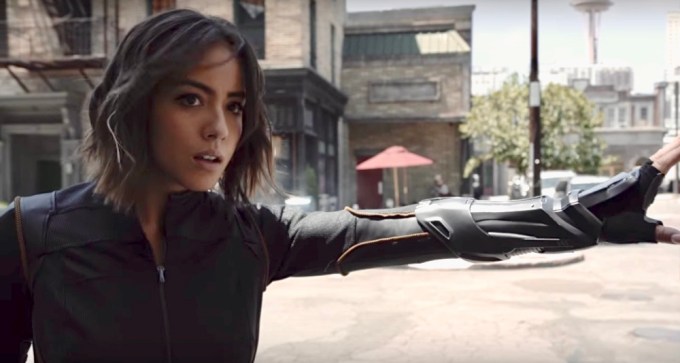
11. Cassie Stuart (Unforgotten) – I’ve loved Nicola Walker for years, loved the various characters I’ve seen her play, but I think DCI Cassie Stuart is my favourite. She heads a team within the Metropolitan Police Service that we’ve now watched investigate multiple cold cases (although this seems to be more of a coincidence than by design, i.e. they’re not a cold case unit but the cases featured have involved crimes committed decades previously). These cases are not only difficult due to the loss of evidence over time, the deaths of people involved, and so on, but also because they’re often interviewing family and friends who have been grieving (or, maybe worse, hoping) for years, which is obviously a lot of emotion to be on the receiving end of. Cassie is a fantastic detective, smart and experienced, but she’s also extremely compassionate: she feels it all and that makes these cases unbearable at times. There’s so much more I could say about her but that’s the thing I admire most about her, how compassionate she remains in the face of such pain and distress, both because that’s what the other person needs and because that’s just who she is. She cares about people and while that makes her who she is, it isn’t an easy burden to carry. I relate to that on a visceral level, as a person who has always cared deeply about others, sometimes to my detriment. But having said that, I wouldn’t change it. Nor, I think, would Cassie, not really. It takes a lot of strength but caring that much, it makes the world so much bigger and so much more vivid and real in a way it could never be if you didn’t.
12. Aza Holmes (Turtles All The Way Down by John Green) – I was so excited when I learned that John Green was writing a book with a main character struggling with OCD and I absolutely loved it, loved Aza and really related to her, to how she thinks and how she processes the world. Aza is sixteen years old, trying to manage school, friends, and life in general, while desperately struggling with constant anxiety about bacteria, infection, and dying from Clostridium Difficile Infection (also known as C. diff). She describes the anxiety as ‘thought spirals’ or ‘invasive thoughts,’ over which she has no control. The only way she’s able to manage it is to check and clean a permanently open cut on her finger, proving to herself that she doesn’t have C. diff. We struggle with a lot of the same things, from the littlest things to the biggest things: with ‘thought spirals’; with her sense of identity (she describes her search for her self as opening Russian dolls, looking for the final solid one but never finding it; with relationships (“I can’t have a normal life if I can’t kiss someone without freaking out.”), which is actually pretty comforting since there are so many stories where a relationship is the thing that makes a person’s mental health better; with the loss of her father and how much it affects her, even years later (“And the thing is, when you lose someone, you realize you’ll eventually lose everyone,” “I remember after my Dad died, for a while, it was both true and not true in my mind… My father died suddenly, but also across the years. He was still dying really – which meant, I guess, that he was still living too,” and how she imagines the moments they should’ve had, so clearly that sometimes she forgets that they didn’t happen), which is so painfully real for me. I was deeply affected by the breakdown of Aza’s mental health, having experienced similar downward spirals myself, where my mental illness has me doing things I would never rationally do. And the climb back up was similarly moving because it was so agonisingly relatable: “Everyone wanted me to feed them that story – darkness to light, weakness to strength, broken to whole. I wanted it too.” She feels so fragile after everything she’s been through and her thought spirals are still there, her life suffocated by her anxiety. At one point, she says, “I could never become a functioning grown up like this; it was inconceivable that I’d ever have a career,” and that is one of the hardest and scariest parts for me when it comes to managing mental illness and disability. But over time, Ava starts to accept the reality of her mental health (“I would always be like this, always have this within me. There was no beating it. I would never slay the dragon, because the dragon was also me. My self and the disease were knotted together for life,”) and slowly, things start to improve, which we notice in the way she thinks about herself and her life: “You’re the storyteller and the story told. You are somebody’s something, but you are also your you.” Real progress is often slow and subtle and we don’t even necessarily notice it at the time but it is progress. And seeing the progress she makes gives me hope. I’m pretty sure this paragraph is a bit more chaotic than the others but that is just because I relate to Aza and her experiences so strongly, even if the actual events aren’t that similar. But it was like my thoughts and feelings were being put into words and that was such a profound experience. I don’t think you can really know how important it is to have a character you relate to until you can’t find one. Reading the book made me feel less alone. It made me feel seen. It made me feel understood. And I’m so, so grateful for that.
13. Ginny Weasley (The Changeling by Annerb, a Harry Potter series fanfiction) – In the original books, I preferred Hermione to Ginny but then we obviously saw a lot more of the former. While rereading old favourites from my fanfiction days (I both read and wrote it during my teenage years but revisited it a few years ago as a relaxation strategy), I discovered this story, where Ginny is sorted into Slytherin instead of Gryffindor. The story creates real depth around the houses and the traits that define those within them: for example, we learn about what ambition, loyalty, conflict, and rules mean to Slytherins, from both positive and negative perspectives. This life-altering moment, this complete change in how she’d expected her life to pan out, obviously has a dramatic effect on her development as a person and how she experiences the events described in the series. She’s strong willed and reserved: she knows the value of secrets, knows it so well that she becomes an incredibly skilled Occlumens and Legilimens. But she’s also deeply loyal and takes her responsibility for others very seriously, sometimes to her own detriment: that’s one of her consistent qualities, that she always puts others ahead of herself. She can think twenty steps ahead in every direction so she’s prepared for any possible circumstance and outcome, a skill that saves multiple lives throughout the story. She’s also beyond passionate about quidditch, the one thing that seems to make her feel completely in sync with the world and with herself. That’s another one of her consistent qualities: she gives her all to everything she does. This, I think, is what I admire most in her and something that I try to emulate whenever and wherever possible.
14. Marisa Coulter (His Dark Materials) – It’s been years since I read the books and if I’m honest, I don’t remember them well (I mean, I did read all three in four days). And when the TV show was announced, I wanted to give it a fair chance where I wasn’t constantly comparing between the show and the books so I didn’t reread them beforehand. Set in a world world where all humans’ souls manifest as animal companions called daemons, Lyra, an orphan living at Jordan College in Oxford, sets serious change in motion when she goes in search of her missing friend. Given the complicated nature of the His Dark Materials trilogy, there is so much more context that I could include here but, for the sake of brevity, I’ll leave it there as this post is about characters more than the fictional worlds they live in (unless it’s absolutely necessary to include extra context for my thoughts to make sense). As much as I love Lyra in the TV adaptation, there is just something (many somethings) about Mrs Coulter (Lyra’s absent mother) that are just utterly fascinating, that have completely captivated me from the beginning. I swear, I finish every episode and say, “Ruth Wilson should’ve won an award for that episode.” She might be a villain but to call her something so commonplace is almost insulting for she is far more nuanced than that. She’s exceedingly intelligent, beautiful, and enigmatic, effortlessly commanding the attention of every room she enters. To anyone watching, she seems utterly composed and yet, under the surface, she is, without a doubt seethingly dangerous. She is ruthless in her pursuit of power, whether that be political or over a single person. Control is everything. She retains fierce control over her emotions and on the few occasions her control has slipped, the explosions of repressed emotion are almost painful to witness (something I think we can put down to Ruth Wilson’s incredible acting skills). She has even managed to exercise all but complete control over her daemon, a golden monkey, which is to say that she has all but complete control over her own soul, something no other human seems capable of without unbearable pain and distress. In the present, she presents as unconcerned by the separation from her daemon but, with such a tight grip on her emotions, who knows what she truly feels and one has to wonder what she experiences every time she punishes her daemon for offering affection. Why does she do it? What does it say about how she feels about herself? Is she punishing herself for giving into the temptation and sin that result in Lyra and her own ruined reputation or is she doing all that she can to suppress any expression of emotion in order to succeed in their brutally patriarchal society? Is it both? How did she even manage it? There are so many questions and so few answers. We know she had an awful childhood, we know her affair with Lord Asriel (Lyra’s father) damaged her reputation possibly beyond repair, we know she’s had to fight for everything she has, even the things that people think they’ve given her… This obviously doesn’t excuse the terrible things she’s done but make for a fascinating character and for fascinating discussions around what makes people who they are and do what they do. Clearly, she’s not a role model but she is a pretty incredible example of the complexity of human beings, of the damage sexism, discrimination, guilt, and self hatred can do, of how people choose to wield the power they have (and if we didn’t know she was powerful before, her display of controlling the soul consuming spectres – something that was previously unheard of and yet something she seems to do effortlessly – has proven that), and how far someone will go to get what they want. She’s a character I don’t think I’ve ever seen before, one so complex that she may be impossible to completely unravel. I think her self control is what I think most about, what that must be like – not that I’d ever want to emulate it. If she can control her emotions so fully – control her soul so fully – what does that make her? What does she feel? Does she feel at all, apart from those rare moments where her emotions seems to erupt out of her like lethal molten lava? What does that do to a person? Are they even a person anymore? I would’ve thought it would make a person feel powerful, would feel satisfying to have that much power over yourself, but I’m pretty sure that’s not a safe road to head down. For how long can you follow it before you can’t turn back? As I said, a complex character and so, so many questions. But I think that’s good. We need characters that challenge us and challenge our thinking. That’s one of the great gifts of art, in whatever form it comes.
I just had to include this quote because I think it sums up Mrs Coulter so well: “She’s also a deeply intelligent complex woman in her own right, and her suppressed rage and cruelty clearly stem, in large part, from her own history and experiences. Her hard exterior is clearly a necessary result of a life lived in a deeply patriarchal society—the only way she gains any modicum of respect and power for herself is to behave, at all times, as though she were a man. Her iron-like self-control and vicious repression of her emotions are all clearly a means to an end, and the few moments when her icy veneer breaks are all the more terrifying for both their violence and their rarity. Even her relationship with her daemon is different. Mrs. Coulter’s golden monkey is the one daemon in His Dark Materials that doesn’t speak or have a name, and often functions as the id that reveals the hidden cost of her iron control over her own demeanor. (And its loving interaction with Lord Asriel’s leopard Stelmaria in the first season’s final episode is an admission of an entirely different type.) It’s the constant visual evidence that she’s not as removed or in control as she seems. Externally, she knows the façade she needs to present to the Magisterium, Asriel and everyone else around her. Internally, she’s often barely hanging on, as evidenced by her violence toward her monkey—and by extension herself. Mrs. Coulter has even trained herself and her daemon (after what must have been years of nightmarish experimentation) to push through the pain of separation, so much so that they can now both function at great distances from one another. Since HBO’s His Dark Materials has largely underplayed the primacy of the human-daemon connection in the name of budgetary restrictions, this ability (and the constant suffering it entails) perhaps does not seem as big of a deal as it ought to. But it really is. This is a woman willing to put herself and her very soul through tremendous torment in the name of getting what she wants.” (x)
15. Emily Byrne (Absentia) – The TV show, Absentia, was one of my 2020 discoveries and I instantly found myself invested in Emily and her story. An FBI Agent with a husband (also FBI) and young son, she goes missing while tracking a serial killer and is eventually declared dead in absentia. However, six years later, she’s found alive, having been tortured but with almost no memory of who abducted her or what happened to her. She’s deeply traumatised and reuniting with her family is emotional and painful: her husband has remarried, her son has no memory of her, and she and her brother had serious issues between them that aren’t magically solved by his relief that she’s alive. The FBI relaunch their investigation into her abduction while she struggles to regain some sense of normality (side note: it’s one of the only shows I’ve seen that is truly invested in representing a character’s mental health, showing the effects of her trauma, the triggers both expected and unexpected, the steps forward, the slips back). When the investigation starts to suggest that Emily kidnapped herself and was the accomplice of the serial killer she’d been chasing when she disappeared, she goes on the run in an attempt to find out the truth and consequently prove her innocence. Stana Katic is incredible in the role: Emily is tough and determined and doesn’t give up for anything; she’s relentless. She’s stubborn and more than a little reckless, a trait I wouldn’t be surprised to learn she possessed before she was abducted but one that I’m sure was heightened by what she went through. She’s also incredibly resourceful, sometimes unbelievably so. But despite the fierceness she presents to the world, she’s still a gentle person at heart. She loves Flynn, her son, more than anything and would do anything for him; as they reconnect, you can see how much pure joy she gets just from seeing him. On a related note, we see such a range of emotions from Emily: most likely due to her trauma still being so fresh, her emotions are unbearably raw and right on the surface all the time. She ricochets between them with alarming speed. But despite said emotions, she’s still strong enough to fight her way through it all, face her triggers, evade the FBI manhunt, and begin to unravel the mystery of what happened to her. I can’t say that I relate to her because I’ve never been through that sort of trauma but I have been through some shit and her strength really inspires me. Her ability to balance being tough and being gentle, her willingness to do anything for the people she loves, the willpower she possesses to move forward with her life despite everything that’s happened to her… I just really respect the hell out of her.

So that turned out far longer than I’d expected or intended it to be but I hope it was interesting. There are many more amazing female characters that I could’ve included but given how long this post became, I thought I’d stop at fifteen. But it’s awesome that there are so many great women in the media for us to look up to, to inspire us and motivate us and make us feel seen. There’s a way to go – marginalised groups are still very much underrepresented in fiction, especially mainstream fiction – but things are improving and I’m hopeful. And I’m grateful for the wonderful characters we currently have.
 Finding Hope