 Finding Hope
Seeking Help For Chronic Pain (Year One)
Posted on July 8, 2023
After the Hypermobile Ehlers-Danlos Syndrome diagnosis, one of my many referrals was to the Pain Clinic (something I didn’t know existed). At that point, I’d been in pain for about eight months and the fact that this thing even existed had me feeling optimistic for the first time in ages. But then the weeks started passing and that feeling faded. In that time, I believe there were a number of other referrals from the Physiotherapy and Occupational Therapy services so I don’t know how many times they actually had requests about me but someone finally got in touch five months after the initial referral.
This post spans from May 2021 to April 2022.
MAY 2021
The initial contact was over the phone. We got a call from one of the Pain Clinic team and we had a long conversation; we were on the phone for an hour. She asked me loads of questions and got a detailed history; she also talked me through what the Pain Clinic does and what they can provide. She went away to go over the notes she’d made and figure out what a good next step would be and we had a chance to think about what might be the right path for me.
JULY 2021
Seven weeks after the first call, we got a second call from a different woman; apparently she had a different background to the first woman we’d spoken with and had a load of different questions. We spent another hour on the phone and before we hung up, she told us that she would be taking her notes to the team (which is made up of a group of different clinicians and therapists) and that they would get back to me with their suggestions.
Two weeks later, she called back and, after some discussion, we decided that seeing a pain psychologist was the best way forward – understanding pain, understanding chronic pain, figuring out the triggers, learning how to manage it, and so on – and she set up the first of the six sessions.
AUGUST 2021
The first session was an hour long video call. We’d somehow missed the information packet that the pain psychologist had sent but she was kind enough to go through a lot of the information – a basic understanding of pain – during the session. It was okay but it was very focussed on managing pain, which felt incredibly frustrating: I was fine until May 2020 and then suddenly I was in pain and at no point had anyone stopped and asked why and I want to know why. But no one seems interested in figuring out the why. I got very upset: I spend my whole life just managing things. I don’t even really feel like a person anymore, just a collection of problems that need managing that leave me no space or energy for actually living. The call ended in tears with me curled up in a depressed ball on the sofa.
Given how much the appointment had taken out of me, we decided that it was just too much while I was in the final stretch of my Masters, which the psychologist was really supportive of, and we arranged to start again when it was over so that I could really make the most of the sessions.
OCTOBER 2021
I had my second session five weeks after I finished my Masters (I was completely exhausted from the final semester and, with my Granny’s death, it took me a while to find my feet again). It was mostly a catch up about how my pain had been since the first session; we talked about how constant it had been (just sometimes better, sometimes worse), how it doesn’t seem to be triggered by anything specific. I got so distressed just talking about it that the psychologist suggested that we talk to the advanced practitioner for more insight into hEDS related pain. She said she’d talk to their team and recommended I talk to my GP about a better pain medication. We, again, agreed to pause the sessions until we had some clarity on those two things. I still haven’t found a pain medication that works reliably but it wasn’t long before we got a letter for an appointment with the advanced practitioner.
NOVEMBER 2021
At the beginning of November, I had the appointment with the advanced practitioner. In hindsight, it was probably doomed from the start, considering how unwell I was having just started the ADHD meds – I had to stand outside for a good ten minutes trying to get the nausea under control. And then, just because things had to get worse, I got hit by the electric shock like pain in my back right as the appointment was starting; I could barely hear what everyone was saying, the pain was so debilitating.
As it turns out, there had been some sort of confusion or miscommunication because the two doctors were under the impression that they were showing me some physio-like exercises rather than give me guidance about hEDS related pain as I had discussed with the pain psychologist. One of them just kept talking about all of the “ingredients” of pain – like diet, sleep, exercises, medication, levels of anxiety, emotional state, and so on – and after a while, I just couldn’t keep my mouth shut. I was upset, in pain, and feeling so sick; I just couldn’t listen to another person give me vague advice without telling me how to actually apply these things to my life with all of my problems. And, on top of that, I was sick of everyone dodging my questions: why would this pain just start and why is ‘management’ the only thing being talked about? Why is no one interested in finding out why it started and whether it can be fixed? When the pain started, the only thing that had changed was my anxiety over the pandemic and it’s not like I was the only person who was experiencing that. So why did it start? If it can just appear, what’s to say it can’t disappear again if I do the right things (which obviously relies on me knowing what the right things are)?
Eventually this doctor gave me a somewhat murky explanation: that the trauma of the autistic challenges and the anxiety relating to the pandemic, compounded by the de-conditioning of the stabilising muscle in the early months of the pandemic, has resulted in the pain I’ve been experiencing. I’m not convinced by this but it’s the closest thing to an explanation that I’ve received so far. Anyway, they said that they’d take my case to their multi-disciplinary meeting and see what the suggestions were. I’ll take what I can get but I didn’t have a lot of hope: the last time I was in a similar situation, the Chronic Fatigue Service told me my case was too complicated and then just abandoned me. I’ve also had NHS doctors tell me that the NHS can’t help me and that I should go private – like that’s the automatic next step. They do know how expensive private healthcare is, right? Particularly if you have a chronic condition? So I did not leave that appointment feeling optimistic.
Later that month, we got a letter informing us that the original referral to the Pain Clinic from December 2020 had just gone through. Eleven months that took. I’m trying to be grateful that one of the other referrals went through faster but it was hard when it felt like we hadn’t made any progress at all.
APRIL 2022
The pain had reduced some by the end of 2021 but it flared up again (mostly in my hips and lower legs) in early February, which was likely exacerbated by my lack of movement while struggling with the effects of the ADHD meds – extreme nausea, depression, insomnia – and therefore not swimming. Things were better for a while – between more daily movement and starting hydrotherapy – but then it flared up again in late April, with awful pain in my elbows, arms, and hands.
When I realised how long this post was getting, I decided to split it up by year (yeah, because the whole process took actual years). This is the first instalment from Spring 2021 to Spring 2022. The next part will be up soon.
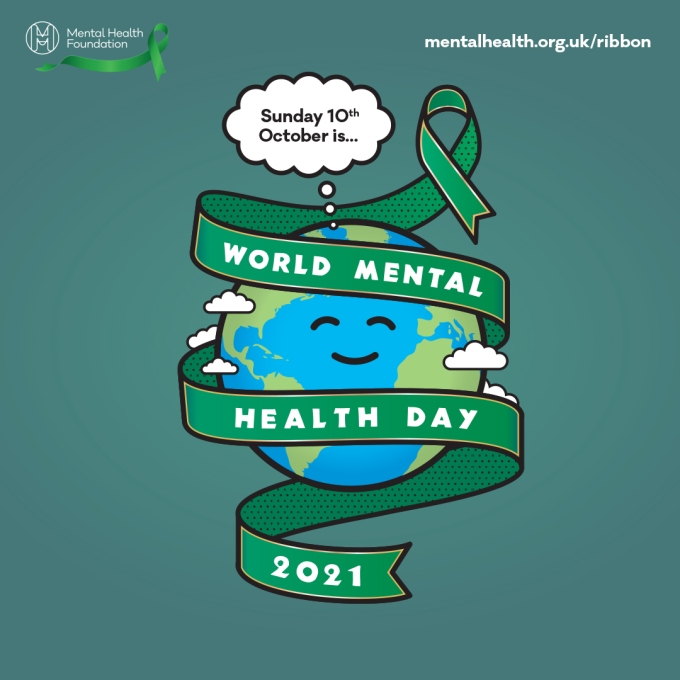
World Mental Health Day 2021
Posted on October 10, 2021
‘MENTAL HEALTH IN AN UNEQUAL WORLD’
As I’m sure many of you know, today is World Mental Health Day and the theme, chosen by the Mental Health Foundation, is ‘mental health in an unequal world.’ WHO seems to be building it around the pandemic, rather than as a problem of its own, but from what I’ve seen in the newsletters and on the social medias of many mental health charities and organisations, most seem to be following the lead of the Mental Health Foundation.
According to the Mental Health Foundation’s website: “2020 highlighted inequalities due to race and ethnicity, sexual orientation and gender identity, and the lack of respect for human rights in many countries, including for people living with mental health conditions. Such inequalities have an impact on people’s mental health. This theme, chosen for 2021, will highlight that access to mental health services remains unequal, with between 75% to 95% of people with mental disorders in low and middle-income countries unable to access mental health services at all, and access in high income countries is not much better.” It goes on to say: “Many people with a mental illness do not receive the treatment that they are entitled to and deserve and together with their families and carers continue to experience stigma and discrimination… The stigma and discrimination experienced by people who experience mental ill health not only affects that person’s physical and mental health, stigma also affects their educational opportunities, current and future earning and job prospects, and also affects their families and loved ones.”


Statistics provided by Mind (x)
I have my own experience with the mental health system – which I do want to touch on – and have heard from many others about their experiences but I wanted to read into the research around these inequalities further, both to get a better factual understanding and to put my own experience in context (beyond an anecdotal one). The research is sporadic at best but here are some of the statistics I found…
ACCESS TO MENTAL HEALTH CARE
- “NICE [The National Institute for Health and Care Excellence] recommends that people should be able to access services when they need them. However the proportion of people who felt they had definitely seen NHS mental health services enough for their needs reduced from 47% in 2014 to 43% in 2018.” (x)
- In 2020, it was reported that approximately 1 in 3 people who experience mental health problems are able to access the support they need. (x)
From these statistics, it’s clear that far too many people aren’t getting the support that they need.
INEQUALITIES IN ACCESS TO TREATMENT (x)
- For those with common mental health problems, 36.2% reported receiving treatment.
- Women are more likely than men to receive treatment for all mental health conditions, with 15% of women receiving treatment compared to 9% of men.
- Young people aged 16-24 were found to be less likely to receive mental health treatment than any other age group.
- White British people are more likely to receive mental health treatment (13.3%) compared to BAME groups (7%). The lowest percentage of people receiving treatment were those from black ethnic minority groups (6.2%).
These statistics clearly show the disparities in the availability of treatment, more supporting evidence for the statement that the Mental Health Foundation is making with the theme for this World Mental Health Day.
YOUNG PEOPLE
- “There is very little national information about mental health services for children and young people, and what information there is suggests quality is declining. [Research] indicates substantial cuts to services, increasing demand, increasing thresholds for treatment, very long waits (more than a year) for specialist services, and a resultant decline in accessibility.” (x)
- Approximately 1 in 3 children and young people with a diagnosable mental health condition get access to NHS care and treatment. (x)
- More than 338,000 children were referred to CAMHS in 2017, but less than a third received treatment within the year. (x)
- Around 75% of young people experiencing a mental health problem are forced to wait so long their condition gets worse or are unable to access any treatment at all. (x)
- In a YoungMinds survey, three-quarters (76%) of parents said that their child’s mental health had deteriorated while waiting for support from Child and Adolescent Mental Health Services (CAMHS). (x)
This research all indicates that young people in particular are being let down by the health care system.
SECONDARY [LONG TERM] CARE
- “Demand for secondary care (which generally treats people with severe mental health problems) is increasing, and there is evidence to suggest services are becoming less accessible… There is little information available on the outcomes that services achieve.” (x)
- “There is no high quality national information on waiting times for secondary mental health services. In a 2014 survey, 20% of people with severe mental illness who were offered talking therapy reported waiting more than a year to access it.” (x)
The statistics show not just that the need for mental health care is increasing but the need for long term mental health care is increasing but that it’s also very difficult to access.
HIDDEN WAITING LISTS (x)
“A study of 513 British adults diagnosed with a mental illness also reveals the damaging consequences that hidden waiting lists – the wait between referral and second appointments – have on the lives of patients living with severe or common mental illness.”
- “Of those on a hidden waiting list, nearly two thirds (64%) wait more than four weeks between their initial assessment and second appointment. One in four (23%) wait more than three months and one in nine (11%) wait longer than six months.”
- “Respondents living with severe mental illness – including eating disorders, bipolar disorder and PTSD – were left waiting up to two years for treatment. Others were left waiting up to four years for treatment for depression, anxiety and suicidal thoughts.”
- “Two-fifths (38%) reported that they, or someone on their behalf, had contacted emergency or crisis services while waiting for their second appointment, while 39% said that waiting led to a decline in their mental health.”
It’s clear that, beyond the difficulty of even getting into the mental health care system, once in it, the process of actually getting the support you need is much too slow – so slow in fact that it’s exacerbating the mental health problems that those waiting are seeking help for.
Now I want to look at my experience of getting support for my mental health…
- For more than two years, I was repeatedly dismissed and had my feelings and experiences invalidated by multiple doctors and services. No one took me seriously. Eventually, my Mum took me to a private psychiatrist and I was diagnosed with Generalized Anxiety Disorder, Social Anxiety Disorder, Depression, and OCD. Having had no idea what I was struggling with, I’d done a lot of research and asked about the quiet presentation of Borderline Personality Disorder, which my psychiatrist initially rejected but then reconsidered and diagnosed me with it after reading my research and personal notes (it has since been recommended to me multiple times – sometimes by doctors who don’t even know me – that I have this diagnosis removed from my file because “people might make assumptions”). Getting an NHS referral for an Autism Diagnostic Assessment was similarly difficult as he felt that I didn’t fit the classic presentation (I do apparently fit the classic FEMALE presentation though).
- There was no follow up after this diagnosis and we were told there was no support available so my Mum investigated private therapists. I tried CBT for a while but didn’t find it helpful so I tried DBT instead, which has been a much better fit.
- All of this private treatment is obviously not cheap and I am so beyond grateful that my family is fortunate enough to support me financially. I honestly don’t know where I’d be without it, whether I’d even be here. But the cost of it does cause me significant worry, only adding to the anxiety I already experience.
- With so many of my problems connected to my Autism, had this whole process been… easier, simpler, quicker, less traumatic, or something… so many of my health problems wouldn’t have deteriorated to the level that they have. Had I been diagnosed earlier – had even one medical professional believed me – things might’ve been so different. I try not to dwell on that because there’s no point wasting my energy on what might have been but it is the truth.
- Having said that, considering some of the stories that I’ve read or have had shared with me, my story isn’t that bad. I’m positively lucky compared to some and that’s a confusing, complicated thing to say, knowing how traumatic this has all been… and continues to be.
Since then, I’ve developed near constant chronic pain throughout my body – something that’s obviously had a big impact on my mental health – but over a year later, I’m still waiting for the NHS physiotherapy and hydrotherapy referrals to go through. I have started Occupational Therapy and with the Pain Clinic (both through the NHS) but with the end of my Masters, I had to take a break because they were too painful and/or upsetting to manage alongside all the work. I’m starting back this week. It still bothers me that no one’s ever even tried to find out why the pain started though.
Almost six years after my ASD diagnosis, the Neurobehavioural Clinic called to offer me an appointment, to do what I had no idea. But at the end of the two part session, I’d been diagnosed with Hypermobile Ehlers-Danlos Syndrome and ADHD – aged twenty six – both conditions having gone unnoticed because no one had ever taken my associated problems (problems that have been there my whole life) seriously. They’re both conditions that often occur alongside ASD. The hEDS diagnosis would, in theory, push my physiotherapy and hydrotherapy referrals but, as I said, I haven’t heard anything and almost a year later, my ADHD is still untreated. My psychiatrist was happy to ‘move’ that condition to his care but the consultant I saw didn’t want that, which is especially frustrating because she’s so difficult to get in contact with.
And finally, I may be getting answers to another ongoing medical problem: severe dizziness, light-headedness, nausea, physical weakness, and breathlessness when I stand up for too long. We’ve been trying to get support around this for so long that I can’t even remember when it started. This too may well be related to my Autism and I can’t help thinking that it’s another thing that should’ve been discovered sooner.
All of these things have had a profound impact on my mental health and going through the agonising process of diagnosis again and again has left me wary, fearful, and angry at medical professionals. It’s deeply ingrained in me to be polite and respectful but it doesn’t take much to send me flying off the handle; I walk into each appointment feeling like a tightly coiled spring. I leave pretty much every appointment in tears at best, raging at worst. Because I’m so. freaking. tired. of feeling like this. Of feeling like no one believes me, of being made to feel like I don’t know what I’m talking about, of being made to feel like I don’t know what I’m feeling. I feel so worn down by the constant let downs. At this point, I think I’m only going back because I don’t know what else to do.
I have no doubt that social media will be filled with nice words and encouraging quotes today. But we need more than that. World Mental Health Day is about more than that. Or it should be. It should be about pushing for change and improvement. The Mental Health Foundation is absolutely right that the inequalities in the mental health care system need to be addressed but looking at these statistics, it’s also clear that the standard of care needs to be better. For everyone’s sake. After all, there’s very little difference between not getting any support and being on a list waiting years for support.
 Finding Hope