 Finding Hope
Increasing The Phenelzine (June – July 2023)
Posted on September 23, 2023
TW: Mentions of depression and suicidal thoughts.
NOTE: I wrote this a few months ago but waited to post it. There were a couple of things that I felt I wanted to comment on in the conclusion but I needed a little bit longer before I felt confident enough to do so. So I let things play out a bit but then some life stuff happened and this post got away from me for a bit. But here we are. Here it is.
Things had improved since I’d settled on the daily 30mg of Phenelzine but it still didn’t feel like enough. I wasn’t crushingly depressed but there were still problems, still areas of my life that weren’t back to what they used to be. So, for a while, I’d been thinking about increasing the Phenelzine, upping it to the high dose of 45mg (with my psychiatrist’s permission, of course). I had tried it before and it wasn’t the right thing for me – it was like the lights were too bright all of the time – but I hadn’t been coming from as low a place as I was this time; I hadn’t been trying to pull myself out of such a bad place. So, with that in mind, I wondered whether the higher dose would help, whether it would give me the additional rungs on the ladder that it seemed I still needed.
So I saw my psychiatrist and while he was quick to comment on how much of a change he could see since I’d started on the Phenelzine again, he listened to what I had to say and we discussed trying the higher dose. He asked me what the most important thing to me was and I said that I wanted my songwriting ability back. I’d written a couple of songs since I started taking the Phenelzine again and I loved them but they’d taken so much time and effort to write, much more than it would usually take. I used to write multiple songs a week with ease but, on the 30mg of Phenelzine, it was taking me months to drag one song out of my brain. So I wanted to write like I used to again. He listened and ultimately agreed: he said we’d use my creativity as a benchmark, using how many songs I was writing as a measure of whether the increase was helping or not (alongside whether I had any negative side effects, of course).
For a while, life was overwhelmingly busy and chaotic and there were things I needed to be able to do, that I needed to rely on my body and my behaviour (as much as I could normally, at least) to manage. So it was a while before I was able to increase from 30mg per day to 45mg per day. I started the increase on 17th June 2023 and took notes for the first six weeks (since the side effects and general effects can be quite subtle), finishing this record on 29th July.
And, as always when talking about medication, this is just my experience. Please don’t start, change, or stop taking any medications without the advice and support of a medical professional.
WEEK 1 (15mg in the morning and 30mg at night)
For most of the week, I didn’t feel any different. I have been more keen to engage with stuff, especially new stuff, but that’s not new exactly; it might’ve increased a bit but I couldn’t be sure. I was consistently tired and, on more than one occasion, I fell asleep before I could take my medication at night; I was also really drowsy during the day, needing naps to function, to make it to a decent bedtime. My back pain was relentless too, although my TENS machine did help.

Come the end of the week, my sleep was a mess and I was completely exhausted. I ended up needing multiple naps during the day and still barely making it to a respectable bedtime, forgetting my pills again. But I was managing to do a lot: I worked through my to-do list, went out to see some cool art, managed to avoid a meltdown when a creepy guy wouldn’t leave me alone, and spent my short evening snuggling with the neighbour’s puppies. But even though I hadn’t really had the time to sit down and do any writing, my brain was like a firework show, ideas appearing one after another at a dizzying speed. It was more than a bit overwhelming. I didn’t manage to find out, exhausted as I was, whether I could turn those ideas into anything but it was a definite start.

WEEK 2
The beginning of the week was so hot (the result of a hideous but thankfully short heatwave) that it felt almost impossible to do anything; moving around just made me even hotter, sickeningly so (heat like that makes my POTS symptoms go haywire, which just makes everything harder). For the most part, I dozed, cuddled up with one of the puppies. I was easily overstimulated and exhausted but I made it home to Brighton (with an impromptu nap on the train) and had a quiet evening before going to bed, falling asleep before I could take my pills or turn the light off.


The rest of the week was a really mix. I slept better, longer and deeper – and I actually remembered to turn off the lights and take all of my pills before falling asleep – but I was so tired; I kept falling asleep on the sofa or in the car or really anywhere I sat down. I was just so exhausted. I struggled during the day, unable to concentrate even though it felt like my brain was full of ideas and things I wanted to do. But I just felt like I was being sucked down by sleep and staying awake took so much effort. It made me feel like I might start crying at any moment.
I had some really bad days, where I felt overwhelmed and overstimulated and miserable and just so tired that I couldn’t do anything, which, on top of it all, left me feeling so frustrated. I had a horrible time in therapy and was just feeling really fragile. Plus, I was really stressed about the puppy situation: I want her so badly and I have no idea what’s going on; the idea of losing her from my life makes my heart ache.
But despite all of the difficulties, I was surprisingly productive, and was busier than I’ve been in years. At least that’s what it felt like. I started to work on some of the song ideas that I’ve been turning over in my head; I hung out with friends; I managed to swim; I went to see the fantastic Candi Carpenter play a show in London (I’d missed their last UK shows because I was self-isolating) and then we all went to the pub afterwards and had a great time (highlights include all of us singing Taylor Swift karaoke and running into uni friends I haven’t seen in years); I even did a drawing class. It was all really good but it was just A LOT. It was hard to process it all.
WEEK 3
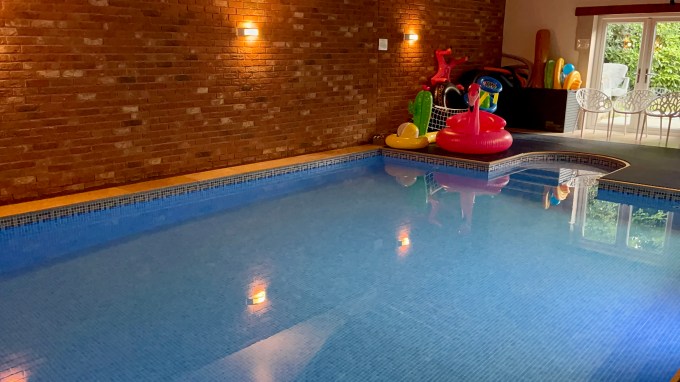
For the first half of the week, things were okay. My sleep was pretty good: I was sleeping long and deep, although I did have the weird, busy dreams that I’ve come to associate with a medication change. I was still incredibly tired during the day (I fell asleep upright on the sofa several times) but I did manage to get some stuff done. And even though my back was hurting, I did manage some hydrotherapy.
Mentally, I wasn’t doing super well. I just felt really overwhelmed, drained and fragile. It felt like my depression was just hanging around, deep down, all the time. I was still functional and I even managed to do quite a bit of songwriting, more than I’d done in a while, but it was hard. I went to an amazing Maren Morris concert with my friend, Richard, and although I had an amazing time at the show, everything leading up to it and then the aftermath was a really struggle: getting there was exhausting and painful; the disability accommodations were as stressful as always; I was exhausted and freezing by the end of the gig; and it took forever to get home. I had a slow start the next morning, exhausted and aching after the concert, and despite the decent night’s sleep, I was a mess: I was completely overwhelmed and ended up in tears multiple times.


The second half of the week was really difficult. My sleep was a mess, making me a zombie during the day, and my emotions were all right at the surface, raw and ragged. I was beyond stressed and overwhelmed by everything that was coming up over the coming weeks; it felt like it was all barrelling towards me at an unstoppable speed. Both my body and my emotions felt so heavy and I was constantly bursting into tears.
WEEK 4
This week was pretty much dominated by my overwhelming, paralysing anxiety and stress over trying to get Taylor Swift tickets and the hurt and devastation of being treated so badly as a disabled person. I wrote about that here so I won’t rehash it all but I wanted to include what a devastating effect the experience had on my emotional and mental states. While the experience is, of course, separate from whatever the Phenelzine was doing, both are tied up with my emotional regulation and the effect my feelings have on me. As I said in my post, I was basically in various states of meltdown for all three days of the tickets presale. And it wasn’t just the suffocating anxiety of not getting a ticket: the way that Wembley Stadium treated disabled fans was appalling and it was just such a gut-punch to realise that they either didn’t care about us or they didn’t even remember that we exist. It was really distressing. I was so stressed and so depressed, even after I managed to get tickets. Just the thought of not getting to see this show, having looked forward to it for five years, had my emotions so big and loud and devastating that I felt this overwhelming compulsion to scream until my throat tore, to rip my skin off. With so little bringing me joy these days (and my chronic suicidality ever present and oppressive as a dark cloud), the thought occurred to me that, rather than endure the excruciating pain I know I would feel if the shows happened and I couldn’t be there, I should just kill myself to avoid it all. That thought just made me feel even more fucked up than I usually do. My emotions are so big and so precarious that even the smallest thing can tip me into serious and scary lows and this isn’t the smallest thing, given how much Taylor means to me. As I said in my post about the experience, these feelings are due to my mental health, to my depression and my chronic suicidal thoughts, not specifically to seeing Taylor; it’s about the fear of losing one of the few sources of joy when you’re in a really dark place. Those things will be different for everyone but the fear of losing them is so overwhelming that words don’t really do it justice.
The exhaustion and residual stress from that whole… experience had completely drained me of energy and, for several days, I was so tired that I could barely function (although I’d get sudden jolts of adrenaline, thinking I should still be on the phone, that I’d fucked up and forgotten, and was losing my chance). My sleep had been screwed up by my anxiety and I had pain from the physical tension I’d been holding in my body for three long days; both of those took most of the week to settle back to normal, normal being exhausted and sleepy and not able to do much. That was causing me a lot of anxiety too: I had so many things that needed doing but I was just too tired to do them and the anxiety over how they were piling up was starting to get overwhelming. I did manage to spend some time with friends, which was really nice, but I struggled to feel connected while still feeling so emotionally drained.
WEEK 5
The last week had exhausted me and it showed over the following weeks in various different ways. I was going to bed early, sleeping long and deep, and often struggling to wake up. And even with a long night under my belt, I was tired and drowsy during the day, often falling asleep on the sofa (and sometimes at my laptop); I struggled to concentrate, my eyes were tired and straining by the end of a day, and sentences stopped making sense. I was just completely done in. I hadn’t emotionally recovered either. I felt utterly overwhelmed, fragile and miserable; I was suicidal in the face of what just felt like too much. It wasn’t particularly surprising when I had an awful meltdown.
I did manage to be vaguely productive though, despite it all. I worked hard at my hydro and physio; I went to therapy; I managed some writing; I saw a couple of friends and had a good time with them, even if I didn’t feel as present as I usually would; I went to a show a friend runs (and the whole thing made me very emotional); I attended an interesting webinar about ADHD. But, even with how much I was struggling to be present in my mind, nothing felt quite enough, like I hadn’t done enough or gotten as far as I’d wanted to. I’ve been trying not to beat myself up but I’ve never been very good at that, being kind to myself that is.
WEEK 6
Another week and my sleep still wasn’t great. I was still falling asleep early (sometimes forgetting to turn the light off or put in my retainer) and sleeping long hours, although I was starting to wake up at a more reasonable time. I was still really tired during the day, taking some accidental naps, and struggling to focus. It was getting better but, as I said, it wasn’t great.
I was working hard to build in better habits too, alongside the medication and therapy. I worked hard at hydrotherapy and started physiotherapy too. The physio was a bit of a shock to my system and I was sore for the first few days (which disrupted my sleep but then pain always does). But, midweek, I ran for a train and actually caught it, despite thinking that there was no way I was fast enough or strong enough to make it (I would’ve had to wait an hour on a cold platform for the next one so I was certainly motivated). There’s no way that, a year ago, I could’ve managed that; I was so ridiculously proud of myself. So the hydrotherapy has definitely made a difference and I feel confident that the physiotherapy will only complement that.

I was also trying to drink more water. I definitely don’t drink enough and, given that the Autonomic Dysfunction I struggle with as part of my Ehlers Danlos leaves me prone to chronic dehydration, I should be drinking a lot more than the average person. I’m nowhere near that yet but I’m already drinking more than I was when I first measured my liquid intake.
It’s hard to know for sure but I felt like I was more productive and motivated than I had been previously. I was actually getting things done and getting them done at a faster pace: blog writing, songwriting, researching. I even went to an online writing workshop that I really, really enjoyed: the session was fun, the people were really nice, and I was really excited about what I wrote. My brain was just desperate for new things and new information; it was excited to learn. I don’t really know how to explain it any other way. I also went out and spent time with friends, went to a songwriters’ circle, and saw family friends. I was more social than I’d been in ages but I was kind of feeding on that, which is really unusual for me. But it was nice. And exciting. Oh, and I also started mentoring sessions for my creative projects, which I felt really optimistic about.
Unfortunately, the week didn’t end as well as it had begun, my depression hitting me like a tidal wave at full strength. It was so overwhelming that I felt like I couldn’t breathe, couldn’t do anything. I was also really stressing about food and eating, feeling guilty as soon as I ate anything. I was miserable and exhausted and couldn’t focus on anything; I slept on and off during the day, dizzy and ears ringing. One side of my body was tingling too and we were this close to calling the doctor. It was horrible. I also found that I physically couldn’t relax: my body felt tensed up even though I wasn’t tensing my muscles (so I obviously couldn’t relax them if I wasn’t actually causing the problem). After several hours, my muscles started to hurt but I still couldn’t unclench them. My legs were twitching too and when I thought about it, I realised that that wasn’t new, that it had been happening on and off for weeks, as had the tensing in certain muscles. The more I thought about that, the more stressed out I got. I know that certain doses and/or extended use of certain medications, including Phenelzine can cause Tardive Dyskinesia, a movement disorder with symptoms including sudden and irregular movements in your face and body. It’s something that gets worse over time and the idea of developing it was really distressing to me.
In the following weeks, my sleep evened out, helped by CBD gummies and the occasional Diazepam or Zolpidem. I spoke to my psychiatrist about the twitching and whether it could be Tardive Dyskinesia. He felt that it was unlikely, that a much more likely cause was the physiotherapy, which I’d started around the same time the twitching started; he thought it was more likely that it was just my muscles waking up with the exertion I was putting them through for the first time in so long. So my anxiety was abated.
But now, several months later, the twitching is still happening and my anxiety is growing again. I’m going to go and see my psychiatrist and have a proper conversation about it because if it is something – something that needs to be dealt with rather than something that’ll just resolve in time – I need to know so that, at the very least, I can think about the options, whatever they are. It’s hard to believe they’ll be anything but bad though; past experience doesn’t exactly fill me with confidence.
Self Care For Creative People
Posted on April 30, 2022
I don’t know about you other creative types, but my creativity really relies on my life being as balanced and healthy as possible. If I’m feeling overwhelmed, burned out, stressed, and so on, my inspiration and motivation become a lot harder to access and translate into something tangible – or as tangible as a song can be. So I’m learning that it’s really important for me to have strategies to manage those feelings in order to stay open to inspiration and to keep creating.
All of the more general self care suggestions – like taking care of your physical and mental health (eating and sleeping well, spending time outside, exercising, socialise, talk to someone if you’re going through a difficult time, doing things simply for fun, and so on) – still apply but I wanted to create a list aimed more specifically at creative people or people that have creative jobs. I’m coming at this list as a songwriter but hopefully it’ll be applicable to all sorts of creative people and creative pursuits.
Create a schedule – We’ve all had those wonderful moments where inspiration has struck and we just have to write or draw or sing the thing right then and there but most people creating on a consistent basis know that it’s about much more than the lightning strikes of inspiration. It’s about putting in the work. But it’s very easy to get carried away and just work for hours and hours on end so, to avoid getting burnt out, it’s important to set working hours (with breaks!) and try to stick to them. Planning what you want to achieve each day can also be a useful tool. It’s not an approach that works for everyone but it’s definitely worth trying (and I mean really trying) because there’re so many variables that you can tweak. For example, what time of day are you most creative? What time of day are you most productive? Do you work better in long or short stints? All of these things need to be considered and potentially experimented with when creating a schedule for yourself.
Organise all your creative projects – It’s not the most glamorous of tasks but creating some sort of order to your projects can be really helpful. I’m all for exhilarating chaos when it comes to imagining and experimenting but when you take a step back and look at the different things you’re working on, I think a sense of order and clarity can help you be more productive, help you focus, and also switch off when you need some space to breathe. Plus it can save you hours when you just want to find that one specific thing to add to whatever you’re working on. And who knows what you’ll find in the process: a project you loved but had to sideline because of other commitments, an idea that you loved but forgot about because you were in the middle of working on something else… who knows what you’ll find?
Consume different types of media – Watching films and TV shows, listening to music and podcasts, reading books, going to see art and installations… it all feeds our creative brains and you never know what will spark your next idea. I’ve fallen in love with writing from the point of view of fictional characters during the pandemic as a result of watching more films and TV series; I used to find it really uncomfortable but now I love the challenge it presents.
Learn about another creative – Whether they work in your field or another, learning about another creative – what inspired them, how they approached their work, etc – and trying out their practices and methods could inspire a new piece of work or even an evolution in your own creative approach. Big or small, it could create some really interesting, fresh, and inspiring results.
Try a different creative pursuit – Sometimes trying a different form of art can just shake things up a bit and refresh your approach to your primary form of creativity, if you have one that is. But it can just get you looking at things differently. It doesn’t have to be wildly different to what you do normally – I write poetry when I get stuck writing songs because it feels less restrictive – but it can just get your brain looking at what you do from a new angle or, if you want to be more ambitious and try something completely new, it can change the way you look at your art and turn your approach on its head.
Make sure to move – If your form of creativity is very stationary, movement and exercise are important to build into your day, even if it’s just a few circuits of the room you’re working in. It keeps the blood flowing and your muscles from getting stiff but it also – especially if you’re going somewhere to exercise like the park, the gym, or a pool – gets us out of our heads, breaking any loops or unhelpful thought processes. And, more often than not, our brains keep working in the background and it’s quite possible that a new idea will pop up while we’re taking a break.
Disconnect for a bit – Turn off your phone. Turn off your laptop. Get away from the internet. Get lost in your own little world for a bit where the only voice that matters is yours, where there aren’t any critics or competition. Recenter yourself. Make sure you love what you’re working on and that you know why you’re making it. You’ll want (and need) to talk to other people later but make sure you’re solid in yourself first.
Engage in opposite action – I learned the technique of taking opposite action very early on in therapy. Sometimes, to avoid feeling stuck or anxious or depressed, we have to do the opposite of what we feel like doing and break the cycle: go out if we feel like staying in, take some time alone if we like to always be busy, write or draw or dance anyway even if you don’t feel like it, and so on. As I said, my creativity is very closely linked with my mental health so the better I take care of my mental health, the more creative I feel able to be.
Give yourself permission to let go – Sometimes a project just isn’t meant to be. Maybe it just won’t translate into something tangible or maybe it just isn’t ending up the way you intend it to but sometimes, you have to let a project go. It’s tempting to want to obsess over a piece of work until it’s perfect but as we all know, perfect doesn’t really exist. Sometimes a project just needs more time, to go on the back-burner for a bit, but sometimes giving up is the right thing. It allows us to move onto something new.
Take a break from creating – Sometimes we get burned out, sometimes life gets in the way… whatever the reason, sometimes we have to take a break from creating. But if that’s the case, it’s important to remember that our ability to create doesn’t vanish, as much as it may feel like that sometimes. It’s a skill we nurture and practice and taking a break for a little bit won’t cause it to disappear. But consistently creating can be emotionally and physically taxing so taking a break isn’t a bad thing; we all need to recharge now and then. And no doubt your brain will keep working on things in your subconscious.
Try not to beat yourself up – This is definitely easier said than done, I know, but try to be kind to yourself while you’re creating and especially when you’re struggling to create. The beautiful thing about creating things is that you never know what’s going to happen next and while that can be scary, it can also be freeing. Try to let it be freeing.
I’m definitely not perfect when it comes to self care. I can get really fixated on a project and forget to look after myself and my ongoing struggle with my mental health can result in me pushing myself far too hard but I’m learning and I’m trying, which is one of the reasons for this post. I want to be better; I want to be more creative and more productive and to go about it in a way that doesn’t put me under ridiculous amounts of pressure or cause me distressing levels of anxiety. But self care is a tool box of sorts and hopefully with each skill I learn, I add to that tool box and become better at managing my life as a creative person.
Another resource (x)
Quotes That Helped Me (Songwriting Edition) – Part 3
Posted on December 11, 2021
I had intended to post a different blog today. I’ve been working on a companion to my folklore post – for sister album, evermore – and had hoped to post it today for the one year anniversary of it’s release but I’ve been so unwell over the last month – the side effects of my new ADHD medication have been brutal – that I just haven’t been able to finish it. I have a good chunk of it done so I’d like to finish and post it at some point but I guess we’ll see. I still wanted to post though and this is what I had finished. So I hope you enjoy these quotes (here’s part one and two, if you’re interested) and hopefully writing will start to feel easier soon.
“A painting is never finished – it simply stops in interesting places.” – Paul Gardner
“You wind up creating from silence, like painting a picture on a blank canvas that could bring tears to somebody’s eyes. As songwriters, our blank canvas is silence.” – Rodney Atkins
“Hearing about a visual artist’s approach can change the way you think about songwriting.” – St. Lucia
“When you don’t write songs for a while there’s a fear you won’t be able to do it again.” – Tim Wheeler
“Write until you can’t write anymore.” – Billie Myers
“If you’ve got a really strong concept, then it’s easy to write. Whereas if you’re not sure what the true story is, it’s bloody hard.” – Shelly Poole
“Often the simplest song is the hardest to write.” – Patti Smith
“All of my acoustic playing came from my songwriting. All of the chords I’ve learned and all of the voicings I play them in are a direct result of composing.” – Mat Kearney
“I don’t think about commercial concerns when I first come up with something. When I sit down at the piano, I try to come up with something that moves me.” – Lamont Dozier
“My task as an artist is to stay as close as I can to my own essence.” – Trixie Whitley
“A song is an ever-changing, ever-evolving and morphing thing.” – Simon Tong
“My songwriting has evolved, just as I’ve evolved as a person.” – John Oates
“I write about what I know and what I’ve experienced. That’s the only way it can be real to me. I love songwriting. There is something so satisfying in coming up with an idea and turning it into a song that means something to people…” – Aaron Tippin
“Songwriting is such an intricate part of me as an artist and as a person; I couldn’t just let someone else do it.” – Shakira
“It doesn’t stop. It really doesn’t stop. It’s the way I live every single day. I don’t do anything else. I have no other interest other than music. At all.” – Steven Morrissey
“No one can attack you when you’re songwriting; it’s you and a song, which is a great place to be.” – Gin Wigmore
“People haven’t always been there for me but music always has.” – Taylor Swift
“Songwriting is a great release. It helps me work through things.” – Jo Dee Messina
“I’ve always used songwriting as a way to help me organise reality.” – Jason Mraz
“You need to work at the craft of songwriting, but not only the craft. When I see people working both on themselves and the craft, and they combine those things… I just go, ‘That’s just fabulous.'” – Fred Eaglesmith
“Music is energy, emotion, expression, escapism, enlightenment. Music is so much more than just entertainment.” – Rasheed Ogunlaru
“I write a song because I want to. I think the moment you start writing it to make money, you’re starting to kill yourself artistically.” – Pete Seeger
“Something good happened to my writing when I stopped being afraid to do something simple, for the fear that people might think I couldn’t do something more complex. Don’t be confused by the word simple. Simple is not easy, it is clear voiced, and fearlessly elegant.” – Carrie Newcomer
“I always saw songwriting as the top of the heap. No matter what else you were going to do creatively – and there were a lot of choices – writing songs was king.” – Jakob Dylan
“Every musician out there wants to be judged on the merit of their songwriting, the merit of their performing abilities.” – Laura Jane Grace
“Nothing can stop a great song, so just keep songwriting.” – Manika
“Songwriting is the way of perpetual want. Songwriters are the blessed/cursed people. You will never have a moment’s peace in your life. You will always be wanting the next song.” – Jon Stewart
“Closed in a room, my imagination becomes the universe, and the rest of the world is missing out.” – Criss Jami
“You’re never quite sure where the song is going, because you might not find the word to rhyme with the end of the line. You have to find associative meaning to get you there. So it’s rather like doing a crossword puzzle backwards. A kind of strange, three-dimensional, abstract crossword puzzle.” – Annie Lennox
“Creativity is the greatest rebellion in existence.” – Osho
I hope these have been inspiring and thought-provoking. I’m always looking for more quotes so if you have any that you love, about anything, please stick them in the comments!
 Finding Hope