 Finding Hope
World Mental Health Day 2021
Posted on October 10, 2021
‘MENTAL HEALTH IN AN UNEQUAL WORLD’
As I’m sure many of you know, today is World Mental Health Day and the theme, chosen by the Mental Health Foundation, is ‘mental health in an unequal world.’ WHO seems to be building it around the pandemic, rather than as a problem of its own, but from what I’ve seen in the newsletters and on the social medias of many mental health charities and organisations, most seem to be following the lead of the Mental Health Foundation.
According to the Mental Health Foundation’s website: “2020 highlighted inequalities due to race and ethnicity, sexual orientation and gender identity, and the lack of respect for human rights in many countries, including for people living with mental health conditions. Such inequalities have an impact on people’s mental health. This theme, chosen for 2021, will highlight that access to mental health services remains unequal, with between 75% to 95% of people with mental disorders in low and middle-income countries unable to access mental health services at all, and access in high income countries is not much better.” It goes on to say: “Many people with a mental illness do not receive the treatment that they are entitled to and deserve and together with their families and carers continue to experience stigma and discrimination… The stigma and discrimination experienced by people who experience mental ill health not only affects that person’s physical and mental health, stigma also affects their educational opportunities, current and future earning and job prospects, and also affects their families and loved ones.”


Statistics provided by Mind (x)
I have my own experience with the mental health system – which I do want to touch on – and have heard from many others about their experiences but I wanted to read into the research around these inequalities further, both to get a better factual understanding and to put my own experience in context (beyond an anecdotal one). The research is sporadic at best but here are some of the statistics I found…
ACCESS TO MENTAL HEALTH CARE
- “NICE [The National Institute for Health and Care Excellence] recommends that people should be able to access services when they need them. However the proportion of people who felt they had definitely seen NHS mental health services enough for their needs reduced from 47% in 2014 to 43% in 2018.” (x)
- In 2020, it was reported that approximately 1 in 3 people who experience mental health problems are able to access the support they need. (x)
From these statistics, it’s clear that far too many people aren’t getting the support that they need.
INEQUALITIES IN ACCESS TO TREATMENT (x)
- For those with common mental health problems, 36.2% reported receiving treatment.
- Women are more likely than men to receive treatment for all mental health conditions, with 15% of women receiving treatment compared to 9% of men.
- Young people aged 16-24 were found to be less likely to receive mental health treatment than any other age group.
- White British people are more likely to receive mental health treatment (13.3%) compared to BAME groups (7%). The lowest percentage of people receiving treatment were those from black ethnic minority groups (6.2%).
These statistics clearly show the disparities in the availability of treatment, more supporting evidence for the statement that the Mental Health Foundation is making with the theme for this World Mental Health Day.
YOUNG PEOPLE
- “There is very little national information about mental health services for children and young people, and what information there is suggests quality is declining. [Research] indicates substantial cuts to services, increasing demand, increasing thresholds for treatment, very long waits (more than a year) for specialist services, and a resultant decline in accessibility.” (x)
- Approximately 1 in 3 children and young people with a diagnosable mental health condition get access to NHS care and treatment. (x)
- More than 338,000 children were referred to CAMHS in 2017, but less than a third received treatment within the year. (x)
- Around 75% of young people experiencing a mental health problem are forced to wait so long their condition gets worse or are unable to access any treatment at all. (x)
- In a YoungMinds survey, three-quarters (76%) of parents said that their child’s mental health had deteriorated while waiting for support from Child and Adolescent Mental Health Services (CAMHS). (x)
This research all indicates that young people in particular are being let down by the health care system.
SECONDARY [LONG TERM] CARE
- “Demand for secondary care (which generally treats people with severe mental health problems) is increasing, and there is evidence to suggest services are becoming less accessible… There is little information available on the outcomes that services achieve.” (x)
- “There is no high quality national information on waiting times for secondary mental health services. In a 2014 survey, 20% of people with severe mental illness who were offered talking therapy reported waiting more than a year to access it.” (x)
The statistics show not just that the need for mental health care is increasing but the need for long term mental health care is increasing but that it’s also very difficult to access.
HIDDEN WAITING LISTS (x)
“A study of 513 British adults diagnosed with a mental illness also reveals the damaging consequences that hidden waiting lists – the wait between referral and second appointments – have on the lives of patients living with severe or common mental illness.”
- “Of those on a hidden waiting list, nearly two thirds (64%) wait more than four weeks between their initial assessment and second appointment. One in four (23%) wait more than three months and one in nine (11%) wait longer than six months.”
- “Respondents living with severe mental illness – including eating disorders, bipolar disorder and PTSD – were left waiting up to two years for treatment. Others were left waiting up to four years for treatment for depression, anxiety and suicidal thoughts.”
- “Two-fifths (38%) reported that they, or someone on their behalf, had contacted emergency or crisis services while waiting for their second appointment, while 39% said that waiting led to a decline in their mental health.”
It’s clear that, beyond the difficulty of even getting into the mental health care system, once in it, the process of actually getting the support you need is much too slow – so slow in fact that it’s exacerbating the mental health problems that those waiting are seeking help for.
Now I want to look at my experience of getting support for my mental health…
- For more than two years, I was repeatedly dismissed and had my feelings and experiences invalidated by multiple doctors and services. No one took me seriously. Eventually, my Mum took me to a private psychiatrist and I was diagnosed with Generalized Anxiety Disorder, Social Anxiety Disorder, Depression, and OCD. Having had no idea what I was struggling with, I’d done a lot of research and asked about the quiet presentation of Borderline Personality Disorder, which my psychiatrist initially rejected but then reconsidered and diagnosed me with it after reading my research and personal notes (it has since been recommended to me multiple times – sometimes by doctors who don’t even know me – that I have this diagnosis removed from my file because “people might make assumptions”). Getting an NHS referral for an Autism Diagnostic Assessment was similarly difficult as he felt that I didn’t fit the classic presentation (I do apparently fit the classic FEMALE presentation though).
- There was no follow up after this diagnosis and we were told there was no support available so my Mum investigated private therapists. I tried CBT for a while but didn’t find it helpful so I tried DBT instead, which has been a much better fit.
- All of this private treatment is obviously not cheap and I am so beyond grateful that my family is fortunate enough to support me financially. I honestly don’t know where I’d be without it, whether I’d even be here. But the cost of it does cause me significant worry, only adding to the anxiety I already experience.
- With so many of my problems connected to my Autism, had this whole process been… easier, simpler, quicker, less traumatic, or something… so many of my health problems wouldn’t have deteriorated to the level that they have. Had I been diagnosed earlier – had even one medical professional believed me – things might’ve been so different. I try not to dwell on that because there’s no point wasting my energy on what might have been but it is the truth.
- Having said that, considering some of the stories that I’ve read or have had shared with me, my story isn’t that bad. I’m positively lucky compared to some and that’s a confusing, complicated thing to say, knowing how traumatic this has all been… and continues to be.
Since then, I’ve developed near constant chronic pain throughout my body – something that’s obviously had a big impact on my mental health – but over a year later, I’m still waiting for the NHS physiotherapy and hydrotherapy referrals to go through. I have started Occupational Therapy and with the Pain Clinic (both through the NHS) but with the end of my Masters, I had to take a break because they were too painful and/or upsetting to manage alongside all the work. I’m starting back this week. It still bothers me that no one’s ever even tried to find out why the pain started though.
Almost six years after my ASD diagnosis, the Neurobehavioural Clinic called to offer me an appointment, to do what I had no idea. But at the end of the two part session, I’d been diagnosed with Hypermobile Ehlers-Danlos Syndrome and ADHD – aged twenty six – both conditions having gone unnoticed because no one had ever taken my associated problems (problems that have been there my whole life) seriously. They’re both conditions that often occur alongside ASD. The hEDS diagnosis would, in theory, push my physiotherapy and hydrotherapy referrals but, as I said, I haven’t heard anything and almost a year later, my ADHD is still untreated. My psychiatrist was happy to ‘move’ that condition to his care but the consultant I saw didn’t want that, which is especially frustrating because she’s so difficult to get in contact with.
And finally, I may be getting answers to another ongoing medical problem: severe dizziness, light-headedness, nausea, physical weakness, and breathlessness when I stand up for too long. We’ve been trying to get support around this for so long that I can’t even remember when it started. This too may well be related to my Autism and I can’t help thinking that it’s another thing that should’ve been discovered sooner.
All of these things have had a profound impact on my mental health and going through the agonising process of diagnosis again and again has left me wary, fearful, and angry at medical professionals. It’s deeply ingrained in me to be polite and respectful but it doesn’t take much to send me flying off the handle; I walk into each appointment feeling like a tightly coiled spring. I leave pretty much every appointment in tears at best, raging at worst. Because I’m so. freaking. tired. of feeling like this. Of feeling like no one believes me, of being made to feel like I don’t know what I’m talking about, of being made to feel like I don’t know what I’m feeling. I feel so worn down by the constant let downs. At this point, I think I’m only going back because I don’t know what else to do.
I have no doubt that social media will be filled with nice words and encouraging quotes today. But we need more than that. World Mental Health Day is about more than that. Or it should be. It should be about pushing for change and improvement. The Mental Health Foundation is absolutely right that the inequalities in the mental health care system need to be addressed but looking at these statistics, it’s also clear that the standard of care needs to be better. For everyone’s sake. After all, there’s very little difference between not getting any support and being on a list waiting years for support.
Ideas To Help With Hair Pulling
Posted on February 13, 2021
Trigger warning for Trichotillomania/hair pulling. Please don’t read this if this is something that will upset or trigger you. I only want this to be helpful, never harmful.
Having just written about some of the things that can trigger episodes of Trichotillomania, I wanted to post a list of ideas that have the potential to help someone struggling with hair pulling. There are lists all over the internet with various collections of ideas but I felt that it would be irresponsible to post about the triggers of Trich without offering some kind of help, especially the kind of help that you can practice yourself without having to wait to see a specialist (although I would encourage you to seek out professional support as well). These aren’t cures obviously – there are currently no proven cures for Trichotillomania – but numerous accounts have shown that many of these strategies have helped people manage and reduce their urge to pull, which is obviously a big deal. I also wanted to share which strategies have helped me – if you relate to other things that I’ve posted maybe they’re a good place to start.
There are a number of things I want to mention before getting into this list:
- You have to remember to forgive yourself for not being perfect. Trying to stop pulling is an incredibly difficult (although incredibly rewarding) task. Your progress isn’t always linear. Sometimes you’ll manage an amazing streak and then not even manage a day. But just as you can struggle, you can succeed. However, beating yourself up for ‘going backwards’ won’t help you move forward; it’s a waste of precious energy that you could be dedicating to your attempts to stop pulling.
- One strategy won’t necessarily work forever. It may work for a time and things may improve. But then, if you start pulling again, it may not be helpful the second time around. For example, I wore a hat consistently for months and that slowly stopped me pulling my hair out. I didn’t pull for a year but when I started again, wearing a hat just made me feel anxious and claustrophobic. So I had to try different methods.
- If you’ve ever tried to stop pulling before, you’ll know that you have to be committed. Seriously committed. As dramatic as it sounds, you have to be thinking about it all the time. And if you’ve been doing it long enough, there will be a degree of habit so you don’t even notice yourself doing it and yet you still have to have an awareness of it. It’s really hard. Really, really hard. But it is possible to reduce the pulling to some degree at least.
Now, onto the list…
* = I’ve tried this.
** = I’ve tried this and it helped.
- Wear a hat or bandana**

(I wore a hat for months, possibly more, consistently – to the extent that it’s become part of my look as a singersongwriter and I have been recognised because of it – and that helped me stop pulling for over a year. However, as I said earlier in the post, when I started pulling again, it didn’t help because I started pulling from a different area of my scalp.)
- Wet down your hair**
- Cut your hair short (or if necessary, shave your head)
- Wear a wig
- Sit on your hands until the urge passes or you’re distracted
- Snap a hair band or rubber band against your wrist
- If you use tweezers to pull, put them out of the way of your daily routines or throw them out if necessary**
- Squeeze a stress ball or something similar*
- Use a fidget toy (you may need to try several different ones to find one that works for you)**
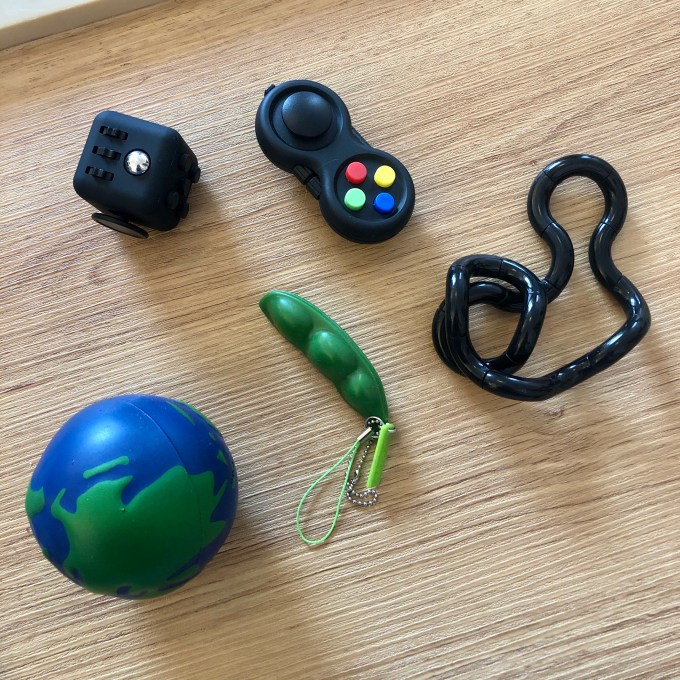
(These fidget toys are my personal favourites. I have more that I’m slowly donating to family and friends and acquaintances who have expressed interest in them. Personally I prefer plastic over metal because the metal toys make my hands smell. I also prefer the ones with buttons etc, rather than ones that you squeeze, like stress balls. But different fidgets appeal to different people).
- Put vaseline on your fingers or the hair you would be pulling
- Put plasters on your fingertips
- Wear gloves
- Journal about your experiences*
- If you feel comfortable doing so, ask your friends or family to point out when you start pulling*
- If there’s a room or environment you normally pull in, try changing your environment
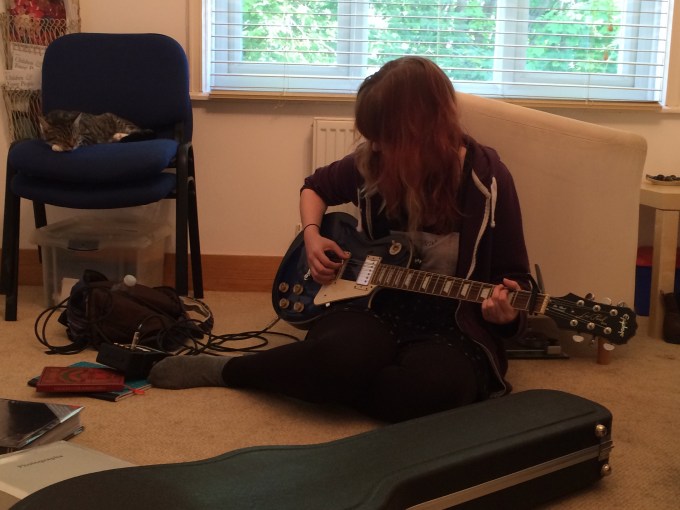
- Play an instrument**
- Stroke or play with an animal*
- Exercise
- Start with small goals (periods of time where you don’t pull, for example) and increase as you can**
- Use a chart or app to track the amount of time between pulling ‘sessions,’ inspiring/motivating yourself not to break your streak**

(There are multiple phone apps that count days; it mostly comes down to whether there are any extra features that might help you, what kind of aesthetic you prefer, and whether you feel you need one that you’d have to pay for.)
- Try a hobby that occupies your hands, like origami or knitting*
- Brush your hair instead of pulling
- Come up with a saying that you repeat out loud until the urge to pull passes or say “No” out loud
- Form a ball with your fist and tighten the muscles in that arm
- If your pulling is triggered by texture or colour, try dyeing or care for your hair to minimise pulling**
(Hairs with a coarse texture is a really trigger for my pulling so I’ve been searching for a good product that at least reduces that problem for years. I love Aussie’s Miracle Moist Collection – the shampoo, conditioner, conditioner spray, and the 3 minute deep conditioner – because it makes my hair really sleek. It’s the best product I’ve found. I am trying to find a vegan, cruelty-free replacement but I do have to balance that search with how bad my Trich is and the state of my finances. I’m determined to keep looking though.)
- Fiddle with dental floss or thread
- Wear jewellery you can fiddle with/wear specially designed fidget jewellery**
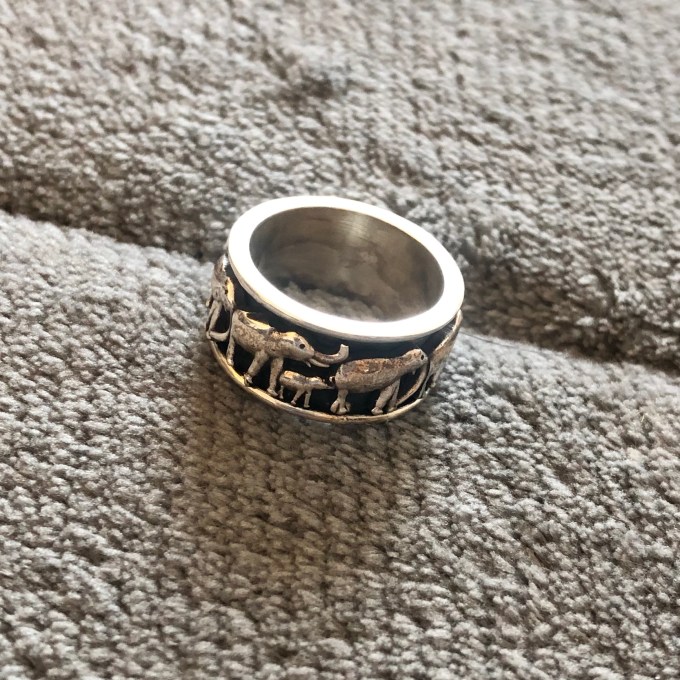
(I had a spinner ring for several years that I adored. It was silver with elephants on it and I was constantly wearing it and spinning the outer band. But recently it broke and the replacement isn’t quite the same: it isn’t as comfortable and so I don’t wear it as much.)
- Use positive reinforcement (reward yourself even in the smallest way, like treating yourself to your favourite snack or having an extra indulgent bath or shower, when you achieve a certain period of time without pulling)
- Weed the garden
- Cut your nails short or wear acrylic nails, making it difficult to get ahold of strands
- Style your hair in a way that prevents access to the area you pull from*
- Try meditation or mindfulness*
- Pull from or fiddle with the hairs of paintbrushes
- Use a hand grip strengthener*
- Make yourself aware of the action (putting essential oil or perfume on your hands, for example)
- Attach a weight to your pulling hand
My latest strategy has been to use a strip of elastic (like the kind used in clothing or sewing) and attach one end to my portable desk, the other loosely around my wrist. Technically I can still reach my hair if I really try but it’s awkward and uncomfortable and so far, just the sensation of the elastic pulling against my wrist has stopped me trying to pull. It hasn’t been long so I don’t know how successful it will be long term but it seems to be working so far.

It’s also worth mentioning that there are therapies, and then issue specific therapies within those therapies, such as Habit-Reversal Therapy (several studies from 1980 concluded that it had a 90% symptom reduction rate), which was born out of CBT. Hypnotherapy has also shown results for some people. However, access to CBT can take a long time via the NHS and these therapies can become incredibly expensive if you venture into the world of private healthcare.
There are also support groups, both online and in person (although not currently due to the COVID-19 pandemic). Search out Trichotillomania organisations and charities for general online support groups. You can also search for Facebook groups for both general and location specific support groups. I can’t speak to the effectiveness of these as I’ve never personally used them – I didn’t personally feel that that sort of support was one that would be helpful – but I know they make many people feel less alone and allow people to share tips and strategies.
I hope this list has been informative. Hopefully some of these tips have been or will be helpful. At the very least, it’s a varied collection of things to try. If you’re struggling with Trichotillomania, I’m thinking of you and I hope that something on this list will help.
My Experiences with Therapy
Posted on October 13, 2018
Going to therapy hasn’t always been easy. I feel so, so lucky to have such an amazing therapist now but I had a lot of difficult experiences before I started seeing her. So I thought I’d share some of those experiences. Maybe they’ll be helpful.
After many, many appointments with my GP, I was finally referred to the local NHS Wellbeing service but the session didn’t go well. At this point in time, my anxiety was so bad that I couldn’t talk to people I didn’t know. I just couldn’t. Answers to questions would form in my mind but I couldn’t force them up my throat. So I sat there, in tears, while the doctor tried to get my Mum out of the room and told me he ‘wouldn’t’ help me if I didn’t talk. I don’t want to rant but I WAS STRUGGLING WITH A MENTAL HEALTH PROBLEM. I wanted desperately to be able to talk about it but I couldn’t. I don’t remember much about that appointment but I do remember standing in the street afterwards, shaking and crying and screaming and swearing. I couldn’t understand why no one was helping me when there was so clearly something wrong.
My second attempt at therapy was a bit better. I started Cognitive Behavioural Therapy (CBT) with a really lovely therapist. She was very patient and very open to working around the anxiety that kept me from talking. She was also happy to have my Mum in the room: it helped my anxiety and meant she could provide information. Slowly I started to trust her and started answering questions myself. But it was exhausting, bone achingly exhausting. As hard as we worked, I didn’t feel like we were making any progress and it was too hard to go through that to make no progress. I really liked her and I could tell that she was a really good therapist but the approach wasn’t right for me. I found the format too rigid. In simple terms, CBT is about breaking down your problems and then trying to create change in those areas. I felt, and still do feel, that my problems are too murky for a short stint of CBT. I know now that many of my problems originate from my Autism and the fact that it went undiagnosed for so long but even with that knowledge, the difficult things still feel overwhelmingly huge. I can see CBT being useful for a specific anxiety. For example, we tried to work on my anxiety around making phone calls. But I think the reason it didn’t work is that it wasn’t an isolated problem; it was a piece in a much bigger puzzle. I don’t think you can solve that sort of problem if you don’t know what’s causing it. Plus, being rational about what you’re struggling with in the controlled setting of therapy and being rational when it’s overwhelming you are very different things. CBT sort of assumes that you can still apply the skills you’ve learnt in therapy regardless of how you’re feeling, which can feel impossible, especially if you live with really powerful emotions. But maybe that’s just my perception.
The next thing we tried was Eye Movement Desensitization Reprocessing (EMDR), recommended by a family member. In the few months between finishing CBT and starting EMDR, my anxiety had sky rocketed so starting a new therapy was really hard. It was so bad that I actually never spoke to the guy I worked with. But despite that, and my difficulty with eye contact, communicating with him was easier than it had been with previous therapists. He was fantastic. He accepted my difficulty speaking and suggested writing on a whiteboard. I considered that and it felt possible so that’s what we did. He asked me questions and I replied, scribbling as fast as I could. It worked. And to take the pressure off, we would spend part of the session on the floor, playing dominoes while he asked me questions. I felt absolutely safe there. It was incredibly strengthening to have someone accept my anxieties as they were, to have someone recognise that I wasn’t just being difficult, that I was genuinely struggling with something really hard. And although it didn’t turn out to be the right thing for me, the sessions are still really important to me. For several months, we worked hard. We tried. I felt supported. And even though I didn’t ever speak, I did once sing for him and he almost cried. That was a pretty big moment.
After that, I didn’t go to therapy for a while. There was a lot of life stuff going on and there just wasn’t the time to find someone new. But I did start seeing a new psychiatrist. He prescribed me Phenelzine (which I’ve previously written about) and we spent a lot of time trying to figure out what was causing my problems. I guess it was a type of therapy. We went through my history and analysed my emotions, trying to find a diagnosis. The medication helped and we managed the side effects but it still took a long time. When my university said that they couldn’t help unless I had a diagnosis, I pushed for this and in January 2015, I could finally put names to the issues I was struggling with (apart from the Autism diagnosis which came several months later). My psychiatrist recommended Dialectical Behaviour Therapy (DBT) so we started looking for another therapist.
My current therapist is the first one we met. I just knew she was right; me and Mum walked out, looked at each other, and said, ‘she’s the one.’ We did meet another one but my mind was made up. And we were right. She’s amazing. I’ve been seeing her for three years now and I’m so grateful to have that safe place. DBT suits me much better. It’s based on CBT but, as the Mind website says, it’s “been adapted to help people who experience emotions very intensely.” They both help with changing unhelpful thoughts and behaviours, but DBT also helps you to accept yourself. It’s about a balance between acceptance and change. That really makes sense to me and always has.
In the beginning, I needed my Mum in the room with me and she would answer all the questions. We’d always talked about everything so she knew pretty much all the answers. But over time, I felt more comfortable there. I needed Mum there less and less and eventually I started doing the whole session by myself. Three years later and it’s really, really important to me. It’s a huge part of who I am. It’s not easy; it’s really hard work and I often come home exhausted, sometimes falling asleep on the sofa afterwards. But it’s really satisfying to talk things through, to make connections, to see change happen. I’ve talked about things that I never, ever thought I would talk about and I’ve worked through things I never thought I’d let go of. That’s so huge that I can’t really comprehend it.


So that’s my therapy journey. For me, it’s DBT that works but I’ve seen the others help people too. You need to be ready, you need to find the right approach, and you need to find the right person. It’s not easy but it is worth it.
 Finding Hope