 Finding Hope
In The Mourning – Out Now!
Posted on March 1, 2025
I know I’m pretty late in my announcement – things have been beyond hectic since the song was released and my insomnia has been brutal – but, as of Wednesday 19th February, my new single, ‘In The Mourning,’ is out in the world! If you follow me on social media, you will, of course, already know this but I know that there are those of you who don’t and I wanted to make sure you knew as well. This song means so much to me and I’m so excited (and a little bit nervous) to have released it…
If you read my post about ‘Write This Out,’ you’ll know that these two songs are part of a bigger project, the details of which are still to be revealed. I’ve only been mentioning it because I want you all to know that these songs are connected, that they’re not one-off singles. ‘Write This Out’ set the foundation, establishing the need to get the story out of me, but this song – ‘In The Mourning‘ – is the beginning of that story: when I was diagnosed as autistic.
When I sat down to write this song, it tumbled out, like it had just been waiting to be written – it was, after all, more than five years since I’d been diagnosed. I’m not sure why I’d never written about it before: maybe I’d thought that I didn’t have anything to say about the actual diagnosis, only about my experiences of being autistic. But it seems that there were a lot of emotions and moments from when I was processing the diagnosis that have stuck with me, that I’d apparently needed to express. It was definitely cathartic to write and one of the things that makes it so special to me is how, when I listen to it, it really feels like how I felt during that time; yes, the lyrics describe that but the song also manages to convey the emotions I was feeling within me and around me.
Again, this isn’t an easy song to listen to – I was trying to process a lot of grief and confusion and uncertainty – but it isn’t without hope. I had been feeling so lost and so broken and suddenly I had answers and information and the beginnings of a new way forward. I’d never felt in sync with the world around me and suddenly I knew why. That didn’t change exactly but knowing why made such a difference and it helped me to see the world differently, to see the places I could fit rather than seeing all of the places I couldn’t.
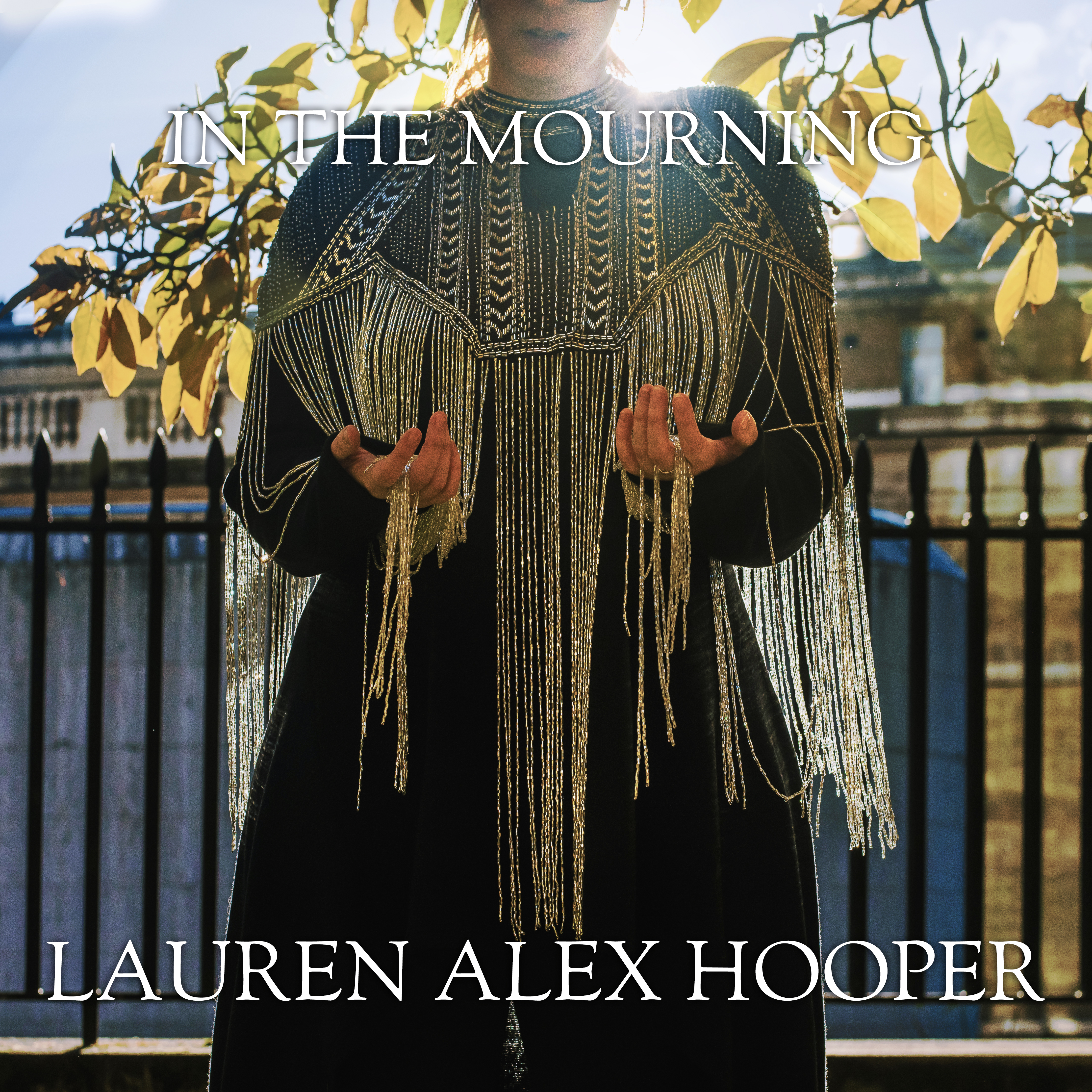
Photographer: Thomas Oscar Miles // Cover Design: Richard Sanderson
If you’ve been diagnosed as autistic – or anything that turned your life upside down – did it take you a long time to process it? Did you go through a mourning period of sorts? Maybe you relate to this song, maybe you don’t. But if you do, I hope you know that whatever you feel – or felt – is valid; I hope you’re talking to people who love and support you and I hope you’re moving through it as smoothly as possible. No state lasts forever. Change is, after all, the only constant in the universe.
I’m so grateful to be able to put this little piece of my heart out into the world and I’m so grateful to everyone who’s already listened to it, who’s left a comment, who’s reached out to me about it… If you haven’t listened to it yet, you can find it here. I’ve never been one to say ‘I hope you love it!’ because I think many songs inspire more complex emotions than love. So, instead, I tend to say, ‘I hope it makes you feel something.’ I’m going to sign off here: I hope you’ll take a few minutes to listen to the song and I hope it makes you feel something. And if you’d like to share that with me, on here or on social media, please do. Nothing means more to me.
Parenting A Young Adult With Autism Spectrum Disorder: My Mum Interviews Me
Posted on April 1, 2021
When my Mum was answering my questions in the previous post, she was inspired and suggested she interview me in return, with similar questions. I was up for that so here goes: this is the mother of a young adult with Autism Spectrum Disorder interviewing her daughter with said Autism Spectrum Disorder…
Briefly, what has it been like for you to get a late diagnosis?
In some ways, it was such a relief. I’d been struggling for such a long time and not having a name or label caused me a lot of anxiety and made it difficult to get any support. So in that sense, it was great. It obviously hasn’t changed the fact that I struggle but I have more confidence – it had been going on for so long and had become so complex that I did worry I was making it up and actually causing my problems – and the support allows me to work on the areas I struggle with, managing them, decreasing the intensity, and creating solutions.
But I don’t want to imply that it’s been a hundred percent straightforward because it hasn’t. For twenty years, I operated under the assumption and expectations (from myself and others) that I was neurotypical and would go on to have a neurotypical life, meeting the usual milestones. I’d always held myself to a high standard and that wasn’t really a problem until I was finishing school: learning was something I was comfortable with and excelled at and my social issues were just assumed to be shyness. But then life started to get harder, with bigger and more serious demands, and I struggled more and more but still held myself to the same high standard. I still do. It’s very deeply ingrained. So it’s really, really hard to accept that my life is never going to look like what I expected or like the lives of my peers.
Having discussed how I’ve been your advocate at various times and in various situations, where did that need come from? How has that made you feel both pre and post diagnosis? Are there particular times where it has felt more necessary than others?
I’ve definitely lost count of how many appointments we had with various people where I would explain what I was going through and how much I was struggling only to be told things like, “All teenagers struggle,” and “Well, you’re showered and dressed so you’re clearly coping.” There’s so much I could say about those experiences alone but after a while, those appointments made me so anxious that I just couldn’t talk. At all. I needed someone who could tell my story for me when I wasn’t able to and since we had (and do) talk about everything, you were always able to give all of the information and spare me at least some of the anxiety involved in those appointments. Pre-diagnosis, you were the only one a hundred percent behind me and I honestly don’t know what I would’ve done without that. Best case scenario, I don’t think I would’ve gotten my diagnoses and the worst case scenario doesn’t bear thinking about. If I hadn’t had you in my corner, researching and reaching out and pushing for answers, I certainly wouldn’t have gotten this far. Post-diagnosis and in the time since, I think I’ve grown in confidence and have needed it less but there are still times that I’ve, at the very least, needed back up. There are many situations that I do now feel able to manage myself but in times of great stress or anxiety, having someone on my side, someone ready to step up and take over when I get overwhelmed or it all becomes too much, is just so important in moving life forward. I like to think that I get a bit further every time before needing you to take over but I am also aware that I may never be able to completely handle these kinds of situations when under great stress.
Having answered this question from my perspective, what about you? What would you would consider to be the positives and negatives of having Autism Spectrum Disorder?
I think I’ll start with the negatives first. That’s not a particularly optimistic start but the negatives do, at this point in time, feel more overwhelming and painful. The high levels of anxiety and overwhelming intensity of my emotions can make it really difficult to function day-to-day, plus both are incredibly exhausting. All of that is really hard. I also often feel very different from – and behind – my peers, which can feel extremely distressing. Not really in a competitive sense but because I really want to experience all the things they get to experience and often take for granted, knowing that I may never get to have those experiences.
Onto the positive things… Admittedly this perspective is harder because I am in a period of feeling that my ASD takes more from me than it gives back. Hopefully one day I won’t feel this way. But for now, positives… Although the strength of my emotions can be overwhelming, I definitely prefer it to the idea of ambivalence or apathy. And while the negative emotions are awful, the positive ones are like nothing else in life. I imagine it’s like going from grainy black and white to high definition colour: when I’m happy or passionate or excited, I feel like I’m glowing brighter than the sun. I don’t know if that makes sense but it’s how it feels. I can also get completely immersed myself in something: it doesn’t even feel like I’m focussing because I don’t feel like I’m in control, but I think people would call it deep focus. I can work on something for hours and fours. For example, I once started working on a song at eight in the morning and when I next looked up, it was dark and my hands were shaking because I hadn’t eaten for over fourteen hours. I hadn’t even noticed the time passing. And I guess another positive is how seriously I take things – my relationships, my commitments, my words, and so on. Nothing is flippant to me. I mean, I can be funny and silly but I take life seriously. Everything that I invest myself in matters so deeply to me and I never want to give anything less than my best. All of these things do have negative side effects if they go too far – which they often do – but overall, I consider them to be positives.
How do you think things would’ve been different if your ASD had been recognised when you were younger?
I mean, who knows? I don’t think we can ever really know the answers to questions like these, although I’m fascinated by the ways life might’ve turned out had this happened or that not happened. I’m not sure, to be honest; there would obviously be so many differences. But the biggest one that sticks out for me is that I wouldn’t feel so stuck between a neurotypical world and an autistic world, especially identity wise. I often feel like I have two sides to myself constantly pushing against one another and like I’m trying to find a place in the world where I don’t just have to be one part of myself, where I can be all of myself. I mean, I know everyone’s trying to find their place in the world and that most people don’t often get to be their whole selves but I feel very conscious of the two worlds that I don’t quite fit into and end up feeling like I don’t fit anywhere. So I think the obvious thing for me would be that I think my identity wouldn’t feel so fractured because growing up knowing I was autistic would’ve meant that my personality and my identity evolved with that already present, rather than trying to fit everything together later on, if that makes sense.
How do you feel about taking various medications and going to different forms of therapy for years now? How do you think those have affected you?
It’s an ongoing, exhausting part of my life and I do sometimes wonder whether any of it has made any difference. But then I think about it properly and despite all the awful medication experiences, there have been some really great ones: I wouldn’t have made it through my BA without the Phenelzine, wouldn’t have made it this far through my MA without it. And sometimes it feels like therapy only uncovers more problems but then I remember how many empowering conversations I’ve had with my therapist, how many strategies I’ve learned to help me manage not only my struggles but my life in general. There have been more ups and downs than I can count but I honestly don’t know where I’d be without them.
What do you think the hardest part of living with ASD is?
This is a really difficult question to answer. Part of me wants to answer with ‘living with ASD’ but that’s not helpful. There are so many things I could say: the anxiety; the fatigue; feeling like I blend in enough to fit in casually but feel too different to fit in on a deeper level; my limited ability to be independent; sensory sensitivities… The list goes on. But I think, overall, the hardest part is feeling like the life I want to have is never going to be possible for me and I don’t mean in the being-a-musician-is-a-risky-career-path way; I mean that, as an autistic person, I will not be able to do the things required of me to do music. It’s a terrifying prospect because I cannot imagine my life without music at the forefront. There seems no point to living otherwise. I know that sounds overdramatic but given the intense emotions I experience as part of being autistic, that is just how I feel. To an overwhelming degree.
How do you feel your life as an autistic person is different to those of your neurotypical peers?
I can absolutely recognise that we do go through a lot of the same things, albeit often in different ways and according to different time frames. But then there are definitely significant differences between my life and the lives of most of the neurotypical people around me. I feel like my life is smaller, limited. I’m sensitive to food, loud noise, large groups of people, and I struggle with low energy levels, which all make it difficult to keep up socially, so I often feel like I’m on the outside. I also find myself constantly comparing my level of independence to that of my friends: so many of them – if not all of them – have moved out (even if they’ve moved home during the pandemic), lived with friends or alone, have jobs, operate as independent adults. And I’m just not able to do that. Every day, I have to ration my energy down to the smallest sliver and it’s just not physically possible for me to do any of those things with the amount of energy I have to allocate out to all the tasks required in a day. And that’s as things are now, living at home, let alone if I was living alone and taking care of myself without any help. These things are some really big issues for me and I do find that I isolate myself sometimes so that I’m not being constantly reminded of them.
Are your relationships with your neurotypical friends different to your relationships with your autistic friends?
I think there probably are – to a certain degree, at least – but for the most part, I think it’s not that different to how we relate to each different social group we interact in. We connect with different people for different reasons so while the underlying connection to my university friends is music, the underlying connection to my autistic friends is based on our shared experiences as autistic women. But all of those connections are strengthened by other things, other commonalities and time spent together. So while I initially connected to my autistic friends because we are all autistic – and those similar emotions and experiences and struggles are an important part of our relationship because we can connect to and support each other in a very specific way – our friendship has grown a lot from there, just as every friendship grows.
How do you feel parents can be most supportive to a young adult with ASD?
I have a couple of things I’d like to include here, things that have been invaluable to me over the years:
- Really listen to what your child, teenager, or young adult is saying and I mean really listen and take seriously what they’re saying.
- Support them in the areas they struggle with as best you can without judgement or criticism. Chances are they don’t understand why they find it so hard either. You can do this by encouraging them to be honest about what they’re feeling, researching the particular issue (noise sensitivity, for example), and speaking to specialists. There are also therapies you can then pursue if you both/all feel it’s necessary or would be helpful.
- It’s good to have someone to push you to help you work through your struggles, particularly someone who loves you and only wants to see you succeed, but it’s also important as the parent to recognise when the child, teenager, or young adult is reaching their limits and that they need to take a break. Respect those limits and celebrate each victory.
- Advocate for them when necessary, with no judgement as to why they need you to in that moment.
So there we go. If you guys have any other questions for me or my Mum about living with and managing my ASD and mental health problems, please get in contact and we can always do another of these posts. I hope it was helpful!
 Finding Hope