 Finding Hope
Sleeping and Dreaming in the Time of Covid-19
Posted on August 1, 2020
Since the pandemic began, many people seem to have been having trouble sleeping, from not getting enough to getting too much to having vivid and often scary dreams. It’s been well documented – scientifically and anecdotally via social media. I’ve had problems with fatigue for years but over the last several months, my struggles in the sleep department have dramatically increased and so I thought I’d do a bit of research into the subject and see how my experiences compare to those of others.
SLEEP
We all know that sleep is massively important to our wellbeing. It’s vital to the functioning of our immune systems, the health of our organs (especially our brains), and the maintenance of our mental health to name a few. The ideal amount of sleep ranges from person to person but most adults need seven to nine hours in order to perform at their best, with children and teenagers requiring even more. But during the pandemic, most people are getting far less than the amount they need, making it even more difficult to handle the stress and uncertainty that have become the norm over the last several months. Personally, I’ve spent much of the pandemic and lockdown either getting less than five hours sleep or getting nine hours but waking continuously and struggling to get back to sleep.
It’s not surprising that the pandemic has had this effect. The loss of time anchors like scheduled work hours, anxiety over you or your loved ones getting sick, economic instability, isolation, and increased screen time are all factors that are contributing to this surge in disturbed sleep and continuing lack of sleep can cause real problems. In the short term, it can become difficult to concentrate and make decisions and can contribute to mental health issues such as anxiety and depression. I’ve definitely experienced these effects (despite already struggling with anxiety and depression, they’ve both become much more significant and life altering since the pandemic began). In the long term, it can put you at risk for dramatic and dangerous health problems.
Fortunately, there has been a lot of research into sleep and the factors that affect it…
ADVICE ON IMPROVING YOUR SLEEP
- Keeping a routine – Setting times to get up and go to bed (and sticking to them) helps you to programme your brain and internal body clock, making it easier to get to sleep and wake up at normal times. Building other factors into your routine, such as relaxation techniques and turning off screens (ideally) ninety minutes before bed, can also aid with this.
- Reserve your bed for sleep only – With so many of us working or studying from home, it’s tempting to be comfortable and settle on our beds but that then makes it much harder to settle down and sleep because our brains have associated the space with thinking and processing rather than relaxing.
- Consistent exposure to natural light – Natural light is one of the triggers for our circadian rhythms (our sleep wake patterns) so making sure we get plenty of natural light helps our bodies to better regulate our sleep.
- Avoid naps if possible – We all know that naps make it harder to get to sleep at night because we’re less tired when it comes to bedtime but it’s very tempting when we’re having trouble sleeping. Of course, the problem then perpetuates itself. So avoiding naps altogether (or as much as possible) is the obvious solution to this. As someone who has struggled with energy, I know that sometimes naps do become unavoidable but it’s important to keep them short where possible and to avoid allowing it to become habit.
- Exercise – While many of our exercise habits have been disrupted, it’s still important to exercise and burn energy, something we all know helps us to unwind and sleep. There are lots of alternatives to going to the gym, from walking to home exercises (there are SO MANY on YouTube) to just doing physical jobs around the house. However, the closures of gyms have been problematic for those requiring specific types of exercise due to injuries or illnesses that affect movement. For example, weight bearing exercise is often very painful for me and so I have desperately missed being able to swim, my main form of exercise pre-lockdown.
- Reduce alcohol and caffeine – Both of these have been proven to disrupt our sleep and therefore many doctors and scientists are recommending avoiding these during this time when our sleep is already disrupted.
- Meditation or relaxation techniques – Many people have found these to be helpful when it comes to reducing stress and getting to sleep, before the pandemic and during. Apps like Calm are highly recommended with guided meditations and breathing exercises to aid with relaxation, mindfulness, and better sleep.
- Practice kindness and connection – Human connection (whether in the flesh or via technology) and positive actions have been proven to reduce stress and therefore aid relaxation and sleep. We all need space and alone time but it’s so important to avoid isolating ourselves, something that’s very easy to do when there are literal isolation procedures in place. Spending time with animals is also good here, especially if making conversation feels too overwhelming.
STRANGE DREAMS AND NIGHTMARES
Along with difficulty sleeping, a significant number of people have reported struggling with nightmares, or more nightmares than usual, and I’ve definitely experienced this phenomena. Here’s a few examples of the dreams I’ve been having:
- Walking on a deserted, desert-like planet (not dissimilar to pictures of the surface of Mars).
- My Mum having only one day left to live and the panic of having so little time left with her.
- Losing my dog, Lucky, in the London Underground and never being able to catch up to him as much as I shout for him.
- Being trapped in a packed London Underground tunnel, people pressing in on all sides (this is a recurring one).
- Various post apocalyptic scenarios.
- Walking about destroyed cities.
- Very vivid experiences of self harming.
- England being invaded and bombed and the house exploding around me.
- Breaking precious and fragile possessions.
- Trying to walk one way down a hugely busy street with endless amounts of unmasked people walking the other way, rushing past and bumping into me (another recurring one).
I also often wake up feeling unsettled and anxious, sweating from dreams that are already fading, disappearing before I can figure out what had happened in them.
There are multiple theories for why we dream but the most common seems to be that, while we’re sleeping and our consciousness is resting, our subconsciousness is processing the events of our day, the big events in our lives, our emotions, our stresses and anxieties, and so on. We’re all obviously dealing with elevated levels of stress and intense emotions during this time so it’s not surprising that our brains are working overtime trying to make sense of it all, producing vivid and often weird or disturbing dreams. Our brains are trying to process something that it has no context for.
While the exact cause and content of these dreams is still being debated, there’s a lot more research into why we feel like we’re dreaming more in the last several months. On average, we dream four to six times a night but most of the time, we simply don’t remember them; but due to the disturbed sleep that many of us are experiencing (caused by stress, massive changes to lifestyle, and social isolation to name a few), we’re waking up during our dreams and that’s why we’re remembering them. Therefore, it seems as though we’re having more dreams when really, we’re just remembering more of them.
If you’re interested in sharing your experiences of these types of dreams or learning about the dreams of others, a website, I Dream of Covid, has been set up to do just that. You can submit your own dreams and read through the dreams of others. It’s really fascinating.
Here is a fascinating interview with Dr. Deirdre Barrett, the assistant professor of psychology in the Department of Psychiatry at Harvard Medical School, about pandemic dreams. She obviously has a much greater understanding of dreaming and of these dreams and offers some valuable thoughts and advice. She’s also running a research study into these dreams that involves an open survey where you can share your experience of pandemic dreams, adding to her data if you feel comfortable doing so and want to help.
TIPS FOR MANAGING QUARANTINE DREAMS
Considering the fact that these dreams are most likely helping our brains (and therefore our entire beings) cope with this incredibly stressful, uncertain period of time, it’s not necessarily in our best interests to try and prevent or reduce these dreams. But, having said that, I’m pretty sure we’d all rather not have to experience them, remember them, or have them hang over us. So that leaves us with the option of attempting to avoid remembering them. Here are some tips that will hopefully help in that endeavour:
- Try to get better sleep – If you can sleep for longer periods without waking up, you’ll be less likely to remember the dreams you’re having. Hopefully the tips in the above section are helpful in regards to this.
- Do something positive or relaxing before going to bed – Going to bed with a positive and relaxed mindset before trying to sleep has been proven to improve our quality of sleep, so creating a nighttime routine including things that help put you in a good mental space is worth investing in. These things will differ for everyone: some people like to have a bath; some people like to take time to read; some people like to meditate or journal. I personally enjoy watching a favourite TV show with my family or going for a swim (whether this is currently possible is still uncertain).
- Avoid the news and social media before bed – Filling your head with scary images and upsetting information is obviously not going to help you relax. The resulting anxiety is likely to continue the cycle of sleep disruption and remembering the dreams you’re having, the exact opposite of what we’re trying to achieve here. It’s hard to ignore the compulsion to feel like you’re up to date but it’s a good habit to establish, in general as well as during the pandemic.
- Talk through your nightmares with someone you trust – These dreams can feel very disturbing and so talking them through with someone you trust can lessen the anxiety they cause or even dissipate the dream itself (if you can work through whatever it is that’s causing that specific dream). But even if that doesn’t happen, sharing what you’re going through can at least prevent you from feeling isolated by the experience because, as we’ve seen, many of us are having a very similar experience.
- Reach out to sleep experts or therapists – I don’t want to offer something I’m not qualified to comment on but many sleep experts and therapists specialising in sleep have been sharing resources online or offering consultations online. If you’re really struggling, professional help might be the most productive way to get your sleep back on track.
So here is what I’ve experienced and learned about sleeping and dreaming during the pandemic and subsequent lockdown. It’s been a really interesting blog post to put together. I hope it’s helpful and/or interesting and I wish you all sweet sleep and sweet dreams.

SOURCES
- https://www.sleepfoundation.org/sleep-guidelines-covid-19-isolation
- https://thesleepdoctor.com/sleep-pandemic/
- https://www.helpguide.org/articles/sleep/sleep-needs-get-the-sleep-you-need.htm
- https://www.nhs.uk/live-well/sleep-and-tiredness/why-lack-of-sleep-is-bad-for-your-health/
- https://www.nhs.uk/live-well/sleep-and-tiredness/how-to-get-to-sleep/
- https://thesleepdoctor.com/2020/05/12/quarendreaming-why-your-pandemic-dreams-and-nightmares-are-so-weird-and-intense-and-what-to-do-about-it/
- https://www.independent.co.uk/life-style/lockdown-coronavirus-dreams-vivid-strange-sleep-emotional-state-a9486206.html
- https://www.sleep.org/articles/how-often-dreams/
- https://www.cnbc.com/2020/04/03/why-youre-having-pandemic-related-nightmares-and-how-to-sleep-better.html
- https://www.nbcnews.com/health/mental-health/why-so-many-people-are-experiencing-weird-pandemic-dreams-n1188901
- https://news.harvard.edu/gazette/story/2020/05/harvard-researcher-says-dreams-indicative-of-virus-fears/
- https://www.cnet.com/news/is-the-coronavirus-pandemic-giving-you-bad-dreams-heres-why-and-how-to-cope/
I Finally Left My House
Posted on July 18, 2020
On Monday, for the first time in over a hundred days, I left my house.
I was already self isolating when the UK lockdown went into effect. My university classes had moved online, I have friends and family that I could put at risk if I caught the virus, and it generally seemed like the safest, most socially responsible thing to do. Then the lockdown was officially put in place and it was me and my Mum in the house together. Struggling with Chronic Fatigue Syndrome, I don’t go out a whole lot because I physically can’t manage it but I had previously had university classes, seeing friends and family, and swimming at the gym (the only exercise that doesn’t cause me physical pain – probably because it’s non weight-bearing), all of which were suddenly gone. My Mum went out only to food shop and pick up medication prescriptions as necessary.
I’ve only been out once since then and that was to rescue my kitten who got stuck up a tree in a neighbour’s garden – we think she’d been up there for more than twelve hours. And when we did go to get her, all involved socially distanced and wore masks. It was stressful in the face of the virus but my kitten would not come down by herself and we were all getting really worried about her.
Ever since then, I’ve stayed in the house. My mental health has been a monumental struggle during this time, especially my anxiety – to the point that something as simple as laughing from outside or looking through the window at the street can cause severe anxiety and autistic meltdowns. And the longer this goes on, the worse it’s getting. I’m in contact with my psychiatrist, taking my medication, and having online sessions with my therapist but I don’t feel like it’s making much difference to my anxiety.
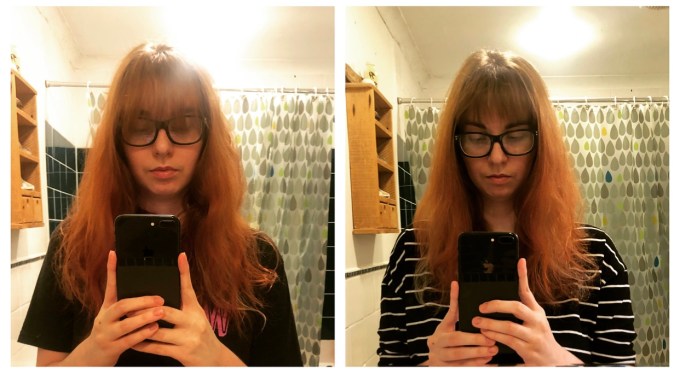
The easing of lockdown only increased my anxiety. With the scientists and Public Health England still warning of the dangers of Covid, it seemed (and still seems) incredibly irresponsible of the government to be making such changes. When it was announced that hairdressers would be opening on the 4th July, my anxiety sky-rocketed. Ever since the pandemic began moving into Europe, my Trichotillomania has escalated dramatically. It’s been a problem for years but with the recent extreme levels of stress, I’m now pulling my hair out more than I ever have. It’s not only causing pain in my scalp and damage to my hair, it’s also causing terrible pain in the fingers, hand, arm, and shoulder on the side I pull from, as well as tingling and numbness that often doesn’t pass for most of the day. So while I did, of course, want a hair cut (as I think everyone did), I was also desperate for advice and help with this problem. Plus, I go to an independent hairdresser and wanted to support them.
But despite all of that, I just as desperately didn’t want to go. Even with the all the strict safety measures they’d informed their clients of, I still felt overwhelmingly unsafe going out, especially into town. To make it feel more possible, we spoke to them and they arranged my appointment to be as stress free as they could possibly make it: we cancelled the colour to reduce my time there (it felt unnecessary as it was something I could do at home – I’d booked it way back when when it had looked like it would be (or feel) safer, they scheduled my appointment first thing on a Monday morning so the environment would be as clean and safe as possible, and they were happy to have my Mum come with me in case my anxiety got too bad. When we made those arrangements, it felt as good as I thought it was ever going to and we moved on, the appointment still a few weeks away.
But as it got closer, my anxiety grew and grew until I was having panic attacks over it. I didn’t want to go. I really, really didn’t want to go. It felt so unsafe to be going out, even with a mask, gloves, hand sanitiser, and safety measures in place. I didn’t want to go. The anxiety was unbearable and I had multiple awful panic attacks.
In the end, my anxiety just wiped me of all my energy and on the morning of the appointment, I just didn’t know what to do. I had nothing left. So Mum took over, got me up, and took me to the appointment. Even being outside felt terrifying: I felt so unsafe and exposed and vulnerable. We got there and the hairdressers was almost empty, as planned, and my hairdresser was as lovely as always. I’ve been camouflaging my Autism and my anxiety for so long – I’ve spent my life building a mask to help me manage in difficult situations, something that I want to write about more in the future – that most people see the ‘usual’ me but in reality, I was so anxious that I felt like I couldn’t breathe properly (and that had nothing to do with the facemask). I almost destroyed the fidget toy I’d brought with me and the whole experience was just exhausting. It felt like it only added to the trauma of the pandemic and lockdown.
(I do want to make it absolutely clear that that has nothing to do with them as people or a business. It was all about going out and feeling so unsafe outside my house.)
My hairdresser is awesome and so lovely and we had a good conversation about the condition of my hair and the textures that trigger my pulling. We talked about what might improve the condition of my hair and therefore lessen the textures that trigger me, which products might be helpful. So we’ll see how that goes. And simply cutting off the dry ends of my hair will hopefully help with the pulling too.
We were there less than an hour but I was completely exhausted. I was barely functional all day and ended up falling asleep on the sofa at about 10pm, hours earlier than I usually get to sleep at the moment. And it’s taken days to regain enough energy to concentrate and actually do things again. Even now I’m not sure whether I made the right choice or the safest choice but it’s done and I can’t go back and change it. Several people have said to me that going out would make going out again easier but if anything, it’s made it feel even scarier so, for the moment at least, I’m not going anywhere.
The next challenge, I guess, is when gyms reopen. As swimming is the only non-painful exercise I can do, my exercise has been severely limited during lockdown and on a personal level, I’m desperate to get back to it. I love it, I miss it, and I miss how it makes me feel, physically and mentally. But I just can’t imagine how on earth it can be safe. So there’s a lot of investigating to do, a lot of thinking and weighing the pros and cons to do. I’ve never been so jealous of people having their own private pools.
 Finding Hope