 Finding Hope
A Week In My Life (July 2023)
Posted on September 30, 2023
I really overdid things in June and pushed myself harder than I could really handle; I was just so overwhelmed and drained and exhausted so, in July, I tried to take things more gently, to varying degrees of success. Having said that, I did have some completely one-off opportunities booked that I couldn’t – and didn’t want to – miss. It’s hard, relearning to balance doing things with recharging and building my stamina. There are still so many things I want to do, especially see my friends and schedule more sessions with my favourite cowriters but I just really struggle to make things fit, and make things fit without absolutely crashing and burning, something that has happened repeatedly since I started taking the Phenelzine – and therefore doing things – again.
The week in this post started on Monday 3rd July 2023 and ended on Sunday 9th July 2023.
MONDAY
I woke up before nine and worked through some of my morning habits, like drinking water and my Duolingo practice, before getting up and getting in the shower. Then I settled in the living room and got to work on my current blog post, alternating with closing some of the many tabs I have open and trying to tidy my laptop up a bit. My Mum had gone in to town to get her laptop fixed and she’d asked about mine and it’s new habit of randomly turning off at any given moment. They said that, when it was made in 2015 (I got it later, refurbished), running it was like asking it to function at 100% but now, eight years later, running it is like asking it to run at 200%, which is obviously problematic. And given my propensity to work on about seven different things at once (with so many tabs open), I’m honestly surprised that it’s survived this long. They basically said that it’s not going to last much longer and I’m going to need to get a new one soon: the dreaded words with the Taylor Swift ticket sales coming up. Even though I’ve been saving for these concerts and have savings for moments like these (when something necessary, like a laptop, needs to be bought), the money anxiety was sitting in my stomach like a slimy, writhing creature.
Early afternoon, one of my friends came over to visit. She’s probably my oldest friend; we met when we were thirteen and we’ve been really close ever since, even though we don’t see each other as much now, living in different cities and working and so on. But our friendship has been one of the great pillars of my life; we always pick up right where we left off and there’s never any awkwardness. It was so, so lovely to see her, to hang out with her even though it wasn’t as long as we’d hoped for, but we got to catch up properly and we had a good laugh. I miss her more now that she’s further away, further away than she ever has during our friendship; it’s so much harder to see each other. But it’s comforting to know that our friendship has never really changed, even if it has evolved since we were at school and saw each other every day.
When she left, I made sure to take some rest time. Mum and I were both hanging out in the living room; she was working on her laptop and I spent a couple of hours continuing the work of cleaning up my laptop. We’ve been half watching House at times like this and we finally finished it, watching the ‘making of’ at the end. For the most part, it was fun and interesting but there was one part that really got under my skin: one woman was talking about the creation of the character of Gregory House and how the original idea was that House was in a wheelchair but that that was ‘too difficult’ so they changed it. I’m sure she meant it from a filming and set perspective and they eventually got to the idea of him using a cane, which I do think was a better choice for storytelling given the character, but the way she talked about it just felt really ableist and insensitive. I know I get triggered by that ‘too difficult’ and ‘too complicated’ talk but it just felt really uncomfortable and, at the very least, borderline offensive to wheelchair users.
My Mum and I had an early dinner together and finished His Dark Materials while we ate. It was the first time Mum had seen the end and my second. God, the end just wrecks me; it’s so heartbreaking. Dafne Keen and Amir Wilson’s performances (and, of course, Ruth Wilson’s – I love her) are just incredible. I think series three is my least favourite, just because there’s so much happening that needs to be shown in order for the end to make sense but, when any of those three are onscreen (plus the scenes between Ruth Wilson and James McAvoy), it’s breathtaking.
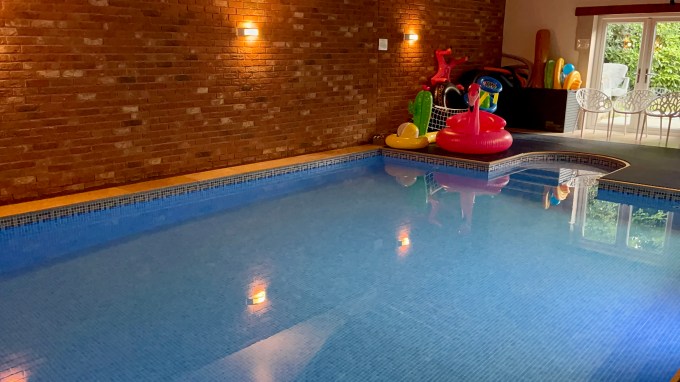
I was freaking exhausted but I made myself go and do my hydrotherapy anyway. I tried – I really, really tried – but my back still hurt and I was so exhausted that I didn’t manage as much as I usually do. I was so tired that I felt like, if I’d rolled over and floated face down, my body would have been too tired to care and I would’ve just drowned. But going was better than not going and I had a nice time with two of my parents swimming too.
Back home afterwards, I put on Doctor Who, too tired to think any harder about what to watch, and kept working on my laptop. It was a struggle though because I kept getting distracted by the cats playing with their new donut toys, plus I kept falling asleep sitting up; I was that tired.

I dragged myself to bed, utterly exhausted, but then I was still awake at three for some reason. That was deeply frustrating; I was so tired but I just couldn’t sleep.
TUESDAY
I struggled to wake up, finally managing to drag myself out of bed around twelve; I was just so tired and the lack of decent sleep made me feel heavy and groggy. I don’t know whether it was connected or not but for the next few hours, I had some really miserable stomach problems that meant I couldn’t do much more than lie on the sofa. I felt hot and faint and nauseous and sweat was all but dripping off me. It wasn’t fun but eventually it did recede a bit and I was able to haul myself up and into the shower.
Back in the living room, I spent the next several hours working on blog posts, hanging out with the cats, and dreading therapy. I was just feeling so tired and raw that putting my feelings under a magnifying glass was the last thing I felt like doing. But I went and it wasn’t as bad as I’d imagined it would be: I’d recommended The Anthropocene Reviewed by John Green to her because I related to so many of the feelings and philosophies that Green had written about (my copy, full of highlighted passages and comments scribbled in the margins, is an incredibly revealing insight into my brain, into my emotions and experience of the world) and she’d just finished it so we decided to go through some of the things that had really resonated with me, especially in the context of my mental health. It wasn’t easy but it wasn’t as hard as it could’ve been. I do think our discussion made it clearer than ever that my depression is still hanging around, dark and heavy and cloying.
Back home, I spent the evening working on blog posts and trying to reduce the amount of open tabs on my laptop. For a while, there was some amazing heavy rain and that really helped to lift my mood; I’ve always found it so calming but also really invigorating. If I recall correctly, rain releases a wave of negative ions which apparently relieve stress and alleviate depression as well as boosting energy. I don’t know how much research is behind those findings but heavy rain and thunderstorms always have that effect on me.
I wrote in my diary for a bit and then started to go to bed early but got distracted by the piano. A little fiddle turned into a couple of hours as I started playing old and half finished songs; my early night became a distance memory when I got sucked into writing a bridge for a song I’ve always loved but never managed to finish.

When I eventually got to bed, I quickly planned out my route into London for the next day and then went to sleep around two in the morning.
WEDNESDAY
I struggled up early but kept falling asleep again, which resulted in me running around like a headless chicken as I tried to get ready to leave. I just managed to catch my train and spent the journey catching up with various family members, working on various blog posts, and listening to Maisie Peters’ album, The Good Witch. I’m obsessed with it.
It seemed to take ages to get to Richard (one of my best friends, my most trusted cowriter, and my producer) but I did eventually arrive, exhausted, out of breath, and hot. We hung out for a bit as I gathered myself, catching up and chilling. We were both tired but eventually we got going, settling into his studio to work on some music. We didn’t have a specific plan and ended up writing a new song together, based on an idea that I’d been turning over in my head. It was hard to start with, like we’d both forgotten how to write together after going so long without doing it – it did get easier but I think that, if we can get back to writing together more often, we’ll find our groove again (no pun intended). By the time we had to stop, we’d written a delicate little song based on The Nettle Dress, an art piece with an accompanying documentary.
That done and running late, we raced across town (my joints were deeply unimpressed – although admittedly I shouldn’t have tried to be a hero and just gotten the lift out of the tube station instead of trying to manage all of the stairs) to the O2 Forum Kentish Town for the Maren Morris show. We both love her and we always go to see her together whenever she tours here. My Mum met us there: I had a disabled ticket and she had the accompanying companion ticket since I find these environments so hard (concert accessibility is unbelievably terrible) and she knows best how to help me through them. The O2 Forum Kentish Town doesn’t have an accessible section (which, again, just blows my mind – how can they be a functioning concert venue that hosts acts as big as Maren Morris without accessible seating?!) but they offered me early access so that I could, in theory, get a suitable seat. That was very stressful but fortunately we did get in quickly enough to get a seat that wouldn’t leave me in excruciating pain the next day. The few in total that I could’ve used only fanned my frustration with them as a venue.
Sam Palladio was the support act and he was good but his musical style wasn’t really my taste; for the most part, I couldn’t stop thinking about him as Stoke in Episodes, which was pretty distracting. Ah well. I’m happy to simply enjoy the support slot; becoming a fan of the person filling that slot is a bonus considering they’re not the person you’re there to see.
Maren Morris was incredible, as always, and she played so many of my favourites, including ‘Circles Around This Town,’ ’80s Mercedes,’ ‘The Middle,’ ‘RSVP,’ ‘Nervous,’ ‘Once,’ ‘Second Wind,’ ‘Rich,’ ‘The Bones,’ and ‘My Church.’ Her voice was in top form and she’s such a great performer; it’s always such an amazing experience to see her live. I love how much London means to her, how she never fails to acknowledge how much she loves it. And to honour that this time, she played a brand new song called ‘Get the Hell Out of Here.’ That was really special.
It was a really, really awesome show. She’s such an amazing performer. My only regret was that she didn’t play ‘Humble Quest’ since I love it so much, but then it seems that we got a lot more songs than the rest of the tour did – plus a new song – so I really can’t complain. It is surprising to me though, since it is the title track of her most recent album. (The show had also meant I missed the Song Suffragettes show – and, as it turned out, the last one – which I was sad about because I love or am desperate to see most of the girls playing and see my friends who work the event but it couldn’t be helped. It’s Maren Morris!)
Richard and I hugged goodbye, repeatedly and effusively, before going our separate ways. A short bus ride later and I was on the train home. I was exhausted but I used the time to make sure my Ticketmaster and AXS accounts were linked up and organised, all the information stored clearly and carefully to hopefully make any ticket buying as straightforward as possible. It was a cold train on a cold night and even though I’d sat for most of the show, my joints were so sore (probably from the slightly panicked journey to the venue); I was hobbling by the time I got off the train.
I was very pleased to get home and into my bed but I needed some time to decompress before I could sleep. I was scrolling through BBC iPlayer, looking for something that would soothe the still surging adrenaline. I spotted Wallace & Gromit, consistent figures in my childhood, and ended up falling asleep as those stories played out.
THURSDAY
My alarm went off at the usual time but I ended up going to back to sleep. It was a very slow start to the day but I was just so tired and sore from the night before. I also had a throbbing headache so I figured I was dehydrated, having probably not drunk enough at the concert. I’ve been trying to drink more water (my hEDS comes with Dysautonomia so I’m quickly and easily dehydrated) but the habit hasn’t become ingrained yet and I’d been distracted by the trip to London.
I lay in bed for a while, looking through my photos from the night before. There weren’t many good ones. I would love to get a new camera – mine is probably ten years old now, if not more, and I’m finding myself increasingly unhappy with the quality of the photos – but between the cost of Taylor Swift tickets (fingers crossed that I can get them) and the looming expense of a new laptop (mine is dying a slow, painful death), I can’t afford it, at least not for a while. Hopefully I’ll be able to get one before hopefully seeing Taylor Swift next year.
It turned out to be a hard day. I did manage to get my budget clearly worked out for seeing Taylor (I’d had a rough idea, having been saving since The reputation Tour ended, but it needed to be hammered out, which I’ve now done) but I spent most of the day in tears, stressed and overwhelmed and exhausted; it’s never been clearer that I need a day off, that I’ve been doing too much and need to slow down a bit. The boost Phenelzine gave me seems to have worn off, at least to some degree, and now I’m left with more plans than I have the energy or emotional capacity for. Between the busy weekend ahead, my stress around money, and the fear that I won’t get to see The Eras Tour next year: I’d received a presale code but there was no information about disabled access and when we rang them to ask how to handle the ticket sale, the information was different from last time. It’s different every time. The whole thing is just getting more and more distressing; it’s just another aspect of the world telling me that, because I’m disabled, I don’t matter as much as the rest of the population.
So it wasn’t the best day and I struggled to get much done. I did some writing and posted on my cat Instagram – a throwback to when my lovely Lucy was a kitten – but that was about it, having lost so my of the day to panic and distress…
I had a quiet evening, watching New Tricks with Mum and working on a couple of different blog posts before going to bed.
FRIDAY
I could not sleep, no matter what I tried; I think three hours is probably a generous estimate if I totalled up the sleep I did manage to get. It was frustrating and boring but the timing could’ve been worse as it meant I was awake to listen to Speak Now (Taylor’s Version) when it came out. Given that her album releases are always at five am for me, I don’t get to join in the countdown with everyone online. So that was a bonus of sorts.
I always loved Speak Now – it was the album that had me absolutely invested in Taylor’s music – and I think this is the best rerecording of the three so far, in terms of how closely she’s managed to replicate the sound. The vault comes close to being my favourite, just after the vault on Red (Taylor’s Version): I love ‘Electric Touch (Taylor’s Version) (From The Vault),’ ‘I Can See You (Taylor’s Version) (From The Vault),’ ‘Timeless (Taylor’s Version) (From The Vault),’ and ‘Castles Crumbling (Taylor’s Version) (From The Vault)’ is fast becoming one of my favourite songs on the whole album. And the prologue is beautiful but heartbreaking; I’m tempted to call it one of the best non-musical things she’s written. Speak Now has always been about using her music to express her feelings and tell her side of so many different stories but this new prologue exposes a new side of that: that she was ashamed of not speaking up in the moment (something that she now tries hard to do) and that writing these songs was her way of coping with it, like she needed to prove to herself – and everyone else – that she could speak up. That undertone of shame is also present when you look at the songs she didn’t include at the time, in the context of the prologue: there are powerful emotions and experiences – the insecurity in ‘When Emma Falls in Love (Taylor’s Version) (From The Vault),’ exploring her sexuality in ‘I Can See You (Taylor’s Version) (From The Vault),’ and the pressures and fears that you can hear in ‘Castles Crumbling (Taylor’s Version) (From The Vault),’ for example – that it seems she didn’t feel able to share and thus an album about being honest wasn’t as honest as she’d intended. I have so many thoughts about this album already but I think I’ll save them for my albums post.
I got up around seven, bored of trying to sleep; I figured I’d have a nap later in the day if I needed one. My plans for the day had changed anyway: I’d originally been going to see Madeline Edwards at OMEARA that night, having seen her in Nashville and fallen in love with her album, Crashlanded, but she’d cancelled the show (with promises to come back soon). I was disappointed – I’d been really looking forward to seeing her perform again and seeing her perform a show after seeing her in a songwriters’ round capacity – but personally, it was probably a good thing that I didn’t have to travel up to London with the weekend I had ahead of me. I was already completely exhausted and it meant I could still go to therapy – not as much fun but still a worthy use of time.
I tried to have a restful day but I was so anxious about going to London Film and Comic Con the next day. It was my third attempt; my first was thwarted by COVID and the second by my anxiety. It’s not a happy environment for me and I was stressed about being surrounded by so many people and so much noise. I was also worried about messing up out of anxiety when meeting Amanda Tapping, my reason for going. So the whole thing had me basically paralysed by anxiety. I tried to do nice things, like watch my favourite TV shows and make bracelets (my current hyperfixation), but it was still a lot.
I went to therapy and we split the time between going over the coming days and my coping strategies before continuing with our discussions inspired by The Anthropocene Reviewed by John Green. I do like having something to prompt our conversations, especially when it’s a busy, stressful week; I feel like it allows us to keep moving forward, for her to keep learning about me, without flooring me the way sessions often do. When I’ve got something big the next day (or during the week), I can’t really afford to give everything to therapy. It’s a good way of still making the most of the time, at least for me.
Back home, I put on New Tricks (an oldie but such a goodie – apart from some of Brian’s mental health stuff) and continued resting, methodically making more bracelets. I wasn’t sure if I’d have the opportunity (or the confidence) to give the handful I’d made for Amanda to her but I wanted to be prepared. I also wrote out my letter for her (I wanted to make sure I could share the thoughts I wanted to share with her, even if I froze up in the moment) and chose the photo I wanted her to sign at the autograph booth (one from the final episode of Sanctuary – Sanctuary, my beloved).
One of my parents (one that doesn’t live with me and Mum) joined us for dinner and we caught up and continued our watching of Lucifer while we ate. I finished the bracelets I’d been making and went to bed early, very aware of how early I had to be up in the morning to get to London.
SATURDAY
I had a stressful early start but despite everything, Mum and I still made the train on time. Mum had a carer’s pass for LFCC; there was no way I could do it without her. Maybe one day but certainly not at this point, having already attempted to go and backed out because my anxiety over it was so paralysing. Even with her there, I was worried about getting overwhelmed and having a meltdown. But at least with her there, someone knows what to do; I wouldn’t have to manage something like that on my own.
On the train, I managed to get my new blog post up and then there was nothing left to do but wait and deep breathe until we got to London and then over to Olympia. Getting in as a disabled person was complicated and stressful – I absolutely would’ve had a meltdown if I’d been there by myself, without her to take over and cut through the chaos – but the people were really nice (one of them at least was autistic too) and skipped through all the complications to make it easier and get me through the registration and back out into the open hall and away from the dense crowd, which I really appreciated. We’d arrived in good time so at least I didn’t have to worry about that. We’d planned to be there just for the Amanda Tapping parts – the meeting and photograph, the autograph, and her talk later in the afternoon – so that I didn’t overwhelm myself when I was already anxious about my first trip to the convention but that meant we had a pretty big gap in the middle of the day; I hadn’t booked anything because I hadn’t been sure how the autographs worked. But according to the schedule Clark Gregg and Iain De Caestecker – both from Agents of Shield – had a talk right in that block of empty so I booked us into that.
I’d been well prepared and had the map on my phone so I navigated us up to the second level where the photo booths and autograph tables are. I spotted Amanda quickly and just stood for a while, watching people take their turn and trying to get an understanding of how the whole thing worked. But since it was just about time for her photo session, I didn’t join the queue; I’d just have to leave it again in a few minutes. So I found a quieter area to sit and wait, deep breathing to try and keep myself calm for the impending meeting. I was so anxious and so anxious about doing something stupid or embarrassing that would make me cringe for the rest of my life; I tried not to obsess over that possibility and just breathe but it was hard. My Extra Help wristband meant that I was allowed to go straight through for the photo – so I didn’t have to stand and didn’t have to spend too long completely surrounded by people – but there were still several people before me, which was a relief; that meant I could watch both how the process worked and how they interacted with Amanda (and how Amanda interacted with them, not that that had changed from when I met her back in 2018 at AT9 – she’s so open and warm) to prepare myself. When it was my turn, we hugged and I said how good it was to see her in real life and not on a screen. She was really lovely; I hate that the memory is already fading. We posed for the photo and then we said goodbye, that I’d see her at the autograph table. I don’t know how she does that kind of event; I’d be completely overwhelmed. My photo was printed right there and I collected it on the way out. I wish I was happier with it: my fringe rarely looks good in photos and I feel like I never look like myself in posed photos. But, as it turned out, it was the autograph moment that was really special.
The adrenaline was still pumping, my hands shaking, when I met up with Mum outside the photo booth and it took almost an hour for me to calm down. The adrenaline crash was making me feel sick and I was obsessing a bit over whether I should’ve done the autograph before the photo, whether I’d been too enthusiastic, and so on and so forth. The photo session had ended and, after taking a photo with Matt Smith, Amanda was back at the autograph table. I was really stressing about messing up but I knew that putting if off was just giving me more time to worry. At that moment, the queue was pretty short so I joined the end and pulled out the photo I’d printed for her to sign.
The photo sparked surprise from her helper person – I think everyone had one to take care of the admin of checking everyone off and getting names right – about her with long, dark hair, which Amanda laughed about and I expressed my love of Sanctuary and how important the show was to me, how it always will be. I gave her the letter I’d written, briefly explaining that I’m autistic and had worried that I’d get too overwhelmed to talk, which she took in stride (I was feeling pretty overwhelmed, talking to her face to face – although having no one behind me, waiting for me to move on, did help). I also gave her the bracelets I’d made and she was so gracious and so lovely about them, instantly noticing that both Mum and I were wearing others that I’d made. The conversation actually felt surprisingly easy and, like any fan I think, I couldn’t help wishing I had hours to talk to her and ask her questions. My Mum also grabbed a moment with her, thanking her for everything she’s done for me – for how much her presence in my life has helped me – from one mother to another. We all ended up quite emotional and Amanda stood up and gave us both a hug, saying that we’d made her weekend. I’m sure that we’re one of multiple moments that made her weekend but that meant a lot to me; I treasure that comment.
I was beyond hyped and very emotional after that and needed a quiet moment to myself in the bathrooms in order to bring everything back down to manageable levels, levels where I wouldn’t get tipped into a meltdown by the business and background noise of the convention. And by the time I’d managed that, it was time for the Clark Gregg and Iain De Caestecker talk.
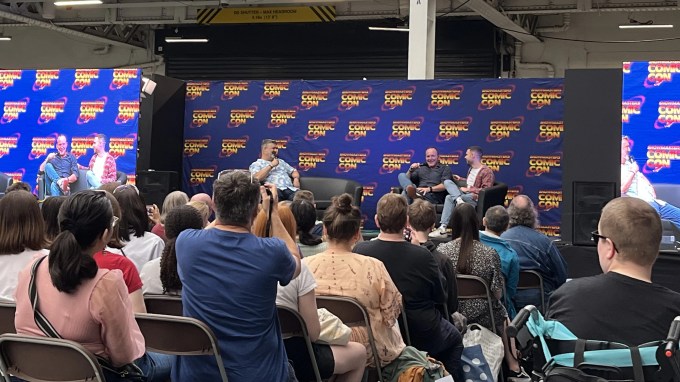
Clark Gregg is so lovely, warm and open and affable, and although he was quieter, Iain De Caestecker seemed really nice too. They were clearly really good buddies and they told lots of funny stories; they were very enjoyable to listen to. It was really cool to hear how they got into acting and how some of their early roles shaped them and their approaches to their careers and their new projects sound interesting, although I’m not entirely sure Iain’s is my thing. They talked a little bit about Agents of SHIELD but I couldn’t help wishing that they’d talked about it a bit more, about their experiences on the show and with their castmates. I’m pretty sure everyone there was an Agents of SHIELD fan and would’ve welcomed any behind the scenes stories. On that note, I’m still sad about missing Ming Na Wen when my anxiety forced me to cancel and I would LOVE to see Chloe Bennet at a convention, although I’m not sure she does them anymore; she hasn’t done one in years, pandemic irrelevant. I can only imagine what an absolute mess I’d be if I had the opportunity to meet her, given how important the character of Daisy Johnson is to me; her acting is, of course, a big part of that.
When the talk ended, Mum and I found a table tucked away and had some lunch. We ended up chatting with a man who had a service dog, a gorgeous yellow lab or golden retriever, I wasn’t quite sure. But he was lovely and that got us talking. Now that I’ve been accepted to Autism Dogs‘ service dog programme (yes, I am SO excited about getting a service dog but I want to talk about that properly in its own post because the whole thing is a really big deal), I’m always keen to talk to people about their experiences and about their service dogs. This guy – he was also autistic but had his service dog due to being in the armed forces – patiently talked with me about his previous and current service dogs and even showed me photos of his dogs meeting various famous people; that made me laugh. While obviously not a good reason for trying to get an Autism service dog, I think that must be a super cool way of raising awareness about Autism and the needs of autistic individuals: posting pictures of your service dog with someone famous.
When the time rolled around, me and Mum headed down to the little auditorium area. I ended up making friends with someone in the queue and we spent the wait, discussing how much we love Amanda Tapping, about Stargate SG-1 and Sanctuary. She was having a hard time and, as the only person there, I did my best to keep her occupied until the talk began and then we were all absolutely occupied by Amanda. She walked out onto the stage and I noticed straight away that she was wearing three of the bracelets I’d made her – I thought I might explode with joy. (I couldn’t see, at the time, which ones she’d chosen and my photos turned out not to be clear enough. I ended up scouring social media for photos that would reveal them and, although it took several days, I did eventually get to see which ones they were, which made me very happy.)


I’ve always found Amanda to be a beautiful, thoughtful speaker. Even when answering questions from the audience, questions she couldn’t have prepared for, she speaks well, earnest and personable and funny, always engaged with both the person who asked the question and the audience as a whole. I think it’s because everything she does comes from a place of empathy. All of that said, the talk was really interesting and enjoyable. She told stories, from the set of Stargate SG-1 and Supernatural, and joked around with the host; she talked about her upcoming projects (although the future is very unknown with the writer’s strike going on) and how she’d been thinking about the future and what she wants to do next, how she’s told her agents that she wants to act again. That was very exciting to everyone. She also shared quite a lot about her life, like stories from quarantine times and how she prepares for these events and recovers after, and it was so lovely and such an honour to get a little glimpse into her world. The one thing that I felt was missing was any talk of Sanctuary, especially as her most recent starring role and a project that was such a world unto itself, driven by this small, emotionally invested circle. It would’ve made the experience perfect to hear a couple of stories from that time. I kept waiting for her to mention it or someone to ask a question about it but nobody did. I’d finally gathered the courage to put my hand up and ask a question about it (I can’t remember what it was now – probably something about how it differed to other shows she’s been a part of or about the character of Helen Magnus, another of my absolute favourite characters of all time) but it was too late; we’d run out of time and they weren’t taking anymore questions. But it was fine. The day had been amazing and the fact that I’d even considered asking a question was a really big deal. Maybe next time I go to a similar event, I’ll actually manage to ask one.
So, yes. As I said, it was an amazing day and an amazing experience, despite all of my anxiety around. It took me a while to process it all but when I finally felt like I could put at least some of it into words, I posted this…
When Amanda’s talk finished, Mum and I got going, heading back to the station and catching the train towards Manchester. Having been accepted by the Autism Dogs charity, we wanted to go to their fundraiser the next day to show our support and our gratitude. It was a bit of a trek though, especially after such a long, emotional day. I’d planned to work on the train but I was so tired that I ended up putting my head down on the table and sleeping for more than two hours. Oops.
It was pouring with rain when we arrived – absolutely tipping it down – and since our hotel didn’t do dinner, we picked up fish and chips and the hotel was really lovely and accommodating in letting us eat in our room. I was still falling asleep, literally wherever I stopped (like leaning on the bannister while the hotel staff member retrieved plates and cutlery for us); I barely made it through my dinner. We ended the day watching one of the Sanctuary episodes I had on my laptop (and were properly weirded out, watching Amanda with long, dark hair after just talking to her in person with short, blonde hair). We were both asleep early, probably by ten and definitely by eleven.
SUNDAY
Exhausted from the day before, it was a struggle to wake up early but I did eventually manage to force myself out of bed. The shower was super slippery and I nearly fell over several times, which was a bit scary, but I did survive – just – and then ran around like a headless chicken as I got myself ready and packed up. The cab was already waiting when I was done but then I got lost twice on my way out of the hotel. So… not the most graceful beginning to a day.
My Mum and I spent the morning at the Autism Dogs fundraiser, which was really enjoyable. We ate cake, met some gorgeous dogs, and watched the dogs compete in some very adorable competitions, including waggiest tale and several rounds of musical sits. It was all very cute.


The event being so far away meant that we didn’t know anyone there (apart from a few people from Autism Dogs) but we met a really nice family and ended up spending most of our time chatting to them (and their gorgeous dog). It was a really nice morning.
Then it was back to the station, a really long wait for the train, and a long series of trains home. The only thing of note was a really adorable corgi on one of them. I could definitely see myself having a corgi. But beyond that, it was long and cold and monotonous. I was completely exhausted – physically, mentally, and emotionally – so I didn’t manage to do anything on the journey; I ended up alternating between scrolling through social media and sitting back with my eyes closed.
Getting home was a great relief. It had been a really good weekend but, as exhausted as I was and needing to process everything that had happened, I really needed some time in my safe space without loads of people around. I was delighted to see the cats too; I hate being away from them. I went to bed ridiculously early and was asleep in minutes.
This post is – clearly – quite late. To be honest, I wasn’t sure if anyone cared, a fear that I often have about this blog, especially in my lower moments. But this blog really matters to me so I’m trying to ignore those whispers. This was a really cool week where some really special things happened and so I came back to it and pushed myself to get it done. I hope you enjoyed it, or at least found it interesting. It’s kind of funny; I think these are the posts where you can potentially learn the most about me but because they’re so busy, with so much happening in each one, that fact sometimes goes unnoticed. I don’t know. Maybe that’s just my runaway brain overthinking.
I hope you’re all doing well.
Rare Birds, The New Neurodivergent Clothing Line – Review
Posted on August 12, 2023
Several months ago, I got an email with a survey for a new clothing line that prioritises neurodivergent people, known as Rare Birds. They already had plans to make the clothes soft, seamless, without labels, and so on, all things that neurodivergent individuals often struggle with; problems like these can trigger anything from difficulty concentration to full-blown meltdowns. This definitely appealed to me, having struggled with clothing and fabric issues all my life, and I eagerly filled out the first and then the second survey with my preferences, what a clothing line would ideally provide me with. Then, back in July I think, they launched the line and I bought a handful of items, hopeful that I’d find things I loved but also just curious about what they did with the survey results and how that data has translated into the actual clothes.
So here are my thoughts on my order, on the clothes that I bought.
My first impression when I unpacked them (apart from the overwhelming smell of plastic that plumed out of the box – it was so strong it actually gave me a headache and I knew I’d have to wash whatever I kept a handful of times before I could wear them) was that the fabric wasn’t what I’d been hoping for. I’m a 100% cotton girl and the clothes felt more lycra-like, more stretchy and slippery, which didn’t thrill me. But I wasn’t going to be put off just by that; I felt like I had to give them a real chance. First impressions and all that…
So, because I wanted to get a real sense of what the line was like, I’d bought several things (which ended up being pretty expensive but I’ll come back to that later):
Everyday Short-Sleeve T-Shirt (in black) – This big, loose t-shirt is described as “gentle on the skin and super soft to the touch” and in their ThermoSoft range, made of 68% Bamboo, 28% Organic Cotton, and 4% Elastane. It’s reported to be stretchy, durable, super soft, breathable, and thermo-regulating (the bamboo helps to regulate your body temperature, making sure you stay cool when it’s hot and warm when it’s cold). It was comfortable, if not my fabric preference, but not more comfortable than most of the t-shirts I already own and I wouldn’t wear it out; it’s a bit shapeless and I felt kind of frumpy in it.
Everyday Long-Sleeve T-Shirt (in black) – Part of the CloudComfort collection, this soft long-sleeve top is made from 95% Modal (made from beech trees and considered more eco-friendly than cotton) and 5% Elastane. They describe it as ultra soft, durable, lightweight, and breathable. The last part is what I liked most about it: it felt very light and airy, even if the fabric isn’t quite my preference. I think it would be good for summer, especially since I’ve semi-recently developed the compulsive urge to be covered up at all times. It’s a nicer shape than the short-sleeve t-shirt too. It was probably my favourite of the things we bought, although I’m still not sure how comfortable I’d feel wearing it outside the house; it’s not as flattering as I would have liked (and I don’t mean tight – I wouldn’t want it to be tight – I mean in regards to its shape).
Everyday Leggings (in black) – Made of 86% Organic Cotton and 14% Elastane, these leggings from the FlexSoft range (described as blending “the softness of Organic Cotton with the stretchiness of Elastane to create a fabric that maintains its shape with ease while being gentle on the skin”) are supposed to be soft and comfortable (even for the very sensitive skin), stretchy but strong, lightweight, and will retain their shape despite frequent wash and wear. They were strong and supportive but I’m not completely convinced by the shaping of them: the waistband was uncomfortably tight at a strange point of my torso, which was particularly unpleasant when sitting.
Everyday Joggers (in black) – Also in the ThermoSoft range, these thin sweatpants are made of 68% Bamboo, 28% Organic Cotton, and 4% Elastane: stretchy, durable, super soft, breathable, and thermo-regulating. I found them light and thin (not heavy, like the fabric of some sweatpants) and I think they’d be particularly good in the summer but they’re far too like pyjamas to ever wear out. And while I know sweatpants are about comfort and not about looking good, I felt actively unattractive in them, which I think I would struggle with long term. (The idea of Dopamine Dressing is something that I’m intrigued by and want to test out at some point to see if it does improve my mood and confidence and motivation).
DreamSeam Socks (in black) – They were beautifully soft, I have to give them that, made of 75% Bamboo, 23% Polyester, and 2% Elastane, and I love that they don’t have seams (I’ve been wearing my socks inside out for years in order to avoid them) but I couldn’t even bear to open them when I saw how expensive they were (£10 for one pair of socks – when I’d made the order, Mum and I had been talking about it, she’d done it on her laptop, and either she didn’t mention the pricing to me or I missed her telling me). That’s just too expensive (especially in the case of the socks when you can just turn them inside out).
And that was something I wanted to talk about in general. A significant percentage of the neurodivergent population are unemployed for various reasons and so to charge so much for basic items makes them, as far as I can tell, pretty unavailable to the people they’re making them for. I want to support them and I can understand many of the reasons why they may need to cost what they do but I certainly can’t afford it as a general practice. It’s all too expensive for me to base my wardrobe around; they are simple, basic pieces after all and not fashion or statement pieces for which you’d expect to spend more. I want to support them but while they’re this expensive, there’s a limit to what I could buy.
Another general issue that I noticed is that none of the clothes have sizes bigger than XL. Other than excluding anyone who wears sizes bigger than this, it’s not uncommon for neurodivergent people to want their clothes loose to avoid feeling uncomfortable or overstimulated; while it’s true that most of these clothes are roomy, I’d imagine that anyone who’s size L or above and looking for baggy clothes will struggle without bigger sizes. Maybe this is something they’ll introduce over time but I have noticed it while perusing their website.
And on a personal note, I didn’t feel good in pretty much any of it: I felt unattractive and like, to others, as if I hadn’t put any effort into my appearance. I know they’re meant to be the basics but still, they didn’t make me feel good about how I looked or confident in my appearance, which we know is really important when it comes to our mental health, our confidence, our relationships… As I mentioned earlier, the idea of Dopamine Dressing – dressing in a way that boosts your mood, your productivity, your confidence – is real, even if the evidence is still largely anecdotal in the neurodivergent population: if I’m excited about the clothes I’m wearing and how I look, I’m likely to feel more confident and social and motivated because I feel good in myself. I can’t believe I’m the only person who feels this way. That is something I think is lacking here and hopefully will be addressed in the future.
Although I didn’t have a hugely positive experience this time, I think that overall, it’s a really positive thing. Different people want different things so I can hardly be annoyed that it’s not everything I wanted right off the bat; I guess I just hoped that I’d like it more than I do. But as I said, I think it’s a really great venture that I am excited about and will continue to support. It’s brand new and you’ve got to start somewhere; there are so many avenues that they can explore from this point. I’ll be keeping an eye on it to see what they go on to release and whether that is more my thing.
World Cat Day 2023 – The Benefits of Cats
Posted on August 8, 2023
Happy World Cat Day! I am both deeply a cat person and a dog person, even though I don’t have a dog right now, and my cats are one of the great loves of my life so, for World Cat Day, I thought I’d research and share why cats are so incredibly good for us. But before I get started with that, I wanted to share my favourite fact: we know that our relationship with cats goes back thousands of years but some research shows that cats essentially domesticated themselves in South Asia, befriending humans for a ‘mutually beneficial relationship’ (although, let’s face it, it probably started out as an easy way of getting food). (x) And clearly, we’ve always been obsessed with them: in 889 CE (also known as AD), twenty-two year old Japanese Emperor Uda described his new cat with familiar passion: “the colour of the fur is peerless,” “when it stands, its cry expresses profound loneliness, like a black dragon floating above the clouds,” and “I am convinced it is superior to all other cats.” (x) Who of us cat owners have not described our cats in similar ways and with similar pride?
IN THERAPY
- According to the Human Animal Bond Research Institute (HABRI), pet therapy sessions have proven to decrease isolation and loneliness, increase social functioning, and improve independence in autistic individuals.
- Cats are being used in animal-supported therapy more and more, commonly used to treat anxiety disorders, depression and Post Traumatic Stress Disorder (PTSD), as well as Attention Deficit Hyperactivity Disorder (ADHD) in children as they often help to keep them calm and focussed.
- Cats (and animals in general) act as a good ice-breaker, both at the beginning of the session or if the session becomes difficult and the patient needs a moment to breathe; they serve as a positive, calming topic of conversation, a good release valve, before getting back to work.
- Cats are a reassuring presence, good for reducing anxiety.
EFFECTS ON THE BRAIN
- A positive bond with your pet can increase your dopamine, serotonin, and oxytocin levels, the hormones known as the ‘happiness hormones.’
- Researchers have discovered that the human brain releases endorphins when stroking a cat and when listening to a cat purring, lowering our stress levels.
- The brain also responds to a cat’s purring by releasing serotonin.
- Playing with your cat can raise your levels of serotonin and dopamine, relaxing the nervous system, and the ‘happiness hormones’ are stimulated when we smile or laugh or talk to our cat.
- Studies show that the bond between a person and their pet is linked to several mental health benefits, including reduced feelings of loneliness, reduced anxiety, and reduce symptoms of PTSD.
- According to HABRI, 74% of pet owners say that owning a pet has improved their mental health. Studies have shown that the bond between human and animal increases oxytocin levels in the brain, resulting in feelings of calm and focus.
- Research by the Mental Health Foundation and Cats Protection, in a study of over 600 cat owners, found that 87% felt that having a cat had a ‘positive impact’ on their wellbeing and 76% reported that they felt they could cope better with their lives because of the presence and relationship with their cat.
- It has been reported that people with pets experience less anxiety than those without. Studies have also shown that cats are beneficial in reducing anxiety, especially in certain groups such as students and autistic children.
- Spending even twenty to thirty minutes with a pet can trigger chemical changes in the body that reduce stress, including the increase of serotonin and dopamine levels in the brain and reducing anxiety.
EFFECT ON EMOTIONS
- Our pets love us unconditionally which is very comforting when we’re struggling or feeling lonely.
- Animals are so present that they encourage us to do the same, to be present and mindful.
- Researchers in 2008 found that 44% of cat owners felt ‘a sense of safety’ when with their cats.
- Caring for someone or something other than ourselves, that relies on us, can create a sense of accomplishment, fulfilment, and confidence. And the more confidence we have in ourselves, the better we tend to feel about ourselves.
- Polish researcher Elzbieta Budzinska-Wrzesien and her colleagues concluded that when you have a close relationship with your pet – who shows you unconditional affection and doesn’t judge you – that relationship can boost your sense of wellbeing and self esteem. This bond can relieve stress, increase social interaction, and create healthy habits.
- The love of and for a pet can often motivate a depressed person to keep going because they know they have their pet relying on them.
EFFECTS ON THE BODY
- Studies have shown that the bond between a person and their pet can result in many health benefits, including decreased blood pressure and cholesterol levels.
- Multiple studies show that cats have a calming effect on us, reducing our stress to the point that we are approximately 30% (different studies show slightly different numbers) less likely to experience heart disease. Even watching videos of cats of have shown to reduce our stress.
- Another study showed that cat owners have fewer strokes than non-cat owners.
- Stroking and cuddling your cat can reduce the cortisol, the stress hormone, in your body, which leads to decreased heart rate, blood pressure, and anxiety.
- Some studies have shown that having your cat close by at night results in better sleep. Cat-owners who let their cat sleep on their bed or in their bedroom said they found it easier to both fall asleep and stay asleep. Compared to dog owners and those without pets, cat owners specifically indicated waking up fewer times during the night, as well as less restlessness and fatigue.
- A cat purring has therapeutic effects both on them and on us. Studies show that purring falls between 25 – 240Hz, the frequency known to speed up the healing of injuries, including broken bones, damaged tendons, and injured joints. Some people have even reported the purring of their cat easing their migraines too.
EFFECTS ON LIFESTYLE
- Looking after a pet requires the ability to create and stick to a routine, time management skills, organisation, and multitasking. These skills are difficult for many people, especially individuals with ADHD, so caring for a pet can aid in building and strengthening these skills, motivated by the knowledge that your pet needs your care and attention; tasks involving them can’t be procrastinated or skipped. Over time, these skills can be harnessed for non-pet related tasks.
- Caring for a pet can also help to build a better sense of self-esteem and can improve how pet-owners, especially those with ADHD, feel about themselves in a neurotypical society.
- ADHD pet owners have reported feeling great pride in managing to take care of their pets, especially on their own. Sometimes it’s the first time they’ve managed to build and keep a daily schedule. This builds confidence, which goes on to affect other areas of their lives. Some reported that getting a pet is what forced them to learn and improve these skills, which resulted in them taking better care of themselves as well.
I found an excellent story during my research…
“I have a cat and I couldn’t manage without him. Yes, he provides comfort and unconditional love, but he also keeps me on track. I used to work with chimps and sign language, so when I got a kitten, I placed a very high priority on his communication skills and on shaping gestures he used naturally. I also used food puzzles and other things to keep his mind active. He knows what time I need to be up for work in the morning. Unless I tell him the night before that we can sleep in, he pokes me awake 3 or 4 minutes before the alarm. If I space out cuddling with him, he gives me a minute or so, and then he stands up and uses his limited gestures to say firmly, ‘You. GO,’ and waits to make sure I’m up before he leaves the room. He knows how long it takes me to wash and dress. If I dawdle too long deciding what to wear, he’s in the doorway checking to see what’s taking so long. If I leave something in the oven and forget about it, or leave a burner on after I’ve taken a pot off it, he lets me know. Sometimes I assume he’s just looking for attention and scold him for making a ruckus when I’m trying to focus, but if it’s a safety issue, he won’t stop until I give up and say, ‘FINE! SHOW me what’s wrong,’ and then he leads me to the stove, or wherever the issue is. He’s most certainly the grown-up in the relationship.” (x)
MY CATS
If you’ve followed this blog for a while, you’ll know that I have five cats, all related to each other. Lucy came first and then we kept her second litter of kittens, Tiger and Mouse, and then – to even the vet’s surprise – Mouse suddenly had two kittens, Sooty and Sweep, that – for a number of reasons, including the pandemic – we ended up keeping. I love them all dearly and it’s sweet how, not only have they all developed different relationships with each other, they’ve developed different relationships with me.
Lucy is my anchor. She’s always there, curled up next to me or snoozing somewhere in the same room. She doesn’t want to be cuddled all of the time but she always wants to be nearby; she likes to know what’s happening and what I’m doing. It’s very sweet. And she probably looks after me more than I look after her: she regularly checks in with me, she follows me around, she gets anxious if she can’t be in a room with me, she’s always really pleased to see me when I reappear from behind the shower curtain, she tries to usher me to bed when it gets really late and then sits with me to make sure I don’t get up again, and so on. It’s adorable. She’s the queen of the house though and she absolutely knows it.


Tiger is my snuggle buddy. Up until recently, she’d come for a cuddle now and then but she was usually too busy exploring the garden or playing with the other cats (plus she does have a favourite spot for snoozing). But after I went to the US and then Germany, it’s almost like she realised that she really doesn’t like it when I go away – I think all five cats got very comfortable with my Mum and I being home all the time since the pandemic began. As soon as I got home, she was all over me and ever since, she’s been coming to me for long cuddle sessions multiple times a day. It’s very cute, especially given how independent she was before. I’m certainly not turning her down, even if her tail is a weapon of mass disruption.
Mouse and Sweep are my floofs. Sweep has always been Mouse’s baby and they are definitely a bonded pair, which is a gorgeous thing to witness: they are curled up together all the time and even in the summer heat, they lie as close together as possible without touching (although Sweep often reaches out with her paw to touch Mouse, like she’s reassuring herself that she’s still there). Sweep frequently runs to Mouse for reassurance after something traumatic happens (the most traumatic thing to ever happen to her is the unexpected appearance of the window cleaner’s brush) or runs into the room, calling for her. It’s so cute how much she loves. She’ll rush up to Mouse and flop down on top of her, getting as close as possible, something that I’m not sure Mouse always appreciates. Mouse has always been the most skittish of the pride but she’s getting more affectionate and playful as she gets older, which is lovely. And we’ve started trying to teach them all tricks, mainly for our own entertainment, and Mouse has definitely been the fastest to pick them up. And Sweep is the complete opposite. I’ve started referring to her as ‘my little neurodivergent baby.’ I don’t know if there’s any proof that neurodiversity exists in any species other than humans but it seems unlikely that it’s just us; I wouldn’t be surprised if it’s only so obvious in humans because neurodivergent individuals are forced to live in a neurotypical society, something that animals don’t seem to have, certainly not in the same way. If those pressures aren’t there, then maybe neurodivergence doesn’t manifest in the same way. Anyway. I think of Sweep as neurodivergent because she seems to think and process completely differently to the other four, like they think in words and she thinks in pictures – or the cat equivalent. She still struggles with the cat flap, she doesn’t seem to understand how doing tricks works at all, she likes to hide away from everyone but has her special bond with Mouse, she seems to experience a lot more anxiety than the rest of them… I don’t know. She’s just very different to the others, not that we love her any less.
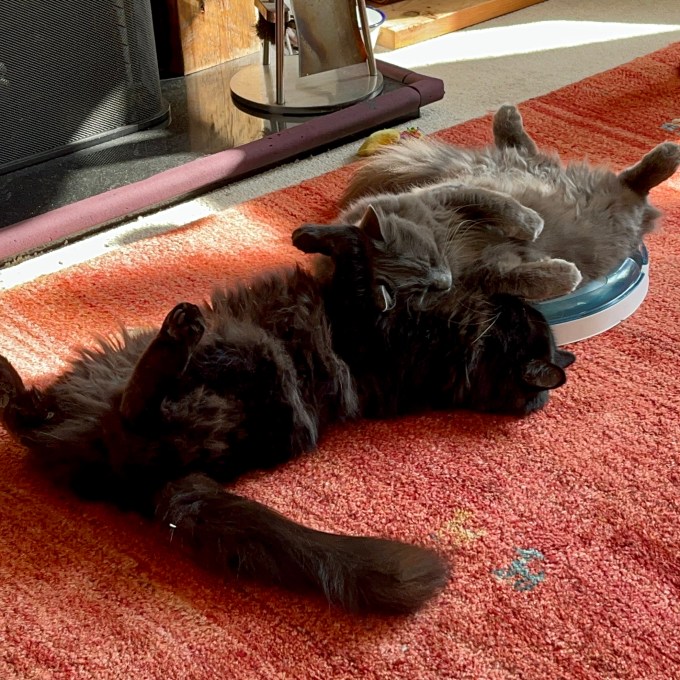
Sooty is my baby. She’s always seemed to think of me as her mother, even when she was a teeny tiny kitten. I wonder if that’s because Sweep and Mouse are always so entangled but whatever the reason, it’s adorable and I’m not turning down her affections. She always wants to sit on the sofa with me, demanding that I stretch out my legs so that she can stretch out between them; it’s her favourite spot. She’s also very playful and she and Lucy are a particularly playful pair, although she’ll play with anyone who will engage with her. She still feels very much a baby, Sweep too, even though they’re four now (which seems unbelievable to me but then I guess the pandemic really screwed with our perception of time) and that’s very sweet. I kind of hope she always will; I think she’ll probably always be my baby (although, to a degree, they’re all my babies).

APRIDEOFCATS
To avoid overwhelming people with cat pictures on my Instagram, which is focussed on me as a singersongwriter, I created a new account, aprideofcats, so that I could post as many as I wanted. It’s as much as for my own entertainment as anything else. I stopped using it for a while – when I was struggling with social media in general – but I’ve recently started posting on it and having a great time, trying to choose between the ridiculous amount of cute pictures that I have of them.
So there you have it: concrete evidence that cats are amazing. I’m just kidding, although I do love cats and my cats in particular. I think it’s fascinating that just spending time with animals – and in this case, cats – can have such dramatic effects on us and our health, physical and mental. I hope this has been interesting and fun and if you liked the cute little faces of my cats, please do follow my cat instagram: there will be plenty more photos of them going up.
(1) (2) (3) (4) (5) (6) (7) (8) (9) (10) (11) (12) (13) (14)
 Finding Hope