 Finding Hope
Breaking Up With My Therapist
Posted on March 31, 2024
And I accidentally abandoned this blog again… I’d always intended to take a break over January and February, to clear my head and to catch up on some of my end of 2023 blog posts, and while I obviously did take a break, neither of those things happened. Instead, I had a very traumatic break up with my therapist and I’ve spent the last two months or so in such distress that writing blog posts wasn’t even on my radar. Hopefully I’ll return to those posts and get them finished, posted, and out of my brain but, for the moment, I’m still feeling really overwhelmed and traumatised by those last three sessions and the absolute landslide of emotion and distress that they caused.
I’d been struggling on and off with therapy for a while, which I’m pretty sure was a result of feeling really burned out: with so little energy – physical, mental, and emotional – I found it really difficult to put myself into a position where I knew I’d end up feeling even worse. It was taking everything I had just to get out of bed, let alone go and pour my heart out for ninety minutes only to stuff it back in and walk around for the next week like it wasn’t utterly draining. So my attendance wasn’t deeply consistent but I was trying; I was giving it all I had even though I didn’t have much to start with. And then something changed around October last year.
Whenever I mentioned having a meltdown, she’d question it, to the point where it started to feel like she was trying to determine if I was lying or like she was trying to catch me out in some way, like “Gotcha! I knew they weren’t meltdowns!” And whenever the topic of my family came up, she’d dig, like she was looking for trauma or dysfunction. I also had the vague sense that she was trying to drive a wedge between my Mum and I, which I didn’t understand at all since we were trying to chip away at some really, really hard stuff and my Mum feels like the only person I can just about share this stuff with. As far as I can tell, it’s not uncommon for autistic people to have a ‘safe person’ in their life and destabilising that relationship, especially when I was already feeling so fragile, felt unwise at the very least. At first, I’d brushed it off, assuming I was being overly sensitive or something but it kept happening and was bothering me more and more. After our last session before the Christmas and New Year break, I decided that I’d bring it up when sessions started again.
I really struggled over Christmas and New Year – it’s a time that I’ve been finding increasingly difficult, especially over the last few years – with my depression and suicidal thoughts reaching really scary levels. I did email my therapist but we never worked things out over email: it was more about putting some of those thoughts and feelings somewhere and to keep her informed so that, when I arrived at the next session, she’d at least have a basic understanding of where I was at emotionally. We’d also discussed exploring Brainspotting since I was having such a hard time talking about my core fears, one of which was the main reason I’d gone back to therapy this time.
But we never got to any of those things. The session was an absolute nightmare. I can’t remember the first half of the session because the second half was so traumatic. We were sat on the floor and I had Izzy in my lap – she’d come to several sessions with me since she’s become such a grounding presence for me – and I’d thought we were going to talk about Brainspotting but then, for some reason still unknown to me, my therapist started asking me question after question about this core fear. My anxiety got worse and worse, I couldn’t breathe, and it wasn’t long before I was in verbal shutdown. I couldn’t speak; I could not answer her questions; and she wouldn’t step back, despite my obvious distress (I mean, I thought it was blatantly obvious). I’d lost all sense of time but eventually she slowed down and when she next asked a question, I dredged up my last reserves of energy and, my brain still barely functioning, I forced out a sentence. Maybe it was just inside my head, but it sounded flat and slurred – all off my energy was going into forming the words; I didn’t have anything left for expression or emotion. I had two reasons for forcing myself so beyond my limit: firstly, because I was scared that I’d have a full on meltdown with all of the worst elements (screaming, pulling my hair out, self harming, etc), which I dread having anywhere but at home (and it’s not like I enjoy them at home…) and, secondly, because I was scared she’d touch me, meltdown or not, which I viscerally did not want, especially while I was having so much trouble speaking and wasn’t sure I’d be able to say no. I felt like she was trying to force me into a meltdown and, regardless of the fact that this was coming from someone I was supposed to feel safe with, I felt and still feel deeply traumatised by the experience. The ‘conversation’ that followed only compounded that. We’d run out of time – thank god, because I felt utterly wrecked and wanted nothing more than to get out of that room – and I was packing up my bag and sorting out Izzy when my therapist said that, instead of pursuing Brainspotting, we were going to repeat that experience every week. I don’t know if I can even describe the feeling that that triggered – panic, terror, I don’t know – but, even though I was so drained that I could barely keep my eyes open, I couldn’t let that go. Maybe some sort of survival mechanism kicked in. I said that I knew that that would make things worse but she brushed off my reaction and said that it would help, both dismissing and invalidating my feelings. By that point, I was so overwhelmed with so many blinding emotions that I couldn’t say anything else; I had to get out of the building before I fell apart entirely.
The next several weeks were dominated by meltdowns, paralysing anxiety, crying jags, and the feeling that the ground was constantly shifting under my feet. I felt so traumatised, so completely rocked by the session that all I could do, for weeks, was lie on the sofa and stare blankly at the TV. I’ve experienced dissociation of a sort before but this was far, far worse: whenever I thought about the sessions or even therapy in general, my thoughts would scatter and wouldn’t reconnect until hours later. I couldn’t even engage with the thought of therapy until a month after that awful session. My Mum had been in regular contact with my therapist, letting her know that I wouldn’t be coming in, but it was a month before I could even think about writing to her myself. Even then, a month since that hideous session, I felt like I couldn’t breathe, like I was about to throw up, like my mind was going to get shoved right out of my head and I’d shut down. But the idea of carrying around all of those feelings felt unbearable so I spent a full day shouldering through the nausea and writing her an email, describing my experience of the session. Just the thought of being in the room triggered such an intense flight or flight response that I couldn’t imagine going back there so soon, so I suggested doing a Zoom session (which we’d done before when one or other of us had been abroad) as a stepping stone to getting back there. When she replied, she shot it down without explanation, triggering another tidal wave of anxiety and confusion – she felt like an entirely different person to the one I’d been working with for so many months. It was like she’d had a personality transplant or, probably a more likely explanation, that something had happened in her life and it was creeping into her work. I still wonder if that was the case. (In a later email, she explained why she hadn’t wanted to use Zoom and her reasons were completely understandable but I couldn’t understand why she hadn’t simply said that in the original response, why she’d chosen to leave me confused and upset when she could have so easily prevented that.) That response left me untethered again and I could feel this monstrous, ugly trauma growing and feeding on itself; it was like someone had ripped open the stitches and the tissue that had just started the slow process of knitting itself back together was torn open, messy and raw.
It took me over a week to compose a response but then, before I could send it, I received an email – in the same cold tone as the previous one – where my therapist declared that since ‘we’ hadn’t found a way to meet in person (an interesting word choice since I had been the only one suggesting alternatives), she had decided to terminate therapy. Reading that felt like experiencing a physical trauma, like something dense and heavy impacting my chest and splintering every bone, pulverising every muscle, organ, and blood vessel. I couldn’t tell if I was going to throw up, stop breathing, or completely dissociate. I felt so fragile that I honestly feared that my brain would splinter and that would be it: I’d learn what it means to lose your mind. I couldn’t believe she’d be so cruel; I’d never imagined that she could be so cruel. Part of me wondered if it was a manipulation: she was forgoing the carrot and using the stick to force me back into the room, regardless of my feelings about it. But I couldn’t believe she’d really do that, couldn’t believe that the person I’d known for a year would do that – to anyone. She suggested a session or two to wrap up but I could barely process that concept: the words ‘terminate therapy’ were all I could think about, drowning out everything else in my head. It took a while but when I could eventually form coherent thought, I knew I couldn’t miss the upcoming session, not with this weight hanging over me; I couldn’t carry it around any longer than I had to. So I wrote back, trying to briefly express the hurt and anger I felt to, at the very least, establish a foundation for what I assumed would be the final session. I didn’t know how much I’d be able to say myself so I wanted to get some of it out there before I got into the room: I wanted her to know how abandoned I felt, how ending therapy without so much as discussing it felt like a punishment; I wanted her to know how invalidated I felt, how I felt she’d invalidated my trauma after the previous session; I wanted her to know that this abandonment felt like one more person telling me I’m too complicated, that I’m broken, that I’m not trying hard enough, that I’m not worth putting in the effort. It was a hard email to write and a hard few days waiting for the session.
It took me six weeks in total to go back and even then, I didn’t feel ready. I woke up in the middle of the night – the night before the session – screaming and crying in pain, the trauma and hurt I felt about the whole situation overwhelming me even in sleep. Mum had to sit with me until I calmed down enough to go back to sleep but I could still feel the ghost of it the next morning, along with nausea and shaking. I wanted to skip it so badly but given how that last session had ended, not going back felt worse than going (although it was a very slim margin). I wanted to understand and, if this was the end, I wanted closure, even if closure meant learning that I’d never get the whole truth. I’ve been there before. Everyone I’d told thought I was mad, but I needed to try, despite how awful I felt. So back I went.
My fight or flight response was so intense when I arrived that I don’t know how I walked inside; my whole body was screaming at me to run and it almost felt like gravity was trying to pull me off my intended course. I sat down on the sofa but didn’t take my shoes off as I usually would; if I truly needed to escape – Mum was waiting in the car outside with Izzy – I didn’t want anything to slow me down. My whole body was shaking, so noticeably that my therapist actually pointed it out. For a moment, she seemed so like the person I remembered from before all of this but it didn’t last: the session was a complete mess. It’s tempting to say that it was worse than the previous one but in reality, they’re not really comparable: the January session was traumatic and although this one was a hideous experience, I didn’t feel traumatised by it. I don’t feel traumatised by it. It felt more like a battle of wills: each of us pushing, neither of us willing to give up any ground. (I don’t know if she’d think of it that way but all I could think about when she was – or more accurately wasn’t – answering my questions, was that she was scrambling, desperately trying to protect herself.) I was angry and hurt and she was defensive and reactive, repeatedly turning my feelings and questions back on me with statements like, “well, that wasn’t my intention” or “I can’t help it if you interpreted it that way” and so on. She didn’t outright make everything that had happened in the last session my fault but she was clearly avoiding taking any responsibility for the situation, despite being the therapist in our relationship. For example, whenever I expressed that I felt traumatised – specifically by how I’d felt pushed into a shutdown – her responses only left me feeling more distressed and invalidated, like she didn’t believe me. I felt like she thought I was throwing the word ‘trauma’ around casually, rather than using it to describe a very real emotional injury. When I asked her specifically about the verbal shutdown I’d experienced as a result of her pushing, she said that she didn’t realise how bad my distress was, that it didn’t seem worse than the previous times I’ve become distressed during sessions. I felt it was deeply, deeply obvious but we clearly weren’t going to agree on that.
In my anger, I ground out that I felt that not only terminating therapy but terminating it by email was a punishment for ‘not trying hard enough,’ for not meeting her expectations, for not getting back into the room in her acceptable timeframe (despite the fact that I had no help in doing so). I said that it felt like a manipulation to get me back into the room but she claimed that it wasn’t: she gave me her ‘reasons’ for terminating therapy but, in my opinion, not only were they very flimsy but they were things that she’d never mentioned to me. If she had, there were adjustments we could’ve made and things we could’ve worked on but how could I have done that when I never even knew that she considered these things problems? I’m skeptical that those were the real reasons; I think she had others that she just didn’t want to share. She said that she’d talked extensively about all of this with her supervisor and I couldn’t help thinking what I wouldn’t have done to hear those conversations. I tried to get some clear answers from her, get my most basic questions answered – about the last session, about terminating therapy by email – but it wasn’t long before her answers started spiralling and she couldn’t stop justifying herself. That, to me at least, implied that she wasn’t confident in her decisions but I can’t know that for sure and I’ll probably never know now.
She brought up the fact that she’s self employed, saying that me not coming consistently put her livelihood at risk. I think it’s worth noting that my sessions had always been cancelled in the accepted timeframe and, on the one occasion where I’d left it too late – because I’d really thought I’d be able to go – we’d paid her. That is my only responsibility to her financially; I thought bringing that up was not only unbelievable but also deeply unethical (and everyone I’ve described this moment to have been appalled too). She said that she couldn’t have a client taking “an extended holiday,” a phrase that seemed to suck all of the air out of me: I couldn’t believe that she’d just essentially compared my six weeks of trauma and dissociating to a holiday. The panic attack hit me so hard that I felt paralysed, shaking and hyperventilating. At one point, she asked if she could sit on the sofa beside me but I flinched – from the moment I walked into the room, I hadn’t wanted to be within reach of her – so, fortunately, she didn’t move. I don’t know how long it took but when I was eventually able to breathe and communicate, I told her that she wouldn’t like what I wanted to say. She said that that didn’t matter, that she always wanted me to share what I felt (which felt very ironic considering how the session was going). So I expressed that, whether she’d intended to or not, she’d just compared this incredibly traumatic experience to a holiday. She instantly, vehemently, and repeatedly denied it but it’s what she said; I wish she would’ve just acknowledged that what she’d been trying to say – regardless of it being an appalling point – had come out wrong. It still would’ve hurt but I think it would’ve hurt less. Or maybe the whole thing was already broken beyond repair at that point; maybe it was already too late and I was just trying to get some answers before fleeing the burning building.
I pointed out that, in terminating therapy and therefore abandoning me by email, she’d repeated a trauma that had devastated me at nineteen; it was an experience she knew a great deal about since we’d spent months discussing it. She forcefully disagreed and said that it wasn’t the same at all but apart from a few details, I can’t believe that she couldn’t see the screaming similarities; I don’t believe it. She said that she just needed to get me in the room and I couldn’t help but laugh at the irony: how was that not manipulation? That was another element of what felt like, to me, was her ‘scrambling’ to stay in control, of the session and the party line she was sticking to: she kept contradicting herself. Another example was, despite announcing the end of therapy over email, she repeatedly told me that I had agency, that continuing with therapy was my choice. I found that deeply confusing: one day she was dropping me as a client by email and the next, it was all up to me? I didn’t understand. But I wasn’t sure that it mattered in the long run: I was running through the consequences of everything I thought to say before saying it – on whether or not I should say it at all – because, having threatened to end therapy once, I couldn’t trust that she wouldn’t do it again. I didn’t trust her and I didn’t feel safe with her anymore.
Possibly the only useful thing to come out of the session – apart from a sense of catharsis – was a short exchange about other types of therapy and what other modalities might be helpful. But then, when I said that every therapist I’ve seen has hurt me in one way or another – intentionally or not – and that trusting someone new feels all but impossible, she suggested that I’m letting them hurt me (or inviting them to hurt me – something to that effect). I was astonished that she could say something like that, that she could say – to my face – that it’s my fault that therapists have been traumatising me. I mean, I don’t even know what to do with that. And then she asked me how my dog was, as if she hadn’t just spent more than ninety minutes denying, dismissing, and invalidating the trauma that she was the source of. I was wound so tight that I thought something in my body might snap, despite the exhaustion weighing me down, as if my muscles had been replaced by sand bags.
I escaped to the car, relieved to see Mum and Izzy, who climbed up my body and around my neck; she’s a sensitive little bean, always wanting to make people feel better. I was so exhausted that when we got home, I went straight to the sofa, curled up with Izzy, and slept for the rest of the day. It was a long week; it was a lot to process. I had a lot of interesting conversations with family, friends, therapists, friends who are therapists, all of them horrified that my therapist had treated me the way she had and said the things she’d said to me. In the end, I decided that I needed to go back, most likely for the last time: my therapist had been so reactive and so on edge that I thought, with a week to process everything that had been said, she might be a bit less defensive and therefore able to answer some of my questions. She hadn’t really given me any answers, not sufficient ones anyway.
Before that final session, I emailed her with some thoughts and questions so that she would have time to think about them before we met to talk. I told her that I still didn’t feel clear about the traumatic session in January and how that had gone so wrong, why she hadn’t stopped pushing when I was clearly so distressed; how confused I felt about her terminating therapy by email only to turn around and say that I had agency over the situation; that I felt really distressed and invalidated by her response to how traumatised I felt by the experience. When we’d first met, she was confident that she could help me with this core fear that I was struggling with but suddenly she was saying that she didn’t have the skills and I didn’t understand what had changed.
At some point over the next few days, my Mum emailed her to officially and logistically tie things up. The reply insisted that she’d ultimately been thinking of my best interests, that she felt she didn’t have the skills to help me and that another model of therapy might be more helpful. It was only at this point that she expressed that she was “sorry that the therapy didn’t work,” something she never said to me; I know that an apology wouldn’t have changed anything by that point but it would’ve changed the story a little, to hear that she actually felt something about the crash and burn that was the end of our therapeutic relationship. To me, she’ll always be another mental health professional who abandoned me during a crisis because I was too much, because I was too complicated, because I wasn’t worth the effort. She never contacted me again, not that she necessarily had to as my now ex-therapist, but I can’t help thinking that, had I been in her shoes, I would’ve emailed to say goodbye, to wish me well, to… something. But as I said, now that all is said and done, she’s just another person who didn’t really care.
I’ve had many, many conversations with many, many different people since then and, of course, I’ve thought about it a lot. I even looked up the relevant ethical guidelines but, when I talked about it with another therapist, she advised me not to waste my time and energy: even if I had any proof, therapists have many more protections than their clients. And while the anger that still lingers is tempting, I know that I wouldn’t be able to prove it and my impassioned description of what happened is unlikely to change anything; stories like mine are far too common. I do think about her other clients though and I wonder what their experience over the last six months has been like. But I’ll never know and I don’t think knowing either way would help me.
It’s taken me a long time to write this and, to a certain extent, I’m still processing it; I know that this new emotional injury won’t heal for a long time. But writing things down has always helped me to make sense of my feelings and to let go of some of the weight that I carry. And posting it here… well, this is where I’ve documented the ups and downs of my life for almost a decade (where all of that time went, I have no idea). To leave it out… I might as well give up posting entirely.
I feel lighter already.
Increasing The Phenelzine (June – July 2023)
Posted on September 23, 2023
TW: Mentions of depression and suicidal thoughts.
NOTE: I wrote this a few months ago but waited to post it. There were a couple of things that I felt I wanted to comment on in the conclusion but I needed a little bit longer before I felt confident enough to do so. So I let things play out a bit but then some life stuff happened and this post got away from me for a bit. But here we are. Here it is.
Things had improved since I’d settled on the daily 30mg of Phenelzine but it still didn’t feel like enough. I wasn’t crushingly depressed but there were still problems, still areas of my life that weren’t back to what they used to be. So, for a while, I’d been thinking about increasing the Phenelzine, upping it to the high dose of 45mg (with my psychiatrist’s permission, of course). I had tried it before and it wasn’t the right thing for me – it was like the lights were too bright all of the time – but I hadn’t been coming from as low a place as I was this time; I hadn’t been trying to pull myself out of such a bad place. So, with that in mind, I wondered whether the higher dose would help, whether it would give me the additional rungs on the ladder that it seemed I still needed.
So I saw my psychiatrist and while he was quick to comment on how much of a change he could see since I’d started on the Phenelzine again, he listened to what I had to say and we discussed trying the higher dose. He asked me what the most important thing to me was and I said that I wanted my songwriting ability back. I’d written a couple of songs since I started taking the Phenelzine again and I loved them but they’d taken so much time and effort to write, much more than it would usually take. I used to write multiple songs a week with ease but, on the 30mg of Phenelzine, it was taking me months to drag one song out of my brain. So I wanted to write like I used to again. He listened and ultimately agreed: he said we’d use my creativity as a benchmark, using how many songs I was writing as a measure of whether the increase was helping or not (alongside whether I had any negative side effects, of course).
For a while, life was overwhelmingly busy and chaotic and there were things I needed to be able to do, that I needed to rely on my body and my behaviour (as much as I could normally, at least) to manage. So it was a while before I was able to increase from 30mg per day to 45mg per day. I started the increase on 17th June 2023 and took notes for the first six weeks (since the side effects and general effects can be quite subtle), finishing this record on 29th July.
And, as always when talking about medication, this is just my experience. Please don’t start, change, or stop taking any medications without the advice and support of a medical professional.
WEEK 1 (15mg in the morning and 30mg at night)
For most of the week, I didn’t feel any different. I have been more keen to engage with stuff, especially new stuff, but that’s not new exactly; it might’ve increased a bit but I couldn’t be sure. I was consistently tired and, on more than one occasion, I fell asleep before I could take my medication at night; I was also really drowsy during the day, needing naps to function, to make it to a decent bedtime. My back pain was relentless too, although my TENS machine did help.

Come the end of the week, my sleep was a mess and I was completely exhausted. I ended up needing multiple naps during the day and still barely making it to a respectable bedtime, forgetting my pills again. But I was managing to do a lot: I worked through my to-do list, went out to see some cool art, managed to avoid a meltdown when a creepy guy wouldn’t leave me alone, and spent my short evening snuggling with the neighbour’s puppies. But even though I hadn’t really had the time to sit down and do any writing, my brain was like a firework show, ideas appearing one after another at a dizzying speed. It was more than a bit overwhelming. I didn’t manage to find out, exhausted as I was, whether I could turn those ideas into anything but it was a definite start.

WEEK 2
The beginning of the week was so hot (the result of a hideous but thankfully short heatwave) that it felt almost impossible to do anything; moving around just made me even hotter, sickeningly so (heat like that makes my POTS symptoms go haywire, which just makes everything harder). For the most part, I dozed, cuddled up with one of the puppies. I was easily overstimulated and exhausted but I made it home to Brighton (with an impromptu nap on the train) and had a quiet evening before going to bed, falling asleep before I could take my pills or turn the light off.


The rest of the week was a really mix. I slept better, longer and deeper – and I actually remembered to turn off the lights and take all of my pills before falling asleep – but I was so tired; I kept falling asleep on the sofa or in the car or really anywhere I sat down. I was just so exhausted. I struggled during the day, unable to concentrate even though it felt like my brain was full of ideas and things I wanted to do. But I just felt like I was being sucked down by sleep and staying awake took so much effort. It made me feel like I might start crying at any moment.
I had some really bad days, where I felt overwhelmed and overstimulated and miserable and just so tired that I couldn’t do anything, which, on top of it all, left me feeling so frustrated. I had a horrible time in therapy and was just feeling really fragile. Plus, I was really stressed about the puppy situation: I want her so badly and I have no idea what’s going on; the idea of losing her from my life makes my heart ache.
But despite all of the difficulties, I was surprisingly productive, and was busier than I’ve been in years. At least that’s what it felt like. I started to work on some of the song ideas that I’ve been turning over in my head; I hung out with friends; I managed to swim; I went to see the fantastic Candi Carpenter play a show in London (I’d missed their last UK shows because I was self-isolating) and then we all went to the pub afterwards and had a great time (highlights include all of us singing Taylor Swift karaoke and running into uni friends I haven’t seen in years); I even did a drawing class. It was all really good but it was just A LOT. It was hard to process it all.
WEEK 3
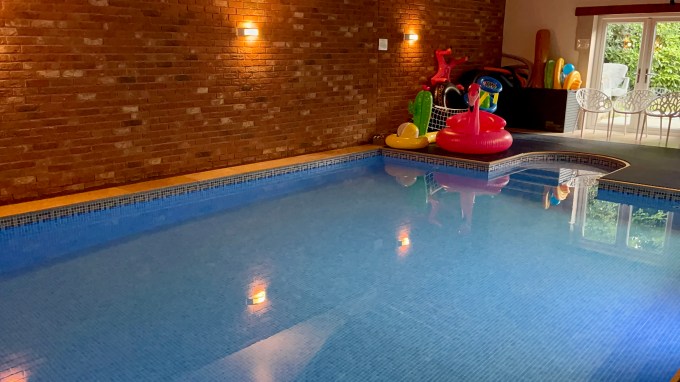
For the first half of the week, things were okay. My sleep was pretty good: I was sleeping long and deep, although I did have the weird, busy dreams that I’ve come to associate with a medication change. I was still incredibly tired during the day (I fell asleep upright on the sofa several times) but I did manage to get some stuff done. And even though my back was hurting, I did manage some hydrotherapy.
Mentally, I wasn’t doing super well. I just felt really overwhelmed, drained and fragile. It felt like my depression was just hanging around, deep down, all the time. I was still functional and I even managed to do quite a bit of songwriting, more than I’d done in a while, but it was hard. I went to an amazing Maren Morris concert with my friend, Richard, and although I had an amazing time at the show, everything leading up to it and then the aftermath was a really struggle: getting there was exhausting and painful; the disability accommodations were as stressful as always; I was exhausted and freezing by the end of the gig; and it took forever to get home. I had a slow start the next morning, exhausted and aching after the concert, and despite the decent night’s sleep, I was a mess: I was completely overwhelmed and ended up in tears multiple times.


The second half of the week was really difficult. My sleep was a mess, making me a zombie during the day, and my emotions were all right at the surface, raw and ragged. I was beyond stressed and overwhelmed by everything that was coming up over the coming weeks; it felt like it was all barrelling towards me at an unstoppable speed. Both my body and my emotions felt so heavy and I was constantly bursting into tears.
WEEK 4
This week was pretty much dominated by my overwhelming, paralysing anxiety and stress over trying to get Taylor Swift tickets and the hurt and devastation of being treated so badly as a disabled person. I wrote about that here so I won’t rehash it all but I wanted to include what a devastating effect the experience had on my emotional and mental states. While the experience is, of course, separate from whatever the Phenelzine was doing, both are tied up with my emotional regulation and the effect my feelings have on me. As I said in my post, I was basically in various states of meltdown for all three days of the tickets presale. And it wasn’t just the suffocating anxiety of not getting a ticket: the way that Wembley Stadium treated disabled fans was appalling and it was just such a gut-punch to realise that they either didn’t care about us or they didn’t even remember that we exist. It was really distressing. I was so stressed and so depressed, even after I managed to get tickets. Just the thought of not getting to see this show, having looked forward to it for five years, had my emotions so big and loud and devastating that I felt this overwhelming compulsion to scream until my throat tore, to rip my skin off. With so little bringing me joy these days (and my chronic suicidality ever present and oppressive as a dark cloud), the thought occurred to me that, rather than endure the excruciating pain I know I would feel if the shows happened and I couldn’t be there, I should just kill myself to avoid it all. That thought just made me feel even more fucked up than I usually do. My emotions are so big and so precarious that even the smallest thing can tip me into serious and scary lows and this isn’t the smallest thing, given how much Taylor means to me. As I said in my post about the experience, these feelings are due to my mental health, to my depression and my chronic suicidal thoughts, not specifically to seeing Taylor; it’s about the fear of losing one of the few sources of joy when you’re in a really dark place. Those things will be different for everyone but the fear of losing them is so overwhelming that words don’t really do it justice.
The exhaustion and residual stress from that whole… experience had completely drained me of energy and, for several days, I was so tired that I could barely function (although I’d get sudden jolts of adrenaline, thinking I should still be on the phone, that I’d fucked up and forgotten, and was losing my chance). My sleep had been screwed up by my anxiety and I had pain from the physical tension I’d been holding in my body for three long days; both of those took most of the week to settle back to normal, normal being exhausted and sleepy and not able to do much. That was causing me a lot of anxiety too: I had so many things that needed doing but I was just too tired to do them and the anxiety over how they were piling up was starting to get overwhelming. I did manage to spend some time with friends, which was really nice, but I struggled to feel connected while still feeling so emotionally drained.
WEEK 5
The last week had exhausted me and it showed over the following weeks in various different ways. I was going to bed early, sleeping long and deep, and often struggling to wake up. And even with a long night under my belt, I was tired and drowsy during the day, often falling asleep on the sofa (and sometimes at my laptop); I struggled to concentrate, my eyes were tired and straining by the end of a day, and sentences stopped making sense. I was just completely done in. I hadn’t emotionally recovered either. I felt utterly overwhelmed, fragile and miserable; I was suicidal in the face of what just felt like too much. It wasn’t particularly surprising when I had an awful meltdown.
I did manage to be vaguely productive though, despite it all. I worked hard at my hydro and physio; I went to therapy; I managed some writing; I saw a couple of friends and had a good time with them, even if I didn’t feel as present as I usually would; I went to a show a friend runs (and the whole thing made me very emotional); I attended an interesting webinar about ADHD. But, even with how much I was struggling to be present in my mind, nothing felt quite enough, like I hadn’t done enough or gotten as far as I’d wanted to. I’ve been trying not to beat myself up but I’ve never been very good at that, being kind to myself that is.
WEEK 6
Another week and my sleep still wasn’t great. I was still falling asleep early (sometimes forgetting to turn the light off or put in my retainer) and sleeping long hours, although I was starting to wake up at a more reasonable time. I was still really tired during the day, taking some accidental naps, and struggling to focus. It was getting better but, as I said, it wasn’t great.
I was working hard to build in better habits too, alongside the medication and therapy. I worked hard at hydrotherapy and started physiotherapy too. The physio was a bit of a shock to my system and I was sore for the first few days (which disrupted my sleep but then pain always does). But, midweek, I ran for a train and actually caught it, despite thinking that there was no way I was fast enough or strong enough to make it (I would’ve had to wait an hour on a cold platform for the next one so I was certainly motivated). There’s no way that, a year ago, I could’ve managed that; I was so ridiculously proud of myself. So the hydrotherapy has definitely made a difference and I feel confident that the physiotherapy will only complement that.

I was also trying to drink more water. I definitely don’t drink enough and, given that the Autonomic Dysfunction I struggle with as part of my Ehlers Danlos leaves me prone to chronic dehydration, I should be drinking a lot more than the average person. I’m nowhere near that yet but I’m already drinking more than I was when I first measured my liquid intake.
It’s hard to know for sure but I felt like I was more productive and motivated than I had been previously. I was actually getting things done and getting them done at a faster pace: blog writing, songwriting, researching. I even went to an online writing workshop that I really, really enjoyed: the session was fun, the people were really nice, and I was really excited about what I wrote. My brain was just desperate for new things and new information; it was excited to learn. I don’t really know how to explain it any other way. I also went out and spent time with friends, went to a songwriters’ circle, and saw family friends. I was more social than I’d been in ages but I was kind of feeding on that, which is really unusual for me. But it was nice. And exciting. Oh, and I also started mentoring sessions for my creative projects, which I felt really optimistic about.
Unfortunately, the week didn’t end as well as it had begun, my depression hitting me like a tidal wave at full strength. It was so overwhelming that I felt like I couldn’t breathe, couldn’t do anything. I was also really stressing about food and eating, feeling guilty as soon as I ate anything. I was miserable and exhausted and couldn’t focus on anything; I slept on and off during the day, dizzy and ears ringing. One side of my body was tingling too and we were this close to calling the doctor. It was horrible. I also found that I physically couldn’t relax: my body felt tensed up even though I wasn’t tensing my muscles (so I obviously couldn’t relax them if I wasn’t actually causing the problem). After several hours, my muscles started to hurt but I still couldn’t unclench them. My legs were twitching too and when I thought about it, I realised that that wasn’t new, that it had been happening on and off for weeks, as had the tensing in certain muscles. The more I thought about that, the more stressed out I got. I know that certain doses and/or extended use of certain medications, including Phenelzine can cause Tardive Dyskinesia, a movement disorder with symptoms including sudden and irregular movements in your face and body. It’s something that gets worse over time and the idea of developing it was really distressing to me.
In the following weeks, my sleep evened out, helped by CBD gummies and the occasional Diazepam or Zolpidem. I spoke to my psychiatrist about the twitching and whether it could be Tardive Dyskinesia. He felt that it was unlikely, that a much more likely cause was the physiotherapy, which I’d started around the same time the twitching started; he thought it was more likely that it was just my muscles waking up with the exertion I was putting them through for the first time in so long. So my anxiety was abated.
But now, several months later, the twitching is still happening and my anxiety is growing again. I’m going to go and see my psychiatrist and have a proper conversation about it because if it is something – something that needs to be dealt with rather than something that’ll just resolve in time – I need to know so that, at the very least, I can think about the options, whatever they are. It’s hard to believe they’ll be anything but bad though; past experience doesn’t exactly fill me with confidence.
One Woman With Autism
Posted on October 14, 2017
Ask anyone about Autism and they’ll most likely describe the stereotype: difficulty socializing, a ‘lack of empathy’, specific and focused interests. But, as with everything, it’s so much more complex than that, especially for girls and women with Autism. While there are various statistics on the ratio of boys to girls, it’s clear that there are many more girls and women with Autism than was originally thought. And because the diagnosis of Autism has always been based on the male presentation of Autism, it can be really difficult for girls and women to get diagnoses and support. I can’t speak to anyone else’s experience but I can speak to mine.
I was a shy kid. I was so shy, and so anxious, that I couldn’t be left at after-school clubs or activities. I was petrified and cried until my Mum would take me home. I was constantly told I was too sensitive, that I took things too personally, that I needed to grow a thicker skin. And that really upset me – but then I was being too sensitive, wasn’t I?


These issues continued through my childhood and into my teenage years. I was always anxious and strived for perfection in everything. I was a vigilant rule follower; I couldn’t, and still can’t, break a rule for anything. I was terrified of turning in homework late, convinced it was an unforgivable act. The one time I did forget a piece of homework (because I’d taken it out of my bag to check I’d packed it and then forgotten it in a panic about being late – another constant anxiety), I cried in a corridor and my hands shook when I told my teacher. It was fine, of course, but it didn’t help my anxiety. I was so scared of doing something wrong, of getting into trouble.
In addition to that, I never felt like I quite fitted in. Anywhere. I felt like I was stuck behind glass, separated from everyone else and unable to break through it. Everything seemed so much easier for everyone else; everything they seemed to do effortlessly took all of my energy, leaving me exhausted. I couldn’t understand why I just couldn’t cope as well as everyone around me. For some unknown reason, I couldn’t function as well as everyone else and that made me feel like I was broken. Despite all of this, no one clocked that there was a problem, not a doctor, not my family, not me.
What had always just been a feeling of not coping started to take over other areas of my life. I’d always done well as school, despite missing more than eighteen months when I struggled with an unidentified illness that caused debilitating fatigue. My lowest grade at GCSE was an A (although I was disappointed with not having achieved more A*s). I got to Sixth Form and everything changed. Suddenly every class, every test was a struggle. Learning and applying knowledge had always been something that had come easily to me, something I’d enjoyed, and all of a sudden, it had become so difficult and that was incredibly distressing. My anxiety got higher and higher and depression started to creep in. I was constantly exhausted and just getting through the day started to feel like an impossible task.
The turning point came when I failed an exam. I locked myself in a toilet stall and scratched at my arms over and over with a broken paper clip, desperate to feel anything other than this howling feeling of failure that came from somewhere deeper than I’d ever experienced. I don’t know how long I sat there and I don’t remember much of that day, but that was when my family and I started to realise that there was something really wrong.
A lot went into getting my diagnosis. I’ve lost count of all the doctors I’ve seen, the amount of times we left without any answers, the amount of books we read. I’ve been diagnosed with multiple mental health problems and tried a lot of different medications. I tried various therapies like CBT and EMDR. Nothing helped. But due to my Mum’s never ending commitment, I ended up at the Brighton and Hove Neurobehavioural Service and after several hours answering questions, I walked out with a diagnosis of Autism Spectrum Disorder. To start with, I was too exhausted by getting to that point to take it all in but slowly, everything started to make sense. All these disconnected pieces of my life and my personality began to click into place.
I’ve always felt emotions strongly. If something goes well, I feel like I’m bulletproof. If something goes badly, I can end up in a meltdown: crying, shaking, screaming, and often self-harming. Either that, or I go into shutdown where I retreat to my room and lie in the dark, unable to think or talk properly. Sometimes a meltdown leads to a shutdown and it can last for days, or even weeks.
I’m extremely sensitive. To a lot of things. A change of plan, loud noises, bright lights, unfamiliar people and places, all of those things increase my anxiety, making it difficult for me to function, to make decisions, to interact with people or the environment around me. Processing that information takes a lot of energy and I’m easily exhausted and overloaded. Too much sensory information, too many demands placed on me, the closer I get to a meltdown. It’s a fragile existence, like walking on a tightrope.


I’ve never had trouble with empathy, with ‘stepping into another’s shoes’. Or more accurately, I’ve never found that difficult to do. My struggles tend to be with the other extreme: I’ve been told I’m too empathetic. I frequently experience other people’s emotions as if they’re mine and with such strength that I feel completely overwhelmed. It’s strange and upsetting to, for example, feel grief for someone I didn’t know. It can feel like I’m intruding even though all I ever want to do is help because I know how strong those emotions can be. It’s incredibly difficult for me to see someone upset and not be able to do anything. It can also be very difficult to do something as simple as walk down the street. I just feel overwhelmed by how big everyone’s lives are, how much makes up a person: memories, favourite colours, foods they hate, things they want to happen, things they don’t want to happen, phone numbers they’ve forgotten, songs stuck in their heads. I could go on forever. And when I’m surrounded by people, I feel all of that pressing in on me. It makes it hard to breathe.
Socialising is difficult. Again, processing all the information around me takes a lot of energy: a person’s words, body language, tone, how other people are reacting, everything going on in the background. It’s hard work. It feels like everyone else has a rulebook that I never received and so I’ve had to learn how to be social. Where everyone else processes all this information automatically, I have to actively process it, which takes a lot of energy. So it’s not hard to imagine why I’m tired out very quickly by social situations. Of course many people don’t notice this and have no idea that I’m autistic. Even the visible signs go unnoticed, like my difficulty with eye contact. Aside from the fact that I have no idea how long you’re supposed to hold eye contact for or which eye you’re supposed to look at it, I also feel very vulnerable when someone is looking into my eyes, like they can tell what I’m thinking and feeling.
I do have my own specific interest: writing, in all forms, but my favourite is songwriting. I’ve read a bit about these focussed interests and apparently the interests in the female presentation of Autism tend to go under the radar because they can be similar to a neurotypical girl’s interests, like animals, TV shows, books, particular singers or music groups. It’s the intensity that’s different. I’ve never simply liked something; once I’m interested in something, nothing else matters. When I’m writing, I lose all sense of time. I recently spent ten hours working on a particular piece and only stopped because I noticed my hands shaking. When I looked up, it was dark and I realised that a whole day had passed and I hadn’t eaten. Writing, and writing songs, is everything to me. It’s the only thing I want to do, the only thing I want to do for the rest of my life. It’s hard though, because there’s a big part of me that feels like my life isn’t worth living if I’m not doing that one thing, if I’m not doing songwriting. The music industry is tough as hell so it’s terrifying to think like that. But that’s the truth.
Of course there are other symptoms and this is just one presentation of Autism. As the specialist that diagnosed me said, we are the experts of our own Autism. But, in my experience, it’s really hard. And it’s made harder when there’s so little understanding around the way Autism affects girls and women. Life post-diagnosis is difficult but at least I know what I’m struggling with. I’m learning what helps and what doesn’t. Not knowing was awful. I felt like I was drowning, like I couldn’t even find the surface. And the years of asking for help and being turned away made it worse. The lack of awareness and understanding about how Autism affects girls and women has real consequences. The time it takes to get a diagnosis and the repeated invalidation causes problems of their own. The people supporting me now think that that was part of the reason I developed Borderline Personality Disorder, a mental health problem that involves instability of mood, behaviour, and self image. And I will never forget one particular doctor’s opinion, that maybe that’s just how life was going to be for me. That remains one of the most upsetting experiences of my life and years later, I’m still struggling to believe that I will ever be happy.
I am so lucky to have found the people who are supporting me now and I feel it because I know that without them, there’s a very real chance that I wouldn’t be here now. But there are so many people without this support. There needs to be more information, more awareness, more understanding of Autism in women. Too often it goes unidentified and the effects of that can be worse than the struggles caused by the Autism itself.
 Finding Hope