 Finding Hope
So I Wrote A Thing For World Mental Health Day
Posted on October 10, 2018
(Trigger warning for self harm.)
Today is World Mental Health Day.
If I’m honest, I’m not really sure what to say. I’m in the middle of the worst depression I’ve ever experienced and I’m very aware that my perspective, my opinions, my hopes are distorted by that. If this was a video, I might just sit and cry. But this day is important so I’m trying to pull myself together and put something out into the world that is (hopefully) positive (and maybe helpful).
This year’s theme is the mental health of young people. When it comes to things like this, I’ve never felt comfortable talking about anyone’s experience but my own. So that’s what I’m going to do. I hope that’s okay with you guys.
My experience at secondary school was a very mixed one. I spent the first three years dealing with some complicated health problems but by the time I reached Years 10 and 11 (ages fifteen and sixteen for those of you who don’t know the education system in England), I felt really settled. I loved learning, particularly English, Maths, History, Psychology, and Philosophy (real shout out to my teachers in all of those subjects). I got real satisfaction from working hard and that was reflected in my grades. I came out of secondary school with not unimpressive grades, especially when you consider I missed most of the first three years. So I felt pretty good about going into Sixth Form (A Levels/ages seventeen and eighteen).
But that was when it all started to unravel. I really, really struggled. I’d gone from completing the work with ease to barely scraping by. I couldn’t understand it: I was trying so hard and it didn’t seem to make any difference. And I couldn’t see it at the time, but my anxiety was getting worse and worse and what I now know to be depression was creeping in. But I didn’t know it was happening so I just kept pushing forwards. I spoke to a couple of people about the high anxiety I was experiencing but each one told me that anxiety is normal and that was the end of the conversation.
It all came to a head when I failed an exam, something that had never happened before. I’d been told I was all set for an A* and I came out with a U. I was absolutely devastated. I know now that our worth as human beings has nothing to do with grades but I was eighteen years old: I had only ever been valued based on my grades. It’s no one person’s fault but that’s how the education system in this country works. It needs changing.
But back to this little story. I don’t remember much after I opened the envelope and saw that U but I ended up in one of the less used college toilets, self harming repeatedly with a broken paperclip. I don’t know how long I was there (long enough that the automatic lights went off and I was plunged into a very appropriate darkness) but at some point, my friends tracked me down and coaxed me out of the stall. I still remember seeing my reflection: my make up all down my face, my hands shaking, and the scratches barely hidden by my long sleeves. One friend took me to a nearby café, bought me a hot chocolate, and just talked to me. And eventually I told her what I’d done. Her kindness and gentleness was so healing, not for the whole problem but for that very difficult day. I will never forget it and I don’t think I’ll ever be able to repay it.
After that, I dropped out of that course and clawed my way out with two A Levels and an Extended Project, far less than I and everyone had expected of me. I went straight into a music course but had to drop out two days in because my anxiety was so bad that I just couldn’t cope. I spent a year grappling with the anxiety and depression, trying the first of many antidepressants (so many) and trying to retake some of the exams in the hope that I could improve my A Levels (I didn’t end up opening the results of those until after I finished my degree, three years later, but that’s another story). During that year, I tried desperately to get help from the NHS to no avail: my anxiety was so bad that talking to people I didn’t know was practically impossible and they refused to help me if I wouldn’t talk. Eventually we were forced to go private, something that I’m endlessly, endlessly grateful has been possible. And I only managed to get my diagnoses when my university said they weren’t able to help me if I didn’t have an official diagnosis.
It still upsets me to talk about. I asked and asked and asked for help but no one either seemed able or willing to help me. I would not be as twisted up now had that not been the case. The information and support was not available to me, it wasn’t available to my family, and it wasn’t available or deemed important enough (I’m not sure which is worse) to the medical professionals I saw. That has to change. It is not acceptable.
Now that I’ve told my story, I want to include some other important, relevant stuff.
The first thing is that I want to link you to Hannah Jane Parkinson’s recent article in The Guardian. She makes the very important distinction between mental health and mental illness. And this is where, I think, physical health and mental health are most comparable: your mental health is something you take care of (or don’t) everyday, by eating and sleeping well, exercising, talking through your emotions, and so on. Mental illnesses, similarly to physical illnesses, can be caused by not taking care of your mental health but there can also be genetic factors, environmental factors, and just hard stuff going on in your life.
WAYS TO HELP YOUR MENTAL HEALTH:
- Talk – Talk through your feelings with someone you trust.
- Keep a journal – This way you can air your thoughts and feelings in private.
- Keep in contact with friends – It’s really easy to get busy and fall out of touch but spending time with people you love and feeling connected to other people is so important.
- Exercise – This doesn’t mean every or any kind of exercise will help. On a personal level some types of exercise can potentially hurt your mental health. You just need to find the one that does help and then it will really help. I always recommend swimming because it’s non-weightbearing and therefore causes less strain on your body when you’re potentially already struggling with physical symptoms, like fatigue.
- Eat well/drink sensibly – Everything we put into our bodies affects our minds.
- Be mindful of your commitments – Yes, social interaction can be really helpful but if you’re taking on too much, it will take more from you than it gives you. And then you won’t be able to cope as well with whatever else is thrown at you.
- Ask for help if you start to feel mentally and emotionally overwhelmed – Fortunately it’s starting to become easier to access support and counselling but even if it’s a struggle, it is a struggle worth going through.
- Spend time with animals – It’s scientifically proven that being with animals is good for your health!
WAYS TO HELP YOUR MENTAL ILLNESS:
- Work with a medical professional/therapist that respects and understands what you’re struggling with – Finding one can be the mission of a lifetime but having that presence in your life whose sole purpose is to help you through your struggles is incredible.
- Medication – If you’re prescribed medication, take it diligently.
- Try to keep track of your triggers – Knowing what they are doesn’t always prevent them from sending you into a complete spiral but even one spiral avoided is progress.
- Create a support system – This isn’t something you can necessarily do without help but, over time and with the help of people who care about you, building a circle of trusted people who will support you through whatever it is you’re going through is so special and helpful.
- Take time off if you need it – This is one I think we all struggle with. It’s a learning curve for a lot of us but it is important and can prevent small problems from becoming big problems.
- Find a stress reliever – Whether it’s reading, or watching every episode of your favourite TV show, or doing something artsy like watercolouring, taking a break from all the stuff in your head is well worth doing.
- Create a safe space for yourself – Living with a mental illness is exhausting and so having somewhere where you can just exist without thinking or masking is so important.
And of course, there is overlap between these two lists.
Where we go from here, I’m not sure. The information about mental health and mental illness is spreading and spreading and more and more people are speaking up. Now we need the right systems to support it: doctors, treatment, government officials who advocate for positive change. For now, that’s all I know. For now, I’m just trying to manage one day at a time.
(And a gentle reminder, my debut single, ‘Invisible,’ which I wrote about my experiences with my mental health is available on iTunes and Spotify and all those places and all proceeds go to Young Minds, a charity that supports young people in their mental health.)
Getting A Diagnosis – The Mental Illness Edition
Posted on August 18, 2018
This is something I’ve been meaning to write about for a while but it’s such a big topic that I was very daunted by just how much I needed to include. I’d open a word document, stare at it for ten minutes, and then switch to something else. You’ll see what I mean. Getting a diagnosis is a complicated and emotional process that is so different for everyone but I had no idea how difficult it would be when we started pursuing it. So I thought I’d write out my experience just to put out into the world one version of the story. Maybe yours is similar, maybe it’s different. Hopefully you’ll get something out of it either way. And if you’re trying to get one, maybe this will give you some idea of the hurdles. I don’t want to scare anyone off; it was a brutal experience but it was absolutely life changing and life saving, both for my mental health and for who I am as a person.
I’m going to split this into two posts because although they’re linked, the processes for getting the mental health diagnoses and getting the ASD diagnosis were very different for me. I don’t know if that’s the same for everyone. This post will be about getting the mental health diagnoses.
My mental health problems became very acute when I failed an exam at sixth form in March 2013. I was eighteen and it was the first time that had happened. There’s a lot of stuff behind why that was the breaking point but I’ll talk about that in a different post. Otherwise we’ll be here forever; I’m already splitting this post in half. I hadn’t been oblivious to my mental health up until that point but I hadn’t recognised the signs for what they were; my knowledge of mental health had been pretty limited. But I’d always felt like there was something wrong with me (I now know that it’s different rather than wrong but that’s how it felt and sometimes still does feel) and I know that my depression and anxiety had been building up to that moment, that critical incident.
After that, I started seeing a psychiatrist that a family member had recommended (my GP had been unhelpful at best and distressing at worse). He diagnosed me with Clinical Depression and gave me an anti-depressant called Paroxetine to try. I don’t have enough experience to judge whether he was a good psychiatrist or not but I don’t remember feeling particularly supported by him. I only saw him a few times before I switched to a psychiatrist closer to where I lived. The Paroxetine made me incredibly sleepy; it was like they put me into a waking sleep that I still don’t feel I’ve really woken up from. I switched to Sertraline but that was even worse: I felt like a zombie and that was so upsetting that I (unwisely) stopped taking it cold turkey. That was a Bad Move, such a bad one that I still capitalise the first letter of each word. For a while I was very dissociated and then my anxiety came back, even stronger than it had been before. So I was a bit put off by medication but the diagnosis was helpful and I started going to CBT.
That ended up not being the right thing for me and the energy it took was just too much so I quit, not forever necessarily but I needed a break and we wanted to explore some of the other options. I tried several other things over the next year before deciding to try medication again. Both that first psychiatrist and the CBT consultant had been private but I couldn’t get the NHS to help me. I have to say here that I have so much (SO MUCH) respect for the NHS. It has saved the lives of several of my friends and I will defend it to the death but I don’t feel it has yet got it right when it comes to mental health. In my case, my anxiety was so bad that I found it incredibly difficult to talk to people I didn’t know. My Mum would explain the situation but we were repeatedly told that if I wouldn’t talk they couldn’t help. That was very distressing. Logistically I understand that it’s more difficult to communicate if a person can’t talk but that’s not an excuse to refuse care. The not talking was a result of my anxiety, which falls under their job description. They should’ve helped me. They should’ve at least tried. But they didn’t and I was struggling so much that we were forced to go private. I am endlessly, endlessly grateful that my family have been able to make that possible. It has, without a doubt, saved my life.
We found a new psychiatrist in the summer of 2014 and after such a horrible year, I was determined to make it work. I walked into his office, sat down, and started talking. I still don’t know how I did that. I was just as anxious as I had been before but I guess that’s desperation for you. Maybe it was my survival instinct. Anyway. My psychiatrist has since told me that he couldn’t believe I had such bad social anxiety because I had been so articulate and direct. Again, I’m putting that down to desperation (and I wouldn’t be surprised if the ability to mimic ‘normal’ behaviour – something that many girls with autism have learnt to do – came into play here too). But as I told him more, he started to understand where I was coming from and what I was dealing with. He put me on Phenelzine, which made a massive difference (I’ve written more about that here) and we continued our sessions so that he could get as much information as possible.
I wanted him to give me a diagnosis. I wanted a name for the thing (or things) that had so much power over me. I wanted to know what was really me and what was this indistinct, suffocating black shadow. I thought he’d have me do a load of diagnostic tests and questionnaires and then give me his findings but it felt more like therapy, but with a focus on my past experiences (rather than strategies to move forward). He didn’t seem in a hurry to find the answers and I didn’t know how to fast track the process. Eventually we got the deadline I wanted: my university said they couldn’t help me until they had an official diagnosis. But again, it wasn’t how I’d expected it to be and again, it was incredibly slow. Throw in that I’d just started university (which came with new people, new classes, and commuting into London) and I was under a lot of stress, as you can probably imagine. How I didn’t have more autistic meltdowns, I have no idea.
I couldn’t just do nothing. I spent hours searching the internet, looking for anything that might explain my experience. I examined diagnostic criteria and read medical papers; I scrolled through forums and took diagnostic tests. I’ve read a lot about the back and forth on self diagnosis (something I definitely want to discuss in more depth at some point) but for me, I needed a professional diagnosis, both to get the help I needed and to validate how much I’d struggled. Grouping my symptoms together and trying the strategies advised for whatever label fitted that group wasn’t going to be enough. So I used those test results as a starting point. Eventually I came across Borderline Personality Disorder and more specifically, the ‘quiet’ presentation of BPD. This means that they have many of the same symptoms (including mood swings, problems with self worth, unstable identity, and difficulties with relationships) but rather than ‘acting out’, they ‘act in’: they direct their negative emotions inwards, hiding them rather than projecting them onto others. Many struggle with issues around self hatred and self harm. If they lie or manipulate, it’s to protect themselves from perceived abandonment and they may avoid or distance themselves in relationships because they don’t want to be abandoned or because they feel they don’t deserve those connections. The ‘quiet’ presentation made a lot of sense to me because while I struggled with many of the problems associated with BPD, I rarely lash out so this felt like something to explore.
So, buoyed by momentum that discovery had given me, I took it to my psychiatrist. And he shut me down straight away. He said that I didn’t fit the criteria and moved on to something else. I didn’t understand: I was struggling with so many symptoms associated with BPD, almost all of them when you factor in the ‘quiet’ presentation. I couldn’t believe that it wasn’t worth, at the very least, a little bit more discussion. And at the end of the session, he said that he thought we’d done all we could do. I was devastated. And incredulous: we hadn’t achieved anything. If that was it, I was back to square one. Or minus one after everything the process had taken from me.
That session sent me into the worst place I’d been and after a particularly horrific meltdown, I spent several days in a fragile, barely responsive state. But once I recovered from that a bit, I got to work. I went back through my research and symptom by symptom, anecdote by anecdote, I wrote down everything I related to, everything I’d experienced, anything that could be relevant. It wasn’t that I was certain it was BPD, it was that I was certain it was something. This seemed as good an explanation as any and my psychiatrist wasn’t offering anything better.
When I was done, the document was seventeen pages. I’m pretty sure it was longer than my dissertation for university. And then we went back. I presented him with all my research and something very surprising happened. I’d hoped he’d accept it as something to explore and not only did he do that, he admitted he’d been wrong and apologised for dismissing it. Even now, that feels like a very important moment. In my experience, medical professionals aren’t naturally inclined to apologising, let alone admitting to being in the wrong. And I’d been ignored for a long time. When it came to my health, physical and mental, doctors had always looked at the most obvious option and then, when that didn’t fit, they’d just shrugged their shoulders and brushed me off. So this was a big deal.
And at the end of that session, I had my diagnosis. Or more accurately, my diagnoses. He pulled together everything he’d learned about me and diagnosed me with Borderline Personality Disorder, Anxiety, Social Anxiety, Depression, and OCD. It was a very strange experience. Momentous and anti-climactic at the same time. I felt light enough to float away but so exhausted and heavy that I wasn’t sure I could get out of my chair. I felt like I might burst into tears at any moment but I had this weird, hysterical urge to laugh. I felt invincible and incredibly fragile at the same time. Very strange.
Finally getting names for the monsters I’d been struggling with was incredibly validating. It was real. I wasn’t ‘crazy’ or ‘over dramatic’ or ‘too sensitive.’ It also made it real to everyone else. And although part of me was steadfast that something was wrong, I had started to doubt myself, having been dismissed by so many people. I was constantly fighting against falling into a well of despair, of fear that this was just going to be how life was for me. But the diagnosis confirmed that they were problems and most problems have solutions of some sort.
The diagnosis enabled me to get the support I needed at university and gave us some idea of what kind of talking therapy might help. Dialectical Behaviour Therapy (DBT) is recommended for people with BPD and that’s what I’m still doing, about three years later.


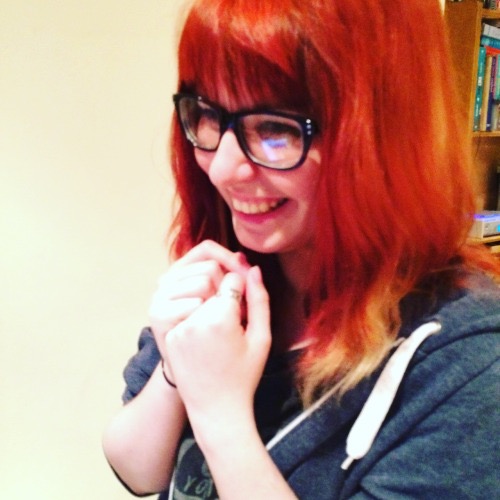
(I have no relevant photos for this post so here are a couple from around that time.)
Hannah Jane Parkinson on Mental Health and Mental Illness
Posted on July 18, 2018
Not long ago, I read an article in the Guardian Magazine and I really wanted to share it with you guys. Hannah Jane Parkinson writes about her experience with mental illness, the conversation around mental health, and how we can make real change happen. She doesn’t pull any punches, which can make it hard to read, but that’s exactly why it needs to be out there because even though we are making progress around mental health, there’s still a long way to go. And that’s what this article is about. I really recommend reading the whole thing (you can find it here) because I just cannot do it justice without posting the entire article.
The whole article is important but here are some of the most important points:
“We should normalise the importance of good mental health and wellbeing, of course. Normalise how important it is to look after oneself – eat well, socialise, exercise – and how beneficial it can and should be to talk and ask for help. But don’t conflate poor mental health with mental illness, even if one can lead to the other. One can have a mental illness and good mental health, and vice versa.”
A very important point as it’s so easy to blur the two together.
“Like the rest of the population, I instinctively love the NHS, from the junior doctors to the consultants to the community psychiatric nurses. But, really, if you asked me right now? I hate the NHS. I hate the thin film of skin on its bones. It is incompetent and ailing. I used to blame the system. Mostly it is the system: those never-ending cuts and closures; the bureaucracy; the constant snafus of communication; the government’s contempt for staff.”
This is such an important issue to talk about. I feel exactly the same way. I love the NHS and I’m so grateful that it exists: it has literally saved the lives of several of my friends. I would fight to the death for it. But when it comes to mental health and mental illness, it’s incredibly lacking. I saw so many people who either couldn’t help me because of how the system works or wouldn’t help me because they didn’t understand, or even know of, what I was struggling with. And I know many people who’ve had the same experience. It’s a really upsetting, difficult situation and there’s no simple solution.
“The truth is: enough awareness has been raised. We – the public, the health professionals, the politicians – need to make our words and actions count for more. First, the Conversation needs to be more inclusive when it comes to rarer conditions, and to people whose voices are less loud. Second, we need to recognise that posting “stars can’t shine without darkness” on social media might piss someone off in the midst of desperation and that, actually, anxiety can be a normal reaction and is different from general anxiety disorder, a serious condition. That feeling down is not the same as depression.
Then, action. Donate to Mind; volunteer as a Samaritan. Vote for politicians who aren’t going to decimate our National Health Service or who support policies that lead to greater incidences of mental health problems (because it’s not just physical; society and environment plays its part).
What does the government need to do? Hire more staff, and then more. Enough staff to provide a service that meets individual needs. That means better working conditions and pay, and not piling all funding into a single type of therapy or care path. Clinical commissioning groups need to spend money earmarked for mental health on mental health. Prescription charges for long-term conditions should be reviewed. Funding and research must be increased.”
One of the things that, I think, sets this article apart from others I’ve read is that it includes concrete steps that we can all take. So often, articles talk a whole lot about how we need to create change but then they finish without actually telling us how to do it. I finished reading this article and felt empowered, like I could actually make a difference when, usually, the situation makes you (or, at least, it makes me) feel overwhelmed and hopeless.
These are some of the big points made in the article. But as I said, go and read the whole thing. It’s a really important piece of writing.
It’s taken me a really long time to write this out because the article talks about issues that make me really emotional and because there are so many quotes that I could pull out and talk about. While our experiences of mental illness are very different, there were so many things in this piece that I related to, this one maybe most of all:
“So I am a newspaper journalist – for now. But I don’t know how long for because the illness might grip itself around me so tightly that it cuts off everything I love and hold dear, and my ability to lead a normal life.”
Thank you, Hannah Jane Parkinson, for writing such an important, moving piece.
 Finding Hope