 Finding Hope
Don’t You Lose Your Halo
Posted on June 8, 2019
The last few months have been particularly difficult, anxiety and depression wise. I came of my anti depressants and one of my anti anxiety medications with the intention of starting a new medication but starting that new medication has been a real struggle. This new low brought on by the withdrawal and the lack of meds has been possibly the worst I’ve ever felt. I’m aware that it’s affecting my thinking and my decision making but right now, the starting of a new medication just feels impossible. Just the thought of it triggers an autistic meltdown. So it’s safe to say I’m struggling.
BUT the last week has been better for exactly one reason: I got to see Maren Morris in concert! In fact, I got to see her twice! So that’s what I want to write about: seeing her and how concerts are something that can really help me when I’m feeling very low. There’s something about the energy that just lifts me, makes my body feel lighter and that’s so very valuable when I’m in this place.
My first show of the tour was Bristol. As I’ve mentioned in previous posts, if possible, I like to go to multiple shows of a tour because I get overwhelmed so easily. Seeing the show more than once allows me to really experience and enjoy all of it. Concerts are pretty much the only thing I spend money on so I’ve been very fortunate in this endeavour.

The show was incredible. I’d been feeling very, very depressed in the days leading up to the show and didn’t even want to go – it felt like it was wrong to want such a simple ‘fix’ to my low mood and like seeing such an amazing songwriter would hurt too much given that I haven’t been able to write a song in months (if not longer) – but as soon as Maren Morris took the stage, I started to feel lighter. It felt easier to breathe. She’s an incredible songwriter and performer and her voice is out of this world: I remember once describing it as sounding like a gorgeous sunset. Hearing the new songs was like hearing them for the first time and hearing the old ones was like a wave of nostalgia: they remind me of my degree, of my first trip to Nashville, of writing songs in my best friend’s living room, of a younger, less troubled version of myself.
The song that really got me was ‘A Song For Everything.’ This is what I wrote in my diary after the show:
“Given how emotional and tearful I was, I was crying by the first chorus. It just lifts my soul and makes me feel lighter, like I’m going to be okay, like I need to dedicate my life to writing a song like that and so I have to be alive to do it. I was breathless by the time the song finished.”

“I don’t often cry at concerts (it usually happens when I hear the songs again for the first time after the show) but this one just got me. My depression is the worst it’s ever been but tonight… helped. I could write a book about the emotions of the last few days but I’m so tired that even this is a struggle. @marenmorris, thank you for being there exactly when I needed you to be. Thank you for reminding me that there’s a song for everything and that maybe one of them could be written by me, but that I need to be here to write it. #girltheworldtour“
I had a day to recover before my next show, in London. At the freaking Royal Albert Hall. This is probably my favourite venue I’ve ever been to and it’s my ultimate dream to sing there one day. One can hope. And work hard. Anyway.
The day of the show, I cried all day. I was miserable, deeply, deeply miserable. I was on the edge of a meltdown all day but somehow I was holding it back because I knew if I had a meltdown, I wouldn’t be able to go to the show. Me and Richard (my best friend and writing partner) had bought the VIP packages, which meant we would get to meet Maren before the show and I couldn’t miss that. But even though I was looking forward to it, I was paralysed with anxiety. I didn’t know what to say or do and the fear of wasting the opportunity was so great that I couldn’t think. I couldn’t think my way through the problem and that was almost the worst part.
I cried all the way to London (listening to ‘A Song For Everything’ on repeat) and I only really managed to get myself together when I arrived at Victoria station. Holding onto that song helped somehow. I got to the Royal Albert Hall, met Richard, and we (all the VIP package holders) were all taken in for the pre-show Q&A and meet and greet. It went okay. I’m not gonna lie, I was actually shaking. It wasn’t specifically because I was anxious about meeting her – I’d met her on the previous tour and she’s absolutely lovely – it was more that I was worried about it going wrong, that I’d waste the experience by saying something embarrassing or meaningless. Looking back at it now, it went okay. It could’ve been worse, it could’ve been better. Maren was very sweet but I didn’t feel able to be as honest as I would’ve liked to be, for multiple reasons.
When the doors opened, we went to find our seats and discovered that we were FRONT AND CENTRE. At the Royal Albert Hall. For Maren Morris. I think that was when I first started to feel more excited than anything else – anxious, depressed, lost (“The depression was receding – just out of reach – and it felt easier to smile, even if it was a little slow and stiff.”). And all of that completely fell away when the show started.
It was one of the best shows I’ve ever been to. Maren is one of the best performers I’ve ever seen, her vocals are unmatched, and I love her songwriting more than I can properly express. The upbeat songs were so much fun and the slower songs were quiet moments filled with emotion. It might sound like any other concert (any good concert) but the energy was bigger and bolder and brighter than any other concert I’ve been to. I lost my voice long before the show was over but that didn’t stop me from singing along. And as I said in my diary, “I’m always self conscious dancing but sometimes, if all the stars align, the constant tension in my body releases and I can just move as my mood dictates. It’s not very elegant but it is fun.” She even had special surprises planned: performing ‘Seeing Blind’ with Niall Horan and bringing a string quartet (an all female string quartet!) on stage for several songs. The whole thing was magical. I never wanted it to end. But unfortunately it had to, although she closed the show with style: an amazing performance of ‘The Middle.’ Me and Richard have spent so many car journeys and writing sessions and just hours of our lives singing that song; singing it with Maren Morris from the front row of the Royal Albert Hall may be one of my favourite memories of all time.
Another snippet from my diary: “The performance was incredible and hearing everyone sing along just made my heart soar. It was all gone and I felt alive and light and happy. I was tired and achy but it was amazing.”


Getting home was hard. I had a huge adrenaline crash and all the negative emotions returned and that, combined with several unpleasant incidents on the train, had me in tears before I was even halfway home. I also struggle physically after concerts: my whole body hurts and that was starting to set in so yeah, getting home was a struggle. But I made it and my Mum was kind enough to prepare macaroni and cheese and ice cream (not together), which did help a bit. My brain wasn’t really ready to go to bed but a migraine was setting in (another side effect of concerts) so I didn’t have a choice.

“Yesterday was a very difficult day. The depression was bad; I shook, I screamed, I cried (probably seven or eight times). It was miserable. But in the evening, I got to see @marenmorris at the @royalalberthall and my god, it was like it was built for her voice. What a special artist in such a special venue. Somehow, me and @richardmarcmusic ended up with front and centre seats and the whole show was just incredible. Every second was fun, every second was amazing. I wish it could’ve gone on forever. The tears returned on the train and I cried most of the way home but I am so, so grateful to have been there, so, so grateful to have had that escape for a few hours. I will treasure those memories.”
Recovering from these concerts has been an experience. Over a week later and my back is still bothering me. But it’s an improvement: the day after the London show, I could barely walk and it took days for the limping to fade. But I’m doing better. Surprisingly, the post concert low hasn’t been too bad. Mainly, I just miss being at the show, in the show. I physically miss it. My body misses it. But I’m doing okay. These concerts have given me a lift I desperately needed and will keep me going while I take my next steps, whatever they end up being. For that, I’m incredibly grateful.
Getting A Diagnosis – The Mental Illness Edition
Posted on August 18, 2018
This is something I’ve been meaning to write about for a while but it’s such a big topic that I was very daunted by just how much I needed to include. I’d open a word document, stare at it for ten minutes, and then switch to something else. You’ll see what I mean. Getting a diagnosis is a complicated and emotional process that is so different for everyone but I had no idea how difficult it would be when we started pursuing it. So I thought I’d write out my experience just to put out into the world one version of the story. Maybe yours is similar, maybe it’s different. Hopefully you’ll get something out of it either way. And if you’re trying to get one, maybe this will give you some idea of the hurdles. I don’t want to scare anyone off; it was a brutal experience but it was absolutely life changing and life saving, both for my mental health and for who I am as a person.
I’m going to split this into two posts because although they’re linked, the processes for getting the mental health diagnoses and getting the ASD diagnosis were very different for me. I don’t know if that’s the same for everyone. This post will be about getting the mental health diagnoses.
My mental health problems became very acute when I failed an exam at sixth form in March 2013. I was eighteen and it was the first time that had happened. There’s a lot of stuff behind why that was the breaking point but I’ll talk about that in a different post. Otherwise we’ll be here forever; I’m already splitting this post in half. I hadn’t been oblivious to my mental health up until that point but I hadn’t recognised the signs for what they were; my knowledge of mental health had been pretty limited. But I’d always felt like there was something wrong with me (I now know that it’s different rather than wrong but that’s how it felt and sometimes still does feel) and I know that my depression and anxiety had been building up to that moment, that critical incident.
After that, I started seeing a psychiatrist that a family member had recommended (my GP had been unhelpful at best and distressing at worse). He diagnosed me with Clinical Depression and gave me an anti-depressant called Paroxetine to try. I don’t have enough experience to judge whether he was a good psychiatrist or not but I don’t remember feeling particularly supported by him. I only saw him a few times before I switched to a psychiatrist closer to where I lived. The Paroxetine made me incredibly sleepy; it was like they put me into a waking sleep that I still don’t feel I’ve really woken up from. I switched to Sertraline but that was even worse: I felt like a zombie and that was so upsetting that I (unwisely) stopped taking it cold turkey. That was a Bad Move, such a bad one that I still capitalise the first letter of each word. For a while I was very dissociated and then my anxiety came back, even stronger than it had been before. So I was a bit put off by medication but the diagnosis was helpful and I started going to CBT.
That ended up not being the right thing for me and the energy it took was just too much so I quit, not forever necessarily but I needed a break and we wanted to explore some of the other options. I tried several other things over the next year before deciding to try medication again. Both that first psychiatrist and the CBT consultant had been private but I couldn’t get the NHS to help me. I have to say here that I have so much (SO MUCH) respect for the NHS. It has saved the lives of several of my friends and I will defend it to the death but I don’t feel it has yet got it right when it comes to mental health. In my case, my anxiety was so bad that I found it incredibly difficult to talk to people I didn’t know. My Mum would explain the situation but we were repeatedly told that if I wouldn’t talk they couldn’t help. That was very distressing. Logistically I understand that it’s more difficult to communicate if a person can’t talk but that’s not an excuse to refuse care. The not talking was a result of my anxiety, which falls under their job description. They should’ve helped me. They should’ve at least tried. But they didn’t and I was struggling so much that we were forced to go private. I am endlessly, endlessly grateful that my family have been able to make that possible. It has, without a doubt, saved my life.
We found a new psychiatrist in the summer of 2014 and after such a horrible year, I was determined to make it work. I walked into his office, sat down, and started talking. I still don’t know how I did that. I was just as anxious as I had been before but I guess that’s desperation for you. Maybe it was my survival instinct. Anyway. My psychiatrist has since told me that he couldn’t believe I had such bad social anxiety because I had been so articulate and direct. Again, I’m putting that down to desperation (and I wouldn’t be surprised if the ability to mimic ‘normal’ behaviour – something that many girls with autism have learnt to do – came into play here too). But as I told him more, he started to understand where I was coming from and what I was dealing with. He put me on Phenelzine, which made a massive difference (I’ve written more about that here) and we continued our sessions so that he could get as much information as possible.
I wanted him to give me a diagnosis. I wanted a name for the thing (or things) that had so much power over me. I wanted to know what was really me and what was this indistinct, suffocating black shadow. I thought he’d have me do a load of diagnostic tests and questionnaires and then give me his findings but it felt more like therapy, but with a focus on my past experiences (rather than strategies to move forward). He didn’t seem in a hurry to find the answers and I didn’t know how to fast track the process. Eventually we got the deadline I wanted: my university said they couldn’t help me until they had an official diagnosis. But again, it wasn’t how I’d expected it to be and again, it was incredibly slow. Throw in that I’d just started university (which came with new people, new classes, and commuting into London) and I was under a lot of stress, as you can probably imagine. How I didn’t have more autistic meltdowns, I have no idea.
I couldn’t just do nothing. I spent hours searching the internet, looking for anything that might explain my experience. I examined diagnostic criteria and read medical papers; I scrolled through forums and took diagnostic tests. I’ve read a lot about the back and forth on self diagnosis (something I definitely want to discuss in more depth at some point) but for me, I needed a professional diagnosis, both to get the help I needed and to validate how much I’d struggled. Grouping my symptoms together and trying the strategies advised for whatever label fitted that group wasn’t going to be enough. So I used those test results as a starting point. Eventually I came across Borderline Personality Disorder and more specifically, the ‘quiet’ presentation of BPD. This means that they have many of the same symptoms (including mood swings, problems with self worth, unstable identity, and difficulties with relationships) but rather than ‘acting out’, they ‘act in’: they direct their negative emotions inwards, hiding them rather than projecting them onto others. Many struggle with issues around self hatred and self harm. If they lie or manipulate, it’s to protect themselves from perceived abandonment and they may avoid or distance themselves in relationships because they don’t want to be abandoned or because they feel they don’t deserve those connections. The ‘quiet’ presentation made a lot of sense to me because while I struggled with many of the problems associated with BPD, I rarely lash out so this felt like something to explore.
So, buoyed by momentum that discovery had given me, I took it to my psychiatrist. And he shut me down straight away. He said that I didn’t fit the criteria and moved on to something else. I didn’t understand: I was struggling with so many symptoms associated with BPD, almost all of them when you factor in the ‘quiet’ presentation. I couldn’t believe that it wasn’t worth, at the very least, a little bit more discussion. And at the end of the session, he said that he thought we’d done all we could do. I was devastated. And incredulous: we hadn’t achieved anything. If that was it, I was back to square one. Or minus one after everything the process had taken from me.
That session sent me into the worst place I’d been and after a particularly horrific meltdown, I spent several days in a fragile, barely responsive state. But once I recovered from that a bit, I got to work. I went back through my research and symptom by symptom, anecdote by anecdote, I wrote down everything I related to, everything I’d experienced, anything that could be relevant. It wasn’t that I was certain it was BPD, it was that I was certain it was something. This seemed as good an explanation as any and my psychiatrist wasn’t offering anything better.
When I was done, the document was seventeen pages. I’m pretty sure it was longer than my dissertation for university. And then we went back. I presented him with all my research and something very surprising happened. I’d hoped he’d accept it as something to explore and not only did he do that, he admitted he’d been wrong and apologised for dismissing it. Even now, that feels like a very important moment. In my experience, medical professionals aren’t naturally inclined to apologising, let alone admitting to being in the wrong. And I’d been ignored for a long time. When it came to my health, physical and mental, doctors had always looked at the most obvious option and then, when that didn’t fit, they’d just shrugged their shoulders and brushed me off. So this was a big deal.
And at the end of that session, I had my diagnosis. Or more accurately, my diagnoses. He pulled together everything he’d learned about me and diagnosed me with Borderline Personality Disorder, Anxiety, Social Anxiety, Depression, and OCD. It was a very strange experience. Momentous and anti-climactic at the same time. I felt light enough to float away but so exhausted and heavy that I wasn’t sure I could get out of my chair. I felt like I might burst into tears at any moment but I had this weird, hysterical urge to laugh. I felt invincible and incredibly fragile at the same time. Very strange.
Finally getting names for the monsters I’d been struggling with was incredibly validating. It was real. I wasn’t ‘crazy’ or ‘over dramatic’ or ‘too sensitive.’ It also made it real to everyone else. And although part of me was steadfast that something was wrong, I had started to doubt myself, having been dismissed by so many people. I was constantly fighting against falling into a well of despair, of fear that this was just going to be how life was for me. But the diagnosis confirmed that they were problems and most problems have solutions of some sort.
The diagnosis enabled me to get the support I needed at university and gave us some idea of what kind of talking therapy might help. Dialectical Behaviour Therapy (DBT) is recommended for people with BPD and that’s what I’m still doing, about three years later.


(I have no relevant photos for this post so here are a couple from around that time.)
Snapshot #1: Country2Country Festival as an Autistic Person
Posted on March 12, 2018
So, while this isn’t specifically a post about mental health, it is about how my mental health affects my life and the things that I want to do so I think it’s still relevant and maybe useful to someone else. There still aren’t a huge amount of resources for people with Autism and music festivals aren’t a naturally autism friendly situation: they’re loud and busy and overwhelming. The obvious advice is to avoid the conditions that cause you distress but when you love music and live music, it’s not that simple. This thing that I love is also a great stress. So it has to be about balance. Am I having a good time? Is this taking more than it’s giving?
So, let’s begin. For those of you who don’t know, Country2Country is a country music festival in London, Glasgow, and Dublin. In London, it’s three days at the O2 Arena with little stages throughout the complex and a big arena show in the evenings. I love country music and I love the country music community in the UK so there are a lot of positive moments but a lot of stressful ones too. I thought I’d write out a little overview of the festival, the good points and the bad, and how the whole thing fitted into the picture of my mental health and experience of Autism.


The biggest consideration for events like these is my lack of energy, especially with my recently increased struggles with fatigue. Standing is a huge part of any festival and for me, standing for extended periods of time (and by that I mean more than a few minutes) results in shaking, dizziness, and overwhelming nausea. Not to mention the disproportional levels of fatigue that build and build until I physically can’t stand up anymore. Most of the shows are standing, especially the ones during the day. And like any concert, there’s the expectation that you stand, as if standing means you care more than someone who’s sitting. My fatigue has been so bad lately that I only went to shows where I knew I could sit down and even then, I really struggled. I had to really pick and choose what I could go to and that came down to an upsettingly short list. But I was determined to enjoy what I could manage.
My 2018 C2C experience began on the Thursday night with a Songwriters’ Circle where a group of songwriters take turns playing songs they’ve written (that have often been released by other artists) and sharing stories about writing them. I love these events: they’re usually pretty laid back and very inspiring. It is one of my favourite things to hear songs as they were originally written and to hear how they turned from nothing into something. I was almost at the back but I was just so happy to be there. The line up was Brett James, Luke Combs, Nicolle Galyon, Kip Moore, and Natalie Hemby who is one of my all time favourite songwriters so I was very excited and they did not disappoint. They played old favourites as well as new songs but I think everyone agreed that Natalie’s performance of her song, ‘Jealous,’ recorded by Labyrinth, completely stole the show. Although I must also give an honourable mention both to Nicolle’s performance of ‘Consequences,’ recorded by Camila Cabello, and Luke Combs’ new songs. And to round off the night in the most perfect fashion, I managed to hang out with Natalie for a few minutes after the show and she was even lovelier than I remembered. So with that as a first night, the standard was set pretty high!


My excitement was so high that I did crash afterwards. I was completely overwhelmed by nausea twice on my way home, to the point where I had to sit on the ground and just breathe until it faded. This is one of the side effects of my most recent medication (for depression) and it’s one of the worst I’ve experienced but once it passed, I was okay. The emotional energy I get from live music and from being inspired and from talking to these wonderful people is unlike anything else. I could live off that night for days, even weeks, and that’s without the rest of C2C. It’s like feeding a dying fire; I come back to life.
Having had to go back home to Brighton, Day 1 of C2C began with travelling into London. My first event of the day was a very exciting one: an exclusive listen to The Shires’ upcoming album. I’d applied for a ticket and not gotten one but one of my friends in the UK Country community offered me their plus one. I can’t put into words how much that meant to me. I’ve been listening to The Shires since their first single came out and I actually went to one of the events they held when releasing their first album. I’ve already said it but I absolutely adore the UK Country community: I’ve met so many wonderful people (and now great friends) while queuing for gigs or while waiting in meet and greet lines and it is just the kindest, most generous group of people. For this event in particular, I saw so many people offering their tickets to people they knew desperately wanted to go and I was so touched to witness that. Personally, I had three people offer me a ticket because they all knew how much I wanted to be there. How amazing is that?! You’ll get no spoilers from me but it was better than I’d hoped it would be and I felt honoured to be there. Ben and Crissie are such lovely people and it has been so special to watch their journey up to this point. I’m honestly so excited to listen to all of these new songs over and over when the album comes out.
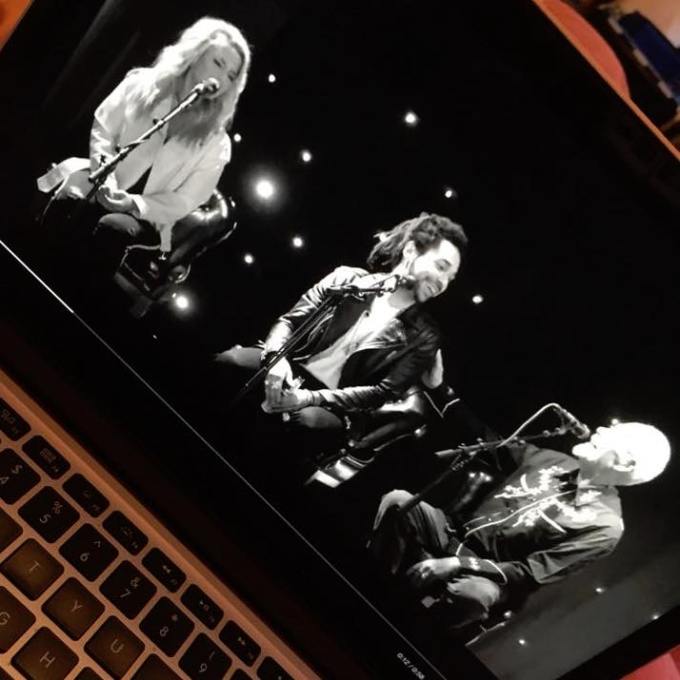
We weren’t allowed to use our phones in the session so, for the purposes of this blog post, I took a photo of The Shires appearing in the official highlights video.
I genuinely loved hanging out with everyone and catching up afterwards but it wasn’t long before I started to struggle. I powered through for a while but when my legs started to shake, I had to call it and headed back to where I was staying, although I did have to sit in North Greenwich station for a while because the shaking and dizziness got so bad. I would love to be able to wander around and spend the day listening to artist after artist but it’s just too much for me: my lack of energy, the constant high level of noise, and the overwhelming amount of people. With the latter two, it’s like my brain becomes overloaded and that can trigger a meltdown. I haven’t written about meltdowns very much so far on this blog (although I mentioned them here – a more in depth post is on the list, I promise!) but one way to explain it would be to imagine tapping on glass that has a crack in it. While one knock doesn’t do much damage, they build up and eventually it shatters. That’s how incoming sensory information feels to me. When I reach overload, I experience extreme anxiety and that can lead to crying, screaming, self harming, etc. Obviously that’s not something I ever want to experience in public, with people that I don’t know, where I don’t feel completely safe, so I have to be aware of how close to that point I am and retreat to a safe place when everything starts to feel too much. I went back to where I was staying and had a couple of hours of quiet time before heading back to the O2 for the arena show.
Kelsea Ballerini was my priority with Tim McGraw and Faith Hill’s headline set coming in second; I would have to assess my capabilities throughout the night. Getting into the O2 Arena always stresses me out: there could be a problem with the ticket, they might not let me take my bag in, the metal detector could go off and they’d want to pat me down… All of those things cause me a lot of anxiety before going into a concert but fortunately everything went smoothly this time (having said that, that anxiety still takes a lot out of me, even when the things I’m worried about don’t come to pass). It always surprises me that people can’t seem to tell how anxious I am because to me, it’s everything. It’s all I can think about. But as I said, it was simple, so that anxiety didn’t turn into anything else.

“Can I be Kelsea Ballerini when I grow up? What a fab show. I loved every second of it. I may have cried a little bit because I want to write songs and sing them too and I want it so badly but that’s not necessarily a bad thing. We are made to love things and I love music unapologetically.” (x)
Kelsea Ballerini was fantastic. I’ve now seen her three times in the last year and she’s such a great performer. I got completely lost in it and that was wonderful, even if I did cry a bit because I want that to be me so badly – that’s not something I can ever really separate myself from. But I had a really awesome time, and I actually managed to lose myself in the music and not feel so self-conscious about enjoying myself. Normally, I can barely move for feeling so exposed to everyone’s opinions. So that was really fun. Also, we all need someone to look at us the way Kelsea looks at her audiences…


By the end of her set, I was feeling very shaky and since I wanted to be well enough for Sugarland the next night (I’ve been waiting eight years to see them live!), I decided to go home. That was derailed a bit by some stuff going on with a friend that didn’t exactly help my anxiety and by the time I got home, I was completely exhausted. As is normal after days and evenings of high emotions, it took me a long time to get to sleep but then I slept so deeply that when I woke up, I was so disorientated that a week could’ve passed. Apparently the previous two days had tired me out more than I’d thought because I slept for most of the day and only really managed to get up in time for the arena shows. I was pretty shaky and anxious but having some of my family with me definitely helped.

Sugarland were freaking awesome. One of my parents played me a few Sugarland songs about eight years ago and ever since, I’ve absolutely loved their voices, their songs, and their energy. If I’m jamming out in the car, it’s most likely to a Sugarland song. So we were both super excited when they announced that they were getting back together and even more so when they were on the line up for C2C. We sang and danced (while sitting down) through the whole thing and it was so, so fun. It couldn’t have been better. I mean, there were more songs I wanted to hear but I do understand that they couldn’t just keep playing until they’d performed their entire repertoire. Mostly… Anyway, I was and am a very happy bean for having finally seen them live. It was a dream come true.


“I didn’t think I could love Sugarland any more than I already did but after last night, I absolutely do. The show was incredible and after waiting eight years, it was a dream come true. Apologies to the people behind me for all the crazy dancing and dramatic singalong.” (x)
The headline act of the night was Kacey Musgraves who I have loved since her first album. When I bought my tickets, I decided that I wanted to see her more than anyone on the Sunday so I decided to push myself to stay for her and then not go the next day. I was okay with that trade off and it was worth it. I’d sort of forgotten how much I love her and her writing style and it was so great to hear both my old favourites and some new songs from the upcoming album. I struggled a bit with the graphics on the screens; they made me a bit dizzy and gave me a headache. But it was a great show and I can’t wait for her to come back to the UK in October. I was worried about being in the underground with masses of people so we left a little bit early and had a relatively easy journey home.
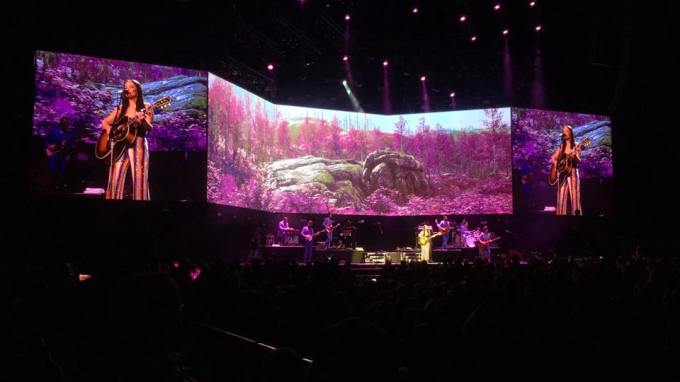
“Kacey Musgraves is a princess. I’m loving the new songs.” (x)
It was a good weekend, if a tiring one. I spent the next day in bed, tired and achy and a bit overly emotional, but that’s not an unexpected consequence of an event like this. It takes a lot out of me, on lots of different levels. Because of all the thinking and restricting and careful planning, it wasn’t too bad but I wish it were easier. I wish I didn’t struggle so much and I wish my abilities and my needs weren’t so incompatible with the way the world typically works. Being out in the world is stressful and overwhelming and most places don’t come with a built in quiet room to hide out in while I recharge. It doesn’t help that I find it really difficult to ask for support. I feel like I’m failing for succumbing to these problems and that I should be strong enough to power through, which I think comes from being diagnosed so late: I’ve spent my life thinking this way and it’s not an easy habit to break.
I hope that this has been helpful, or at the very least gives an insight into what it can be like to go to a festival such as Country2Country when you have Autism, when you struggle with your mental health. The positive moments are unrivalled but the difficulties are freaking difficult.
 Finding Hope