 Finding Hope
Creative Difference: Exploring Art And Autism
Posted on October 24, 2020
Recently I attended a webinar hosted by the Autism research charity, Autistica, about the relationship between Autism and art and it was really interesting. The panelists were Professor Jonathan Green (Autistica Trustee, Professor of Child/Adolescent Psychiatry at Manchester University, and artist), Sarah Jane Bellwood (artist and gallery owner), Lizzie Huxley-Jones (editor and author of Stim: An Autistic Anthology), and Jane Elizabeth Bennett (multi-disciplinary artist and researcher).
Each person introduced themselves and then the discussion began. I found the whole thing really fascinating so I thought I’d pull a few quotes from the video that I thought were particular highlights, but I thoroughly recommend watching the whole video to hear all of the points made.
So here are some quotes that I found really interesting…
JANE ELIZABETH BENNETT: “I think art is the first language that I really kind of learnt. So, for me, art is a way to speak, it’s a way to communicate, it’s a way to convey emotion, and they’re not always things that I’m fantastic at doing in a kind of neurotypical way. For me, art is a very atypical way of communicating. You do it through colour, you do it through gesture, you do it through sound.“
I love this description of art and it’s something I really relate to as an artist. I definitely use my songwriting to tell stories and relay experiences and share emotions. I do that through the lyrics, through the melody, the vocal performance, the arrangement and instrumentation, as well as the production. While, for me, the song is the piece of art in its purest form, the performance, the arrangement, and the production are all a vital part of conveying and enhancing the emotional experience. I definitely experience Synaesthesia to some degree: sounds have colours (and some even have specific tastes) as do emotions and so a big part of my process is trying to bring those experiences together; I’m often only happy with a song when the emotions, sounds, and colours are completely in sync.
JONATHAN GREEN: “And I was totally absorbed in doing this drawing, like nothing else existed except what I was doing. And I came out of it an hour or two later or something and I think I felt, ‘That’s the most real thing that’s happened to me for a long time… is that connection, with that plant through drawing.’ And I think that’s, for me, why I held on to it… was that it felt… it gave me an access to something that was so real… It’s allowed me to feel really real.“
Having just written and finished a song is when I feel most real, most alive. Sometimes I feel like I don’t really exist and when I finish a song I’m proud of, it’s like a realisation that I really do exist. It’s the only time I feel in sync with the universe. I never feel so connected to myself as when I finish a song, or to other people as when I perform a song I’ve written and they respond to it. We’re all in this single moment, experiencing this thing together and it’s magical.
LIZZIE HUXLEY-JONES: “We should have the space within an industry to create whatever we want.“
JANE ELIZABETH BENNETT: “I think it’s very important that as an autistic artist… it’s very important to have that space to make work that isn’t about Autism. Just because I’m autistic doesn’t mean I have to be, like, the voice of Autism but I think my Autism – just as a personality or as a writing style – is gonna be inherent in the work I make.“
LIZZIE HUXLEY-JONES: “The way I describe it is, ‘we experience everything autistically so why wouldn’t everything we create be a little bit autistic as well?‘”
I think these are really important points: just because we’re autistic, it doesn’t mean that we have to create art about being autistic. Many do because it’s an outlet for their individual experiences or because it’s a way to make sense of themselves but we should never be pigeon holed into just creating Autism related work. How much space Autism takes up in our lives is different for everyone and we obviously feel and experience unrelated things that we want to make art about so not all autistic artists will choose to make art about Autism. But as Jane points out, being autistic likely will influence the work we make because it influences the way we perceive the world. Day to day that can be incredibly frustrating but when it comes to art, it can be something that makes our work special and different.
JONATHAN GREEN: “I think, for me, making art or the process of making art does help me make sense of things or sort my mind out in some way. I always feel, kind of, more in harmony after I’ve been making art. Internally, you know? Kind of rebalanced, or something like that.“
I can absolutely relate to this. I definitely feel most calm, in mind and body, when I’ve just finished a song. It’s not too far from the experience I described earlier, about feeling real and alive and in sync. I also feel this real sense of inner calm. It’s like everything within me has been shaking and it’s suddenly stopped. It’s like all these disconnected pieces have come together and everything makes sense. It’s not dissimilar to how I imagine getting high feels.
There were a couple of things that bothered me though. I felt like having three visual artists and one writer wasn’t the best representation of artistry; they could’ve had a musician or sound artist, an animator, a photographer, etc and that would’ve created a more varied discussion because the forms of art were more varied. The discussion was really interesting as it was but I think a wider variation of art forms would’ve only added to that.
There was one thing specifically that I really didn’t like and that was the repeated use of the word ‘obsession’ in place of ‘special interest,’ the term more commonly used in Autism. I know that some people don’t like the phrase ‘special interest’ (I must admit I don’t love it) but I don’t think that that’s a good reason to revert to the word ‘obsession,’ a word that has some very negative connotations. Various definitions of ‘obsession’ involve the terms ‘unhealthy’ and even ‘disturbing’ and while I can’t speak for anyone else, I find those associations with my special interests uncomfortable and actually upsetting. I’ve had a handful of special interests in my life and none of them have been unusual in subject (animals, writing, singing, songwriting, to name some), but the intensity of that interest and fascination is what stood out. Definitions of ‘obsession’ also include the idea that they dominate a person’s thoughts, that they have control over you (which links back to the idea that they’re unhealthy), which, again, I personally wouldn’t associate with my special interests. While I think about my special interest – songwriting – a lot and would prefer to spend all of my time doing it, I can think and do other things and I can recognise when I’m spending too much time doing it and neglecting the other areas of my life. And during my research into the difference between ‘obsession’ and ‘special interests,’ I found several articles about how helpful and positive engaging with special interests are for autistic people (here and here). In the former, the writer, Laina Eartharcher, makes many good points that I feel I should quote rather than attempt to paraphrase:
- “They soothe and calm me.”
- “My interests do not dominate my thoughts the way that is consistent with an obsession. It’s not like I can’t think about–or talk about–anything else. It’s not like I can’t set my other interests aside and focus on my daily work. It’s not like I can’t get anything else done. If my interests were indeed obsessions, none of that would be true; my life outside of the interest would have come to a full stop.”
- “For me, it’s all about relaxation and curiosity. I want to learn, focus, explore. And I want to do so in depth, with a sense of completeness. I don’t want pieces of the picture, I want the whole picture. I want to connect dots. I want to reach understanding. I want to feel solid in my knowledge. Tidbits and soundbites just don’t do it for me. They’re pointless and unsatisfying. It’s like, what’s the point of spending time gathering a bunch of soundbites and headlines? Meh. Give me the whole story, or don’t bother me with it.”
- “I would like to see the ‘obsession’ association fall out of favor. It’s not accurate. It’s not nice. It lacks understanding.”
I relate to all of these statements and fully agree with her. ‘Special interest’ may not be the perfect word but the use of ‘obsession’ can be damaging and create misunderstandings about Autism. So it did really bother me how many times this word came up and the fact that it was never addressed, even briefly. I want to talk about special interests more in the future – I think it definitely deserves its own blog post as a subject – but as it came up here, I felt like it was important to talk about.
But that issue aside, I found the webinar to be a really informative, enjoyable experience and I look forward to similar events that Autistica puts on. I’ve followed several of the speakers on social media and have enjoyed delving deeper into the work they’ve created. As an autistic person, I’m always intrigued by the work of other autistic people and to what degree they experience and interpret the world in the same way I do and then (if they do) how they translate that into art.
Category: autism, book, diagnosis, emotions, music, response, tips, uncategorized, video, writing Tagged: actuallyautistic, art, art and autism, artist, artists, asd, author, autism, autism spectrum disorder, autistic, autistic adult, autistic artist, autistica, communication, creative difference, creativity, emotion, exploring art and autism, jane elizabeth bennett, jonathan green, laina eartharcher, language, language of autism, lizzie huxley-jones, music, obsession, obsessions, perspective, quote, quotes, representation, sarah jane bellwood, songwriting, special interest, special interests, synaesthesia, webinar, writer
Mourning A Public Figure
Posted on September 8, 2020
Last week was the two year anniversary of Claire Wineland’s death. She was a twenty one year old activist, raising awareness around Cystic Fibrosis and founding Claire’s Place Foundation to support children with Cystic Fibrosis and their families. She spoke at many conferences (including TEDx and the International Respiratory Convention and Exhibition) and posted multiple videos on YouTube, talking about her illness but also her life and her thoughts on various subjects.
In 2018, she went into hospital for a double lung transplant. I remember watching the Instagram Live where she announced that she’d received the call as she dashed around her home, gathering everything she needed. It was so exciting and I was so happy for her. She had the surgery and everything seemed to be going well. But then she had a stroke and a week later, according to her advanced directive, was taken off life support. She died on the 2nd September 2018 at the age of twenty one. I wrote several posts about her, including one in remembrance.
I was deeply upset at the news of Claire’s death. When I discovered her YouTube videos in mid-2017, I instantly fell in love with her personality, her eloquence, her thoughtfulness. I really felt a lot of the ideas she expressed and despite the fact that we’d had very different life experiences, it felt like we had something in common, something in the way we thought and felt. And despite only having a few interactions on Twitter, I felt a connection to her – obviously not the same connection as the ones I have with my friends, for example, but a connection nonetheless. She had a big impact on my life and when she died, I felt like I could feel the edges of the space in which she’d previously existed, like there was a hole where she’d been. It was a very distressing feeling.
Two years later and I still feel her loss. She was so full of life. You know how some people just seem bigger than others, have minds somehow more infinite, have something extra special about them? That was always the way Claire felt to me. I’d felt so sure that I’d watch her go on to do even more great things. Her death felt so unfair and it still does. It still hurts. The documentary about her, CLAIRE, came out on the first anniversary of her death and as much as I want to watch it, I haven’t been able to. It’s just felt too hard. One day, I will but I just haven’t felt ready.
Over the last few years, I’ve had several similar experiences. The first, I believe, was Cory Monteith in 2013. I was still watching Glee at the time and he was so young; his death was so sudden. Then there was David Bowie, who has always been incredibly important to my brother, and Alan Rickman, who had been a consistent presence in my life through his role in the Harry Potter films. If you’ve read previous posts of mine, you’ll know how important Harry Potter has been throughout my life. And more recently, there have been the deaths of Cady Groves, a singer I’ve been a fan of for a decade, and Naya Rivera, another Glee alumni.
I struggled with each of these deaths, all of these people having had an impact on my life. But I think the only death that has had as dramatic an effect on me as Claire Wineland’s was that of Christina Grimmie. I’d been following Christina on YouTube for years; I just fell in love with her voice and her piano playing, how unapologetically herself she was. She was about my age and pursuing music so it’s not surprising that I related to her. But with managing both my mental health and university, I’d fallen behind on a lot of people in my social media bubble, Christina included. Then I woke up one day and she was gone; I still remember the moment I found out. I was stuck in a state of paralysed shock for days and I had nightmares that went on for months. Much like with Claire, I felt like there was a hole in the fabric of the universe where Christina had been, should still be. Even now, I still think of her often.
Grieving for a celebrity or public figure can feel like a bit of a minefield, I think. There’s the internal conflict: you didn’t know them personally but the feelings are still very powerful. Plus there are always people ready to tell you that you don’t have the right to mourn someone you never actually knew and because you didn’t know them, whatever you’re feeling can’t be grief. But personally, I don’t agree.
Grief is an incredibly complex emotion. I don’t think anyone truly understands it. Personally, I wouldn’t classify it as a single emotion; I see it more as an umbrella term, a checklist of things you may experience although you won’t necessarily experience all of them. I don’t think there’s a big enough word to describe what we go through when we’re grieving. It’s a natural disaster, an emotional natural disaster. It’s so complicated and having lived through both the losses of people in my life and public figures I cared (and still care) about, it’s my experience that the two are definitely different (having said that, we could have a whole other conversation about how the grief for each person is completely different) but that they’re both real and they’re both profound.
I definitely want to write more posts about grief but I want to keep this one to the grieving of a public figure. As I said, it is, of course, different to losing a person who is physically in your life but if you feel a connection to someone, it is inevitable that their death will be painful. As far as I’m concerned, that connection is the key. Whether they’re an actor, singer, writer, activist… they’re all reaching out, with their stories, their songs, their words. They’re reaching out with the intention of creating a connection with another person, a person who finds meaning in what they have to say. And I think it’s fair to say that – often – the deepest connections are the ones that are built from the most personal places (for example, their presence or their work has gotten you through a difficult time, you relate strongly to something they’ve said or created, etc). So of course we would feel the loss that connection. Of course it would be painful and distressing and maybe even traumatic.
And then there’s the moving forward to consider. There will always be things that remind you of them, such as events they would go to or public appearances they’d make. And in the case of creatives, yes, we will always have their past work but that may be difficult to consume again: the emotions and memories associated with them may be overwhelming; it may be painful because it reminds you that they’re no longer here; if they helped you through difficult times, it may be difficult knowing that they won’t be there to help you through any future hard times; knowing that they’ll never create or release anything new may be distressing, especially when the release of new work was a big occasion in your life.
I think that the only way to truly move through an event like this is to talk about it or, at the very least, express your emotions:
- Hopefully your loved ones will understand what you’re going through, especially if you’ve mentioned this person before or they’ve seen or heard you consuming their content, whether that’s listening to their music, watching their videos, or reading their works. If you can talk to someone close to you and at least get your emotions out of your body; sometimes I think that keeping the emotions stored inside your body only makes them harder to shift further down the road. (If someone you don’t feel comfortable telling the whole truth asks you why you’re upset, you can always tell them that a friend or someone you know has died – that will explain your mood and they’re unlikely to ask too many questions.)
- You can express your feelings on social media, if you feel comfortable sharing with an unknown audience. Sometimes that can be too scary but sometimes it can be cathartic to put your thoughts out into the world, not knowing where they’ll go or who they’ll reach.
- You can write a letter to the person who has died. I’ve always found writing to be a good way of getting my emotions out. If you want to, you could post it online if you keep a blog or something similar, or you could simply keep it for yourself as a reminder of what they meant to you and everything you felt at that particular moment in time. When it comes to such an emotionally charged moment, in the future you may want to remember everything about the experience. You may not, of course, but you can’t know that in the present moment.
- I’ve always found journaling to be very helpful in coping with and managing the ebb and flow of my emotions. Since it’s just for me, I can feel and say whatever I like without fear of judgement, which I think allows me to move through each emotion with less friction. Putting words to what I’m feeling somehow makes it all easier to process and work through. It doesn’t necessarily mean those feelings go away, but the strength of them does become easier to cope with. And then at some point, they simply become a part of you, a piece in your mosaic.
I’m sure there’s more to say. When it comes to grief, there always is. But I think I’ll leave it there. I hope you leave this post knowing that whoever or whatever you grieve for, your grief is valid and I hope that, if you’re going through any kind of grief, that you’ve found some way to manage it and/or that you have people to support you. I’m not sure if it ever goes away but it does change. Life goes on, even if it feels unbearably unfair. So carry with you the gifts they gave you and try to do some of the good that they would be doing were they still here.
Category: about me, death, emotions, event, life lessons, music, tips, video Tagged: alan rickman, blogging, cady groves, celebrity, christina grimmie, claire, claire wineland, claire's place foundation, cory monteith, cystic fibrosis, david bowie, death, documentary, emotion, emotions, feelings, future, glee, goodbye letter, grief, grieving, grieving for a public figure, grieving process, human connection, journaling, letter, letter writing, loss, mourning, mourning a public figure, moving forward, naya rivera, pain, processing emotions, public figure, rest in peace, rip, sadness, sharing, shock, social media, stages of grief, support, support system, talking, tips, video, writing, youtube, youtuber
About Me
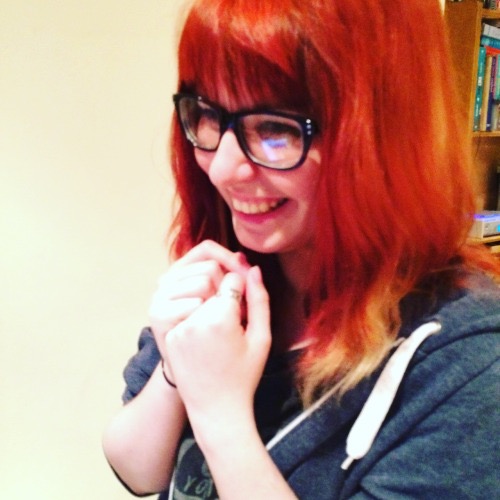
Hi! I’m Lauren Alex Hooper. Welcome to my little blog! I write about living with Autism Spectrum Disorder (ASD), ADHD (Inattentive Type), and Hypermobile Ehlers-Danlos Syndrome (hEDS), as well as several mental health issues.
I’m a singer-songwriter (it’s my biggest special interest and I have both a BA and MA in songwriting) so I’ll probably write a bit about that too.
My first single, ‘Invisible,’ is on all platforms, with all proceeds going to Young Minds.
My debut EP, Honest, is available on all platforms, with a limited physical run at Resident Music in Brighton.
I’m currently working on an album about my experiences as an autistic woman.
Links
Categories
Recent Posts
Archives
- April 2026 (1)
- March 2026 (3)
- February 2026 (1)
- January 2026 (1)
- December 2025 (1)
- August 2025 (1)
- July 2025 (1)
- June 2025 (4)
- May 2025 (3)
- April 2025 (2)
- March 2025 (1)
- February 2025 (1)
- January 2025 (1)
- December 2024 (2)
- November 2024 (1)
- October 2024 (1)
- July 2024 (1)
- May 2024 (1)
- April 2024 (3)
- March 2024 (1)
- January 2024 (1)
- December 2023 (4)
- November 2023 (6)
- October 2023 (5)
- September 2023 (6)
- August 2023 (4)
- July 2023 (5)
- June 2023 (5)
- May 2023 (7)
- April 2023 (4)
- December 2022 (4)
- November 2022 (1)
- October 2022 (1)
- September 2022 (1)
- August 2022 (3)
- June 2022 (2)
- May 2022 (6)
- April 2022 (10)
- March 2022 (9)
- February 2022 (3)
- January 2022 (1)
- December 2021 (7)
- November 2021 (5)
- October 2021 (7)
- September 2021 (4)
- August 2021 (1)
- July 2021 (2)
- June 2021 (4)
- May 2021 (10)
- April 2021 (11)
- March 2021 (14)
- February 2021 (6)
- January 2021 (6)
- December 2020 (8)
- November 2020 (9)
- October 2020 (8)
- September 2020 (10)
- August 2020 (8)
- July 2020 (4)
- June 2020 (6)
- May 2020 (8)
- April 2020 (7)
- March 2020 (9)
- February 2020 (5)
- January 2020 (7)
- December 2019 (7)
- November 2019 (1)
- October 2019 (1)
- August 2019 (1)
- July 2019 (2)
- June 2019 (3)
- May 2019 (5)
- April 2019 (5)
- March 2019 (5)
- February 2019 (6)
- January 2019 (5)
- December 2018 (7)
- November 2018 (3)
- October 2018 (5)
- September 2018 (5)
- August 2018 (5)
- July 2018 (9)
- June 2018 (7)
- May 2018 (7)
- April 2018 (6)
- March 2018 (11)
- February 2018 (5)
- January 2018 (6)
- December 2017 (7)
- November 2017 (7)
- October 2017 (7)
- September 2017 (6)
- August 2017 (5)
About Me
Hi! I’m Lauren Alex Hooper. Welcome to my little blog! I write about living with Autism Spectrum Disorder (ASD), ADHD (Inattentive Type), and Hypermobile Ehlers-Danlos Syndrome (hEDS), as well as several mental health issues.
I’m a singer-songwriter (it’s my biggest special interest and I have both a BA and MA in songwriting) so I’ll probably write a bit about that too.
My first single, ‘Invisible,’ is on all platforms, with all proceeds going to Young Minds.
My debut EP, Honest, is available on all platforms, with a limited physical run at Resident Music in Brighton.
I’m currently working on an album about my experiences as an autistic woman.
 Finding Hope