 Finding Hope
A Fibromyalgia Diagnosis Was Not On My 2023 Bingo Card…
Posted on September 9, 2023
I’ve been trying to write this post for a couple of weeks now but I’ve been finding it difficult to accurately describe my feelings about the whole experience. To cut a long story short, I have been diagnosed with Fibromyalgia (on top of the Hypermobile Ehlers-Danlos Syndrome and Chronic Fatigue Syndrome) but, given my traumatic history with doctors and the medical system, it’s left me feeling shaken up and vulnerable…
Several weeks ago, I went to the hospital for an appointment with the Rheumatology Department. It was my annual follow up, post my diagnosis and then confirmation of Hypermobile Ehlers-Danlos Syndrome, despite it being a different hospital, a different doctor, and having had no support for it since the diagnosis. I was, let’s say, perplexed by the purpose of the appointment, given the lack of contact with them but apparently the appointment was important to insure that I wasn’t discharged from the system; I’m not entirely sure how being in the system is helpful (given the lack of contact and support) but I wearily (and warily – I’ve had so many traumatic experiences at the hands of medical professional that just walking through the door can trigger a panic attack or a meltdown) agreed to go.
I’m not sure the doctor knew exactly what the purpose of the appointment was either because he meandered through a series of questions without an apparent destination. But when he asked about pain and I described the ebb and flow of the chronic pain I live with day-to-day, he started talking about Fibromyalgia, whether I’d heard of it, and whether I’d ever been assessed for it. I told him that I had been and wasn’t found to have it, a snarky comment – “I thought doctors didn’t believe in Fibromyalgia” – slipping out. Over the last decade or so, my apprehension (read: trauma response and resulting severe anxiety) in medical situations tends to manifest either as becoming non-verbal or triggers a snarky, provocative attitude (depending, I think, on whether I’m more upset or angry – what determines that, I’m not really sure). That day, apparently, the snark was winning out. I don’t particularly like this about myself but the emotions are always so overwhelming that I feel about as in control of it as I do the non-verbal periods – as in, not at all. My therapist and I are talking about it but sixteen years of traumatic experiences aren’t going to be solved in a handful of sessions. Fortunately the doctor didn’t seem offended.
He asked me to fill out a couple of questionnaires and I scored ridiculously high on both of them, indicating Fibromyalgia. He asked me a few more questions and then had me lie on the gurney, pressing on the Fibromyalgia Tender Points and rotating various joints. To his credit, he told me exactly what he was going to do before he did it – with the explicit option to say no – and he was as careful and gentle as was probably possible while still learning was he needed to. Usually an appointment that involves a medical professional touching me ends in emotional disaster (panic attacks, meltdowns, etc) and while there’s no world in which I could describe myself as relaxed during the exam, it didn’t end in tears, literally or figuratively. He also carefully examined my hands, given how much pain I have in them. He couldn’t find anything specific but acknowledged that that didn’t mean there wasn’t a problem and said he’d arrange an ultrasound to be sure. That surprised me; in my experience, most doctors stop at not finding a problem. I don’t think I’ve ever had a doctor run tests ‘to be sure.’
He diagnosed me with Fibromyalgia (my thoughts on that in a moment) and ran through the (limited) available options. He listed various medications to manage the pain, none of which I can take due to previous bad reactions or because they’re contraindicated with my anti-depressants; he said he’d look into some funding for more hydrotherapy since the NHS only gives you maximum two, although I’d be very surprised if he managed that; and he said he’d refer me to an inpatient centre that specifically takes people with hEDS (but just the thought of the inpatient format makes me very anxious, unsurprising as an autistic person who finds change difficult to say the least). So I don’t feel particularly convinced by any of that but I have to give him credit for trying; I don’t usually get even that.
So, according to at least five different doctors, I have Chronic Fatigue Syndrome, Chronic Pain, Hypermobile Ehlers-Danlos Syndrome, and now Fibromyalgia. These conditions can and do exist together but I remain unconvinced that I have all of these conditions when so many of the same symptoms occur in all or multiple conditions, such as pain (in both joints and muscle), muscle stiffness and/or weakness, severe fatigue, difficulty sleeping, difficulty with concentration and memory, headaches, heart rate irregularities, dizziness, and low mood. I feel reasonably sure about the hEDS – given the joint hypermobility and instability, as well as the autonomic dysfunction, the postural tachycardia (and the connection with neurodiversity makes for an even stronger case) – and I definitely struggle with something or some things that involve severe pain and severe fatigue, but I don’t know how to be sure which diagnosis or diagnoses those fall under. In an ideal world, I’d be able to trust these doctors and the diagnoses they bestow upon me, even if the number of them and the overlap of symptoms feels unlikely (to my admittedly untrained eye). But my experience and the trauma I live with as a result of how medical professionals have treated me, reinforced by the all but unanimous lack of support, has left me unable to trust them and trust them with something as precious and fragile as my health, physical and mental. So I find it very, very hard to take any of them at their word and then to believe that they’ll do what they say they’ll do; I’ve long stopped having expectations.
Even though I remain skeptical about the Fibromyalgia diagnosis and the options I’ve been presented with, I was reassured a little when the doctor asked if I’d mind having a series of blood tests done (including ones for thyroid function, liver function, and cortisol) and more so when he was happy to include a couple more – ones relating to my ADHD – that I’d been waiting to ask my GP about; I was more than a little taken aback that he was listening and willing to help, even though it wasn’t a part of his job. I was surprised again when he rang to check whether there were any problems because he was still waiting on the results (I’d had to postpone the tests when I was felled by an ear infection); that’s a diligence I’ve seen so rarely that I could probably count the occasions on one hand. So I am grateful for that, even though I find it unsettling, even though the whole thing was very stressful.
A new diagnosis (and yet more time in medical establishments with medical professionals) isn’t a road I wanted to go down and the confusion and internal conflict over how Fibromyalgia fits into the picture (especially since I’ve been told in the past that I don’t have it, making the whole thing even more confusing) have been really draining; my anxiety has been running high, especially around medical stuff (which made going to the doctor for the aforementioned ear infection a difficult and distressing experience). I’ve been talking to my therapist a lot about these experiences (more on this in a separate post, I think) but, given how long this traumatic cycle has been going on, it’s not something that I can simply deep breathe my way through. No, it’s going to take rather more than that, I think.
World Mental Health Day 2021
Posted on October 10, 2021
‘MENTAL HEALTH IN AN UNEQUAL WORLD’
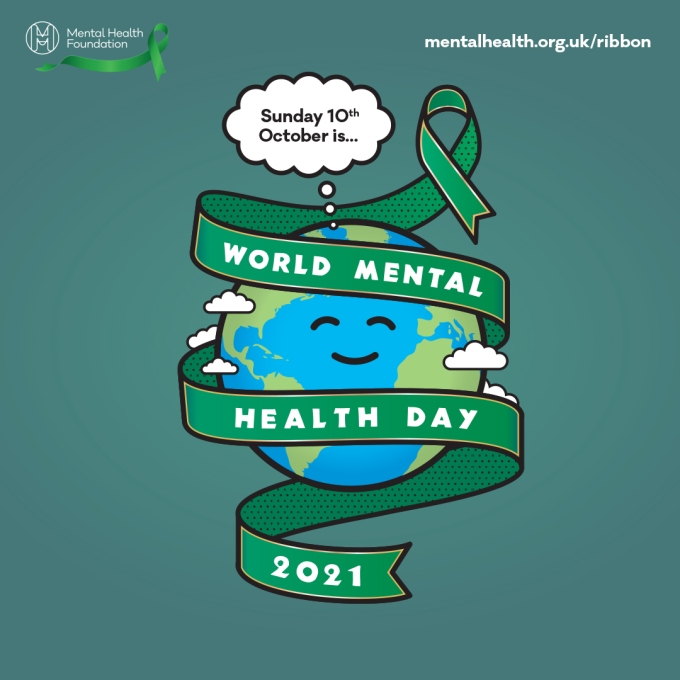
As I’m sure many of you know, today is World Mental Health Day and the theme, chosen by the Mental Health Foundation, is ‘mental health in an unequal world.’ WHO seems to be building it around the pandemic, rather than as a problem of its own, but from what I’ve seen in the newsletters and on the social medias of many mental health charities and organisations, most seem to be following the lead of the Mental Health Foundation.
According to the Mental Health Foundation’s website: “2020 highlighted inequalities due to race and ethnicity, sexual orientation and gender identity, and the lack of respect for human rights in many countries, including for people living with mental health conditions. Such inequalities have an impact on people’s mental health. This theme, chosen for 2021, will highlight that access to mental health services remains unequal, with between 75% to 95% of people with mental disorders in low and middle-income countries unable to access mental health services at all, and access in high income countries is not much better.” It goes on to say: “Many people with a mental illness do not receive the treatment that they are entitled to and deserve and together with their families and carers continue to experience stigma and discrimination… The stigma and discrimination experienced by people who experience mental ill health not only affects that person’s physical and mental health, stigma also affects their educational opportunities, current and future earning and job prospects, and also affects their families and loved ones.”


Statistics provided by Mind (x)
I have my own experience with the mental health system – which I do want to touch on – and have heard from many others about their experiences but I wanted to read into the research around these inequalities further, both to get a better factual understanding and to put my own experience in context (beyond an anecdotal one). The research is sporadic at best but here are some of the statistics I found…
ACCESS TO MENTAL HEALTH CARE
- “NICE [The National Institute for Health and Care Excellence] recommends that people should be able to access services when they need them. However the proportion of people who felt they had definitely seen NHS mental health services enough for their needs reduced from 47% in 2014 to 43% in 2018.” (x)
- In 2020, it was reported that approximately 1 in 3 people who experience mental health problems are able to access the support they need. (x)
From these statistics, it’s clear that far too many people aren’t getting the support that they need.
INEQUALITIES IN ACCESS TO TREATMENT (x)
- For those with common mental health problems, 36.2% reported receiving treatment.
- Women are more likely than men to receive treatment for all mental health conditions, with 15% of women receiving treatment compared to 9% of men.
- Young people aged 16-24 were found to be less likely to receive mental health treatment than any other age group.
- White British people are more likely to receive mental health treatment (13.3%) compared to BAME groups (7%). The lowest percentage of people receiving treatment were those from black ethnic minority groups (6.2%).
These statistics clearly show the disparities in the availability of treatment, more supporting evidence for the statement that the Mental Health Foundation is making with the theme for this World Mental Health Day.
YOUNG PEOPLE
- “There is very little national information about mental health services for children and young people, and what information there is suggests quality is declining. [Research] indicates substantial cuts to services, increasing demand, increasing thresholds for treatment, very long waits (more than a year) for specialist services, and a resultant decline in accessibility.” (x)
- Approximately 1 in 3 children and young people with a diagnosable mental health condition get access to NHS care and treatment. (x)
- More than 338,000 children were referred to CAMHS in 2017, but less than a third received treatment within the year. (x)
- Around 75% of young people experiencing a mental health problem are forced to wait so long their condition gets worse or are unable to access any treatment at all. (x)
- In a YoungMinds survey, three-quarters (76%) of parents said that their child’s mental health had deteriorated while waiting for support from Child and Adolescent Mental Health Services (CAMHS). (x)
This research all indicates that young people in particular are being let down by the health care system.
SECONDARY [LONG TERM] CARE
- “Demand for secondary care (which generally treats people with severe mental health problems) is increasing, and there is evidence to suggest services are becoming less accessible… There is little information available on the outcomes that services achieve.” (x)
- “There is no high quality national information on waiting times for secondary mental health services. In a 2014 survey, 20% of people with severe mental illness who were offered talking therapy reported waiting more than a year to access it.” (x)
The statistics show not just that the need for mental health care is increasing but the need for long term mental health care is increasing but that it’s also very difficult to access.
HIDDEN WAITING LISTS (x)
“A study of 513 British adults diagnosed with a mental illness also reveals the damaging consequences that hidden waiting lists – the wait between referral and second appointments – have on the lives of patients living with severe or common mental illness.”
- “Of those on a hidden waiting list, nearly two thirds (64%) wait more than four weeks between their initial assessment and second appointment. One in four (23%) wait more than three months and one in nine (11%) wait longer than six months.”
- “Respondents living with severe mental illness – including eating disorders, bipolar disorder and PTSD – were left waiting up to two years for treatment. Others were left waiting up to four years for treatment for depression, anxiety and suicidal thoughts.”
- “Two-fifths (38%) reported that they, or someone on their behalf, had contacted emergency or crisis services while waiting for their second appointment, while 39% said that waiting led to a decline in their mental health.”
It’s clear that, beyond the difficulty of even getting into the mental health care system, once in it, the process of actually getting the support you need is much too slow – so slow in fact that it’s exacerbating the mental health problems that those waiting are seeking help for.
Now I want to look at my experience of getting support for my mental health…
- For more than two years, I was repeatedly dismissed and had my feelings and experiences invalidated by multiple doctors and services. No one took me seriously. Eventually, my Mum took me to a private psychiatrist and I was diagnosed with Generalized Anxiety Disorder, Social Anxiety Disorder, Depression, and OCD. Having had no idea what I was struggling with, I’d done a lot of research and asked about the quiet presentation of Borderline Personality Disorder, which my psychiatrist initially rejected but then reconsidered and diagnosed me with it after reading my research and personal notes (it has since been recommended to me multiple times – sometimes by doctors who don’t even know me – that I have this diagnosis removed from my file because “people might make assumptions”). Getting an NHS referral for an Autism Diagnostic Assessment was similarly difficult as he felt that I didn’t fit the classic presentation (I do apparently fit the classic FEMALE presentation though).
- There was no follow up after this diagnosis and we were told there was no support available so my Mum investigated private therapists. I tried CBT for a while but didn’t find it helpful so I tried DBT instead, which has been a much better fit.
- All of this private treatment is obviously not cheap and I am so beyond grateful that my family is fortunate enough to support me financially. I honestly don’t know where I’d be without it, whether I’d even be here. But the cost of it does cause me significant worry, only adding to the anxiety I already experience.
- With so many of my problems connected to my Autism, had this whole process been… easier, simpler, quicker, less traumatic, or something… so many of my health problems wouldn’t have deteriorated to the level that they have. Had I been diagnosed earlier – had even one medical professional believed me – things might’ve been so different. I try not to dwell on that because there’s no point wasting my energy on what might have been but it is the truth.
- Having said that, considering some of the stories that I’ve read or have had shared with me, my story isn’t that bad. I’m positively lucky compared to some and that’s a confusing, complicated thing to say, knowing how traumatic this has all been… and continues to be.
Since then, I’ve developed near constant chronic pain throughout my body – something that’s obviously had a big impact on my mental health – but over a year later, I’m still waiting for the NHS physiotherapy and hydrotherapy referrals to go through. I have started Occupational Therapy and with the Pain Clinic (both through the NHS) but with the end of my Masters, I had to take a break because they were too painful and/or upsetting to manage alongside all the work. I’m starting back this week. It still bothers me that no one’s ever even tried to find out why the pain started though.
Almost six years after my ASD diagnosis, the Neurobehavioural Clinic called to offer me an appointment, to do what I had no idea. But at the end of the two part session, I’d been diagnosed with Hypermobile Ehlers-Danlos Syndrome and ADHD – aged twenty six – both conditions having gone unnoticed because no one had ever taken my associated problems (problems that have been there my whole life) seriously. They’re both conditions that often occur alongside ASD. The hEDS diagnosis would, in theory, push my physiotherapy and hydrotherapy referrals but, as I said, I haven’t heard anything and almost a year later, my ADHD is still untreated. My psychiatrist was happy to ‘move’ that condition to his care but the consultant I saw didn’t want that, which is especially frustrating because she’s so difficult to get in contact with.
And finally, I may be getting answers to another ongoing medical problem: severe dizziness, light-headedness, nausea, physical weakness, and breathlessness when I stand up for too long. We’ve been trying to get support around this for so long that I can’t even remember when it started. This too may well be related to my Autism and I can’t help thinking that it’s another thing that should’ve been discovered sooner.
All of these things have had a profound impact on my mental health and going through the agonising process of diagnosis again and again has left me wary, fearful, and angry at medical professionals. It’s deeply ingrained in me to be polite and respectful but it doesn’t take much to send me flying off the handle; I walk into each appointment feeling like a tightly coiled spring. I leave pretty much every appointment in tears at best, raging at worst. Because I’m so. freaking. tired. of feeling like this. Of feeling like no one believes me, of being made to feel like I don’t know what I’m talking about, of being made to feel like I don’t know what I’m feeling. I feel so worn down by the constant let downs. At this point, I think I’m only going back because I don’t know what else to do.
I have no doubt that social media will be filled with nice words and encouraging quotes today. But we need more than that. World Mental Health Day is about more than that. Or it should be. It should be about pushing for change and improvement. The Mental Health Foundation is absolutely right that the inequalities in the mental health care system need to be addressed but looking at these statistics, it’s also clear that the standard of care needs to be better. For everyone’s sake. After all, there’s very little difference between not getting any support and being on a list waiting years for support.
 Finding Hope