 Finding Hope
‘Invisible’ Music Video – Out Now!
Posted on May 14, 2019
I’m so excited to announce that the ‘Invisible’ music video is finally out. This time last year, I put this very special single out and although I’d planned to put the video out straight away, life and mental health got in the way. But now it’s Mental Health Awareness Week again and I thought it was time this video saw the light of day. I would love it if you’d watch and I really hope you like it. It’s so, so special to me.
Almost two years ago now, I got together with Rosie Powell (my incredible director and videographer) and we planned this video. I really wanted to focus on the lyrics and the story behind the song so we came up with the idea of painting the lyrics on a wall (shout out to one of my parents for letting me paint all over my old bedroom wall). I was super excited. But having never been ‘in’ a music video before, I was also really nervous about being on camera. I felt really self conscious and worried about how my issues with eye contact would affect the video. Autism problems, am I right?
Day one was painting day. We set up in my childhood bedroom (and by that I mean, we lugged all the furniture out – which I then fell over multiple times) and got to work painting the lyrics on the wall.


It was really fun but weirdly, really hard work: it was very physical and I was exhausted by the end of it. It was also really cathartic to physically put those words out into the world. I’m not very artistic – I’ve never been very good at drawing or painting – so this was all new to me: seeing what I’d imagined in my head out in the real world. It was very satisfying to see this…
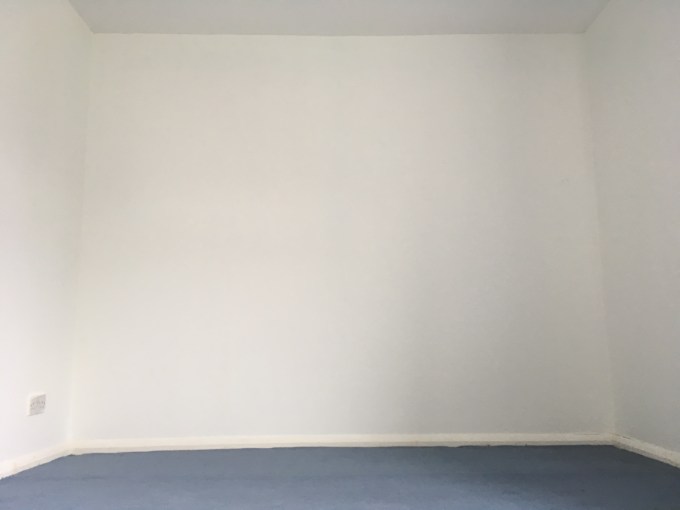
… turn into this:
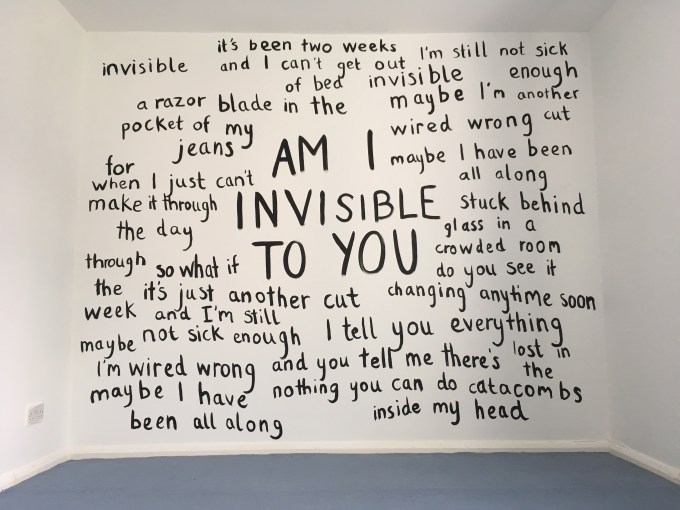
It was a really good day and I’m really proud of the work we did.
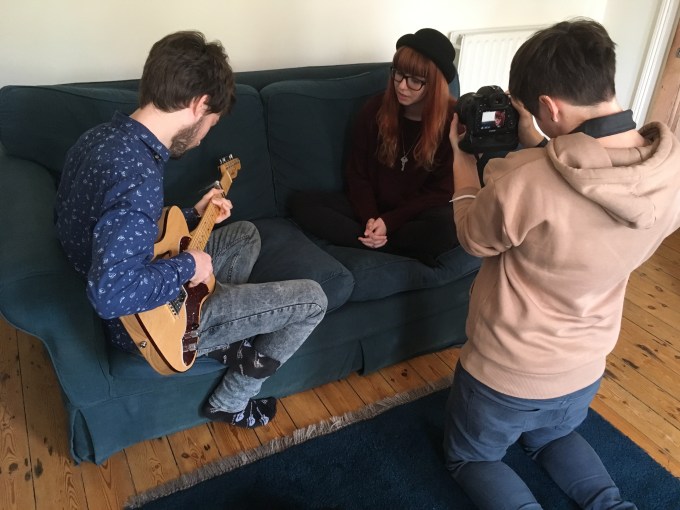
Day two had Richard (my writing partner and general partner in crime) coming down to Brighton and we shot the ‘performance’ section of the video. I felt very self conscious with the camera on my face so much but both Rosie and Richard are so lovely that I felt very safe. Again, it was exhausting – that might be my issues with fatigue coming into play – but really satisfying and fun.
I had a lot of plans for this single and the video but alas, they weren’t to be. Life happened and my mental health took a lot of hits (if you’ve been following this blog, you’ll be aware of some of them). My depression has been brutal and made doing anything musical almost impossible. It’s been a long, hard road but I’m so, so glad this video is out in the world. I’m so proud of it and I’m so grateful to have worked on it with such lovely people. I wouldn’t have wanted my first music video to have come to life any differently.

Claudia Boleyn on BPD and Obsessions
Posted on April 20, 2019
EDIT: Since writing this post, I’ve learned a lot about the language around mental health and I no longer think that the word ‘obsession’ is necessarily a helpful one. I think something like ‘subject of intense interest’ or ‘specialised interest,’ not dissimilar to language used when describing ‘special interests’ in Autism. Having said that, I’m reluctant to change the language in this post because it’s the language that Claudia uses and because I think it’s potentially important to leave the post in its original form. Also, the negative connotations of the word ‘obsession’ are potentially relevant in the context of BPD as it’s a condition that can have unhealthy (a word often linked to obsession) and damaging behaviours for both the person living with it and the people who surround them (and I say this as someone who struggles with BPD).
I’ve written about Claudia Boleyn’s videos before but this is another great one that I think really clearly explains something that happens with Borderline Personality Disorder (also becoming known as Emotional Intensity Disorder) and various other mental health problems. I really recommend watching it.
In this video, Claudia talks about how, when you’re struggling with your mental health, you can develop obsessions with certain things, particularly fandom related things: fictional characters, books, TV shows, etc. These special interests can overlap with autistic special interests but they can also come about as a coping mechanism; they can become an escape from the difficulties of the real world.
She talks about how she can categorise her life by her obsessions, including Emmerdale and Anne Boleyn and certain areas of art history. She talks in particular about her obsession with Anne Boleyn, how it strengthens her and gets her through the really tough times. She even uses Boleyn as a surname: “I use it to exist in the world.” She talks about how she uses this obsession and others to understand herself. All of this makes those obsessions really special and important. I can definitely relate to this. My life can be divided up by my obsessions: animals but particularly horses – I obsessively read the Animal Ark and Saddle Club book series – Harry Potter, crime dramas, Taylor Swift, certain youtubers, anything superhero related…
“My identity and my life is sort of filled up with the stories of other people rather than stories of my own.”
With BPD, there’s the extra layer of struggling with your identity and your sense of self. Claudia talks about how she would go to school dressed as her favourite characters and how a teacher once asked her, ‘When will you come to school dressed as yourself?’ But that’s really hard when you don’t know who you are. I’ve always found it very easy to lose myself in fandoms or characters because I don’t know who I am to begin with and I’ve had a couple of experiences where I’ve done things I didn’t actually want to do because I thought that’s what a character would do, i.e. what I should do to embody those good characteristics.
“I’ve never felt like I have a proper identity in myself so I’ve sort of constructed one in a way based on what I admire and what I want to be and what will make me as good a person as I can be and what will make me contribute to the world but it’s really tough.”
It can be a good, helpful strategy – until it starts to dictate your emotional state.
“I think this isn’t spoken about enough with BPD, especially because we can struggle with identity and who we are and what sort of people we are. I think we often construct ourselves based around fiction and around those characters we admire and I think it matters a lot to us. It feels like it becomes a part of our identity in a way, so when it goes wrong, it feels like we’re falling apart. Yeah, it’s difficult.”
Another problem in BPD is that of regulating your emotions. Small things – day to day things – can have massive impacts on your mood. It can be exhausting and stressful to go through such ups and downs and it’s constant; there’s a lot of fear and uncertainty involved. So escaping into an obsession or fandom can be helpful and soothing but then, when something goes wrong in or around that fandom, for example, it can cause really negative emotions because your escape, your safe place, has been threatened. It might seem extreme from the outside but it’s very real and personal if you’re going through it.
I really relate to this video and I’m really grateful to Claudia for putting it out into the world. We need to talk about all parts of living with mental health, not just the relatively straightforward ones.
 Finding Hope