 Finding Hope
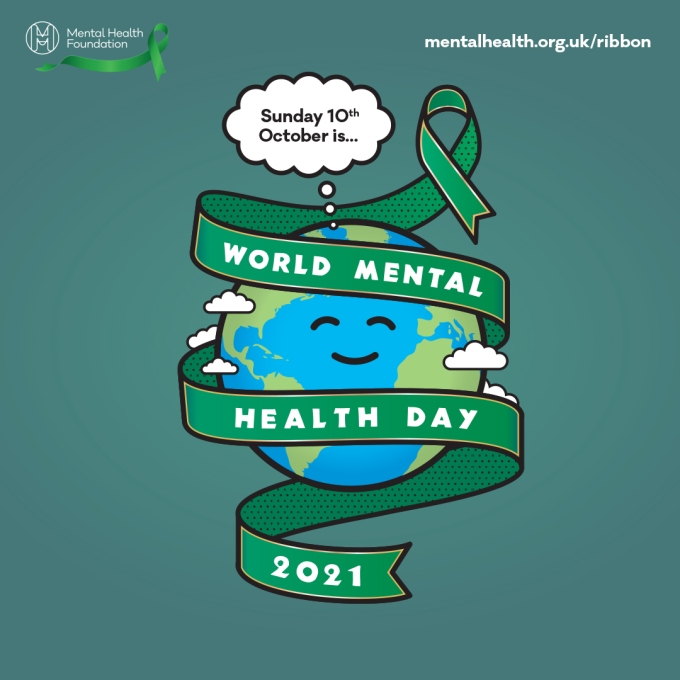
World Mental Health Day 2021
Posted on October 10, 2021
‘MENTAL HEALTH IN AN UNEQUAL WORLD’
As I’m sure many of you know, today is World Mental Health Day and the theme, chosen by the Mental Health Foundation, is ‘mental health in an unequal world.’ WHO seems to be building it around the pandemic, rather than as a problem of its own, but from what I’ve seen in the newsletters and on the social medias of many mental health charities and organisations, most seem to be following the lead of the Mental Health Foundation.
According to the Mental Health Foundation’s website: “2020 highlighted inequalities due to race and ethnicity, sexual orientation and gender identity, and the lack of respect for human rights in many countries, including for people living with mental health conditions. Such inequalities have an impact on people’s mental health. This theme, chosen for 2021, will highlight that access to mental health services remains unequal, with between 75% to 95% of people with mental disorders in low and middle-income countries unable to access mental health services at all, and access in high income countries is not much better.” It goes on to say: “Many people with a mental illness do not receive the treatment that they are entitled to and deserve and together with their families and carers continue to experience stigma and discrimination… The stigma and discrimination experienced by people who experience mental ill health not only affects that person’s physical and mental health, stigma also affects their educational opportunities, current and future earning and job prospects, and also affects their families and loved ones.”


Statistics provided by Mind (x)
I have my own experience with the mental health system – which I do want to touch on – and have heard from many others about their experiences but I wanted to read into the research around these inequalities further, both to get a better factual understanding and to put my own experience in context (beyond an anecdotal one). The research is sporadic at best but here are some of the statistics I found…
ACCESS TO MENTAL HEALTH CARE
- “NICE [The National Institute for Health and Care Excellence] recommends that people should be able to access services when they need them. However the proportion of people who felt they had definitely seen NHS mental health services enough for their needs reduced from 47% in 2014 to 43% in 2018.” (x)
- In 2020, it was reported that approximately 1 in 3 people who experience mental health problems are able to access the support they need. (x)
From these statistics, it’s clear that far too many people aren’t getting the support that they need.
INEQUALITIES IN ACCESS TO TREATMENT (x)
- For those with common mental health problems, 36.2% reported receiving treatment.
- Women are more likely than men to receive treatment for all mental health conditions, with 15% of women receiving treatment compared to 9% of men.
- Young people aged 16-24 were found to be less likely to receive mental health treatment than any other age group.
- White British people are more likely to receive mental health treatment (13.3%) compared to BAME groups (7%). The lowest percentage of people receiving treatment were those from black ethnic minority groups (6.2%).
These statistics clearly show the disparities in the availability of treatment, more supporting evidence for the statement that the Mental Health Foundation is making with the theme for this World Mental Health Day.
YOUNG PEOPLE
- “There is very little national information about mental health services for children and young people, and what information there is suggests quality is declining. [Research] indicates substantial cuts to services, increasing demand, increasing thresholds for treatment, very long waits (more than a year) for specialist services, and a resultant decline in accessibility.” (x)
- Approximately 1 in 3 children and young people with a diagnosable mental health condition get access to NHS care and treatment. (x)
- More than 338,000 children were referred to CAMHS in 2017, but less than a third received treatment within the year. (x)
- Around 75% of young people experiencing a mental health problem are forced to wait so long their condition gets worse or are unable to access any treatment at all. (x)
- In a YoungMinds survey, three-quarters (76%) of parents said that their child’s mental health had deteriorated while waiting for support from Child and Adolescent Mental Health Services (CAMHS). (x)
This research all indicates that young people in particular are being let down by the health care system.
SECONDARY [LONG TERM] CARE
- “Demand for secondary care (which generally treats people with severe mental health problems) is increasing, and there is evidence to suggest services are becoming less accessible… There is little information available on the outcomes that services achieve.” (x)
- “There is no high quality national information on waiting times for secondary mental health services. In a 2014 survey, 20% of people with severe mental illness who were offered talking therapy reported waiting more than a year to access it.” (x)
The statistics show not just that the need for mental health care is increasing but the need for long term mental health care is increasing but that it’s also very difficult to access.
HIDDEN WAITING LISTS (x)
“A study of 513 British adults diagnosed with a mental illness also reveals the damaging consequences that hidden waiting lists – the wait between referral and second appointments – have on the lives of patients living with severe or common mental illness.”
- “Of those on a hidden waiting list, nearly two thirds (64%) wait more than four weeks between their initial assessment and second appointment. One in four (23%) wait more than three months and one in nine (11%) wait longer than six months.”
- “Respondents living with severe mental illness – including eating disorders, bipolar disorder and PTSD – were left waiting up to two years for treatment. Others were left waiting up to four years for treatment for depression, anxiety and suicidal thoughts.”
- “Two-fifths (38%) reported that they, or someone on their behalf, had contacted emergency or crisis services while waiting for their second appointment, while 39% said that waiting led to a decline in their mental health.”
It’s clear that, beyond the difficulty of even getting into the mental health care system, once in it, the process of actually getting the support you need is much too slow – so slow in fact that it’s exacerbating the mental health problems that those waiting are seeking help for.
Now I want to look at my experience of getting support for my mental health…
- For more than two years, I was repeatedly dismissed and had my feelings and experiences invalidated by multiple doctors and services. No one took me seriously. Eventually, my Mum took me to a private psychiatrist and I was diagnosed with Generalized Anxiety Disorder, Social Anxiety Disorder, Depression, and OCD. Having had no idea what I was struggling with, I’d done a lot of research and asked about the quiet presentation of Borderline Personality Disorder, which my psychiatrist initially rejected but then reconsidered and diagnosed me with it after reading my research and personal notes (it has since been recommended to me multiple times – sometimes by doctors who don’t even know me – that I have this diagnosis removed from my file because “people might make assumptions”). Getting an NHS referral for an Autism Diagnostic Assessment was similarly difficult as he felt that I didn’t fit the classic presentation (I do apparently fit the classic FEMALE presentation though).
- There was no follow up after this diagnosis and we were told there was no support available so my Mum investigated private therapists. I tried CBT for a while but didn’t find it helpful so I tried DBT instead, which has been a much better fit.
- All of this private treatment is obviously not cheap and I am so beyond grateful that my family is fortunate enough to support me financially. I honestly don’t know where I’d be without it, whether I’d even be here. But the cost of it does cause me significant worry, only adding to the anxiety I already experience.
- With so many of my problems connected to my Autism, had this whole process been… easier, simpler, quicker, less traumatic, or something… so many of my health problems wouldn’t have deteriorated to the level that they have. Had I been diagnosed earlier – had even one medical professional believed me – things might’ve been so different. I try not to dwell on that because there’s no point wasting my energy on what might have been but it is the truth.
- Having said that, considering some of the stories that I’ve read or have had shared with me, my story isn’t that bad. I’m positively lucky compared to some and that’s a confusing, complicated thing to say, knowing how traumatic this has all been… and continues to be.
Since then, I’ve developed near constant chronic pain throughout my body – something that’s obviously had a big impact on my mental health – but over a year later, I’m still waiting for the NHS physiotherapy and hydrotherapy referrals to go through. I have started Occupational Therapy and with the Pain Clinic (both through the NHS) but with the end of my Masters, I had to take a break because they were too painful and/or upsetting to manage alongside all the work. I’m starting back this week. It still bothers me that no one’s ever even tried to find out why the pain started though.
Almost six years after my ASD diagnosis, the Neurobehavioural Clinic called to offer me an appointment, to do what I had no idea. But at the end of the two part session, I’d been diagnosed with Hypermobile Ehlers-Danlos Syndrome and ADHD – aged twenty six – both conditions having gone unnoticed because no one had ever taken my associated problems (problems that have been there my whole life) seriously. They’re both conditions that often occur alongside ASD. The hEDS diagnosis would, in theory, push my physiotherapy and hydrotherapy referrals but, as I said, I haven’t heard anything and almost a year later, my ADHD is still untreated. My psychiatrist was happy to ‘move’ that condition to his care but the consultant I saw didn’t want that, which is especially frustrating because she’s so difficult to get in contact with.
And finally, I may be getting answers to another ongoing medical problem: severe dizziness, light-headedness, nausea, physical weakness, and breathlessness when I stand up for too long. We’ve been trying to get support around this for so long that I can’t even remember when it started. This too may well be related to my Autism and I can’t help thinking that it’s another thing that should’ve been discovered sooner.
All of these things have had a profound impact on my mental health and going through the agonising process of diagnosis again and again has left me wary, fearful, and angry at medical professionals. It’s deeply ingrained in me to be polite and respectful but it doesn’t take much to send me flying off the handle; I walk into each appointment feeling like a tightly coiled spring. I leave pretty much every appointment in tears at best, raging at worst. Because I’m so. freaking. tired. of feeling like this. Of feeling like no one believes me, of being made to feel like I don’t know what I’m talking about, of being made to feel like I don’t know what I’m feeling. I feel so worn down by the constant let downs. At this point, I think I’m only going back because I don’t know what else to do.
I have no doubt that social media will be filled with nice words and encouraging quotes today. But we need more than that. World Mental Health Day is about more than that. Or it should be. It should be about pushing for change and improvement. The Mental Health Foundation is absolutely right that the inequalities in the mental health care system need to be addressed but looking at these statistics, it’s also clear that the standard of care needs to be better. For everyone’s sake. After all, there’s very little difference between not getting any support and being on a list waiting years for support.
Mental Health Awareness Week 2020 – #KindnessMatters
Posted on May 18, 2020
This week is Mental Health Awareness Week. Originally, this year’s theme was going to be sleep but with the impact of the pandemic on the world’s mental health, the Mental Health Foundation changed the theme to kindness:
“We think it could be the most important week we’ve hosted, not least because our own research shows that protecting our mental health is going to be central to us coping with and recovering from the coronavirus pandemic – with the psychological and social impacts likely to outlast the physical symptoms of the virus.”
Their website offers some really powerful insight into the importance of kindness:
“We have chosen kindness because of its singular ability to unlock our shared humanity. Kindness strengthens relationships, develops community and deepens solidarity. It is a cornerstone of our individual and collective mental health. Wisdom from every culture across history recognises that kindness is something that all human beings need to experience and practise to be fully alive.”
We all know about Captain Tom Moore’s incredible fundraiser and Dolly Parton’s massive donation towards researching a cure, as well as other wealthy and/or famous people giving money to various charities that support all kinds of people struggling during this time. These are all amazing acts of kindness but the foundation are encouraging people to share acts of kindness they’ve experienced so I thought I’d list some of mine:
- My street’s WhatsApp group – As many streets or communities do, my street has a WhatsApp group and the generosity displayed in it is really heartwarming. People are offering the use of various equipment, like ladders or gardening tools; people are offering to help those less able than themselves; people are giving things away for free, like packets of seeds, cooking ingredients, unwanted furniture, art that they’ve made, and so on. The sense of community has grown so much since the lockdown and that’s really nice to see.
- My neighbour helping us to rescue my cat – When one of the kittens went missing, the WhatsApp group helped locate her (which has caused her to become somewhat of a local celebrity) and the owner of the garden with the tree she was stuck in was so lovely about letting us in to retrieve her (we were social distancing, of course). When I tried to get her and couldn’t, my amazing neighbour climbed all the way to the top of the ladder, got his shirt off while perched up there, and used it to drag her off the branch she was clinging too. He handed her straight over to me for a cuddle but asked for a quick cuddle with her himself to apologise for squishing her a bit while getting her down. He told my Mum later that he’s actually terrified of heights but didn’t even think about it while helping us. That actually made me cry. I’m so, so grateful to him – especially with a fear of heights – for getting Sooty down because even with us standing below her, she seemed absolutely paralysed and unable to get down.
- The generosity of my neighbours – The family next door to us (the father was the guy who rescued Sooty) are just so lovely and have an allotment that they work super hard at. Whenever they bring vegetables back, they give us some and they often share cake or other gorgeous food that they’ve made. They’re honestly some of the most generous people I’ve ever met and I feel so lucky to have them as neighbours.
- The trumpet player on my street – There’s a guy who lives in the street who has offered, via the WhatsApp group, to come and play ‘Happy Birthday’ on his trumpet for anyone who has a birthday while we’re in lockdown. It’s kind of bizarre but then the world is truly bizarre right now and it’s a lovely, special gesture for a birthday that could otherwise feel very un-special.
- The handful of people helping my Granny – There are several people who have been helping my Mum’s Mum with her shopping and computer and series of electrical problems, as well as checking in with her (safely) to make sure she’s doing okay, and I’m so grateful. We speak frequently but we’re too far away to be helpful in the practical sense so I’m really thankful for the people making her life easier and safer.
- The support of my module leader and tutor during the assessment period – This was a while back but still in the lockdown period so I think it counts. I found this assessment really stressful and difficult, whether that’s because I’m still not used to the Masters standard of essay writing or my mental health I don’t know, but my tutor, Dan – who is also the leader of this module – was so helpful. He helped me with sourcing material and gave me really useful feedback. The Masters course is the first time in education where, as an autistic person, I’ve felt truly, 100% supported in my learning, rather than being made to feel like a hindrance, a hitch in the otherwise smoothly running classes. This means so much to me, more than I can possibly articulate. While no autistic person should ever be made to feel this way, it still happens far too often so to have tutors be so accommodating (in such a non-judgemental way) has meant the world to me and made the course possible.
- Kalie Shorr playing a song I’d requested during one of her livestreams – I said this multiple times but Kalie is one of my favourite musicians, Nashvillians, and people. I wouldn’t call us friends but we’ve met several times during my trips to the US and gotten on well (maybe one day we will be friends – that would be really nice). Since the lockdown began, she’s been playing a lot of livestreams, which has been really cool, and during one of those livestreams, she played a song that I’d requested. It’s an unreleased song, one that she posted a snippet of on her Instagram stories ages ago but I fell in love with it and had been desperate to hear more. So the fact that she actually played it meant a lot to me. And by some good fortune, that livestream took place when I was having a really hard week and it really lifted my spirits so I’m really grateful to Kalie for that.
- My friend sending me a Sara Bareilles CD – I’m not sure now whether this was just before the lockdown or just after the lockdown started (anyone else having major issues with judging the passing of time?), but a friend of mine was passing on some CDs, knew how much I love Sara Bareilles, and sent me a copy of Little Voice. As I have the money, I’m slowly collecting my favourite albums on CD or even vinyl, so I really appreciated him gifting it to me.
Another one of the focuses of this week is to think about how to build a kinder future. I can’t explain it any better than they do so, again, I’m gonna post what they’ve said:
“We have a once in a generation opportunity not only during but also following this pandemic for a reset and re-think about what kind of society we want to emerge from this crisis.
Our own reports and others such as Sir Michael Marmot’s 10 years On report reveal how inequality is rising in our society and its harmful effects on our health. Life expectancy is falling for the poorest for the first time in 100 years. As child poverty rises, children and young people in the poorest parts of our country are two to three times more likely to experience poor mental health than those in the richest. After the 2008 credit crunch it was the most vulnerable in our communities who experienced the severest consequences of austerity, with devastating effects on their mental and physical health. This not the hallmark of a kind society. We must not make the same mistakes after this pandemic.
Applied kindness could have a transformative impact on our schools, places of work, communities and families. As the former Governor of the Bank of England, Mark Carney, has said, now is a time to put values above valuations. We must seize this time to shape a society that tips the balance in favour of good mental health, for all of us, but especially for those who are most vulnerable.”
I have to hope that the kindness I’ve been seeing, the general community focussed behaviour and mindset will only continue after the lockdown ends, even though our lives will be busier, with work and school and so on. We’ll go back to our normal lives but that normal doesn’t have to be the same as the old normal. Hopefully we can build a new normal, one that’s kinder, more connected, more neighbourly, and more flexible, because of this experience with the pandemic and the lockdown. How beautiful would it be if we could create something so good out of such a difficult, distressing time? It won’t, of course, bring back the people who’ve died but perhaps it could be a tribute to all those who have suffered during this time. Maybe it’s naïve but I have to have hope.
I couldn’t make this post without acknowledging the incredible courage and strength and… kindness isn’t a big enough word by far… of the all the NHS staff, care workers, key workers, teachers (fuck the Daily Mail), and all those working unimaginably hard to protect us, keep us safe and healthy and moving forward despite everything going on. We can’t thank them enough. We’ll probably never be able to thank them enough. Someday, somehow, I’ll figure out a way to say a proper thank you, a way to give back and help people in their honour.
But coming back to Mental Health Awareness Week, the Mental Health Foundation are, as I said, encouraging people to share the acts of kindness they’ve experienced or witnessed, using the hashtags, #KindnessMatters and #MentalHealthAwarenessWeek on social media. You can find out more and access further resources through their website. And to quote them once more:
“No act of kindness is ever wasted.”

 Finding Hope