 Finding Hope
Goin’ Back To Nashville, Thinkin’ ‘Bout The Whole Thing
Posted on April 21, 2018
Ten points if you understand that reference.
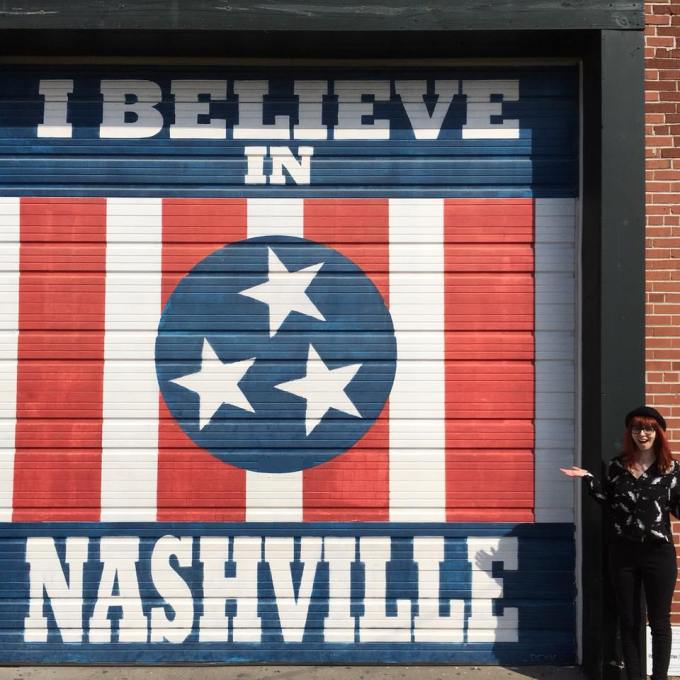
As many of you know, I was in Nashville from 1st April to 11th April so here is a post all about that: the travel, the being away from home, some of the things I did, and how I felt about it all. A big part of this is that I do just want to write down some of my thoughts about it but I also think that documenting these experiences as a person with Autism, as a person with mental illness, could be helpful, especially when there is so little information and testimony about living with these issues.
The flight out was smooth. In the literal sense, anyway. But about an hour before we arrived in Charlotte, North Carolina, I started sneezing. I didn’t think much of it until we were walking through the airport and it still hadn’t stopped. And then my nose started to run (this is gross and probably too much information, but it was like water was just leaking out of my nose) and all the sniffing I was doing to try and stop it gradually gave me a terrible headache. So that was a struggle. And it just wouldn’t stop. By the time we arrived in Nashville several hours later, I had the beginnings of a migraine and was practically useless. Fortunately, I was travelling with my Mum and one of my best friends, Richard (who is also my writing partner), so I could hand over responsibility and focus on staying upright. We got to our accommodation and I fell asleep as soon as I sat down (getting back up and walking to the bed was the most asleep I’ve ever been while awake and, no joke, I laughed hysterically until I fell asleep). The jetlag got me good – I was so tired that I fell asleep in the middle of the afternoon every single day – and I still hadn’t gotten myself in sync by the time we were flying home.
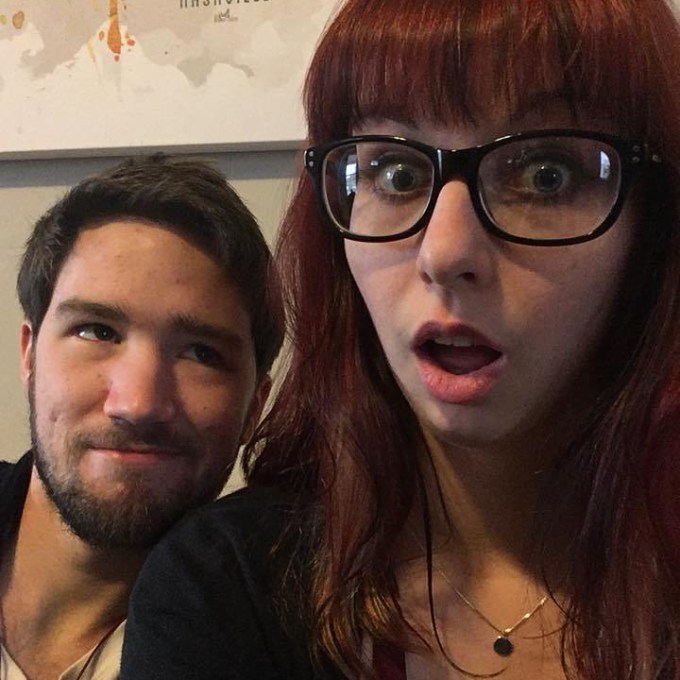
Before I get on to the rest of the trip, I have to say that none of it would have been possible if my Mum hadn’t come with me. This was my third trip to the US and she has been with me each time, sometimes working and sometimes taking a holiday – she freaking deserves one with how hard she works, at everything – and I could not do it without her. This probably deserves it’s own post but in short: she helps me keep my anxiety under control, helps me process everything that’s happening, removes the stress around food by either being there to catch me when I fail at it or completely assuming responsibility for it… She is the certainty I need when every other thing around me is uncertain. All of these things make it possible for me to be functional, let alone make the most out of the trip and the opportunities I’m presented with. She is a complete superstar and I’m so, so grateful.
Another thing that I think is important to mention is how much I struggle with food when I travel. I have huge, huge anxiety around food (see my recent post) and there aren’t many things I can manage. I remember thinking, before my first trip, that there would finally be things I could eat but my perception of the food was wrong; I was convinced I’d gain loads of weight but I actually lost more than half a stone. Since then, both me and my Mum have been more prepared: we travel with things like rice cakes (one of my staples), shop on the first day, and never rely on restaurants or venues. So, this time, we made a huge thing of Stir Fry at the beginning of the week and I basically ate that all week. I know that some people would find that boring but for me, it was comforting to know that there was a meal a day that I wouldn’t have to worry about. Sometimes that’s all I can manage so I need to know that it’s something I can eat. Again, a major shout out to my Mum for supporting me with that. And to Pancake Pantry for getting me excited about food.

The reason for going at this time of year is the Tin Pan South songwriting festival. Over five days, there are a hundred songwriters’ rounds where all of these incredible songwriters play their songs – some famous, some never released – and tell the stories that inspired them. As a songwriter, it’s the most amazing and motivating experience. As you guys probably know from my playlist post, I saw so many people that I was so excited by but I’m not sure anyone is interested in that, given that this is primarily a mental health blog. Let me know if you would be interested in that. But having said that, I can’t not mention some of them: Natalie Hemby (one of my all time favourite songwriters) was incredible and hilarious; Alyssa Micaela and Emily Shackelton were wonderful; Abby Anderson’s ‘History’ was one of my favourite songs of the festival; the show with Jeff Cohen, Kara DioGuardi, Jamie Hartman, and Ingrid Andress (one of my favourite finds of the week) was mind blowing and definitely a highlight; and Nikita Karmen was another great discovery. All of the shows were fantastic though and I felt so lucky to be there. I felt (and do still although my mental health has crashed since) so, so inspired and can’t wait to write new songs having learned so much.


And on that note, I got to hang out and write songs with one of my favourite people in Nashville. Her name is Caylan and we met during my first trip to Nashville in 2016. We wrote one of my favourite and most personal songs several days later. She is such a beautiful songwriter and again, we wrote some really cool songs and it was so, so nice to see her again. I also did some writing with Richard, which is one of my favourite things to do.
The biggest, most exciting part of my trip was playing a Song Suffragettes round. I’ve been following them on social media and watching their shows on Periscope for years now and I have always been so inspired by their mission to promote these incredible up and coming young women in country music. I’ve always done my best to see the shows in person when in Nashville and it has truly been a dream of mine to play at one of their rounds. And on this trip, that dream came true. It was nerve wracking but it was one of the most positive experiences I’ve ever had and definitely so in the last year: everyone behind the show was so lovely and the other girls were so sweet and so welcoming. My performances weren’t perfect but I’m still proud of them and I felt so, so honoured to be there. It was inspiring and motivating and so special. We finished the show with a cover of ‘Delicate’ by Taylor Swift, which we’d put together in the back room before going on stage and, again, that was really fun. Oh, and the video of that is now on YouTube!


After the show, we went out to the lobby to meet and talk to anyone who wanted to talk. That turned out to be a real highlight. I hadn’t expected anyone to want to say more than hello since it was my first time playing and no one would’ve known me before the show but so many people came up to me and the conversations we had were and are very special to me. Two of the three songs I played are incredibly personal, including one about my experiences with trying to get help with my mental health, and these are the songs that seem to really connect with people. I’ve had people come up to me, tell me what it meant to them to hear these songs, and share some amazingly personal stories. It blows my mind that a little song that I wrote in my friend’s front room on a Thursday afternoon has made people feel safe enough to share these really important things with me. I’m so honoured. That whole night was so special to me. A massive thank you again to everyone behind Song Suffragettes for all you guys do and thank you, thank you, thank you for inviting me to play.
The last couple of days were a bit of a blur after that but my last activity in Nashville was a memorable one. We went to The Candle Bar to make our own candles, something I’d seen on Instagram and really wanted to do. I really, really struggle with candles because of how sensitive to smells I am so I was excited to find out whether I could create a candle that I could not only tolerate but also enjoy. Because you’re pouring out the fragrance and the wax, you are in control of how strong the candle will smell; obviously you want to be able to smell it but this made it possible to add slightly less of the fragrance so that it won’t be overwhelming. It was a really fun experience, simple and chilled and interesting. I had commitment issues over which container to use and had to change once I’d chosen the fragrance because the colour of it didn’t match how it smelled, but choosing the fragrance was easy: there were only two that I liked. I ended up going for the pink pepper and grapefruit because, as a smell, it had no sharp edges, if that makes sense. There was nothing jarring about it. Since I’ve been home, I’ve only lit it once but I really like it. It’s subtle, which is perfect for me, but I can still smell it and it does actually smell like the fragrance I chose. So I’m really happy with it and would definitely recommend the experience.


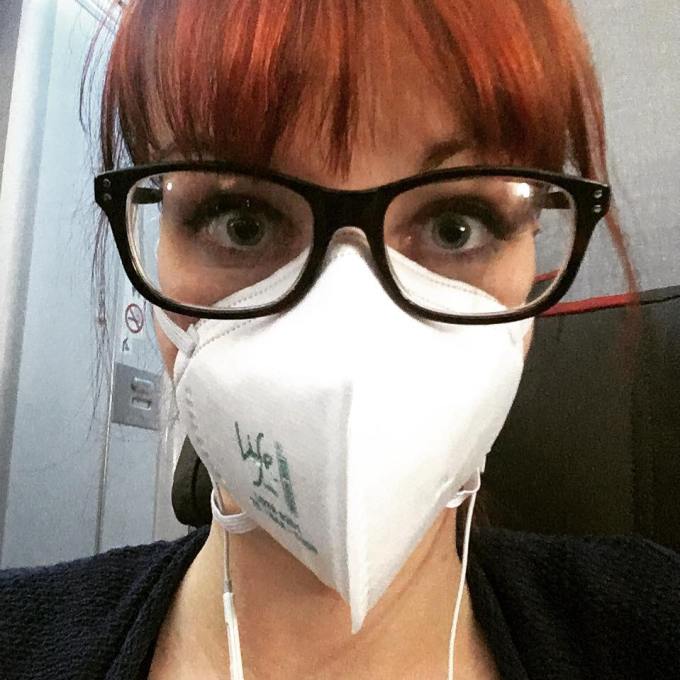
And then it was time to go home. Usually I dread going home but after the roller coaster of emotions that I went through on this trip and having the kittens waiting for me, I was ready to go. But it was still hard. I’ve jokingly compared my love for Nashville to a long distance relationship but fortunately, I know it isn’t going anywhere anytime soon. I’ll be back and it will be there, waiting for me. The plane ride home went fine, although we took extra precautions and I wore a mask for most of it. I felt ridiculous but I kept reminding myself that I was trying to avoid more illness and discomfort, that I am allowed to take care of myself.
Before I sign off, there are a couple of other things that I wanted to mention and the first one is about the emotions throughout the trip. The first half of the ten days was really hard: I was overwhelmed by anxiety and struggling to stay ahead of a particularly bad episode of Depression, my self doubt was paralyzing, and I just had this overwhelming longing to go home where I felt safe and less like I was going to fall apart at any second. It was horrible, but fortunately it did pass (although it’s come back in full force since I’ve been back) and I was able to enjoy the rest of the trip apart from some anxiety (which is totally normal – I can’t remember the last time I wasn’t anxious, and very anxious at that). The lows were very low and the highs were very high, as usual. And with everything on top of that, I was completely and utterly exhausted. So it was definitely a rollercoaster.
The other thing I want to say is that it was vital that I had some time out from it all. I’m going to write a ‘tips for travelling when you’re autistic’ post but I also want to include it here. With all the emotions, the anxiety, the walking and standing, etc, I had to have some recovery time. Apart from the times where I just fell asleep on the sofa, we would watch TV together (shout out to Episodes and Queer Eye – highly recommend both). I tried to ignore the little voice in my head that kept telling me I was wasting the trip by doing that but I tried to remember that I was doing it to ensure that I could make the most of the trip. It’s hard to see it that way sometimes. But without rest, I wouldn’t have been able to go out every night – sometimes to two shows – and I wouldn’t have been able to write the best songs I could and I wouldn’t have been able to enjoy the experience. So yes, if you need to take breaks, take breaks.
And that’s it for this post. I hope it was interesting, that there were a few helpful things in here. I have lots of blog posts on the go or in the planning stages so I’ll talk to you all soon!
Learn With Me
Posted on March 29, 2018
I was diagnosed with Autism Spectrum Disorder at the age of twenty, after actively struggling for several years. When I use the word ‘actively,’ I mean that, while I had had difficulties with all the things that turned out to be characteristics of Autism, they had become really hard to deal with and were having a serious impact on my life and my mental health. For example, I’d always found socialising confusing and stressful but I’d managed it for most of my life, thinking that that was just how I was built. Ultimately, that’s true but knowing where it comes from has been very helpful, both in validating that struggle but also in helping me to learn how to cope with those feelings. So, the diagnosis was a really big deal but I still think a lot about why it came so late and what that means.
In my opinion, there was one big reason why it took so long to get a diagnosis and that was the lack of awareness and understanding around both mental health and Autism, especially in women. Because Autism in women often presents very differently to the stereotypical male presentation, no one even mentioned it until we’d been looking for an explanation for more than eighteen months. I have a couple of blog posts about the process of getting my diagnoses coming up but the short version is that we started out by looking at my mental health. We went to various people but no one took my anxiety, my depression, and so on as serious problems, brushing them off as things that everyone deals with. So it took a lot of work to get even one person to recognise that what was happening was an actual problem, and then even more work to get them to see that that was part of a bigger pattern. And I know that all of that was down to this general lack of awareness about how Autism can manifest and again, how it can manifest in women.
I am very grateful to have my diagnosis, regardless of how long it took to get it but I do think that getting it so late has had a detrimental effect on me:
- Expectations, my own and those of others – Having grown up assuming I was neurotypical, I have always compared myself to my neurotypical peers and hated myself when I couldn’t measure up. When I got to sixth form, I started to really struggle (mentally, socially, academically) and so the whole thing started to snowball. And because I was comparing myself so viciously to those around me who were coping so much better, I did great damage to my mental health and self esteem. Had I known that my brain worked differently and that I might need support, those two years of my life would most likely have been an altogether different experience. Even now that I know the difference is there, I still find it really difficult not to compare myself to others; I still often see myself as less capable or less intelligent or less whatever word is relevant to the situation.
- The mental health consequences – While this is not something I can scientifically prove, the chances are that this whole process has had an impact on my mental health. Being repeatedly invalidated and brushed off definitely made my depression and anxiety worse. That invalidation may also have triggered the development of Borderline Personality Disorder; I’m not qualified to make a definitive statement on that but between discussions with my health professionals and my own research, it’s a theory if nothing else.
I’ve often had friends and family ask what they can do to help me and to be completely honest, I don’t know. I’m still trying to figure all of this out for myself: what’s affected, what helps, what doesn’t… Sometimes it feels like, just because it’s my diagnosis, people think I have this deep understanding of it. I’m definitely more clued in than I used to be but even two and a half years later, I don’t always know what to do when something comes up. I think the only thing I can say is this: “Learn with me.” This is a process, which involves a lot of trial and error and over-planning and screwing up. When it doesn’t work, it’s no one’s fault. We just learn and move on to the next thing. But hopefully, we can navigate it as a team rather than a group of individuals.
I try not to spend too much time thinking about how my life would’ve been different if I’d been diagnosed at a younger age because there’s little to be gained from it. It is how it is. But occasionally the thought creeps in and I imagine this life where I’m so much more productive and engaged and independent. I don’t know if that’s how it would’ve played out but it’s a seductive thought. But as I said, I try not to go down that rabbit hole. I think it comes down to this: there are people I wouldn’t have met and experiences that I wouldn’t have had if I’d been diagnosed as a child and ultimately, I wouldn’t give those up for anything.
Living With The Volume Up Loud
Posted on March 28, 2018
I have always been incredibly sensitive, ever since I was a little kid. It was one of the words used most commonly to describe me as I grew up. While it was usually emotional, I was also sensitive to what was going on around me and that seems to have increased over time. I can get overwhelmed by all the sensory information coming into my brain and I end up struggling to process it all. The processing can get stuck or I’ll zero in on one specific thing, like tunnel vision. It can also happen emotionally. The smallest thing can unsettle me and it can take hours or days to come back to myself. When I was diagnosed with ASD, someone described this really well to me: where neurotypical brains can filter out information that isn’t relevant (not ignoring it but not consciously processing it), neuroatypical brains can’t, so all the information comes in at the same volume and overwhelms the brain.
I struggle a lot with noise. Loud, sudden noises, like a slamming door or a fire alarm are very upsetting. It’s like they’re inside my body, inside my head, and before long, I can’t think and my anxiety overwhelms me. If it ends quickly, I can slowly force it back until I can function again but if it continues, it can lead to a meltdown where I lose all control of my emotions and thinking. It’s awful.
When it comes to studying or writing (although not songwriting), I need some background noise, almost to fill the space around me and in my brain. I often refer to the earlier example of information coming in through every channel: if I listen to something familiar, like a well watched TV show or audiobook, it’s like I’m filling some of those channels with something that I don’t need to process because I’ve already processed it, leaving me with only the channels I need to work on whatever it is I’m working on. Having said that, if there are too many different sounds going on, I start to get overwhelmed. It’s like my brain can’t balance them correctly, focussing on one too much and not hearing the others and so on. As you can imagine, that can make playing music quite difficult. I’m finally getting into the habit of carrying earplugs around but that has issues of it’s own: I find the sensation of essentially blocking my ears a difficult one, plus they’re pretty uncomfortable.
I’d never really thought of myself as being sensitive when it comes to touch but the more I think about it, the more experiences come to mind. I’m pretty specific about the fabrics I can wear and there aren’t many things I can put on my skin. It doesn’t take much before it feels unclean and once that feeling sets in, I can’t shake it. It’s horrible. There have been a few days where even multiple showers won’t fix it. I’ve also had some pretty bad reactions to various soaps and make up products, even those labelled as suitable for sensitive skin. The most dramatic example of this was when I was given perfume for my birthday. I love the smell of it but wearing it causes this weird reaction: my eyes water, my nose itches, my throat hurts, and so on. The worst part is how badly it irritates my lips: the skin burns and splits and it can take days to heal. And I don’t even have to be wearing the perfume to have that reaction; I only have to be wearing something I once wore with the perfume. Washing and airing the clothes hasn’t seemed to help much but I’m holding out hope that it will eventually fade.
My relationship with food needs it’s own post (I’ll get there, I promise!) but I think it’s important to mention in this context. I am really, really sensitive when it comes to food, so much so that I can only handle pretty bland stuff. This used to be a big problem because my family is pretty adventurous when it comes to trying different recipes and that often caused stress and anxiety all around. I got labelled as a picky eater and the most common response was to push me to eat the things I didn’t like, assuming that the experience would get better. But it didn’t; I just got more and more anxious around food. But since the diagnosis, it’s been easier. Well, easier to manage. It’s something that people can understand and that has really lessened the pressure on me. Now, the people around me let me decide what I can and can’t handle. I struggle with both texture and with taste and that can make some food impossible to eat. I get so overwhelmed by all the flavours that I can’t taste any of them individually. It’s like throwing a load of different coloured paints together: you don’t see all the different colours, you just get one new colour and it often isn’t a nice one. And that links into being really sensitive to smell. Something that those around me can’t smell can overwhelm me like a fog. It gets into my throat and my eyes. I won’t be able to focus and often have to leave the vicinity.
There are other things that overload my brain and while they aren’t exactly to do with my senses, they feel pretty similar. I guess they’re based on intuition and it seems that my intuition can be as amplified as my other senses.
Being in a crowd of people also overwhelms me emotionally. I get overloaded with how everyone has a name, a favourite colour, family, friends (who all have names and favourite colours), foods they hate, superstitions, dates they always remember, phone numbers they always forget, movies they quote, and so on and so on and so on. I get overwhelmed by how much is in everyone’s lives and I end up feeling like I’m being crushed by the weight of that. I feel like I can’t breathe. Some days I don’t feel it so strongly but on the days where I feel really fragile, like I don’t have any skin, it’s very, very stressful.
Another thing that needs it’s own post is my reaction to other people’s emotions. I feel like a lightning rod for them, especially the strong ones. I want to write more about this at some point but again, it’s relevant here. When I’m around anyone feeling a strong emotion, I start to feel it too. Most commonly I feel other people’s grief. And there’s always guilt mixed in: they’re not my emotions so I shouldn’t be feeling them. But I can’t help it. And it doesn’t take long for me to feel overwhelmed by all of that.
All of these things become exponentially worse when I’m stressed or anxious which, of course, is when I feel least able to cope with it. I don’t know if it’s something I can change, or whether my brain is wired this way, making everything so intense. Maybe it’s both. Maybe it’s neither.
 Finding Hope