 Finding Hope
Meltdowns, Halsey, Halsey, and Meltdowns
Posted on October 20, 2018
I’ve never really written about meltdowns before. Not long after I started writing this blog, I started taking Venlafaxine for my depression, which essentially numbed me to all my emotions. And since my meltdowns have always come from an emotional place, I basically stopped having meltdowns. But I couldn’t deal with not being able to feel anything: everything I do – writing, songwriting, relationships, choices – everything I do is based on emotion. So I came off that medication and my emotions (and my ability to think clearly) came back. But I hadn’t had any meltdowns until recently.
A couple of weeks ago, I was supposed to be going to see Halsey in London, something I’ve been looking forward to for years. Since I saw her in 2016. I love her songs – a masterclass in lyric writing, melody, production, songwriting in general – and she’s an incredible performer, one of the best I’ve ever seen. I particularly love the Badlands album: somehow the songs just make me feel brave. So I was really, really excited.
If you’ve been keeping up with my blog, you’ll know that my depression has been particularly suffocating recently and when it’s that bad, being out and around people is incredibly difficult. Sometimes talking about those emotions and the strength of them is helpful: just letting it out of my body lessens the pressure and makes it easier to cope but sometimes, like this time, it’s like a crack in the dam. It just started pouring out and I couldn’t reign it back in. I was desperate to get to this show though so I kept trying.
My Mum drove me to the station but when we got there, I couldn’t get out of the car. It was like a magnetic force preventing me from getting out of my seat, from making decisions. My Mum suggested alternative ways of doing the day but I could feel all the possible decisions and deviations spiralling away from me and I ended up shouting that I needed her to stop (all that anxiety and stress and emotion just exploded out of me). I just couldn’t. I couldn’t find the right decision but I knew when they were wrong. So my Mum said she was going to drive me to London and take me to the show. That’s the only way I was going to be able to go. So that’s what we did.
This is one kind of meltdown. There seem to be different variations of them based on the situation. Usually, I can’t do anything after having one; usually I just have to go and sleep until I feel like myself again. But my desperation to go to the show pulled me through all of that somehow. It took me over an hour to be able to think clearly and make sentences again and by the time we got to the show, I was just about functional – I could walk, I could interact with others (although I still couldn’t make eye contact with anyone) – although I felt like I was in a different dimension to everyone else: we could see each other and interact but it was like we were on different frequencies. I’m mixing my metaphors I know. Meltdowns mess with your head.
It was an amazing show. Halsey shows are unlike any other shows in my experience. She gives everything to her performance. The energy is just off the charts, her vocals were incredible, and the stage/backdrops are complete works of art. The songs I loved before, I loved even more. The songs I liked before, I loved by the end of the show. The performances and the stories she tells about them make every single song special and I will hold on to all of it forever.

Because of the meltdown, I was in a really strange headspace: I felt far away and disconnected and kind of lost. So I couldn’t enjoy the show in the way I would have had I not had the meltdown. But I did enjoy it and looking through my photos and videos makes me so, so happy and grateful and proud that I managed to get there. And it helped somehow. I can’t really explain it but it helped. It’s like it filled in all the cracks with gold, to use a Japanese art form as an analogy.
I got home, went to bed, and got up the next day, ready to do the whole thing again, although without the meltdown (or so I thought). As an autistic person and a concert lover, I really like to go to shows twice where possible. With the lights, visuals, music, the scream, the energy expended, the energy expended getting there… I find it incredibly difficult to process everything and I get overwhelmed very quickly. It all starts to pass through me without really landing. Fortunately, the only thing I really spend money on is concerts so that is something that I am sometimes able to do.
For several days after a meltdown, I feel really, really fragile. So my Mum – my hero – said she’d come to the show again. Thank goodness she likes Halsey too. So we drove up to London, got to the venue, and really enjoyed the show. My god, Halsey is just so good. And seeing it twice just meant that I could take in all of it and that was just so amazing. Some of my favourite moments include (I could easily list everything but I’ll try my best to just keep it to a few):
- The opening song, ‘Eyes Closed,’ will always be special to me because of the feeling it created. The energy in the room lifted by tenfold and it was the closest thing to magic I’ve ever experienced.
- How she left it to the crowd by shout the lyric, ‘Do you call yourself a fucking hurricane like me?’ I wasn’t expecting that and the intensity of the crowd just took my breath away.
- The visuals for ‘Hurricane’ were the most beautiful things I’ve ever seen. And during the song, she shouted, ‘London, this song is a reminder that you do not belong to anybody but yourself!’
- The little B stage that I thought was made up of LED lights but was actually covered in water (I really have no idea how to explain it) where she and her dancer stamped and kicked water into the crowd during ‘Don’t Play.’

- The volume of the crowd when everyone sang along to the stripped down version of ‘Closer.’
- The way she sat and talked to us, the story she told about ‘100 Letters,’ and how she finished by saying, ‘You only get one you in this life. Do not waste it on someone who doesn’t appreciate who you already are.’ Maybe it sounds cheesy but in the moment, it almost brought me to tears. I’m tearing up even now as I write this. The shows were just one empowering moment after another and for that, they will always be incredibly special concerts to me.
- The beautiful flower backgrounds for ‘Now or Never.’
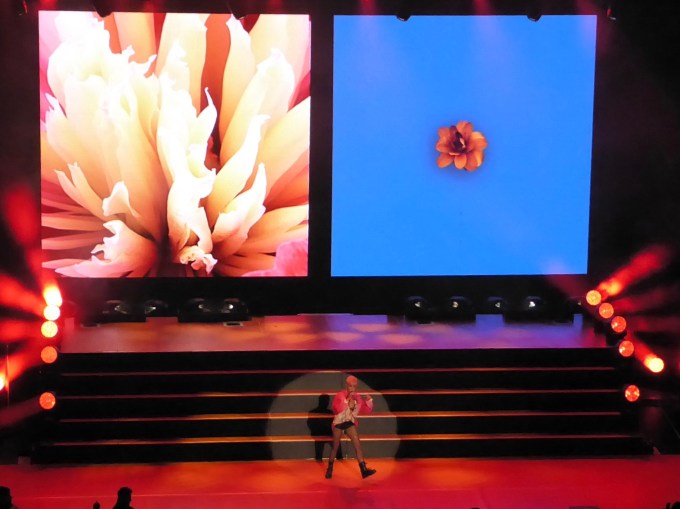

There are so many more moments I could name but I’ll leave it there. They were two really incredible concerts and I feel so lucky to have experienced them.
When the show finished, I was absolutely exhausted, physically and mentally. Walking down the stairs to the venue exit was physically painful. I’d specifically bought a seated ticked because I don’t have the energy at the moment to stand for such a long period of time but there were two girls who stood for the whole thing (almost everybody sat behind them ended up standing in the aisle so that they could see – they refused to sit down or move despite the disruption they were causing) so I kept having to stand up to see. My whole body hurt by the time it was over. Apparently that’s another unexplained Autism thing: fatigue and pain and so on with no obvious cause.
We made it out of the venue and were halfway across the street – standing on the traffic island – when an ambulance less than a few feet away turned on its siren. I don’t know if I can really explain it: it’s something so deeply rooted in emotions and sensory stuff that I’m still searching for the right words. I might never find them. But the sound – the high-pitched, ear-splittingly loud sound – just completely overwhelmed me in a split second. It was like it blew a fuse in my brain and suddenly I was screaming and my knees buckled and I would’ve hit the ground if Mum hadn’t caught me. At some point the screaming turned into crying and shaking and somehow my Mum got me onto the tube, back to the car, and home to my bed and my cats. It took most of the journey before my brain reengaged and I could think in complete sentences but even then I couldn’t talk. It just took too much energy.
We got home, went to bed, and I spent the next few days recovering. In truth it took me over a week to feel like myself again and to process and commit to memory the amazing moments from the concert before the meltdown, before my brain shut down. It was a lot to make sense of. Meltdowns are traumatic and I don’t use that word lightly. I will write more about them, when I’m in a more stable, more composed place. I’m more than a bit all over the place at the moment. But this page here is an amazing resource so do have a look at that if you want to know more about meltdowns (and shutdowns).
And just in case:
Thank you Halsey (I never know whether to think of you as Halsey or as Ashley). Thank you for an amazing show and a treasured experience. It might’ve been a rough weekend but the shows were worth the meltdowns. Concerts make me feel alive, make me feel real. You gave me that and I’m really grateful.

My Experiences with Therapy
Posted on October 13, 2018
Going to therapy hasn’t always been easy. I feel so, so lucky to have such an amazing therapist now but I had a lot of difficult experiences before I started seeing her. So I thought I’d share some of those experiences. Maybe they’ll be helpful.
After many, many appointments with my GP, I was finally referred to the local NHS Wellbeing service but the session didn’t go well. At this point in time, my anxiety was so bad that I couldn’t talk to people I didn’t know. I just couldn’t. Answers to questions would form in my mind but I couldn’t force them up my throat. So I sat there, in tears, while the doctor tried to get my Mum out of the room and told me he ‘wouldn’t’ help me if I didn’t talk. I don’t want to rant but I WAS STRUGGLING WITH A MENTAL HEALTH PROBLEM. I wanted desperately to be able to talk about it but I couldn’t. I don’t remember much about that appointment but I do remember standing in the street afterwards, shaking and crying and screaming and swearing. I couldn’t understand why no one was helping me when there was so clearly something wrong.
My second attempt at therapy was a bit better. I started Cognitive Behavioural Therapy (CBT) with a really lovely therapist. She was very patient and very open to working around the anxiety that kept me from talking. She was also happy to have my Mum in the room: it helped my anxiety and meant she could provide information. Slowly I started to trust her and started answering questions myself. But it was exhausting, bone achingly exhausting. As hard as we worked, I didn’t feel like we were making any progress and it was too hard to go through that to make no progress. I really liked her and I could tell that she was a really good therapist but the approach wasn’t right for me. I found the format too rigid. In simple terms, CBT is about breaking down your problems and then trying to create change in those areas. I felt, and still do feel, that my problems are too murky for a short stint of CBT. I know now that many of my problems originate from my Autism and the fact that it went undiagnosed for so long but even with that knowledge, the difficult things still feel overwhelmingly huge. I can see CBT being useful for a specific anxiety. For example, we tried to work on my anxiety around making phone calls. But I think the reason it didn’t work is that it wasn’t an isolated problem; it was a piece in a much bigger puzzle. I don’t think you can solve that sort of problem if you don’t know what’s causing it. Plus, being rational about what you’re struggling with in the controlled setting of therapy and being rational when it’s overwhelming you are very different things. CBT sort of assumes that you can still apply the skills you’ve learnt in therapy regardless of how you’re feeling, which can feel impossible, especially if you live with really powerful emotions. But maybe that’s just my perception.
The next thing we tried was Eye Movement Desensitization Reprocessing (EMDR), recommended by a family member. In the few months between finishing CBT and starting EMDR, my anxiety had sky rocketed so starting a new therapy was really hard. It was so bad that I actually never spoke to the guy I worked with. But despite that, and my difficulty with eye contact, communicating with him was easier than it had been with previous therapists. He was fantastic. He accepted my difficulty speaking and suggested writing on a whiteboard. I considered that and it felt possible so that’s what we did. He asked me questions and I replied, scribbling as fast as I could. It worked. And to take the pressure off, we would spend part of the session on the floor, playing dominoes while he asked me questions. I felt absolutely safe there. It was incredibly strengthening to have someone accept my anxieties as they were, to have someone recognise that I wasn’t just being difficult, that I was genuinely struggling with something really hard. And although it didn’t turn out to be the right thing for me, the sessions are still really important to me. For several months, we worked hard. We tried. I felt supported. And even though I didn’t ever speak, I did once sing for him and he almost cried. That was a pretty big moment.
After that, I didn’t go to therapy for a while. There was a lot of life stuff going on and there just wasn’t the time to find someone new. But I did start seeing a new psychiatrist. He prescribed me Phenelzine (which I’ve previously written about) and we spent a lot of time trying to figure out what was causing my problems. I guess it was a type of therapy. We went through my history and analysed my emotions, trying to find a diagnosis. The medication helped and we managed the side effects but it still took a long time. When my university said that they couldn’t help unless I had a diagnosis, I pushed for this and in January 2015, I could finally put names to the issues I was struggling with (apart from the Autism diagnosis which came several months later). My psychiatrist recommended Dialectical Behaviour Therapy (DBT) so we started looking for another therapist.
My current therapist is the first one we met. I just knew she was right; me and Mum walked out, looked at each other, and said, ‘she’s the one.’ We did meet another one but my mind was made up. And we were right. She’s amazing. I’ve been seeing her for three years now and I’m so grateful to have that safe place. DBT suits me much better. It’s based on CBT but, as the Mind website says, it’s “been adapted to help people who experience emotions very intensely.” They both help with changing unhelpful thoughts and behaviours, but DBT also helps you to accept yourself. It’s about a balance between acceptance and change. That really makes sense to me and always has.
In the beginning, I needed my Mum in the room with me and she would answer all the questions. We’d always talked about everything so she knew pretty much all the answers. But over time, I felt more comfortable there. I needed Mum there less and less and eventually I started doing the whole session by myself. Three years later and it’s really, really important to me. It’s a huge part of who I am. It’s not easy; it’s really hard work and I often come home exhausted, sometimes falling asleep on the sofa afterwards. But it’s really satisfying to talk things through, to make connections, to see change happen. I’ve talked about things that I never, ever thought I would talk about and I’ve worked through things I never thought I’d let go of. That’s so huge that I can’t really comprehend it.


So that’s my therapy journey. For me, it’s DBT that works but I’ve seen the others help people too. You need to be ready, you need to find the right approach, and you need to find the right person. It’s not easy but it is worth it.
Things I’d Tell My Younger Self
Posted on September 29, 2018
Have you seen the book where various different celebrities or famous people write letters to their younger selves? Some of them write pages and pages and some of them write a sentence, maybe two. But the majority of them reveal very little about their lives because they believe that the journey to the major events is as important as those major events. I don’t disagree with that but considering my levels of anxiety, it wouldn’t be the worst thing in the world for my younger self to have a little more certainty. Most of my stresses, then and now, are about the future so this would’ve been the perfect thing to calm younger me. Obviously this is a hypothetical exercise since we haven’t actually invented time travel and therefore don’t have to worry about causing a paradox that dramatically alters human history. We’ve all seen enough sci fi to know that that always ends badly.
- Your grades are only important for the next step. I know everyone keeps talking about how universities and jobs all look at your GCSE results and maybe in some fields – like medicine or if you wanted to be an astronaut (yes, I know, there’s a little bit of you that really does want to be an astronaut but, spoiler alert, that hasn’t happened yet) – that’s true but for the most part, your GCSEs only matter until you have A Levels and then your A Levels only matter until you’ve got a degree. Hopefully, you get my point. Try not to stress too much. If you get a grade that wasn’t as good as you wanted, feel it, process it, and let it go. Move on to the next thing. It will be okay. There’s always more than one way to get somewhere.
- Try not to worry about fitting in. I know you wish that you could be like the beautiful girls who all seem to have it so together but it won’t always be like that. The years will pass and you’ll be glad that you have your life and not theirs, not because there’s anything wrong with their lives but because you are where you’re supposed to be. I hope.
- You will get to Nashville. I know how much you want it. I’m not going to tell you how it happens because that journey is important but I promise you that you’ll get there and it will be worth the wait and the effort. I know it’s stressful and you’re terrified that you’ll never get there but you will. And it will be magical. Take it from someone who knows.
- Don’t let people treat you badly. You don’t deserve to be treated that way. There will always be people who think it makes them superior (*cough* or a better teacher *cough*) but it doesn’t. I know it’s really emotionally overwhelming but you are strong enough to stand up for yourself. I promise you, you are.
- It’s okay if you feel like you’re never going to get through something or if you feel like things are never going to get better. People will tell you that you will and you won’t believe them but that’s okay. There are things in life that you can’t know until you’ve experienced them. You can’t take pathways in your brain that you haven’t forged yet. So, when people tell you that time heals everything, try not to despair. They can say that because they have had that experience. It’s okay that you don’t yet. So keep going, keep living, and try to remember that everything you do and everything you experience is shaping you into the person you have the potential to be. And, chances are, a person who knows that time heals and a person who will annoy the shit out of a younger person by saying that time heals.
- You are so much stronger and can endure so much more than you think you can. I know that that’s not always a blessing but we have to believe it is, you and me. You’re gonna go through the wringer and it will feel really unfair but you’ll get through it. At the very least you’ll make it to twenty-four.
- There’s a reason you’re feeling the way you are. This is the point I’ve thought about most, about whether or not I should include it, but my gut says that I should. You’re autistic. I know that seems like a weird idea but you’ve always felt like your brain works differently to everyone else’s and this is why. Your only experience of Autism is the boy who was always being told off for being disruptive in primary school and most of the time, it’s really different for girls. You’ll figure it out, you’ll create a relationship with it, and what you learn will help other people.
Ultimately, there’s not much to be gained from wishing you could change the past and while there are things I wish had been different, I don’t think I’d change almost any of the things I had control over: the people, the pursuits, the loves… I’d choose them all over again.


 Finding Hope