 Finding Hope
Moving House When You’re Autistic
Posted on April 24, 2018
So I just moved house. It was not fun. I am going to write about it in more detail – I think the experience might be useful, maybe for someone trying to understand how change can affect a person with Autism – but I’m not ready to do that yet. It was really difficult and I’m still pretty emotional about the whole thing. Change is notoriously hard for people with Autism but I think the permanence of a change like moving house is particularly difficult. I definitely learned some lessons during the process so I thought I’d share them.
Some context before we begin: Not only were my family moving, we were separating into different houses, which was something I hadn’t been expecting. That was a real shock to me and made the whole thing even more difficult. But we’re still close and live close enough that we still see each other as much as before, which I’m really grateful for. Now I live with my Mum; I’m not ready to move out.
Right, here we go.
TIPS
Prepare for emotions, yours and others – First, however you feel is okay. It’s a big deal. Whether you feel everything or nothing, it will take time to work that out. And just when you think you’ve dealt with all of that, it’s time to move and it all comes back. There were lots of tears on the day of the move, as well as the few days after. It’s emotional and stressful and exhausting: the perfect mix for someone to get upset. I think the only thing you can do is be gentle with yourself and each other and give people space when they need it.
Build in as much time as possible – Moving house is exhausting and emotional. And packing at the last minute just makes it worse. Giving yourself time allows you to be careful and methodical and it means you can take breaks if it gets too much.
Label the boxes – The destined room is not enough. By the time you’ve packed everything you own and transported it to your new home, you’ll have no idea where anything is. And every time you need anything, you’ll spend at least twenty minutes digging through all the boxes in order to find it. It will drive you up the wall.
Pack a suitcase – You know me: preparation, preparation, preparation. Make sure you have a bag of things you’re going to need for at least the first week. You might think that you can get yourself sorted in a couple of days but chances are you can’t and you really don’t want to find yourself out of things like clean clothes and make up remover. You don’t need that on top of the stress of moving. Also, remember to check the weather forecast before packing, just in case you find yourself caught unawares by a heat wave with only jumpers to wear like I did.
Try to create a safe space for yourself – Moving house is messy and if you’re anything like me, being surrounded by clutter for extended periods of time makes me feel very claustrophobic and panicked. So, both before moving out and after moving in, I tried to keep one area calm and somewhat neat to give me a space to decompress and recharge in. I wasn’t always successful at keeping it tidy but for the most part, it helped.
Set a reminder to put all your food in the fridge – The last thing you need is all your food going off and with a million things to remember, you’ll most likely forget something. Let that be something else.
QUESTIONS TO THINK ABOUT
How much help do you need?
Depending on your capabilities, you may need to enlist some help to move everything, whether that’s professional movers or friends and family or both. You really don’t want to get halfway through moving day and be unable to keep going so make sure to think carefully about what you need and ask for that help well in advance.
Do you need to be there on moving day?
This obviously depends on whether you’re moving with your family or by yourself: the demands on you will be different. In my case, my family knew how difficult the whole experience had been and so suggested going to see a friend while the removal people did their thing. They thought that the empty house would upset me but I felt like I needed to be there; it helped me say goodbye.
Do you need a clean slate or do you need to keep things familiar?
As already mentioned, change is often hard for autistic people so you might feel the need to keep things as similar as possible, such as furniture and when decorating. But on the flip side, many people with Autism feel emotions very strongly so a change might actually be the less overwhelming option. It wouldn’t be healthy to be constantly reminded of an upsetting event.
Do you need closure and if so, how can you get it?
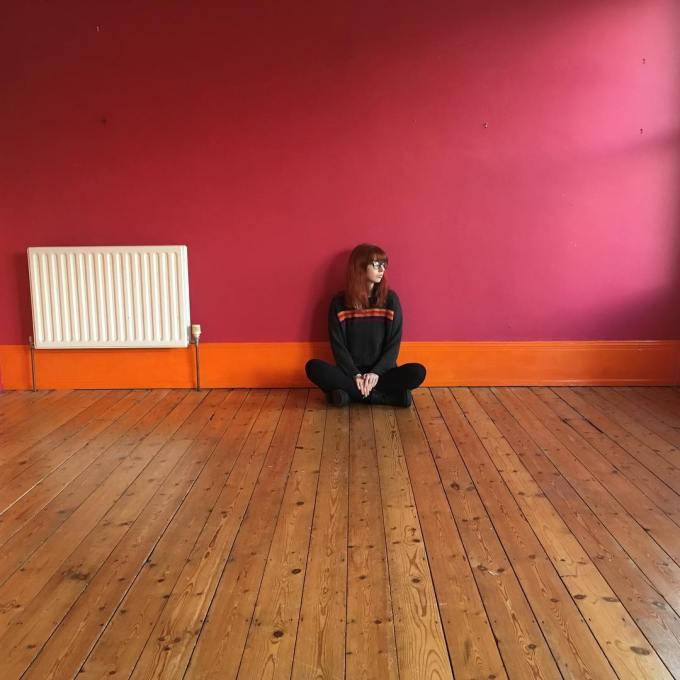
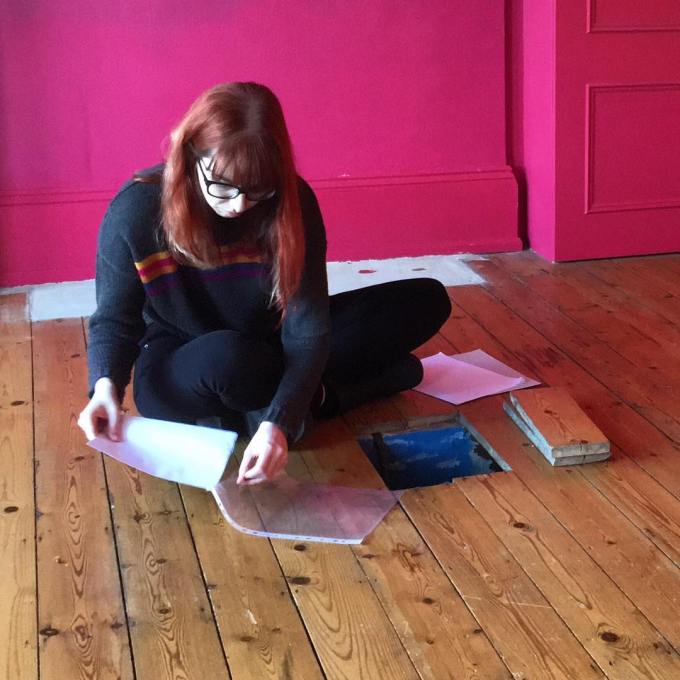
I definitely needed to say a real goodbye. I’d lived in that house for fifteen years; I felt safe there and there are a lot of memories associated with it. For a long time, it felt impossible to leave. So, once I could consider it, I thought a lot about what would help me leave, knowing that I wouldn’t be coming back. So, on the last day, we took some pictures of me in my room and then I put a letter I’d written for a future resident under a loose floorboard. I can’t tell you why or how but that did help a bit.
ADVICE FOR FRIENDS AND FAMILY
If you’re telling an autistic person that you have to move, be clear. Give them all the information. Especially when there’s so much emotion, it can be hard to process what’s going on so anything that isn’t explicitly stated may get lost.
Give them as much warning as possible. Something like this is really difficult to process – there are so many emotions involved – and it came take time to absorb and make sense of.
So I think that’s everything. I hope this has been interesting and helpful. One last thing to add: I found this article recently that is more relevant to someone moving out of their family home and thought it was definitely worth including here.
Introducing my Mum
Posted on March 31, 2018
In this post, I’d like to introduce my Mum, Sandra. We’ve been talking about her writing a post or two for a while because I think she’s got some really valuable stuff to add to the discussion of Autism, and Autism in women. Most of the resources around Autism tend to be written by parents of young children and while that viewpoint is important, the lack of any other viewpoints is something that needs to be addressed. There’s very little written by young people with Autism and I can’t find anything written by the parents of young people with Autism. So we thought we’d throw this out there.
We’ve never had a typical relationship: I’ve never felt the need to rebel and I can probably count on one hand the number of times we’ve really argued. We just get on really well and we share everything; we talk everything through. So she’s been on every step of this whole journey with me, from the moment I realised that what I was feeling wasn’t normal. She must’ve talked to hundreds of people – friends, family, health professionals in multiple fields – and spent hours and hours reading up on every possibility. She’s been to every appointment with me and she came to therapy with me until I felt confident enough to do it by myself. She pushes me when I need pushing and she protects me when I need protecting. I genuinely wouldn’t have made it this far without her. She’s always believed in me and she’s never stopped pushing to get me the help I needed, not for a moment. I am more grateful than I could ever express. She spoke for me when I couldn’t and she still does if I need her too. I only have to ask and she’s there. She is my hero. I couldn’t be me without her.
Here is a little paragraph from her to start her off:
‘Get out and take up dancing!’ was one of the many pieces of well-meaning advice I was given during my search for help for Lauren. ‘Tough Love’ was another suggestion and was just another way of saying the same thing. Because of the age she was when we started seriously looking for answers, many people, both professional and otherwise, saw much of her anxiety and depression as the ‘normal’ behaviour of an adolescent. But I felt there was more to it and knew I had to try and get some answers. So I began researching: talking, reading, anything to better understand what I saw Lauren struggling with. Now, several years later, I still remember my response to that suggestion: ‘I will take up dancing once I find the help my daughter needs’. And I have been lucky. We have been lucky. We have found some extraordinary people to help and support her but it has often been a long and isolating journey and one that I wonder whether might be useful to share for other parents or carers finding themselves in a similar situation.
We’ve been throwing some ideas around but nothing’s written yet. Between work stuff, moving house, and my mental health, there just hasn’t been the time. But we’ll get there. Stay tuned!


Introducing My Autistic Self
Posted on March 30, 2018
Someone asked me the other day how I told people that I’d been diagnosed as autistic and I realised that I’ve never told that story on here. So I thought I’d post it as part of Autism Awareness Week. Maybe it will be helpful to some of you.
I was between my first and second years at university and I consider myself very lucky that I was diagnosed during the summer holiday. It gave me time to really process the news and figure out how I felt about it, as well as decide who I wanted to tell and how I wanted to tell them. I could absolutely set the pace and break it down into smaller tasks. It’s a big thing to tell people so I wanted to find the best way to do it.
I decided that the best way for me to tell people was to send a Facebook message. There wasn’t going to be an opportunity to tell everyone at once and I’ve always felt more comfortable sharing important news through writing. It gives me more time to think about what I want to say and I can always walk away and come back to it if it isn’t coming across the way I want it to. It also means that I don’t have to worry about processing other people’s reactions; I can think about one thing at a time.
This is what I ended up with:
“Hey guys, I just wanted to let you know of a change in my life without making a big announcement. Over the summer, I was diagnosed with Autism Spectrum Disorder (still commonly referred to as Asperger’s). Apparently it’s commonly missed in girls and young women as it presents similarly to Depression and Anxiety, which, as many of you know, I’ve struggled with for a long time. But this is a good thing because I’m finally getting the support that I need/have needed to manage it, the social anxiety, general anxiety, etc. Overall, nothing’s really changed, other than the fact that this thing I’ve been struggling with has a name now but I wanted you guys to know since it does affect my life. If you want to ask me anything, please do J Look forward to seeing you all soon.”
The second job was to choose who I wanted to tell. Within my family, it hadn’t been a secret that we were looking into an Autism diagnosis and so a lot of them already knew by this point. So that left friends and acquaintances. I wanted my good friends to know and I also wanted to tell the people that, because of university, I would be spending a lot of time with. It was such a big thing that I didn’t want to feel like I had to keep it a secret. I also didn’t want to accidentally spring it on anyone. I went down the Facebook list and tried to add everyone I thought fitted into those categories. I’m sure there are people I missed but I did my best.
I hit send and then did my best to forget about it for the rest of the evening. Just sending the message was a lot to process. So I had some quiet time with my family, watching TV and having dinner. And only then, a few hours later, did I check the response the message was getting. These were all lovely people so I wasn’t expecting a negative response but I was a bit overwhelmed by how positive the replies were. I unashamedly admit that there were several messages that just about had me in tears. I don’t think it’s fair to post anyone’s actual words but I had people thanking me for sharing the news with them, telling me I was brave for doing so, saying that they were glad I was getting support and that they loved me. Those messages still mean so much to me.
Of course, there have been occasions where I’ve had to tell people face to face but the positive response really boosted my confidence. So I hold up my head and say the words like they’re a shield to protect me. I don’t always feel as self-assured as I appear to when I tell people but I have found that it helps my confidence to act like I do. I’m not generally a fan of the ‘fake it ‘til you make it’ approach – I usually find it invalidating – but in this case it has helped. Maybe I’m not faking it, maybe I’m using it as something that protects me rather than something that weakens me. I don’t know.

 Finding Hope