 Finding Hope
Things I Did In Lockdown
Posted on September 20, 2020
Given how stressful I was finding the pandemic and the lockdown, I thought it might be helpful to keep a list of what I’d done (achieved, managed, spent time on – whichever word is most appropriate), whether it took a huge amount of effort or was simply something I’d wanted to do, just to remind myself that I was still doing things, that I was still capable of being productive during such a difficult time. Some of them are silly, some of them important, and some of them are just interesting. And I thought posting it would be a good record of sorts when it comes to looking back at this time.
I don’t consider us to be out of lockdown by posting this. It’s just that now I’m starting a new year at university – the second of my Masters Degree – so my life is going to change. I’m doing all of my classes online, rather than going in for half of the classes as is the current norm at uni; I’d be commuting and the risks still feel too high for just two hours a week. So in terms of leaving the house, not much is changing. But it’s a moment of transition in my life and so it seemed like a natural stopping point for this post. I may continue it as a series, depending on how things play out going forward but for now, this is what I did while in lockdown, from 13th March to 20th September 2020…
- Watched the entirety of Grey’s Anatomy.
- Bought a Kalimba.
- Went down a YouTube rabbit hole of Otomatone covers…
This one and this one are my favourites.
- Did the Enneagram test.
- Tried (unsuccessfully) to teach one of my cats to play fetch.
- Watched all of the Harry Potter films one after the other (more than once…).
- Continued therapy via Zoom.
- Released and promoted the ‘Clarity (Academic Remix)‘.
- Released and promoted the ‘Clarity (Academic Remix)’ Music Video.
- Wrote a 4000 word, fully researched and referenced essay about authenticity and imagery in ‘All Too Well’ by Taylor Swift for my Masters Degree.
- Finished the first year of my Masters Degree.
- Rescued one of my cats (the youngest) when she went missing, stuck up a tree for maybe twenty four hours, with the help of some kind neighbours (all of us masked and socially distanced).
- Rewatched many of my favourite films and TV shows, including…
Films: Hot Fuzz, The Martian, Miss Congeniality, etc.
TV Shows: Episodes, Lucifer, and Nikita, etc.
- Wrote and posted fifty three blog posts.
- Watched Season 15 of Criminal Minds, finishing the show after following it for ten years.
- Read a lot of Fanfiction…
This is something I did a lot of as a teenager but reverted to during my Masters as a form of stress relief: escaping into another world, a familiar and safe world. My most impressive achievements were reading all of the Ros Myers (Spooks) Fanfiction I could find and reading The Changeling and it’s three sequels (a Harry Potter alternate universe where Ginny is sorted into Slytherin, which totals nearly 600,000 words). Of course, there were more one off stories; these are just my greatest hits.
- Had multiple movie dates with friends and family.
- Had multiple Studio Ghibli movie dates with one group of friends.
- Multiple collaborations via video calling: working on my songs, working with new people, critiquing the songs of friends, and so on.
- Caught up with Law & Order: SVU.
- Received a grade I was really happy with for my Musicology essay on Taylor Swift’s song, ‘All Too Well.’
- Released and promoted ‘Sounds Like Hope.’
- Rewatched all ten seasons of Friends (multiple times – although mostly as background noise).
- Played the piano a lot, learning the songs of others and writing my own.
- Watched all of Little Fires Everywhere in one day.
- Released and promoted the music video for ‘Sounds Like Hope.’
- Bought a new cat tree for the cats (they’d practically destroyed the old one), one with beds for all five of them and eventually we caught them all in it at once.

- Had multiple panic attacks and meltdowns, some really severe.
- Watched all of Absentia Season 1 in one day.
- Watched multiple new films including What Happened To Monday, Isn’t It Romantic, Ocean’s 8, Studio Ghibli’s Castle In The Sky, Fantasy Island, The Half Of It, Official Secrets, The Accountant, and more.
- Watched multiple new TV shows, including Little Fires Everywhere, Absentia, Broadchurch, Agents of Shield Season 7, The Fix, Lucifer Season 5 (Part 1), Away, and more.
- Started watching Castle.
- Made multiple banana breads (and other things, like chocolate chip cookies, but that’s less uncommon).
- Signed petitions and made donations to various causes in the Black Lives Matter movement and collected a list of resources to educate myself more when I don’t feel so incredibly mentally and emotionally fragile (short pieces, like some of the infographics on Instagram have been really good and digestible but I’ve been struggling to absorb large amounts of new information due to my general mental state, which has included frequent meltdowns and panic attacks, all affecting my concentration and memory).
- Filled six diaries.
- Watched many of my favourite movies from childhood, including The Emperor’s New Groove, A Bug’s Life, and all of the Wallace and Gromit shorts and movies.
- Sorted through my clothes.
- Sorted through and reorganised my DVDs.
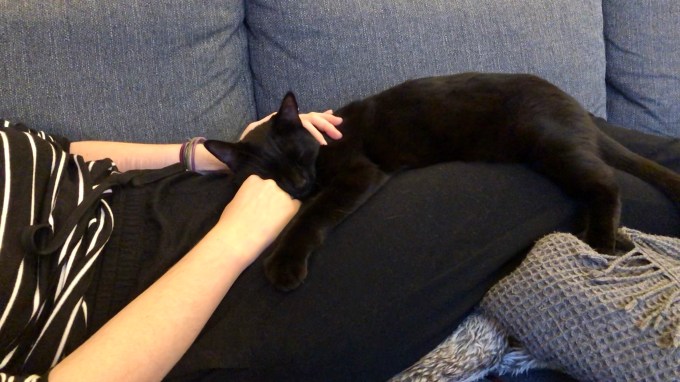
- Spent A LOT of time with my cats.
- Made a significant dent in sorting through all of my possessions.
- Sorted through my jewellery.
- Worked on my music theory knowledge during a series of piano lessons.
- Weaned myself off Pregabalin.
- Gathered up loads of stuff to donate to charity shops when they reopen/are able to accept donations.
- Cleared out my box of electronics, technology, cables, etc, only keeping the things I actually use and need.
- Cleared my eight USB sticks.
- Celebrated the kittens’ first birthday.
- Received my new laptop (plus other helpful equipment) from DSA, the process of which has been going on for months, only to find that it wasn’t the right laptop.
- Watched multiple online/streamed concerts, including ICMP Songwriters’ Circles, Kalie Shorr, Savannah Keyes, Song Suffragettes, Ingrid Andress, and more.
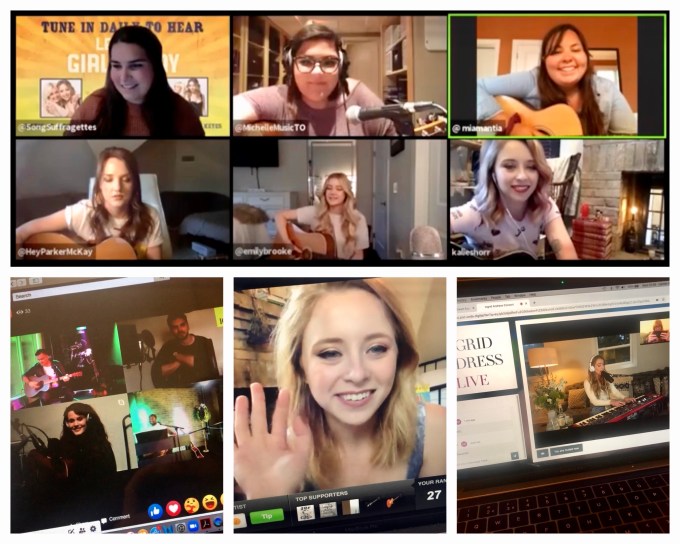
- Attended Ingrid Andress’ first livestream show with a meet and greet afterwards, which started at 2am and resulted in me staying up until 5am.
- Watched all of Absentia Season 2 in one day.
- Took part in multiple research studies looking at how the pandemic and subsequent lockdown are affecting mental health in general, specific mental health conditions, and Autism. I also participated in studies about experiences with therapy and about living with Chronic Fatigue Syndrome.
- Received and set up the new laptop from DSA.
- Loaded up my old Photos library onto the new laptop, only to find three (or more, sometimes up to seven) copies of basically every photo so I started going through and deleting the duplicates (getting the wheel of doom approximately every five seconds). Got down from 85,000 to just under 30,000 and then organised them all into albums, which took about three weeks. It was a mammoth job but it was incredibly satisfying to finish.
- I applied to be part of the Disability Pride 2020 Livestream, got a place, and saw myself on TV!
- Managed to go out for a haircut.
- Planned the ‘Back To Life’ music video, having had to scrap the original plan due to travel restrictions and anxiety.
- Dyed my hair orange.
- Dyed my hair red when the orange wasn’t the right colour.
- Filmed the ‘Back To Life’ music video on the beach with Richard.
- Watched all of Absentia Season 3 in one day.
- Was interviewed by a Dutch journalism student about being a new artist during a pandemic.
- Obsessively listened to and analysed Taylor Swift’s beautiful new album, folklore.
- Bought a Gretsch electric guitar (for my birthday but early so that I can make use of the time I have before uni starts, in whatever way it starts).
- Tried to go to the gym but didn’t feel it was safe.
- Finally saw Hamilton via Disney+.
- Met up with a friend for a dog walk, meeting her gorgeous new puppy for the first time.
- After experiencing serious and ongoing pain in both shoulders down to fingers, I had a Zoom appointment with my GP who referred me to an occupational rheumatologist (which would apparently take two to three weeks). And since any medication stronger than Ibuprofen and Paracetamol will cause side effects similar to those of my anti-depressants, she’s reluctant to prescribe anything stronger unless absolutely necessary.
- Finished Liar Series 2.
- Updated my photo albums, after getting eighteen months behind.
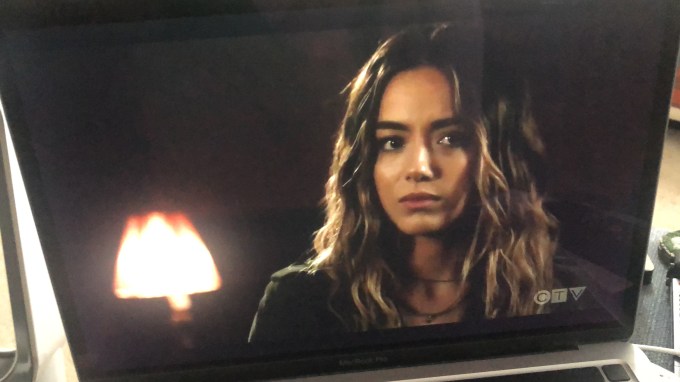
- Got up to date with Agents of Shield Season 7 so that I could watch and celebrate the finale of the season and the show itself with the show’s cast, crew, and fandom on social media.
- Watched the Perseid meteor shower and saw a handful of ‘proper’ shooting stars.
- Suffered severe electric shock like pain in my lower legs, requiring more doctors appointments. The information was added to my rheumatology referral and I started taking stronger painkillers.
- Watched Hamilton with some of my family who’d seen it live and loved it but not seen the film.
- Watched the finale of Agents of Shield, not just of Season 7 but of the whole show, and cried my eyes out, although sometimes I was laughing at the same time. I loved it and thought it was a really beautiful end to such a fantastic show. I’ll miss it more than I can say but I’m so grateful to have had it, to have had Daisy Johnson, and I’ll always carry with me what it’s meant to me.
- Released and promoted ‘Back To Life.’
- Did an interview with Vents Magazine.
- Went on several dog walks with my friend and her puppy.
- Contributed to #DaisyJohnsonAppreciationWeek2020 and #QuakeWeek on social media, posting edits on Tumblr and Twitter.
- Did an interview with Middle Tennessee Music.
- Filmed the Behind The Video for the ‘Back To Life’ music video.
- Went through my clothes a second time (sorting through my possessions, especially when I have an emotion connection to them gives me decision fatigue and I stop being able to make objective decisions – there was a lot to go through the first time).
- Did an interview with Zap Bang Magazine.
- Made the decision to do the next semester of my Masters Degree 100% online.
- Bought Bon Iver tickets for November 2021 – here’s hoping it’ll be possible to go!
- Put together the ‘Back To Life’ music video with Richard.
- Released and promoted the ‘Back To Life’ Music Video…
- Kept a two week photo diary for the CFS/ME research study.
- Finally captured the motivation to start learning the Kalimba only to find out there was a problem with the one I’d bought so I have to sort that out before I can really start learning to play it.
- Went through a traumatic few weeks worried that there was something seriously wrong with one of my cats but after multiple vet visits and lots of tests, she’s been given a clean bill of health.
- Attended the (online) Induction event for the new year at university.
- Acted as a guinea pig for one of my tutors as he fine-tuned a couple of things for the upcoming online classes.
- Was given a signed copy of folklore by Taylor Swift as an early birthday present.
- Signed up for a home recording course.
I doubt I’ll ever be able to look back on this time positively (from a personal perspective – in the wider sense, it’s clearly been catastrophic) but there have been moments and experiences that I am grateful to have had. As I’ve said, I don’t consider lockdown to be over so this post may become a series but with my Masters to focus on, I will have significantly less time to dedicate to bigger projects like organising my photos or sorting through my possessions. So lockdown continues; I’m just entering the next chapter.
Going Back To University During A Pandemic
Posted on September 16, 2020
So, as of next week, my university classes start again and given that the pandemic is worse than ever in the UK (when it comes to the number of cases, at least), I definitely have mixed feelings about it. Had this year gone ahead as expected, I would’ve been super excited to go back to uni but with all my anxiety about the pandemic, not to mention the state of my mental health in general, it feels like an almost impossible feat. I’m not sure how I’m going to manage it. But before I start thinking about that, I thought I’d document how I got to this point…
When the pandemic hit the UK and the lockdown went into effect, I only had two or three weeks of online classes to contend with before my final assignment, which was a piece of coursework. Once that was turned in, I was done, with only unstructured time ahead of me. As a part time student, I didn’t return to classes until late September so, although I’d planned to do a lot of things (I made a post about that here) in that time, I didn’t have to try and manage university alongside all of my anxiety about the pandemic. I didn’t have to think about university for a long time and since we didn’t know much about Covid-19 at the time, it seemed pointless to speculate. So I put those worries to the side and just tried to manage day to day (with varying levels of success).
When August rolled around, the anxiety about what I was going to do started to build. I’d thought about deferring but I really didn’t want to do that: I didn’t want to delay my education more than it already had been with years off to manage my mental health; I felt like I’d be at a real disadvantage in the second year modules, having potentially forgotten skills I’d learned in the first year; we don’t know how different things will be in a year anyway and I’d rather be working through the modules with people I know, whether that’s the case or not. So if I was going to do it, I had to figure out what felt safe and manageable.
Eventually I got an email from my university with some information about how they’d planned out the module, trying to balance safety and getting the best out of our education. My first module of the year was going to be 50% online and 50% onsite: the lectures would be via Microsoft Teams and the practical workshops – where we put the musical skills into practice – would be in person, although there were various different rules about whether anyone could actually perform what they’d written, depending on the number of students present. That all felt very uncertain and anxiety-provoking. Plus commuting to London (using trains and the underground) for only two hours of classes felt like a lot of risk (especially with the number of cases on the rise) – and that’s without considering the effects it would have on my energy levels and mental health and how that would affect my ability to complete the module – for not necessarily enough reward. It all felt very risky and scary.
I spoke to the head of the module, a tutor I’ve known for a really long time and have a really good relationship with. I wanted to get a bit more detail about what was happening, especially as it’s the module I’ve been most worried about: music theory has always been a struggle for me and even though it’s more about experimenting with those concepts in our writing, I’ve still worried about it from the beginning of the course. It’s the module I’ve always felt I’d need the most support and clarity in. Unfortunately, this trusted tutor will be running the online classes and not onsite at all – not that I’d want him to put himself at risk but that plus the fact that my two closest friends wouldn’t be there either only increased my anxiety. In what was obviously going to be a very stressful semester, I felt like I had very few people that I could go to if I needed help or something triggered a meltdown, for example. It was all feeling more and more overwhelming and difficult.
There was the potential to do the whole module online and at the beginning of lockdown, I’d refused to consider it, feeling that I wouldn’t get the education I had chosen and was paying for, if all the classes were online, especially when it’s such a practical course. But if I didn’t want to defer, my only options were to do the 50/50 approach or move entirely online. And after thinking about it a lot and talking to multiple members of my family, we decided that all the stress of going into uni felt like a significant cost compared to the benefit. So eventually I bit the bullet and decided to transfer to being a fully online student.
For a while, everything was fine – or as fine as it could be. But as we started building up to the new year, everything started to unravel. I always find the start of the new academic year stressful but this year has been a special level of hell. One example was ongoing complications with my timetable, which only exacerbated my already high anxiety and caused multiple meltdowns. I could probably rant for hours about the problems in education around mental health and neurodiversity but I won’t. At least not here.
The last week or so has probably been the worst, mental health wise, since the early days of lockdown: there has been constant anxiety, sickening drops into the depression that I’ve been carefully tiptoeing around since the pandemic reached the UK, and many meltdowns. I’ve also fought with Mum, which almost never happens. You know I’m in a bad place when that starts happening. My emotions have been very volatile; my anger has been particularly explosive. Anger’s not an emotion that I usually experience, especially not to this degree, so that’s been really hard to know what to do with. I’m really going through it at the moment.
It’s been suggested and even recommended that I defer, given the state of my mental health and my anxiety around the pandemic but I really, really don’t want to. I don’t want to defer and I don’t really want to do the module online – neither feel like great options, if I’m honest – but we have no idea what the situation next September will be and of the two, I’d rather be moving forward.
Today my group had our induction session, which was helpful. And it was really nice to see my course mates and tutors again; it was a little glimpse of normality, even if it was through a screen. I don’t know if I feel any better about the whole situation – I’m still terrified that the odds against me are just too high and I’ll fail everything – but I’d rather try than not. If get a couple of months in and it really is too much then I’ll reconsider but I have to try. I just can’t not try.
The DSA Process For My Masters Degree
Posted on September 12, 2020
Since the academic year is starting up again, I thought I’d write about my experience with getting support for my Masters Degree as a disabled student. The DSA (Disabled Student Allowance) process can be very difficult so, having been through it twice now, I thought I’d share my experience. I don’t know if I’ve had a good, bad, or typical experience but I thought that simply putting the experience out there might be helpful to anyone at the beginning of this process, to give them an idea of what may happen down the line. As I’ve already said, it’s difficult and tiring but that’s not to say that I would discourage someone from applying. I was just very naive going into it the first time and was blindsided by how complicated and stressful it was; I’m lucky to have had help going through this both times. Having support from sources such as DSA can be hugely beneficial but I wouldn’t want anyone going into the application process unaware so I thought I’d share my experience as I haven’t seen many accounts of the whole process…
I wrote about my first assessment in great detail here, so I suggest reading that but I’ll also sum it up here to make sure I’m sharing the full experience in one place. So… That first assessment was a complete disaster. The assessor was perfectly nice but when we got to discussing what support DSA was willing to offer me, it went downhill fast. They would offer me a laptop, but not one with an operating system required to run the programs I needed for my course because apparently that was a course specific need rather than a disability specific need despite the fact that I – a disabled student – needed them to do my course. They wouldn’t offer me any travel support towards commuting because I’d ‘chosen’ to live at home when I actually had to live at home because of my disabilities. And they have no direct contact with the universities themselves so they couldn’t offer any support through them. So, essentially, they weren’t going to offer me anything because my needs didn’t fit their guidelines, because my disability didn’t fit with their idea of disability. It was hugely frustrating and distressing and I left in tears. I felt completely let down and abandoned.
By the end of the assessment, I was so utterly distressed that the assessor told us that we could appeal, which we did. The second assessment was with a different person, a really lovely woman called Rebecca, and was much longer and in much more depth. We went through everything again in minute detail: from the necessary computer specifications to the exact details of an average university day’s travel. She went through all the possibilities and all the potential outcomes, as well as the potential roadblocks and the reasonings behind them. It was a lot of information but I did leave feeling more hopeful; I really felt like she was on the case, like she was really committed to helping me get as much support as possible. Her report went through several different people before reaching a senior SFE (Student Finance England). It was initially rejected but then, when we provided them with documentation proving I receive PIP (Personal Independence Payment), they changed their minds and granted me a new laptop, software and apps to help with my lectures, independent study, and mental health, and mentoring through the National Autistic Society (although it seems that, due to the pandemic, this service no longer exists). I didn’t get any support for the travel but I’m grateful for what I did get, plus the travel costs haven’t exactly been an issue over the last few months… From that second assessment, it was four months before I received the support I was awarded.
In my experience, the whole DSA process is very slow. It was slow when I went through it during my Bachelor’s Degree and it’s been even slower this time, presumably due to the pandemic. I started this process in January – much later than intended but my mental health was so bad that I couldn’t handle the in person assessment – and didn’t get the equipment until June. Then the laptop that arrived wasn’t the right one and so we had to spend another two weeks – and a somewhat ridiculous amount of emails proving that it was in fact the wrong one – organising the swap, insuring that I got the one that my DSA assessment had determined I needed. A couple of weeks later, the new laptop arrived but setting it up took much longer than it should have. This was due to how the people who’d previously worked on my laptop had set it up, making the transfer of all my files much more complicated and messy. It’s still not as sorted as I would like it to be but it is functional.
Factoring in all of this, had I been doing my Masters in one year rather than two, I would’ve had this equipment for less than a semester before I finished the course. Yes, this was affected by the pandemic, problems with the university Autism support person, and the late start in pursuing DSA but that was due to the reasons I was in need of support so it’s not the most efficient system in that regard: what happens if you’re too disabled by your disability to seek help?
The laptop and software that DSA have provided me with has been invaluable, especially since my laptop was dying a slow death around the time I received the new one. We didn’t get everything we were hoping for but it’s definitely better to have it than to not. So, having now been through this twice, I thought I’d offer some tips that would’ve been helpful to me before going through the process…
- If you disagree with part or all of the final assessment, ask to talk to someone else – It’s not something you’re necessarily made aware of when you have the assessment but I was so distressed by the end of the assessment that the assessor told us we could appeal. My second assessment yielded quite different results than the first one so it’s definitely worth asking if you feel that you haven’t been heard or fully supported.
- Ask what kind of documents act as proof of a need for support – The earlier you find out what paperwork might help your case, the quicker the process will go. We, unfortunately, didn’t know that the PIP documentation was helpful and the whole thing may not have taken so long if we had.
- Take someone with you as it can be overwhelming and tiring – These assessments can go on for hours and there’s a lot of information to both give and receive. Plus, it can be a pretty emotional experience so having someone with you can make the whole thing easier; you have someone to lean on and two pairs of ears to take everything in.
- Ask for everything that you would find helpful – You might not get it all but you definitely won’t get it if you don’t ask and hopefully you’ll get some of it. It’s also always worth asking what you’re potentially entitled to because there may be things you aren’t aware of that could be helpful.
- If you’re told something isn’t possible, ask why – The assessors can’t know every relevant question to ask and you can’t know every relevant piece of information to give so if they tell you something isn’t possible or available, it’s worth asking why because you may have some information or some paperwork that changes the situation and what support you can get.
I hope this post is helpful for anyone considering or going through the process. I hope I haven’t made it sound too scary. I really do recommend it but I wouldn’t want anyone to be unaware of how difficult and stressful it can be. You deserve to get the support you need and I only want to make that easier, if only by arming you with information and advice. So, if you’re going through it, I wish you the best of luck and I’m rooting for you.
 Finding Hope