 Finding Hope
In The Mourning – Out Now!
Posted on March 1, 2025
I know I’m pretty late in my announcement – things have been beyond hectic since the song was released and my insomnia has been brutal – but, as of Wednesday 19th February, my new single, ‘In The Mourning,’ is out in the world! If you follow me on social media, you will, of course, already know this but I know that there are those of you who don’t and I wanted to make sure you knew as well. This song means so much to me and I’m so excited (and a little bit nervous) to have released it…
If you read my post about ‘Write This Out,’ you’ll know that these two songs are part of a bigger project, the details of which are still to be revealed. I’ve only been mentioning it because I want you all to know that these songs are connected, that they’re not one-off singles. ‘Write This Out’ set the foundation, establishing the need to get the story out of me, but this song – ‘In The Mourning‘ – is the beginning of that story: when I was diagnosed as autistic.
When I sat down to write this song, it tumbled out, like it had just been waiting to be written – it was, after all, more than five years since I’d been diagnosed. I’m not sure why I’d never written about it before: maybe I’d thought that I didn’t have anything to say about the actual diagnosis, only about my experiences of being autistic. But it seems that there were a lot of emotions and moments from when I was processing the diagnosis that have stuck with me, that I’d apparently needed to express. It was definitely cathartic to write and one of the things that makes it so special to me is how, when I listen to it, it really feels like how I felt during that time; yes, the lyrics describe that but the song also manages to convey the emotions I was feeling within me and around me.
Again, this isn’t an easy song to listen to – I was trying to process a lot of grief and confusion and uncertainty – but it isn’t without hope. I had been feeling so lost and so broken and suddenly I had answers and information and the beginnings of a new way forward. I’d never felt in sync with the world around me and suddenly I knew why. That didn’t change exactly but knowing why made such a difference and it helped me to see the world differently, to see the places I could fit rather than seeing all of the places I couldn’t.
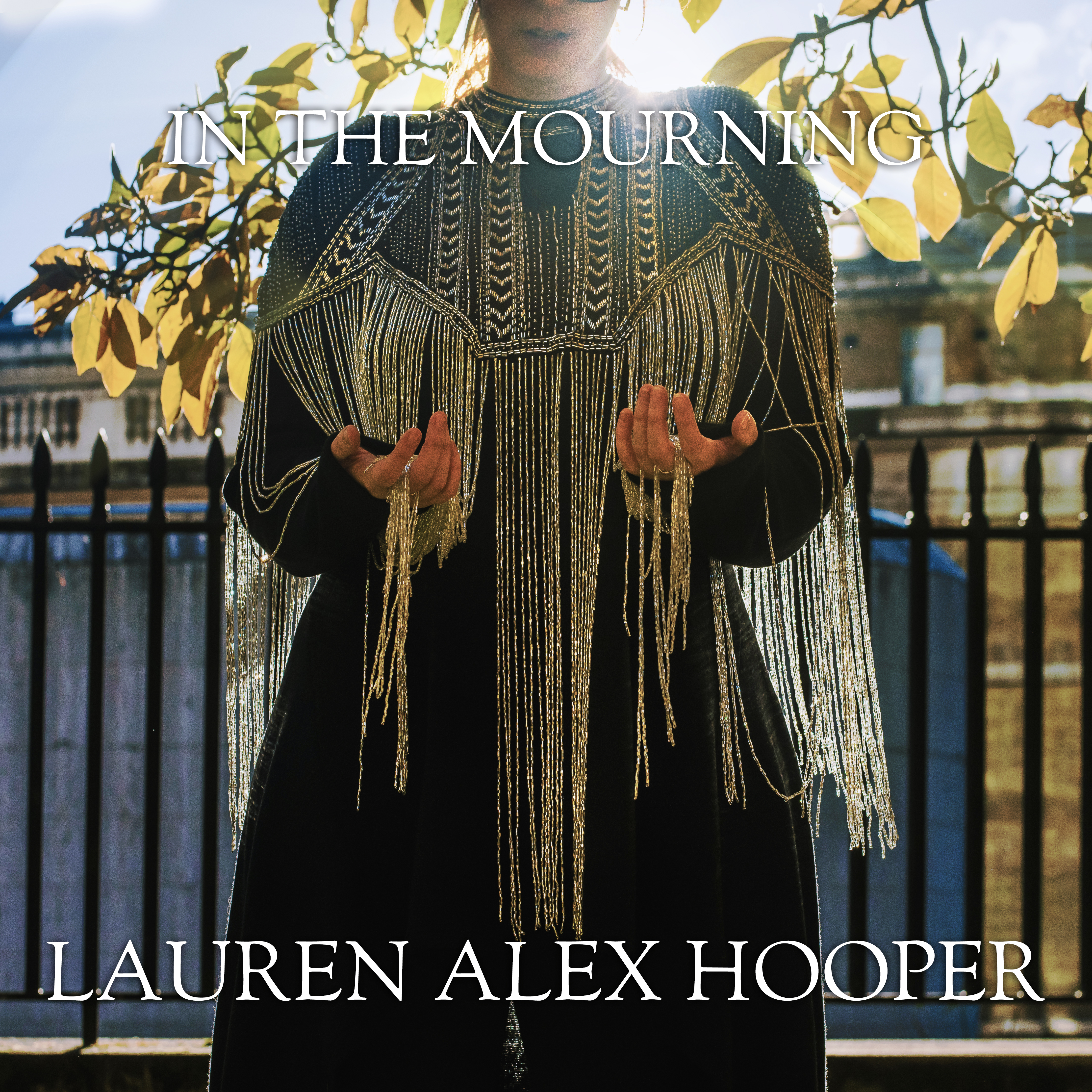
Photographer: Thomas Oscar Miles // Cover Design: Richard Sanderson
If you’ve been diagnosed as autistic – or anything that turned your life upside down – did it take you a long time to process it? Did you go through a mourning period of sorts? Maybe you relate to this song, maybe you don’t. But if you do, I hope you know that whatever you feel – or felt – is valid; I hope you’re talking to people who love and support you and I hope you’re moving through it as smoothly as possible. No state lasts forever. Change is, after all, the only constant in the universe.
I’m so grateful to be able to put this little piece of my heart out into the world and I’m so grateful to everyone who’s already listened to it, who’s left a comment, who’s reached out to me about it… If you haven’t listened to it yet, you can find it here. I’ve never been one to say ‘I hope you love it!’ because I think many songs inspire more complex emotions than love. So, instead, I tend to say, ‘I hope it makes you feel something.’ I’m going to sign off here: I hope you’ll take a few minutes to listen to the song and I hope it makes you feel something. And if you’d like to share that with me, on here or on social media, please do. Nothing means more to me.
Autism Dogs – It’s A Match!
Posted on February 9, 2025
NOTE: Between my brain fog and a WordPress update, I lost track of the post between the first post – The Application – and this post, where I went up to the Autism Dogs farm to discuss the Advanced Tasks my dog would need to learn and met a few of the dogs they’re currently training. That post is here, in case you missed it. This post follows that one.
In April 2024, I went up to the Autism Dogs farm to discuss Advanced Tasks and meet some of their current dogs to get a sense of what breed of dog would be a good fit for me. We came to the conclusion that a female Labrador would be the best choice and not long after, in May, they contacted me to tell me that they had a potential match, a female black Labrador called River. They sent us a couple of photos and although she was very cute, I was reluctant to open myself up to getting attached before I’d even met her. What if I fell in love with her and then we weren’t compatible? I wanted to meet her before I let myself feel anything. So I waited – both excitedly and anxiously – for our next trip up to the farm in early June.
It takes several hours for us to get up to the farm so my Mum and I caught the train to Stoke-on-Trent and I stayed over the night before at the Holiday Inn (they were dog-friendly and had many of my safe foods). We got there without too much trouble, although I do find the travel tiring, and settled into our room – which had the biggest bathroom I think I’ve ever seen. Given how busy my week had been, having a quiet evening before our session with Autism Dogs and before meeting River wasn’t the worst thing.
Originally, the plan had been to bring Izzy so that she and River could meet but, as we got on the train, they called and asked us not to bring her as River had a bit of a cough; she’d be seeing the vet within the next day or two and they weren’t worried but they were reluctant to have the two dogs mixing just in case it was something infectious. But we were already on the train with Izzy so one of the team would look after her while we met River and the two could meet on the next visit should everything go well.
Izzy had never been in a hotel room before and while she initially found it the most exciting thing ever, she did start to struggle with the noises on either side and in the corridor. She found it hard to settle and she barked a bit but she wasn’t too bad, all things considering; it was a completely new experience for her, on top of all the travelling. I mean, I was feeling quite overwhelmed so I’m surprised she wasn’t more unsettled.


The next morning, we got up and – after a breakfast of ALL safe foods! – caught a cab to the Autism Dogs farm. Izzy hung out with a member of the team: given how adorable she is, I’ve yet to find someone who doesn’t want to spend time with her. And once she was settled, Mum and I got ready to meet River. She bounded into the room, this gorgeous black Labrador – bigger than the black Labrador I grew up with – bounded into the room, super excited and running back and forth between me and Mum. Her enthusiasm was infectious. But once she calmed down a bit, she was so sweet and so gentle: she curled up with her head in my lap, soft and warm and snuggly, so quickly. I was in love.


We got to just hang out with her for a bit: play and stroke and cuddle and just really get a feel for each other. It wasn’t a hard decision at all. Mum and I both felt like she was a really good fit: personality wise, good size, her fur isn’t a sensory issue for me, we have experience with Labradors… She was so sweet and affectionate and it just felt really right. The team members who were present for that session said that they don’t often see dogs connect so quickly.
Early on in the process, we had asked whether we would be able to name the dog I was matched with, as I had a specific name in mind – if possible. They said that that was unlike to be a problem, especially if it was the same amount of syllables as the original name. So River became Daisy, my personal superdog, inspired by Daisy Johnson of Agents of Shield (my special interest character for those of you who don’t know). And while I am, of course, biased, I think she looks more like a Daisy than a River.


I can’t get over how lovely she is and I can’t wait to start really working with her and learning the training and really building that bond. Unfortunately, we couldn’t stay there indefinitely so, when our time was up, we said goodbye to Daisy and were reunited with Izzy, who was very excited to see us. We caught a cab to the station and then the multiple trains home. We were all exhausted and so finally, finally getting home was wonderful. My bed had never been so appealing and me and Izzy snuggled down together. She’s handled the whole thing really well, given how many new and potentially overwhelming things she’d encountered over the previous two days; I was really proud of her.
It was a really good day and I can’t wait to visit Daisy again.
It was a long, exhausting day but I felt like we’d made a real leap forward, having matched with Daisy. I do feel pretty overwhelmed and emotional by the whole thing but I only had to talk to Mum to restore my confidence in the choice. It’s just a really big change and I always find big changes very unsettling. But even though it does feel quite overwhelming, the team are great and I have faith in them to guide me through Daisy’s training and then support me once she comes to live with me. So, yes, there’s anxiety but, for the most part, it’s not overwhelming; I know it’s just my brain spiralling because that’s my knee jerk reaction to any upheaval in my life. But I feel well supported and, ultimately, excited about the path we are now absolutely on.

Write This Out – Out Now!
Posted on January 15, 2025
If you follow me on one or more of my social media platforms, you will already know this but if you don’t… SURPRISE! My new single, ‘Write This Out,’ is out today! I’m so excited and I cannot wait for you to hear it!
‘Write This Out’ is the very first single in a much bigger project, one that I’ve been actively working on since 2021 and thinking about for even longer. But details about the project will have to wait. Today is for ‘Write This Out’ – my first song to be released since ‘House on Fire’ in 2023. It was inspired by this fear that I’ve always had: the fear that, if I forget the details of my life, then I would be losing all of the pieces that make me who I am. I think this is very tied up with my OCD – in the form of memory hoarding – but I think it’s also connected to a lifetime of masking and my struggles with unmasking; my memories anchor me and without them, I would have no idea who I am. This manifested as a desperation to keep these memories safe and so I’ve been writing everything down for years. The memories are preserved and so I don’t have to try to hold onto every moment of my life at once: as an autistic person, I can find it really hard to regulate my emotions and they can get utterly overwhelming and I cannot function if I’m trying to hold EVERYTHING – the past, the present, the future – in my head. So if I’m going to function – and function I must, to some degree at least – I have to get those feelings out before I start to lose things and ultimately lose myself. I have to write it all down, something that is completely exhausting but feels impossible not to do. I have SHELVES of notebooks in my room, filled with my thoughts and feelings and experiences.
And beyond that being a part of my life that I wanted to express in song form, it was a concept that felt like a really important one to begin a project about being neurodivergent – although more specifically about being autistic – with because writing about my experiences of being neurodivergent, of being autistic, is something I’ve really wanted and needed to do. I never wanted to hide these fundamental parts of my identity but being open about them can feel really vulnerable and as much as I wanted to write about it all and put it out into the world, it took me some time to get there, as well as other life stuff – autistic burnout, chronic illness, mental illness, trauma, therapy, and so on – getting in the way. But I started writing songs because I never heard anything that I related to and I think every song I’ve written has been a stepping stone to this moment, to this project. I wanted to stop holding all of these feelings and experiences and difficulties and write about them, write about my reality, like every other songwriter gets to.
Plus there’s a huge population of neurodivergent individuals that have very little music written directly about the experiences that often make us feel separate from those around us. That’s not to say that every neurodivergent person WILL relate to this song and the songs to come but I hope that some will and that they can find some validation and some connection from them. We deserve music that covers our experience of the world, that makes us feel seen and validated and understood. As I said, no song is going to resonate with every neurodivergent person – being neurodivergent doesn’t automatically make us the same and grant us the same experiences – but I think we need more neurodivergent artists in the world and I’ve been so excited to see the number of artists talking about their neurodivergent experiences rise exponentially over the last few years. I’m proud to be a part of that, even as a little indie artist with a relatively small audience.
This isn’t an easy song to listen to: it’s bursting with panic and desperation and urgency. And if you relate to that, I feel for you; it’s an awful, exhausting way to exist. But I hope that, if it does resonate, you feel seen and you feel heard and you feel understood. Maybe this song can help you write out all of the feelings that are overwhelming you. Maybe it can help you say them out loud or scream them at the sky if you need to. You’re not alone.

Photographer: Thomas Oscar Miles // Cover Design: Richard Sanderson
As I said, I’m so excited to finally put this song out and for people to finally hear it. I can’t wait to hear what you think. Here’s to ‘Write This Out‘ and to all of the songs to come!
 Finding Hope