 Finding Hope
Nashville By Richard Marc – Out Now!
Posted on September 1, 2021
Richard Marc, one of my best friends and closest collaborators, has now released three singles (two of which I helped write) and his new single, Nashville, comes out today! I helped write this song as well and I think it’s turned out super gorgeous. Please go and check it out! I hope you love it as much as I do!
International Cat Day 2021
Posted on August 10, 2021
NOTE: This post was written to go up yesterday, on 9th August 2021. However, my phone – which, of course, had the video of the cats on it – completely died and only recovered this morning. Following some further technical difficulties, the video has finally been retrieved and this post can go up. So happy belated International Cat Day!
Happy International Cat Day! Yes, it’s a real thing!
When I first started writing this blog, I made a post introducing the animals in my life and talking about the importance of pets. There have been significant changes in the animal contingent of our family since then and given this holiday, I thought it was time for an update and, if nothing else, a post full of cuteness.
A short note before I get into the main post… if you’ve followed this blog for a while, you’ll know that our family dog, Lucky, had to be put to sleep at the age of fifteen just before the pandemic hit the UK. Although he obviously wasn’t a cat, he may very well have thought he was one (he did spend almost all of his life surrounded by various cats after all) and most of our cats adored him. He was an honorary member of our cat family and we miss him dearly.
LUCY
Lucy is the queen of the house. She always has been and she most likely always will be. And that is very clear. Having been an only cat, she can be a bit aloof and irritable with the younger generations, like it’s a great trial for her to have to share her house, her garden, her people, and so on. Sometimes she’ll smack them as they walk past for no apparent reason. But most of the time, she’s very affectionate, especially with me but with all familiar people, the other cats, and she adored Lucky when he was still with us. She demands her time with me in particular and gets somewhat ratty if she doesn’t get it: she hangs out in the bathroom with me whenever I’m in there; she’s the only one allowed to roam the house at night and she always sleeps on my bed (or nearby if we’re having hot weather); and she spends most of the day in whichever room I’m based in. It’s very sweet. She doesn’t always want to be snuggled up with me but she does like to be close by.


“I’m not sure why I like cats so much. I mean, they’re really cute obviously. They are both wild and domestic at the same time.” – Michael Showalter
MOUSE AND TIGER
Lucy had her first litter of kittens in 2016 which was a wonderful experience. We found them all homes (homes that were all linked actually, which was kind of adorable) and went back to being a one cat household, which I had missed. We discussed having Lucy spayed before deciding that we wanted to have one more experience of kittens, which resulted in Mouse and Tiger, both girls, in early 2018. They were, of course, unbearably adorable and I loved every moment with them. They also really helped me through the traumatic experience of moving house: their playfulness and innocence and general wonder at the world was incredibly soothing to my anxiety and distress. We hadn’t planned to keep them but both my Mum and I had just fallen head over heels and one day, watching the two of them play with Lucy in the garden, we acknowledged that the decision had already been made really. After that, we had Lucy spayed, content with our little family of three.
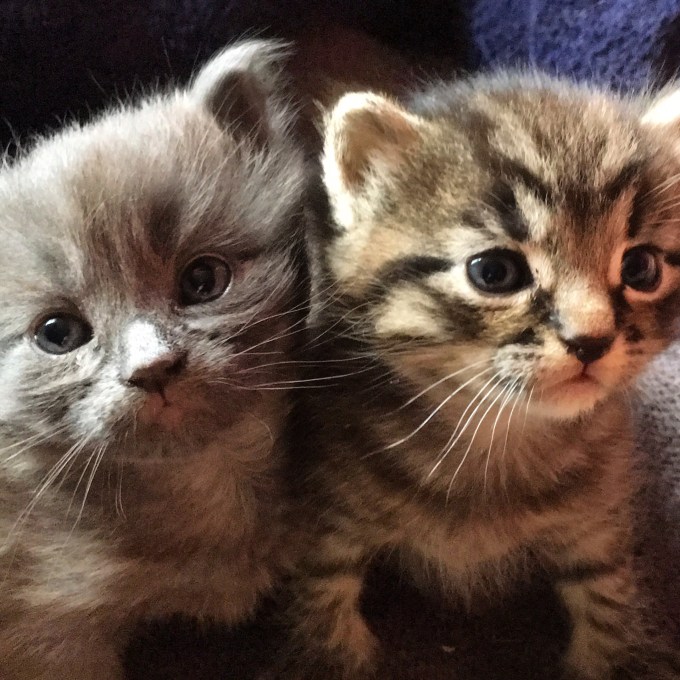
Mouse is the elder of the two and she’s just the most beautiful cat: silver, sleek, and utterly gorgeous (as ridiculous as she looks in this picture). She looks very much like a Nebelung cat but given that Lucy and Tiger look nothing like her, I’m not sure how that would be possible. She’s pretty reserved and quite skittish but when she decides she wants affection, she will not leave you alone; it’s very cute. She’s very playful and very vocal, sometimes for no apparent reason, almost like she’s just making sure you haven’t forgotten she’s there.
Tiger is the younger and ever since she could wriggle across the floor on her tummy, she’s been following me around, climbing on me, and snuggling up with me. She’s somewhat obsessed and it’s kind of hilarious. As a kitten, she once climbed up my shirt (whilst I was sitting in bed) and fell asleep curled up on my shoulder. She demands my attention – loudly – and won’t leave me alone until I have thoroughly patted, cuddled, and appreciated her. There have been a handful of very funny Zoom/online class experiences over the last eighteen months where she just wouldn’t leave me alone for anything as I tried my hardest to maintain some semblance of professionalism. She can be a little skittish too, like her sister, but on the whole, she’s calmer and more obliging.


“You can not look at a sleeping cat and feel tense.” – Jane Pauley
SOOTY AND SWEEP (their birth order is actually Sweep and Sooty but, of course, we call them Sooty and Sweep)
When Mouse and Tiger reached the age of being spayed, we had to decide whether or not we wanted to do kittens one last time. After a lot of discussion, my Mum and I decided that it would be really nice to have one more litter. Tiger had been my baby since the moment she was born and I just couldn’t imagine her as a ‘grown up’ – if that makes sense – so we had her spayed and decided to just wait and see what happened with Mouse.
Life went on and nothing happened in the kitten department. Meanwhile my mental health plummeted and I was struggling to get by. In the end, the idea of things changing, of anything new happening, just felt too overwhelming so we decided to have Mouse spayed. We took her for the pre spay check up and the vet said she was fine, although she could lose a little weight so we should reduce her food some.
And then about a week later, we came home to find Mouse pacing by the front door. As soon as she saw me, she headed for my room, stopping every few feet to make sure I was following and yowling the whole way. We went into my room, she curled up in the cat bed in the corner, and a few hours later, we had two new kittens. So that threw us for a loop: just as we’d decided against more kittens, we had them. (The vet – who’d said that Mouse absolutely wasn’t pregnant – thought this was all very funny. As you can imagine, we don’t go to them anymore.) But despite the shock, it was wonderful to have kittens around, even though it took Mouse a while to figure out what she was supposed to do. Watching them explore and learn and grow was a very untainted, therapeutic experience. And their calming influence was especially appreciated when I started my Masters and was having almost daily meltdowns due to stress.
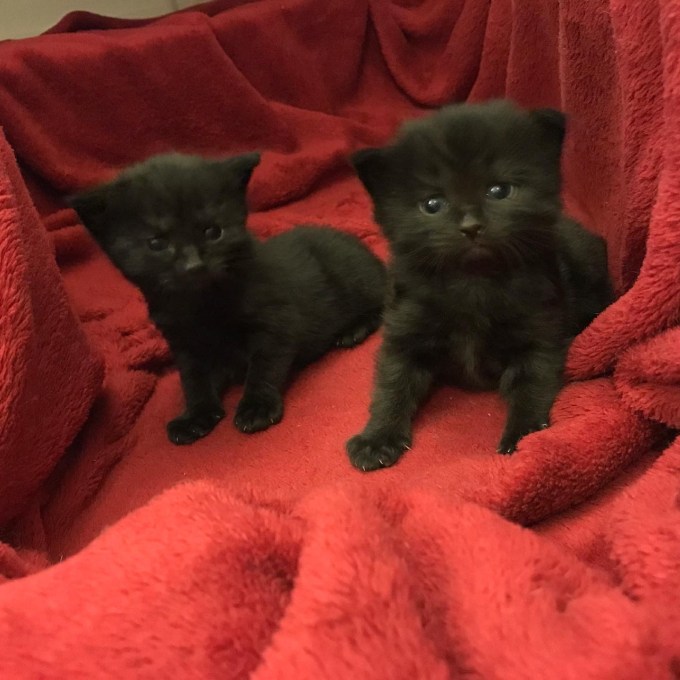
“A kitten is in the animal world what a rosebud is in the garden.” – Robert Southey
When they reached rehoming age, we did look for a home for them (ideally, we were hoping that they could go to the same home together) but we weren’t in too much of a rush given how high my anxiety levels were. But time kept passing and I was still struggling and in the end, we decided that the joy they brought to the house outweighed everything else. So we kept them and I’m so, so grateful that we did.
Sweep, we believe, is the older sister and in full fluff, she looks very like a Norwegian Forest Cat but like her mother, we don’t know how that would be possible. I’d love to do DNA tests and find out the breeds of our whole pride but that would be incredibly expensive – too expensive just to satisfy my curiosity. She’s super chilled out, happy to curl up – or stretch out! – anywhere and starts to purr immediately when you stroke her. She’s very obliging – cuddling, anything medical, grooming, etc – as long as you let her go when she’s clear that she’s had enough, which rarely means more than pulling away a bit more forcefully than usual. She’s very sweet and has the cutest little face with these gorgeous green eyes.
Sooty is the baby of the family. (They all have their own nicknames: we refer to Lucy as ‘Queen Lucy,’ Mouse and Tiger as ‘the kittens,’ and Sooty and Sweep as ‘the beans’ and Sooty is very often ‘baby bean.’) She’s little and skinny with a ridiculously long tail; she’s like a monkey. She’s super chatty and makes a clear noise of ‘hello’ whenever you enter the room or stop to stroke her. She’s very inquisitive and affectionate and during the winter, she’ll spend hours curled up on the sofa with me (preferably stretched out in between my legs. Like Tiger before her, she’s always been very attached to me; now there is some degree of competition between the two of them and they’ve had to figure out how to take turns in getting my full attention.


While Lucy kind of separated herself from Mouse and Tiger after a certain point (I think she felt she’d done her job and didn’t understand why they hadn’t left like the previous litter had; I think that, if they’d been her first litter and she hadn’t already had the experience of mothering and then watching them leave, things might’ve been different but who knows), Mouse has remained very maternal, especially with Sweep. They curl up together, they cuddle, they groom each other, they play… The two of them in particular are two peas in a pod. Mouse and Sooty are close too but Mouse and Sweep are a special little unit. It’s very sweet.
And that’s our family of cats, also known as the pride of cats. I love them deeply and… Not to say that I wouldn’t love them as much if not for the pandemic, but they were (and still are) one of a handful of things that have kept me going through the hardest parts of the last eighteen months. They were there for cuddles when I needed them, they made me laugh (which was not easy to do), and their complete obliviousness to everything going on in the world was very soothing when my anxiety got overwhelming. I honestly don’t know how I would’ve made it to this point in the pandemic without them.
Over the last year, ever since I discovered that International Cat Day was in fact a real thing, I’ve been collecting clips of them. I thought it would be something fun to post today…
Over the last eighteen months, my pride of cats have been one of the great joys of my life. Managing five cats isn’t always easy and when something goes wrong, it’s incredibly scary – as any pet owner will know – but when all is good, it’s so good. They are truly wonderful little souls… I can practically feel the glare I’d get if they knew I was calling them ‘little souls’ so I’ll amend that statement. They are truly wonderful, big and beautiful souls in little bodies.

And to finish this post, I want to include a particularly apt quote. Of all the cat related quotes I found, I’m not sure there are any more perfect for me…
“There are two means of refuge from the miseries of life: music and cats.” – Albert Schweitzer
Category: animals, anxiety, covid-19 pandemic, death, depression, emotions, family, mental health, quotes, sleep, video Tagged: anxiety, cat, cat family, cat quotes, cats, covid-19, family, family of cats, international cat day, kittens, mental health, mental illness, my cats, online classes, online learning, online university, pandemic, pandemic 2020, pandemic anxiety, pride of cats, quotes, self care
folklore by Taylor Swift
Posted on July 24, 2021
Yes, this is a very long post about a single Taylor Swift album. I dithered for a long time about whether to post this or not (and it took me a freaking long time to write it) because this is primarily an Autism and mental health blog and I try to keep it that way, for the most part. But then I realised, you know what? I’m autistic and music, especially songwriting, is my special interest and so it IS relevant. This is part of what it’s like to be autistic, for me anyway. I think about songs and albums, about lyrics and melodies and music and production, in this much detail (or more). And I spend A LOT of time thinking about all of this. So while writing it was really fun for me because all of this is my favourite stuff to think about and explore and try to understand, I also thought it was quite an interesting insight into how special interests can manifest in an autistic person (I absolutely don’t claim to speak for any other autistic person – this is just how my brain works). I won’t be offended if you don’t want to read the whole thing but I do think it’s worth having some understanding of how engrossing and emotional and deep a special interest can be and can go. So please read a little, even if you don’t read all of it. For me.
I’ve been working on this on and off since the album came out but what with new information from the folklore: long pond studio sessions, keeping up with uni, managing my mental health, and so on, it’s taken a long time to actually finish it. Besides, it’s not really supposed to be a review. It’s just been a passion project really, something I’ve been writing for fun – I love thinking about, and by extension writing about, music. So much I’ve been trying to do recently has been about being productive and achieving things and so it’s been nice (and probably good for me) to have something that I do purely because I enjoy it. And since it’s the one year anniversary of folklore‘s release, it seemed as good a time as any to post it.
On Thursday 23rd July, to the world’s surprise, Taylor Swift revealed that she would be releasing her new album, folklore, that night at midnight.
I really liked the cover. The black and white, the small figure amongst the tall trees… It gave me a melancholy vibe, which feels fitting for the times we were and are in and I think matches well with the new, more understated (but still rich) sound of the album: while it isn’t all sad songs, the happier songs are warmer, rather than the joyful, glittering songs of 1989 and Lover. The happiness isn’t less happy because of that; I think that isolation has given us a different perspective on life and many of us are examining our emotions and experiences through a different lens, something which this album really reflects, in my opinion.
It’s also worth noting that this is her first album cover that isn’t a close up of her, which ties in well with the idea that she isn’t necessarily the central character in these songs, that the stories are bigger than her. The imagery is cohesive with the production: minimal but emotive. The less is more approach, I guess. This really allows the songwriting to shine, rightly so when it’s delving into such complex, emotional, and intense subject matter.
Taylor posted this when the album dropped…
The first listen was as magical as it always is but I knew all along that I’d want to dive a bit deeper and think more about the stories of the songs, how they make up the album, how the lyrics and melody and production all fit together to make up this body of work. If you want to read my initial reaction to the album, you can find it in this post.
Learning that the songs that weren’t necessarily all autobiographical (“escaping into fantasy, history, and memory”) was initially a bit of a scary one for me. It’s a considerable departure from form for Taylor and I was left feeling a bit bereft because her authenticity and the fact that she shares such personal moments in her life has always been something that has made her really special to me. So I was initially – not yet having listened to it – a bit deflated. But having listened to it, it’s clear that the songs aren’t simply fictional or personal: some of the songs do share her autobiographical stories; some share her experiences but wrapped in metaphor; some are fictional and yet they contain insights or emotions that she relates to or has related to in the past. So, even if the stories she tells on this album aren’t pulled directly from her life, I think that each song contains strands of the personal, that each one has autobiographical elements. For me, as a songwriter, I find this approach fascinating because it allows you (and, of course, others) to connect deeply to your songs without exposing every little detail of your life. It’s a creative approach that we’ve rarely seen Taylor use.
I should point out before I write any more that all of this is based on my own interpretation of the songs, from listening to them, reading other people’s theories about them, and what those included in the project have said about it, such as Aaron Dessner, Jack Antonoff, and Taylor herself. I’m in no way saying that any of this is fact, unless I actually quote someone. Now, for the song-by-song analysis…
1. the 1 – The first thing that struck me about this song is that, of all the songs on the album, the production sounds most like that of Lover, although toned down to still fit in with the album wide production style. It’s a little pop-ier, a little glossier: the perfect transition from the previous album into this new, more minimal sound.
Lyrically, Taylor seems to be looking back at a relationship that didn’t work out, reflecting on how this have worked out and how things might have been different. This form of writing, writing about what didn’t happen, is a technique called disnarration. The whole song seems to be a tribute to the question of ‘what if?’ What if I’d said yes instead of no? What if I’d gone this way instead of that? “If one thing had been different, would everything be different today?”
The imagery is simple but emotionally compelling, with phrases such as “roaring twenties, tossing pennies in the pool” and “we never painted by the numbers, baby, but we were making it count” and “it’s another day waking up alone.” And I love the parallel statements she weaves throughout the songs, like “you know the greatest films of all time were never made” / “you know the greatest loves of all time are over now” and “if my wishes came true, it would’ve been you”/ “it would’ve been sweet, if it could’ve been me.” These fit so beautifully with the theme of looking back and thinking ‘what if.’
Given the context that the songs aren’t necessarily autobiographical, we don’t know whether this story is from her point of view but as I said, I do believe that there are elements of Taylor in this song. There are multiple little moments that connect back to her and her earlier, more explicitly personal songs, allowing us to infer that she may have been in a similar situation at some point or that she wonders what her life would’ve been like had she made a different choice at a particular point in time. (This is not a comment on her current relationship; I think it’s natural for people to simply wonder about the different paths their lives could have taken and given the amount of reflection people have been doing during the pandemic, it wouldn’t surprise me if she and her boyfriend had actually talked about their lives in this context – would they have still ended up together if each of them had made different choices at various moments? There are, after all, various references to fate throughout the album.)
The narrative follows someone looking back at a relationship that seemed to be really special (“But we were something, don’t you think so?”) but, for some reason, didn’t work out and while she regrets that it ended (“And if my wishes came true, it would’ve been you,” for example), she also wishes the other person the best (“I have this dream you’re doing cool shit, having adventures on your own”). Taylor has previously written about this emotional experience, about having reached a place where she can look back warmly on the good parts of a relationship or situation even though it had ended badly; these emotions match those in songs such as ‘Holy Ground’ on Red and ‘invisible string’ on folklore. So, as I said, while it seems the actual story didn’t happen to Taylor herself, I think she does see herself and her emotions within it, hence the first person perspective and the written-in moments that link back to her and her experiences.
I don’t want to write about this too much now as I go into more detail about it when analysing ‘hoax,’ but given the fact that Dessner described Taylor calling ‘the 1’ and ‘hoax’ “the bookends” of the album, it’s not unreasonable to think that these too songs are connected. And since ‘hoax’ has a clear connection to the loss of her masters, the relationship depicted in ‘the 1’ could be a representation of Taylor’s relationship with her old record label, Big Machine. When things were going well, they certainly were “something special” and it may be true that, had things been different, she would’ve stayed with them. But I talk about this more when looking at ‘hoax.’
A (somewhat) quick side note: I also think that beginning the album with the lyric, “I’m doing good, I’m on some new shit” could be viewed as an important one, for setting up the album as much as the song. In folklore: long pond studio sessions, Dessner commented that Taylor “captured the spirit of the whole record” with this song, with this lyric. She responds that it applies both to the narrative and her creative mindset but I also wonder if it’s a reflection on the improvements she’s made in her life and her new approach to balancing what she wants and needs in her life, a subject she’s spoken about consistently since the end of the reputation era. So part of me thinks that that links in to this lyric, this first lyric of a very new approach to writing and releasing albums. It’s followed by a significant number of emotionally complex, sad, or painful songs but Dessner stated that it was one of the last songs written for the album, which could mean that she’s not only in a good place, but that she’s in a better one for writing through everything on the album. Working through hard things is obviously hard, but it does help you get to a better place, mentally and emotionally.
It’s one of my favourites on the album. I love the nostalgic feel and the production felt warm and gentle, polished but still organic. Melodically, it was catchy without being annoying, like you were already familiar with it; it felt easy and comfortable and uplifting. I was singing along before the end of my first listen. And I adored the lyrics. The visual imagery was just gorgeous and I loved the more emotive statements like those below.
Favourite Lyrics: The parallel of “You know the greatest films of all time were never made” and “You know the greatest loves of all time are over now”
2. cardigan – Before I go into the story within the song and how it fits into the Teenage Love Triangle songs, I want to look at the different elements of the song. The lyrics are stunning. The imagery is so rich, like, ‘Vintage tee, brand new phone, high heels on cobblestones’ and ‘Dancing in your Levi’s, drunk under a streetlight.’ She also uses really distinctive phrases to convey emotion, like, ‘I knew I’d curse you for the longest time, chasing shadows in the grocery line,’ and ‘I knew you, leaving like a father, running like water’ – the latter being one of my favourite lines of the song. It’s very Taylor-like, but there is something new and compelling about it; it feels, to me, like you can hear elements from all of her previous albums in the writing. It’s almost as if you can hear the growth.
My initial reaction, sound-wise, was that the production is a bit more chaotic than we’re used to hearing from Taylor and I stand by that. It’s also pretty consistent throughout the song, subtly adding layers of texture and backing vocals in the latter half of the song, rather than the more traditional pop build-and-release approach to production. And instrumentation-wise, we’re seeing changes too: the use of the piano as the dominant instrument (a musical theme throughout the album), the use of non-traditional percussion, and Taylor showcasing her lower register, when she more commonly leans towards higher notes. It also has a darker feel, matching the lyrical content (as, comparatively, both the lighter lyrical content and production match in ‘august’ and ‘betty,’ the other two songs in the Teenage Love Triangle). I’m not super experienced when it comes to arrangement and production but there is a clear departure from her earlier work, from her traditional patterns, some of which can be traced as far back as her debut album. So production wise, it’s just as fascinating an album as it is lyrically.
Storywise, I barely had a chance to digest the song before other fans had deduced that it was part of the Teenage Love Triangle songs that Taylor talked about during the ‘cardigan’ music video premiere: “There’s a collection of three songs I refer to as the Teenage Love Triangle (in my head). These three songs explore a summer love triangle from all three people’s perspectives at different times in their lives. It’s like this one event happened in their town and it affected them each differently.” Judging by the lyrical details and Taylor’s comment in the album’s prologue (“A cardigan that still bears the scent of loss twenty years later…”), this one seems to be from the point of view of Betty, years later as she reflects, older and wiser, on her relationship with James. As Dessner stated in an interview: “It harkens back to lessons learned, or experiences in your youth, in a really beautiful way and this sense of longing and sadness, but ultimately, it’s cathartic.” To me, that implies that she’s looking back at the good and the bad with the benefit of hindsight and it seems that despite the heartbreak, it was a good thing in her life – a conclusion come to from the repetition and ending of the song with the focus on how good he made her feel: ‘And when I felt like I was an old cardigan under someone’s bed, you put me on and said I was your favourite.’
I admit that I do find the chronology of the narrative within ‘cardigan’ quite confusing. Did Betty and James get back together at the end of ‘betty’? Or did she tell him to ‘go fuck [himself]’? In folklore: long pond studio sessions, Taylor says, “What happened in my head is, ‘cardigan’ is Betty’s perspective from, like, twenty to thirty years later looking back on this love that was like this tumultuous thing.” I’ve seen multiple theories but this is my interpretation. The first verse sets the scene of young adulthood, remnants of teenage life (“Vintage tee, brand new phone”) mixed with the excitement of the newfound freedom of ‘official’ adulthood (“High heels on the cobblestones, […] sensual politics”). In the chorus, Betty describes moments with James including specific details (“Dancing in your Levi’s”), which would imply that these moments were special and treasured but the past tense suggests that the relationship is now over. The repeated refrain of “And when I felt like I was an old cardigan under someone’s bed, you put me on and said I was your favourite” seems to indicate that, whatever happened between them, the relationship was still an important one, as Taylor described on BBC Radio 1: “This is a song that’s about long lost love, and looking back on it, and how special it made you feel, and all the good things it made you feel, all the pain that it made you feel.” In the second verse, we can assume that Betty is referencing James’ infidelity with the girl in ‘august,’ due to the line, “Chase two girls, lose the one.” Since James goes back to Betty in ‘betty,’ we can conclude that he considered Betty ‘the one’ and this lyric from ‘cardigan’ implies that this infidelity resulted in him losing her, that cheating with the girl in ‘august’ ended their relationship. The second chorus is similar to the first in that Betty describes specific moments she shared with James; personally, I think the imagery of these moments is even more intimate than the ones in the previous chorus (“giving me your weekends” and “Your heartbeat on the High Line, once in twenty lifetimes”). The bridge seems to be the point where the break up is confirmed. Betty almost wistfully recalls when their relationship was simple and good (“To kiss in cars and downtown bars was all we needed”) but that it had gone wrong (“now I’m bleeding”). The third chorus focusses on the heartbreak; “Stepping on the last train” could reference the ending of the relationship; the idea of being marked by “a bloodstain,” blood being something difficult to wash out reflects what an impact the relationship and the betrayal had on her; “Tried to change the ending” could mean that the heartbreak was inevitable, no matter how much either of them tried; “Peter losing Wendy,” a reference to the story of Peter Pan, implies that James didn’t want the relationship to end but that ultimately, Betty was ready to grow up and he wasn’t, hence he lost her; and the phrase “Leaving like a father” could be comparing the level of pain she’s experiencing to another painful experience. In what would most likely be called verse three, the repeated line of “When you are young, they assume you know nothing” seems to take centre stage as Betty reveals how much she does know, even at her young age, something that is reflected in the more mature and serious tone (when compared to ‘august’ and ‘betty,’ which sound much younger and somewhat naïve): she knows how long this relationship will stay with her (using phrases of permanence like “tattoo” and “smell of smoke”) and she knows that he’ll come back (presumably referencing the party mentioned in ‘betty’) because, as she’s already referenced he’s young and naïve and impulsive (“you’d miss me once the thrill expired”). And knowing all of this, there’s a feeling of resignation when she sings the refrain one final time. What they had was special and will forever be an important part of her life but that it’s in the past. In folklore: long pond studio sessions, Taylor says, “In my head, she ends up with him but he really put her through it.” But not only does that contradict what she said previously to BBC Radio 1 and at another point during the film (both referenced earlier), given the focus on how deep the heartbreak went for Betty and the emphasis on how much she knew from a young age, it seems unlikely to me that she would take him back after the infidelity. But maybe the interpretation of the song changes for Taylor as her mood and life change, just as the interpretations of songs change for fans over time.
Despite the fictional story, there are lyrics that seem to tie in to previous autobiographical songs, especially the section I’d probably define as the bridge: “To kiss in cars and downtown bars was all we needed, you drew stars around my scars…” This seems to mirror certain events and emotions in ‘Delicate,’ as well as elements of ‘Cruel Summer’ and ‘Cornelia Street.’ To me, it almost feels like she’s deliberately letting her own emotions and experiences bleed into the story, something that would most likely happen when telling and retelling stories through generations, leading us back to the title and concept of folklore.
As a song, it’s not at the top of my list – oddly enough, none of the Teenage Love Triangle songs are – but I do find all the elements in the song a fascinating puzzle and sometimes those songs are just as good as the songs that you instantly love, just in different ways.
Favourite Lyrics: “But I knew you, dancing in your Levi’s, drunk under a streetlight, I / I knew you, hand under my sweatshirt, baby, kiss it better” OR “I knew you / Playing hide-and-seek and / Giving me your weekends, I / I knew you / Your heartbeat on the High Line / Once in twenty lifetimes”
3. the last great american dynasty – I can’t think of many songwriters who would buy a house, discover that a previous owner was a pretty extreme historic figure, find parallels in your lives, and then write a song about it. During folklore: long pond studio sessions, Taylor explains the origins of the song: “When [Dessner] sent me the track for ‘the last great american dynasty,’ I had been wanting to write a song about Rebecca Harkness since 2013 probably, and I’d never figured out the right way to do it because there was never a track that felt like it could kind of hold an entire story of somebody’s life and whatever and move between generations or whatever. Then when I heard that I was like, ‘Oh my god, I think this is my opening. I think this is my moment. I think I can write the Rebecca Harkness story.'” Taylor’s lyrical ability, especially when it comes to storytelling, is really the star of the show in this song (and album really). She manages to pack so much time, so many stories, so many visuals into less than four minutes, with lyrics like, “the wedding was charming, if a little gauche,” “blew through the money on the boys and the ballet, and losing on card game bets with Dalí,” and “they say she was seen on occasion, pacing the rocks, staring out at the midnight sea.” She manages to say so much with so few words. This song also links to the ongoing theme of ‘what if,’ with the lyric of “who knows if she never showed up what could’ve been” repeated in the choruses, both in terms of the main character, Rebekah, and Taylor herself when she moves into the house. She also potentially touches on a parallel theme of fate, which, again, comes up repeatedly throughout the album (in songs such as ‘invisible string’): she and Rebekah both were treated similarly by the locals and clearly had a reputation, whether they deserved it or not. Isn’t it strange that, in that sense, history repeated itself? On first listen, it seems like rather a random story to tell until Taylor flips the perspective and brings in her personal relationship with the tale. It’s a perfect song for the album because it’s so indicative of folklore as a concept: a story that gets told and retold, details changing and people adding to it, just as Taylor does by adding a new chapter to the story. It links back to her country roots too: “It’s that country music kind of narrative device where, in country music, it’s like, ‘this guy did this, then this woman did this, then they met and their kid was me! I was that kid!’ which is the best because you listen to country songs and you’re just like, shivers everywhere, my whole body!” And on a related note, I also personally like the fact that she chose to describe herself as ‘loudest,’ after committing to being the “resident loud person” for artist’s rights in her Billboard’s Woman of the Decade Award acceptance speech.
I also have to include a post I saw on Tumblr about this song because it holds such interesting insight into the song and how Taylor herself relates to the story and why it was included on folklore:
“taylor tying herself to rebekah harkness in [the last great american dynasty] is soooo important because the parallel goes so far beyond the fact that they both stirred up trouble with the neighbors while inhabiting the same house. taylor’s entire life, entire existence, is such an aggravating thing for so many people in a way that goes beyond the basic celebrity antagonism. mainly it’s the fact that she openly and unabashedly writes about her life and holds men accountable when they’ve done something wrong. so when taylor says “i had a marvelous time ruining everything” she’s basically leaning back in her chair and taking ownership of her audacity to be emotional in such a public way, her audacity to outsell and out perform her male counterparts, her audacity to date whomever she wanted because that was her right as a human fucking being. for me, tlgad is taylor’s way of saying “remember that girl from blank space that scared you so much? i AM that girl, more complex and interesting than you’ll ever know, and i love being her.”” (x)
(The only negative for me is that learning more about Rebekah Harkness and her less positive qualities affected my relationship with the song.)
Favourite Lyrics: “There goes the maddest woman this town has ever seen / She had a marvellous time ruining everything”
4. exile (feat. Bon Iver) – This is easily one of my favourite songs on the album, of Taylor’s in general, and it’s definitely my favourite of her collaborations (as much as I love ‘Breathe’ and ‘The Last Time’). The combination and contrast of Justin Vernon’s deep, somber vocals and Taylor’s flawless and airy ones feels like a gut punch every time I listen to the song; the emotion in both sounds so raw and exhausted, reflecting the ongoing conflict that’s clearly occurred in the story being told. Taylor herself has mentioned miscommunication as the main theme of this song, the characters ‘two ships passing in the night’: “exile is a song that was written about miscommunications in relationships, and in the case of this song, I imagined that the miscommunications ended the relationship. They led to the demise of this love affair, and now these two people are seeing each other out for the first time, and they keep miscommunicating with each other. They can’t quite get on the same page, they never were able to, and even in their end, even after they’ve broken up, they’re still not hearing each other.”
The inspiration behind this track isn’t as clear as some of the others on the album. As Taylor says in folklore: long pond studio sessions, the song would not exist without Joe: “Joe had written that entire piano part… and was singing the Bon Iver part, ‘I can see you standing, honey, with his arms around your body, laughing but the joke’s not funny at all.’ He was just singing it the way that the whole first verse is. And so I was entranced and asked if we could keep writing that one.” I’d love to know what their writing process was like. There don’t seem to be any obvious or even subtle lyrical references to Taylor’s life, what she’s chosen to share of it, and based on the foreword for the album, that would imply that the story is either fictional or based on someone else’s experience but it clearly evoked strong emotions in her – emotions that I imagine she related to in some way – otherwise she wouldn’t have felt so compelled to work on the song.
The lyrics themselves are stunning; they’re so visual and emotive. And I’m in awe of how, with such a limited amount of words, Taylor (and William Bowery/Joe Alwyn and Justin Vernon) can create two distinct voices with different perspectives on the same situation. Justin’s verse (even though it’s obviously not about a relationship between Justin and Taylor, I may refer to their parts that way just for the sake of ease) has a real sense of bitterness (most likely stemming from feeling hurt): the lyric, “the joke’s not funny at all” is clearly referencing the joke that Taylor’s new partner told, making her laugh, but it could also be referencing the whole situation, that the reality that they’ve ended up here is so ridiculous it must be a joke but it’s so painful that it’s “not funny at all.” This emotion is also reflected in the line, “it took you five whole minutes to pack us up and leave me with it,” in that it only took a few minutes to break down and box up an entire relationship (the inclusion of the word ‘whole’ also emphasises the bitterness and adds a hint of sarcasm, as if to say, “wow, if it only took five minutes, it CLEARLY meant SO MUCH to you!”); and not only does she pack up the relationship and walk out, she leaves him with the remains of the relationship, implying that it didn’t mean enough to her to keep anything of it. We get all of that story in just six lines.
Taylor’s verse – her side of the story – is just as interesting. My interpretation is that her perspective was that the relationship was always destined to fail. I have to give a shoutout to the lyric, “I can see you starin’, honey, like he’s just your understudy” because it’s just so beautiful and such an interesting way of comparing a new relationship to the previous one (especially in the sense that the previous partner views the new partner as an inferior replacement, plus it also fits with the repeated references to film), but I think the lyric, “like you’d get your knuckles bloody for me” is the really important one in this first half of the verse because, with just a shared look, she can see the intensity of his feelings for her still. She refers to “second, third, and hundredth chances,” something Justin hasn’t referred to at all (in fact it refutes his claim that it only took her five minutes to pack up and leave the relationship), implying turmoil in the relationship before the break up which he doesn’t mention. I love the imagery of “balancing on breaking branches” and the I think the lyric, “those eyes add insult to injury” adds such weight and emotion to the story we’re being told. And in the context of the verse, it could be interpreted that she feels it’s unfair of him to show up and miss her as she tries to move on (and judge the way she tries to do that), despite the “second, third, and hundredth chances.”
The choruses – and the differences between the choruses – are fascinating to me. The message of the section, based on the repetition (a technique used to imply significance) of the lyric, “I think I’ve seen this film before and I didn’t like the ending,” could be a direct reference to when she walked away and how he can’t bear to watch that happen now that he’s seen her again. But a more layered interpretation might be that they’d both had a similar experiences with relationships before and so saw the end coming (something that, perhaps, even played into the ending of their relationship in some way). Moving to the next few lines, even in this main section of the song, even though they’re both singing about the loss of something so important to them, they’re still not on the same page and the way they describe the relationship is quite different, which again adds to the complexity of the two characters, something that can be so hard to achieve in such little time.
Their different descriptions of the relationship could represent what the other person meant to them. Justin describes Taylor as his “homeland,” which could imply that she was what made him who he is, the foundation on which he built his life (the reference to defending her – his “homeland” – also fits with the war imagery in ‘my tears ricochet, ‘epiphany,’ and ‘peace,’ connecting the songs within the album, something that Taylor does so well) while Taylor sees herself as a problem for Justin; he feels the need to defend her while she feels that his presence is an attack, demonstrated by her question, “So who am I offending now?” It’s almost bitter, as if demanding what she’s doing wrong now, how is she messing up now? This links back to her feeling like she was a (or maybe THE) problem for him and in the relationship. However, they both feel exiled by the relationship, like they’ve both lost their home – and perhaps the stable thing in their lives – even if they weren’t happy anymore. And then, at the end of the second chorus, Taylor is “leaving out the side door,” trying to escape him and all the emotions he’s bringing up, another attempt to be done with the relationship.
The bridge is the height and almost heart of the song because, rather than telling the story, they’re now talking to each other. Or talking over each other, arguing their side of things and placing blame. They’re still not hearing each other. Justin says she never heard him out; Taylor says he never heard her out. Justin simultaneously admits that he never learned to read her mind, something Taylor accuses him of. Justin admits that he never managed to turn things around, which Taylor agrees with, stating outright that he never turned things around. She seems harsh and even unfair to him but maybe that’s because he continues to argue that she “never gave a warning sign,” when she feels that she “gave so many signs,” an argument they come back to over and over again.
The final chorus is a repeat of Justin’s chorus but returns to the bridge again, potentially mirroring the cyclical nature of the arguments in the relationship. It’s somewhat chaotic (despite sounding beautiful) and their voices are constantly interrupting each other. At some point, Taylor’s voice fades out, as if she’s just gotten too tired to keep having the same fight, even if it means giving up on getting closure and giving Justin the last word. It’s interesting that his is both the first and last voice in the song; it wouldn’t be a stretch to interpret that as meaning that he’s the one desperately holding onto the relationship, regardless of Taylor’s wishes.
I’m really intrigued by the fact that she chose to title the song ‘exile.’ Most songs get their titles from the most important lyric, often one that is repeated multiple times since repetition conveys importance. The repeated phrase in this chorus is “I think I’ve seen this film before and I didn’t like the ending” so it would seem that this is a phrase of significance and would therefore ‘earn’ the place of the title in some form. But it doesn’t. “Now I’m in exile” is almost a passing phrase in the chorus and yet Taylor chose it for the title. I wonder what the thought process for that decision was. Does it mean that, while the message of the song is that your baggage affects the present (the film you’ve seen before, knowing how it ends, and not liking the end), the focus of the song is the consequence of allowing that to happen (the relationship breaking down, leaving you “in exile”)? I could ramble about this for ages but I’ll stop there.
From an arrangement and production perspective, the piano is the primary instrument again, giving the song a somber and melancholy feel – I’m not entirely sure but it sounds like they recorded an actual piano because there’s a shifting sound that could well be the pedal. The piano melody supports the vocal melody, as well as emphasising parts of the lyrics. A string arrangement is introduced in the first chorus and slowly builds throughout the song, at its most powerful during the bridges, presumably to highlight the intensity of the emotion in that section. They could’ve used massive drum sounds to accentuate the drama of the relationship but instead the percussion is fairly subtle, which I assume is more in keeping with the overall sound of folklore than the big drums would be. This arrangement and the production of it puts the vocals (and the vocal layering and harmonies) at the centre – at the heart of the song – almost to the point where you forget about the music because of the ocean of atmospheric vocals washing over you.
There is so much that could be discussed when talking about the vocals. In the verses, both Justin and Taylor are singing in their lower registers rather than the higher registers that they more commonly sing in, much closer to their speaking voices, reinforcing the almost conversation-like format of the song. The harmonies are so rich and so gorgeous and I’d be so interested to know how they choose which voices should lead at which moments and why, whether they were just wanting to create a gorgeous sound or whether every single moment of separation and unison has meaning.
I absolutely love this song. It was a collaboration I never imagined and one that I instantly fell in love with. Justin Vernon has a stunning voice and it goes so beautifully with Taylor’s. I love the format of the song with two people trying to tell their side of the story, only to end up talking over each other, and the lyrics are both utterly gorgeous and highly emotional (my favourite kind); it had me in tears on the first listen and continues to even now.
Favourite Lyrics: “I think I’ve seen this film before / And I didn’t like the ending” (But I love so many lyrics in this song)
5. my tears ricochet – I can’t speak for anyone else but the meaning beneath the metaphor of this song was clear immediately, before the song had even finished. Or the obvious interpretation at least. While the lyrics tell the story of a dead woman berating an old lover for turning up at her funeral after causing her so much pain, personally, I think the parallel story of her feelings toward Scott Borchetta in the wake of the sale of her Masters to Scooter Braun is much more powerful. The wake referred to in the lyrics could well be a metaphor for Borchetta’s sale of Taylor’s Masters and the resultant breakdown of their relationship; after all, Taylor originally said that she’s “made peace” with the idea that Borchetta would sell her Masters and that she was “going to hang [her] hat on the good stuff. [She] wanted to be friends with him.” But then he sold them to Braun, someone who she described as a “incessant, manipulative [bully].” Taylor all but confirmed these events as the inspiration behind the song in folklore: the long pond studio sessions: “It’s kind of a song about karma; it’s a song about greed; it’s a song about how somebody could be your best friend and your companion and your most trusted person in your life and then they could go and become your worst enemy who knows how to hurt you because they were once your most trusted person.”
In this context, the lyrics are so deeply emotional: “‘Cause I loved you, I swear I loved you, ’til my dying day,” “And if I’m dead to you, why are you at the wake?” “You wear the same jewels that I gave you as you bury me” (likely a reference to Taylor’s albums under Big Machine), “I didn’t have it in myself to go with grace, ’cause when I’d fight, you used to tell me I was brave,” “And I can go anywhere I want, anywhere I want, just not home,” “Crossing out the good years,” and so on… These lyrics demonstrate the depth of her relationship with Borchetta and just how painful the experience of having someone you trusted so deeply completely betray you and in ways you never imagined they were capable of; they’re so completely heartbreaking. As she said after the sale of the Masters: “I thought I knew what betrayal felt like, but this stuff that happened with him was a redefinition of betrayal for me, just because it felt like it was family. To go from feeling like you’re being looked at as a daughter to this grotesque feeling of ‘Oh, I was actually his prized calf that he was fattening up to sell to the slaughterhouse that would pay the most.'”
The bridge is particularly heartbreaking, I think, as Taylor laments that she can go anywhere (whether that’s to any record label or in any direction with her music) but never home, whether that’s to the label that she and Borchetta grew with her career, her body of work that brought her to this point, or just the general concept that we can never go back and even if we could, too much will have changed for it to be the way you remembered it. With the lyric, “And you can aim for my heart, go for blood, but you would still miss me in your bones,” she seems to be telling Borchetta that, as much as he tears her down, there will still be a part of him that wishes she’d stayed on at Big Machine, that he’d never betrayed her and destroyed their relationship; maybe that’s even part of why he’s been just so cruel to her since the sale of the Masters, because he knows that too. The idea that she still talks to him – but only when she’s screaming at the sky – and the visual that accompanies it is incredibly sad, potentially implying that, as angry and hurt as she is, she does still miss him, even if she can only express that by or when she’s “screaming at the sky.” And lastly, from her reference to him being unable to sleep at night (often associated with a guilty conscious), it’s inferred that he knows he treated her badly, especially if he’s hearing her “stolen lullabies” (a clear reference to her Masters and her feelings that they were taken from her). The fact that the word ‘lullabies’ fades out before the word ends almost sounds like she’s having her voice stolen from her, just as her Masters were. The whole song is beautifully written, portraying the devastation of being betrayed so powerfully, but the bridge is where it all comes to a head – all of the emotions clamouring to be heard – before sinking back into the deep and terrible sadness of being hurt by someone you loved and thought loved you.
Arrangement and production wise, the song is perfectly put together, in my opinion; it not only reflects the emotions the lyrics are expressing but it elevates them by pushing and pulling back to emphasise the emotions within the song. The high backing vocals – in contrast to the lower main vocal – are employed almost as their own instrument, creating a unique and intimate musical hook. This, combined with the subtle sound of a synth (or maybe a pad of some kind), leaves the vocal exposed and firmly at the centre of the arrangement. The slow addition of strings and drums add to the depth of the heavy emotions before everything is stripped back after the bridge, reflecting the vulnerability of the moment. Then everything is back for the final moments of the song, re-centering to emphasise the pain of the betrayal before the song ends. The vocal performance is absolutely stunning and the emotion in Taylor’s voice as she sings – every little inflection, every little tremble, every little break – is so clear and adds so much to the emotional impact of the song.
This song is easily one of my favourite songs on the album and it doesn’t surprise me at all that Taylor wrote it alone – before taking it to Jack Antonoff. It has so much raw emotion in it that, most of the time, it brings me to tears. I definitely relate to what Aaron Dessner said about the song: “This is one of my absolute favourite songs on the record. I think it’s a brilliant composition, and Taylor’s words, the way her voice sounds and how this song feels, are, to me, one of the critical pieces. It’s lodged in my brain. That’s also very important to Taylor and Jack. It’s like a beacon for this record.” (x)
Favourite Lyrics: “I didn’t have it in myself to go with grace / ‘Cause when I’d fight, you used to tell me I was brave” OR “And I can go anywhere I want, anywhere I want, just not home”
6. mirrorball – The moment ‘mirrorball’ started, I was in love. I adored the guitar sound and the atmosphere it created – intimate and warm, like it exists in it’s own little world. I absolutely got a sense of what Taylor later described seeing in folklore: the long pond studio sessions: “Sometimes when I’m writing to an instrumental track, I’ll push play and I’ll immediately see a scene set. And this was one of those cases where I just saw, you know, lonely disco ball, twinkly lights, neon signs, people drinking beer by the bar, a couple of stragglers on the dance floor.” Personally, I had thought of it as the last couple still dancing, the song like a conversation between them as they sway under the disco ball, the band playing through the last half hour of their set.
During folklore: the long pond studio sessions, Taylor described the meaning of the song: “It was a metaphor for celebrity, but it’s also a metaphor for so many people who have to feel like… Everybody feels like they have to be ‘on’ for certain people. You have to be different versions of yourself for different people. Different versions at work, different versions around friends, different versions of yourself around different friends. Different version of yourself around family, you know? Everybody has to be duplicitous, or feels that they have to in some ways, be duplicitous. And that’s part of the human experience, but it’s also exhausting. And you kind of learn that every one of us has the ability to become a shape-shifter. But what does that do to us?” I definitely relate to this. Given my ASD, I’ve spent a lot of my life masking and suppressing parts of myself, to the point where I’ve found it difficult to actually be who I am, fully and honestly. It’s something I’m working on but it isn’t easy to undo a practically lifelong habit. So this song is really, really special to me.
Taylor also gave us some insight into how the song came to be: “I wrote this song right after I found out all my shows were canceled. And it’s like, ‘I’m still on that tightrope. I’m still trying everything to keep you… get you laughing at me.’ So, it’s like, I realize, here I am, writing all this music, still trying, and I know I have an excuse to sit back and not do something, but I’m not, and I can’t, and I don’t know why that is.” It was clearly deeply upsetting to have all of her shows cancelled (even though it was the right thing to do) and her confusion over this inability to stop and rest, on top of everything she talked about in Miss Americana about how female artists have to constantly reinvent themselves to stay relevant in the industry. While the interpretation of Taylor singing to Joe makes sense to me, given everything that Taylor’s said about the song and everything she’s previously said, it seems more likely that she’s singing to her audience (although it’s addressed as if it’s to one person).
The first verse begins with “I want you to know I’m a mirrorball, I’ll show you every version of yourself tonight,” likening herself to a mirrorball, something that reflects a person from every angle. Despite vastly different lives and experiences, we all see ourselves in Taylor’s music and see ourselves a bit differently in every song. I found this quote that I think sums up a version of this really well: “This immediately made me think of Taylor on tour and how her shows take you through a whirlwind of emotions in a few hours.” That (as well as any occasion when a Taylor Swift song comes on) links to the following lyric: “I’ll get you out on the floor, shimmering beautiful.” When she performs, she gets everyone dancing and both she and the crowd are a sight to behold: beautiful and magical. “Shimmering beautiful” could refer to either Taylor, her audience, or both. The final lyric of the verse – “And when I break, it’s in a million pieces” – seems deeply sad, despite the airy warmth of the production. She has the ability to this beautiful thing but she’s also incredibly fragile so when something hurts her… when something breaks her, it doesn’t just break her into a handful of pieces, it breaks her into “a million pieces.” She doesn’t just break, she shatters.
The chorus feels more like an anti-chorus than a traditional chorus, with the minimal arrangement and production and focus on just Taylor’s voice. It’s very cohesive with the first word of the section: “Hush.” Beginning the chorus this way, it’s as if Taylor is preempting whatever she thinks is about to be said. It’s warm and affectionate and intimate, like she’s telling the listener not to worry. Followed by “When no one is around, my dear, you’ll find me on my tallest tiptoes, spinning in my highest heels, love,” it sounds like she’s saying that, even when a bright spotlight isn’t on her, she’s still putting in the effort, putting the same love and care into her work. And while that must be exhausting, the use of the endearments “love” and “my dear” make it sound soft and sincere, almost like a promise that she is here for us because she knows how much her music means to us. This is reiterated in the final phrase of the section: “Shining just for you.”
The chorus repeats but with a couple of changes. Again, she hushes the listener, but this time she sings, “I know they said the end is near, but I’m still on my tallest tiptoes, spinning in my highest heels, love.” So maybe there are people saying that her career, her success, her fame are ending (something that she’d repeatedly proven to be untrue…) but it doesn’t matter: she’s still trying, she’s still “shining just for [us].” (I also have to note how much I love the way her voice lifts on the words “tallest tiptoes” and “highest heels,” matching the literal imagery.)
The second verse begins similarly to the first before moving down a different path: “I want you to know, I’m a mirrorball, I can change everything about me to fit in.” While this is an ability that she’s used incredibly skillfully in a positive way – exploring and reinventing throughout her career has shown everyone how talented she really is – it’s also something that can come with so much struggle. Again, this relates to what Taylor said in Miss Americana about female artists always having to reinvent themselves. It was something she also addressed in her Woman of the Decade speech at the Billboard Music Awards in 2019: “This was the decade when I became a mirror for my detractors. Whatever they decided I couldn’t do is exactly what I did.” It’s a hugely relatable lyric, even if we, as listeners, have experienced it in a very different way to Taylor: If you’re constantly changing to fit in, at what point do you lose who you really are?
The following line implies that Taylor sees the difference between her dedicated listeners and those quick to turn on her – “You are not like the regulars, the masquerade revellers, drunk as they watch my shattered edges glisten” – her real fans being the ones who have always stuck by her and the latter being the people who took part in or enjoyed her ‘cancellation’ in 2016.
The next line, “I’m still on that tightrope, I’m still trying everything to get you laughing at me,” shows just how hard she’s trying even though the audience is no longer there. While impressive if you can pull it off, walking a tightrope can be a terrifying and dangerous act, portraying just how far Taylor will go and how hard she’ll try to keep writing and keep making music that we, her listeners, love.
In the second half of the bridge, she sings: “I’m still a believer but I don’t know why, I’ve never been a natural, all I do is try, try, try.” This might be my absolute favourite lyric of the whole album – I may even get it tattooed on me when it feels safe enough COVID-wise. I relate to it so strongly. Taylor seems to be saying that, despite everything that’s happened during her career, she still believes in what she does, even with so many reasons to question it. It’s never been easy – she’s never been a “natural” – but she never gives up and she never stops trying, even if she doesn’t know why. And the final line of the section, “I’m still on that trapeze, I’m still trying everything, to keep you looking at me,” mirrors the earlier ‘tightrope’ line and it’s meaning. These two lines are also somewhat reminiscent of something Taylor said at the end of Miss Americana: “This is probably one of my last opportunities as an artist to grasp onto that kind of success. So, I don’t know, as I’m reaching thirty, I’m like… I want to work really hard while society is still tolerating me being successful.” While the idea of society “tolerating” her success is a horribly cold way of thinking about music, it’s fair to say that managing and maintaining her fame while keeping her life as happy, healthy, and stable as possible isn’t the easiest task. And with women generally having shorter careers in the entertainment industries, it’s understandable that she’d be trying her absolute hardest to put out her best work while she still has an audience. Having said all of that, this was her viewpoint in 2018 and since then, she’s released the massively successful folklore and evermore while maintaining the kind of life that she wants (as much as is possible for any of us) so her opinion may have changed since then. But, of course, these successes were after she wrote ‘mirrorball’ hence the references to these fears.
Rather than a last chorus, we have an outro: “Because I’m a mirrorball, I’m a mirrorball, I’ll show you every version of yourself tonight.” Rather than returning to that safe, reassuring moment, we’re left with a reminder of who Taylor is, what she gives us, and how high the price can sometimes be.
As I said at the beginning, I absolutely the electric guitars in this song; it’s so atmospheric and emotive. I’m pretty sure there’s a synth or two in there supporting them but I don’t have a whole of experience in this area, especially since so many producers create their own sounds. The percussion remains gentle throughout the song, only building slightly in the bridge, arguably the biggest section of the song but only in very subtle ways. Other than the guitars, I think my favourite part of the arrangement is the use of both Antonoff and Taylor’s backing vocals: they just blend so beautifully together under Taylor’s main vocal, almost like they’re more a part of the instrumentation than separate vocals. I love the use of the anti-chorus too. It’s something that isn’t done enough but then, if it was used more often, it would probably lose whatever it is that makes it so special.
I haven’t seen this song mentioned as often as some of the others – in reviews and such – but when it is mentioned, it’s almost exclusively positive, with comments such as: “It’s refreshing to hear the lyric “I’ve never been a natural, all I do is try, try, try” escape Taylor’s mouth. ‘Effortless’ has never been a word often used to describe her or her career; you’ll hear ‘calculated’ much more often. I’d argue ‘mirrorball’ is the most lyrically complex track on the album, and the sweet nostalgia of the production keeps the song from feeling unwieldy.”
As I said, this is a really special song to me. I relate to it so deeply: to wanting to be the right thing for everybody, wanting to be the best thing for everybody, always trying so hard, feeling just so fragile, somehow still believing…
Favourite Lyrics: “Hush / I know they said the end is near / But I’m still on my tallest tiptoes / Spinning in my highest heels, love / Shining just for you” OR “I’m still a believer but I don’t know why / I’ve never been a natural / All I do is try, try, try” (But I adore all the lyrics in this song)
7. seven – Here we have another song clearly not from Taylor’s current perspective, although, given some of the details in the song (such as, “Pennsylvania under me”), it could very well be from the perspective of her childhood self. The song (potentially) tells us the story of Taylor and her childhood friend who seems to have a difficult home life and we hear Taylor reflecting on her childhood innocence, a time when she believed that problems had obvious explanations and straightforward solutions. There’s a sense of longing for that mindset again, for that freedom to feel deeply and express that without censor. As Taylor says in folklore: the long pond studio sessions, “With ‘seven,’ the song, I was looking back on it. I’ve always wondered when I see a kid throwing a massive tantrum in a grocery store, like… part of me is, like, ‘man, I feel you.’ Like, when did I stop doing that when I was upset? When did I stop being so outraged that I would throw myself on the floor and throw the cereal at my mom? […] Obviously, you know, we can’t be throwing tantrums all the time, and we learned that that’s not the right thing to do, but there’s something lost there too.” And that’s so true. We lose something essential when we’re not allowed to really feel our feelings and let them out honestly and without fear of judgement.
With very few lyrics (as usual), Taylor manages to say a lot. The first verse sets the scene but it’s somewhat ambiguous about where the song is heading: the swing imagery is childlike and innocent whereas the line, “Are there still beautiful things?” sounds older and more world-weary, as if she’s wondering whether the ease and freedom and happiness so easily found in childhood still exist. I think this really sets up thirty year old Taylor looking back at seven year old Taylor. My interpretation is that the verses are from present Taylor’s point of view and may even be talking to that childhood friend, telling her that – should she think of Taylor – she should picture her as they were at seven: “in the trees,” “in the swing over the creek,” “in the weeds.” She should picture Taylor as that wild and free seven year old who “used to scream ferociously” before the world got in and told her not to.
I think the second verse (the song has a less than common structure – verse, chorus, bridge, verse, chorus) is particularly interesting and is definitely my favourite part of the song. The lines, “Before I learned civility, I used to scream ferociously, any time I wanted,” so perfectly and succinctly depict what’s like to grow up, especially as a girl: slowly – sometimes unnoticeably – the free expression of emotion, the openness and , the wildness… they’re all things that other people/society’s expectations teach you to repress and be ashamed of. And bringing this into the story, into the song, may be the most feminist moment on the album. Yes, ‘mad woman’ is a feminist song but, with that track, she’s making a point: direct and clear. This moment in ‘seven,’ is quieter but all the more powerful for its simplicity and rawness, wrapped up in a story about growing up.
The rest of the song seems set in childhood, rather than an adult’s reflection. The chorus is full of innocent, childlike imagery: “cross [your/my] heart,” “braids like a pattern,” and a play on a well known expression of love, “love you to the moon and to Saturn.” But rather than ‘love you to the moon and back,’ their love goes further than that because it goes all the way to the moon and then to Saturn, a much greater distance; this reminds me of something a child might say after learning about the planets and realising just how big the solar system is and then using it to express just HOW MUCH they love someone (I’m sure I probably did it). This section gives us an insight into their friendship and how important it was to them – and may still be to Taylor as she reflects back on it.
We get a more detailed picture of their relationship in the bridge. Taylor sees how sad her friend is and attributes it to how her friend’s father is “always mad.” With the kind of logic that only makes sense to children, she concludes that it’s because their house is haunted and therefore the solution is that her friend should come and live with her; they’ll be pirates, they’ll pack up their toys and go to India, they’ll have adventures and everything will okay because they’ll be together. Their plans reflect that wide-eyed, naïve approach to the world. Everything is so simple: they want to move to India and that’s that. Her friend “won’t have to cry or hide in the closet,” whether that’s simply a child-sized place to hide or a reference to the friend struggling with her sexuality, an idea that the father’s anger and the keeping of each other’s secrets (“Cross your heart, won’t tell no other” / “Cross my heart, won’t tell no other”) may be eluding to. Whether these two young girls loved each other platonically or romantically is something that I think is up to the interpretation of the listener but their love for each other was real and something that Taylor still feels affected by. Like a folk tale or a “folk song,” the details may get lost over time but they still impact our lives and we carry them with us as a part of us. The lyrics, “Passed down like folk songs, the love lasts so long” and “And just like a folk song, our love will be passed on,” reference this idea but also allude to the title and concept of the album, folklore: “A tale that becomes folklore is one that is passed down and whispered around. Sometimes even sung about.” Historically, stories and songs were passed orally from generation to generation, rarely written down (which would account for the lost details or slight changes to the stories, such as it being a cat rather than dog that dyed “key lime green” (x) in ‘the last great american dynasty’). Taylor signed off her prologue for the album with this idea, saying, “Now it’s up to you to pass [the stories on folklore] down.” (x)
Aaron Dessner also referenced this when talking about the song in an interview with Vulture: “It’s kind of looking back at childhood and those childhood feelings, recounting memories and memorialising them. It’s this beautiful folk song. It has one of the most important lines on the record: “And just like a folk song, our love will be passed on.” That’s what this album is doing. It’s passing down. It’s memorialising love, childhood, and memories. It’s a folkloric way of processing.”
Interestingly, there’s a parallel interpretation that links parts of the song with Taylor’s career: while seven year old Taylor on a swing, trying to get as high as she can (“I hit my peak at seven, feet in the swing over the creek”) could be a metaphor for the last time she felt free and at ease in her life before the insecurities of growing up and the minefield of the music industry entered her life, it could also refer to the Lover era, the time surrounding the release of her seventh album, Lover. At the time, she described it as her best album and it gained considerable praise, from critics, peers, and fans. She also seemed more confident and comfortable in herself: she started doing press again, she spoke about vulnerable, sensitive topics, she became more politically active, she directed a music video for the first time, and she released the Miss Americana documentary, giving people a completely new insight into her life. This interpretation carries through into the next line, “I was too scared to jump in,” that maybe she was scared to leave the safety of the swing and what she knew worked: a childhood fear of growing up and an adult fear about what might come next (if she feels like she’s peaked), about leaving a genre to try out a new one. And the following lyrics, “But I, I was high in the sky, with Pennsylvania under me,” could be interpreted as, despite her fears, the impact that Lover had on her (her confidence, her career, her newfound freedom with Republic Records, etc – the “high”), along with all of her life experience to depend on (“Pennsylvania under me”), made the choice to move into folklore possible and even exciting. The lyrics, “Passed down like folk songs, the love lasts so long” and “And just like a folk song, our love will be passed on,” also fit with this interpretation, referencing the impact and longevity of Taylor’s music. (This could easily be an overreach though. I’ve just seen so many theories about it floating around the internet.)
Musically, it’s a fairly simple arrangement, not unlike much of folklore, which allows the lyric and vocal to fully capture the listener’s attention. While I have no doubt that there are many subtle layers building the soundscape of the song, the most prominent instruments are the piano, the acoustic guitar, and the drums, although they remain gentle and unobtrusive throughout the song. When the strings come in, they provide something of a counter melody to the vocal with a rich and gorgeous sound. Personally, I don’t think the piano part is necessary – that it actually muddies the arrangement at certain points – but overall, the instrumentation creates a light, nostalgic, slightly sad backdrop to the song. And with Taylor singing in a higher register than she does for much of the album, she sounds younger, reinforcing the seven-year-old point of view and strengthening the sense of nostalgia. Unusually for the current time, the music goes on for quite some time after the lyric and melody part of the song but then Taylor did say in folklore: long pond studio sessions that, when she began making folklore, she threw out the list of things she felt she wasn’t supposed or allowed to do. A long outro is very uncommon these days, especially with radio friendly music (which folklore is even if it isn’t what would be considered pop music), so it wouldn’t surprise me if that was something on her list of things she couldn’t do.
As much as I want to like the song – I love the storytelling, the nostalgia, the sadness mixed in with the love (I remember seeing one reviewer say it gave them major ‘Bridge to Terabithia’ vibes and I definitely feel that) – I struggle with the sound of it. I just find something almost jarring about Taylor’s vocal against the production; I’m not sure what exactly it is (maybe how close the pitch of the vocal and piano part are?) but I find it just… not quite comfortable on my ears. If it wasn’t for that, I think I’d really like it.
Favourite Lyrics: “Before I learned civility, I used to scream furiously any time I wanted”
8. august – I think ‘august’ is my favourite of the Teenage Love Triangle songs (while the narrator is never named, I still think of her as ‘August,’ even after Taylor named her as Augusta or Augustine in the folklore: long pond studio sessions). She’s the girl that James had the “summer thing” with (mentioned in ‘betty’) and the story of their brief relationship is told from her point of view: spending time near the coast, hanging out around town, sleeping together, and so on. She clearly knows (or knew: considering the song is in the past tense, she may not have known until they broke up) that James is in a relationship, given the lyrics, “‘Cause you were never mine” and “You weren’t mine to lose,” but nowhere in the triangle of songs is she portrayed as someone who’s cheating without regard for the other girl’s feelings, rather as a young and naïve girl in love. As Taylor says in the studio sessions, “the idea that there’s some ‘bad villain girl’ in any time or situation who ‘takes your man’ is actually a total myth because that’s not usually the case at all. Everybody has feelings and wants to be seen and loved, and Augustine — that’s all she wanted.” While it’s clear that she knows this relationship is unlikely to last, she’s still hopeful and undemanding in the hope that that will keep the relationship in tact: “Back when we were still changing for the better, wanting was enough, for me, it was enough.” It seems that the first bridge is when she realises that the relationship is just a fling: “So much for summer love, and saying ‘us,’ ’cause you weren’t mine to lose.” This could imply that the song is looking back over the relationship (“Remember when I pulled up, and said, ‘get in the car'” and “Back when I was living for the hope of it all”) and even though it didn’t mean as much to James as it did to her, she still has fond memories of that time.
The imagery in the lyrics is a particularly powerful element in this song. The (I’m sure) specifically chosen words really paint pictures of various moments throughout the story: for example, for me, “Salt air and the rust on your door” conjures an image of a little holiday house in a seaside town; the lyrics, “And I can see us twisted in bedsheets, August sipped away like a bottle of wine” has me imagining the two of them lying face to face in bed in the early afternoon, or sitting wrapped up in the bedsheets and drinking from a swiped bottle of wine (even though I know that it’s a metaphor); “Your back beneath the sun, wishing I could write my name on it” makes me think of the two of them lying on a beach together with her tracing words and patterns on his back; and the lyric, “Cancelled my plans, just in case you’d call” has me picturing her flitting between activities and constantly checking her phone. It’s a very visual song but, in a way, that makes the other lyrics stand out as distinct, lyrics like, “Back when we were still changing for the better” and “Back when I was living for the hope of it all.” Just looking at the lyrics, it’s easy to see why it’s a fan favourite.
A classic Swift/Antonoff collaboration, the meter and rhyme schemes are really interesting and catchy, especially in the choruses and bridges. Musically, it also fits in perfectly with many of their other collaborations such as ‘Out of the Woods,’ ‘Getaway Car,’ and ‘Cruel Summer,’ with its big choruses and even bigger bridges, while still having its own sonic personality and distinct arrangement (which, in this case includes light percussion, acoustic guitar, and strings).
While I loved folklore: long pond studio sessions for multiple reasons, one of those was that we got glimpses of what Taylor’s songwriting process can be like. In the case of ‘august,’ she said, “That whole song started with the fact that I had written down in my phone, ‘Meet me behind the mall’ years ago, wanting to write it into a song.” I love learning little gems like that about Taylor’s songs, given how passionate I am about songwriting. Things like what sparked a song are fascinating to me.
Favourite Lyrics: “Back when we were still changing for the better / Wanting was enough / For me, it was enough / To live for the hope of it all”
9. this is me trying – Joint first with ‘mirrorball,’ this is my favourite song on folklore (I love them both so much that I can’t choose between them). I relate to them both very strongly but they hit differently. Again, I was instantly struck by the production: as I said in my initial thoughts, it was just stunning, so thick and so emotional. And then, when the lyrics came in, I just fell in love. They were so beautiful, with such gorgeous imagery, and the painstaking simplicity made it feel so honest and vulnerable. And the conversation Taylor and Jack Antonoff had about it during folklore: long pond studio sessions only made me love it more…
(References to suicidal thoughts from this point but only during this song.)
TS: “I’d been thinking about addiction, and I’d been thinking about people who, if they’re either suffering through mental illness or they’re suffering through addiction or they have an everyday struggle. No one pats them on the back every day, but every day they are actively fighting something. There are so many days that nobody gives them credit for that. And so, how often must somebody who’s in that sort of internal struggle want to say to everyone in the room, ‘You have no idea how close I am to going back to a dark place’ or ‘You have no idea’?”
JA: “‘You have no idea how hard it is to get to the point where you guys think is still shitty.’ Like, I think about that a lot. Like… The idea of doing your best – or trying – is one that only a person knows, and you know when you’re doing it. And it’s so hard, which is what I get from that song: when you’re doing your damn best and it’s not good enough. And it rarely is. But it’s, you know, it’s a very isolating feeling, which, I think, is funny ’cause it actually is the thing that binds all of us. ‘Cause we’re all doing our best and feeling like it’s not even close to good enough.”
TS: “Yeah, I had this idea that the first verse would be about someone who is in a sort of life crisis and has just been trying and failing and trying and failing in their relationship, has been messing things up with the people they love, has been letting everyone down, and, kind of, has driven to this overlook, this cliff, and is just in the car going, ‘I could do whatever I want in this moment, and it could affect everything forever.’ But this person backs up and drives home and…”
JA: “Yeah, I love that. The idea that not driving off the cliff is an act of trying.”
TS: “Yeah.”
JA: “Which is almost the ultimate act of trying.”
TS: “Yeah, and then the second verse is about someone who felt like they had a lot of potential in their life. I think there are a lot of mechanisms for us in our school days, in high school or college, to excel and to be patted on the back for something. And then I think a lot of people get out of school and there are less… there are less abilities for them to get gold stars. And then you have to make all these decisions and you have to pave your own way, and there’s no set class course you can take, and there’s… And I think a lot of people feel really swept up in that. And so I was thinking about this person who is really lost in life and then starts drinking and every second is trying not to.”
I thought it was a really moving conversation, with some very profound observations: that, so often, you fight so hard just to get through the day and you never get any credit for all that effort; that, a lot of the time, the people around you have no idea how bad things are; that you can make so much progress and yet you’ve only made it a level that other people would still consider a “shitty” place, having no idea how far you’ve come or how hard you’ve had to work to get there; that sometimes trying to not do something is as big a deal as trying to do something…
When it comes to looking at the lyrics of the song, I’m going to refer to the narrator as Taylor for the sake of simplicity but I don’t think it’s from her point of view. Not directly at least. I think the lyrics do speak to issues she’s personally dealing and dealt with, sometimes in metaphor and sometimes not, but I don’t think she is the narrator in the obvious sense. So I think the song is both autobiographical and not.
As for the person she’s addressing in the song, I’m not convinced it’s a specific person. The song feels more like a statement, like she’s addressing multiple people but all people who care about her and worry about her in her current state. But the song is her way of giving them an insight into what she’s going through and assuring them that she’s trying.
I love the first line of the song: “I’ve been having a hard time adjusting.” It’s so understated and yet it says so much, is so emotive. Whatever she’s gone through, whatever she’s struggling with, it’s had a profound effect on her: she’s finding it difficult to reconcile with the before and the after (I can definitely relate to that). She elaborates on this in the next line, “I had the shiniest wheels, now they’re rusting,” which suggests a loss of innocence. Where once she had all of these bright and shiny dreams, now they’re deteriorating. After everything, she feared that it was all too much, that she was too much for the people around her – “I didn’t know if you’d care if I came back” – and that maybe it would be better if she just went away. This line truly and utterly breaks my heart. It breaks my heart that Taylor would ever feel that in any way. It reminds me of something she said in Miss Americana: “When people fall out of love with you, there’s nothing you can do to change their minds. They just don’t love you anymore. I just wanted to disappear. Nobody physically saw me for a year. And that’s what I thought they wanted.” The idea that Taylor thought that even her dedicated fans (and I include myself here) didn’t care about her or love her anymore… I find that so upsetting, knowing how much she’s done for me and for so, so many other people. But the lyric, “I have a lot of regrets about that,” suggests that she doesn’t feel that way anymore, that she “regrets” thinking that. The emotion in her voice is so thick; it gets me every time. I’m serious: every time I listen to this song, I start crying. It’s like it just unlocks the doors I push everything I don’t have the time to deal with behind and it all just comes pouring out.
The verse continues with what may be my favourite lyric of the song: “Pulled the car off the road to the lookout, could’ve followed my fears all the way down.” Again, it says so much, the imagery is so vivid, and it’s such a heartbreakingly honest way of describing that moment where everything overwhelms you and you think, even if just for a moment, about driving over the edge and leaving everything behind. This was referenced above, when Taylor described the narrator thinking, “I could do whatever I want in this moment, and it could affect everything forever,” but that they ultimately drive away to which Antonoff says, “I love that. The idea that not driving off the cliff is an act of trying… which is almost the ultimate act of trying.” Instead, she drives to the house of an unspecified person, someone who, in my interpretation, she’d maybe pushed away during whatever the hard thing was she was going through. Maybe because they were trying to help her before she could accept help, maybe because it was too hard to have someone care about her when she was struggling so desperately, maybe because the only way she could cope was to lash out. But now she’s reaching out: “And maybe I don’t quite know what to say but I’m here in your doorway.” She’s still struggling and she might not have all of the right words yet but she doesn’t want this to be the way things are so she’s taking the first steps, which leads seamlessly into the chorus.
The chorus is simple but sincere and deeply emotional, her message clear and heartfelt: “I just wanted you to know that this is me trying,” a lyric that repeats twice. It’s a short chorus compared to many of Taylor’s songs, but that’s what makes it so powerful. Nothing else needs to be said. As imperfect as it is and not enough as it might be for some people, she’s trying. She really is trying.
In the second verse, Taylor reveals that, “they told [her] all of [her] cages were mental,” a clear dismissal of what she was struggling with, whether it was intentional or a naïve but unhelpful attempt at encouragement – ‘if they’re cages that she’s built, then surely she can dismantle them.’ If only it were that easy… “So I got wasted like all my potential,” implies that she used alcohol, literally or metaphorically, as an escape. It’s a beautiful lyric: utilising both meanings of the word wasted, in terms of wasted potential and of getting drunk (or high) to forget about those feelings of failure. She was clearly spiralling, trying not to feel only for those feelings to come rushing out unexpectedly: “And my words shoot to kill when I’m mad, I have a lot of regrets about that.” She says and does things she doesn’t mean as she desperately tries to cope but she can see the damage she’s doing, that these attempts to cope are hurting people she cares about. That was never something she wanted to happen and it’s so easy for that guilt to just compound the existing problems.
Looking back, she reflects on what brought her to this moment: “I was so ahead of the curve, the curve became a sphere, fell behind all my classmates and I ended up here.” This was another line I deeply related to, as I know many people did. My interpretation of the line is that she was always ahead of the curve, that she followed it until it came full circle, all the way back to the beginning point, leaving her behind everyone, behind “[her] classmates.” In Taylor’s case, I wouldn’t be surprised if she was talking about her relationship to growing up and maturing: she grew up so fast at such a young age and then she got stuck, as she describes in ‘The Archer’ on Lover: “I never grew up, it’s getting so old.” This idea is also something she talked about in Miss Americana, about celebrities getting “frozen at the age they got famous.” And she follows that up, saying, “That’s kinda what happened to me… I had a lot of growing up to do, just to try and catch up to 29.” While this isn’t an interpretation that most people would relate to, the concept in this little section of the song is so incredibly relatable; so many of us have felt what these lyrics describe perfectly. I’ve seen a lot of people relate it to this through their experiences of being labelled gifted as a kid, the resulting pressure to succeed and achieve, and how that led to mental health struggles and burnout, leaving them so far behind their current or past classmates. I can relate to my version of that but I’ve recently seen another interpretation, that of living with a chronic illness, especially an invisible one, and that’s something I can also relate the song to but I’ll come back to that because I think it’s a whole song issue.
Anyway, the section ends with the lyric, “Pourin’ out my heart to a stranger, but I didn’t pour the whiskey,” a notable moment where she didn’t resort to her previous potentially destructive coping mechanisms and instead tried to find a new, more productive way to work through her issues, whether the stranger she’s talking to is a random stranger, a new person in her life, a bartender, or a therapist. It doesn’t really matter; it’s a step – a really good step – in the right direction, even if it feels like a small one.
From there, she’s another chorus, repeating the lyric, “I just wanted you to know that this is me trying.” But this time, there’s a post chorus: “At least I’m trying.” She’s trying and even if it isn’t perfect, even if she doesn’t get it right every time, she is, at least, trying. And trying is always better than not trying.
Originally, I found the melodic rhythm of the bridge somewhat awkward and jarring but over time, I got used to it and it actually started to make sense. It was like the floodgates had opened and all of the emotion and pain was pouring out and that’s very going to sound effortless and comfortable. “And it’s hard to be at a party when I feel like an open wound” is another heartbreaking lyric and so deeply relatable: when you’re struggling, when you’re in pain and it’s so raw, being in a room full of people feels excruciating. I’m not entirely sure who I think the ‘you’ is in “It’s hard to be anywhere these days when all I want is you” but it could potentially be someone who her relationship with was ruined by the things she’s been struggling with and how she’s been acting as a result, because stuff like that usually involves pushing away the people we care about or care about us. And considering just how bad everything is, she just wants this person back; maybe with them in her life, trying to get through everything she’s dealing with will be just that bit easier. The lyric, “You’re a flashback in a film reel on the one screen in my town,” seems to show just how desperately she wants this person: it seems unlikely that this line is literal and metaphorically, it could mean that this person is all she can think about, the “one screen in my town” being in her mind. The way the bridge builds, the way the emotion in her voice builds, it’s all come to a head. It’s almost a relief to go back to chorus.
After everything we’ve heard and felt in the song, the lyrics of the chorus are all the more emotional: “And I just wanted you to know that this is me trying.” She’s going through so much, she’s feeling so much, and it’s so hard but she’s still trying. She’s not giving up, as exhausting as it is. The use of “Maybe I don’t quite know what to say” as backing vocal of sorts reminds us that trying doesn’t mean she’s getting it right but that’s not stopping her, she’s still trying; as she says in the final lyric, “At least I’m trying.”
It definitely feels like an example of working through something, something difficult, but through the use of metaphors, other points of view, and other narratives. This is similar to something Aaron Dessner said in an interview early on: “‘this is me trying,’ to me, relates to the entire album. Maybe I’m reading into it too much from my own perspective, but [I think of] the whole album as an exercise and working through these stories, whether personal or old through someone else’s perspective. It’s connecting a lot of things. But I love the feeling in it and the production that Jack did.”
It’s such a deeply emotional song and personally, I connect to it so strongly, like it resonates on the same frequency as I do. It’s an amazingly powerful thing to feel so heard and understood by a song. Every time I listen to it, I just want to close my eyes and live in it. Or sob uncontrollably. Or both.
I’ve seen a lot of people relate it to this song through their experiences of being labelled gifted as a kid, the resulting pressure to succeed and achieve, and how that led to mental health struggles and burnout, leaving them so far behind their current or past classmates. I can relate to my version of that but I’ve recently seen another interpretation, that of living with a chronic illness, especially an invisible one, and that’s something I can also relate the song to. Before I knew about (or in some cases, developed) any of my health problems, physical and mental, I was such a high achiever, in school and in whatever I engaged in in my own time – when I was twelve, I wrote a twenty thousand word story for fun… Stuff like that was just easy and it wasn’t until I was eighteen that everything started to go wrong. And since then, a lot of my health stuff has spiralled and although, at the moment, I’m in a fairly good headspace about it, it does feel like it’s all stolen a lot from me: time, physical energy, emotional energy, my faith in certain things and certain people, my dreams… For so long, no one believed me and even now that I have people who understand and make sure to check in, I still have this ongoing fear that, at some point, ‘trying’ isn’t going to be enough and I’m going to be abandoned again. I have good days where I can see a positive, productive future but then I also have bad days where I’m just surviving, just putting one foot in front of the other, and it feels like that’s all there’ll ever be; it’s just a completely different way of living to many of my friends and my peers. But I’m still trying, even when I’ve wanted nothing more than to give up.
There’s also an interesting parallel between this song and ‘mirrorball,’ one that Taylor noted in folklore: long pond studio sessions…
TS: “In folklore, there are a lot of songs that reference each other or lyrical parallels and one of the ones that I like is the entire song ‘this is me trying’ then being referenced again in ‘mirrorball’ which is, ‘I’ve never been a natural, all I do is try.'”
JA: “Yeah, I remember that being an interesting one for you to actually put down. ‘Cause I remember you said it, and you did it, and you were, like, ‘Should I say that?'”
TS: “I was like, ‘I that too true?'”
Given how much I love that lyric, this conversation hit me particularly hard.
Other than the link between the ‘mirrorball’ lyric, “all I do is try, try, try,” and the chorus of ‘this is me trying,’ there are numerous other parallels in the songs, linking them together closely. In ‘this is me trying,’ there’s the lyric, “I had the shiniest wheels, now they’re rusting” and in ‘mirrorball,’ we see the progression from “shimmering beautiful” to “my shattered edges glisten.” The lyric, “they told me all of my cages were mental,” from ‘this is me trying’ could easily connect to “I’ve never been a natural” in ‘mirrorball,’ in that, because everyone saw Taylor carrying herself effortlessly, saw her as “a natural,” they couldn’t conceive of her having a legitimate, serious problem, hence the belief that it was all in her head, that her “cages were mental.” And it might be less obvious but I see a link between “and when I break, it’s in a million pieces” from ‘mirrorball’ and the implication that the narrator resisted the urge to drive off “the look out.” Both of these lyrics reflect upon the extreme fragility of the narrators; only someone at their absolute breaking point would consider driving off a cliff or see themselves as shattering into “a million pieces.” While the scenarios being described may be different, there’s a parallel between the emotional states of the narrators. Considering they’re my two favourite songs on the album, I like that they’re connected.
Musically, it’s beautiful too. One review described it as “ethereal yet defeated, gleaming yet tragic,” which I think is incredibly accurate. Taylor’s vocals sound incredible and I love the reverb Antonoff has used, how it adds to the emotion in her voice and in the song. The drums are steady but not overwhelming and what I think is a synth pad is somehow cohesive to the feelings in the song; it almost feels like it’s aching. The addition of strings and horns add another layer to the song and the sound is so melancholy… if I haven’t burst into tears by that point, that is what does it. That carries through the song, adding to the emotional resonance. As I said before, the bridge builds and seems to reach an emotional peak before returning to the chorus where we have the added backing vocal sung both by Taylor and by Antonoff which adds another kick to the emotions. It’s a beautiful arrangement. While I don’t doubt Taylor’s involvement for a second, I think Antonoff is an incredibly skilled arranger and producer, as well as songwriter. It’s definitely a pipe dream to work with him one day.
I’m sure I could talk about this song for even longer but I’ll stop there. This is definitely one of my favourite songs that Taylor has ever written. I also think it’s one of the bravest. Even if it’s not directly about her, I honestly believe that there are pieces of her in there, that the emotions she’s writing about are real to some extent and the fact that she chose to put it out in the world means so much to me. As I said, to feel understood is an incredibly powerful thing and I’m so grateful to Taylor for giving that to me.
Favourite Lyrics: “I didn’t know if you’d care if I came back / I have a lot of regrets about that / Pulled the car off the road to the lookout / Could’ve followed my fears all the way down” (But literally every lyric in this song is stunning)
10. illicit affairs – This isn’t the first song Taylor has written about infidelity but this is the first song from the point of view of ‘the other woman.’ While her early songs that involved cheating were very black and white with the wrong-doer(s) treated with condemnation (‘Should’ve Said No,’ ‘Better Than Revenge,’ etc), her emotional response to the situation has become more nuanced over the years; in ‘Girl at Home,’ she admits that she “might go with it” if she hadn’t been cheated on and knew how painful it was; in ‘Babe,’ although she’s clear that the infidelity has ended the relationship, she expresses a range of feelings over the lost relationship, such as grief and regret, as well as the anger that characterised her early cheating songs; and then, while there’s no actual cheating in ‘Gorgeous’ or ‘Getaway Car,’ she describes finding herself in messy romantic situations that her younger self might have been less than understanding about, having less experience with the complexity of adult relationships. But she’s grown up, matured emotionally, and learned a lot about relationships, allowing her to write from the point of view of a women having a relationship with a man in a committed relationship.
The story behind this song has been widely debated. Is it a personal story? Is it a story she’s been told? Is it about a fictional character? Is it a purely fictional story? No one has a definitive answer but personally, I believe it’s a fictional story but that she’s drawn from past emotions – how it felt to hide a relationship, how it felt to not be the priority in a relationship, how it felt to be in a deteriorating relationship, how it felt to be messed up by a relationship – to write a song so convincing and so heart-wrenching. You can feel her resignation over how this special, if ultimately wrong, relationship has lost what made it beautiful and how worn down she is by the lies and secrecy. Variety‘s review of folklore commended Taylor for just how well she describes “the more mundane details of maintaining an affair with the soul-destroying ones.” Soul-destroying is certainly a fitting word for the emotional journey this song takes the listener on.
The lyrics themselves are written from an interesting point of view; I can’t think of many songs with lyrics in second person. Taylor, our narrator of the story, seems to be talking to herself (until the very end at least). In the verses, she details the lengths to which she goes to keep this relationship a secret: lying to her friends, telling them she’s going for a run to cover up the flushed skin that would instead, it’s implied, be a result of sleeping with her lover; she doesn’t use the perfume she bought to wear for him just in case someone connects them and figures out what they’re doing. But the secrecy takes its toll. Wrapped up in these details is the depressing reality of the relationship, that it’s crumbling around her and the bad is starting to outweigh the good: she describes how the relationship has deteriorated in noticeable ways (“What started in beautiful rooms, ends with meetings in parking lots”), as well as how emotions have changed, how the early intensity and passion has faded (“A dwindling, mercurial high, a drug that only worked, the first few hundred times”). It also potentially reflects how her lover treats her and makes her feel: we could infer from the lyric, “What started in beautiful rooms, ends with meetings in parking lots,” that he’s no longer putting in the effort, that he doesn’t care enough to; he’s clearly okay with her leaving “no trace behind,” like she doesn’t exist and what they’re doing doesn’t matter to him. He must’ve treated her better at the beginning of the affair, otherwise it wouldn’t have lasted this long with such deep, complicated feelings developing, but it seems that that’s no longer the case.
The choruses describe the truth of an “illicit affair” and how they inevitably end. In the first chorus, she describes it as “born from just one single glance,” implying that the affair began quickly and passionately but it wasn’t long before it started falling apart slowly and painfully; there was a short period where it was magical but once that was over, the affair is only dying from that point on. Similarly, in the second chorus, she sings about how the first time shows them how amazing and beautiful their relationship could be but after that, it’s never as good again. They can keep trying to go back to that moment, they can believe that they can have that again, but they can’t. It’s a lie. She keeps telling herself she can end it, maybe even believes it, but she doesn’t, even when it’s so clear that it’s all deteriorating beyond repair.
The bridge is where everything comes to a head, with every complicated emotion boiling over. How dare he patronise her, calling her ‘kid’ and ‘baby’ when he’s made such a mess of her, drawing her into a stressful, demoralising web of lies and secrecy? How dare he try to placate her with pet names – names that you use with the person you love, the person you make your priority – when he’s turned her into such a fool, someone who won’t put their morals ahead of their feelings, someone who won’t leave a relationship even when they’re miserable most of the time? They had something special, something that only the two of them shared – something that maybe only the two of them together could ever share – and now it’s gone; whether they’re breaking up or the relationship has just collapsed around them, it’s over. But instead of saying these things, she admits with resignation that, despite it all, she would do it all again – again and again and again. She would “ruin” herself for him. She would do it and he would let her. As Rolling Stone astutely puts it, “She wants to scream, ‘Look at this godforsaken mess that you made me,’ but she doesn’t. Instead, she boils her hurt down to final words, a sign-off for the ages. ‘For you, I would ruin myself,’ she sings. ‘A million little times.'” Both the melody and lyrics in this section are incredible, so powerful and emotionally satisfying, as heartbreaking as they are. The way Taylor depicts the moment is so vivid: you can feel her frustration with the situation, with being talked down to (‘kid’ is something pretty condescending to call an adult you’re having an affair with and screams of a power imbalance, whether that’s to do with age or something else entirely), with herself for allowing him so much power over her. And the ways she describes what makes the relationship so special are beautiful: that he had her seeing colours she didn’t know existed; that they had a language all of their own… Those things are so special and would feel so once-in-a-lifetime. It’s not hard to sympathise with why she didn’t want to let go of such a relationship, with the fear of never finding another one like it. And then suddenly the song is ending, with no final chorus. Not unlike an affair, it ends unexpectedly and without closure. It just ends and all that’s left is the torrent of emotion created. It’s an exquisitely written song. To quote Aaron Dessner: “This feels like one of the real folk songs on the record, a sharp-witted narrative folk song. It just shows her versatility and her power as a songwriter, the sharpness of her writing. It’s a great song.”
(It’s somewhat amusing to me that Taylor, a highly regarded and respected songwriter, uses ‘you’ twice in the same phrase, referring to two different people, and yet if I handed in a song on my Masters course – a Masters in songwriting, in case you’re new here – I would get somewhat of a bollocking before being told to rewrite it. God help me if I turned it in as part of a formal assessment.)
The arrangement is gorgeous and I think it really reflects the emotion of the song. The guitars are intimate but melancholy; to me, the picking pattern sounds like rain and I can’t help picturing Taylor standing out in the rain when I listen to it. The layers slowly build through the song: it sounds like there are multiple synths filling out the chorus that continue into the second verse; while there are backing vocals right from the beginning of the song, they really burst into life in the bridge, accompanied by rich strings and percussion, all which really elevate Taylor’s vocals and the emotion in them. And then, as the vocal fades and the song draws to a conclusion, the arrangement returns to the original guitar that we heard in the intro. It’s devastatingly symbolic of the relationship: now that it’s over, to everyone but the two of them, it will be like nothing ever happened.
I wasn’t sure, initially, how I felt about this song. I found the melody of the verses a bit disjointed but when I heard the choruses, it made my heart ache because, while the situations are very different, I’ve been in a very similar place and felt very similar emotions. From there, I was all in (plus I loved the use of words like ‘clandestine’ and ‘mercurial’) but even if I hadn’t been, the bridge would’ve done it. Finally the narrator is being honest, if only with herself, and all of the agony and fury is finally being released. It’s such a powerful moment. Listening to it made me feel strangely vulnerable, like it was revealing how I’d felt after my similar experience. It left me breathless and emotional and weirdly drained but in a cathartic kind of way. The song will always be special to me because of that.
One final note: I’m so intrigued as to what inspired her to write this (as well as the love triangle of songs), so curious to know where these characters came from. I do whole heartedly believe that, at the very least, there is some genuine Taylor emotion in every song, if not more specific personal elements like certain lyrics or even the entire inspiration behind a song. So I wonder what train of thought or emotion led her to create these songs. Are they a fictional re-telling of a situation she experienced, first or secondhand? Are they real stories told from different perspectives? Were they songwriting experiments? Or something else entirely? During folklore: long pond studio sessions, she said: “This is the first album where I let go of that need to be a hundred percent autobiographical because I think I felt that I needed to do that, and I felt like fans needed to hear, like, a stripped-from-the-headlines account of my life. And actually it ended up being a bit confining because there’s so much more to writing songs than what you are feeling in your singular storyline. And this was the first time that I ever was, like… I think it was spurred on by the fact that I was watching movies every day; I was reading books every day; I was thinking about other people every day; I was kind of outside my own personal stuff and so I ended up just, like… I think that’s what ended up being my favorite thing about this album is that it’s allowed to exist on its own merit without it just being, ‘Oh, people are just listening to it because it tells them something that they could read in a tabloid.’ To me, it feels like a completely different experience.” I can totally understand that but, as someone who loves solving songwriting puzzles, I’ll probably always wonder, always analyse the lyrics for new interpretations, even though I doubt we’ll ever get any official answers.
Favourite Lyrics: “And you wanna scream / Don’t call me kid / Don’t call me baby / Look at this godforsaken mess that you made me” OR “And you know damn well / For you I would ruin myself / A million little times”
11. invisible string – I have mixed feelings about this song. On the one hand, I love the concept. It reminds me of ‘The Red String of Fate’ from Chinese mythology (although it doesn’t surprise me that Taylor changes it to gold as that is an oft referenced colour in her current relationship, which the song is clearly about – it could also have wedding ring connotations, not necessarily to be taken literally but as a metaphor for their commitment to each other). I like the evolution of the lyrics in the choruses when talking about time, from “curious” to “mystical” to “wondrous,” from “gave me no compasses, gave me no signs” to “cutting me open, then healing me fine” to “gave me the blues and then purple pink skies,” reflecting a journey from insecurity to something beautiful. I also love the bridge; I think the mix of metaphor and imagery is just exquisite (“A string that pulled me / Out of all the wrong arms right into that dive bar / Something wrapped all of my past mistakes in barbed wire”). And I think that’s where I struggle with the rest of the song: the rest of the lyrics feel a little simplistic for Taylor, just describing events without any deeper emotion. Plus I found beginning lines with descriptive words, like “green” and “bold” for example, kind of clunky (this, I believe, is called ‘Topicalization,’ where you put a word or phrase at the beginning of the sentence instead of its canonical position further along in the sentence to emphasise the action or feeling ahead of the subject). In an album that showcases Taylor’s lyrical ability so beautifully, I just feel like this one doesn’t quite meet the standard set by the other songs.
And personally, I’m not a huge fan of the production. I think I would’ve preferred the main instrument to be piano, or even a strummed guitar part rather than the picking pattern. I just find the muted sound a bit thick and in contradiction to the lightness of the melody. I also feel like there’s a similar muting effect on her vocals that just takes the emotion and… shine out of her voice. Regardless of my feelings about the song itself (we all have our favourites after all), I feel like the production could’ve brought out so much more in the song. Yes, the production style of the album is very understated but I think a different arrangement and approach to the production might have resulted in something more fitting, especially when the standard of production is so high.
Favourite Lyrics: “A string that pulled me / Out of all the wrong arms right into that dive bar / Something wrapped all of my past mistakes in barbed wire / Chains around my demons, wool to brave the seasons / One single thread of gold tied me to you”
12. mad woman – To me, this has always very clearly been a personal song, although it’s written in a way that reflects a bigger feminist issue. For Taylor herself, it’s a retaliation to Scooter Braun’s behaviour since buying her Masters. She doesn’t name him directly but in folklore: long pond studio sessions she does talk about the direct inspiration for the song: “a person who makes me feel — or tries to make me feel — like I’m the offender by having any kind of defence to his offences. It’s like, “Oh, I have no right to respond or I’m crazy,” “I have no right to respond or I’m angry,” “I have no right to respond or I’m out of line.”” And that links to the wider inspiration and message of the song, a feeling she picked up on the moment she heard the track: “‘Oh, this is female rage. Like this is a song about female rage, it has to be. I have to figure out a way to make this be about female rage.’ And then I was thinking… the most rage-provoking element of being a female is the gaslighting that happens when, for centuries, we’ve been expected to absorb male behaviour silently: silent absorption of whatever any guy decides to do. And oftentimes when we, in our enlightened state and our emboldened state now, respond to bad male behaviour or somebody just doing something that was absolutely out of line and we respond, that response is treated like the offence itself.” Aaron Dessner described it as “the most scathing song on folklore” and “one of the biggest releases on the album.”
Lyrically, the first verse details Taylor’s reaction to Braun’s behaviour (as one article put it: “Even when she came to battle with the RECEIPTS about this issue, she was still being labelled as the crazy, untamed, aggressive woman in the argument versus two white men. Need I say more?”), likening herself to a scorpion that will obviously and understandably lash out and sting when attacked and not only that but go for the kill to protect itself. Then she moves on to a different image, asking him, “What do you sing on your drive home? Do you see my face in the neighbour’s lawn?” For those of you who don’t know, labels and publishers in Nashville usually have banners on their front lawns to celebrate their writers’/artists’ achievements so when Taylor sings this lyric – followed by, “Does she smile? Or does she mouth, ‘Fuck you forever’?” – she’s asking him how it feels to see her face, knowing that, while he might own her music, he doesn’t own her. She didn’t get trapped. Since she would most likely be smiling in this sort of photo, we can infer that she’s asking him if, when he looks at the photo of her, he just sees the photo or if he sees more, if he sees her utter contempt for him.
The pre-chorus is a classic example of the gaslighting that she describes in folklore: long pond studio sessions: “Every time you call me crazy, I get more crazy, what about that? And when you say I seem angry, I get more angry.” There is nothing more infuriating than being called crazy or angry when you are legitimately angry about something and when a man does it to a woman to sway general opinion against her, it’s incredibly demeaning and unbelievably sexist; Borchetta and Braun “tried to paint her as a ‘mad woman’ and make it seem like she was blowing the situation out of proportion, calling her rightful complaints ‘temper tantrums,’ but rather than biting her tongue, she embraces the image of a ‘mad woman’ but turns it back on them (x).
In the chorus, she sings both about the power of a ‘mad woman’ (“There’s nothing like a mad woman”) and how the label can take a woman’s power away (“No one likes a mad woman”), placing the blame squarely on those who inspired the song, Braun and, partially, Borchetta (although Braun really is the target of her hatred in this song). The lyrics, “And you’ll poke that bear ’til her claws come out, and you find something to wrap your noose around” are incredibly clever and contain so much in so few words: ‘to poke the bear’ refers to the idea of aggravating a bear, pushing it further and further, until it attacks and the phrase ‘the claws are coming out’ is most commonly used to patronise or make fun of women when they show even the smallest amount of anger. Taylor uses these common expressions to portray how she has been treated, that she’s been pushed to her limit and now she’s pushing back, only for them to use it against her, “to wrap [their] noose around” (which could be a reference to killing her, killing her reputation, ‘cancelling’ her). This experience isn’t Taylor specific, of course; most women have experienced this to some degree. The song really rests on her clever usage of the word ‘mad’ and its double-entendre: she plays with the different meanings and how they use it to describe her as crazy rather than angry, as she continually refers to herself throughout the song.
The second verse continues in this vein – that she has no intention of backing down – but also branches out with the lyric, “And women like hunting witches too, doing your dirtiest work for you,” depicting how sometimes women can be complicit in this behaviour. In this specific situation, this is likely a reference to how Braun’s wife wrote a long rant on Instagram, twisting Taylor into the villain behind every difficult experience she’s been through (even ones that have been proven – with publicly available evidence) and belittling her response to the sale of her Masters by calling it “a temper tantrum because [she] didn’t get [her] own way.” Other women in the industry also defended him and yet, Braun stayed silent. Interpreting the following lyric – “It’s obvious that wanting me dead has really brought you two together – through that lens, it could be inferred that Braun and his wife’s joint dedication to undermining Taylor brought them closer. In a wider context, it’s a good example of how hating on someone – often through social media – unites people, regardless of who they are. While social media is wonderful in many ways, it has made this behaviour much easier and it spirals much faster than it could offline.
(This lyric parallels the bridge of ‘I Did Something Bad,’ when Taylor sings: “They’re burning all the witches even if you aren’t one,” linking them through the theme of witch hunting – a powerful metaphor. One article about the album explored this idea further: “Personally, I like to think this track is the anthem of all the women who were accused of being witches during the Salem Witch Trials. And just like all those women were falsely accused, Swift has been villainized time and time again throughout her career. But this time, she’s retaliating, owning the title of being a ‘mad woman’ – and she’s not holding back.”)
After another pre chorus and chorus, we reach the bridge. Taylor describes “taking [her] time” – whether in exacting her revenge or something else; it’s left up to our interpretation – after Braun took everything from her (i.e. her Masters), after watching him do the same or similar to others. She calls him the “master of spin,” presumably alluding to the lies he ‘spins,’ and accuses him of cheating, of having “a couple side flings.” The following line – “Good wives always know” – implies that Braun’s wife knows about these affairs but rather than make a fuss, even though she should be (and would be entitled to be) as angry about it as Taylor is about her Masters, she plays the part of a good wife and keeps her mouth shut in order not to be perceived as “unlikeable,” “crazy,” or “mad.” Because “no one likes a mad woman.”
We don’t return to the established chorus but instead an outro of what could be considered the most important lines of the song, the ones that really drive the message home: “No one likes a mad woman, what a shame she went mad, you made her like that.” As written in the Variety review, “It’s a message song, and the message is: Swift still really wants her masters back, in 2020. And is really still going to want them back in 2021, 2022 and 2023, too.”
Lyrically, I think it’s really clever and I love how unapologetic Taylor is, always going straight for the jugular and never pulling her punches, with lyrics like, “And women like hunting witches too, doing your dirtiest work for you” and “I’m taking my time, taking my time, ’cause you took everything from me, watching you climb, watching you climb over people like me.” But the sheer amount of metaphors – and unrelated metaphors at that – does irritate me a bit when I’m listening to it. We’ve got scorpions, bears, nooses, breathing fire, cannons and yachts, and witches. None of them of are inherently bad (although, in this context, the imagery attached to the phrase ‘poke that bear’ feels a bit weak) but with so many different metaphors, I find it a bit cluttered. If she’d used half the amount or used multiple similar metaphors, I think it would’ve felt smoother.
Production wise, my initial feeling was that it should’ve been bigger and more forceful; I think I was imagining it in the style of reputation. Instead it’s led by a piano with the rise and fall of the track subtly guided by the other instruments: the acoustic guitar, the strings, and the light percussion. But the more I listened to it, the more this minimal style of production completely made sense. Not only does it fit in nicely with the rest of folklore, but it emphasises the lyric and, as I said in my original thoughts on the song, “the calm, beautifully honed steel approach is probably more effective, given the subject matter” as it refuses to feed into the narrative that Braun has been trying to force onto Taylor. As Taylor herself once said, “the moment you raise your voice, you lose your power” and this is a perfect example of that. Yes, she’s angry and unapologetically so but she’s not going to let him tell the story.
Favourite Lyrics: “Do you see my face in the neighbour’s lawn? / Does she smile? / Or does she mouth ‘fuck you forever’?”
13. epiphany – On the surface, I feel like this song is very straightforward: it’s about a soldier and a doctor/nurse/medical professional during the pandemic and the similarities between their experiences, how they go through certain things that they may not ever be able to talk about because of how truly devastating they are. But when you go beneath the surface and get into the details of the song and why Taylor wrote it, it becomes even more powerful. In folklore: the long pond studio sessions, Taylor says, “I had been doing a lot of research about my grandfather who fought in World War II at Guadalcanal which was an extremely bloody battle. And, you know, he never talked about it — not with his sons, not with his wife, nobody got to hear about what happened there. And so, my dad had to do a lot of research and he and his brothers did a lot of digging and found out that my grandad was exposed to some of the worst situations that you could ever imagine as a human being. And so, I kind of tried to imagine what would happen in order to make you never speak about something and when I was thinking about that, I realized that there are people right now, taking a twenty minute break in between shifts at a hospital, who are having this kind of trauma happen to them right now that they will probably never want to speak about, you know? And so, I just thought like, this is an opportunity to maybe tell that story.”
I love the simplicity of this song; the clean, uncomplicated language is almost stark against the atmospheric arrangement, but that starkness makes it beautiful, allowing the raw emotion of these very emotional situations to shine through without distraction. It makes them so utterly heart-wrenching where more flowery language could convolute the purity of a song like this one. The direct descriptions in the lyrics, such as “Crawling up the beaches now, ‘Sir, I think he’s bleeding out'” and “Something med school did not cover, Someone’s daughter, someone’s mother,” combined with the light, delicate vocal delivery – almost as if the words themselves are fragile – has such a powerful impact.
“And some things you just can’t speak about” is clearly the most important lyric in the song, the destination line as my lyrics tutor would describe it: it pulls together everything she says in the song with heart-aching clarity. She’s describing these events but with minimal detail, an example – intentional or not – of Sondheim’s “content dictates form,” i.e. the simplicity of the lyrics reflects the fact that, as an outsider, it’s impossible to truly understand these circumstances and the effects they have unless we’ve been through them ourselves. Taylor is an outsider to these situations, as are most of us as listeners, and as Taylor herself is stating in the song, those who have experienced them may never be able to speak to what they saw and felt. As I said, I don’t know if she’s done this intentionally but it’s something that’s come back to me time and time again as I’ve listened to the song.
Personally, I really love the lyric, “With you I serve, with you I fall down,” because it’s such a simple and sincere promise and yet, to make that promise… it’s a big deal. It’s such a big thing to say to someone – or a group of people – ‘I am with you, whatever happens.’ Even writing about it makes me emotional.
Aaron Dessner confirms the inspiration behind the song: “It’s partially the story of her grandfather, who was a soldier, and partially then a story about a nurse in modern times. I don’t know if this is how she did it but, to me, it’s like a nurse, doctor, or medical professional, where med school doesn’t fully prepare you for seeing someone pass away or just the difficult emotional things that you’ll encounter in your job.” He also elaborates on the link to the pandemic and how Taylor has linked the two narratives within the song: “In the past, heroes were just soldiers. Now they’re also medical professionals. To me, that’s the underlying mission of the song. There are some things that you see that are hard to talk about. You can’t talk about it. You just bear witness to them.”
Musically – and production-wise – it’s a really interesting song. What I originally thought was a synth or a pad was actually revealed by Dessner to be a drone sound that he created: “It’s lots of different instruments played and then slowed down and reversed. It created this giant stack of harmony, which is so giant that it was kind of hard to manage, sonically, but it was very beautiful to get lost in. And then I played the piano to it, and it almost felt classical or something… those suspended chords. I think she just heard it, and instantly, this song came to her.” That sounds like such a fascinating process and I would love to see what the production project looked like when he put the drone together: I’m still basically a beginner when it comes to production but I find it so intriguing (almost as magical as songwriting itself) and I’m endlessly impressed by the amazing things producers are able to do. Oh, and I freaking love suspended chords. Maybe that’s why I’ve always loved the production of this song. As Dessner said: “There’s something else incredibly soothing and comforting about this song. To me, it’s this Icelandic kind of feel, almost classical. My brother did really beautiful orchestration of it.” Plus there’s something so poignant about how the music doesn’t really resolve, just like the situations she’s writing about; when you can’t talk about something – to anyone – it’s never going to be over.
Dessner’s also super complimentary about Taylor and her musical abilities: “She just has a very instinctive and sharp musical mind, and she was able to compose so closely to what I was presenting. What I was doing was clicking for her… I think the warmth, humanity and raw energy of her vocals, and her writing on this record, from the very first voice memos — it was all there.” (x)
One article I read about this album, about this song, said something that’s really stuck with me: “The line about holding hands through plastic also makes me wonder how the pandemic has affected and will continue to affect relationships. In the era of COVID-19, what’s the best way to greet friends and family? Hugs, handshakes and kisses have now become things of the past, and there’s still a lot of uncertainty surrounding the situation. In this time of chaos and unrest, all we can really hope for is some sort of epiphany.” I’ve thought about this quote a lot. While things are starting to return to what we recognise as normal (in the UK, at least – although for how long, who knows?), I have no idea how long it’s going to be before things feel normal again. I can’t speak for anyone but myself but I still struggle daily with how everything has changed and it’s like running at a wall, expecting it to move. I’m still trying to process the last eighteen months, still don’t know what to do with all of it or where to put it in my brain. I guess I’m still waiting for my own emotional epiphany.
While I think this song is beautiful and I feel it deeply, I have to confess that it’s often one I skip. I have to be in the right mental and emotional state to listen to listen to it, otherwise it just feels too upsetting. The pandemic still feels just so raw and World War II had a dramatic effect on my family so, personally, it’s a very emotional song and if I don’t always feel emotionally together enough to listen to it. It can just be too much for my emotions to handle.
Favourite Lyrics: “With you I serve, with you I fall down, down”
14. betty – And with ‘betty,’ the Teenage Love Triangle is completed with James’ side of the story. The song details the overall story: that James felt like he made the effort to go to a dance for Betty only to see her dance with someone else and then went on to spend a summer with the girl from ‘august.’ This information gets back to Betty but James claims that he’s young and didn’t know any better and that the fling didn’t mean anything because he was thinking about Betty the whole time anyway. (It’s worth mentioning that although Taylor sees James as male, as do I, there are fans who see James as female and the Teenage Love Triangle as a queer story; as far as I’m concerned, however you interpret this story is valid.) I know that this song is a fan favourite and while I think Taylor and Joe did a great job of telling this story from a teenage boy’s point of view, I have to admit that it’s one of my least favourites of the whole album. I just think James is a selfish idiot and could not connect to him or feel sympathy for him as a character. Yes, he feels bad for hurting her but that doesn’t make up for the laundry list of questionable behaviour up to that point: after seeing her dance with another guy, he spent a month sleeping with someone else; thinking that somehow thinking of her the whole time he was cheating makes things better; he wasn’t even the one to tell her he’d cheated and she had to find out from someone else; thinking that he can just show up to her party, ambush her in front of a group, and ask her to take him back; dismissing her friends as ‘stupid’ (probably because they’ve been telling her that she deserves better than him and how he treated her); justifying cheating by saying that he’s only seventeen and therefore doesn’t know any better. And that’s just the surface level. After all of that, he really thinks she’s naïve and/or blind enough to forgive him? The key change at the end suggests that he thinks she will but dear god, I hope she doesn’t. (I found all the reviews begging her to run for the hills hilarious: “No, James, Betty dancing with another boy in a high school gym is not comparable to you being with someone else for a whole month,” “[James] spends the summer cheating with another girl and expects that he can just show up at Betty’s party to ask for forgiveness,” and “Ugh, Betty, do not take James back.”)
Favourite Lyrics: “Would you tell me to go fuck myself or lead me to the garden?” (Mainly because never would I ever have imagined I’d hear Taylor Swift sing the words, ‘would you tell me to go fuck myself,’ even when playing a character.)
15. peace – When I first heard ‘peace,’ I cried and cried and cried. It was the most beautiful love song I’d ever heard. It still ranks up there with the best. I love the gentleness of the music and production, the calm but assured wanderings of the melody, and the utter commitment expressed in the lyrics; it’s a really beautiful song. It’s one of my favourite songs on folklore and I loved it even more after listening to Taylor and Aaron Dessner talking about it during folklore: the long pond studio sessions…
TS: “With the song ‘peace,’ when you sent me the instrumental, the first word I thought of was… this is what peace sounds like. It’s got this amazing bass line that just made me feel like, ‘this is serenity, this is peace.’ And then I was thinking, maybe you just start with the obvious and then think about how that could be told in an interesting way that kind of goes against the title. Like, “I could never give you peace” over the most peaceful sounding instrumental track… I think this is a song that is, like, extremely personal to me because there are times when I feel like, with everything that’s in my control, I can make myself seem like someone who doesn’t have an abnormal life and I try that every day. Every day, it’s, like, how do I make myself amongst my friends and family and loved ones, not seem like this big elephant that’s in the room for our normal life? Because I don’t want that elephant in the room. If you’re going to be in my life, I feel like there’s a certain amount that comes with it that I can’t stop from happening. I can’t stop from getting a call in the morning that says, ‘The tabloids are writing this today.’ I can’t help it if there’s a guy with a long lens camera two miles away with a telescope lens taking pictures of you. I can’t stop those things from happening and so the song was basically, like, ‘Is it enough? Is the stuff I can control enough to block out the things that I can’t?’ So it makes me really emotional to hear this song and to know that a lot of people related to it who aren’t talking about the same things I’m talking about. They’re talking about human complexity…”
AD: “Yeah. I love that about the record in general and this song specifically. ‘Cause to me, it’s about… I have, in my life, suffered from depression, and I’m a hard person to be in a relationship with or be married to because I go up and down. And I can’t help it. It’s a chemical thing that happens sometimes. And music is a way of dealing with that for me. Um, and just somehow the song captures the fragility of what that’s like… to be in a relationship with someone who may or may not have peace… But that’s, again, my interpretation.”
TS: “And someone who you would want to provide with peace… You know, someone that you love, so that you want them to have as much peace as possible and reconciling the fact that you might not be their best option for that, but is it still a deal they want to take?”
It was, as always, really interesting to hear Taylor’s process and her thoughts behind the song but it was also a cool counterpoint to hear Dessner’s interpretation, as someone with a very different life to Taylor (and also as someone who struggles with their mental health and how that can affect a relationship).
Musically, it’s gorgeous and I can completely see why Taylor heard it and thought of the word ‘peace.’ There’s this lovely lightness to it but it’s also deeply sincere, if that makes any sense. It’s one of the few songs where the production has been talked about widely, maybe because it’s one of Dessner’s favourites: “That song is just three harmonized bass lines and a pulse. I love to play bass like that – play one line then harmonize another, and another, which is a behavior I stole from Justin Vernon, because he’s done that on other things we’ve done together. And actually, that’s his pulse, he sent me that pulse and said, ‘Do something with this.'” There’s also been lots of commentary on her vocal – done in one take, according to Dessner – which it definitely deserves. Taylor’s voice moving over the notes is almost like watching a dancer, every movement chosen deliberately to carry the story but executed effortlessly, light and natural. One review described the song as “different from all the others in the sense that the power completely rests on Taylor’s raw vocals” and another highlighted the second verse in particular: “The second verse almost feels improvised. Her vocals are a little off-kilter and wandering (“give you my wild / give you a child”), but I think it works so well here. We rarely hear Taylor stray off the pop-melody path, no matter what the production choices are. But ‘peace’ is almost conversational, and her vocals shine.”
The lyrics are also beautiful, mixing metaphor and personal details seamlessly. The song opens with “our coming-of-age has come and gone, suddenly this summer, it’s clear.” The ‘coming-of-age’ – especially as it’s referred to as our ‘coming-of-age’ – could either reference growing up or their relationship moving into a more mature, settled phase (or both) and, to me, it sounds like the summer mentioned could be a specific moment when Taylor had a personal realisation, especially given the next line: “I never had the courage of my convictions as long as danger is near, and it’s just around the corner, darlin’, ’cause it lives in me.” She never felt able to stand up for herself and what she believed was right because of this perceived danger but just as we’re being lead to believe that the danger is external – “near” and “just around the corner” – like the pressures of the industry and media, Taylor smoothly takes us down a new, still fairly untravelled path in her music: the depth of her fears and insecurities and the potential they have to destabilise her relationship. This brings her to the conclusion that she can “never give [him] peace.”
But despite this realisation, she is committed to this relationship: “But I’m a fire and I’ll keep your brittle heart warm if your cascade, ocean wave blues come.” She’ll do everything she can to help him through hard times (as, we can infer, he has for her, considering the similarity to the lyric, “he built a fire just to keep me warm,” from ‘Call It What You Want.’) The line, “all these people think love’s for show,” could refer to the longstanding (and I think we can agree, deeply tired) narrative that dating is her way of mining inspiration for her songwriting or the equally tedious theory that she dates famous men to keep herself in the public eye (despite her repeatedly talking about how difficult she finds the public nature of her life). The closing line of the couplet – “but I would die for you in secret” – neatly cuts that narrative off at the knees. But it also shows her complete and utter commitment to her partner: the act of dying for the person you love is just that… an act. An action, one to be witnessed and applauded. Because what a heroic thing that is to do. But it’s much more heroic and shows so much more love if you’re willing to do that for someone without anyone ever knowing; there’s no agenda or validation, it’s a pure act of love. Taylor described the line, “the devil’s in the details, but you got a friend in me,” by saying, “it’s like, ‘yeah, the devil’s in the details. Everybody’s complex when you look under the hood of the car.’ But basically saying, ‘I’m there for you if you want that, if this complexity is what you want.'” And then, after all of these promises to be there for her partner, she asks, “Would it be enough if I could never give you peace?” She would give him everything but is that enough if she can’t give him peace? Is that peace a sacrifice he’s willing to make to be with her?
In the second verse, she describes how good a person her partner is and how that can, at times, fuel her insecurities: she greatly respects him but sometimes doesn’t feel that she can be good enough for him. However she does compare two pretty different scenarios as if they’re on par with each other: he, painting pictures of ideal futures for them and opening up this whole new world, and her, blowing off steam and maybe even criticising him with her friends (who won’t break her trust and tell anyone, going by passed experience). But the comparison shows that she feels like he’s always doing the ‘good things’ and she’s doing the ‘bad things.’
Rather than moving into another chorus, the song wanders into unknown, unexpected musical territory as the story continues to unfold. Given that the section begins with “you know that,” it seems that, although Taylor has been speaking to her partner throughout the song, here she seems to be reiterating things she’s already said to him, perhaps because of how important they are to her. She assures her partner that she’d “swing for the fences” – a metaphor for putting your all into something – and sit “in the trenches” – a metaphor for waiting out the hardest times – with him, symbols for her commitment to stay with him through the good and the bad. “Give you my wild” could imply that she’s willing to give him everything, give him all of herself, and “give you a child” is a clear reference to wanting a future and a family with him; basically she’s all in. He and his family are now a part of her family, a family they’re building together. But still, she needs to know if that is enough? She’s prepared to give him everything, give him the best she has, but she has to be sure that he understands what this life involves. There will always be rain, the Scooter Brauns (“robbers to the east”) and Kanye Wests (“clowns to the West”); there will always be harsh weather threatening their good days.
From there, we return to the chorus, to Taylor’s promises of commitment, and her ultimate question: “Would it be enough if I could ever give you peace?”
During her Entertainment Weekly interview post-folklore, Taylor talked a little about the writing of ‘peace’: “You have this very conflicted, very dramatic conflict-written lyric paired with this very, very calming sound of the instrumental. But, ‘the devil’s in the details,’ is one of those phrases that I’ve written down over the years. That’s a common phrase that is used in the English language every day. And I just thought it sounded really cool because of the [alliteration of the ‘D’] sound. And I thought, ‘I’ll hang onto those in a list, and then, I’ll finally find the right place for them in a story.'” As you probably know by now, I love getting an insight into Taylor’s songwriting process, even little snippets like this one. Given her songwriting ability and skill, I just want to learn as much from her as I can.
Many people have expressed the opinion that ‘peace’ should’ve been the last track of folklore (although ‘the lakes’ did skew that view and Taylor’s comments about it have changed how people view the album) but I can still see it as an excellent closing track. It’s both positive and realistic and it gives us an incredibly personal view into Taylor’s life. But as I said, I can see why, for her, ‘the lakes’ was the obvious closing track.
It’s still one of my favourites from folklore and one of my favourite love songs. What makes it so good is that it’s so real: whether it’s dealing with difficulties around fame or difficulties around mental health, there’s always something that makes us doubt whether what we have to give to a relationship is enough. I know that my ASD and my mental and physical health problems make me feel that way. So to have a love song like this means a lot. It’s just so gorgeous and it has such a real, vulnerable message: “I can’t give you peace, I can’t give you solace, but I’ll give you everything else.” That’s not a romanticised promise of love, it’s a real one. And the real ones are always the most beautiful.
Favourite Lyrics: “As long as danger is near / And it’s just around the corner, darlin’ / ‘Cause it lives in me / No, I could never give you peace” OR “And you know that I’d swing with you for the fences / Sit with you in the trenches”
16. hoax – In the early days of listening to this song, I thought the lyrics were stunning but I couldn’t help thinking that it was very unlike Taylor to leave them so unlinked, to leave the story they’re telling so vague; she’s usually so specific and cohesive in her storytelling, the lyrics airtight even if they’re more metaphorical than literal. No story was clearly decipherable. No theory seemed to fit with all of the lyrics; there was always something that didn’t make sense. That didn’t stop it being beautiful and I still enjoyed listening to it – felt the emotions that were heavy in the song – but I couldn’t help feeling frustrated by my inability to understand it. It was only when Taylor talked about it in folklore: the long pond studio sessions that I think we all realised that we were struggling to make sense of it because Taylor had struggled to make sense of it. She describes asking Dessner for his advice: “I think I said, ‘What if not all of these feelings are about the same person? What if I’m writing about several different, very fractured situations? Like, one is about love, and one is about a business thing that really hurt, and one is about a sort of relationship that I considered to be family, but that really hurt… I had the moment of, like, ‘I don’t usually do this. I usually know exactly what I’m writing about.’ And I was really happy when you kinda pushed me forward, like, ‘Nope, do the thing that makes you uncomfortable.’ Because I think that’s what makes it a song that really, to me, stands out. That line about, “You know it still hurts underneath my scars from when they pulled me apart.” Like, anyone in my life knows what I’m singing about there. Everybody has that situation in their life where it’s, like, you let someone in and they get to know you, and they know exactly what buttons to push to hurt you the most. That thing where the scar healed over, but it’s still painful. They still have phantom pain. I think the part that sounds like love to me is, “Don’t want no other shade of blue but you, no other sadness in the world would do.” It sounds like… To me, that sounds like what love really is. Like, ‘Who would you be sad with? And who would you deal with when they were sad?’ And like, ‘Grey skies every day for months, would you still stay?'”
Now, there’s some serious guesswork from this point on. We know that the song is about Taylor’s love for Joe, about the loss of her masters, and what seems like the breakdown of her relationship with Scott Borchetta. So we can assume that every lyric is about one of these three things, just not as obviously separated into sections as we’re used to in Taylor’s songwriting. Again, this is my interpretation of what the lyrics relate to and it may be entirely wrong.
The first verse seems to be about the loss of her masters: her “only” body of work, the loss of them “eclipsed” the sun and made the world dark, the very personal nature of the betrayal (Borchetta selling to Braun) could be the “twisted knife,” her “winless fight” could refer to her battle to get her original masters back, and so on. The experience has “broken [her] down” and “frozen [her] ground” – it feels like her world has been decimated.
In the chorus, she describes standing “on the cliffside,” which could be a metaphor for a new future, one that was completely unexpected, and “screaming, ‘Give me a reason,'” is a clear and desperate plea for understanding. It’s a haunting image but a very beautiful one. The lyric, “Your faithless love’s the only hoax I believe in,” continually befuddles me, I think due to the combination of “faithless” and “hoax.” It feels a bit like a particularly confusing double negative and I’ve had to google it so many times. But as far as I can tell, it’s saying, ‘the idea that your love is without conviction is untrue and I believe it’s untrue.’ There’s all this new doubt and hurt and fear in her life but this is the one thing she’s sure of, highlighted by the following lyric: “Don’t want no other shade of blue but you, no other sadness in the world would do.” She loves him and wants to be with him and even the hardest times can’t change that.
Verse two continues with the theme of the loss of her masters, but she starts to bring in the perpetrator of her pain into the lyrics. Her “best laid plan” could refer to her desire to buy her masters or her approach to the sale of her masters – that she’d made peace with the sale and prioritised her future – or both but his (I think we can safely assume that’s Borchetta) “sleight of hand” – his deception and betrayal around the sale of her masters – has lead to the devastation she feels, her “barren land.” His destructive fire has left her in ashes.
She repeats the chorus before moving into the bridge. Much like in ‘peace,’ many of the lines begin with “you know” or “you knew” as if she’s talking to Borchetta directly, pointing out that he knew these things and yet he hurt her anyway. She describes leaving a part of herself in New York, potentially when she disappeared after she was ‘cancelled,’ when the media and the public turned against her; it’s not uncommon to feel like we leave a part of ourselves or a version of ourselves in the place where something traumatic happened to us. The next line is one that’s always stuck with me, I think because it’s just so beautiful but so hopeless: “You knew the hero died, so what’s the movie for?” It’s like asking, ‘if you knew how this was going to end, what was the point of it all?’ Borchetta sold her masters to Braun – the one person she didn’t want having them – and, not only that, he then continues to put up this front, discrediting her, calling her a liar, and acting as if she’s a child who didn’t get her way. He’d gotten what he wanted so what was the point of continuing with this charade? It seems exceptionally cruel given their previous relationship. He had to know he was making himself the bad guy – thus the hero died – when he made the deal with Braun but he still made the deal and he still turned on Taylor in the aftermath. In a film, if the hero dies, all hope is lost. And it seems that that’s true, especially since he did it even though he knew she was still working through everything that happened during and at the end of the 1989 era: “You knew it still hurts underneath my scars from when they pulled me apart.” That goes so far beyond insult to injury, to hurt her that way when he knew she was still struggling.
The second half of the bridge begins with “You knew the password so I let you in the door,” implying that she felt she trusted Borchetta longer than she should’ve, based on their previous relationship. But then he betrayed her, selling her masters and turning against her, constantly undermining her and angling to get the last word whatever the cost: “You knew you won so what’s the point of keeping score.” She reiterates the painful truth, “You knew it still hurts underneath my scars from when they pulled me apart,” but, this time, she adds a new layer: “But what you did was just as dark, darling, this was just as hard as when they pulled me apart.” The idea that what Scott did to her was just as bad, just as difficult to cope with, just as painful, as being ‘cancelled’ really reveals just how devastating the experience was for her. We might never have truly understood that without that comparison.
Traditionally, we would return to the chorus but this final section is different. She’s no longer standing on the cliffside, no longer asking for a reason. Maybe she doesn’t feel she needs one anymore. Instead it’s a verse-like section and it seems to have returned to her feelings for Joe. “My only one,” a repetition from the first verse, likely still relates to her masters and “My kingdom come undone” could refer to her life’s work being out of her control. The lyric, “My broken drum, you have beaten my heart,” is both a beautiful and interesting one. Because of the use of ‘beaten’ – synonymous with something like conquered rather than the literal playing of a drum – I can’t help thinking this means that, with all the damage done, all the pain she’s gone through and is still dealing with, Joe has made his way through all of that to her, that he fought through all of it to be with her and stay with her, which makes even more sense since it’s followed by the lyric that Taylor herself described as what love really is: “Don’t want no other shade of blue but you, no other sadness in the world would do.” The fact that he has shown this to her has truly revealed to her that she feels the same way about him.
This is obviously just one interpretation of the song. But it does make me think differently about some of the other songs, ‘the 1’ for example. In an early interview, long before folklore: the long pond studio sessions, Aaron Dessner said, “‘the 1’ and ‘hoax,’ the first song and the last song, were the last songs we did… She wrote ‘the 1,’ and then she wrote ‘hoax’ a couple of hours later and sent them in the middle of the night. When I woke up in the morning, I wrote her before she woke up in LA and said, “These have to be on the record.” She woke up and said, “I agree. These are the bookends, you know?”” So it seems that these two songs are connected. Given that Taylor has confirmed ‘hoax’ to be about Borchetta and her masters in part, that would imply that ‘the 1’ is as well. I wonder if the could’ve-been-relationship Taylor is reflecting on in ‘the 1’ is actually her relationship with Borchetta and Big Machine, had everything gone differently.
Personally, I think it’s musically perfect. The arrangement is sparse, all of the space making the instrumentation and Taylor’s voice (and harmonies) all the more impactful. The delicate piano accentuates the vulnerability and honesty of the lyrics beautifully – really, I think the whole song could’ve been vocal and piano and it would’ve worked. The additions of soft, high strings adds another layer of emotion; the moment they come in, I always feel the urge to cry. The low guitar or bass (it’s hard to tell – I’m not super experienced at arranging, or analysing arrangements) adds a weight to the section, emphasising the importance of it in the song. The track is still relatively simple and stark, even with these additions, but there’s also a warmth to it by the end, potentially reflecting her certainty about her relationship, about the person she loves.
For Dessner, this song is a favourite: “After writing all these songs, this one felt the most emotional and, in a way, the rawest. It is one of my favorites. There’s sadness, but it’s a kind of hopeful sadness. It’s a recognition that you take on the burden of your partners, your loved ones, and their ups and downs. That’s both ‘peace’ and ‘hoax’ to me. That’s part of how I feel about those songs because I think that’s life. There’s a reality, the gravity or an understanding of the human condition.” I think what he says is very true, especially about ‘peace’ and ‘hoax’ and how sharing the burdens of your partner is what love is about.
And, finally, I love that folklore: the long pond studio sessions gave us another little insight into a song and the process of writing it. Of ‘hoax,’ Taylor said, “The word ‘hoax’ is another word that I love ’cause I love that it has an ‘x,’ and I love the way that it looks, and I love the way that it sounds.” I love that that was part of her motivation for using the word; she’s such a writing nerd. I love it. She also talked about why it’s the last track on the album, or the original version of the album at least: “I think that this song being the last song on the album, it kind of embodied all the things that this album was thematically. Like confessions, incorporating nature, emotional volatility and ambiguity at the same time, sort of love that isn’t just easy.” folklore: the long pond studio sessions was such a gift, giving us so much insight into such a beautifully complex album. I know that some people love to simply listen to the songs and get lost in them but, for me, the meaning behind them is often what makes them so powerful. And I guess I can love the songs both for what they mean to Taylor and for what they mean to me at the same time.
Favourite Lyrics: “Stood on the cliffside / Screaming ‘Give me a reason'” OR “You knew the hero died so what’s the movie for? / You knew it still hurts underneath my scars / From when they pulled me apart”
17. the lakes – With previous albums, the bonus tracks have always been just that: bonus tracks. For the first time, the bonus track was considered an intrinsic part of the album; it was referred to by many as ‘the real end’ of the album. That obviously added significant weight to it as a track if Taylor had deliberately chosen to end the album on this note (no pun intended).
I thought this article in particular summed the song up really well: “The lyrics depict her concerns that she may not be cut out for the modern world of cutthroat competition, blistering criticism, and social media. Rather, she longs to retreat to nature with her love like the poets of yore. It is a haunting elegy with beautiful vocals and a tentative outro that perfectly caps this nuanced and emotional work.” And Taylor’s comments during folklore: the long pond studio sessions give us an incredibly in-depth understanding of the song, the likes of which we don’t often get: “I think ‘the lakes’ sort of sounds like a testament of what I wanted to escape from and what I saw myself escaping.” She talks about visiting the Lake District (in England) and the various poets (that have become known as the Lake Poets) that moved there: “And I remember when we went, I thought, ‘Man, I could see this, you know? You live in a cottage and you’ve got wisteria growing up the outside of it and you just… Of course they escaped like that, of course they would do that.'” And that inspired ‘the lakes’: “So ‘the lakes’ is really talking a lot about relating to people who hundreds of years ago had the same exit plan and did it, they went and did it. I went to William Wordsworth’s grave and just sat there and I was like, ‘Wow, you did it. You just did it! You went away and kept writing but you didn’t subscribe to the things that were killing you.'”
I have to admit that I struggle with this song for several reasons, one of which is the language she uses. I don’t know whether it’s because I’m autistic or not, but sometimes I come across phrases that just don’t make sense to me or get under my skin and dig at me. I rarely have this problem with Taylor’s lyrics but there are a handful of moments in the lyrics of ‘the lakes’ that I find difficult, such as the opening line: “Is it romantic who all my elegies eulogize me?” I’ve had to research it to get even a basic understanding of what Taylor’s saying here but it seems to be a comment on her legacy: elegies are often described as ‘a lament for the dead’ while to eulogise someone means to ‘praise highly in speech or writing’ so the phrase “my elegies eulogize me” could reference how Taylor is known for her break up songs (songs about sad experiences) and how that may be a big part of her legacy. Prefacing it with “is it romantic” sounds like she’s questioning if that’s what she wants her legacy to be. There’s also potentially (and likely, given that this is Taylor) a double meaning to the word ‘romantic,’ which could also refer to ‘romantic poetry,’ poetry that focusses on emotions, imagination, individualism, ‘solitary life rather than life in society,’ love of nature, and fascination with the past, as a rough overview, many things that Taylor has focussed on throughout her writing but especially so on folklore. She goes on to state that she’s “not cut out for all these cynical clones, these hunters with cell phones.” These three lines all reference scenarios that she only has to deal with due to her level of fame and the way the industry (and media) currently works, things that she’s not at all sure she wants to deal with, things that don’t feel healthy for her, her life, her relationships, and so on.
In the chorus, Taylor describes her own desire to escape to the Lakes – somewhere where she can feel what she really feels and be who she feels she really is and keep doing what she loves – feeling disconnected from the world she lives in. But she won’t go without her partner, without her love and her muse. This is another part of the song I struggle with: the lyrics don’t match what she’s saying about the song. They didn’t go to the Lake District to die (only one of them died there); they went there to create in peace, which is what Taylor has said about them and has implied that that is something that appeals to her, but that doesn’t match the lyric she’s written. In fact, “Take me to the Lakes where all the poets went to die, I don’t belong” sounds suicidal, like she’s planning to follow in Virginia Woolf’s footsteps and drown herself in a lake. The whole thing completely goes against what she’s described as her intention for the song. All of this has made the song quite upsetting (and even triggering at times); if you don’t interpret it that way, that’s fine. I’m happy for you! But that was my gut interpretation and I haven’t been able to shake it off.
In the second verse, she sings, “What should be over burrowed under my skin in heart-stopping waves of hurt.” It’s not clear what it is that “should be over” – it seems most likely that she’s referring to everything that happened post 1989 in 2016 but given the rest of the verse, she could also be talking about all the betrayal and pain around the sale of her masters – but it is clear that, while she’s telling herself it shouldn’t hurt anymore, it still does; it’s not unlike the lyric, “It still hurts underneath my scars from when they pulled me apart,” from ‘hoax.’ The second half of the section – “I’ve come too far to watch some namedropping sleaze tell me what are my Wordsworth” – has multiple layers. “I’ve come too far” could refer to all the work she’s done to process and recover from 2016, as if to say, ‘I didn’t let that destroy me so I’m not going to let this destroy me either.’ The “namedropping sleaze” no doubt refers to Scott Borchetta or Scooter Braun (or both), both of which put a price on her lyrics and her words when they sold and bought her masters respectively (not forgetting Borchetta’s proposal that Taylor could ‘earn back’ the albums she’d already made). By spelling ‘words worth’ as ‘Wordsworth,’ Taylor gives a nod to William Wordsworth, the famous English poet who was, in fact, one of the pioneers of Romantic poetry.
After another chorus, we arrive at the bridge. She sings, “I want to watch wisteria grow right over my bare feet ’cause I haven’t moved in years and I want you right here,” which, again, has multiple layers of meaning. Wisteria is a deeply symbolic flower with different significance from culture to culture: it can mean longevity, beauty, love, tenderness, support, good luck in marriage, patience, honour, sensitivity, creativity, and wisteria blooming on the vine can signify a searching for new knowledge and our expanding consciousness. Wisterias are known to live extremely long lives (sometimes a hundred years or more) and so could also represent Taylor’s desire to put down roots, somewhere where she feels safe, able to stay there – with her partner – for so long that these flowers can grow unchecked over and around her.
The second part of the bridge begins with the image of “a red rose grew up out of ice frozen ground.” Again, lots of symbolism! Red roses are well known symbols of love and the idea that this particular rose “grew up out of frozen ground” could well represent a love that somehow managed to grow and thrive in the harshest conditions, a comparison perhaps for Taylor’s relationship with Joe during the fall out of 2016. Roses cannot survive in extreme cold but somehow, this rose did, a metaphor for a relationship that shouldn’t have been possible but somehow was and is. And it’s all the more special for it’s rarity. Followed by the lyric, “with no one around to tweet it” can be taken literally and metaphorically. Literally, it could refer to the fact that this relationship wasn’t public knowledge for months and even after the world found out, they’ve rarely been photographed together despite being together for almost five years. Looking at it from a different, wider perspective, it could be making a comment about social media, similar to something Taylor said in a 2013 diary entry found in one of the Lover journals: “I am of the generation where you see a beautiful flower growing up through the cracks in the sidewalk, and you pick it. You take it with you to show everyone. Whereas I think our ancestors might come upon a beautiful flower and stop and think, ‘Wow, that is really beautiful.’ Nevermind that picking a flower kills it, the same way taking a picture of a moment can ruin it altogether. They need to possess things. They need photographic proof that they were there. They need to then post that photo online so their friends can see it. So that they can spend all day checking the comments underneath.” (While I can recognise that she has a point, I do think this is a pretty big generalisation to make about a big group of people. Many people take photos to record a moment, one that they’ll potentially never have again – is that so wrong as long as you take the time to enjoy the moment as well? I’ve been keeping physical photo albums since I was about fourteen and they bring me such joy, looking through them and recalling the little details that had been forgotten over time. It’s true that some people are very focussed on their social media postings but I don’t think it’s fair to say that this whole generation is.)
And the bridge ends with the lyric, “while I bathe in cliffside pools with my calamitous love and insurmountable grief.” (It’s worth noting that cliffs appear in multiple songs – including ‘this is me trying’ and ‘hoax,’ both representing a moment involving life-changing decisions.) This line could be interpreted in so many ways but, to me, “calamitous love” describes a love so big and so powerful that it could destroy you if it ever went wrong, which we can reasonably assume refers to Joe as this songs appears to be highly personal and “insurmountable grief” is a pretty apt description for all grief – when you’re in it, grief feels never-ending. And in some ways, it is. This grief could be about the ongoing fall out from 2016, the loss of her masters, her mother’s health, or something we have no idea about. But the point is made by the word “and”: she can feel both of these feelings at once, as all-consuming as they can both be.
And then we’re back to the chorus but with one extra, final line: “No, not without you.” She’s emphasising that, as much as she loves the idea of this escape, she wouldn’t even consider it with her partner, her beloved, her muse.
As I said, I struggle with this song and, at many times, it’s lyrics. I love Taylor’s use of more striking language in songs like ‘illicit affairs’ (such as ‘mercurial’ and ‘clandestine’) but there it felt natural in the song, whereas here it feels kind of clunky, pulling the listener out of the flow of the song. At least that’s how it feels for me. The combination of this language and the use of modern (potentially dating) words and phrases like ‘hunters with cell phones’ and ‘tweet it’ is pretty jarring, like she’s trying to combine two clashing linguistic styles within one song. So, since lyrics are the most important part of a song to me, this isn’t one of my favourite songs on folklore. I can understand why people like the romantic, poetic style of it but I much prefer Taylor’s more conversational, personal lyrics.
Musically, it’s busy after the starkness of ‘hoax’ with an orchestral arrangement reminiscent of something you might hear in a historical drama, drifting out of a radio that’s almost as big as a person. This feels very cohesive with the poetic language although I’m not sure it totally fits with the sound of the rest of the album.
And when it comes to the release of the track, I think it was a really interesting move to hold it before releasing it as the real closing track of the album. Taylor explained the decision on folklore: the long pond studio sessions: “I thought it would be the perfect way to slot the last puzzle piece in right when people least expected it. Because ‘hoax’ as the ending song of the record… I thought it was interesting for a couple weeks but then I wanted to come in with the real last song of the record which is a song that is kind of the overarching theme of the whole album: of trying to escape, of having something that you want to protect, trying to protect your own sanity, and saying, ‘Look, they did this hundreds of years ago. I’m not the first person to feel the way. They did this.'” This yearning for a relatively normal life – a life that allows her to do the thing she loves and live her life with the people she loves but without the elements that have been so damaging – isn’t something that Taylor’s kept a secret but it’s clear that writing this album (and writing it during a global pandemic) has brought her much closer to that life, without actually needing to completely disappear: “And that’s really the overarching thing that I felt when I was writing folklore… I may not be able to go to the lakes right now, or to go anywhere, but I’m going there in my head and this escape plan is working.”
(During my research around this song, I found this explanation of the song and I just really loved it: “‘the lakes’ is simultaneously a song about Taylor’s earnest desire to find a sense of peace and safety in an otherwise chaotic time while also celebrating the legacy of the legendary Lake Poets who have, no doubt, had a palpable impact on her life (as well as her music) at this point in time. It’s about all the things the great poets wrote about: love, grief, fear, pain and life with all of its uncertainties. It’s about her sincere wish to share her life and her love with someone who truly means more to her than anything. It’s about her journey to find her way back to “self” after years and years of never-ending nonsense. It’s a bittersweet love letter to the man who has been there to hold Taylor’s hand through some of the worst moments of her life and has loved her unconditionally.”)
Favourite Lyrics: “I want auroras and sad prose / I want to watch wisteria grow right over my bare feet / ‘Cause I haven’t moved in years / And I want you right here” OR “With my calamitous love and insurmountable grief”
I’m not sure I’ll ever be able to accurately sum up my feelings for this album: they’re just so big and so complicated. It came out at a moment when I so desperately needed it (as I know many people also feel), it’s so beautifully written, it explores so many situations and so many emotions, it allows me to explore emotions that I’ve avoided… And so on and so on. There are so many things I could say. There are so many more things about the songwriting I could say. Like, the film motif that runs through album, mentioned in ‘the 1,’ ‘cardigan,’ ‘exile,’ and ‘hoax.’ There’s a great post on reddit about this theme that explains it much better than I ever could. But to paraphrase, it talks about how stories often belong to the person telling it, how stories are not just told but retold, and the importance of how these stories are told, what that means for us as the listener. It’s a really interesting post and highly recommend reading it.
I’ve thought about how it compares to previous albums but I don’t think there’s any point to that because it’s so different. I mean, Taylor has always worked to differentiate each album from the previous one but she really takes it to the next level with this one. I wonder if she ever would’ve written it, or anything like it, had the pandemic not happened. As Taylor said in folklore: long pond studio sessions, “There’s something about the complete and total uncertainty of life that causes endless anxiety, but there’s another part that causes a sort of release of the pressures that you used to feel. Because if we’re going to have to recalibrate everything, we should start with what we love the most first and I think that was what we were sort of unconsciously doing with this.” It seems that she wouldn’t have, at least not straight away. Maybe she would’ve found her way to it eventually – in fact, I’m sure she would have, considering what she said about feeling confined by autobiographical writing – but the pandemic clearly played a bit part in both the creation of the album and the songs she wrote for it.
But despite the changes she made with this album, it still sounds so her. It’s funny, every time she tries something new, I think, ‘god, she was just made for doing this, exactly this’ and then she does something new and I think it all over again. I actually just presented a paper at a musicology conference about her songwriting and how the way she writes, the techniques she uses, make her an utterly unique writer regardless of genre. And now, as I’m wrapping this up, I find a quote that I saved for the conclusion months ago: “Swift has spent the past fifteen years developing an internal world of melody and song structure so sui generis that her songs now belong more to her than to whatever sonic palette she’s working in at any given time. Take ‘Better Man,’ the 2016 power ballad she wrote for country group Little Big Town, or ‘This is What You Came For,’ the EDM hit she co-wrote for Rihanna that same year. Dressed up slightly differently, either song could have fit seamlessly on any of Swift’s last three albums – because at heart, neither of them is a country song or an EDM song, so much as they’re both Swift songs.” I often think how goddamn lucky I am to be alive – and the age I am – at the same time as Taylor, able to watch her grow and succeed and experiment. I know there are many people who feel the same. I learn more from her every day, as a songwriter and as a person, and I feel so lucky and so grateful for that.
There’s one last quote that I want to share, one from folklore: long pond studio sessions, because I relate so deeply to the first feeling Taylor describes: “I often feel with this album… there have been times in my life where things have fallen apart so methodically and I couldn’t control how things were going wrong and nothing I did stopped it. And I felt like I had just been pushed out of a plane and I was scratching at the air on the way down, like, I felt like the universe is just doing it’s thing – it’s just dismantling my life and there’s nothing I can do. And this is a weird situation where ever since I started making music with you [Aaron Dessner], I felt like that was, like, the universe forcing things to fall in place perfectly and there was nothing I could do. It’s one of those weird things that makes you think about life a lot, where this lockdown could’ve been a time where I absolutely lost my mind and instead, I think this album was a real flotation device for both of us.” I relate almost painfully to the feeling of being “pushed out of a plane” and “scratching at the air on the way down.” And much like Taylor, songwriting has always been the thing that kept me going. But during the beginning of the pandemic, I was so depressed and so terrified that I couldn’t write at all. It was only as folklore came out that I was starting to find a fragile grip on it again and just as Taylor describes it for herself, folklore was a flotation device for me. It inspired me, it helped me find writing again, it helped me find my centre again and I will forever be grateful for that, for her, in one of the scariest times of my life.
Category: autism, covid-19 pandemic, depression, emotions, event, favourites, mental health, music, quotes, response, video, writing Tagged: aaron dessner, album review, anxiety, asd, august, autism spectrum disorder, autistic, autistic adult, betty, bon iver, cardigan, covid-19, depression, epiphany, exile, favourite lyrics, folklore, folklore album, folklore: the long pond studio sessions, grateful, hoax, illicit affairs, invisible string, jack antonoff, justin vernon, lyric writing, lyrics, mad woman, mental health, mirrorball, my tears ricochet, pandemic, pandemic 2020, pandemic anxiety, peace, seven, songwriting, songwriting analysis, special interest, special interests, taylor swift, the 1, the lakes, the last great american dynasty, this is me trying
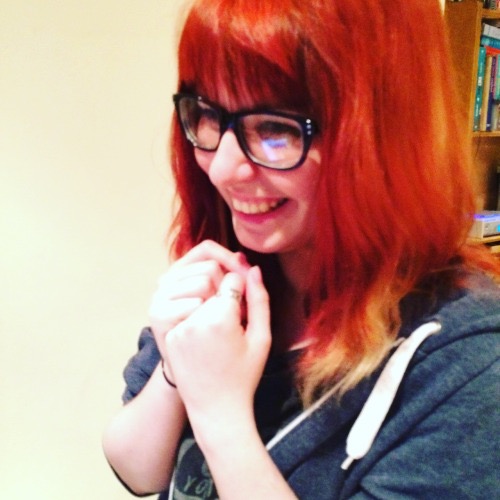
About Me
Hi! I’m Lauren Alex Hooper. Welcome to my little blog! I write about living with Autism Spectrum Disorder (ASD), ADHD (Inattentive Type), and Hypermobile Ehlers-Danlos Syndrome (hEDS), as well as several mental health issues.
I’m a singer-songwriter (it’s my biggest special interest and I have both a BA and MA in songwriting) so I’ll probably write a bit about that too.
My first single, ‘Invisible,’ is on all platforms, with all proceeds going to Young Minds.
My debut EP, Honest, is available on all platforms, with a limited physical run at Resident Music in Brighton.
I’m currently working on an album about my experiences as an autistic woman.
Links
Categories
Recent Posts
Archives
- April 2026 (1)
- March 2026 (3)
- February 2026 (1)
- January 2026 (1)
- December 2025 (1)
- August 2025 (1)
- July 2025 (1)
- June 2025 (4)
- May 2025 (3)
- April 2025 (2)
- March 2025 (1)
- February 2025 (1)
- January 2025 (1)
- December 2024 (2)
- November 2024 (1)
- October 2024 (1)
- July 2024 (1)
- May 2024 (1)
- April 2024 (3)
- March 2024 (1)
- January 2024 (1)
- December 2023 (4)
- November 2023 (6)
- October 2023 (5)
- September 2023 (6)
- August 2023 (4)
- July 2023 (5)
- June 2023 (5)
- May 2023 (7)
- April 2023 (4)
- December 2022 (4)
- November 2022 (1)
- October 2022 (1)
- September 2022 (1)
- August 2022 (3)
- June 2022 (2)
- May 2022 (6)
- April 2022 (10)
- March 2022 (9)
- February 2022 (3)
- January 2022 (1)
- December 2021 (7)
- November 2021 (5)
- October 2021 (7)
- September 2021 (4)
- August 2021 (1)
- July 2021 (2)
- June 2021 (4)
- May 2021 (10)
- April 2021 (11)
- March 2021 (14)
- February 2021 (6)
- January 2021 (6)
- December 2020 (8)
- November 2020 (9)
- October 2020 (8)
- September 2020 (10)
- August 2020 (8)
- July 2020 (4)
- June 2020 (6)
- May 2020 (8)
- April 2020 (7)
- March 2020 (9)
- February 2020 (5)
- January 2020 (7)
- December 2019 (7)
- November 2019 (1)
- October 2019 (1)
- August 2019 (1)
- July 2019 (2)
- June 2019 (3)
- May 2019 (5)
- April 2019 (5)
- March 2019 (5)
- February 2019 (6)
- January 2019 (5)
- December 2018 (7)
- November 2018 (3)
- October 2018 (5)
- September 2018 (5)
- August 2018 (5)
- July 2018 (9)
- June 2018 (7)
- May 2018 (7)
- April 2018 (6)
- March 2018 (11)
- February 2018 (5)
- January 2018 (6)
- December 2017 (7)
- November 2017 (7)
- October 2017 (7)
- September 2017 (6)
- August 2017 (5)
About Me
Hi! I’m Lauren Alex Hooper. Welcome to my little blog! I write about living with Autism Spectrum Disorder (ASD), ADHD (Inattentive Type), and Hypermobile Ehlers-Danlos Syndrome (hEDS), as well as several mental health issues.
I’m a singer-songwriter (it’s my biggest special interest and I have both a BA and MA in songwriting) so I’ll probably write a bit about that too.
My first single, ‘Invisible,’ is on all platforms, with all proceeds going to Young Minds.
My debut EP, Honest, is available on all platforms, with a limited physical run at Resident Music in Brighton.
I’m currently working on an album about my experiences as an autistic woman.
 Finding Hope