 Finding Hope
An Unexpected Trigger
Posted on December 5, 2021
NOTE: Spoilers for Unforgotten Series 4.
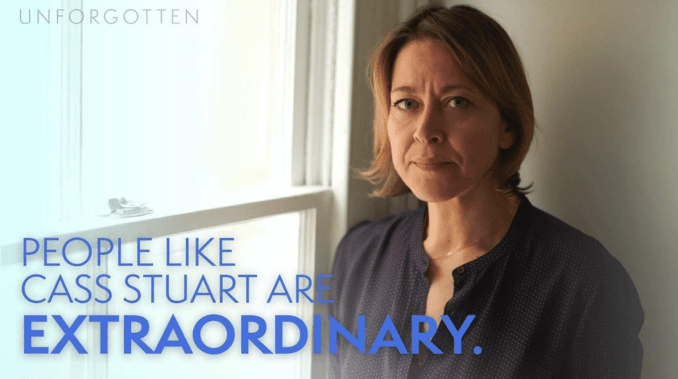
Back in March, I watched the final episode of Unforgotten Series 4 and if you haven’t seen it – spoiler alert – Cassie, the main character (played by Nicola Walker), dies from injuries sustained in a car accident. It was incredibly shocking and upsetting. It’s something that’s been in my head on and off all year and I would really like to leave it in this year. I guess that’s why I’m writing about it now.
(x)
As I said, I was very upset when the series ended with Cassie’s death. That’s not exactly surprising since I do get very attached to my favourite characters. Upset isn’t really a big enough word: there was shock, distress, grief, anger… it was overwhelming. And in an attempt to process some of these emotions, I wrote a song about grief called ‘Incomplete,’ a snippet of which I posted on Instagram…
And while that helped a bit (coincidentally, it’s the second TV show featuring Nicola Walker that I’ve written a song about), I could feel it all hanging over me. It felt so shocking and so brutal and I felt oddly fragile in the wake of it. It was later that I learned about ‘the alienation effect’ after a researching rabbit hole that ended in me reading about the film, Psycho (a film I’ve never seen by the way – I’m looking at you, ADHD). In his essay about Psycho, film theorist Robin Wood wrote: “[The murder of the main character, Marion] also constitutes an alienation effect so shattering that (at a first viewing of the film) we scarcely recover from it. Never – not even in Vertigo – has identification been broken off so brutally. At the time, so engrossed are we in Marion, so secure in her potential salvation, that we can scarcely believe it is happening; when it is over, and she is dead, we are left shocked, with nothing to cling to, the apparent center of the film entirely dissolved.” I could be wrong – I’m not a film expert by any measure – but I think that’s what’s happened here; this quote certainly describes how I felt about that final episode. Cassie was the focal character, the audience surrogate almost, and she was the glue that held together a show that regularly changes almost the entire cast (along with Sunny and the rest of the team, of course) and her death was incredibly shocking. I’ve always felt things deeply but I haven’t spoken to one person who wasn’t upset by it.
While there were, of course, other factors impacting on my mental health, it was the trigger of that particular period of depression. But months later, even after my depression lifted a bit, I still couldn’t shake it. I still found it very upsetting and I was still having nightmares involving car crashes; as deeply as I feel things, this seemed to be sitting differently. Eventually, it occurred to me that it was potentially more than straightforward upset over the loss of a favourite character and the loss of a favourite show (maybe – I’m still not sure how I feel) and that the storyline – a sudden, completely unexpected, shocking death – had triggered me as a result of the trauma around my Dad’s death, trauma that is still relatively undealt with. It completely blindsided me. I’m still relatively in the dark on my triggers in this area, given that my coping mechanism for most of the last thirteen years has been to, essentially, bury it: facing it just felt insurmountable. But now that I’m starting to unearth it again, it appears that that earth is packed with landmines. The metaphor wears thin, but hopefully you get my point.
I don’t know how I feel about all of this but putting my thoughts into words has helped. This year has been so busy and so emotionally chaotic that I feel like I haven’t had the time or brain space to even start processing it all. In regards to the show, I don’t know whether I’ll watch the next series. Right now just the thought of it is upsetting. Nicola Walker said in an interview that “Cassie’s death wasn’t for effect; [Chris Lang, writer of Unforgotten] is going somewhere with that conversation about grief,” and while I think these are important conversations to have, I’m not sure if I have the emotional bandwidth for a fictional one when I’m already trying to manage my own very real one. I don’t know. But I really don’t want to go through this again if I can avoid it.
“Cassie’s fate may have caught viewers by surprise, but it was something Walker had discussed with the show’s creator and writer, Chris Lang. ‘We were talking from the beginning, really, about what he was doing with this character and this story he wanted to tell,’ Walker told TV Insider. ‘Chris and I were always interested in looking at the cost of being involved with these sorts of cases that we all love watching on television. Cassie does not have superpowers. She’s an ordinary person who’s really good at her job, and it took her to the place of having an emotional breakdown… We talked a lot after Season 3 about where it was going to go, and it was a joint decision,’ she adds. ‘I think the clues were there in Season 3. The title of the show is Unforgotten and I think there’s a great deal of narrative beauty to this woman. She’s not going to be forgotten. I felt like she was quietly very unusual on television because she was a real person.'” (x)
I keep coming back to this quote. I agree with it, with what she says about Cassie, but I still don’t understand why Cassie had to die, why she had to die in a shocking, brutal way. Maybe I never will. Most of all, I’m sad. I’m sad that a show I loved will forever be entwined with distress and painful memories.
Trichotillomania Triggers
Posted on February 13, 2021
Trigger warning: This post is dedicated information and experiences with Trichotillomania so if this is a difficult subject for you, please don’t read on. I would hate for you to be triggered. Having said that, immediately following this post will be one on a list of ideas and tips to help with hair pulling.
It’s been a while since I talked about Trichotillomania, whether about my experience or about the disorder in general. I’ve been learning more and more about what triggers me so I thought I’d do some research into triggers more generally and after doing all that reading, I thought I’d collate some of it in case it could be helpful to any of you guys.
CAUSES
Scientists still don’t know what causes Trichotillomania – and other BFRBs (Body-Focused Repetitive Behaviours) – but there are various theories, including:
- A way of dealing with stress or anxiety
- A genetic factor, like a chemical imbalance in the brain, similar to obsessive compulsive disorder (OCD)
- A change in hormone levels during puberty
- A type of self-harm to seek relief from emotional distress
- A trauma in childhood
Pulling can then become a type of addiction. The more a person pulls their hair out, the more they feel the need to keep doing it.
TRIGGERS
While there isn’t much definitive research into the causes of Trich, we are learning more and more about what drives people to pull once they’ve started pulling, the internal and external triggers that occur right before someone pulls. External triggers include certain people, or places, or situations while internal triggers include certain thought processes, emotional states, or physiological sensations. When the particular trigger (or one of multiple triggers) is experienced, a person who struggles with compulsive hair pulling may be ‘triggered’ to pull. The pulling satisfies something, like creating a feeling of relief or calm for example.
These triggers can be sorted into a multitude of categories, these being some of the most common…
- Emotional – The emotions behind hair pulling can be very complicated and multi-layered. For many individuals with Trichotillomania, pulling is a way of dealing with negative or uncomfortable feelings, such as stress, anxiety, boredom, or frustration, to name just a few. Several studies have shown that stress was reported to be the most common trigger for increased hair pulling. This may be because pulling out hair relieves stress; when someone is anxious, the tension in their body increases and the sensation (and sometimes pain) of pulling can help to release some of that energy. I can definitely relate to all of this. When the pulling is focussed (as opposed to automatic – something I’ll come to later in the post), it can almost be a mindful activity, centering in on what your hands are doing and allowing some of the anxiety in your system to dissipate. Pulling can feel satisfying and create a sense of relief, which can reinforce the urge to pull, especially when trying to cope with negative feelings; we all want something to make us feel better when we’re struggling.
- Sensory – Many people will pull out particular hairs that have a certain feel to them, such as being thicker or longer than the rest of their hair. Texture can also be a huge trigger, if certain hairs feel crinkly or just stand out when touching one’s hair, for example; this is huge one for me. My hair is mostly straight (if vaguely wavy) but the individual hairs are very smooth so when I find a crinkly hair, it really stands out and it’s all I can think about until the tension is so high that I can’t concentrate unless I pull it out. Sometimes that’s it but sometimes that causes a period of pulling that can last for days, or until my pulling arm gets so painful that I physically can’t lift it to reach my hair. The location (like the parting or hairline – another relatable experience) and the physical sensations that hair can create against the skin can also trigger someone to pull in order to relieve a person of those sensations.
- Environmental – A person may have particular locations and situations where they are more likely to pull. The privacy of rooms like a bedroom or a bathroom may make pulling more tempting; these rooms are also ones where you’d mostly likely find mirrors and tweezers, items that could also serve as triggers. There are also certain activities that create opportunities for pulling, such as using a computer, reading, watching TV, and so on, all of which have certain things in common: these activities are generally stationary and your posture during these situations gives your hands more access to your hair, if you pull from your scalp or eyebrows for example.
- Cognitive – Cognitive triggers are often connected to thoughts about imperfection. I can definitely relate to this as a lot of the triggers for my hair pulling are related to perfectionist thoughts and feelings. And these thoughts can manifest as hair pulling in multiple ways. The imperfection could be with the hair itself: that it feels too thick, too curly, that it’s the wrong colour, or that it doesn’t match the rest of your hair. And when the hair starts growing back, a person may feel compelled to pull out more hair to balance out the length of the regrowth. Sometimes the imperfection comes in the forms of attempting to stop pulling. For example, if a person challenges themselves not to pull for a day and then they pull just one hair, then they may think that they have failed. ‘Failing’ to meet those goals can results in even more pulling, out of frustration and a low sense of self worth. Pulling can also be triggered by perfectionist thoughts in other areas of their lives, like school or work or relationships, etc. When one (or many) of these areas start to break down and a perfectionist can’t fix it, the loss of control can be overwhelming, leading to the developments of problems like Trichotillomania where they feel that they do have some sense of control. At least to begin with anyway: when they feel out of control, they can pull out their hair and think, “Look, I can control what I look like; I am still in control.” However, when hair pulling spirals into the disorder that is Trichotillomania and stopping feels impossible, the perfectionist thoughts only get worse because now you’ve lost control in another aspect of your life.
There are two ‘types’ of pulling: focused pulling and automatic pulling.
- Focused pulling is when a person pulls their hair out intentionally. This may be due to feeling a hair that’s too thick or too coarse or out of place somehow, to relieve stress or anxiety in their lives, or to get some relief from the overwhelmingly strong urge to pull. Or it could be a combination of things.
- Automatic pulling is when a person pulls out their hair without realising it, or without fully realising it. Automatic pulling may occur while working on a computer, watching TV, reading a book, or really anything that can be done one-handed. Similar to this, some people are completely aware that they’re pulling but feel absolutely unable to stop themselves, like their hands have a mind of their own. This can be due to how long a person has been struggling with Trich or the strength of the urge to pull, for example.
Some people do one or the other but many people do both.
This is obviously not a medical or scientific guide. I completely encourage you to research the subject further if any of this resonates with you. The NHS, for example, has a great page about Trichotillomania but I wanted to share what I’ve learned while researching and my experience with some of the areas that came up. And as I said at the beginning of this post, I will be sharing a collection of suggestions for managing and potentially reducing your pulling directly after this post.
EXTRA NOTE: Here are some of the articles I read while researching that I found to be really interesting and potentially helpful: (1) (2) (3) (4) (5) (6) (7)
 Finding Hope