 Finding Hope
Ideas To Help With Hair Pulling
Posted on February 13, 2021
Trigger warning for Trichotillomania/hair pulling. Please don’t read this if this is something that will upset or trigger you. I only want this to be helpful, never harmful.
Having just written about some of the things that can trigger episodes of Trichotillomania, I wanted to post a list of ideas that have the potential to help someone struggling with hair pulling. There are lists all over the internet with various collections of ideas but I felt that it would be irresponsible to post about the triggers of Trich without offering some kind of help, especially the kind of help that you can practice yourself without having to wait to see a specialist (although I would encourage you to seek out professional support as well). These aren’t cures obviously – there are currently no proven cures for Trichotillomania – but numerous accounts have shown that many of these strategies have helped people manage and reduce their urge to pull, which is obviously a big deal. I also wanted to share which strategies have helped me – if you relate to other things that I’ve posted maybe they’re a good place to start.
There are a number of things I want to mention before getting into this list:
- You have to remember to forgive yourself for not being perfect. Trying to stop pulling is an incredibly difficult (although incredibly rewarding) task. Your progress isn’t always linear. Sometimes you’ll manage an amazing streak and then not even manage a day. But just as you can struggle, you can succeed. However, beating yourself up for ‘going backwards’ won’t help you move forward; it’s a waste of precious energy that you could be dedicating to your attempts to stop pulling.
- One strategy won’t necessarily work forever. It may work for a time and things may improve. But then, if you start pulling again, it may not be helpful the second time around. For example, I wore a hat consistently for months and that slowly stopped me pulling my hair out. I didn’t pull for a year but when I started again, wearing a hat just made me feel anxious and claustrophobic. So I had to try different methods.
- If you’ve ever tried to stop pulling before, you’ll know that you have to be committed. Seriously committed. As dramatic as it sounds, you have to be thinking about it all the time. And if you’ve been doing it long enough, there will be a degree of habit so you don’t even notice yourself doing it and yet you still have to have an awareness of it. It’s really hard. Really, really hard. But it is possible to reduce the pulling to some degree at least.
Now, onto the list…
* = I’ve tried this.
** = I’ve tried this and it helped.
- Wear a hat or bandana**

(I wore a hat for months, possibly more, consistently – to the extent that it’s become part of my look as a singersongwriter and I have been recognised because of it – and that helped me stop pulling for over a year. However, as I said earlier in the post, when I started pulling again, it didn’t help because I started pulling from a different area of my scalp.)
- Wet down your hair**
- Cut your hair short (or if necessary, shave your head)
- Wear a wig
- Sit on your hands until the urge passes or you’re distracted
- Snap a hair band or rubber band against your wrist
- If you use tweezers to pull, put them out of the way of your daily routines or throw them out if necessary**
- Squeeze a stress ball or something similar*
- Use a fidget toy (you may need to try several different ones to find one that works for you)**
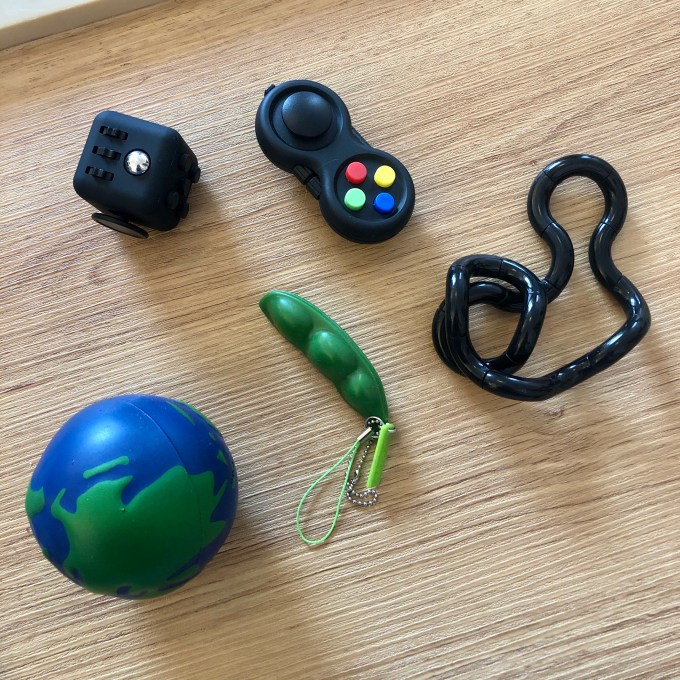
(These fidget toys are my personal favourites. I have more that I’m slowly donating to family and friends and acquaintances who have expressed interest in them. Personally I prefer plastic over metal because the metal toys make my hands smell. I also prefer the ones with buttons etc, rather than ones that you squeeze, like stress balls. But different fidgets appeal to different people).
- Put vaseline on your fingers or the hair you would be pulling
- Put plasters on your fingertips
- Wear gloves
- Journal about your experiences*
- If you feel comfortable doing so, ask your friends or family to point out when you start pulling*
- If there’s a room or environment you normally pull in, try changing your environment
- Play an instrument**
- Stroke or play with an animal*
- Exercise
- Start with small goals (periods of time where you don’t pull, for example) and increase as you can**
- Use a chart or app to track the amount of time between pulling ‘sessions,’ inspiring/motivating yourself not to break your streak**

(There are multiple phone apps that count days; it mostly comes down to whether there are any extra features that might help you, what kind of aesthetic you prefer, and whether you feel you need one that you’d have to pay for.)
- Try a hobby that occupies your hands, like origami or knitting*
- Brush your hair instead of pulling
- Come up with a saying that you repeat out loud until the urge to pull passes or say “No” out loud
- Form a ball with your fist and tighten the muscles in that arm
- If your pulling is triggered by texture or colour, try dyeing or care for your hair to minimise pulling**
(Hairs with a coarse texture is a really trigger for my pulling so I’ve been searching for a good product that at least reduces that problem for years. I love Aussie’s Miracle Moist Collection – the shampoo, conditioner, conditioner spray, and the 3 minute deep conditioner – because it makes my hair really sleek. It’s the best product I’ve found. I am trying to find a vegan, cruelty-free replacement but I do have to balance that search with how bad my Trich is and the state of my finances. I’m determined to keep looking though.)
- Fiddle with dental floss or thread
- Wear jewellery you can fiddle with/wear specially designed fidget jewellery**
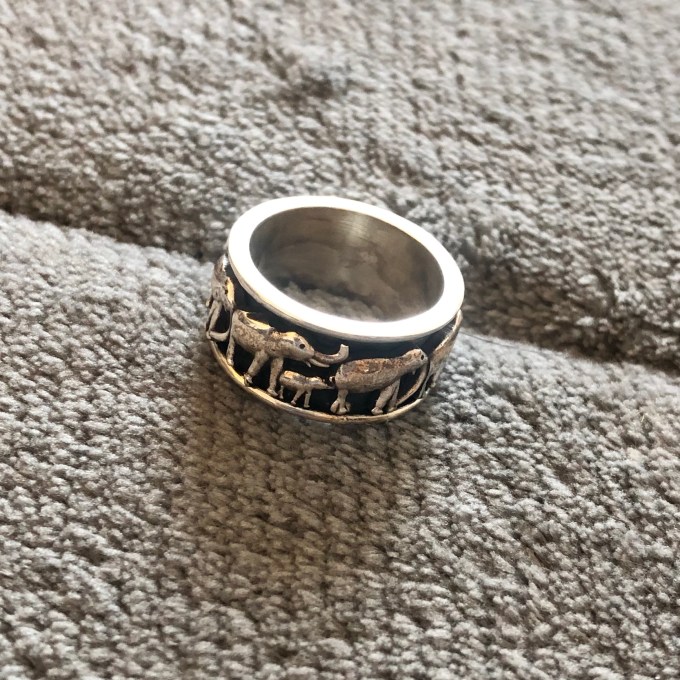
(I had a spinner ring for several years that I adored. It was silver with elephants on it and I was constantly wearing it and spinning the outer band. But recently it broke and the replacement isn’t quite the same: it isn’t as comfortable and so I don’t wear it as much.)
- Use positive reinforcement (reward yourself even in the smallest way, like treating yourself to your favourite snack or having an extra indulgent bath or shower, when you achieve a certain period of time without pulling)
- Weed the garden
- Cut your nails short or wear acrylic nails, making it difficult to get ahold of strands
- Style your hair in a way that prevents access to the area you pull from*
- Try meditation or mindfulness*
- Pull from or fiddle with the hairs of paintbrushes
- Use a hand grip strengthener*
- Make yourself aware of the action (putting essential oil or perfume on your hands, for example)
- Attach a weight to your pulling hand
My latest strategy has been to use a strip of elastic (like the kind used in clothing or sewing) and attach one end to my portable desk, the other loosely around my wrist. Technically I can still reach my hair if I really try but it’s awkward and uncomfortable and so far, just the sensation of the elastic pulling against my wrist has stopped me trying to pull. It hasn’t been long so I don’t know how successful it will be long term but it seems to be working so far.

It’s also worth mentioning that there are therapies, and then issue specific therapies within those therapies, such as Habit-Reversal Therapy (several studies from 1980 concluded that it had a 90% symptom reduction rate), which was born out of CBT. Hypnotherapy has also shown results for some people. However, access to CBT can take a long time via the NHS and these therapies can become incredibly expensive if you venture into the world of private healthcare.
There are also support groups, both online and in person (although not currently due to the COVID-19 pandemic). Search out Trichotillomania organisations and charities for general online support groups. You can also search for Facebook groups for both general and location specific support groups. I can’t speak to the effectiveness of these as I’ve never personally used them – I didn’t personally feel that that sort of support was one that would be helpful – but I know they make many people feel less alone and allow people to share tips and strategies.
I hope this list has been informative. Hopefully some of these tips have been or will be helpful. At the very least, it’s a varied collection of things to try. If you’re struggling with Trichotillomania, I’m thinking of you and I hope that something on this list will help.
Seeking Treatment For Chronic Fatigue – Part 1
Posted on November 21, 2020
As I’ve mentioned before, I’ve struggled with extreme fatigue all my life (I talked about this in my ‘Tired‘ blog post); Myalgic Encephalomyelitis and Chronic Fatigue Syndrome (often referred to collectively as ME/CFS) have been tossed around since I was twelve years old but I wasn’t officially diagnosed until last year. This kind of acute ‘unexplained’ fatigue – unexplained as in there is no obvious cause, such as exercise or lack of sleep – is also a common experience for autistic individuals, as well as related symptoms like headaches and bodily pain.
I’ve been managing these high levels of fatigue for most of my life, trying various things to improve my quality of life. And I continued searching for a cause. I had test after test but nothing ever gave us an explanation. I resisted the ME/CFS diagnosis even as it seemed more and more likely because there’s no cure, not even a reliable method of management, but eventually it seemed the only way to move forward. So, after a long talk with my GP, she officially diagnosed me with Chronic Fatigue Syndrome and we began discussing various options for next steps and support. She referred me to the local Chronic Fatigue Clinic and I anxiously awaited my session.
It was a bitter, heart-wrenching disappointment. I left in tears. Maybe it would’ve been helpful when I first started experiencing these symptoms (I think the longest any of the others there had been struggling was two years) but twelve years in, I knew more than the person delivering the information, had found everything suggested to make no difference or be outright unhelpful, and I just felt so patronised. It was an awful experience and I couldn’t help but feel so angry that this was the best on offer for what I was trying to manage and had been trying to manage alone (in terms of the health system) for more than a decade.
When we spoke to them after said awful session, they referred me to a doctor that we realised I’d previously seen – years and years ago and had a very traumatic experience with. I was obviously very reluctant to go. My Mum and I spent a lot of time talking about it, about the pros and cons of going and not going. The scary thing is that it’s so easy to get kicked off every list with one refusal so I said that I would go, despite having had such a distressing appointment with him – one I’m sure he doesn’t even remember. But before we contacted that clinic, we spoke to my GP again. We explained how upsetting the experience had been and how worried we were that it was only going to be worse this time, considering I would be going in with the baggage of the previous appointment; we told her that I would go if that was how it had to be to continue on this path but she felt that we were right, that it wouldn’t be helpful given the circumstances and as I’d technically already seen him, it wouldn’t cause any problems in the system. We asked if there were any other options and this was when she referred me for the hypermobility assessment (these posts are now out of order, not only because it’s been such a confusing and complicated process, but also because I’ve had trouble keeping things like this clear and ordered in my head since the pandemic started).
I’ve now had this appointment and been diagnosed with hypermobility, which potentially explains (at least in part) my problems with fatigue and pain. (At some point, we’re going to need to lay out all of these diagnoses and work out whether there’s any overlap, whether any of them are now redundant. But that’s a job for another day.) Apparently those with hypermobility are seven times more likely to be autistic, which is a very interesting piece to add to the whole puzzle. The post goes into it in more detail but basically, we’re now waiting to find out whether or not various routes are possible. For example, I’ve been referred for hydrotherapy but we don’t know whether I’ll get it and if I do, when it will be possible with the pandemic and lockdown. That has really stalled things. So it’s one waiting game after another.
But we’re not simply waiting. We – my Mum in particular – are also looking into other angles, other medical professionals who specialise in fatigue or who have studied fatigue in depth. We’ll take any advice we can get. I resisted a diagnosis of CFS for so long because it felt like admitting defeat – an expectation that I would just have to live with it with limited options – but I don’t accept that, not anymore. I’m participating in every research study I can find that I qualify for and my family and I continue to research potential specialists and potential avenues of treatment or even simply more effective management of the symptoms. The pandemic makes it hard but I am not willing to accept that this is going to be my life, that there’s no hope. Not that long ago, NICE (The National Institute for Health and Care Excellence) removed ‘graded exercise therapy’ as a treatment for ME/CFS, after both research and those suffering with the condition proved that it was actually unhelpful at the very least. It’s slow but it’s progress. And I’ll take all the progress I can get.
 Finding Hope