 Finding Hope
Creative Difference: Exploring Art And Autism
Posted on October 24, 2020
Recently I attended a webinar hosted by the Autism research charity, Autistica, about the relationship between Autism and art and it was really interesting. The panelists were Professor Jonathan Green (Autistica Trustee, Professor of Child/Adolescent Psychiatry at Manchester University, and artist), Sarah Jane Bellwood (artist and gallery owner), Lizzie Huxley-Jones (editor and author of Stim: An Autistic Anthology), and Jane Elizabeth Bennett (multi-disciplinary artist and researcher).
Each person introduced themselves and then the discussion began. I found the whole thing really fascinating so I thought I’d pull a few quotes from the video that I thought were particular highlights, but I thoroughly recommend watching the whole video to hear all of the points made.
So here are some quotes that I found really interesting…
JANE ELIZABETH BENNETT: “I think art is the first language that I really kind of learnt. So, for me, art is a way to speak, it’s a way to communicate, it’s a way to convey emotion, and they’re not always things that I’m fantastic at doing in a kind of neurotypical way. For me, art is a very atypical way of communicating. You do it through colour, you do it through gesture, you do it through sound.“
I love this description of art and it’s something I really relate to as an artist. I definitely use my songwriting to tell stories and relay experiences and share emotions. I do that through the lyrics, through the melody, the vocal performance, the arrangement and instrumentation, as well as the production. While, for me, the song is the piece of art in its purest form, the performance, the arrangement, and the production are all a vital part of conveying and enhancing the emotional experience. I definitely experience Synaesthesia to some degree: sounds have colours (and some even have specific tastes) as do emotions and so a big part of my process is trying to bring those experiences together; I’m often only happy with a song when the emotions, sounds, and colours are completely in sync.
JONATHAN GREEN: “And I was totally absorbed in doing this drawing, like nothing else existed except what I was doing. And I came out of it an hour or two later or something and I think I felt, ‘That’s the most real thing that’s happened to me for a long time… is that connection, with that plant through drawing.’ And I think that’s, for me, why I held on to it… was that it felt… it gave me an access to something that was so real… It’s allowed me to feel really real.“
Having just written and finished a song is when I feel most real, most alive. Sometimes I feel like I don’t really exist and when I finish a song I’m proud of, it’s like a realisation that I really do exist. It’s the only time I feel in sync with the universe. I never feel so connected to myself as when I finish a song, or to other people as when I perform a song I’ve written and they respond to it. We’re all in this single moment, experiencing this thing together and it’s magical.
LIZZIE HUXLEY-JONES: “We should have the space within an industry to create whatever we want.“
JANE ELIZABETH BENNETT: “I think it’s very important that as an autistic artist… it’s very important to have that space to make work that isn’t about Autism. Just because I’m autistic doesn’t mean I have to be, like, the voice of Autism but I think my Autism – just as a personality or as a writing style – is gonna be inherent in the work I make.“
LIZZIE HUXLEY-JONES: “The way I describe it is, ‘we experience everything autistically so why wouldn’t everything we create be a little bit autistic as well?‘”
I think these are really important points: just because we’re autistic, it doesn’t mean that we have to create art about being autistic. Many do because it’s an outlet for their individual experiences or because it’s a way to make sense of themselves but we should never be pigeon holed into just creating Autism related work. How much space Autism takes up in our lives is different for everyone and we obviously feel and experience unrelated things that we want to make art about so not all autistic artists will choose to make art about Autism. But as Jane points out, being autistic likely will influence the work we make because it influences the way we perceive the world. Day to day that can be incredibly frustrating but when it comes to art, it can be something that makes our work special and different.
JONATHAN GREEN: “I think, for me, making art or the process of making art does help me make sense of things or sort my mind out in some way. I always feel, kind of, more in harmony after I’ve been making art. Internally, you know? Kind of rebalanced, or something like that.“
I can absolutely relate to this. I definitely feel most calm, in mind and body, when I’ve just finished a song. It’s not too far from the experience I described earlier, about feeling real and alive and in sync. I also feel this real sense of inner calm. It’s like everything within me has been shaking and it’s suddenly stopped. It’s like all these disconnected pieces have come together and everything makes sense. It’s not dissimilar to how I imagine getting high feels.
There were a couple of things that bothered me though. I felt like having three visual artists and one writer wasn’t the best representation of artistry; they could’ve had a musician or sound artist, an animator, a photographer, etc and that would’ve created a more varied discussion because the forms of art were more varied. The discussion was really interesting as it was but I think a wider variation of art forms would’ve only added to that.
There was one thing specifically that I really didn’t like and that was the repeated use of the word ‘obsession’ in place of ‘special interest,’ the term more commonly used in Autism. I know that some people don’t like the phrase ‘special interest’ (I must admit I don’t love it) but I don’t think that that’s a good reason to revert to the word ‘obsession,’ a word that has some very negative connotations. Various definitions of ‘obsession’ involve the terms ‘unhealthy’ and even ‘disturbing’ and while I can’t speak for anyone else, I find those associations with my special interests uncomfortable and actually upsetting. I’ve had a handful of special interests in my life and none of them have been unusual in subject (animals, writing, singing, songwriting, to name some), but the intensity of that interest and fascination is what stood out. Definitions of ‘obsession’ also include the idea that they dominate a person’s thoughts, that they have control over you (which links back to the idea that they’re unhealthy), which, again, I personally wouldn’t associate with my special interests. While I think about my special interest – songwriting – a lot and would prefer to spend all of my time doing it, I can think and do other things and I can recognise when I’m spending too much time doing it and neglecting the other areas of my life. And during my research into the difference between ‘obsession’ and ‘special interests,’ I found several articles about how helpful and positive engaging with special interests are for autistic people (here and here). In the former, the writer, Laina Eartharcher, makes many good points that I feel I should quote rather than attempt to paraphrase:
- “They soothe and calm me.”
- “My interests do not dominate my thoughts the way that is consistent with an obsession. It’s not like I can’t think about–or talk about–anything else. It’s not like I can’t set my other interests aside and focus on my daily work. It’s not like I can’t get anything else done. If my interests were indeed obsessions, none of that would be true; my life outside of the interest would have come to a full stop.”
- “For me, it’s all about relaxation and curiosity. I want to learn, focus, explore. And I want to do so in depth, with a sense of completeness. I don’t want pieces of the picture, I want the whole picture. I want to connect dots. I want to reach understanding. I want to feel solid in my knowledge. Tidbits and soundbites just don’t do it for me. They’re pointless and unsatisfying. It’s like, what’s the point of spending time gathering a bunch of soundbites and headlines? Meh. Give me the whole story, or don’t bother me with it.”
- “I would like to see the ‘obsession’ association fall out of favor. It’s not accurate. It’s not nice. It lacks understanding.”
I relate to all of these statements and fully agree with her. ‘Special interest’ may not be the perfect word but the use of ‘obsession’ can be damaging and create misunderstandings about Autism. So it did really bother me how many times this word came up and the fact that it was never addressed, even briefly. I want to talk about special interests more in the future – I think it definitely deserves its own blog post as a subject – but as it came up here, I felt like it was important to talk about.
But that issue aside, I found the webinar to be a really informative, enjoyable experience and I look forward to similar events that Autistica puts on. I’ve followed several of the speakers on social media and have enjoyed delving deeper into the work they’ve created. As an autistic person, I’m always intrigued by the work of other autistic people and to what degree they experience and interpret the world in the same way I do and then (if they do) how they translate that into art.
Category: autism, book, diagnosis, emotions, music, response, tips, uncategorized, video, writing Tagged: actuallyautistic, art, art and autism, artist, artists, asd, author, autism, autism spectrum disorder, autistic, autistic adult, autistic artist, autistica, communication, creative difference, creativity, emotion, exploring art and autism, jane elizabeth bennett, jonathan green, laina eartharcher, language, language of autism, lizzie huxley-jones, music, obsession, obsessions, perspective, quote, quotes, representation, sarah jane bellwood, songwriting, special interest, special interests, synaesthesia, webinar, writer
On JK Rowling’s Recent Comments
Posted on August 26, 2020
I’m sure many of you have seen JK Rowling’s recent comments on transgender people and how including transgender women and cisgender women in the same group erodes the experience of cisgender women. As this all began on Twitter, that is where I’ve been most vocal. I’ve shared articles, shared the experiences and reactions of trans women, and made my stance clear: trans women are women.
(If you’re not up to date with what’s been happening, these two articles – here and here – have been recommended to me as good representations of the timeline of events and some of the reactions.)
But beyond that, I haven’t written much, haven’t written anything more in depth. I’ve wanted to but with my mental health and cognitive skills (including my concentration) so drastically affected and constantly fluctuating due to my pandemic anxiety, I haven’t been able to sit down and finish anything that I felt said much more than ‘I disagree with JK Rowling’s tweets,’ something which I have already said. I would never want my voice to take the space that belongs to a trans person but then I don’t think this post will do that: it’s simply my little corner of the internet where I get to talk about the things that are important to me and this is important to me. And to remain silent feels like a betrayal. If you are transgender, I support you. If you are non binary, I support you. If you do not fit into society’s expectations around sex and gender, I support you. I support your right to explore who you are, be who you are, and live your life unchallenged, unlimited, and unafraid, and I will do all I am able to help that become a reality.
As the topic has, in this case, been brought into the spotlight by JK Rowling, I’d like to write a little about her. My relationship with all JK Rowling is has become increasingly complicated as time has gone on and as I have grown older and more aware of the issues in our world and the discrimination against different groups of people in our world.
As a child – I must’ve started reading the Harry Potter books when I was about seven or eight – I didn’t really connect stories with their writers. They were just glorious worlds to fall into with characters whose journeys you followed. The writers were simply a name on the front cover. I loved the world of Harry Potter and many of the positive experiences of my childhood (and beyond) are connected to it. It had a massive impact on my life and my own desire to tell stories and for that I’ll always be grateful.
Then, as a young teenager, I became more aware of JK Rowling as a person, both in connection to the world of Harry Potter and as a person, and was honestly really impressed by her: her creativity, her dedication to her work, all of her charitable work and contributions (losing her billionaire status after donating more than £120 million to various charities), and how she stayed in the UK and paid her taxes because she believed it was her duty, having received financial support from the government before her writing afforded her such wealth. I really respected her for that and while I still respect those good choices, they do not excuse her recent comments, for which many people (myself included) will never be able to truly forgive or forget, even if she takes it upon herself to apologise, learn, and take serious positive action.
I know that as a cisgender person I cannot truly understand what it’s like to be transgender and I can admit to having limited academic knowledge. But I do have multiple transgender friends who have been generous enough to share their experiences with me and I have been close enough with some of them to have been present during some of the discrimination and difficult experiences they’ve faced. That has made it a very emotional issue for me, having seen my friends hurt like that. I do want to have a more intellectual understanding as well though so, as soon as I can focus enough to read again (as I mentioned earlier, the cognitive symptoms of my mental health problems have worsened since the onset of the pandemic), this is something I really want to pursue. I’ve sourced a collection of recommended books and reputable articles to read as soon as I can actually concentrate and absorb the information.
As nice as it would be, it’s probably naive to believe that we can simply divorce the creation from the creator. Rowling’s prejudiced comments are cause for concern about whether these harmful views are present in her work, are present in the world of Harry Potter. There are certainly problematic aspects, for example the naming of Cho Chang, the anti-semitic stereotype present in the Goblins, and the slavery of house elves – the existence of the latter two could be ‘explained’ by the fact that magic doesn’t automatically make for a perfect society had anyone seriously addressed the prejudice and inequality but they didn’t, apart from the odd comment or throwaway plot line. Having said all of this, the books are out in the world and I think that the best we can do is discuss the issues they raise, how they translate to the real world, and how we can address these prejudices, individually and as a society* – not an easy goal but a worthwhile one nonetheless.
(*in an understandable and digestible way considering the age of the reader.)
I would just like to touch on Fanfiction briefly because I think there’s a certain kind of magic in that it allows us to dig into the holes and stereotypes and problems and write stories to challenge the problematic parts and flesh out the things that weren’t properly explored. I’ve read some great stories that seamlessly integrate transgender characters and how Hogwarts accommodates (i.e. the rules about who’s allowed in which dormitories), some that explore the history of different magic (such as the development of wands in order to control who can use magic and how wandless magic may have evolved so that women could use magic without them), some that have the characters examining why history so often repeats itself, some that challenge the stereotypes of the Hogwarts houses and the repercussions that they can have on impressionable eleven year olds, and so on. Fanfiction allows us to make these worlds bigger and more complex and look at them through different lenses and I think that’s a really wonderful thing to have access to.
But back to the matter at hand, I don’t think that all of this – JK Rowling’s obvious (and harmful) views and actions – necessarily has to ruin the stories or the positive experiences we gained from Harry Potter, especially considering all of the good messages in them. But then I don’t know if I’d be able to say that had I not started reading the books before I connected them to authors with opinions and prejudices and big platforms on social media. I know that for many people this will have irreparably damaged their relationships with the stories and that makes me deeply sad. I’m reminded of what Daniel Radcliffe said in response to the tweets: “To all the people who now feel that their experience of the books has been tarnished or diminished, I am deeply sorry for the pain these comments have caused you.” Wouldn’t it be lovely if we could store away the things we love(d) in a time capsule so that they could remain untouched by the outside world?
I confess that I’m having trouble reconciling my feelings for the woman I admired as a young teenager and the woman I’m now seeing as an adult. I’m grateful for the gifts she gave me, both through the world of Harry Potter and the telling of stories, but I cannot and will not support her while she spreads such harmful and incorrect views. If she’s going to comment on something that has the potential to endanger an already vulnerable group of people, especially with a platform as big as hers, it is her responsibility to be thoroughly educated on the topic. I am deeply disappointed with her lack of empathy.
So, to conclude this post, I’m going to celebrate Rowling’s recent birthday by making a donation to Mermaids (a charity that supports transgender and gender-diverse children, young people, and their families) and to a series of personal fundraisers to help some transgender people get the support they need.
“I think trans women, and trans people in general, show everyone that you can define what it means to be a man or woman on your own terms. A lot of what feminism is about is moving outside of roles and moving outside of expectations of who and what you’re supposed to be to live a more authentic life.” – Laverne Cox
Category: book, quotes, response, writing Tagged: antisemitism, author, daniel radcliffe, fanfiction, feminism, gender, gender identity, harry potter, jk rowling, laverne cox, mermaids, mermaids charity, predjudice, problematic, quote, racism, reading, response, slavery, stereotypes, terf, trans women, trans-exclusionary radical feminist, transgender, transwomen, twitter
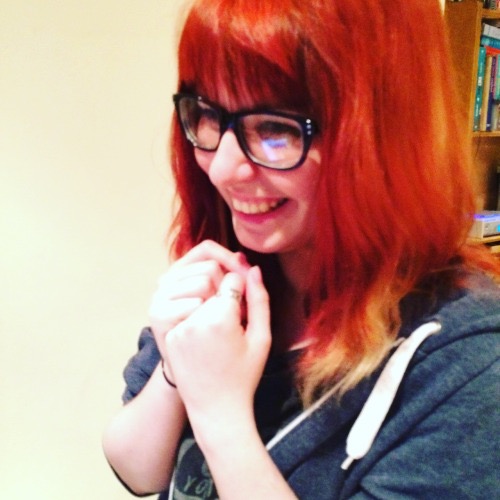
About Me
Hi! I’m Lauren Alex Hooper. Welcome to my little blog! I write about living with Autism Spectrum Disorder (ASD), ADHD (Inattentive Type), and Hypermobile Ehlers-Danlos Syndrome (hEDS), as well as several mental health issues.
I’m a singer-songwriter (it’s my biggest special interest and I have both a BA and MA in songwriting) so I’ll probably write a bit about that too.
My first single, ‘Invisible,’ is on all platforms, with all proceeds going to Young Minds.
My debut EP, Honest, is available on all platforms, with a limited physical run at Resident Music in Brighton.
I’m currently working on an album about my experiences as an autistic woman.
Links
Categories
Recent Posts
Archives
- April 2026 (1)
- March 2026 (3)
- February 2026 (1)
- January 2026 (1)
- December 2025 (1)
- August 2025 (1)
- July 2025 (1)
- June 2025 (4)
- May 2025 (3)
- April 2025 (2)
- March 2025 (1)
- February 2025 (1)
- January 2025 (1)
- December 2024 (2)
- November 2024 (1)
- October 2024 (1)
- July 2024 (1)
- May 2024 (1)
- April 2024 (3)
- March 2024 (1)
- January 2024 (1)
- December 2023 (4)
- November 2023 (6)
- October 2023 (5)
- September 2023 (6)
- August 2023 (4)
- July 2023 (5)
- June 2023 (5)
- May 2023 (7)
- April 2023 (4)
- December 2022 (4)
- November 2022 (1)
- October 2022 (1)
- September 2022 (1)
- August 2022 (3)
- June 2022 (2)
- May 2022 (6)
- April 2022 (10)
- March 2022 (9)
- February 2022 (3)
- January 2022 (1)
- December 2021 (7)
- November 2021 (5)
- October 2021 (7)
- September 2021 (4)
- August 2021 (1)
- July 2021 (2)
- June 2021 (4)
- May 2021 (10)
- April 2021 (11)
- March 2021 (14)
- February 2021 (6)
- January 2021 (6)
- December 2020 (8)
- November 2020 (9)
- October 2020 (8)
- September 2020 (10)
- August 2020 (8)
- July 2020 (4)
- June 2020 (6)
- May 2020 (8)
- April 2020 (7)
- March 2020 (9)
- February 2020 (5)
- January 2020 (7)
- December 2019 (7)
- November 2019 (1)
- October 2019 (1)
- August 2019 (1)
- July 2019 (2)
- June 2019 (3)
- May 2019 (5)
- April 2019 (5)
- March 2019 (5)
- February 2019 (6)
- January 2019 (5)
- December 2018 (7)
- November 2018 (3)
- October 2018 (5)
- September 2018 (5)
- August 2018 (5)
- July 2018 (9)
- June 2018 (7)
- May 2018 (7)
- April 2018 (6)
- March 2018 (11)
- February 2018 (5)
- January 2018 (6)
- December 2017 (7)
- November 2017 (7)
- October 2017 (7)
- September 2017 (6)
- August 2017 (5)
About Me
Hi! I’m Lauren Alex Hooper. Welcome to my little blog! I write about living with Autism Spectrum Disorder (ASD), ADHD (Inattentive Type), and Hypermobile Ehlers-Danlos Syndrome (hEDS), as well as several mental health issues.
I’m a singer-songwriter (it’s my biggest special interest and I have both a BA and MA in songwriting) so I’ll probably write a bit about that too.
My first single, ‘Invisible,’ is on all platforms, with all proceeds going to Young Minds.
My debut EP, Honest, is available on all platforms, with a limited physical run at Resident Music in Brighton.
I’m currently working on an album about my experiences as an autistic woman.
 Finding Hope