 Finding Hope
A Holiday Bubble
Posted on July 11, 2018
From the age of about two years old, I’ve been going to a little town in Norfolk almost every year on holiday. While I was in school, we – me, my parents, and our dog – would go during the October half term but in recent years, we’ve been going in the early summer, before the schools break up. We stay in a caravan less than a ten-minute walk from a stunning sandy beach and I absolutely love it.
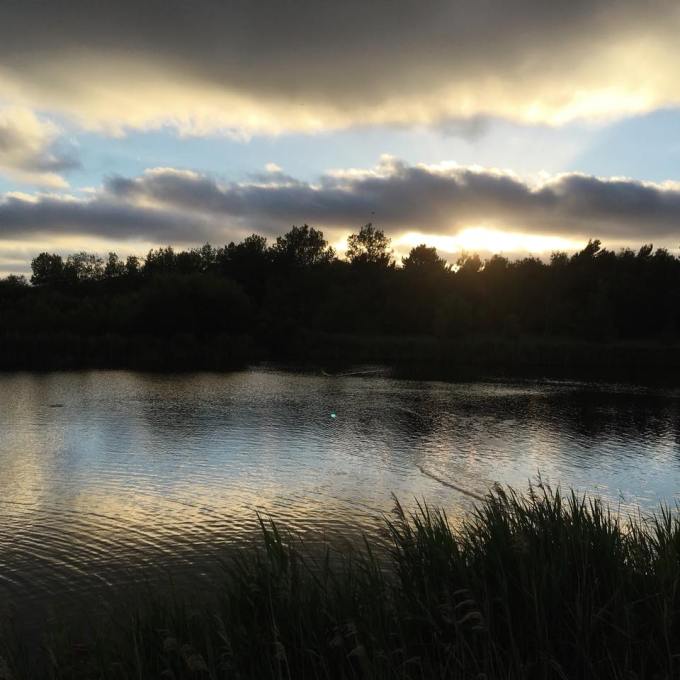
Some people find it strange that we always go back to the same place but as far as I can tell, there are two basic types of holidays: going to explore and going to relax. Both have their pros and cons. This is definitely a relaxation holiday. It’s familiar and calm and beautiful. It’s a bubble away from reality where I can just be, in a way I can’t at home. And, of course, familiarity and Autism go together like fish and chips. We also ate a lot of fish and chips…
I’ve been back from Norfolk a few days and I just really wanted to write about it. After having had so much change with the house move, the changing of medications, and the decision to keep my cat’s kittens, it was really nice to be somewhere so familiar and safe. And as much as I love the cats, I really enjoyed having some dedicated dog time with Lucky. Because he’s now so arthritic, we have to be careful to not over walk him (his enthusiasm far exceeds his physical ability so he’s not much help there) but we manage a couple of trips to the beach, which he loved. He can’t really run anymore but there was a fair amount of skipping, one sure-fire way to know he’s enjoying himself. It’s very cute.
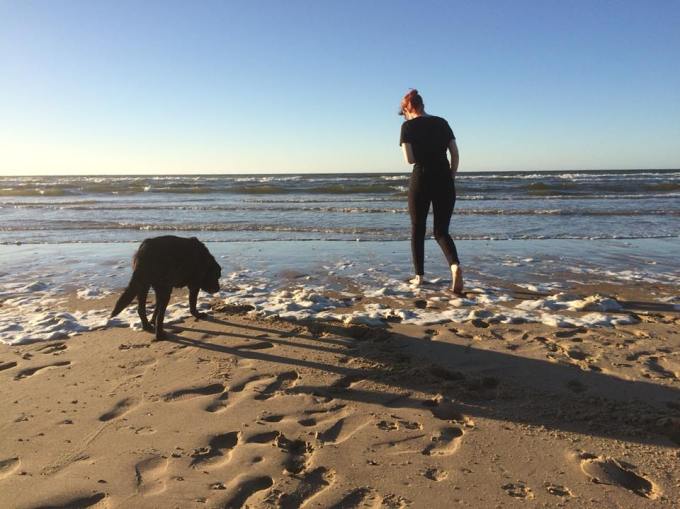
The beaches in Norfolk are just beautiful. The closest beach, the one we jokingly call ‘our beach,’ is particularly close to my heart. Every year, I step onto that beach and everything just clicks into place. It’s subtle but I suddenly feel like my head’s a little clearer, like I can breathe more easily. Something inside me settles. It’s like I leave a little piece of myself there, that I miss all year round, and then, when I get back, it’s an overwhelming relief. I’ve spent some glorious evenings on that beach.


It was ridiculously hot all week so I spent a lot of time inside with all the windows and doors open. I’m really not good with heat. It’s something I’ve heard from quite a few other people with Autism; I wouldn’t be surprised if there’s a link, given the hypersensitivity that often comes as part of being autistic. Anyway. It gave me the opportunity to do a lot of writing and catch up a bit with my diary (if you’ve read this post, you’ll know that my writing can be quite compulsive). That felt really good. I also rewatched some of my favourite films and played chess. The latter is something I haven’t had the concentration to do for months so that felt like a victory in itself, much more exciting than actually winning at chess.
Being there doesn’t eradicate my anxiety entirely but it does a pretty good job of dampening it. Sometimes anxiety feels like this constant vibration that I can’t stop, can’t take a break from. But in Norfolk I can. I still get anxious about specific things but that relentless vibration momentarily ceases. And that’s such a relief.

I’m Running Out of Clever Titles for Medication Reviews
Posted on June 27, 2018
A couple of months ago, I (with the help of my psychiatrist) decided that it was time to stop taking the Venlafaxine. I don’t feel like it’s helping; it just makes me numb to everything and, as overwhelming as my emotions tend to be, feeling is better than not feeling. It might not always feel like it but that’s the truth. Plus, the side effects are not worth it, even if it was helping: my concentration and motivation were pretty bad before I started taking it but I’m pretty sure it’s gotten worse, especially recently. Writing has been such a struggle, even the practice of it. My depression has always had a negative impact on my creativity but this is the first time I’ve found it so incredibly difficult to simply write at all: getting words out has been like pulling teeth.
So I had some good reasons for wanting to stop and I’d put in the time to make sure I had an informed perspective. So I discussed it with my psychiatrist and we decided that the right move was to wean myself off the Venlafaxine and try something new.
When I first reduced the dosage, I didn’t really feel the difference. I still felt both depressed and numb, which is a really weird combination. But over time that’s changed. Obviously I can’t know how much of that to attribute to the medication change or to life in general but I still think it’s worth keeping track and I recommend this practice to everyone: it allows you to see the trends in your life and analyse what does or doesn’t work for you.
Not long after lowering the dose, I started getting headaches. The pain was very similar to the pain of a migraine but I didn’t have any of the other symptoms that come with it. Normal painkillers didn’t seem to help much and there were several occasions where I just retreated to my bed and tried to sleep through it. I had one of those headaches almost everyday for about two weeks, which was horrible but they have now passed at least. So that’s progress.
Coming out of that, I felt really raw and emotional, which was very weird, having felt so blank for months. I felt like I had no control over my emotions, which was more than a little bit scary, and kept bursting into tears over the smallest things. It’s felt a bit like I’ve had all of my emotions bottled up since I started taking Venlafaxine and suddenly they were overflowing everywhere: if something upset me, I became inconsolable and if someone irritated me, I had the urge to scream at them. I feel very lucky and grateful that I’ve managed not to scream at anyone because that isn’t how I actually feel. Once that emotion has died down a bit and I’ve been able to process the whole experience, that’s how I really feel. I live in fear of saying something I don’t mean and it ruining everything. So far, I’ve managed to manage these emotional tidal waves. They’re still happening though, even now that I’ve stopped taking the Venlafaxine completely.
And more recently I’ve started to have moments where I can think more clearly. They don’t last very long and to begin with, they were so sporadic that I didn’t even connect them to coming off the medication. But now that there have been a handful of them, it seems pretty likely that the two are linked. These moments are amazing. The feeling reminds me a bit of coming up for air after being underwater for a long time. You breathe in and you can almost feel the freshly oxygenated blood rushing around your body; everything suddenly feels so easy and you’re shocked by how hard it was up until that moment. These moments aren’t lasting very long and I wish there were more of them but it’s something.
I realise that I’m not giving this progress the recognition it probably deserves but I’m really not in a place where I can be enthusiastic and optimistic; the most I can manage right now is one foot in front of the other. My depression is worse than ever but at least it’s real. And I’m doing the best I can. That has to be enough.
Learn With Me
Posted on March 29, 2018
I was diagnosed with Autism Spectrum Disorder at the age of twenty, after actively struggling for several years. When I use the word ‘actively,’ I mean that, while I had had difficulties with all the things that turned out to be characteristics of Autism, they had become really hard to deal with and were having a serious impact on my life and my mental health. For example, I’d always found socialising confusing and stressful but I’d managed it for most of my life, thinking that that was just how I was built. Ultimately, that’s true but knowing where it comes from has been very helpful, both in validating that struggle but also in helping me to learn how to cope with those feelings. So, the diagnosis was a really big deal but I still think a lot about why it came so late and what that means.
In my opinion, there was one big reason why it took so long to get a diagnosis and that was the lack of awareness and understanding around both mental health and Autism, especially in women. Because Autism in women often presents very differently to the stereotypical male presentation, no one even mentioned it until we’d been looking for an explanation for more than eighteen months. I have a couple of blog posts about the process of getting my diagnoses coming up but the short version is that we started out by looking at my mental health. We went to various people but no one took my anxiety, my depression, and so on as serious problems, brushing them off as things that everyone deals with. So it took a lot of work to get even one person to recognise that what was happening was an actual problem, and then even more work to get them to see that that was part of a bigger pattern. And I know that all of that was down to this general lack of awareness about how Autism can manifest and again, how it can manifest in women.
I am very grateful to have my diagnosis, regardless of how long it took to get it but I do think that getting it so late has had a detrimental effect on me:
- Expectations, my own and those of others – Having grown up assuming I was neurotypical, I have always compared myself to my neurotypical peers and hated myself when I couldn’t measure up. When I got to sixth form, I started to really struggle (mentally, socially, academically) and so the whole thing started to snowball. And because I was comparing myself so viciously to those around me who were coping so much better, I did great damage to my mental health and self esteem. Had I known that my brain worked differently and that I might need support, those two years of my life would most likely have been an altogether different experience. Even now that I know the difference is there, I still find it really difficult not to compare myself to others; I still often see myself as less capable or less intelligent or less whatever word is relevant to the situation.
- The mental health consequences – While this is not something I can scientifically prove, the chances are that this whole process has had an impact on my mental health. Being repeatedly invalidated and brushed off definitely made my depression and anxiety worse. That invalidation may also have triggered the development of Borderline Personality Disorder; I’m not qualified to make a definitive statement on that but between discussions with my health professionals and my own research, it’s a theory if nothing else.
I’ve often had friends and family ask what they can do to help me and to be completely honest, I don’t know. I’m still trying to figure all of this out for myself: what’s affected, what helps, what doesn’t… Sometimes it feels like, just because it’s my diagnosis, people think I have this deep understanding of it. I’m definitely more clued in than I used to be but even two and a half years later, I don’t always know what to do when something comes up. I think the only thing I can say is this: “Learn with me.” This is a process, which involves a lot of trial and error and over-planning and screwing up. When it doesn’t work, it’s no one’s fault. We just learn and move on to the next thing. But hopefully, we can navigate it as a team rather than a group of individuals.
I try not to spend too much time thinking about how my life would’ve been different if I’d been diagnosed at a younger age because there’s little to be gained from it. It is how it is. But occasionally the thought creeps in and I imagine this life where I’m so much more productive and engaged and independent. I don’t know if that’s how it would’ve played out but it’s a seductive thought. But as I said, I try not to go down that rabbit hole. I think it comes down to this: there are people I wouldn’t have met and experiences that I wouldn’t have had if I’d been diagnosed as a child and ultimately, I wouldn’t give those up for anything.
 Finding Hope